
You ever have a moment when you see something so achingly cute that your body melts into a puddle of liquid? No? Okay, stop reading and watch this INSTAGRAM REEL…
There. Now you know. From the moment its tiny nose pokes out of the pouch to the way it tentatively hops into the world, this little marsupial is a pure heart-stealer. Its large, dark eyes look at everything around it with curiosity; its soft fur seems too delicate for the big world it’s heading into; the snug security of its mother’s pouch… everything about it is so ridiculously precious it almost feels unreal—like something out of a Pixar movie.
I could keep going: those floppy little ears, the oversized paws that haven’t yet figured out how to hop, and the unmistakable sense of wonder that radiates from it in every moment. This joey is new to the world yet already determined to explore it, reminding us of the miracle of growth and resilience. In that reel, you see not just cuteness but courage. You see a brand-new life taking its first careful leaps under the watchful care of its mother. But Joey’s are remarkable beyond just the Awwww-factor. Read on to learn all about these incredible little guys.
Born Tiny
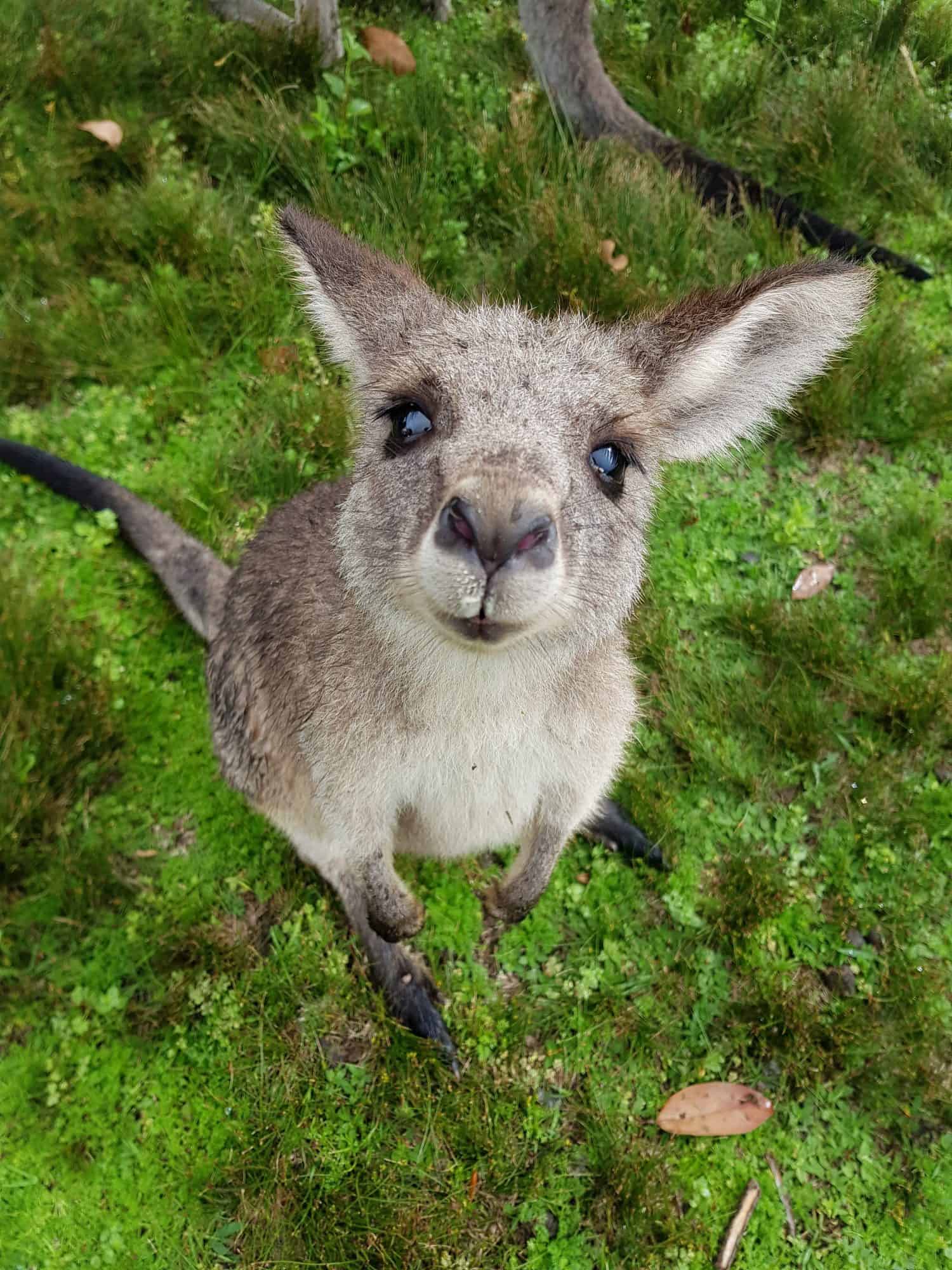
When joeys are born, they’re the size of a grape.
©kikumin/Shutterstock.com
When we think of a baby animal, we often imagine soft fur, open eyes, and a certain level of independence. Not in the case of a joey. These kangaroo babies (and many marsupials) are born at an extremely underdeveloped stage. The folks at Brookfield Zoo note that when kangaroos are born, they’re “roughly the size of jellybeans,” which is barely an exaggeration. In fact, a newborn joey can be only about 1 inch long, which is about the size of a large grape.
That diminutive size is partly because marsupial gestation periods are very short—only about 30–35 days for many kangaroo species. At birth, the joey is blind, essentially earless, and its hind legs are barely developed, yet it immediately begins the difficult trek from the birth canal into its mother’s pouch, a journey that’s vital for survival.
Growing Up in a Pouch
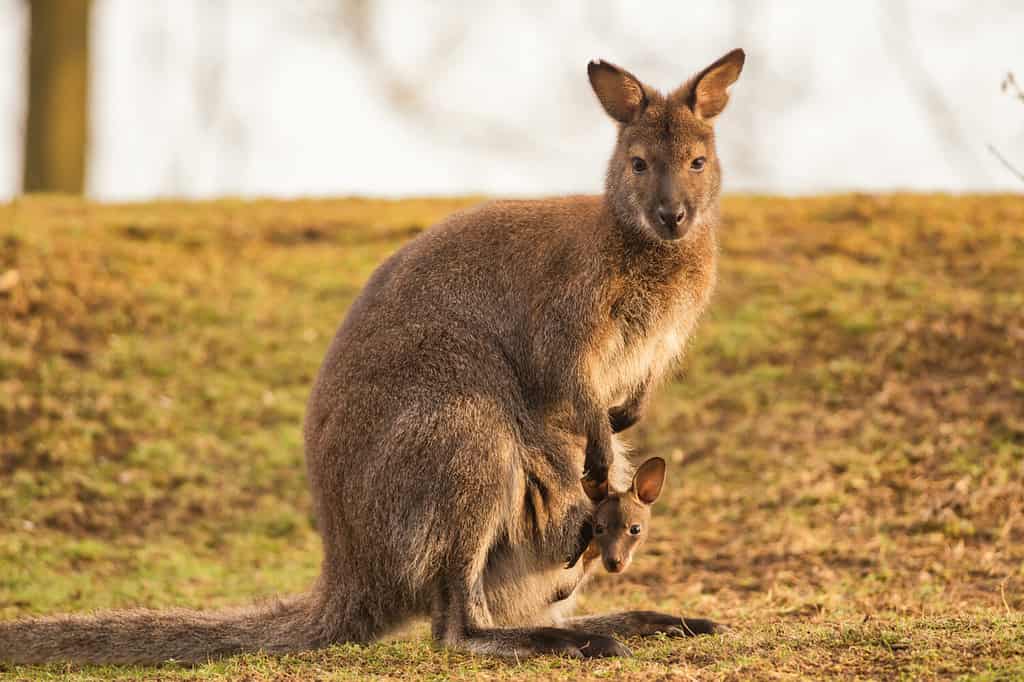
After birth, joeys live in the mother’s pouch for several months.
©Nick Fox/Shutterstock.com
Once inside the mother’s pouch (called the marsupium), the joey attaches to a teat and begins to grow. The pouch is the safety zone. The nursery. Essentially, an all-in-one home during those early weeks and months of life for the joey. By about four months, a joey may begin to peek out of the pouch and graze on grass or small shrubs while still returning to the pouch to nurse and rest.
For many kangaroos, the joey begins to leave the pouch for short forays at around six months of age. In species like the red kangaroo, permanent pouch exit happens around eight months, though the joey may continue suckling for three to four more months. For grey kangaroos, pouch time may extend to around eleven months, with milk dependence continuing up to about eighteen months.
Gaining independence
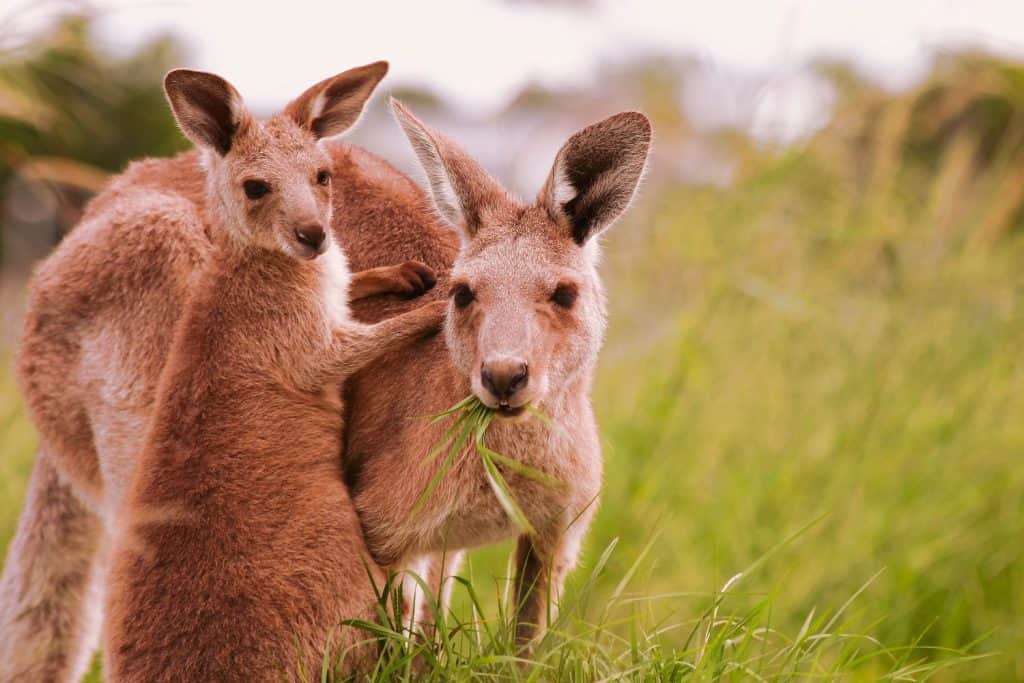
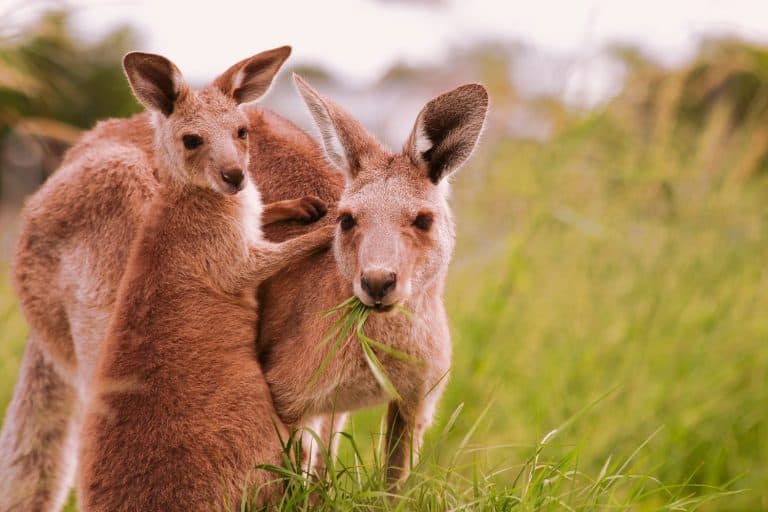
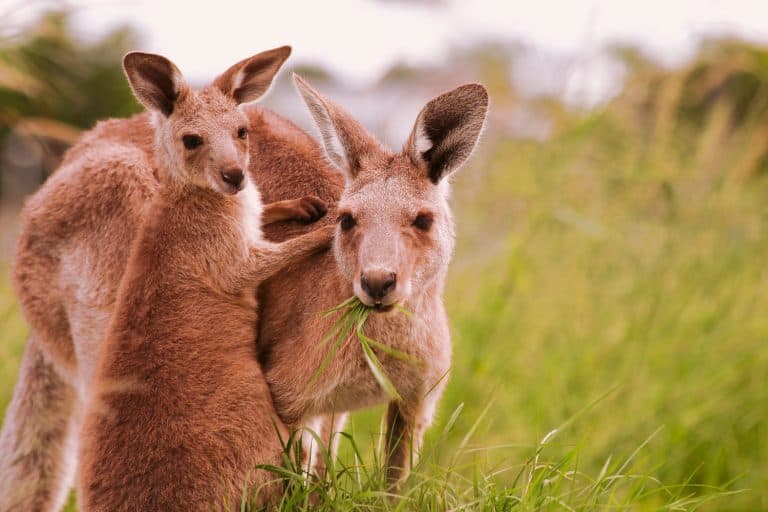
Some mother roos continue to care for their joeys for more than a year.
©CreelShutterStock/Shutterstock.com
While the initial pouch phase may last up to eight to eleven months (depending on species), true weaning and independence come later. The joey may continue to nurse and stay close to its mother even after it’s hopping confidently outside the pouch. In some species of kangaroo, the mother will continue to care for, protect, and feed the joey until it’s over a year old. That tiny grape-sized joey will eventually become a full-blown young kangaroo capable of bounding across the outback, but not without a long journey of care and growth behind it.
Other Notable Facts
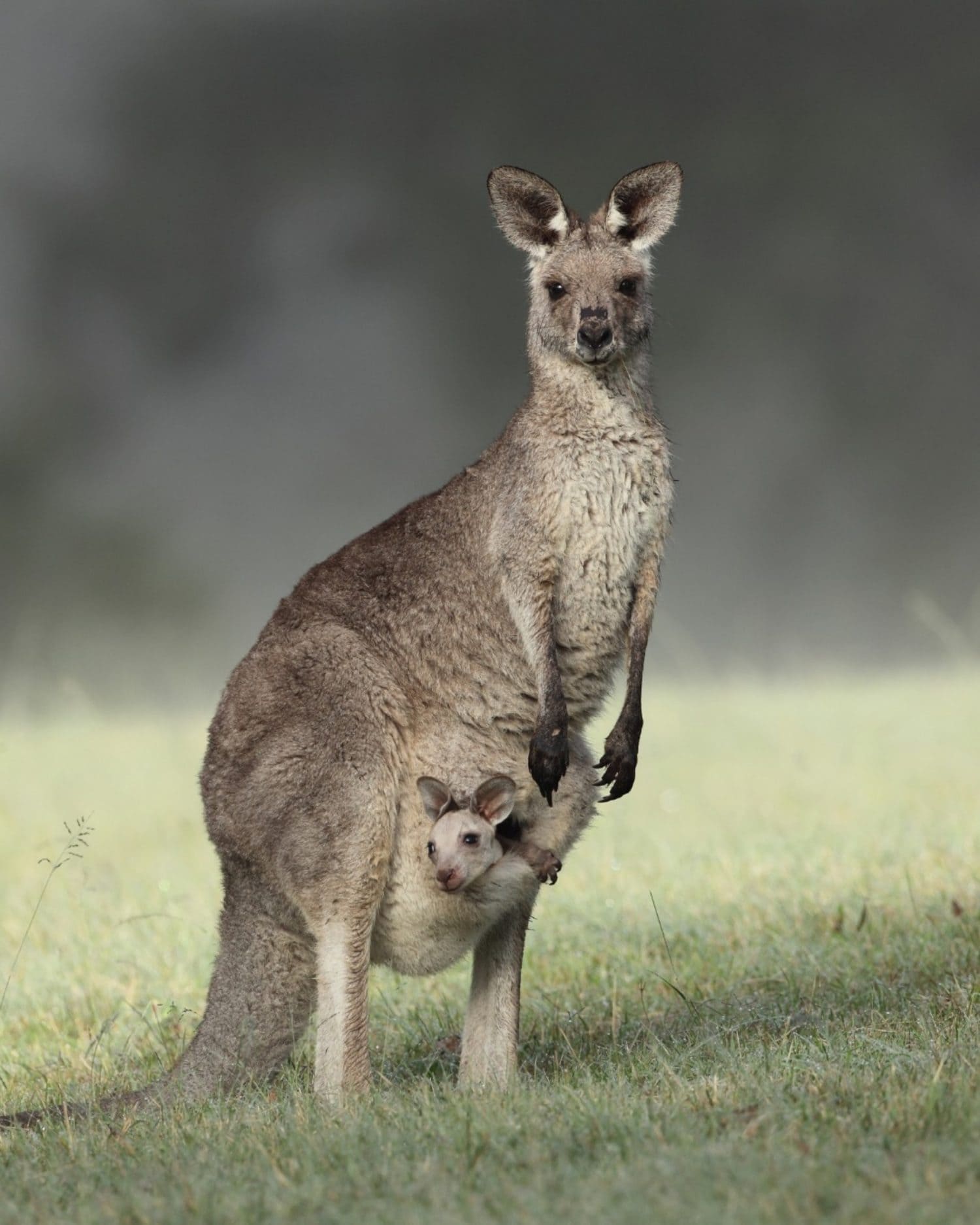
Mother roos can feed two different joeys two different types of milk simultaneously.
©BellFrost/Shutterstock.com
Female kangaroos are amazing multitaskers. They can have one joey in the pouch and another older joey outside, both of which the mother is feeding, and different types of milk for each to boot! When in danger, joeys have been known to dive headfirst into their mother’s pouch for safety.
While there’s no solid evidence that this is where the name comes from, the word joey loosely means “little one” in some Aboriginal languages and is used for many marsupials beyond just kangaroos (for example: wallabies, wombats).
More than Just Cute (But Darn Is It Cute!)
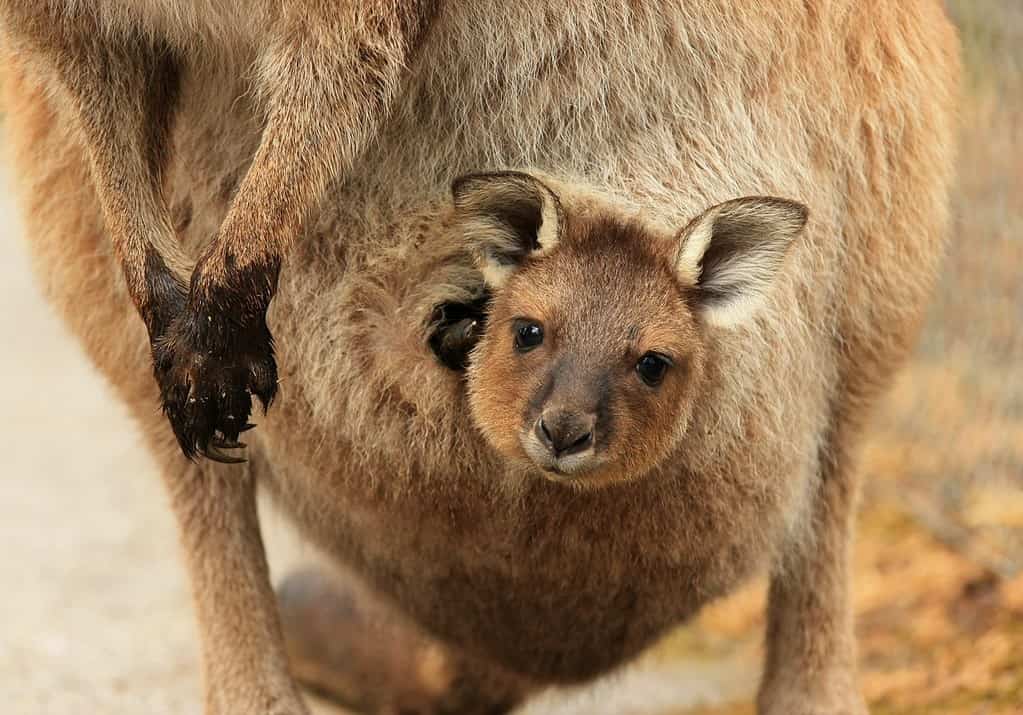
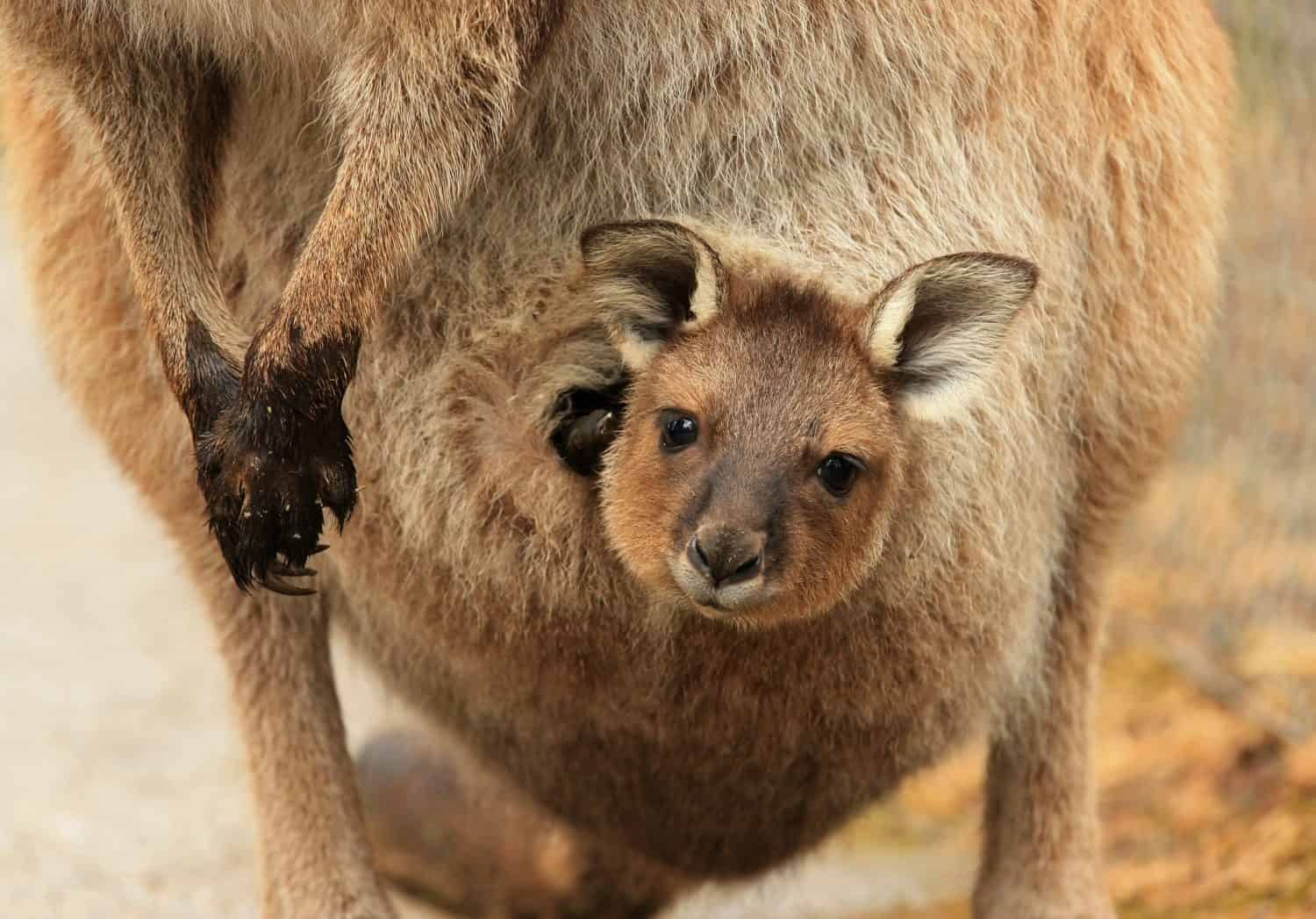
A joey peeks its head out of its mother’s pouch.
©K.A.Willis/Shutterstock.com
Watching that adorable reel of the joey adds beautiful real-life context. You see the fragile start, the protective pouch, the tentative steps, the curious gaze. Behind the cuteness lies an incredible survival story, from grape-sized newborn to outdoors explorer. That little joey isn’t just adorable, it’s a marvel of nature.
So the next time you see a tiny kangaroo peeking out of its mom’s pouch, remember you’re witnessing a stage that many mammals don’t experience in the same way. Each hop, each poked-out head, each tentative look around is part of a deeply fascinating journey of growth, adaptation, and resilience.
Yes, this joey is just too precious, but more than that, it’s a symbol of nature’s ingenuity. From being born essentially embryonic to growing inside a pouch, to eventually bounding across the earth, the facts about joeys remind us that behind all that cuteness—and it is indeed A LOT of cuteness—is a story of challenge, growth, and family devotion.