
Quick Take
- Park staff had no idea one echidna was even pregnant. That changed only when a very unusual symptom made them take a closer look. How the pregnancy was discovered →
- One of the puggle's mothers was named after a Game of Thrones character. Jon Snow's true identity →
- After one puggle was born, staff couldn't check on it for weeks, and the reason why reveals something remarkable about echidna survival instincts. Weeks of uncertainty explained →
- Echidnas share a bizarre reproductive trait with only one other mammal on Earth, and this shared trait shapes every stage of a puggle's early life. Echidnas' unique biology →
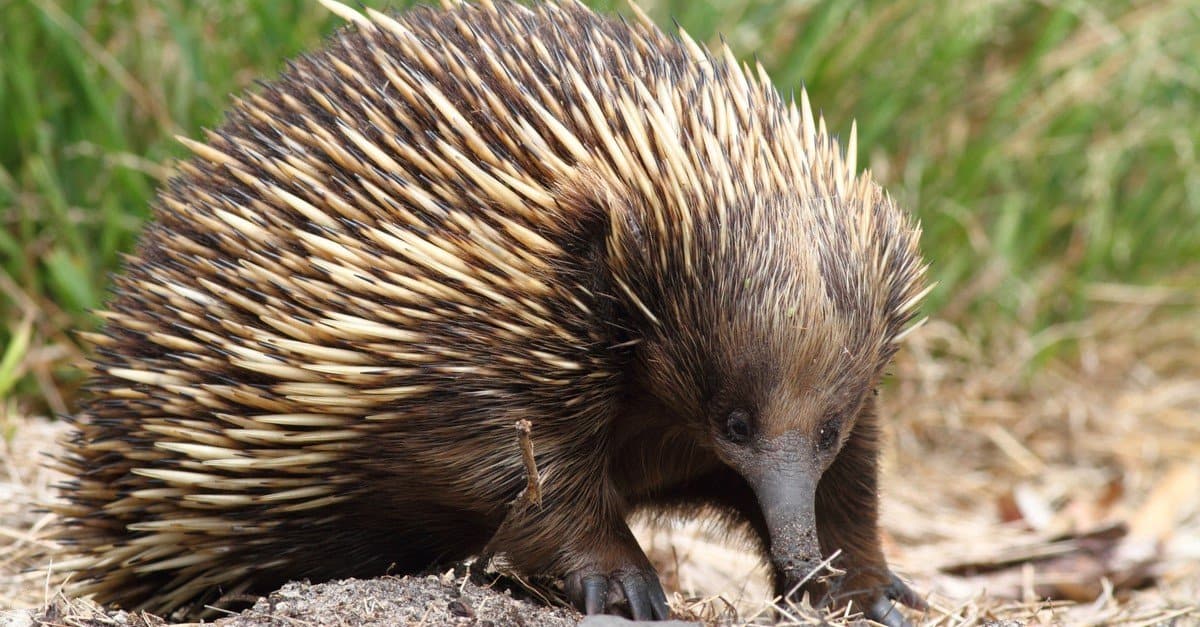
The Australian Reptile Park is pleased to unveil two baby echidnas to the public. The short-beaked echidna puggles were born a few months ago and are now beginning to emerge from their dens and explore their enclosure. Seeing baby echidnas in captivity or in the wild is extremely rare, making Piggle and Puddin a special and welcome sight at the Park.
Two Baby Echidna Puggles Make History at the Australian Reptile Park
The Australian Reptile Park is thrilled to announce that not one, but two echidna puggles have been born at the Park. This news is making headlines, given how rare echidnas are and how few offspring are born at a time.
The echidna puggles, Piggle and Puddin, are the first echidnas born in the Park’s history. At eight and six months old, respectively, the two young echidnas are learning to be independent within their enclosure. However, they remain under their mothers’ care and will continue to do so for several more months.
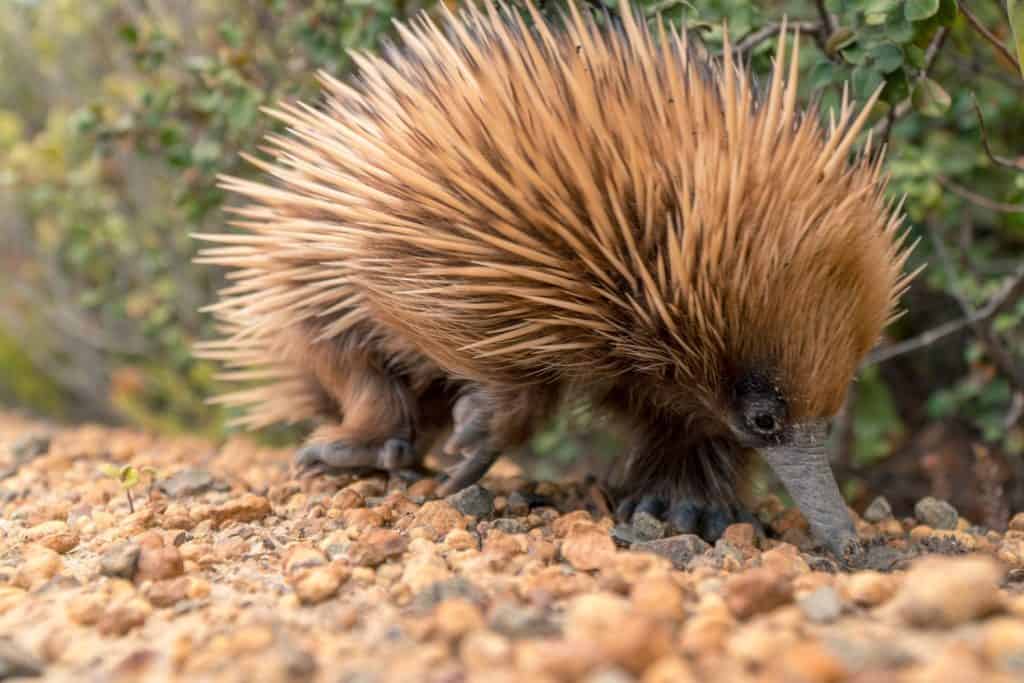
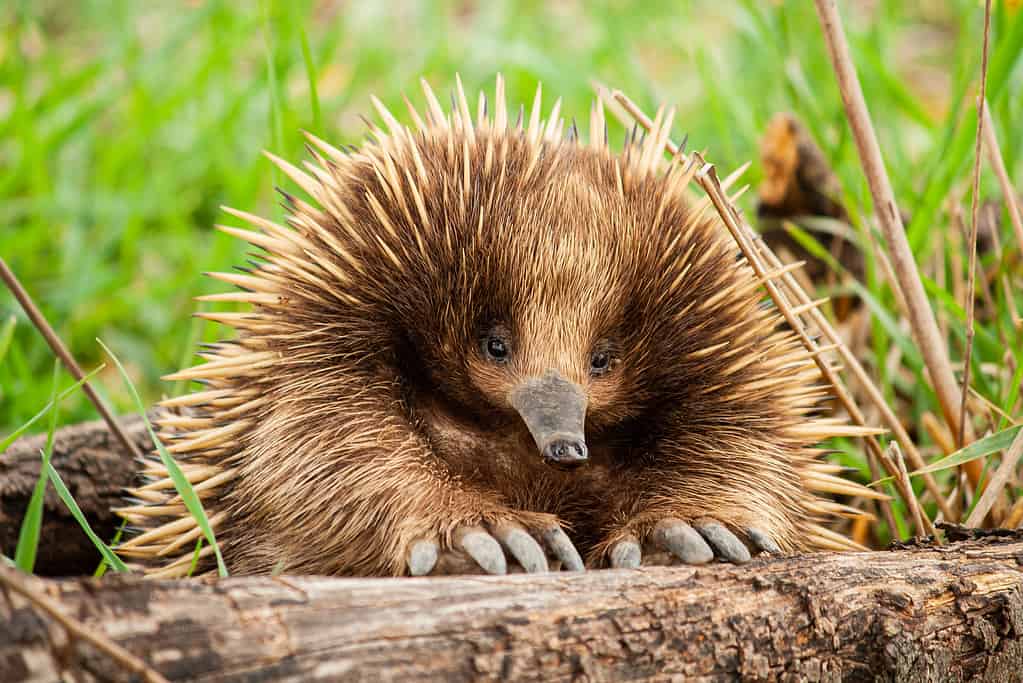
Two baby echidnas, similar to this one, were recently born at the Australian Reptile Park.
©Kirsty Hulme/Shutterstock.com
According to the Australian Reptile Park’s press release, Puddin is the more outgoing of the two puggles. Puddin, whose gender has yet to be determined, is still developing spines and has a very dark brown color.
Piggle, who has been determined to be female, has some spikes emerging. She is a light brown color, similar to her mother’s. Instead of exploring, Piggle sometimes prefers to find hiding spots and observe the activity in the enclosure from afar.
The birth of the puggles is a huge accomplishment for the breeding program at the Australian Reptile Park. Given how rare it is to see puggles in an enclosure or even in the wild, those who have the opportunity are encouraged to come and see Piggle and Puddin while they are still young.
It Was Unclear for Weeks Whether One Puggle Survived
It is not uncommon for puggles to remain in the den their mother built for months after they are born. Many will not emerge until they are four months old or older, because they lack the hard quills necessary to defend themselves. Therefore, after Puddin was born, there was nothing to do but wait to see if the little puggle survived.
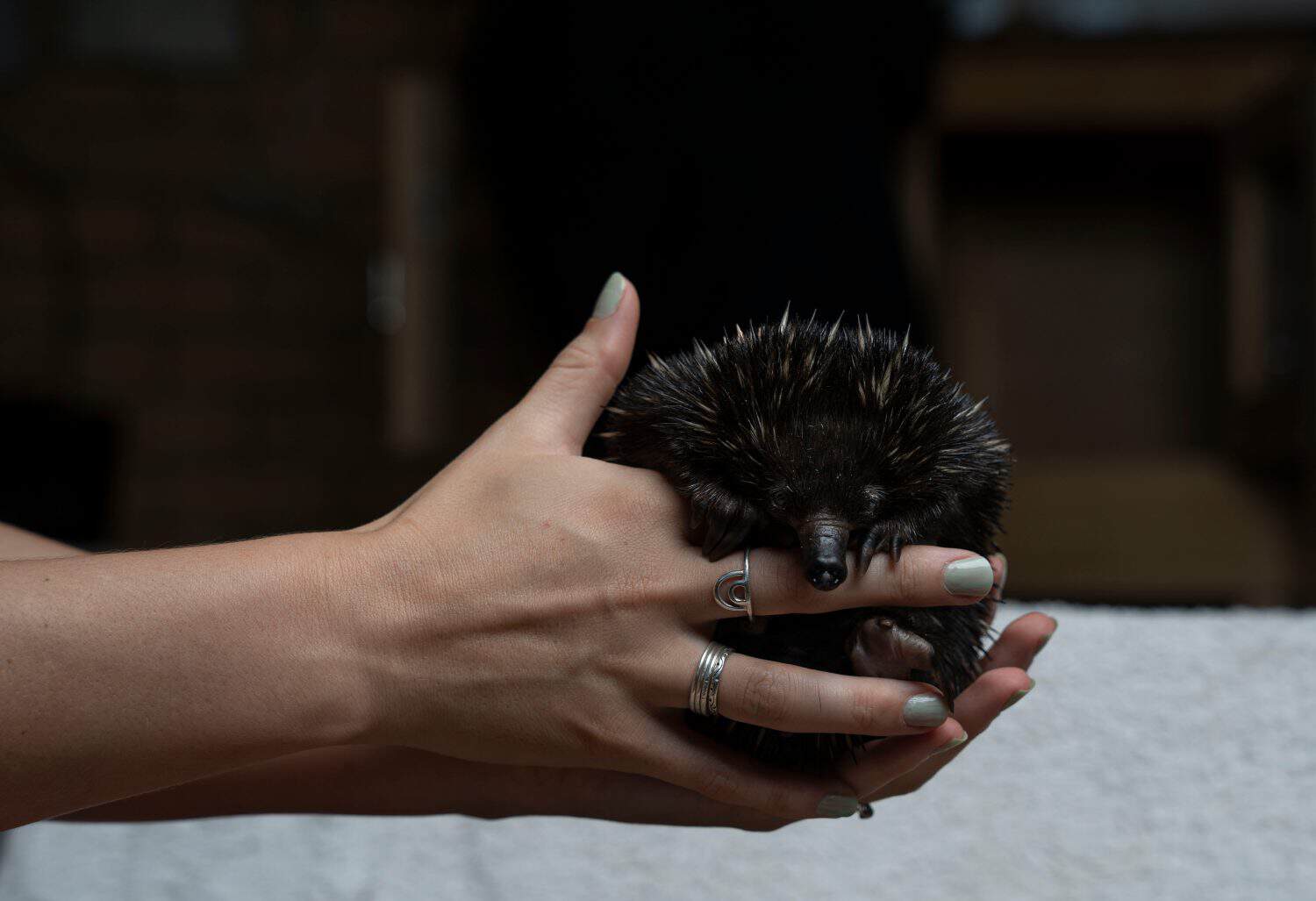
Staff took a wait-and-see approach as to whether Puddin, similar to this puggle, survived.
©Guy Sadler Photography/Shutterstock.com
The Australian Reptile Park took a hands-off approach with Puddin and Puddin’s mom after the puggle was born. Not wanting to disturb Mom in the weeks after Puddin was born, Park staff took a wait-and-see approach.
To help monitor Puddin, staff installed camera traps in the echidna enclosure. When Puddin finally appeared, the staff was thrilled to see that Mom had cared so well for her puggle. A full health check was done on Puddin, according to the Park’s news release, and the “young puggle was perfectly healthy.”
It Came as a Surprise That Jon Snow Was Female
The other puggle born within the confines of the Australian Reptile Park, Piggle, has an interesting story of her own. Piggle’s mother, Jon Snow, has been a resident of the Park for a few years. When she first arrived, Jon Snow was believed to be male, hence the name. It was not until x-rays were performed that the gender was discovered. However, the name stuck.
Jon Snow was doing well in the echidna enclosure. After some time, she began to lose weight, and her appetite decreased. Veterinarians did a wellness check on her, and that is when it was discovered that she had a puggle in her abdominal folds. This puggle was Piggle.
The echidna, Jon Snow, similar to this one, hid that she had laid an egg, hatched it, and was caring for a puggle.
©Jarrod Calati/iStock via Getty Images
The fact that Jon Snow had laid an egg, incubated it, and hatched a puggle without the staff knowing came as a shock. It is also a testament to how hard the staff has worked to make the environment the echidnas live in as similar to the wild as possible.
Now, at eight months old, Piggle is interacting with Puddin as they learn to navigate their enclosure and mature into adult echidnas.
Echidnas Are One of Two Egg-Laying Mammals
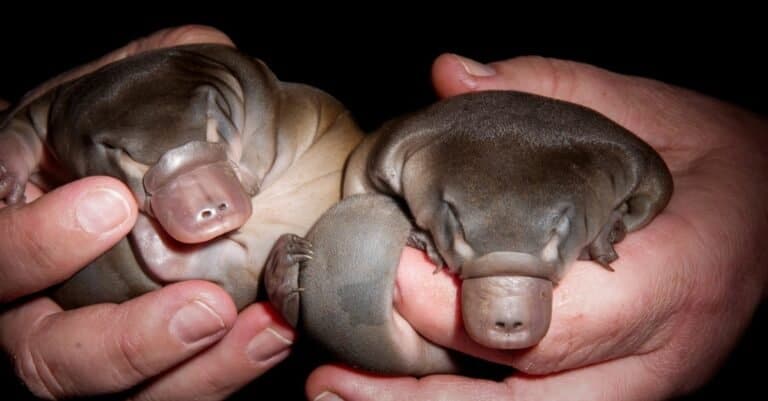
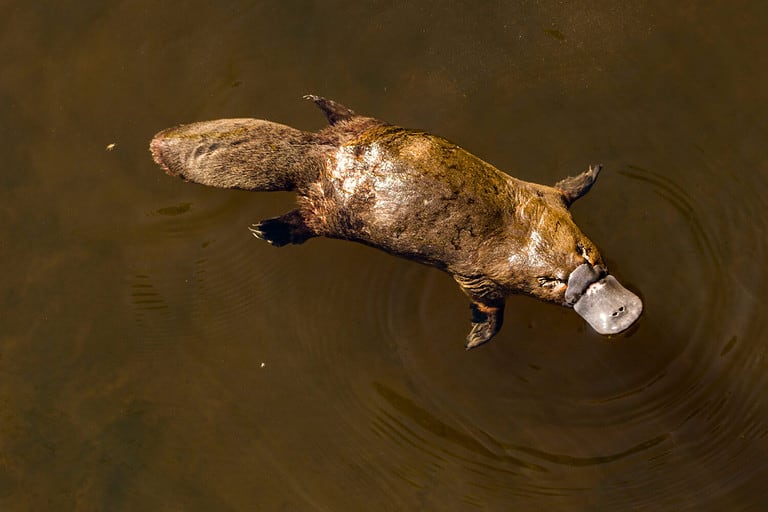
Echidnas are one of two egg-laying mammals. The other is the platypus. Both are very similar in that their eggs are already fertilized when laid, the eggs are a soft, leathery material, and the puggles are underdeveloped when they hatch.
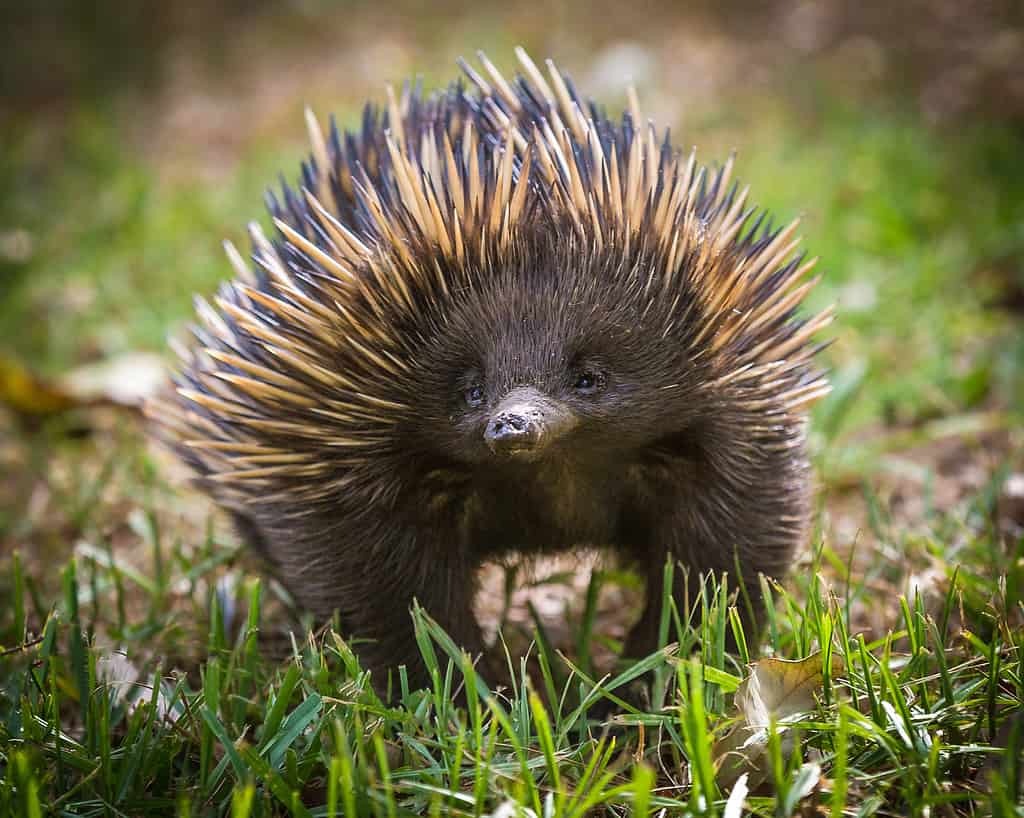
Echidnas and platypuses are the only egg-laying mammals.
©pelooyen/iStock via Getty Images
To protect the puggles when they are born, the echidnas (and platypus, for that matter) keep the puggle in an abdominal fold. This is similar to the pouch that marsupials have, which allows their young to continue growing after birth. However, neither of these mammals is a marsupial. They are instead part of the Order Monotremata. The main difference between the two is that marsupials give live birth to young, whereas those in Monotremata hatch from eggs.
Once the puggles hatch, they drink pink milk secreted from the mother’s abdomen. The puggles will remain in their den for several months as they develop and grow hard spines. Consequently, the puggles are not weaned until nearly 12 months, as they become more independent in the latter part of their first year of life.
What the Future Holds for Piggle and Puddin
The Australian Reptile Park did not specifically state what the future held for Piggle and Puddin. However, the zoo’s press release emphasized that those interested in seeing the two while they are juveniles should try to get to the Park sooner rather than later.
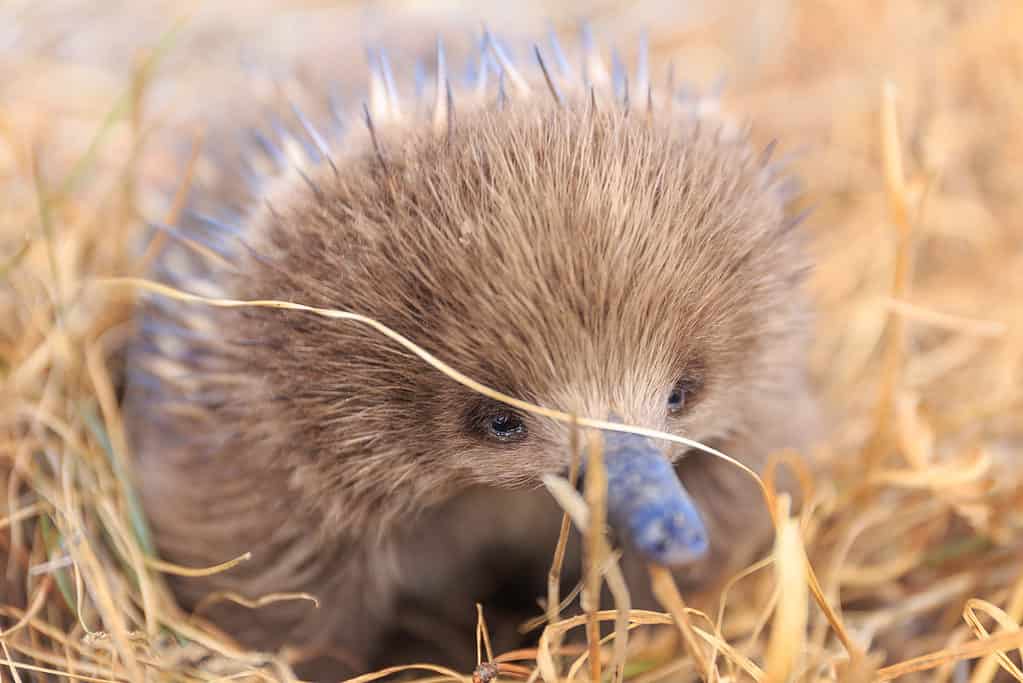
It is not yet known whether Piggle and Puddin will remain at the Australian Reptile Park permanently.
©Ryan Hoi/Shutterstock.com
“With only a short window before the puggles grow older and more independent,” the press release read, “the Australian Reptile Park is encouraging visitors to make the most of the school holidays and see Piggle and Puddin while they are still young.”
The echidnas are a part of a breeding program created by the Park. With a total of six echidnas within the enclosure, the program is doing exceedingly well. Whether the Australian Reptile Park will reach a point where some of its echidnas will be rehomed to another accredited facility to continue breeding the rare critters is unknown. For now, the Park is celebrating its tremendous milestone and encourages the public to come out and do the same.