
Quick Take
- Lionesses hide their newborns from the world for weeks, and the threat they're hiding them from isn't what you'd expect. Discover the hidden threats →
- Lion cubs can't walk, run, or even open their eyes at birth. Their survival hinges on a social system most people don't know lions have. See cub development milestones →
- Female and male cubs born in the same litter end up with completely opposite fates. Only one of them stays in the family for life. Explore how pride roles diverge →
- Lionesses only breed year-round, yet most fertile cycles never produce a litter, and the reason explains a lot about how lion populations stay stable. Understand lion breeding cycles →
This heart-warming Instagram post perfectly captures the dedication of a mother lion. It shows a very young cub being licked and cared for by its mother and is a rare sight. Cubs of such a tender age are usually hidden away by their mother for their own protection until they are around 8 weeks old. So what is it about lionesses that makes them such amazing mothers?
Lion Gestation and Birth
Lions breed all year round, but only one estrus (fertile period) out of every 5 results in a litter. On average, female lions give birth every two years. Their gestation period is 3.5 months, and the average litter contains three cubs. The newborn cubs weigh between 2 pounds and 4.5 pounds. They are born with their eyes closed, and these open at around 11 days old. The cubs cannot walk until they are 15 days old, and they cannot run until they are a month old.
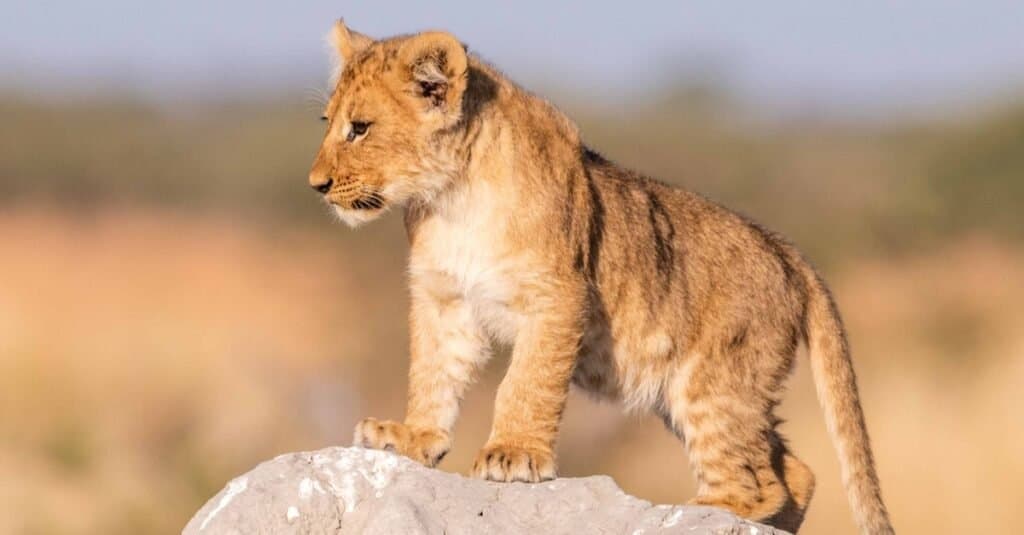
Lion cubs cannot see when they are born.
©Robert Frashure/Shutterstock.com
Weaning takes place between 7 and 10 months, but the cubs still depend on the adults of the pride until they are at least 16 months old.
How Does a Lioness Care for Her Cubs?
Females are responsible for caring for the young lion cubs. Unfortunately, both males and females have been known to kill the offspring of other lions, a behavior known as infanticide. Hyenas are also known to hunt lion cubs, so the mother lion has good reason to be so protective.
They lick and head-rub the cubs, which is related to social bonding, scent-marking, and cleanliness. The females create a crèche-type system in which they all help care for each other’s cubs. The mother and other females teach the cubs to stalk, pounce, and hunt through playful interactions. This is how the cubs hone their predatory instincts.
Female cubs will stay with the pride for life, but males are typically forced to leave the pride between 2 and 3.5 years old. It is up to them to find another pride to take over and breed with.