
Quick Take
- The chemical added to the Reflecting Pool to make it safer may have actually made it more dangerous for wildlife. Hydrogen peroxide risks →
- The green tint in the water isn't just an eyesore. It could pose serious health risks to anyone who gets too close. Health risks explained →
- A $16 million renovation may have turned a national landmark into what one wildlife expert calls a 'death trap.' Renovation's toxic legacy →
The bodies of three ducks have been found in the Lincoln Memorial Reflecting Pool, and it has many wondering what caused their deaths. The ducks were found after a $16 million renovation that involved resurfacing the pool bottom. When the paint began peeling and the water turned murky, the U.S. Fish and Wildlife Service was called in to investigate the cause. The call was made to enforce the Migratory Bird Treaty Act, which prohibits killing, capturing, selling, trading, or transporting birds without approval from the National Park Service.
In D.C., local wildlife groups are also monitoring the situation. Some have theories about what’s happening at the Reflecting Pool and nearby Constitution Gardens. While no information has been released yet, it appears that algae are growing in these waters.
Paint and Hydrogen Peroxide
Tara Zuardo, a senior campaigner at the Center for Biological Diversity, called the Reflecting Pool a giant “death trap” for local ducks. With investigations underway, there’s no definitive evidence that the deaths of several ducks were caused by resurfacing paint. However, peeling paint may release toxic chemicals into the water. This could cause significant health complications for wildlife that spend extended periods floating in the pool.

Photos from the Reflecting Pool show ducks floating near the pool walls before being pulled out.
©iStock.com/Sean Pavone
In an effort to clear up the water, employees also reportedly poured hydrogen peroxide into the Reflecting Pool. While this is typically a safer option than chlorine, wildlife groups worry it could worsen water-quality issues if contaminants in the pool contributed to the ducks’ deaths. Despite safety claims about diluted hydrogen peroxide, wildlife organizations are still raising concerns about the treatment.
Breeding Ground for Cyanobacteria
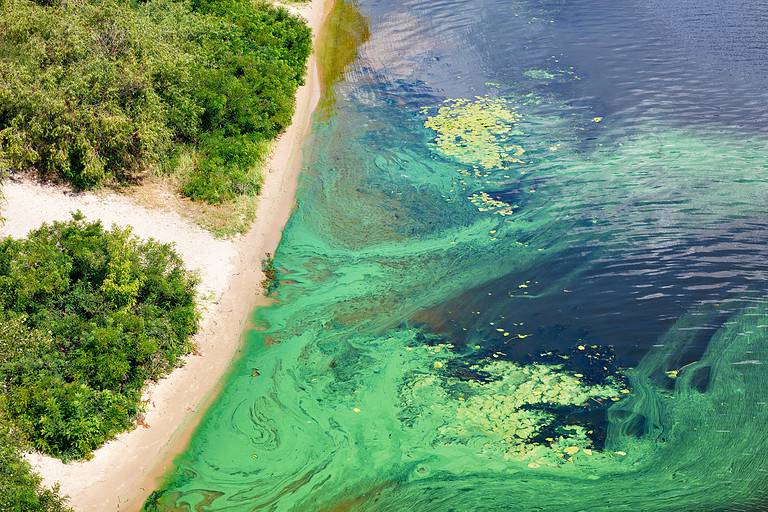
Even more concerning is the color of the Reflecting Pool’s water, which indicates an algae bloom. The water was sent off for testing, but the results have yet to be released. Based on photo evidence, many wildlife organizations theorize that this green sludge is the beginning of a cyanobacteria bloom, also known as blue-green algae.
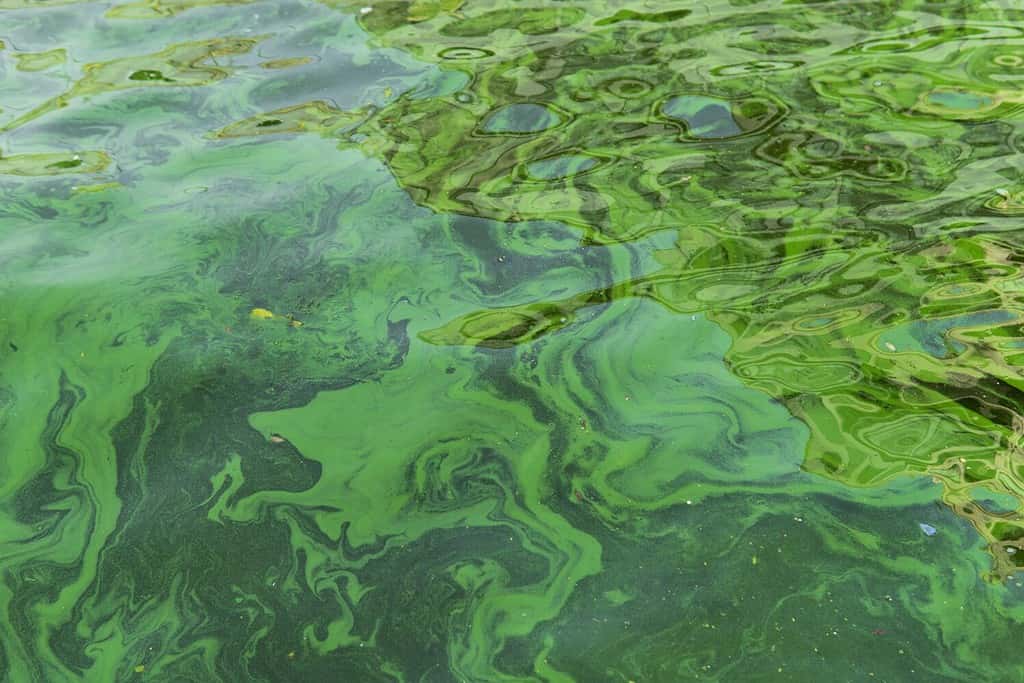
Cyanobacterial toxic algal blooms kill thousands of animals annually.
©Aleksandrkozak/Shutterstock.com
This freshwater algae species uses photosynthesis to survive and poses a significant threat to wildlife in and near the Reflecting Pool and the Constitution Gardens pond. As it grows, it blocks sunlight and depletes oxygen in the water below. If exposed to the cyanobacteria toxins, it can cause mild to severe symptoms in humans, including:
- Gastroenteritis
- Fever
- Headache
- Liver damage
- Dizziness
- Muscle paralysis
- Allergic dermatitis
- Asthma-like symptoms from airborne spores
These symptoms can occur in humans but may be fatal to wildlife, such as ducks.