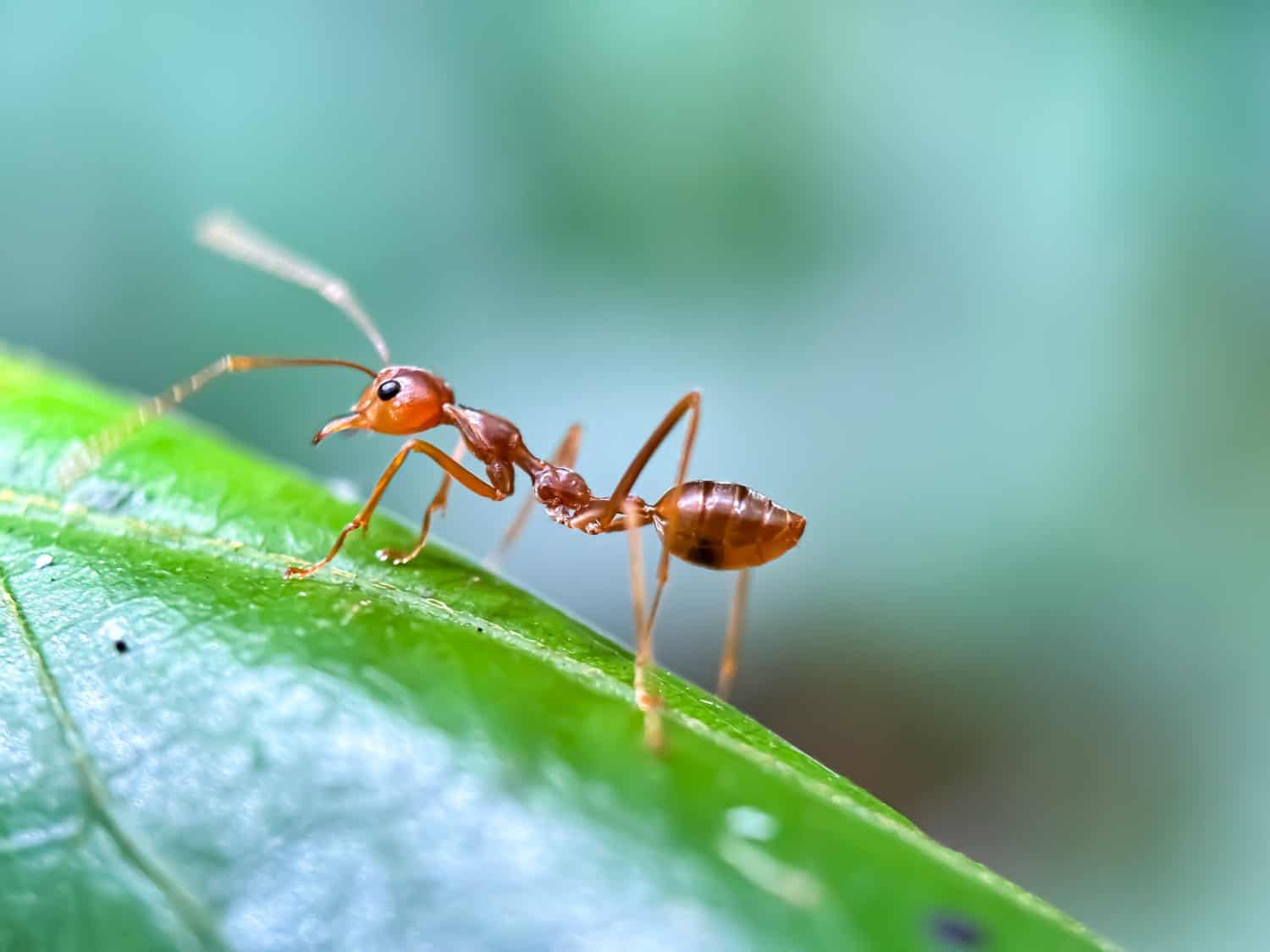

Quick Take
- This tiny spider hunts prey its own size, and it does so by weaponizing the ant's aggression. See why ants are dangerous →
- The trap takes four hours to build, and the spider never has to touch the ant to catch it. Watch the trap being built →
- The silk snare outperforms every other known biological catapult, and the whole mechanism fits on a single leaf. Explore the catapult mechanics →
- It's the only known predator trap on Earth designed to catch exactly one species. Discover the evolutionary advantage →
Scientists have discovered a spider species deep in the rainforests of Queensland, Australia, that uses a sophisticated snare to trap its aggressive prey. The species is still unnamed, but for now, researchers are calling it the “ballista spider” after the ancient Roman high-powered slingshot that used a spring to launch projectiles. In this case, the resourceful spider launches a tree ant at an impressive speed directly into its web.
“The snare mechanism seems to have evolved as a highly specialised way of allowing the spider to ‘pick off’ potentially hazardous prey one at a time and transport them a safe distance away from ant trails and nests,” lead researcher Professor Ajay Narendra said in a press release.
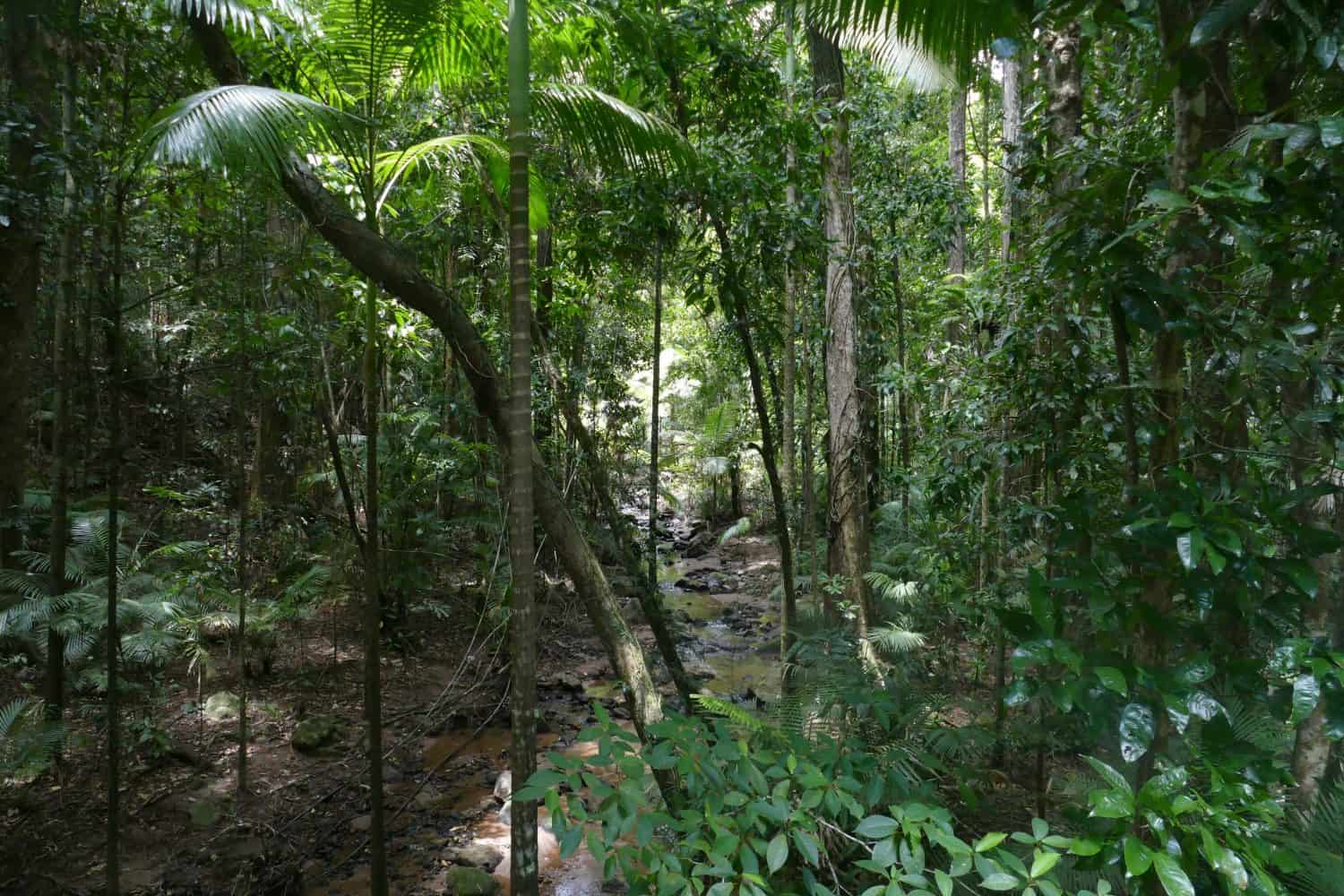
The ballista spider lives in the rainforest trees of North Queensland.
©El Paco 33/Shutterstock.com
What Is the Australian Ballista Spider?
The newly discovered spider is in the genus Propostira. Currently, there are only two known species in the genus: Propostira quadrangulata, which is found in India and Sri Lanka, and Propostira ranii, found in Bangladesh. An international team of scientists describes the ballista spider’s unique predatory behavior in the journal Current Biology.
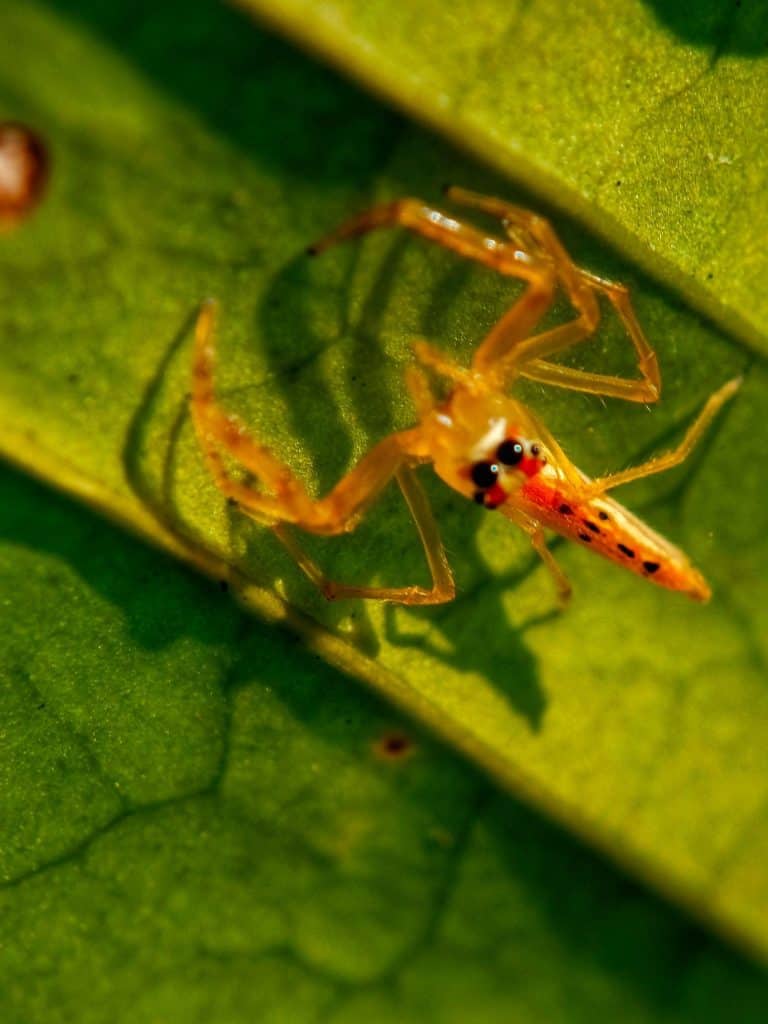
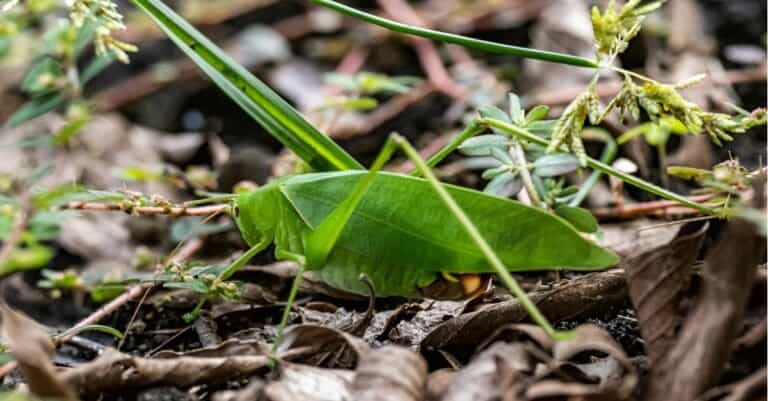
The spider lives in the trees of a rainforest in northern Queensland, an area known for its rich biodiversity. The ballista spider has a greenish-yellow abdomen and long, delicate legs. The tiny spider, only about 3/16 of an inch long, hides under a leaf during the day. At night, it sets its trap to catch its prey: the green tree ant.
Why Green Tree Ants Are Such Dangerous Prey
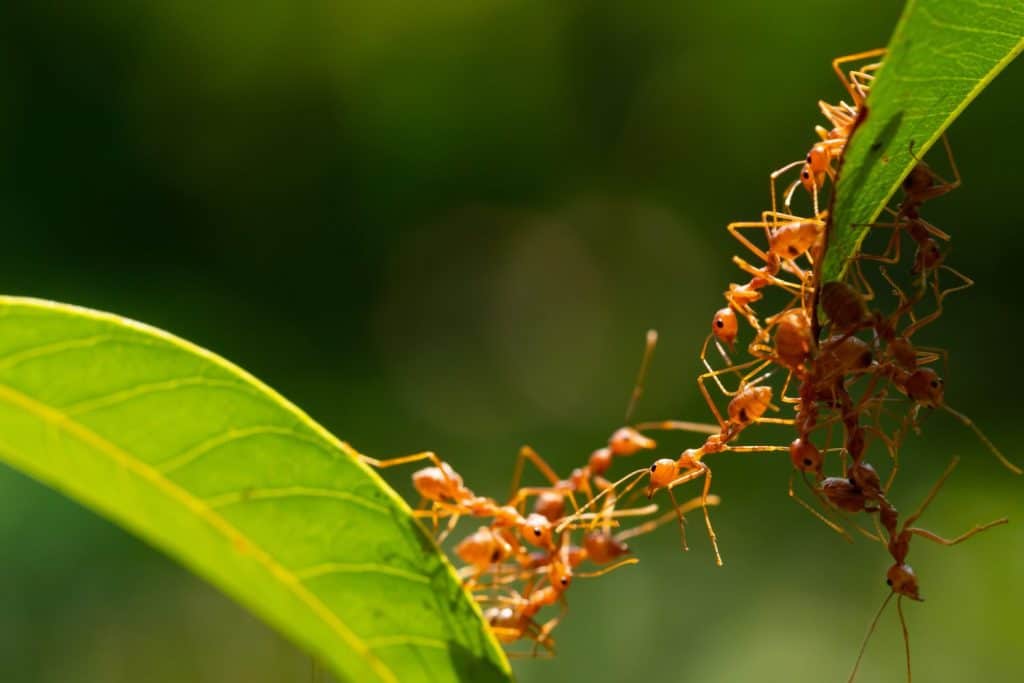
Green tree ants, or weaver ants, form large colonies in tropical trees where they build multiple nests.
©frank60/Shutterstock.com
“It’s very unusual for a spider to feed on ants, because they’re notoriously dangerous, and even more bizarre to find a spider that eats only one particular ant species,” said Narendra. “Ants have a range of chemical defences – including the ability to sting in some species – and they use alarm signals to rapidly recruit hundreds and even thousands of other ants as backup to overcome potential predators.”
Green tree ants (Oecophylla smaragdina), also known as Asian weaver ants, live in tropical Asia and Australia. They live in large colonies in the tree canopy, where they build nests that may spread through multiple trees. They benefit their ecosystems by preying on plant-eating insects.
Workers in the colony range from 3/16 to 3/8 of an inch in length, making them about the same size as, or even larger than, the ballista spider. They don’t sting, but their bite is painful. They have large, powerful mandibles and can secrete formic acid, which causes burning and irritation.
How the Ballista Spider Builds its Trap
Because green tree ants have strong defenses, the ballista spider needs a highly specialized strategy to capture them. The spider rests all day, and as night falls, it descends to a leaf where it knows an ant will pass by.
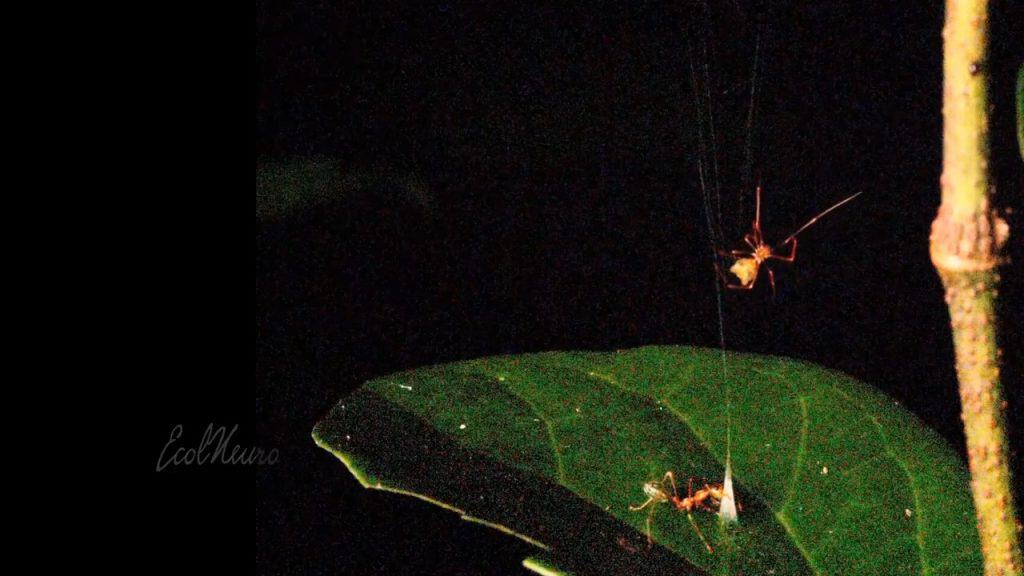
The ballista spider catches green tree ants in a sophisticated snare.
©YouTube/Discover Magazine – Original
First, it sets an anchor on the leaf. Next, the spider lays down tension lines of silk, a process that can take up to four hours. It bundles the lines together into a cone shape. With its snare set, the spider moves to a higher position to wait. “We suspect during the final construction stage the spider adds a pheromone that specifically lures worker ants and induces an aggressive attack, triggering the snare,” explained Narendra.
The final step occurs when an unsuspecting worker ant aggressively charges at the cone and bites down. The action triggers the snare. The ant is then launched upward with an acceleration of 1,367 meters per second squared into the spider’s web. The ant maintains its grip on the cone with its mouth throughout the process. The spider patiently waits until the ant is completely trapped in its web before approaching.
Overcoming the Ant’s Super-Strength
The ant’s feet have adhesive pads on the bottom, which keep it tightly anchored to the leaf. To lift the ant, the spider’s snare must exert a force many times greater than the ant’s body weight. Professor Narendra explained, “The ballista spider’s snare is bioengineered to store elastic energy in the silk and rapidly release it, giving it incredible instantaneous power density – greater than any other specialised silk-based biological catapults.”
You can watch the amazing process for yourself on Discovery Magazine‘s YouTube channel.
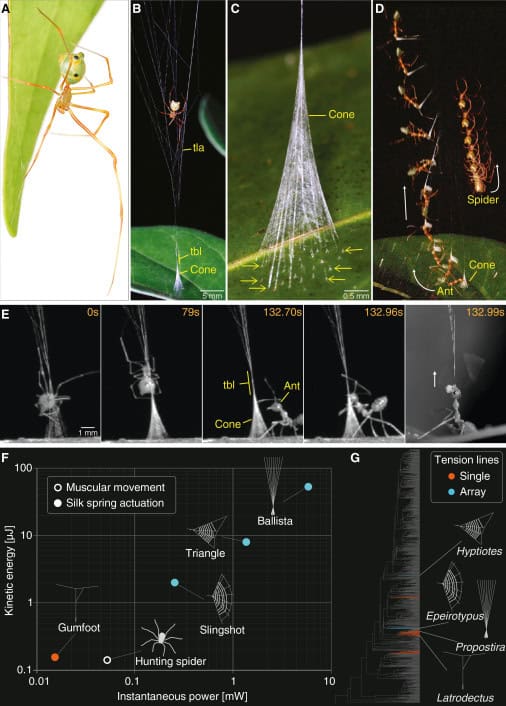
Researchers detailed the ballista spider’s unique hunting strategy in a paper published in the journal Current Biology.
©Figure from Ajay Narendra,Pranav Joshi,Daniele Liprandi,Gregory J. Anderson,Jonas O. Wolff, Current Biology (2026), licensed under CC BY 4.0. – Original / License
A Triumph of Evolutionary Engineering
According to the press release, the ballista spider is the only known example of a prey-triggered trap that is designed to capture only one type of species. This cunning spider uses the ant’s aggressive nature against it, launching the ant into a trap with a force nearly 140 times the acceleration of gravity. Its discovery highlights the biodiverse world hidden in the rainforests of North Queensland, where many species are waiting to be discovered.