
Quick Take
- Male Mandarin ducks display vibrant coloration to attract mates.
- Mandarin ducks have not become a problematic invasive species in North America, despite over 50 years of population establishment.
- These birds possess stunning colors that are not the result of actual pigments but the refraction of light.
- The annual transition into eclipse plumage makes male Mandarin ducks far less striking than they are during mating season.
What do Wilson’s bird-of-paradise, the red-necked tanager, and the keel-billed toucan all have in common? They are all beautifully colored birds. It is not uncommon to find birds that are visually striking. They exist on every continent and live in every country. But there is one bird that looks unreal, yet is 100% real, thanks to its ornate and vivid coloration. This bird is the Mandarin duck, whose eye-catching colors have not only captivated its own species but also humankind for centuries, becoming the literal stuff legends are made of in the process.
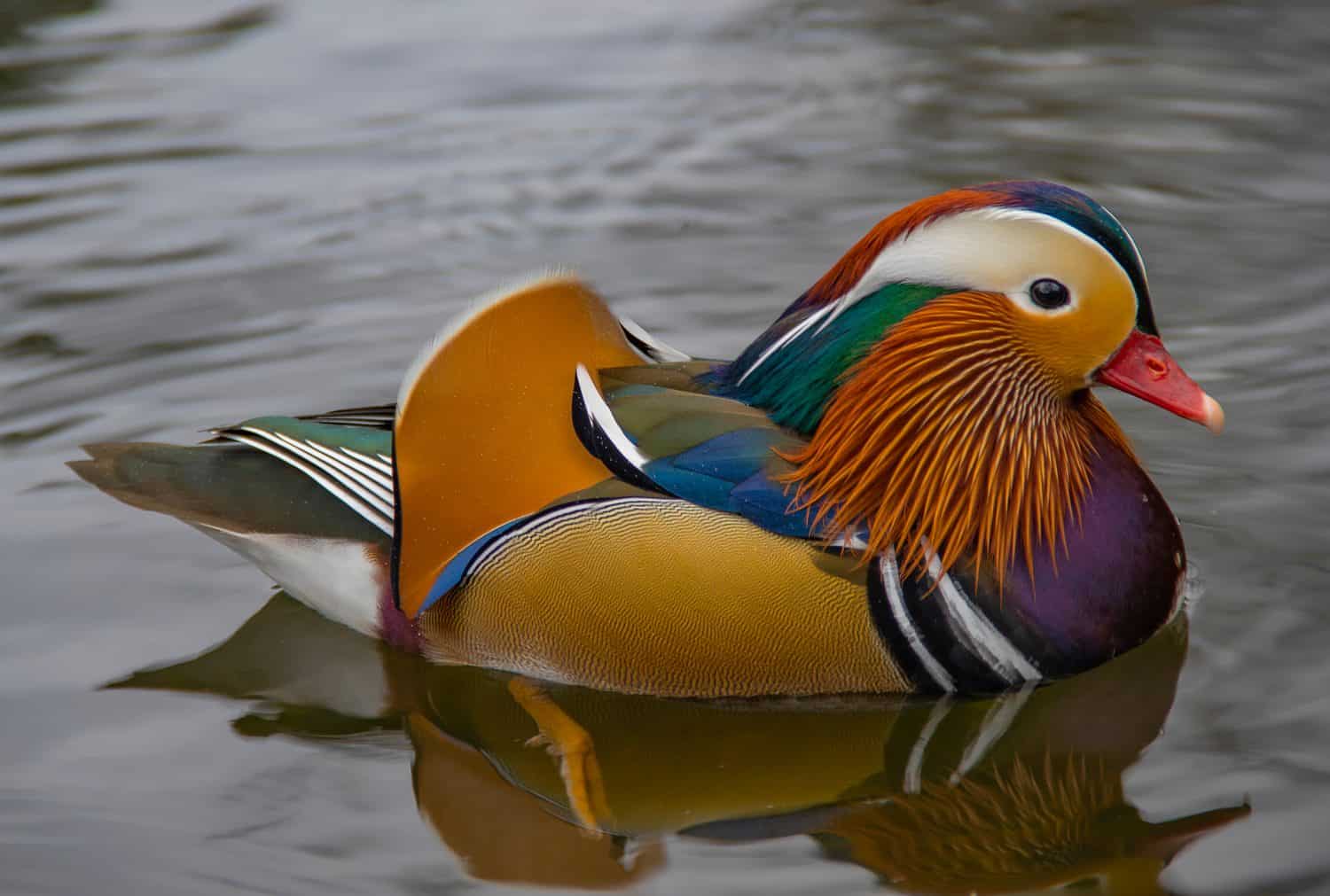
Mandarin ducks are adorned with colorful feathers that make them look like they shouldn’t exist.
©Rob Atherton/Shutterstock.com
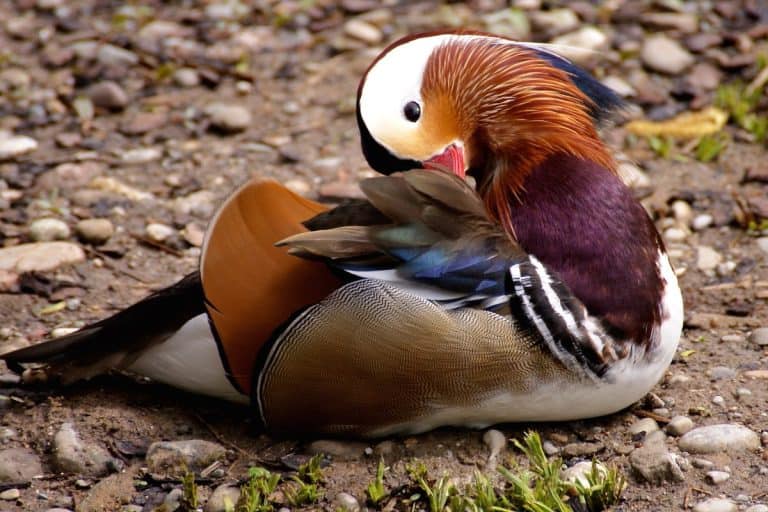
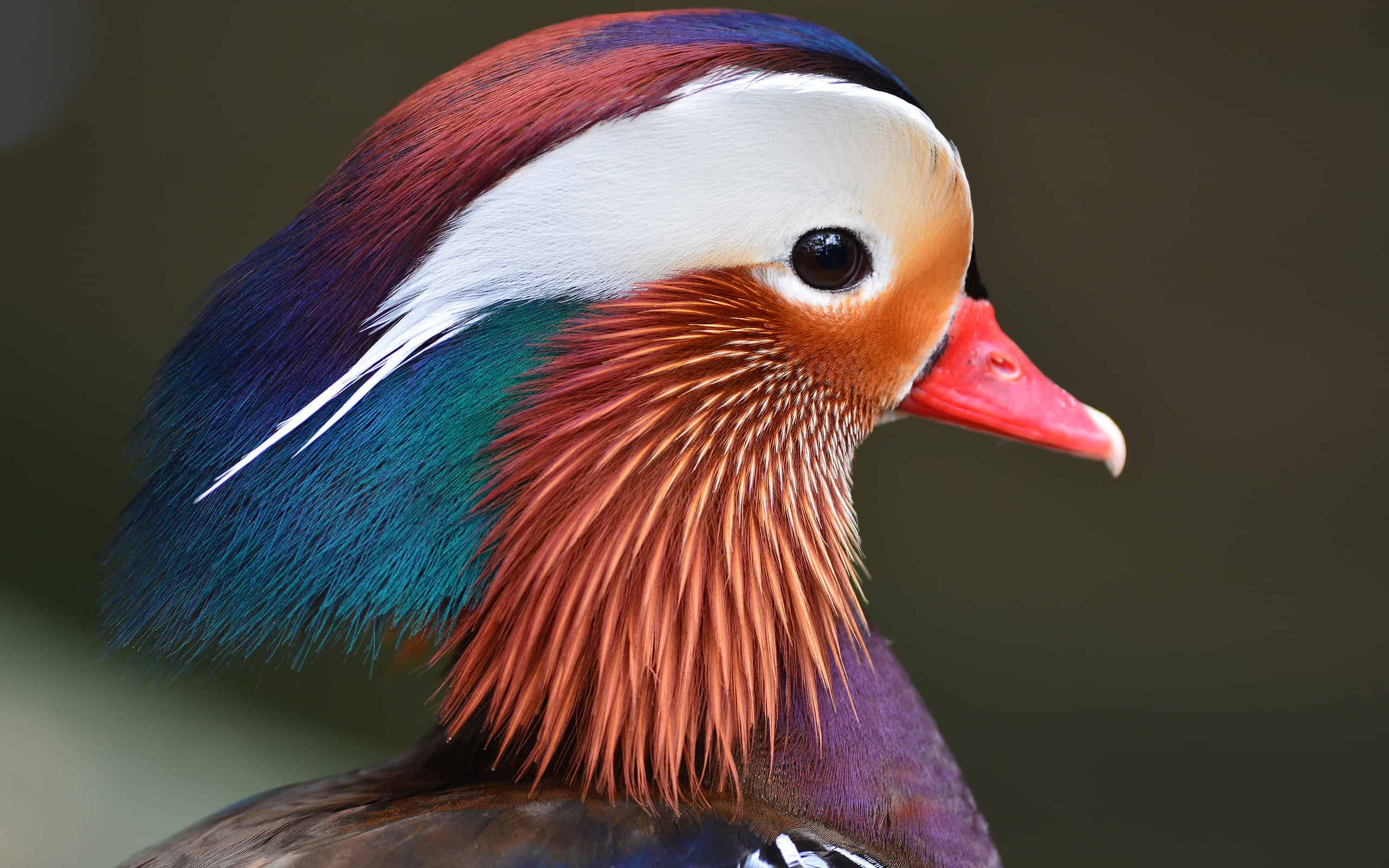
Male Mandarin ducks are waterfowl that need to be seen to be believed. Covered in a variety of feathers that range from purple and green to bronze, blue, black, and white, the ducks do not fit into their woodland environments. Additionally, they have bright red beaks, white crescents surrounding their eyes, and orange “sail” feathers, which make them stand out more. Fortunately, Mandarin ducks are good swimmers and flyers, allowing them to evade predators.
Where Do Mandarin Ducks Live?
Mandarin ducks are native to East Asia, specifically Korea, China, and Japan. It was first described in writing in 1727 by German explorer Engelbert Kaempfer. While this was the first European description of the ducks, they have been a part of Chinese culture since at least the Tang Dynasty (618 to 907), where they were described in poems.
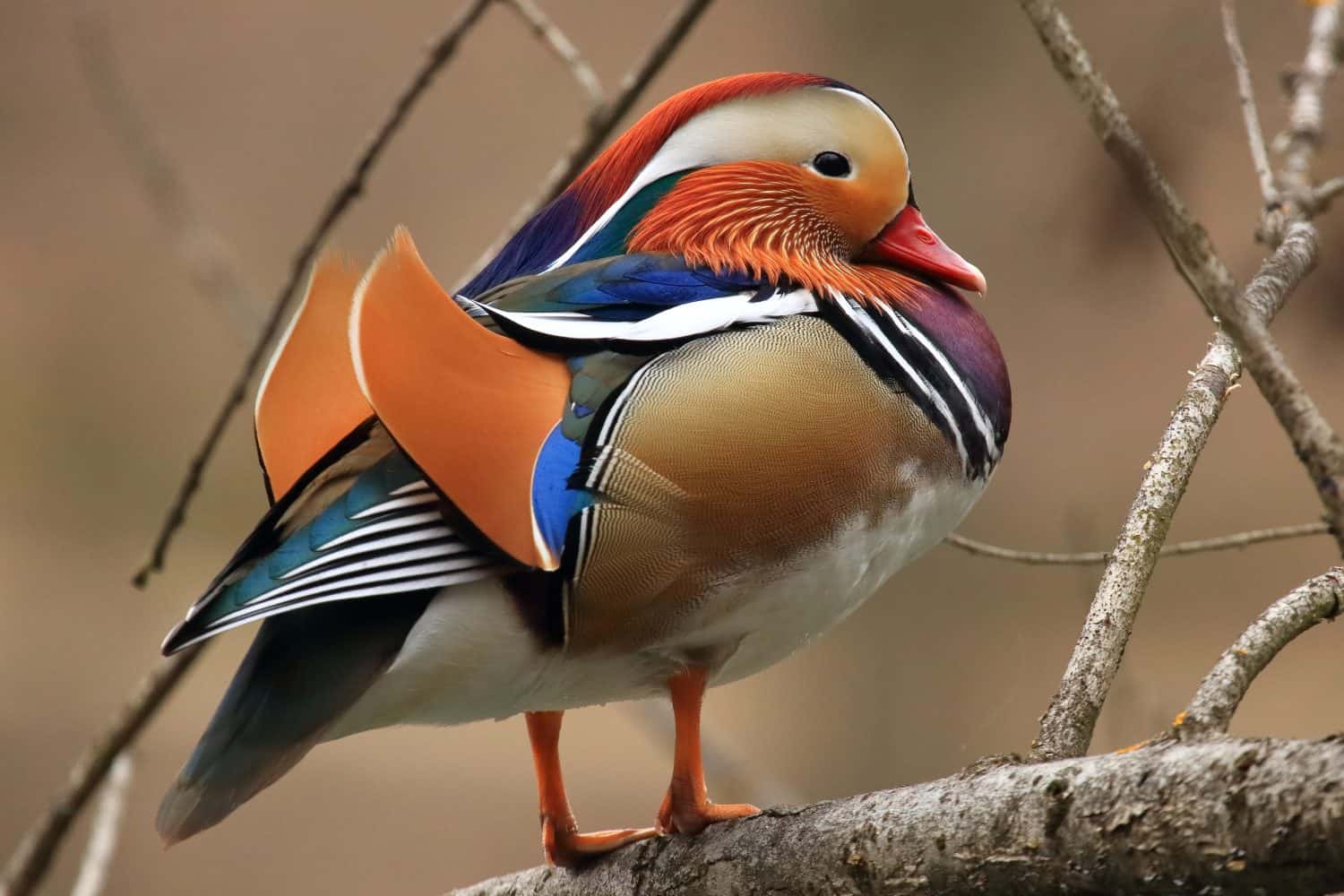
Mandarin ducks are native to Japan, China, and Korea.
©Simun Ascic/Shutterstock.com
Mandarin ducks were once abundant in their native countries, living in densely wooded areas near lakes, ponds, and other bodies of water. However, due to habitat loss caused by logging and urbanization, and wetlands being reduced in size or depleted completely, the number of breeding pairs has decreased significantly. This has yet to result in the IUCN categorizing Mandarin ducks as anything other than a “species of least concern.”
Where Can Mandarin Ducks Be Found in the United States?
Despite Mandarin ducks not being native to the United States, some small populations have established themselves. This is not a result of the birds flying far distances from Asia to North America. Instead, captive Mandarin ducks have been released, either accidentally or intentionally, and have found suitable regions in the United States to live.
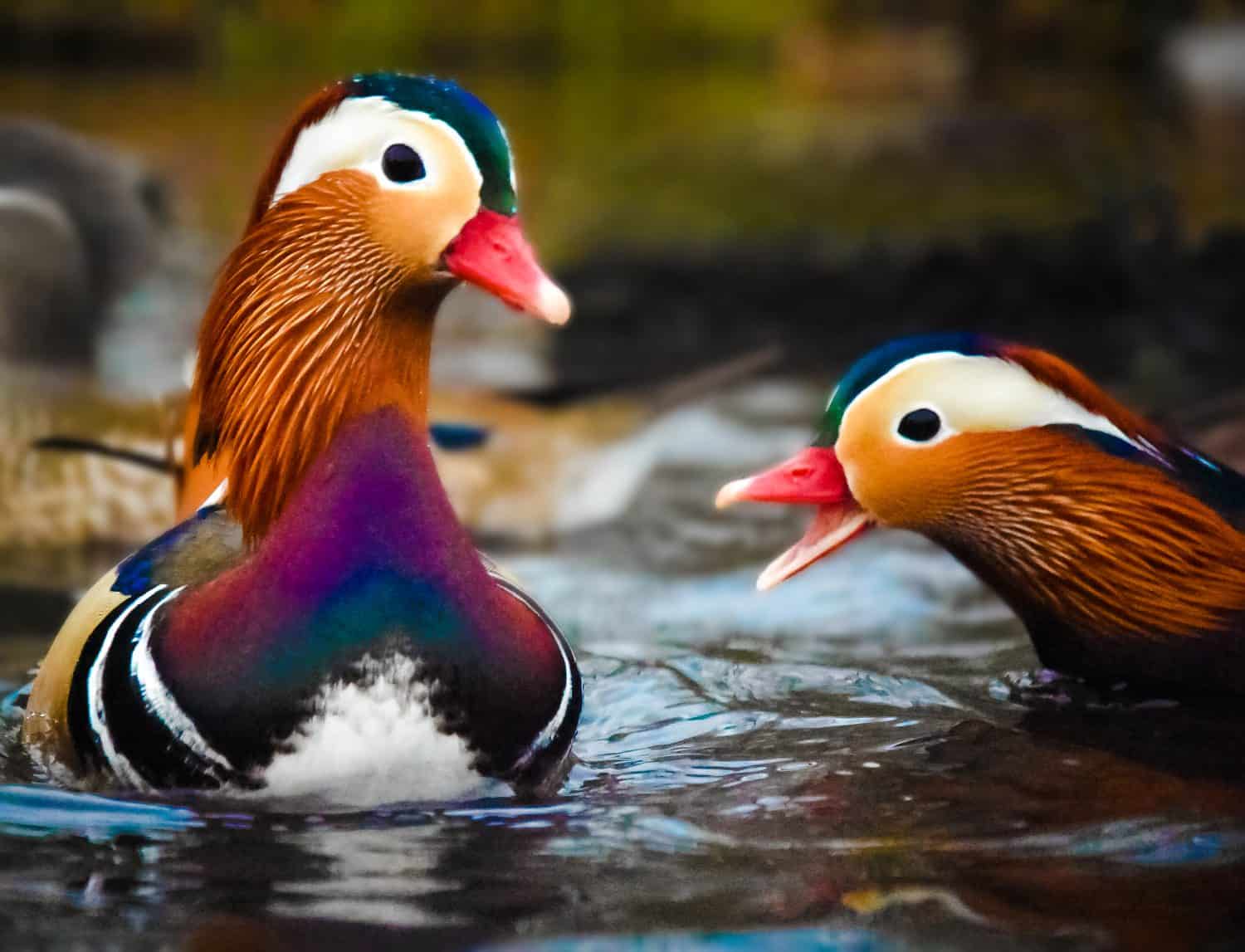
After escaping or being set loose from captivity, small populations of Mandarin ducks can be found in the United States.
©Jolyon Rogers/Shutterstock.com
Mandarin ducks have established small feral populations in the U.S., likely numbering in the hundreds, and have not posed a threat to native species. The parts of the U.S. where Mandarin ducks are most commonly found include:
- New York City
- Long Island, NY
- Western Oregon
- Maryland
- Virginia
- Florida
- Texas
- Colorado
- California
- Georgia
Mandarin duck populations have not exploded in the United States, possibly due to a combination of factors such as limited suitable habitat, competition with native species, and climatic conditions affecting breeding success. Whether this will change in the future is not certain. But for now, the brightly colored birds provide viewing enjoyment for novice and expert bird watchers alike, in the states where the waterfowl have settled.
Why Do Male Mandarin Ducks Have Bright Plumage?
Like some other duck species, male Mandarin ducks have brighter plumage than the females do. This has nothing to do with male camouflage. Instead, it is all about impressing and wooing the females to create a lifelong bond.
As the male Mandarin ducks show off their feathers to female Mandarin ducks, it is those who have the brightest colors and fullest plumage that are seen as the healthiest of the species. These ducks will have their pick of the females, while those whose feathers are not as grand may struggle to get a mate.
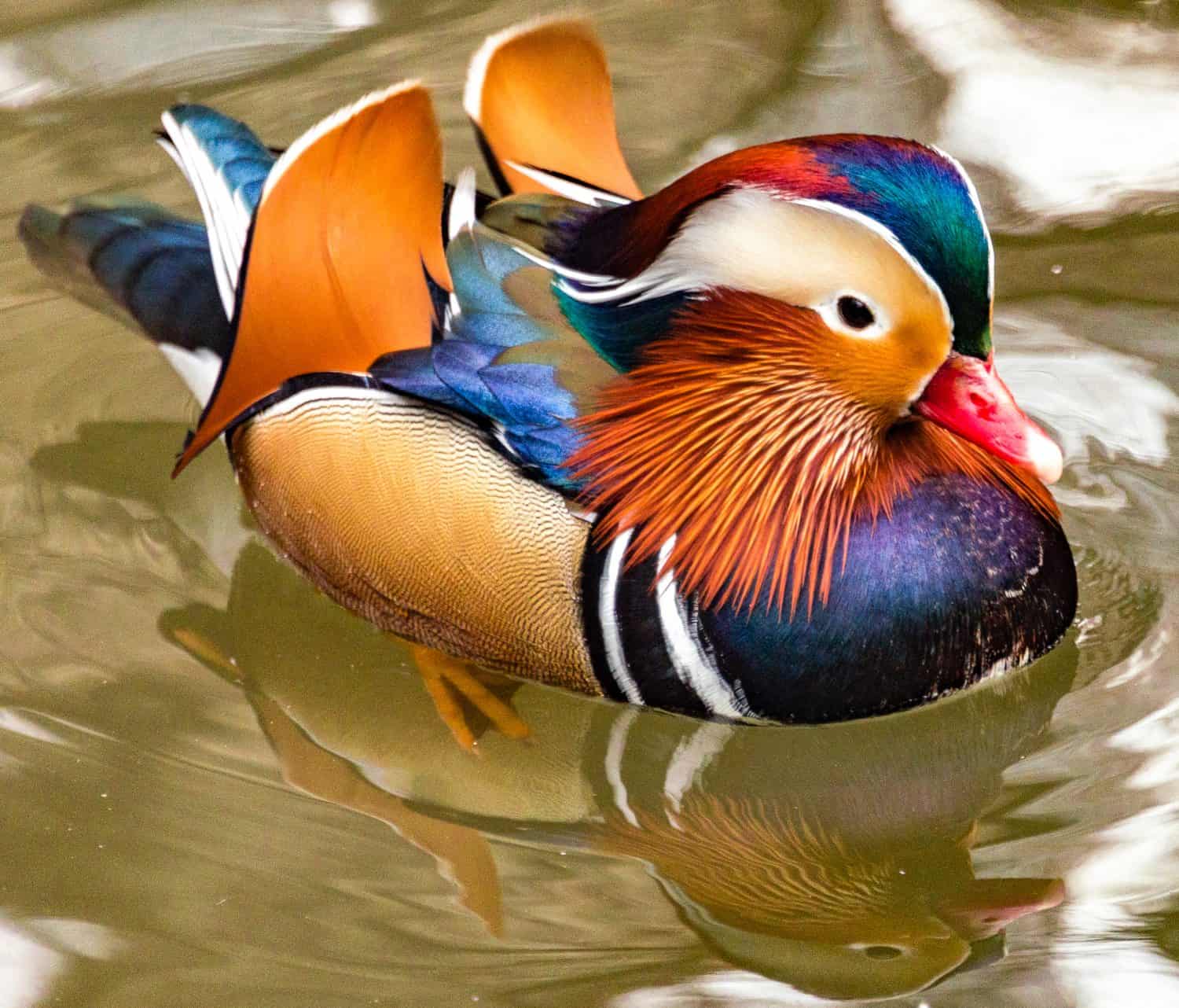
Male Mandarin ducks have bright plumage to attract mates.
©Quincy Floyd/Shutterstock.com
What is interesting about the male’s feathers is that they are not brightly pigmented. Instead, the vibrant colors are due to the way the feathers reflect light because of built-in structures. However, male Mandarin ducks do not keep these stunning colors year-round. Instead, they are only striking specimens during mating season, losing their plumage after it ends.
Male Mandarin Ducks Lose Their Bright Plumage Annually
After the mating season has ended, male Mandarin ducks will begin to lose their flashy plumage. This is a result of molting, which happens each year and leaves the ducks unable to fly for several weeks to a month, making them vulnerable to predators.
Male Mandarin ducks lose their bright colors each year as they molt.
©Chursina Viktoriia/Shutterstock.com
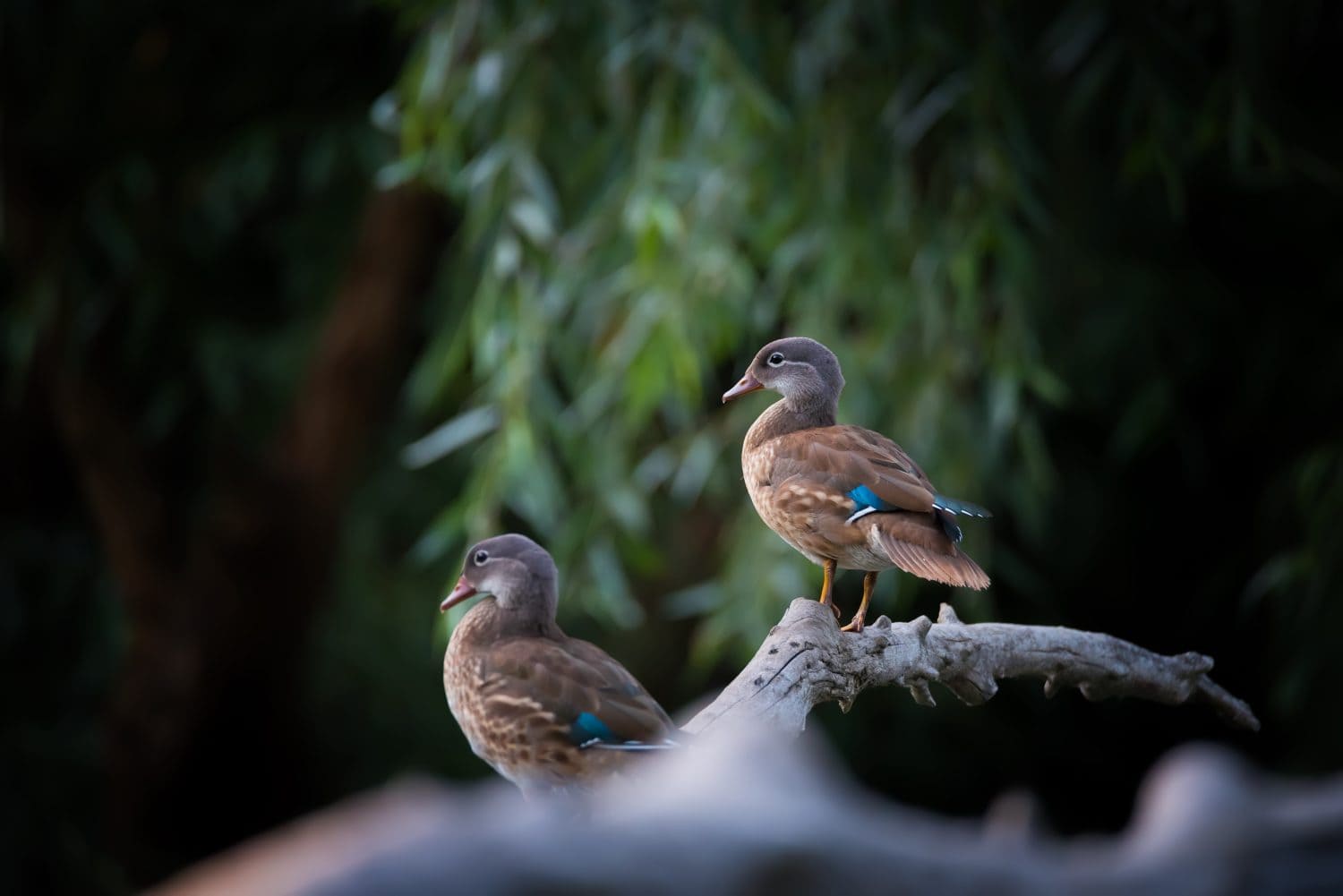
To combat their lack of plumage, male Mandarin ducks grow eclipse plumage. This plumage is temporary but very necessary. The plumage helps the male do the opposite of what showy feathers do to attract mates: it provides camouflage. It is closer in color to the female Mandarin duck’s plumage, making it difficult to tell the two apart in the fall, except that males have fewer feathers than females.
Why Have Mandarin Ducks Become a Symbol of Love and Fidelity?
Mandarin ducks mate for life. Consequently, their commitment to one another has made them a symbol of love and fidelity in China for over 1,400 years, with countries like Japan, Vietnam, and Korea following suit shortly thereafter.
In China, the tale of Yuan Ge and Ying Mei is often told to illustrate commitment and love. According to legend, Yuan Ge was a gardener hired to care for a piece of property owned by Ying Mei’s father. When working on the property, Ying Mei fell into a lotus pond. Not giving it a second thought, Yuan Ge jumped into the pond to save her.
Unfortunately, Yuan Ge’s intentions were misconstrued, and Ying Mei’s father thought Yuan Ge was trying to take advantage of Ying Mei. Consequently, given Ying Mei’s father’s standing as an official, Yuan Ge was ordered to be imprisoned.

Mandarin ducks have been the sign of everlasting love and fidelity for hundreds of years.
©mutinamatyas_photo/Shutterstock.com
Ying Mei visited Yuan Ge, giving him a brightly colored robe to keep him warm. Guards reported this back to Ying Mei’s father, who then ordered that Yuan Ge’s feet be tied to stones. He was then to be tossed into the same lotus pond from which Ying Mei was saved. Distressed by this news, Ying Mei threw herself into the pond after Yuan Ge, and it was believed that both perished.
A few days later, two Mandarin ducks were swimming on the pond. One male, with bright colors like the robe, and one female. It is said that the two transformed themselves into ducks to save themselves and live together.
The tale cemented Mandarin ducks as symbols of fidelity and love, and this symbolism has carried on for generations, with figurines, paintings, and even live ducks given as gifts at weddings to ensure long-lasting love for newlyweds.
Mandarin ducks may not look like real creatures, but looks can be deceiving. The brightly colored males are indeed real and continue to live in the wild, despite threats from habitat loss. They remain symbols of true love and will likely continue to inspire for decades to come.