
Quick Take
- A carriage driver's decision to step out and take a photo set off a chain of events that would reignite a decades-long political battle at City Hall. See the political battle →
- When NYC carriage horses are 'retired,' their next stop is rarely a sanctuary,. Trace the retirement pipeline →
- Major cities worldwide have already banned horse-drawn carriages, yet New York's version of the fight involves a legal loophole that even most animal welfare advocates overlook. Explore bans worldwide →
Within a span of 10 days in 2026, three major events occurred, reigniting protests and debates among animal rights groups advocating for a ban on horse-drawn carriages in New York City.
On the evening of June 9, 2026, Dennis, a 16-year-old carriage horse, collapsed and died near 72nd Street in Central Park while still harnessed to the carriage with two passengers on board. Days later, on June 17, Romanch Mahajan, an 18-year-old tourist from India, died after falling from a runaway horse-drawn carriage in Central Park.
Mahajan’s death sparked renewed protests and debates from animal rights groups pushing for a ban on the horse carriage trade in New York City.
“It’s unnatural,” says Susan Wagner, president and founder of Equine Advocates. “They’re prey animals. Their first instinct is to run and think later. You’re putting them into an area where there are loud noises and crowds, and this is not natural for horses.”
Wagner believes the runaway horse was young and inexperienced, and should not have been left unattended. Before the accident, the carriage driver stepped out of the vehicle to take a photograph of Mahajan and his mother.
Continue reading
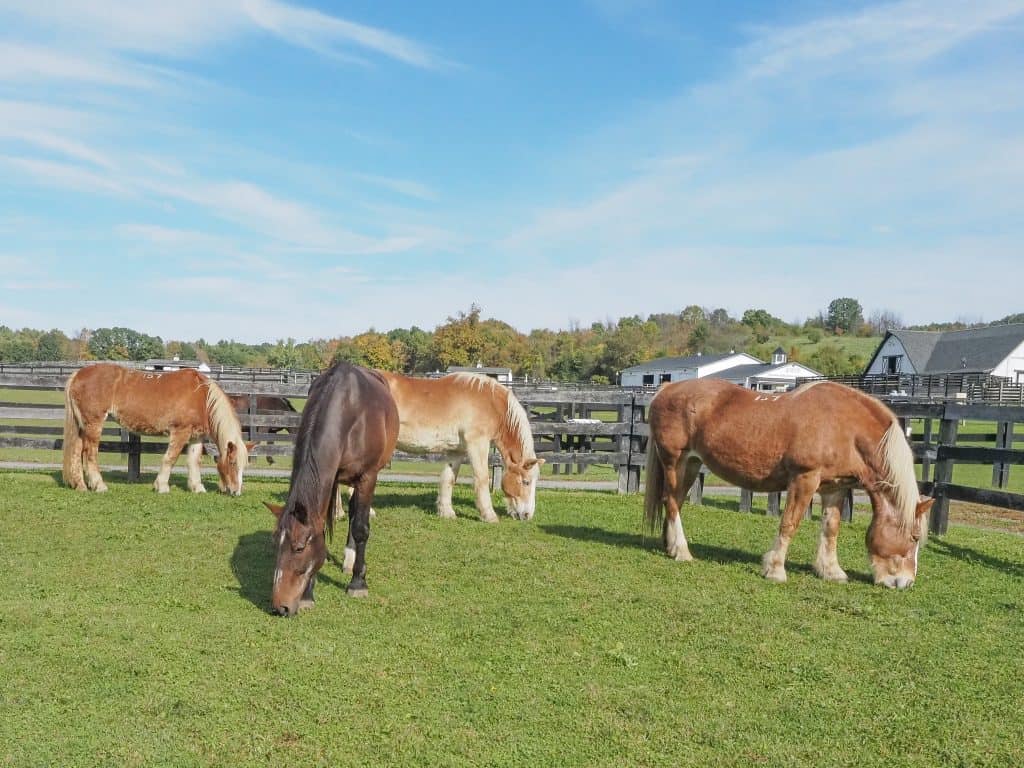
Former Philadelphia carriage horse Mark with his three pasture mates (left to right: Annie, Mark, Melanie and Peggy) at the Equine Advocates property in Chatham, New York.
Carriage Bans
Before Mahajan died, Philadelphia banned the use of horse-drawn carriages in the city on June 11, with the ban taking effect on June 26. Similar bans had already taken place in Chicago; San Antonio, Texas; Salt Lake City, Utah; Las Vegas, Nevada; Biloxi, Mississippi; and Key West and Palm Beach, Florida, as well as other cities internationally, including London, Paris, Brussels, Beijing, Toronto, and Montreal.
“Horses need to be in fields and be allowed to graze,” says Wagner. “Their instinct is to graze, not to live in a renovated garage in Manhattan. New York City is not horse country.”
According to Wagner, “horse country” refers to places like Lexington, Kentucky, and Ocala, Florida—the latter often called the “Horse Capital of the World.” There are even parts of New York State, such as the 173-acre Equine Advocates property in Chatham, which cares for more than 80 rescued horses. On the property, Wagner and her team care for former racehorses, animals from petting zoos, miniature horses and donkeys, a retired rodeo horse named Gerda, and several mules acquired from the Amish. As of mid-2026, the Central Park Conservancy had reported eight horse-related incidents dating back to May 2025.
In the past, Equine Advocates has also rescued carriage horses, including Bobby II Freedom, a former New York City carriage horse who was rescued from a kill pen at New Holland Sales Stables in Pennsylvania in 2010. When he arrived at Equine Advocates, he reportedly had serious injuries resulting from seven years of work as a carriage horse. Bobby died in 2022 at the age of 32, which is comparable to a person in their 90s, says Wagner.
“Had he not had those injuries, he might have lived even longer, because he wasn’t sick,” says Wagner, “but he succumbed to the injuries that we spent 12 years trying to manage for him.”
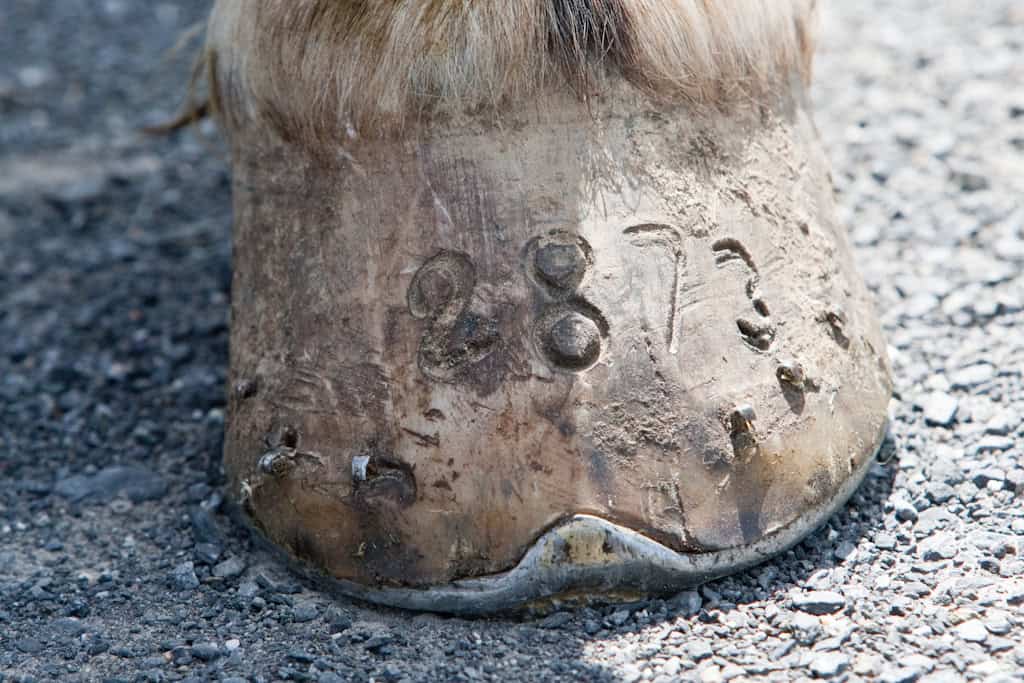
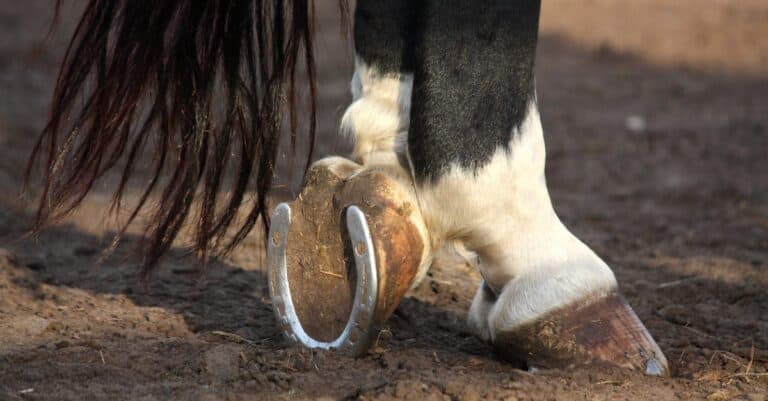
Former New York City carriage horse Bobby’s left front hoof had the number 2873 carved into it; left front hoof numbers serve as the license plates for NYC carriage horses.
Mark, a former carriage horse from Philadelphia, reminds Wagner of Bobby. Also a bay draft cross—a mixed-breed horse typically distinguished by a black mane, tail, and lower legs, and a reddish-brown body—Mark, now approximately 28 years old, arrived at the property in 2020 with injuries similar to Bobby’s. Every six to eight weeks, Mark is fitted with custom shoes made by an equine podiatrist. Although Mark’s physical condition is degenerative, he spends his days in the pasture with his three companions, according to Wagner.
Unfortunately, most city carriage horses that are ‘retired’ are not relocated to sanctuaries to live out their remaining years, like Bobby, Mark, and some of the other animals at Equine Advocates. Often, they are sold as working horses to the Amish, primarily in Lancaster, Pennsylvania, and Holmes County, Ohio.
New York City is not a horse country.
Susan Wagner, founder and president, Equine Advocates
From Streets to Slaughter
Though the slaughter of horses for human or animal (pet food, zoo animal feed) consumption is banned in New York State, former carriage animals are often given to the Amish across state lines.
On the East Coast, most end up at two of the larger auction houses: the New Holland Sales Stables in Pennsylvania and Sugarcreek Stockyard in Ohio. Globally, China, Kazakhstan, Mexico, and Canada are some of the largest processors and suppliers of horse meat to overseas markets, including Europe.
“Slaughter is slaughter,” says Wagner. “To the horse, it doesn’t matter what they’re being slaughtered for—whether it’s for human consumption, pet consumption, or anything else—so we have to get rid of that loophole. A federal bill has to prohibit the slaughter of horses for consumption, of any kind, not just human, and that is our biggest mission right now.”
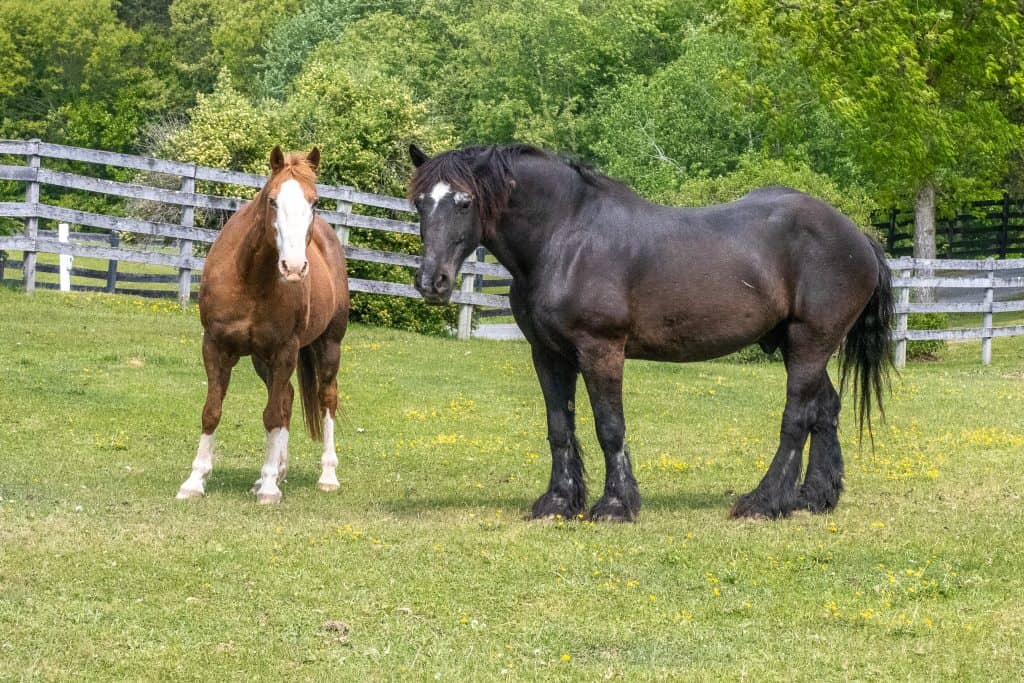
Former NYC carriage horse Jack (right) now resides in a pasture at Equine Advocates with his best friend, Nemo, a former camp horse.
While there is no federal ban on horse slaughter in the U.S., Congress has blocked funding for USDA inspections of horse slaughter facilities since 2007, effectively preventing legal horse slaughter for human consumption. However, horses can still be exported for slaughter abroad. Wagner is advocating for laws that would ban the slaughter of horses for any purpose, including animal products, not just human consumption.
On July 15, less than a month after both the incident involving Ryder—who was retired to an upstate farm but died several months later—and the death of Mahajan, Wagner spoke before the New York City Council in support of Romanch’s Law (Intro 943), previously known as Ryder’s Law, which would ban horse-drawn carriages in the city by June 1, 2028, and prohibit the sale or transfer of these working horses for slaughter.
Outside of New York City, wild horses also face threats under the Burns Amendment of 2004, with roundups of wild mustangs and burros by the Bureau of Land Management in Colorado, Idaho, Utah, and Nevada.
In 2004, the Burns Amendment privatized wild horses and burros and allowed the Bureau of Land Management to manage excess animals on public lands. In 2019, the Trump administration also introduced the Path Forward plan to further reduce the population of wild mustangs and burros on public lands, which Wagner says had the support of some animal welfare groups in the U.S.
New Beginnings
Wagner still remembers falling in love with Tornado on the classic TV series Zorro as a kid, then riding her first horse at the Woodlawn Riding Academy in Vancouver, British Columbia, when she was 5. Since founding Equine Advocates at her apartment in Queens, NY, in 1996, after rescuing her first horse, Gandalf, from slaughter three years earlier, the welfare of horses has remained her life purpose.
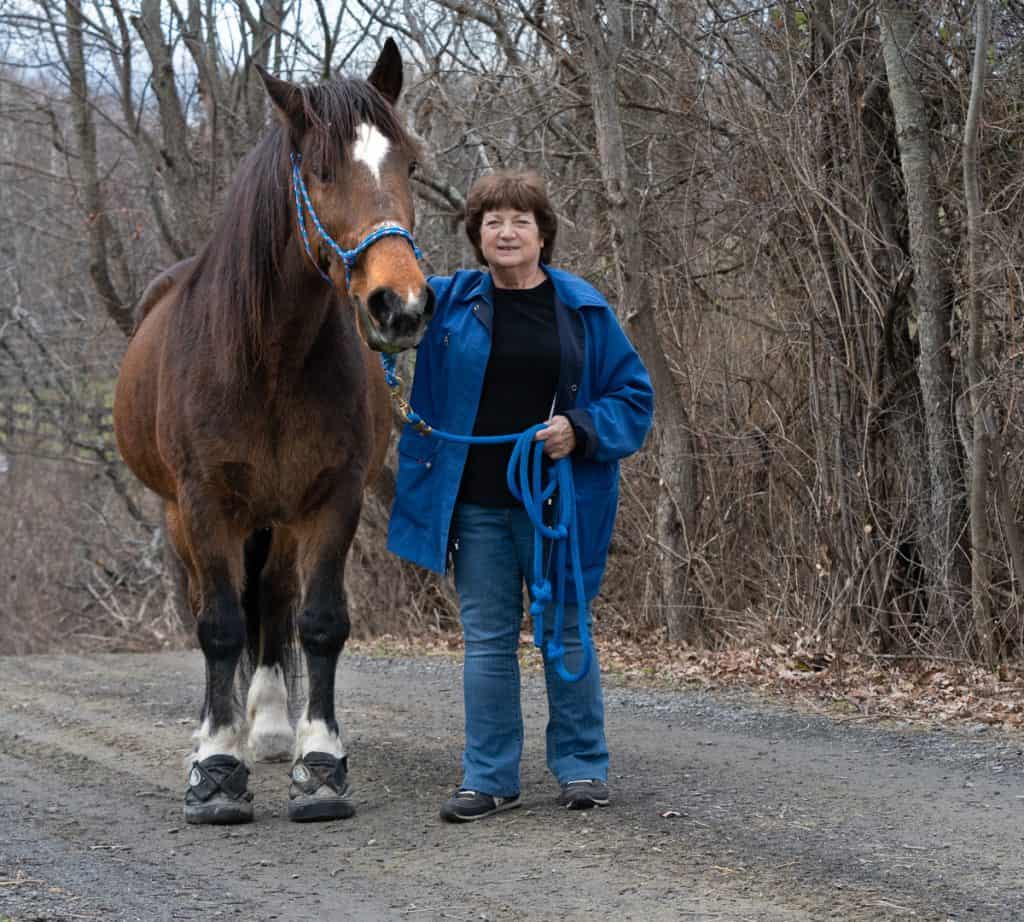
Former New York City carriage horse Bobby with Equine Advocates founder Susan Wagner in 2021, a year before he died at age 32.
Now, there’s more work to be done, including improving law enforcement for animal cruelty in New York City. By 2014, the ASPCA had stopped deploying police-like agents who made arrests for animal cruelty incidents, leaving enforcement to the New York City Police Department.
“This city is not a place for horses,” says Wagner.
She also hopes there’s movement on Romanch’s Law when voting resumes in October, despite opposition, though no specific date has been set as of press time.
The Transport Workers Union Local 100 continues to oppose the ban on horse-drawn carriages in New York City, arguing that the trade provides vital jobs for immigrants and insisting that horses are treated humanely.
During the initial hearing in July, NYC Mayor Zohran Mamdani supported the intention of the bill to help carriage drivers find work once horse carriages are phased out, but said that the city council needs a sufficient plan to help displaced drivers.