
Quick Take
- Bird-safe architecture involves making glass look solid, ultimately cutting down on bird strikes; a 2022 study found 95% fewer collisions on a Canadian building after Feather Friendly markers.
- Cities like NYC, SF, and Chicago require bird-friendly glazing and lights controls, cutting fatalities during peak migrations.
- Toronto pioneered Bird-Friendly Development Guidelines in 2007, the first citywide strategy in North America.
City birds might just have a harder life compared to country birds, and there’s one notorious reason why. In North America, scientists estimate that hundreds of millions to more than a billion birds die every year after hitting glass or windows, duped by reflections and the otherwise transparent material we utilize everywhere.
Agencies like the U.S. Fish and Wildlife Service and U.S. Geological Survey now treat building collisions as one of the leading human causes of bird mortality. However, specific solutions are being implemented to help our flying friends. Window strikes are preventable, without sacrificing our window views.
Decades of research show that simple design changes can cut glass collisions by a significant amount, saving millions of birds in the process. In fact, a growing number of cities, especially in North America, are starting to use such solutions and design standards, placing bird-safe architecture where we need it most.
Here’s how bird-safe buildings are being constructed and the cities advocating for them most of all.
What Does Bird-Safe Architecture Actually Mean?
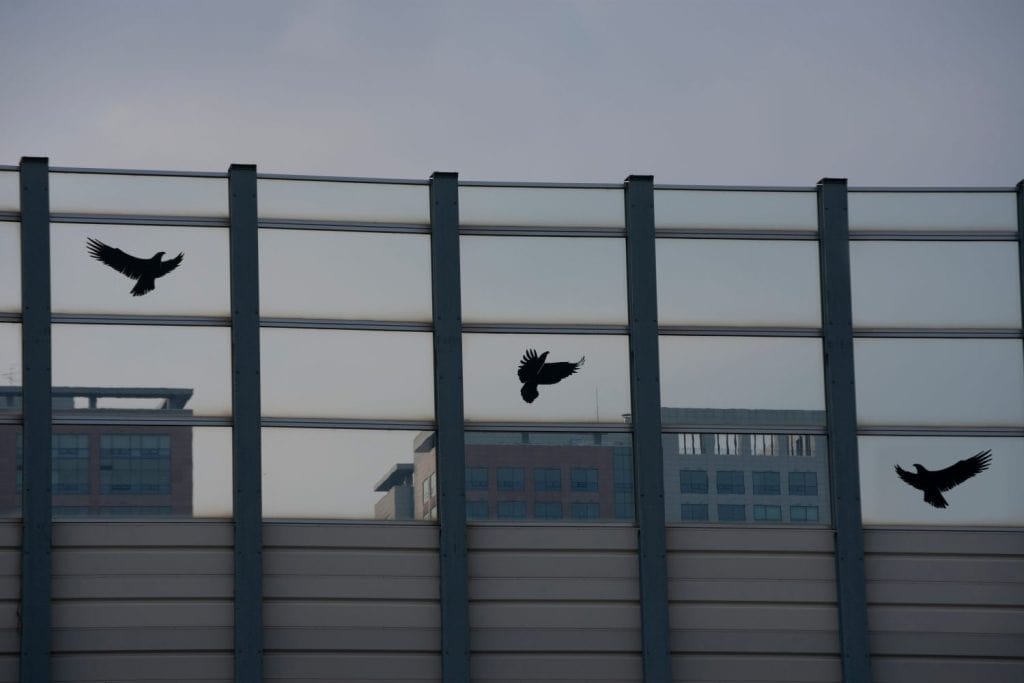
Anti-collision stickers are one of the main ways cities can prevent bird strikes, though other architectural details are more popular.
©Ki young/Shutterstock.com
Bird-safe building design or architecture is fairly straightforward when you take into account that birds don’t understand glass. To them, transparent windows look like open air or reflect the sky, leading them to assume there’s simply more sky ahead. Constructing a bird-safe building, especially in major cities, means our glass can’t look entirely see-through.
The U.S. Fish and Wildlife Service’s best-practices guide on reducing collisions explains that reflectivity and transparency in windows need to be adjusted in the first 40–60 feet above the ground, where most birds fly. The American Bird Conservancy’s Bird-Friendly Building Design guide shows that the most effective solutions all do the same thing: make glass look solid, even in the most subtle ways.
How to Make Windows More Bird-Safe

Bird-friendly decals have a special coating that reflects ultraviolet sunlight, which help prevent wild birds from accidentally striking windows.
©JDzacovsky/Shutterstock.com
There are a number of tips and tricks that have proven successful over the years when it comes to reducing window strikes. These are the same tricks being utilized in cities across the U.S. Some of those tips include:
- Patterns on the glass: dots, stripes, or other markers on the outside of the window, spaced close enough that birds won’t try to fly between them. Many city codes use the “2×4” or “2×2” rule, which means no gaps larger than 2 inches tall by 4 inches wide, or 2 by 2 inches to keep birds safe.
- Bird-friendly glass products: glass manufactured with ceramic, acid-etched patterns, or UV-reflective coatings that birds can see clearly but people barely notice.
- Screens, awnings, and sunshades: three-dimensional elements placed in front of glass to break up reflections and create more structure or shadow.
- Smarter lighting: dim decorative and interior lights during peak migration, especially in the tallest, most reflective buildings. Reducing night lighting can be one of the lowest-cost, highest-impact steps for migratory birds in particular.
These solutions are a boon when you consider just how simple and effective they have proven to be. A 2022 study of a large Canadian building using Feather Friendly dot markers found a 95% reduction in collisions after treatment. And this isn’t the only success story out there. There are many more, especially when entire cities put forth an effort to save millions of bird lives.
Here are the specific cities putting these principles and innovations to work:
Toronto

Not only was Toronto among the first to encourage bird-safe city solutions, but it also maintains and builds upon these solutions frequently.
©J2A/Shutterstock.com
Toronto is widely seen as the first innovator in bird-safe cities. The Fatal Light Awareness Program (FLAP Canada) spent multiple years documenting collision victims downtown and advocating for change. In response, Toronto released its Bird-Friendly Development Guidelines in 2007, which was the first council-adopted, citywide bird-collision strategy in North America.
Toronto’s approach was so successful because of its early implementation and these tips:
- Patterned glass in the first 40–50 feet above the ground, where most collisions occur.
- Treatments on glass specifically near green roofs, rooftop gardens, and interior plants that look like habitats to birds.
- A strong push for night lighting reduction, particularly during high migration months.
New York City
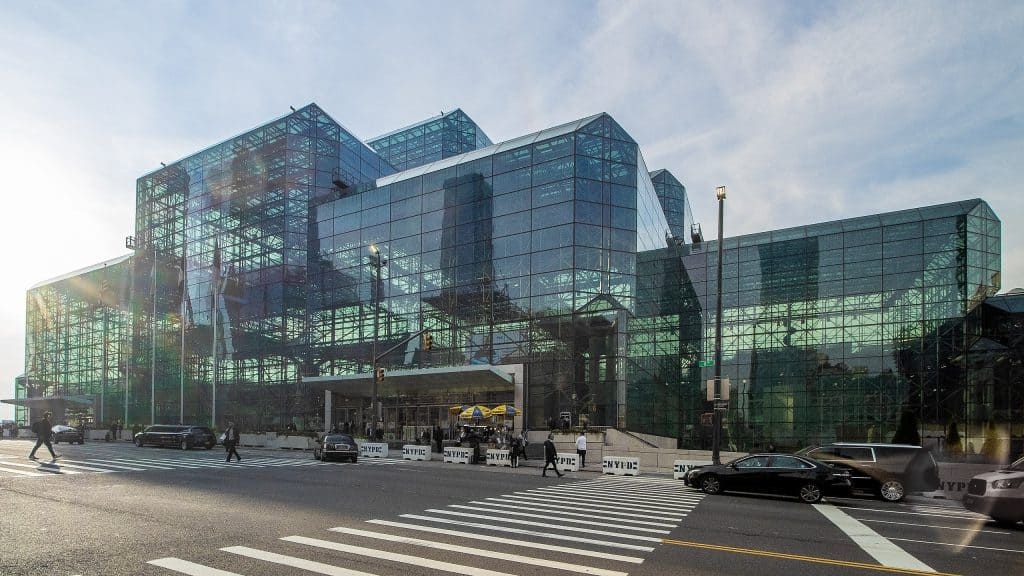
The Javits Center is one of Manhattan’s most impressive changes contributing to bird safety buildings.
©Ajay Suresh from New York, NY, USA, CC BY 2.0 – Original / License
For years, New York’s glass towers and skyscrapers were collision hotspots given their prevalence along the Atlantic Flyway. That began to change with Local Law 15, enacted in 2020, which requires bird-friendly materials on most new buildings and major alterations starting in 2021.
Local Law 15 requires:
- Bird-friendly materials on at least 90% of facades up to 75 feet.
- Bird-safe treatment around all green roofs and terraces (up to 12 feet above plantings).
- Bird-friendly railings, glass corners, and other high-risk elements at any height.
The Jacob K. Javits Convention Center was once one of the city’s deadliest buildings for birds, but that changed in 2013. The center ultimately replaced its mirror-like exterior with fritted or dotted glass panels and added a 6.75-acre green roof. After the renovation, research found about a 90% drop in bird deaths, while also creating ample habitat for nesting birds and native plants.
New York also participates in various Lights Out collaborations, dimming decorative lighting during peak migration nights. By combining material standards with lighting reforms, cities like NYC significantly reduce fatalities during large, seasonal migrations.
San Francisco

Like other cities, San Francisco has implemented city standards that must be adhered to, standards that save birds.
©AlbertPego/iStock via Getty Images
San Francisco became the first major U.S. city to adopt comprehensive bird-safe building standards back in 2011. The city’s Standards for Bird-Safe Buildings define a “bird collision zone” from ground level up to 60 feet and require bird-safe treatments on new construction and replacement exteriors in that height range.
San Francisco’s other bird-friendly initiatives include:
- Location-based requirements: buildings with significant glazing must treat at least 90% of glass within the collision zone.
- Feature-based requirements: 100% treatment for high-risk features like glass corners, skywalks, transparent railings, and rooftop vegetation edges.
- Pattern rules: glass must use visible patterns that meet the 2×4 spacing rule with patterns applied to the outermost surface for maximum visibility.
San Francisco’s planning department notes that “the majority of these deaths are foreseeable and avoidable” through design. Millions of birds could be saved across North America if more cities took the time and effort to implement these basic solutions.
Minneapolis and the Twin Cities
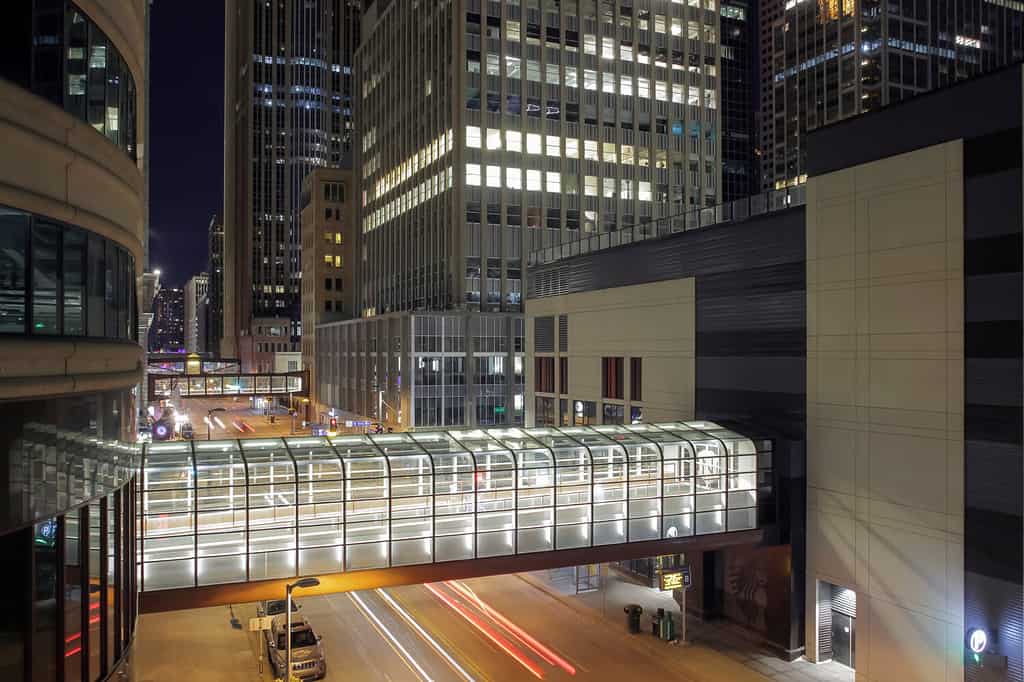
Downtown Minneapolis has multiple skyways, bridges that were once terribly dangerous for birds.
©Sam Wagner/Shutterstock.com
The Twin Cities sit in the heart of the Mississippi Flyway, one of North America’s busiest migration routes. Minneapolis took a notable bird-benefitting step in 2016 by passing a bird-safe glass ordinance for new skyways in their downtown zones. City code now requires that at least 85% of glazing on skyway sidewalls meet the bird-safe definition implemented in other cities.
In addition, Twin Cities bird advocates are actively pushing for broader ordinances modeled on San Francisco and New York, aiming for all new glass-heavy construction to include bird-safe glazing and smarter lighting, with some recent progress at the state and local levels.
Washington, D.C.
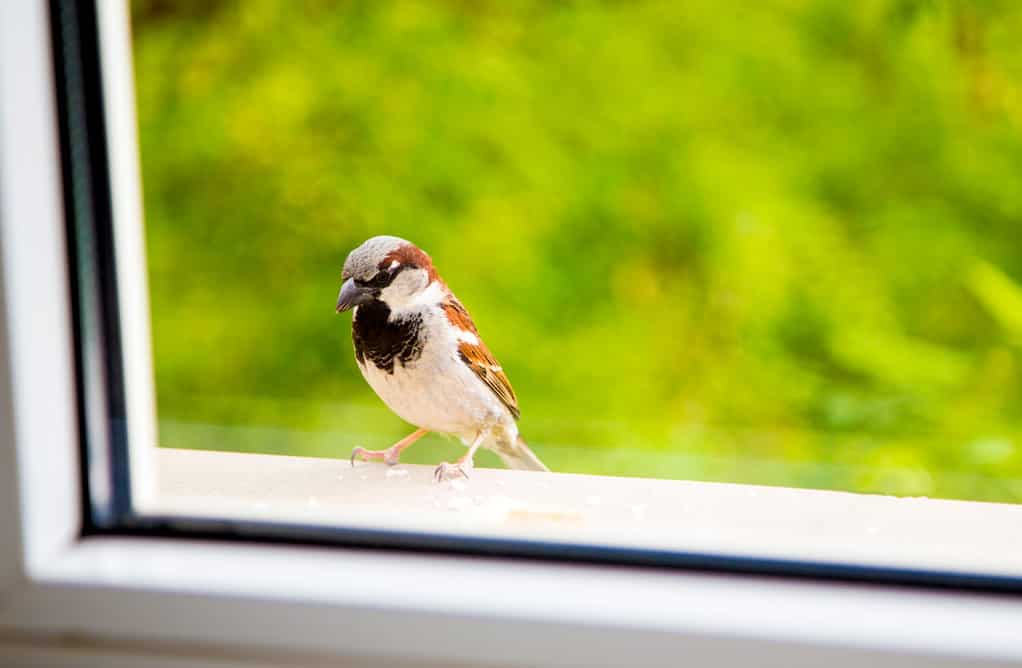
Unlike other cities, D.C. has funds set aside to help contractors build bird-safe buildings.
©Dima Oana Gabriela/Shutterstock.com
D.C. has emerged as a leader in bird conservation with the Migratory Local Wildlife Protection Act of 2022. The law requires that building permits for most new commercial, multi-unit residential, institutional, and District-owned buildings use bird-friendly materials up to 100 feet above grade. The city also created a Bird-Friendly Buildings Fund to help building owners comply.
D.C.’s law is one of the most comprehensive in the U.S., comparable to or stricter than many local ordinances when it comes to height thresholds and percentage of glass that must be bird-friendly. As of late 2025, no published long-term collision data exists for D.C. and implementation has faced some delays. However, in the near future, we will know more about the difference D.C. is making.
Portland, Oregon

While beautiful and a great city for wildlife, Portland wasn’t always a safe city for birds to fly through.
©iStock.com/Sean Pavone
Like the Twin Cities, Portland sits on its own Flyway, and its glassy downtown has historically been risky for migrants. However, this PNW city became a pilot bird city as part of the US Fish and Wildlife Service Urban Migratory Bird Conservation Treaty back in 2003, so it’s no stranger to helping birds. It passed a measure in 2013 to encourage bird-friendly building design among city architecture in particular.
Besides these efforts, the city adopted “Bird Safe Exterior Glazing” standards for its Central City in 2020, standards that are similar to other cities on this list. To make compliance easier, Portland maintains an official Bird-Safe Windows List, which specifies glazing treatments that meet the city’s criteria. The city also offers resources that give architects practical, cost-effective ways to integrate bird-safe solutions.
Chicago
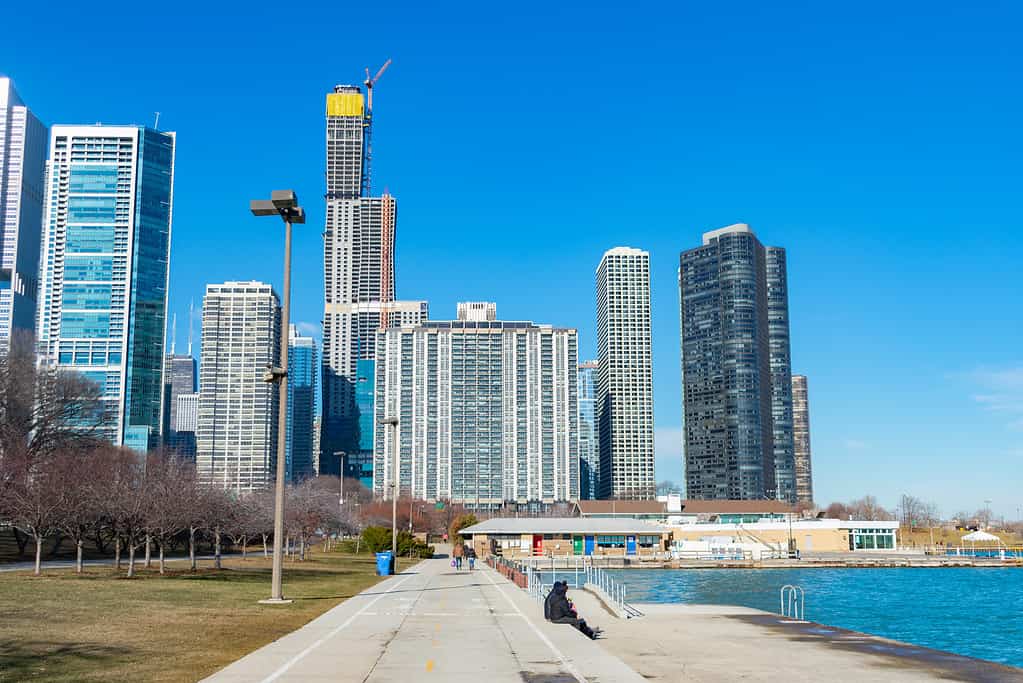
While the city remains potentially risky for migrating birds, Chicago is now doing its part to make its buildings more bird-safe.
©James Andrews/iStock via Getty Images
Chicago is known as one of the most dangerous U.S. cities for migratory birds, thanks to its location on the Lake Michigan shoreline and its city skyline. In fact, a 2023 mass-collision event recorded roughly 1,000 birds hitting a single lakeside building in one night, drawing international attention.
Because of this event, Chicago is now a test case for how quickly design changes can help. The McCormick Place Convention Center, once infamous for collisions, recently installed bird-safe glass in the summer of 2024. Since then, collisions have fallen by about 95%, which is almost identical to the Javits Center’s experience in NYC.
The city also has a long-running Lights Out Chicago program and updated its Sustainable Development Policy in 2024 to encourage bird-friendly materials, although advocates are still pressing for a legally binding ordinance as one does not exist yet. We’ll see what other changes Chicago implements, as its skyline is particularly deadly and there’s plenty of research to back up bird-safe building.
It’s Time to Design Cities Where Birds Are Safe
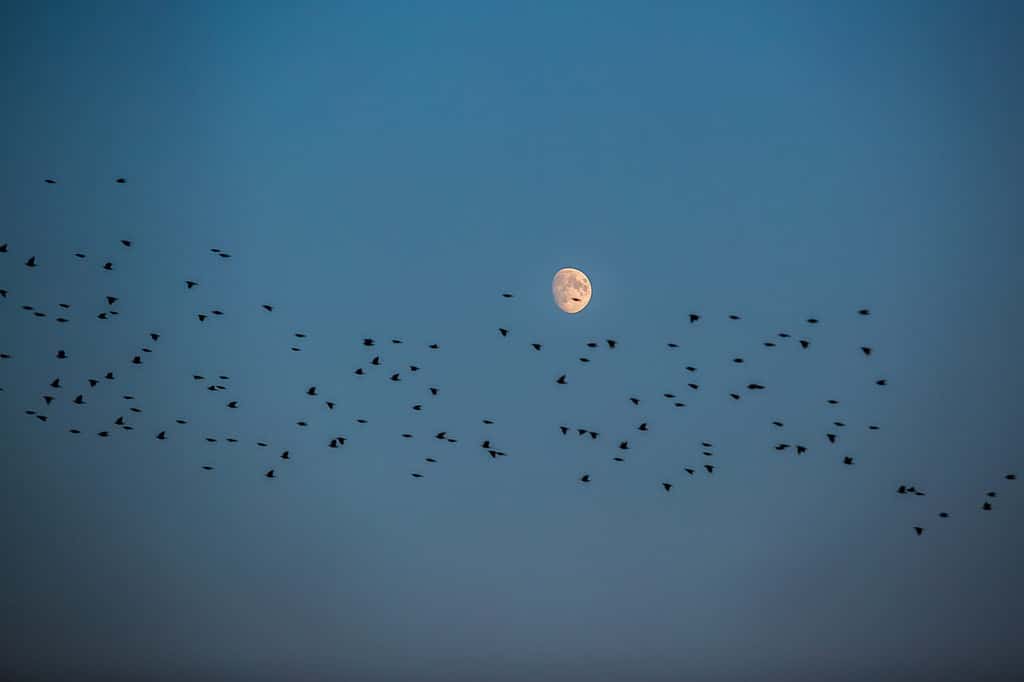
Birds pass through our cities every single day and deserve safe skies to fly in.
©Lioneska/Shutterstock.com
While it may not seem vital or pressing, bird-window collisions are actually part of a larger crisis: North America has lost an estimated 3 billion birds since 1970, and over 100 U.S. bird species have lost at least half their populations, making them in need of urgent conservation action. The cities determined to help are making a difference and doing so very easily.
As more cities follow Toronto, New York, San Francisco, D.C., Minneapolis, Portland, and Chicago’s lead, the hope is that window strikes become an occasional tragedy rather than a routine event taking millions of lives. Which cities will follow suit, and what will the data reveal? Hopefully, more birds will feel safer flying through the skies they call home, even in our densest urban areas.