
Quick Take
- Equine veterinarians focus on a horse’s total health and wellness.
- Farriers are experts in horse foot and hoof care.
- These professionals work together to solve many horse foot ailments.
- Horse owners need care from both to ensure the horses’ well-being.
If you’ve ever dreamed of owning a horse of your own or are about to get one, there are two people who will become very important in your life. One is an equine veterinarian, and the other is a farrier. The equine vet focuses on overall animal health, while the farrier is a specialist who cares exclusively for a horse’s most important body part: its feet. The two jobs are very different, but both are equally valuable in keeping your horse in tiptop shape.
What Does an Equine Veterinarian Do?
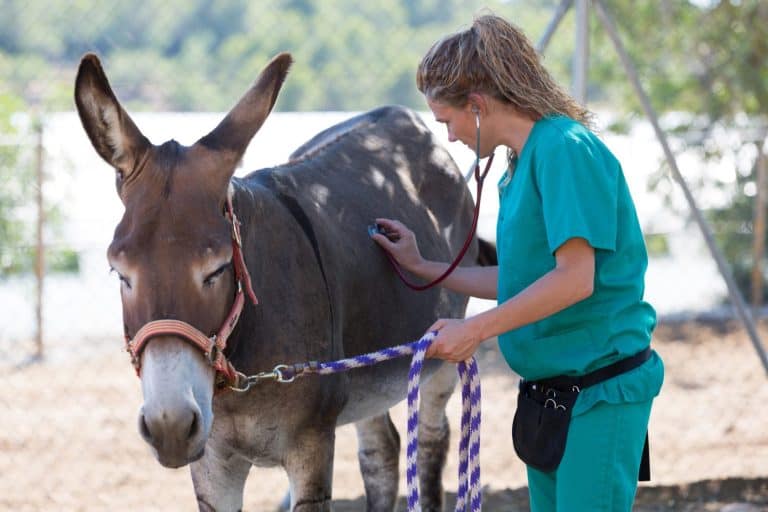
Equine veterinarians are a subset of regular veterinarians. Just like other vets, they focus on providing care for all aspects of an animal’s health. However, since their patients weigh 1,000 pounds or more, equine vets don’t typically have offices where they see their patients. Instead, equine vets are usually mobile, operating from a truck set up like a mini-hospital. They travel from barn to barn to visit their patients instead.
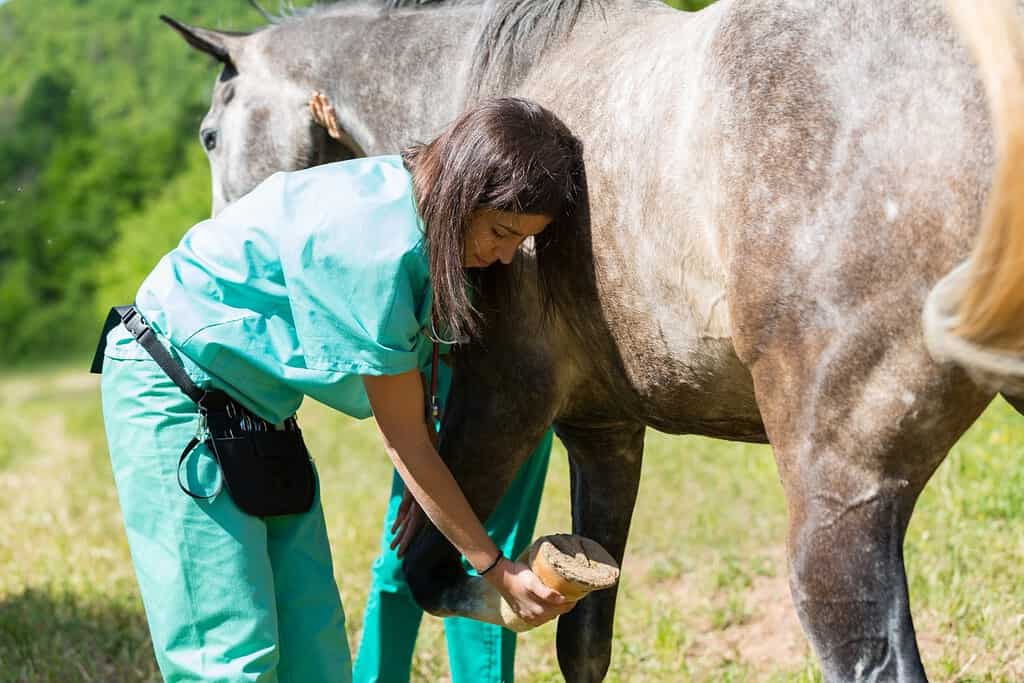
Equine vets visit their patients where the patients live rather than in a veterinary office.
©135pixels/Shutterstock.com
No two days are the same for an equine vet. One day, they might be administering vaccines or filing down a horse’s teeth (preventative care), and the next, they may be performing ultrasounds or digital x-rays to diagnose one of the most common horse ailments: lameness in a leg. Then there are the days when equine vets are like ER doctors, providing 24/7 care for emergency issues like colic or lacerations.
Equine veterinarians also manage horse pregnancies. This includes helping mares get pregnant via artificial insemination, monitoring the foals’ in-utero growth, and helping with difficult births.
Unlike their small animal veterinarian counterparts, equine vets also need specialized knowledge in areas such as hoof anatomy and the unique digestive system of horses. Equine vets also have to be comfortable working with very large animals that are prone to being spooked easily.
How to Become an Equine Veterinarian
If you want to become an equine veterinarian, it is going to take eight years of study after graduating high school. First, you need to obtain a four-year undergraduate college degree, ideally in a medically related field of study, such as biology or animal science.
Once you have that degree, you must attend a specialized four-year medical school program devoted to veterinary medicine. You will spend three years completing classroom and lab work focusing on all species (dogs, cats, cows, horses, etc.). In your fourth year, you’ll do clinical rotations at a teaching hospital that focuses on equines. Upon graduation, you will have your Doctor of Veterinary Medicine (DVM) degree.
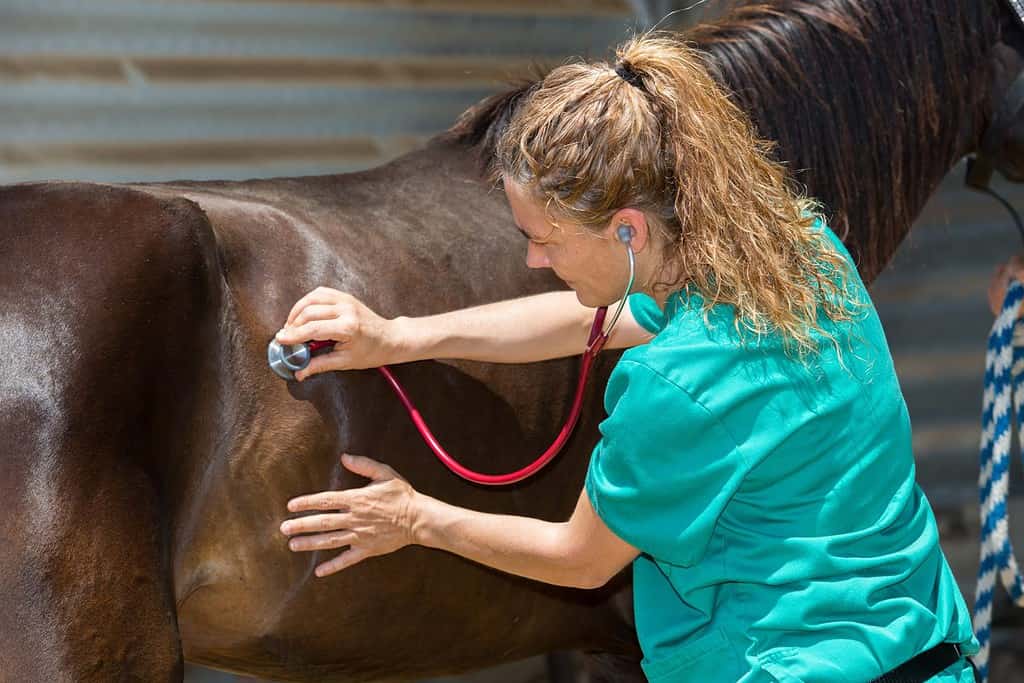
To become an equine vet, you’ll need to complete at least eight years of college.
©135pixels/Shutterstock.com
If you want to specialize in a particular aspect of equine care, such as ophthalmology or surgery, you’ll need to complete an optional three-year residency and pass additional board exams. Attending veterinary school is very similar to attending regular medical school in terms of the years of schooling and commitment. The only difference is who your patients will be.
Once you’ve finished your formal schooling, you then need to pass the North American Veterinary Licensing Examination (NAVLE), a 360-question exam that covers all aspects of animal medicine. After passing the NAVLE, you must apply for a license to practice in the state where you want to work.
Finally, if you plan to sign health certificates for horses traveling across state lines or internationally, you need to get an extra accreditation from the U.S. Department of Agriculture. This is a fairly common thing for equine veterinarians to do, especially in states with large horse populations, like Kentucky, California, or New York.
How Much Do Equine Veterinarians Get Paid?
According to 2026 data from The Equine Practice website, new graduates just starting out in practice can expect to earn between $80,000 and $90,000 per year. Associates with four to ten years of experience usually have annual salaries of between $110,000 and $120,000. For practice owners, annual salaries are higher. Sole practice owners earn, on average, $166,250, while multi-owner practices earn $285,733 annually.
What Does a Farrier Do?
Think of a farrier as a specialist in equine foot care, particularly the horse’s hooves. Hooves are like human fingernails, always growing. In fact, a horse hoof grows about one-quarter to nearly one-half inch each month. If hooves are not regularly trimmed and cared for, injuries and infections can develop in the foot and leg.
This is why regular farrier visits are essential. They should be on a regular schedule to check in on your horse every four to eight weeks. During each visit, the farrier will do an assessment of your horse, watching how it walks to see if there are any issues. The farrier will look at how each foot hits the ground and note if the horse is limping or if its gait is irregular.
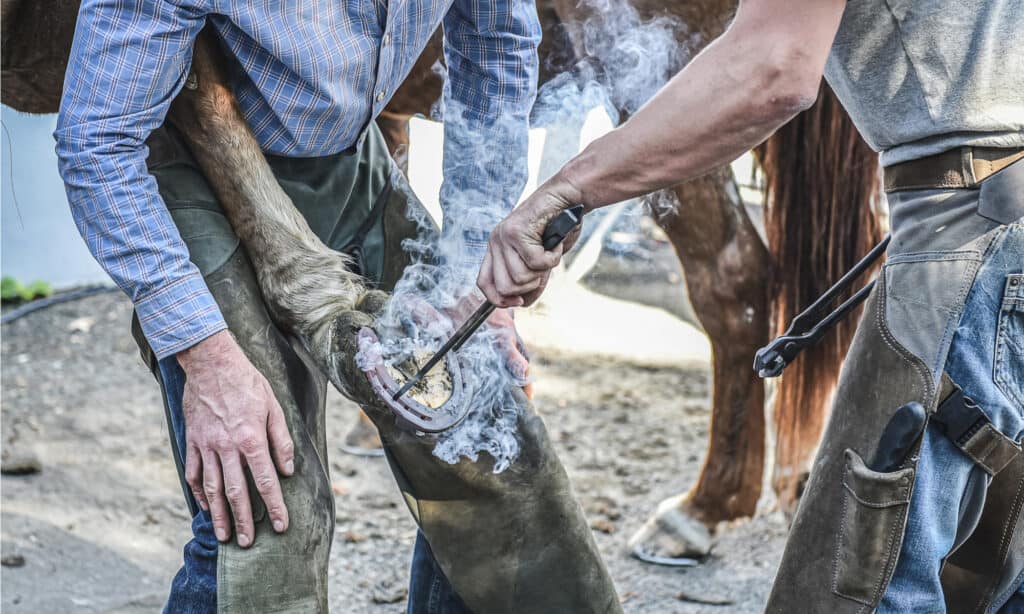
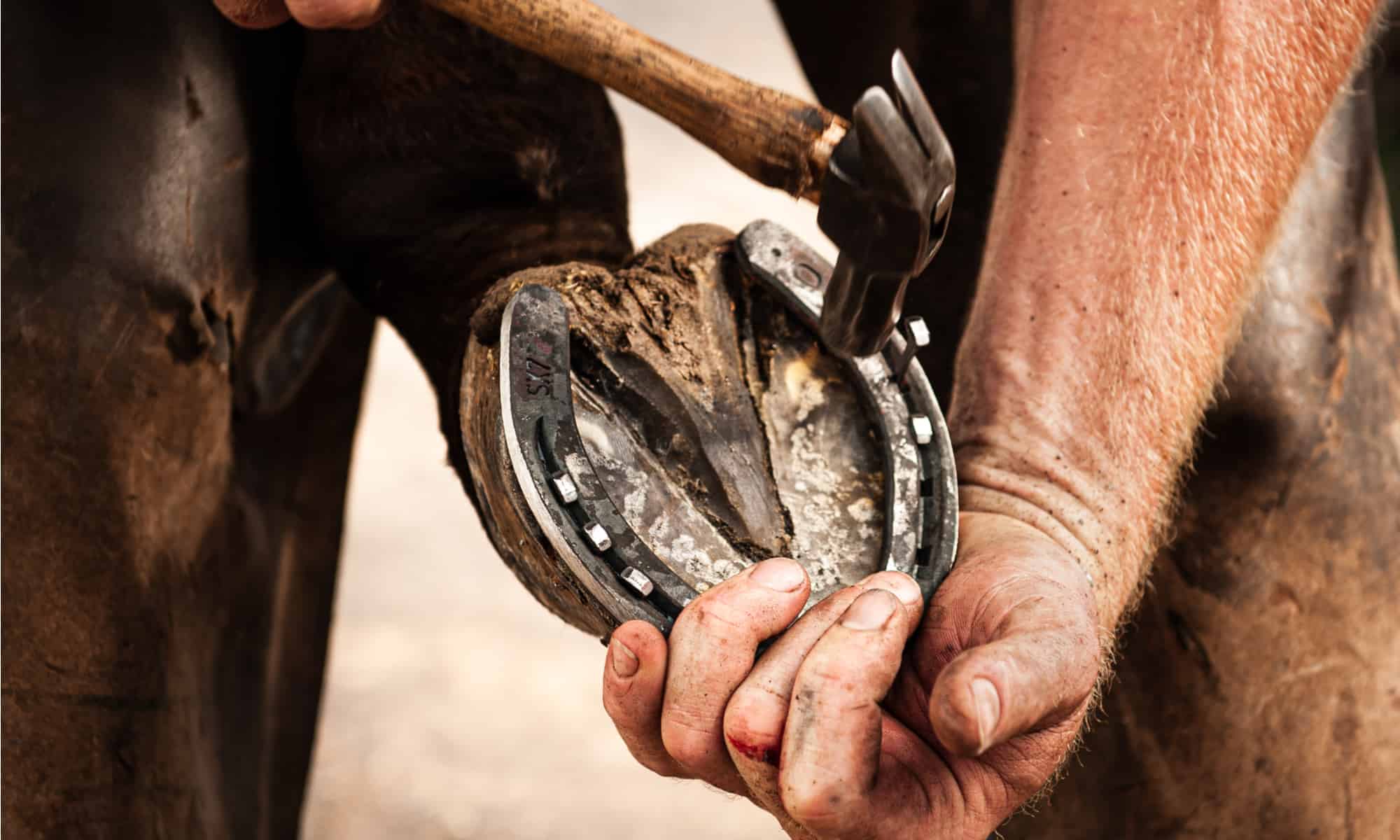
One job of a farrier is putting shoes on a horse.
©Eugenie Photography/Shutterstock.com
If your horse wears shoes, the farrier will remove them to perform a horse pedicure. The farrier will clean and trim each hoof using specialized tools to trim away the hoof wall and clean the underside of the hoof. They will then use a rasp to even out all four hooves. This is necessary to ensure the horse’s weight is distributed equally among all four legs. Uneven hooves cause an imbalance, which can lead to joint and tendon problems, even arthritis.
Finally, the farrier will put new shoes on the horse. This is the finishing touch for horses that wear shoes, though not all horses require them. It comes down to the kind of work the horse will be doing, the natural condition of its hooves, and other factors. Whether your horse wears shoes or not, regular farrier visits are an essential part of keeping your horse healthy.
How to Become a Farrier
In the United States, the path to becoming a farrier usually starts at a farrier school. These programs usually last anywhere from eight weeks to two years, and cover topics like anatomy and physiology, forging (yes, farriers need to know how to use an anvil and fire!), and horsemanship.
Once formal schooling is finished, the farrier will then do an apprenticeship with a skilled master farrier. The apprenticeship usually lasts one to three years. This is where the school lessons get put into action every single day.

Farriers must know how to forge horseshoes using an anvil and fire.
©Maximillian cabinet/Shutterstock.com
Most new farriers begin by pulling old shoes and rasping the hooves. The more experienced farrier takes care of the trimming and new shoe fitting. As a new farrier’s skills increase, they gradually move toward completing all the tasks. In the United States, the American Farrier’s Association (AFA) offers certification levels that show the depth of knowledge a farrier has.
How Much Do Farriers Get Paid?
Most farriers are self-employed business owners. According to the American Farriers Journal 2024-2025 salary survey, the average gross annual income for a full-time farrier is $115,457. Factor in the overhead expenses, and the net income is between $60,000 and $80,000 per year. Farriers typically bill per horse rather than by the hour, and the amount charged varies depending on the services provided and the location.
Do Farriers and Equine Veterinarians Work Together?
Yes! You’ll often see the vet and farrier working closely together, especially when it comes to foot and hoof issues. The vet will x-ray the hoof to diagnose the problem, and the farrier will use the x-rays to determine how to shape the shoe to best address the issue. Sometimes, the farrier has to even design a specialized orthopedic solution to fix more serious issues. The two will work together closely to come up with the best solution to get the horse back to normal.