
Quick Take
- The 7-to-1 dog year rule isn't just imprecise. Scientists now say it's wrong in ways that could change how you care for your dog. See the new formula →
- Bigger dogs seem hardier, but their size hides a biological clock ticking far faster than their smaller cousins'. Explore the biology →
- Your cat may hit the human equivalent of 60 much sooner than you'd expect, and the timeline carries real veterinary consequences. Check the cat timeline →
- The smallest pets age so fast that 'senior' arrives before most owners even notice the signs. Discover how fast they age →
For years, pet owners have relied on simple rules of thumb, like the classic “1 dog year equals 7 human years,” to estimate their companion’s age. But recent scientific research paints a far more complex and surprising portrait of how animals grow old, one that calls into question everything you thought you knew about your pet’s true age.
The End of the “Seven-Year Rule”
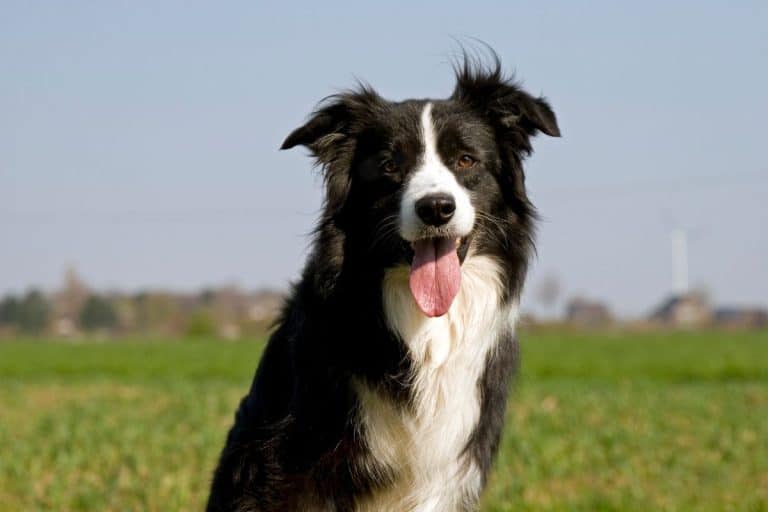
The familiar “seven years for every one” dog age formula is now considered outdated and inaccurate by scientists. In 2019, researchers publishing in the journal Cell Systems introduced a new formula that captures the realities of canine aging, and it’s all about logarithms. According to their findings, a dog’s human age equivalent is calculated as 16 times the natural logarithm of the dog’s age, plus a constant that varies by the dog’s size.
This means dogs experience a dramatic early aging curve. A one-year-old dog is already roughly 31 in human years. By age two, that counterpart is about 42. Beyond these early years, the “aging” slows: at five years, a small dog is roughly 57 human years old, compared to 68 by age ten. Size matters, too: the constant added to the formula is higher for larger breeds because they age and die younger on average. Small dogs age to roughly +31, medium to +33, and large breeds to +36.
©A-Z Animals
Why Larger Dogs Grow Old Faster
The evidence is as striking as it is counter-intuitive. Bigger dogs don’t live as long as their smaller cousins. A small breed may live 12 to 16 years, but a large breed may only live 8 to 12 years. Scientists point to several biological reasons for this gap.
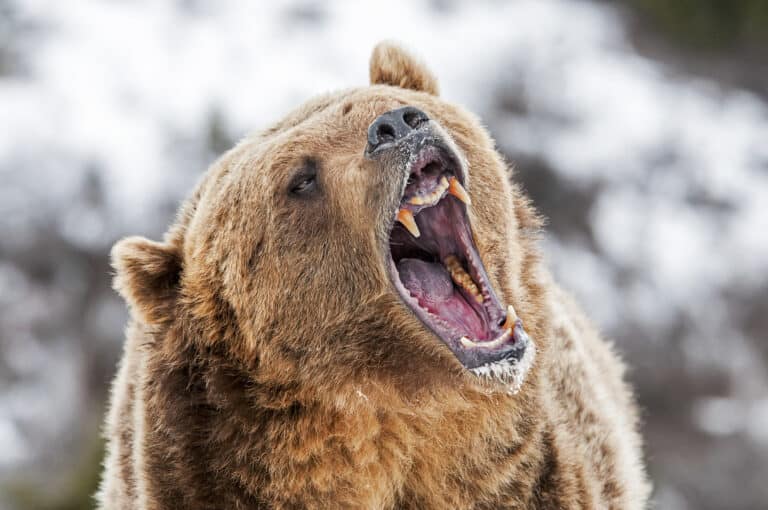
Large dogs grow rapidly, putting extra wear and tear on their cells. Their size puts more physiological stress on hearts and organs. Oddly enough, their metabolism also favors earlier aging. The statistics show that health risks like joint problems, heart disease, and especially cancer are more common in the big breeds. After age two, a giant dog can age the human equivalent of 9 to 11 years each calendar year, while a small dog only adds 4 or 5.
Cats Age with Subtlety, but Even Faster Than You’d Think
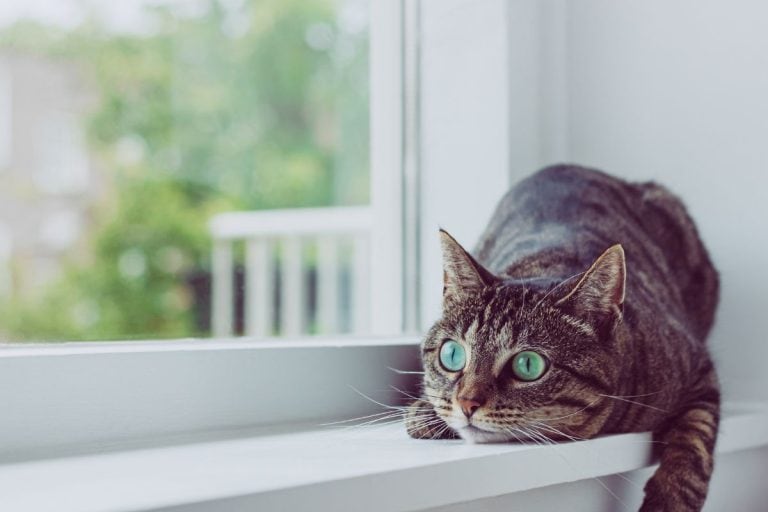
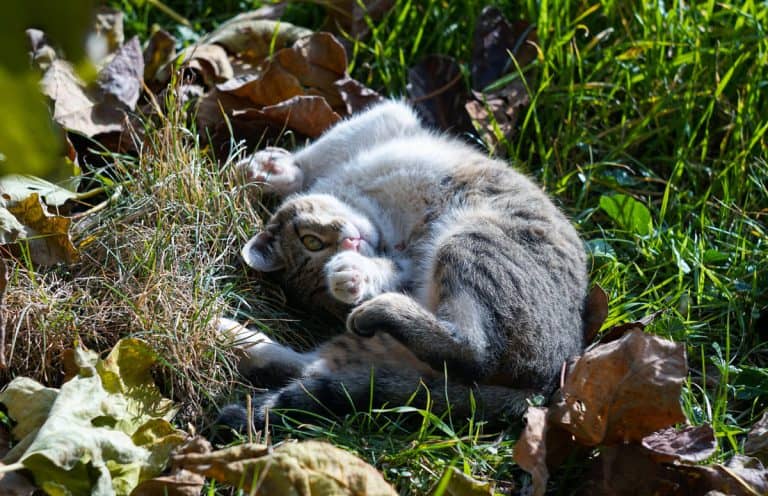
Cats don’t age the way you might assume. Their life stages run the gamut: a kitten up to one year old is about 0 4 in human years. By two, a cat reaches roughly 24 human years. Then, every additional year adds about four more “human” years. A domestic cat is considered “senior” at age 11, which translates to 60 human years.
Cats enter their twilight much the way people do. From ages 3 to 6 (about 28 0 human years) they’re adults. At 7 to 10 (4to 4 56 human years), they’re mature. From 11 on, seniority sets in. After 15 years, your cat is the equivalent of 76 or older. Vets recommend switching to senior diets, bringing your cat for checkups twice a year, and even making small home modifications to ease everyday life by the time your companion approaches age 11.
Small Pets, Short Lives, Rapid Aging
The smallest companions, such as hamsters or guinea pigs, live in a vastly accelerated timeline. Hamsters, with their 2 to 3-year lifespan, can be considered “senior” before their second birthday. In human equivalence, a single hamster year might equal 25 human years. Each species has its own milestones; rabbits, ferrets, and parrots all age differently and can have wildly different lifespans, from just a few years to 80 depending on species.

©SofikoS/Shutterstock.com
Why These Conversions Matter
Understanding your pet’s real age isn’t just academic. It helps owners anticipate life stage transitions and the changing needs those bring: the right food, appropriate exercise, and increased veterinary attention. Many online calculators now offer not just a straight-age conversion, but a reverse lookup as well. Wondering when your cat hits the equivalent of your own age? Or at what age your dog will match your 50th birthday in “dog years”? The math is now at your fingertips, based on scientific formulas tailored to each species.
Of course, every pet is unique. Genetics, diet, environment, and veterinary care all play a role. These age estimates are useful benchmarks, but always consult a veterinary professional to tailor care for the animal’s true stage of life.
Stepping away from the old myths reveals something fundamental about our relationship with the animal world: aging is far from simple, and every life, human or animal, follows its own remarkable curve.