Quick Take
- A house cat chasing a coyote isn't just bravado. There's a behavioral reason behind it.
- The size gap between Tiger and his target is bigger than you'd guess, and it changes how the video looks.
- Researchers dug through coyote droppings across Los Angeles. What they found about cats depends on where you live.
- Your own yard may be inviting coyotes. The fix is simpler than most cat owners expect.
On Tuesday morning, Nov. 17, Marjorie Menza filmed her cat, Tiger, going after a coyote in their apartment complex in South Pasadena, California.
Tiger pursued the much larger animal through the landscaping and around a tree. During a pause, Tiger sat down in the middle of the road, and the coyote walked away.
“My neighbor always says Tiger acts like he owns this place. Today, he showed this coyote who is the boss!” Menza told KTLA. The station’s morning anchors said Tiger stood guard once the coyote retreated.
Watch KTLA’s report on YouTube
Why would a house cat chase a coyote?
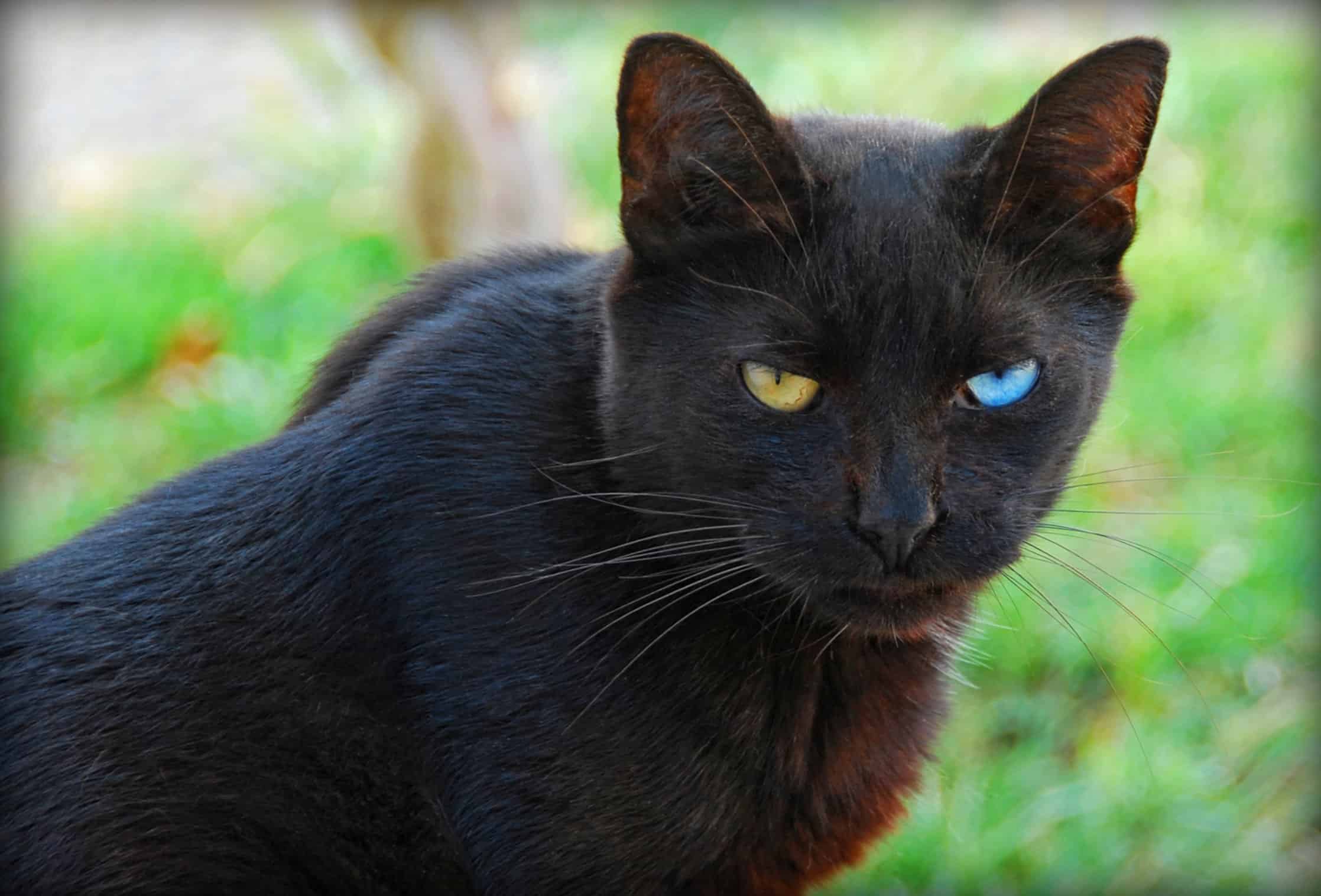
A dark house cat outdoors. This isn't Tiger, but he has a similar dark coat. Chris Yarzab / CC BY 2.0
Territory is the likely answer. Cats tend to establish and defend their territories, according to the Cornell Feline Health Center. They may show aggression toward newly introduced cats, and occasionally toward other animals or people, that encroach on their established domain. That aggression “commonly takes the form of swatting, chasing, and attacking the encroaching individual”.
Tiger’s chase fits that description, and so does his reputation. Menza’s neighbor says he acts like he owns the place, and KTLA’s anchors called him territorial.
How much bigger is a coyote than a cat?
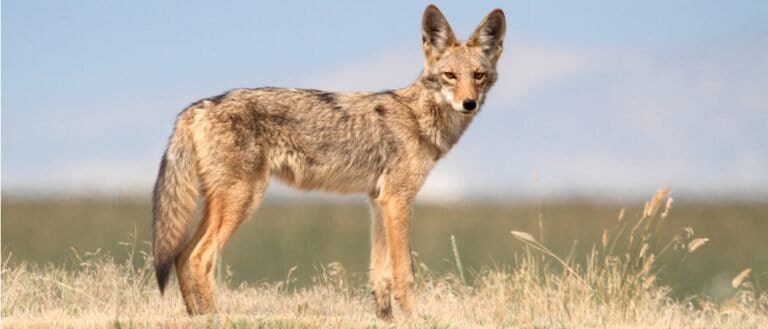
Coyotes in Southern California average 18 to 25 pounds and stand about 18 inches at the shoulder, according to California Department of Fish and Wildlife guidance. The average cat weighs 8 to 12 pounds, with most around 10, per PetMD.
A typical coyote weighs roughly two to two and a half times as much as a typical cat.
Do Los Angeles coyotes really eat cats?
Yes, and far more often in the city than in the suburbs. A 2020 study in the journal PLoS One, by National Park Service and California State University Northridge researchers, analyzed 3,147 coyote scats collected around metropolitan Los Angeles from September 2016 to August 2018. Domestic cat remains turned up in 19.8% of the 1,541 urban scats, compared with 3.9% of the 1,606 suburban scats.
Justin Brown, the park service’s lead researcher on the project, explained in a news release why coyotes stay in neighborhoods. “Whether it’s cats, fruits or garbage, the food resources that we have left out for them is why coyotes hang around,” he said.
Why did the coyote walk away?
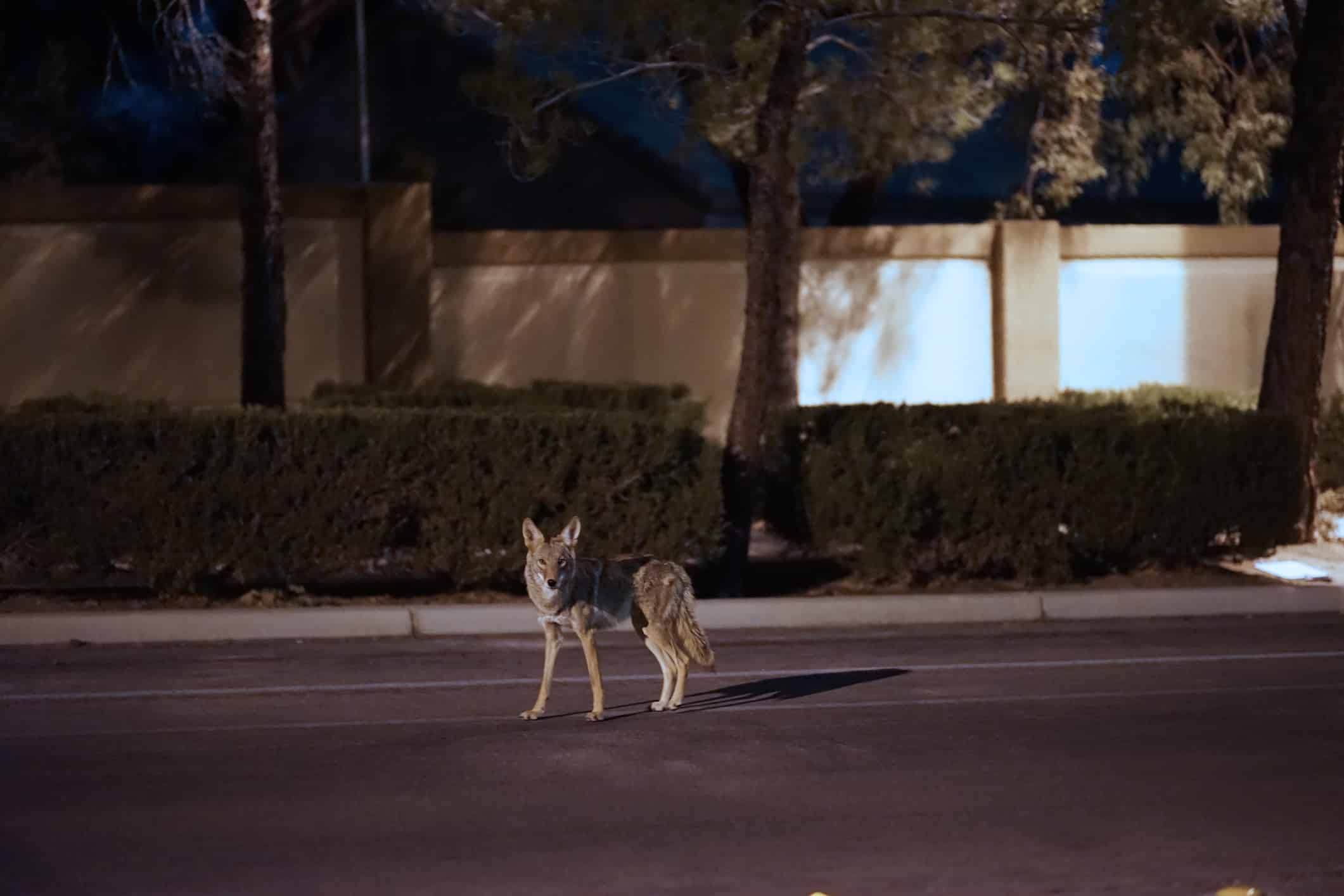
A coyote stands in a suburban street at night. Coyotes live in neighborhoods across Southern California. ©Zachary Byer/Getty Images
©Zachary Byer/iStock via Getty Images
KTLA’s guess was that the coyote left “presumably in search of an easier meal”.
The park service describes urban coyotes as “the ultimate opportunists”. In the Los Angeles study, ornamental fruit and seeds appeared in 26.1% of urban scats and human trash in 22.1%.
What should cat owners do?
The state wildlife department advises keeping small pets indoors, feeding cats and dogs indoors, storing pet food indoors and avoiding walks with pets at dawn or dusk.
Brown recommends that neighbors work together to remove food sources, which includes picking up dropped fruit and bringing pet food inside.
Tiger held his ground this time. For most cats, the safer place to act like the boss is indoors.