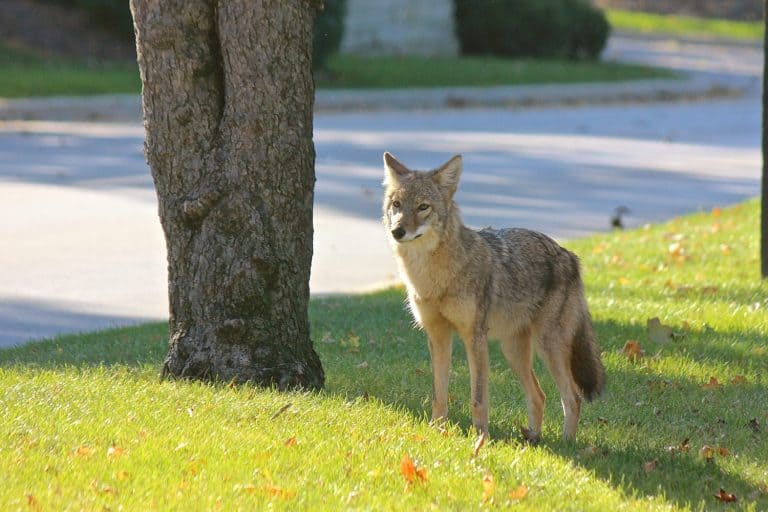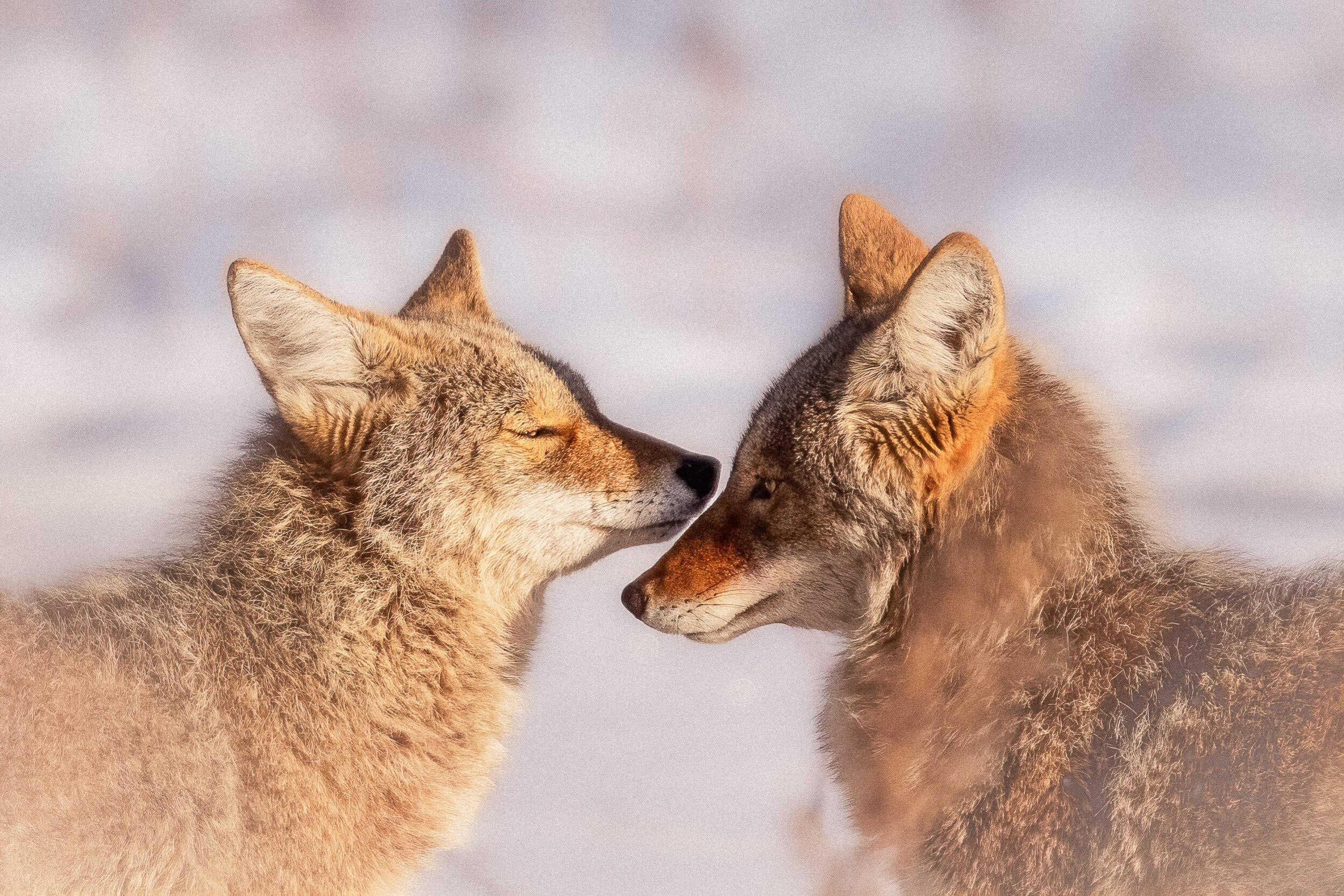

Coyotes and wolves have long been cast as the villains of the wild. For centuries, they’ve been trapped, poisoned, and shot—not because of what science says, but because of old fears and folklore. Enter Project Coyote. Founded in 2008 by wildlife advocate Camilla Fox, the nonprofit is rewriting that story, pushing us to see predators not as enemies but as neighbors we can live alongside.
“Project Coyote was founded on the mission to protect North America’s wild carnivores and promote compassionate coexistence through education, science, advocacy, and coalition building,” says Camilla, who launched the group after years in animal protection and graduate work focused on predator conservation.
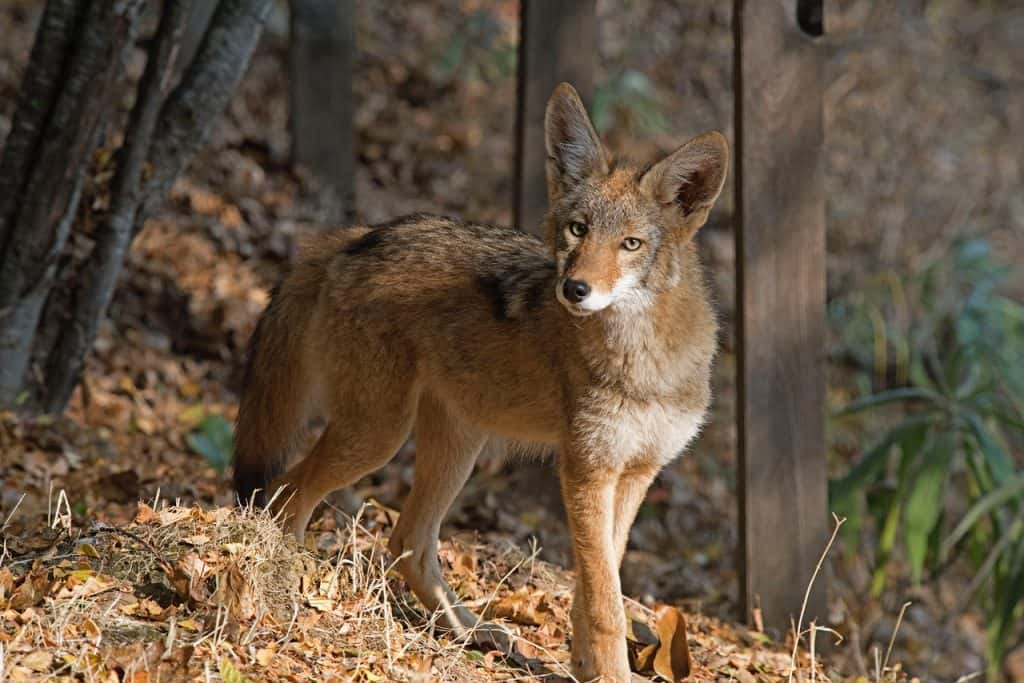
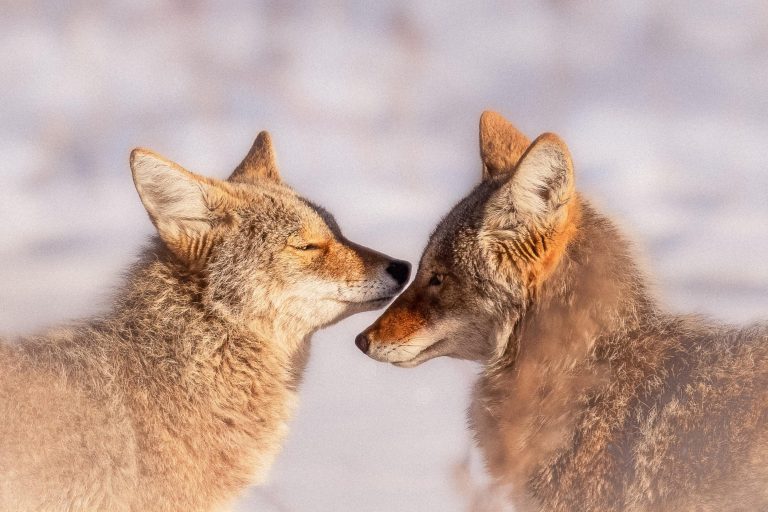
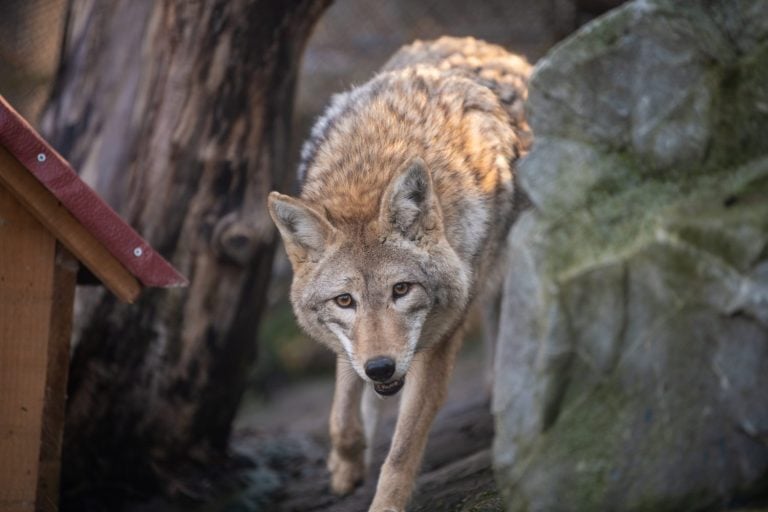
Meet the coyote: smarter, savvier, and more family-oriented than most people realize. Project Coyote works to protect these misunderstood song dogs and promote coexistence.
©Project Coyote
The Making of Project Coyote
When Project Coyote started, there weren’t many organizations speaking up for animals like coyotes that can be legally killed year-round in most states. This gap meant communities had little guidance on how to coexist peacefully with predators.
Sixteen years later, Project Coyote has grown into a force for change. With scientists, ethicists, educators, artists, and grassroots advocates all working together, the group has become known for not only pushing policy reform but also for reshaping public attitudes.
It’s more important than ever to inform, inspire, and empower students to act conscientiously on behalf of their wild neighbors and our shared planet.
Camilla Fox, wildlife advocate and founder of Project Coyote
Big Wins on a Modest Budget
Despite limited resources, Project Coyote has stacked up some big victories.
“We now have highly functional coalitions across the country working together to better protect wolves, to ban wildlife killing contests, to rewild parts of the continent with large carnivores, to protect and defend the Endangered Species Act, and to reform state and federal wildlife agencies,” the team explains.
Among the most high-profile wins: ending wildlife killing contests, events where participants compete to kill as many animals as possible…usually coyotes. Thanks in part to Project Coyote’s relentless campaigning, 10 states (including California, New Mexico, New York, and Oregon) have now outlawed them.
“In 2023, for example, we achieved two significant victories: Oregon and New York both enacted statewide bans on wildlife killing contests,” Camilla notes. At the federal level, they’re also backing the Prohibit Wildlife Killing Contests Act of 2024, which already has 20 congressional sponsors and would ban these events on more than 500 million acres of public land.
Beyond contests, Project Coyote has supported wolf protections, pushed to outlaw cyanide bombs (M-44s), and helped Vermont pass a law banning the export of black bear parts. “Each year we publish an impact report, which details these victories and accomplishments for wildlife,” Camilla adds.
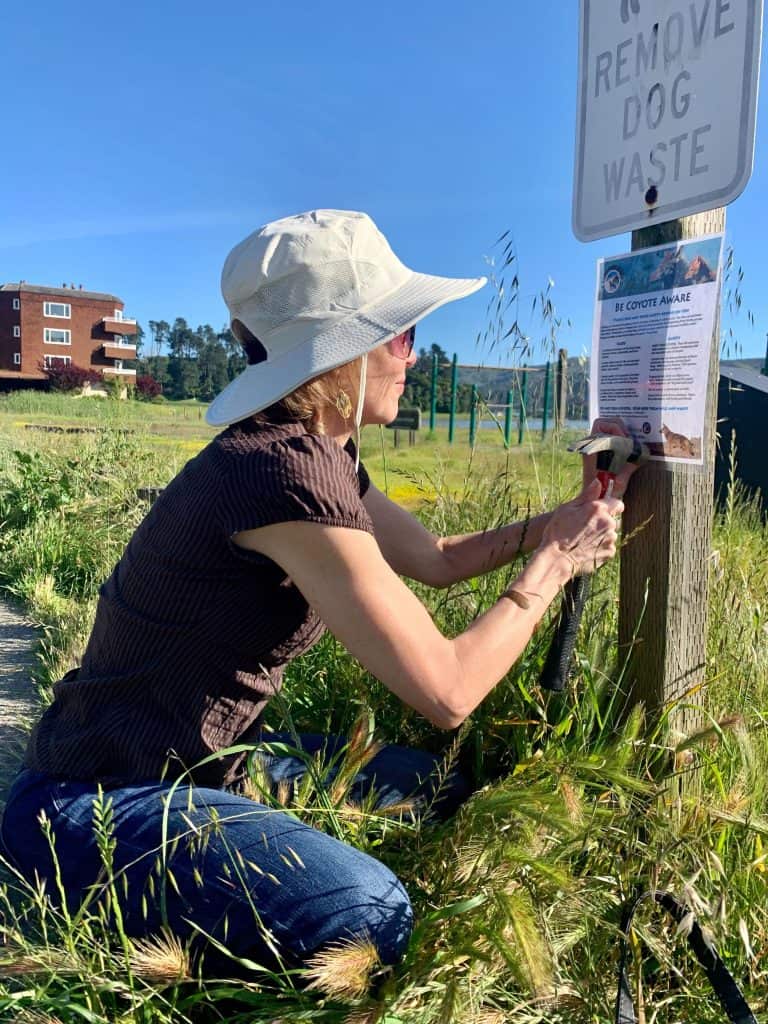
Project Coyote Founder and Executive Director Camilla Fox posts educational signage to help communities learn safe, practical ways to coexist with coyotes.
©Project Coyote
Grassroots Power, National Change
Project Coyote isn’t shy about blending hard science with a softer, more empathetic message. “Project Coyote uniquely advocates for a compassionate, ethical, and science-based approach to wild carnivore protection,” says Camilla.
This means pushing back on outdated “management” strategies that rely on killing and instead highlighting research that shows carnivores are intelligent, family-oriented, and vital to healthy ecosystems.
“Consideration of the intrinsic value and interests of the individual animal (in addition to species preservation) is fundamental to furthering compassionate wildlife conservation,” Camilla explains.
From Cameras to Classrooms: Creative Advocacy
Facts are important, but so is storytelling. Project Coyote uses art, photography, and youth programs to help people see carnivores in a new light.
The Project Coyote #CaptureCoexistence Campaign showcases wildlife photography as an alternative to killing contests, celebrating the beauty of predators in their natural world. The organization also teams up with musicians, writers, and visual artists to reach new audiences through creative channels.
And then there’s the next generation. Through the Keeping It Wild program, Project Coyote gives educators the tools to teach kids about predators’ roles in ecosystems. “It’s more important than ever to inform, inspire, and empower students to act conscientiously on behalf of their wild neighbors and our shared planet,” Camilla shares.
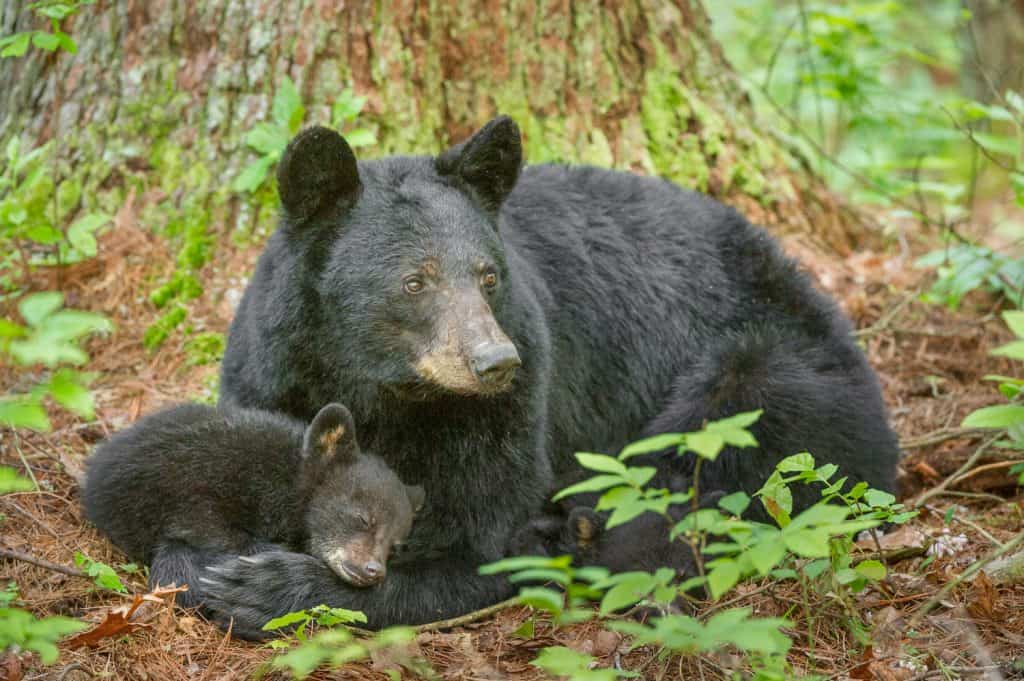
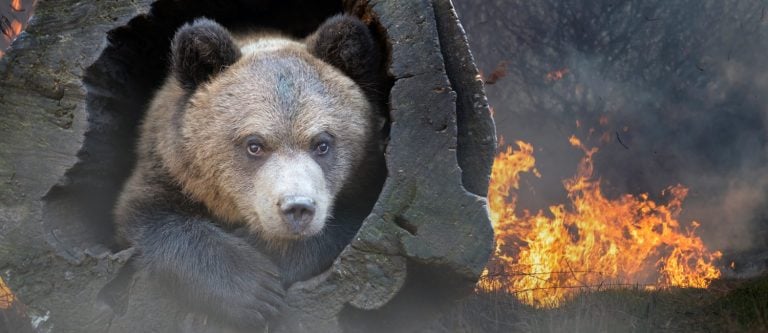
An alert mother black bear keeps watch while her cubs rest at the base of a white pine. Project Coyote advocates for the protection of carnivores like bears, ensuring they (and their young) have a future in healthy ecosystems.
©Project Coyote
Coyotes: Villains or Vital?
No animal embodies Project Coyote’s mission better than, well, the coyote. Despite being dubbed “song dogs” and admired by many for their intelligence and adaptability, they’re the most persecuted carnivore in North America. More than half a million are killed every year in the U.S.
“Coyotes are incredibly under-appreciated,” says Camilla. “They are so smart, adaptable, and resilient, with complex social groups and strong family ties.”
The science backs it up. Coyotes keep rodent populations under control, clean up carrion, and even boost bird diversity. And contrary to popular belief, killing them doesn’t “work.” In fact, it often makes things worse by disrupting stable family groups and triggering population booms. “Their resilience against persecution is no excuse for cruelty,” she says.
“We work to reduce fears and misconceptions so that people can learn to coexist peacefully with coyotes,” says Camilla. “For example, we recently released a Model Coyote Coexistence Plan that guides communities through the process of implementing coexistence measures that protect people, companion animals, and coyotes.”
Coexistence: A How-To Guide
Changing perceptions is one thing. Helping communities actually live alongside coyotes is another, and Project Coyote offers plenty of practical tips.
For city dwellers, this means things like securing garbage, keeping pet food indoors, and hazing coyotes that wander too close. For ranchers and farmers, it’s about better husbandry and nonlethal strategies: guardian dogs, night corralling, fladry fencing, and range riders, to name a few.
“Good animal husbandry practices combined with strategic nonlethal predator control methods can considerably reduce losses,” the Project Coyote team says.
The bottom line? Coexistence is possible…and often more effective than lethal control.
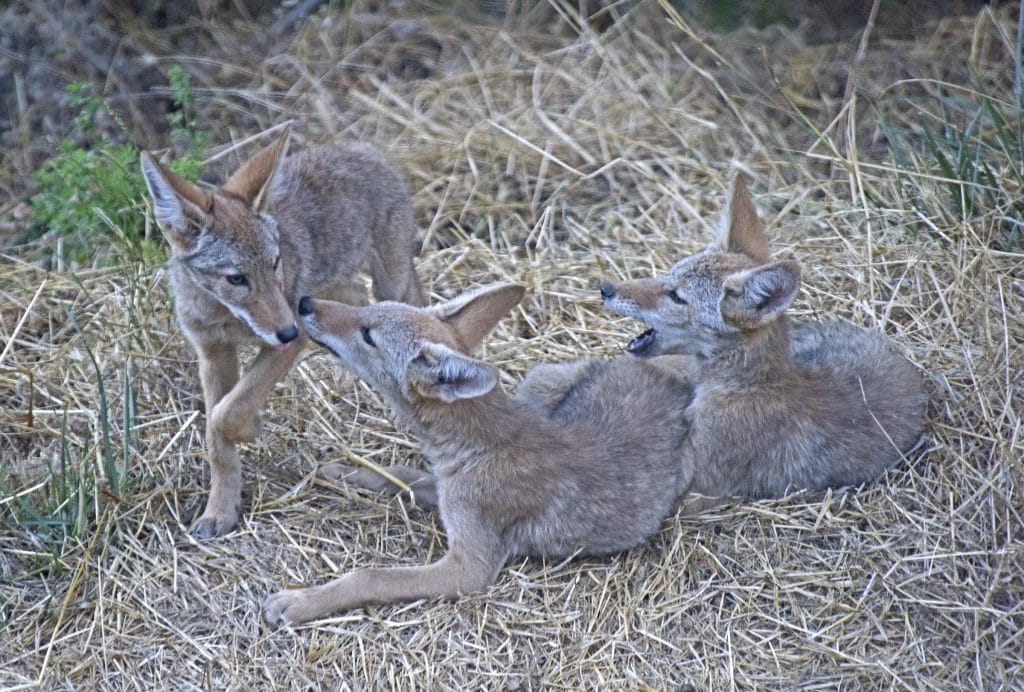
Promoting coexistence means giving young coyotes the chance to grow up safely alongside their human neighbors.
©Project Coyote
Breaking Old Myths & Building New Attitudes
Changing laws is tough, but changing attitudes may be even tougher. “We live in a country that still vilifies and unnecessarily persecutes wild carnivores,” says Camilla, pointing to a recent case in Wyoming where a wolf was tortured.
But there are signs of hope. Public outrage over incidents like this shows a shift in how people think about predators. “Human sentiments are changing with regard to our relationship to nonhuman animals, and with predators in particular,” she explains.
This shift, combined with legislative wins and grassroots mobilization, is what Camilla calls their biggest breakthrough: “We’ve helped raise public awareness and appreciation for the critical role [carnivores] play in maintaining healthy ecosystems and biodiversity, while also defending and protecting wild carnivores through legislation, grassroots mobilization, and litigation where necessary.”
What’s on the Horizon?
This summer marks a new chapter with Project Coyote’s State Advocate Pilot Program, which trains volunteers in states like Texas and Colorado to run local campaigns. The group is also rolling out new education resources, including curriculum for K-8 students on understanding and coexistence.
And they’re bracing for the next round of wolf battles, particularly in Montana, where proposals to dramatically increase wolf killing quotas ignore even the state’s own scientists. “Such cruel, unscientific, and extreme proposals are exactly why Project Coyote and its partners persist with its state lawsuit challenging Montana’s wolf management policies and practices,” the Project Coyote team laments.
For anyone looking to help, Project Coyote makes it easy: Sign up for their E-Team to get action alerts, volunteer as a state rep, or explore their Advocacy Hub for petitions, fundraisers, and ready-to-share resources.
Why It Matters
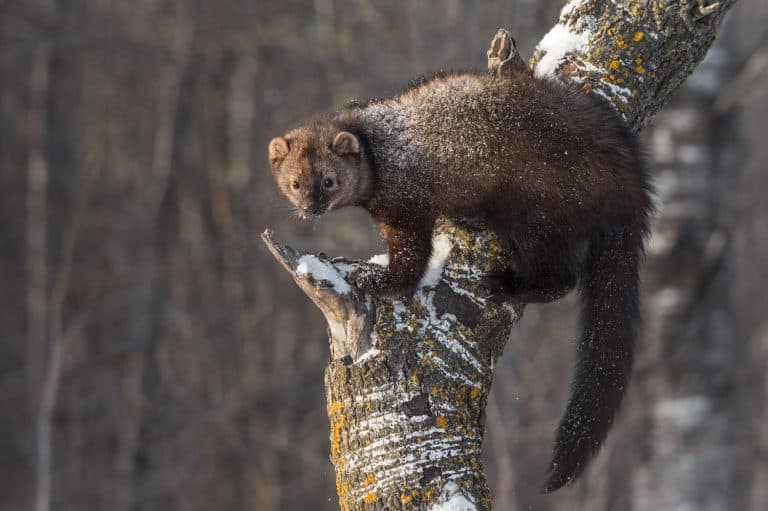
Coyotes, wolves, foxes, and other predators aren’t villains in the story of North America; they’re vital characters keeping ecosystems in balance. Project Coyote is proving that with science, empathy, and creativity, we can rewrite their story.
As Camilla puts it, “Coyotes are sentient, intelligent, family-oriented beings. They regulate their own populations when left undisturbed and play a vital role in thriving, healthy ecosystems. They deserve respect, protection, and the right to exist in our multispecies communities.”
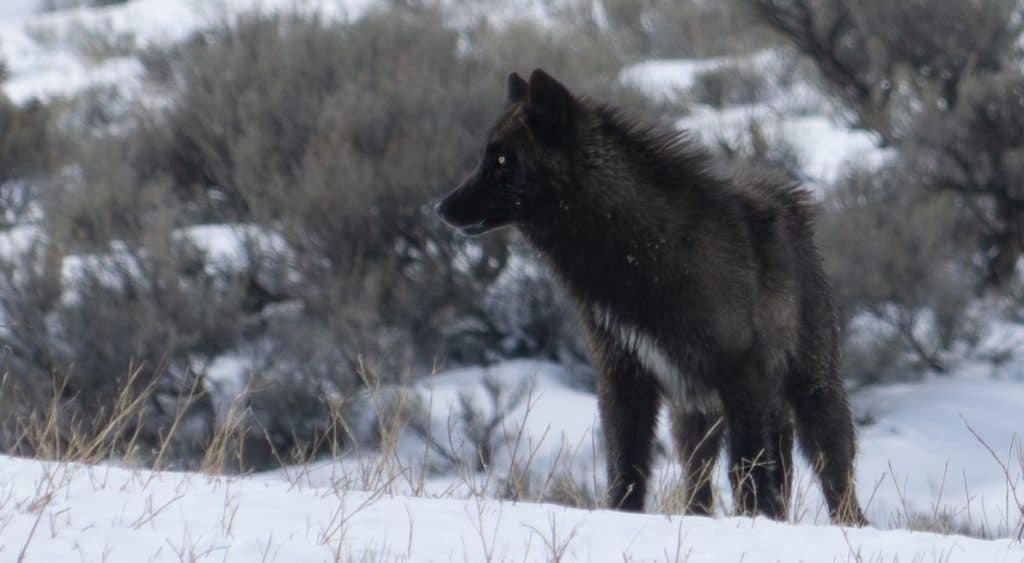
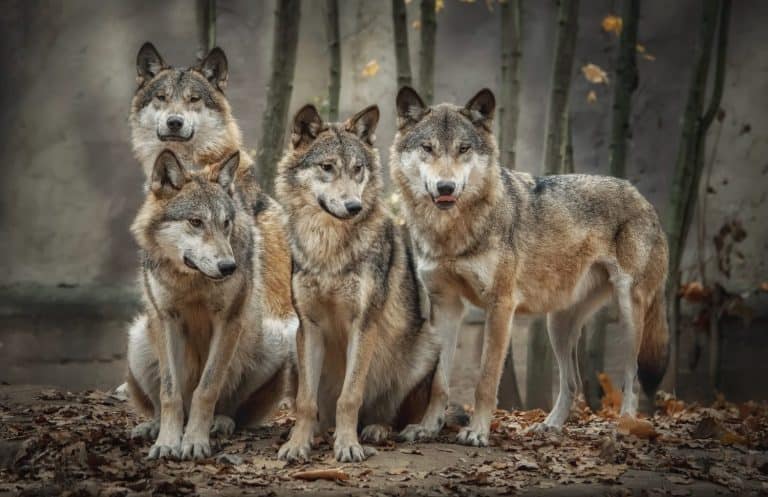
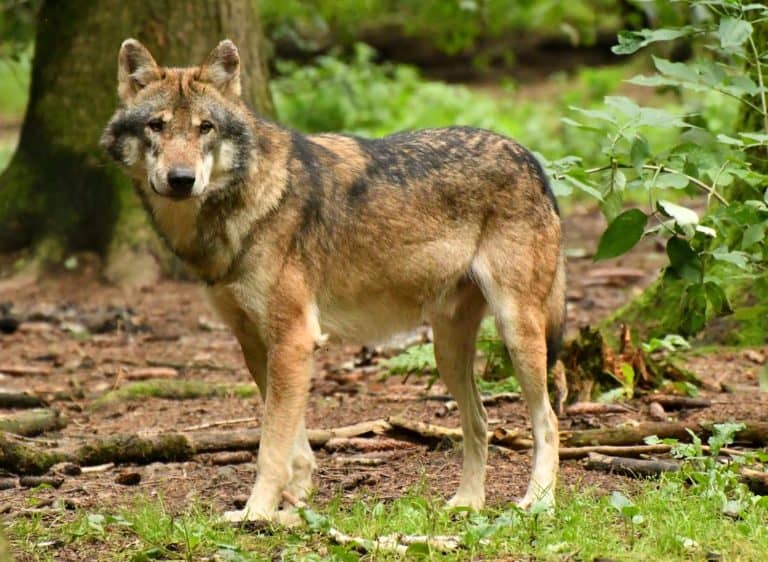
The wolf reminds us that predators aren’t foes at all, but essential threads in nature’s tapestry. It’s a story Project Coyote is working to rewrite with science and empathy.
©Project Coyote
Nonlethal Ways to Prevent Conflicts with Coyotes
Coyotes are among our most common wild neighbors in North America. Generally shy and reclusive, they prefer to avoid people, so spotting one (even in broad daylight) is not usually cause for concern. In fact, their ability to adapt and thrive in both rural and urban environments is exactly what makes them so successful. But those same traits can sometimes lead to conflict with humans and domestic animals, especially when easy food, water, or shelter are available.
We live in a country that still vilifies and unnecessarily persecutes wild carnivores.
Camilla Fox
Most coyotes naturally fear people, but they can lose that fear if they’re rewarded with access to food or other attractants. Actual cases of coyotes injuring people are extremely rare and usually tied to feeding (intentional or not), walking with a dog, or disturbing them during pupping season (April through August). If you do encounter a coyote, keep these tips from Camilla and the Project Coyote team in mind:
- Appreciate them from a distance and never feed or approach them.
- Keep dogs on leashes; if a coyote is nearby, pick up small dogs.
- If approached, make yourself BIG and LOUD. Wave your arms, shout, blow a whistle, or even pop open an umbrella.
- Leave calmly, without running, which can trigger a chase response.
Urban neighborhoods often provide a buffet of coyote attractants. Removing or securing these can go a long way toward preventing problems:
- Store garbage in sturdy, wildlife-proof containers.
- Bring pet food inside.
- Put trash out the morning of pickup, not the night before.
- Keep compost covered and fallen fruit off the ground.
- Clean up barbecue grills.
- Remove birdseed if coyotes are seen in your yard (seeds attract rodents, which attract coyotes).
- Eliminate water sources and clear brush or dense weeds where coyotes might den.
- Close off crawl spaces under porches or decks.
- Use motion-activated lights or make noise (pots, pans, air horns) to discourage repeat visits.
While cars pose a far greater risk to pets than wildlife, small cats and dogs left unsupervised (even inside yards) can be vulnerable. Coyotes may also perceive domestic dogs as competitors, which can spark rare conflicts. Other animals, including sheep, chickens, and rabbits, may be seen as prey unless properly protected. A few key coexistence strategies include these:
- Always walk dogs on leashes, especially during mating and pupping seasons.
- Spay or neuter your dogs (rarely, coyotes can be attracted to mate with them).
- Keep pets and farm animals securely enclosed at night.
- Use predator-proof fencing or motion-sensor lights.
- Consider livestock guardian animals such as dogs, llamas, or donkeys.
Coexistence is a community effort. Share resources with neighbors and explore free downloads at projectcoyote.org.
For rural ranchers and farmers, nonlethal strategies are just as effective. Most livestock losses come from disease, birthing complications, or weather, but predators can be a factor. Good husbandry practices combined with strategic, nonlethal methods can greatly reduce those losses. Among the most effective are the following:
- Woven-wire or high-tensile electric fencing
- Fladry (ropes with red nylon flags strung along fence lines)
- Livestock guardian animals (dogs, llamas, donkeys)
- Flerds (mixed herds of cows and sheep)
- Night corralling and penning
- Hazing techniques and scare devices
- Range riders and active shepherding
- Foxlights (solar-powered flashing deterrent lights)
For more detailed tools and strategies, visit Project Coyote’s Ranching & Farming with Wildlife webpage.