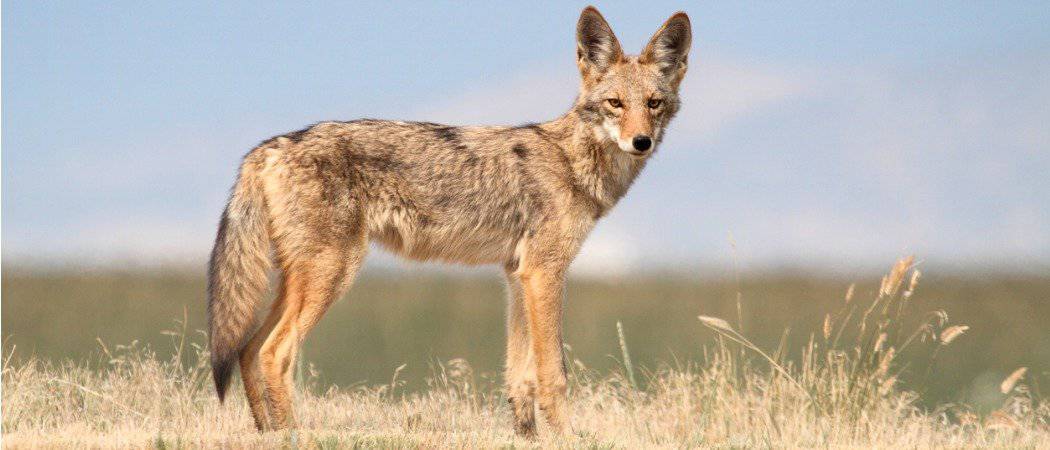

In October 2025, a coyote attacked a 31-year-old woman in her employer’s backyard in Woodcliff Lake, New Jersey, as she was walking the family dog. The coyote bit her shoulder, arm, leg, and back before briefly going after the dog. It fled when the homeowner intervened, and the victim received treatment as a precaution for possible rabies exposure. Local wildlife officials reminded residents to secure garbage, avoid feeding wild animals, clear yard brush, and “haze” coyotes (make loud noises, throw objects) if they appear, noting some 100 coyote-related calls are handled annually in the state.
Human civilization has become increasingly removed from nature, but the natural world still creeps its way into modern cities and suburbs. Coyotes—along with other wild animals—are appearing in urban areas with more frequency, and learning how to coexist with our new, wild neighbors might be a necessity moving forward. But coexistence isn’t always easy, and wild animals can undoubtedly be dangerous. So, do coyotes pose a threat to humans, or is the above incident a rarity? And what can we do to protect ourselves in the most humane way possible?
Here’s everything you need to know about the risks coyotes pose both in the wild and in our own backyards.
This post was updated on November 10, 2025, to include information on New Jersey’s recent coyote attack.
Where Can Coyotes Be Found?
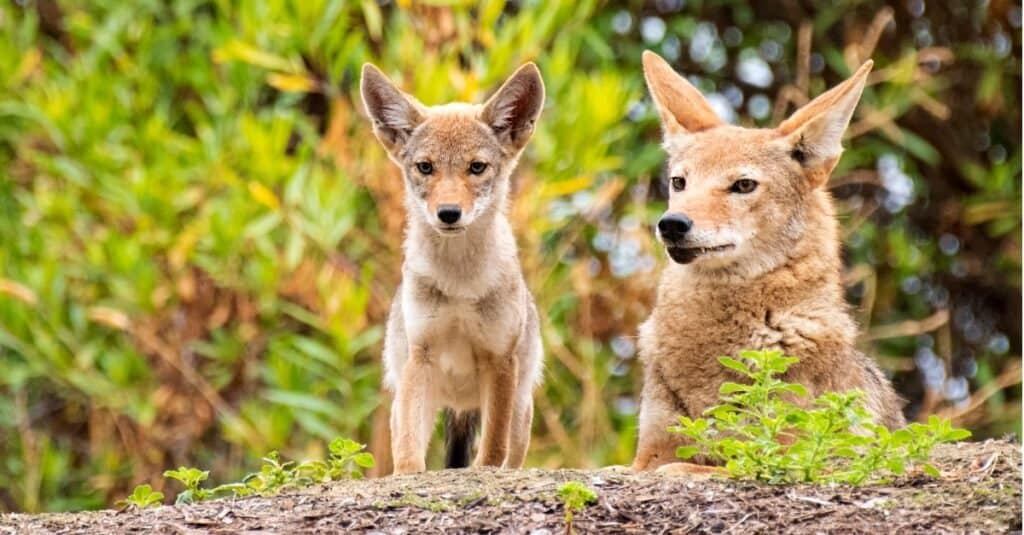
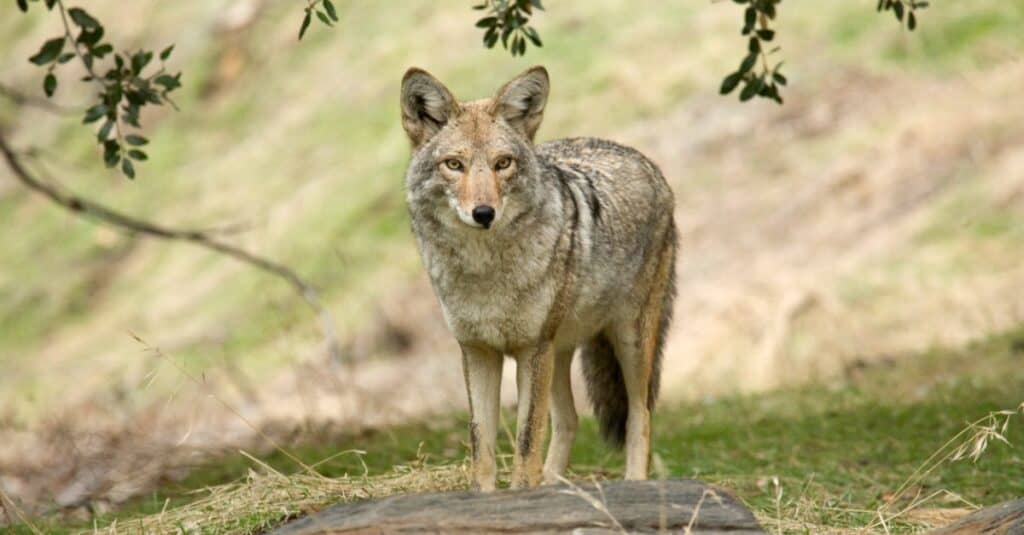
Coyotes are typically crepuscular, meaning they are most active during dawn and dusk. However, many in urban and suburban areas hunt at night to avoid human interactions. Seeing a coyote during the day is not unusual.
©iStock.com/roclwyr
There was a time when coyotes could only be found in the Midwest and Southwest United States and portions of Mexico. But things changed during the turn of the century, as farmers and ranchers thoroughly decimated native wolf populations and left opportunities for coyotes to fill roles in the surrounding ecosystems.
The attempted extermination of wolves led them to the brink of extinction, and their populations have never fully recovered. However, attempts by ranchers and farmers to curtail the spread of coyote populations have been far less successful.
Even though it’s legal to kill coyotes in most of the United States—along with an aggressive poisoning campaign run by the U.S. government until 1972—these pack animals can now be found in every state except Hawaii. They’ve also expanded their habitats to parts of Canada and Central America.
Coyotes aren’t merely keeping to the fringes of human expansion either. Some of America’s biggest cities have seen incursions of coyotes. It’s believed that roughly 2,000 coyotes live comfortably in Chicago, Illinois, and some of them have even been spotted obeying traffic lights while navigating through traffic.
City dwellers have long had to grudgingly accept living with rats for neighbors, but urban coyotes are increasingly just a part of the urban ecosystem.
Do Coyotes Attack Humans?
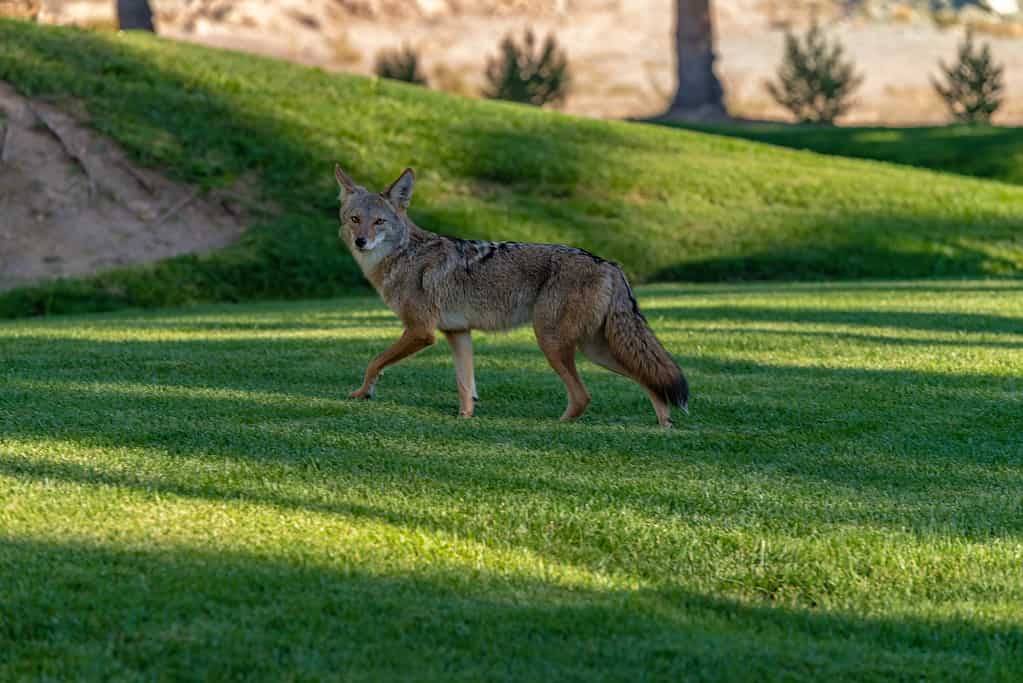
While coyotes have been known to frequent residential areas, they very rarely attack people.
©TerryKelly/iStock via Getty Images
Will coyotes attack humans? While it might seem like predators moving into urban and suburban areas might elicit a high level of danger, coyote attacks are actually quite. There’s a lack of formal accounting practices for coyote attacks, but researchers have identified 142 cases of attacks by coyotes on humans in the period from 1960 to 2006.
In fact, there have only been three reported human deaths caused by coyotes.
The lack of attacks makes one consider the question, “Will coyotes attack humans?” Although the answer is usually not, it doesn’t mean that coyotes aren’t alongside us. Coyotes may form families, but they’re not traditionally pack predators like wolves—and they’re unlikely to approach humans while they’re hunting solo or with a single partner.
Coyotes are typically most active at dawn and dusk. They are not strictly nocturnal hunters. However, it’s been observed that coyotes change their hunting patterns in suburban and urban areas. They seem to hunt at night to reduce the risk of their crossing paths with people. Seeing a coyote during the day is not unusual.
A disproportionate number of encounters or attacks happen in California. Los Angeles, in particular, has become a place where urban coyotes have become a regular sight—day and night.
The California Department of Fish and Game has warned that coyotes can become more dangerous when they become habituated. Coyotes can shift between roles as predators and scavengers as the need demands, and that makes them likely to become accustomed to humans. That could lead to the erosion of their fear instincts when encountering humans.
Habituation could make the situation worse, but there’s still not enough data to make a definitive conclusion.
Can Coyotes Be Useful to People?
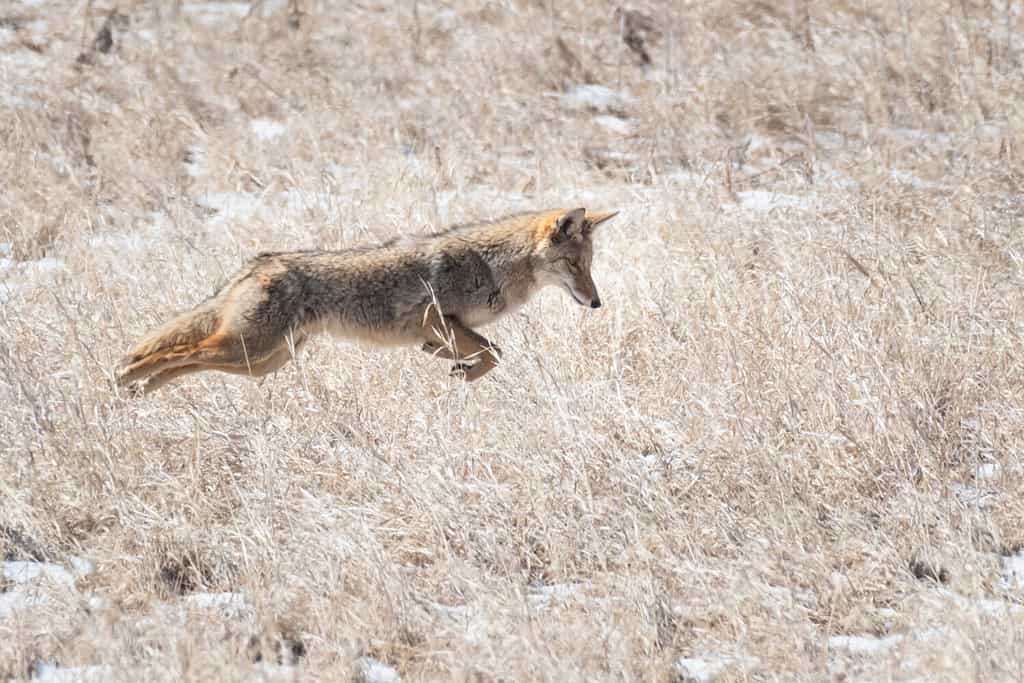
Coyotes aid in curtailing rodent populations in urban environments.
©Eivor Kuchta/Shutterstock.com
It’s important to remember that the current influx of wild coyotes in populated areas happened largely in response to our attempted extermination of wolves.
And while the fear of a coyote pack prowling your neighborhood can seem terrifying in isolation, these creatures are sometimes filling necessary niches that are otherwise absent in developed environments.
One important role they serve is in managing communities of pests in urban environments. The coyote is an adaptable carnivore capable of shifting between scavenging and predating roles depending on the needs of their environment, and the most attractive factor of cities and suburbs is that they offer abundant prey with a distinctive lack of predators.
Nearly half of an urban coyote’s diet is typically rodents or other small prey mammals, which has helped manage the out-of-control hare population in Chicago. And as carrion-eating scavengers, they can also serve communities by reducing the presence of roadkill.
In fact, coyotes might increasingly become a necessity for maintaining animal populations in cities and their outskirts. As cities expand, coyotes aren’t the only animals moving into urban ecosystems. Chicago has seen some indications that the presence of coyotes has helped curtail Canada geese and white-tail deer in the city.
How Can We Coexist with Coyotes Safely?
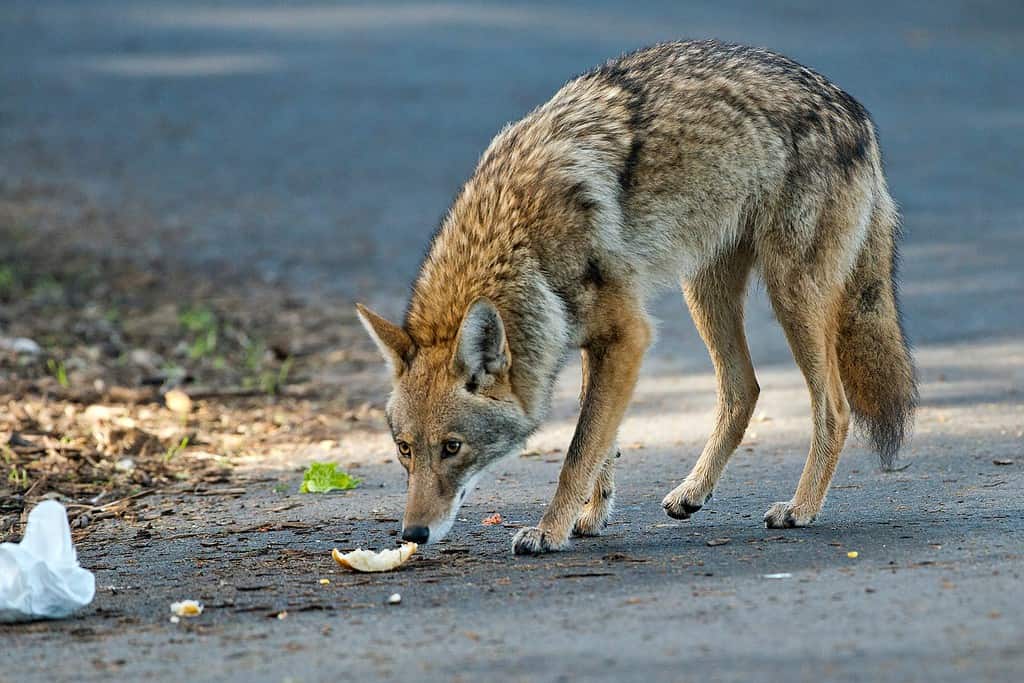
California coyotes are bolder than those in Texas, likely due to Texas ranchers being more aggressive toward coyotes.
©Matt Knoth/Shutterstock.com
Co-existence can sometimes mean walking a tenuous line between respecting the roles that coyotes play in urban ecosystems and not allowing them to get too comfortable in the presence of humans.
Researchers focused on discovering the reasoning behind coyote attacks noting that they appear at significantly higher rates in California than in Texas despite the population density of coyotes being similar in both states. They hypothesized that the more aggressive stance of Texas ranchers towards wildlife might have a role to play.
That said, it’s important to remember that aggressive extermination efforts directed at wolves led to the rise of coyote populations in the first place. The best approach is to respect the boundaries of other animals with a territory that overlaps yours. Coyotes tend to stay out of sight and occupy natural habitats.
Building and maintaining cities that accommodate these habitats will allow urban coyotes to live in harmony with humans, but it also requires a diligent approach to leaving one another alone and the recognition that wild animals like coyotes cannot become habituated to our presence.
As is the case in any environment, wildlife needs to stay wild to be happy and healthy.
Will Coyotes Attack Humans and How to Prevent a Coyote Attack?
Prevention is the best approach to dealing with coyotes, and the right measures can significantly reduce the risk of a coyote ever coming close to you. On a personal level, there are a few steps you can take to ensure that coyotes don’t become a nuisance.
Be careful about leaving your pets outside unattended for extended periods of time if you know that there are coyotes in the neighborhood.
Coyotes are rather fond of cats (domestic or feral), hence special care must be taken with adventurous pets who love to wander about the neighborhood.
These canines are also partial to small dog breeds such as Jack Russells, poodles, Shih Tzus, and Yorkshire terriers, although to a lesser degree compared to felines.
That said, coyotes have also been known to take on larger breeds such as golden retrievers with the aid of another pack member.
You can also prevent your property from becoming a target of coyotes by being conscious about leaving food out that could lure them to your yard. Bird feeders that attract squirrels, garbage, and pet food left out overnight can all become targets for wayward coyotes—and subsequently encourage them to make your yard a part of their ordinary hunting rounds.
If coyotes become a serious threat, there are always fences and repellents that can sometimes deter coyotes.
©iStock.com/Fabiomichelecapelli
How Should You React to a Coyote Attack?
Coyote attacks are rare, but that doesn’t mean that you shouldn’t know what to do if the worst happens. Coyotes are opportunistic predators who will pounce on any sign of weakness but who will generally back down against threats of intimidation from humans.
If you find yourself encountering a hostile coyote, maintain eye contact if possible, and make loud noises. You can shout, wave your hands, and throw objects at the coyote. It’s important to remember that these animals are operating off a desire for an easy meal and not some primal desire to kill.
You should never run, but that doesn’t mean that you shouldn’t try to disengage from the situation. If the coyote or coyotes won’t move, it could be a sign that they’re protecting their den, young, or a food source. Retreat slowly without exposing your back to the coyote.
Your goal should get to a populated and lit area efficiently. The most important thing to do is to not panic, and remember that serious attacks are a serious rarity.
Be sure to alert the proper authorities about any aggressive coyotes—or any other aggressive native wildlife—as soon as you’re safely able.
CORRECTION: This article was updated on March 24, 2026, to clarify that coyotes are not exclusively nocturnal hunters. They are crepuscular, meaning they are most active at dawn and dusk. It is quite normal to see a coyote roaming during daylight hours.