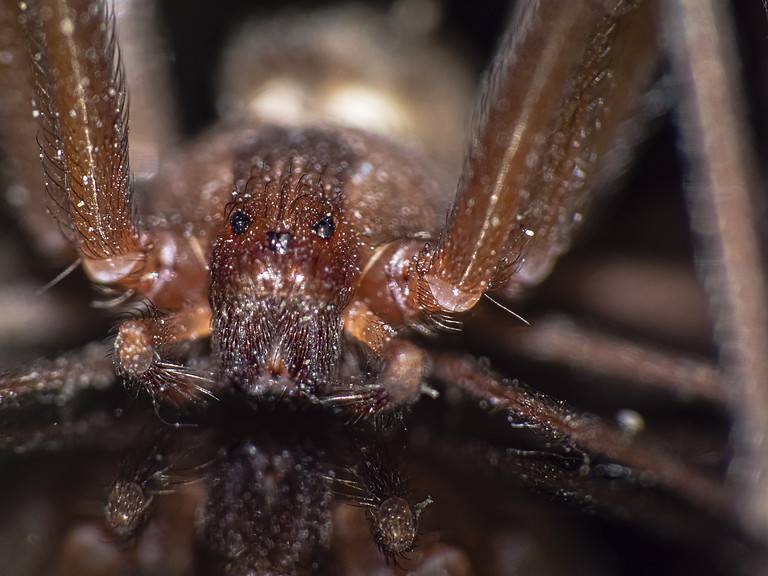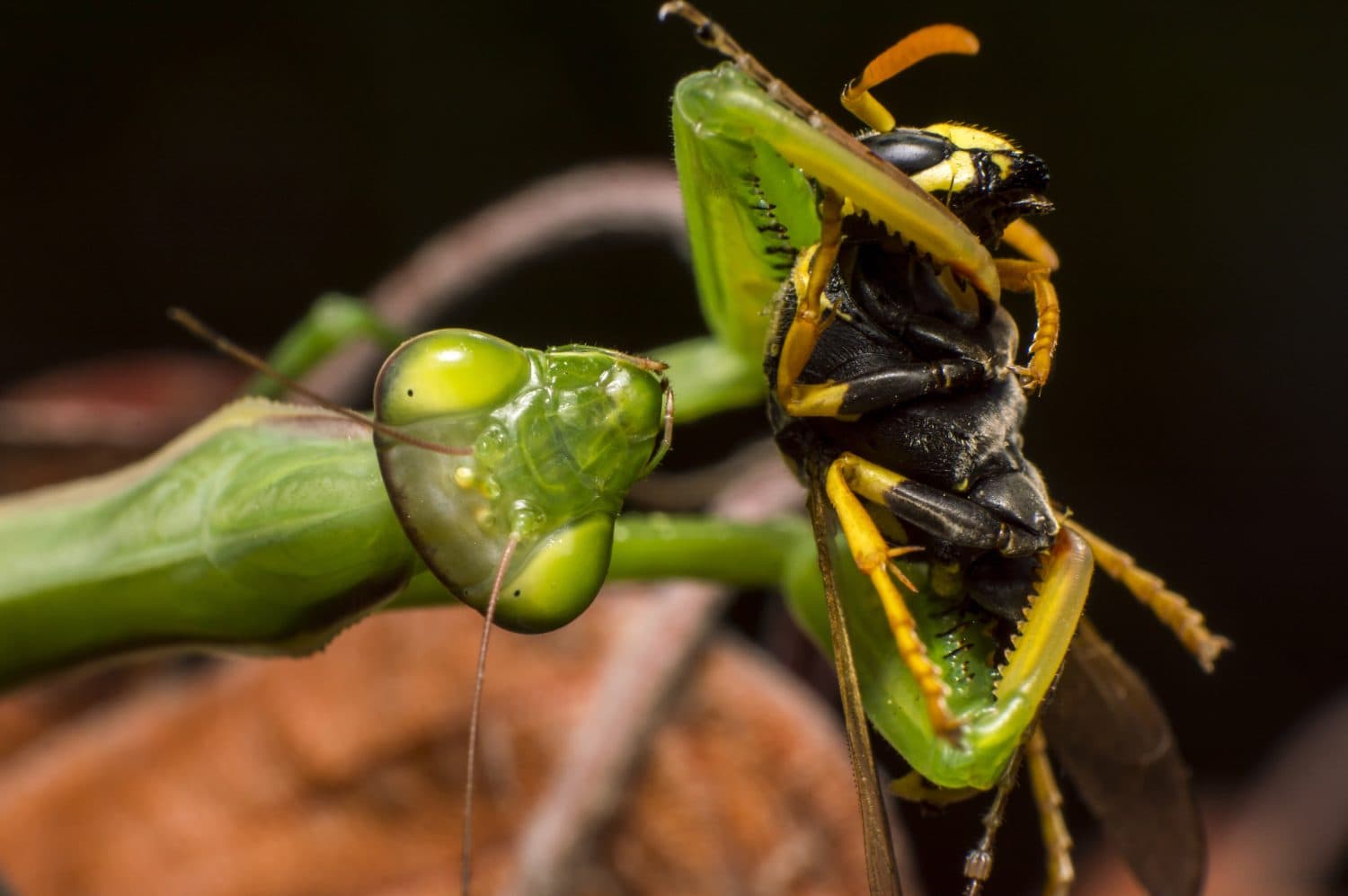

A calm little praying mantis sits perfectly still as a spider creeps nearby. For a moment, you might think the mantis is meditating. It is named for its “praying” pose, after all.
Then, in a blink, wham! The mantis strikes, pinning the spider in its spiny forelegs. Within seconds, the mantis begins to feed. The spider never stood a chance.
But don’t take my word for it. Watch it here.
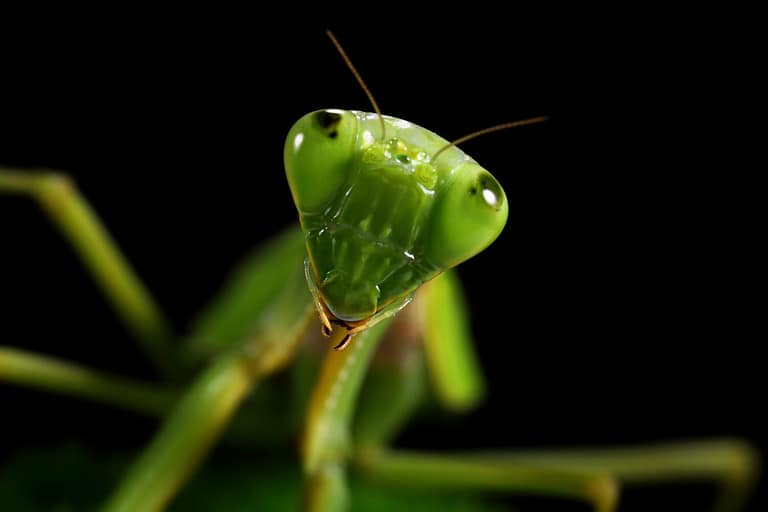
This terrifying footage shows classic mantis behavior: a lightning-fast ambush from one of nature’s most deceptive predators. That slow, rocking motion you saw? It wasn’t prayer, it was predation. (Perhaps they should have been called PREYing mantises…) Praying mantises are stealthy ambush hunters, blending into leaves, flowers, and twigs until a victim wanders too close. Their big, bulging eyes—capable of true 3D vision—measure distance with uncanny precision. When the timing is perfect, those folded “arms” snap forward faster than you can say “lunch.”
They may look tranquil—heck, even saintly—but mantises, as you just saw, are absolute savages when the opportunity arises.
What else do they eat?
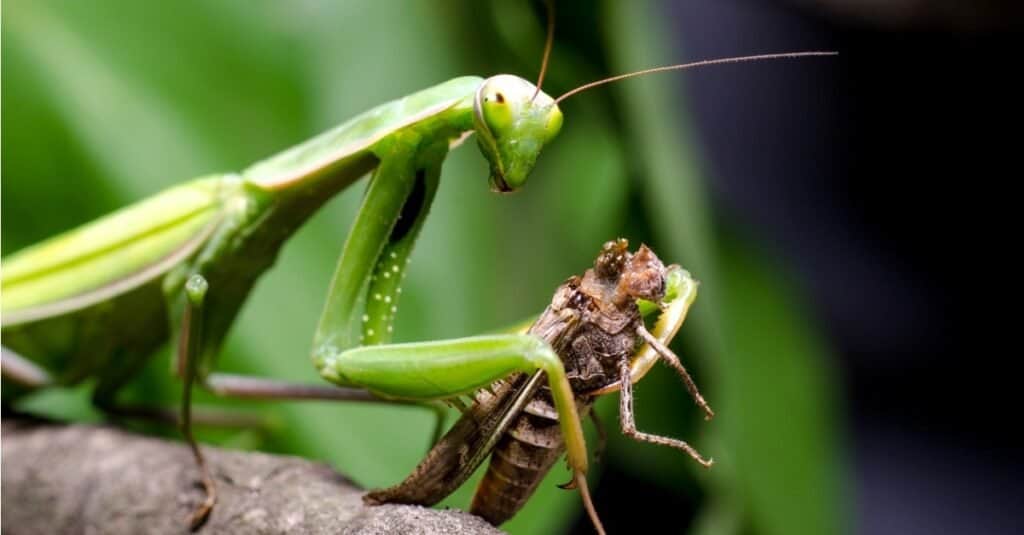
Praying mantises have been known to eat creatures as large as hummingbirds.
©iStock.com/artas
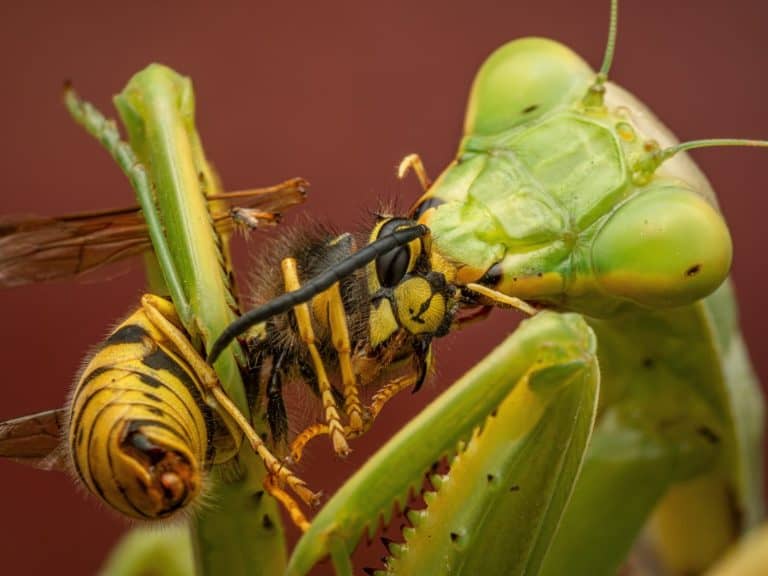
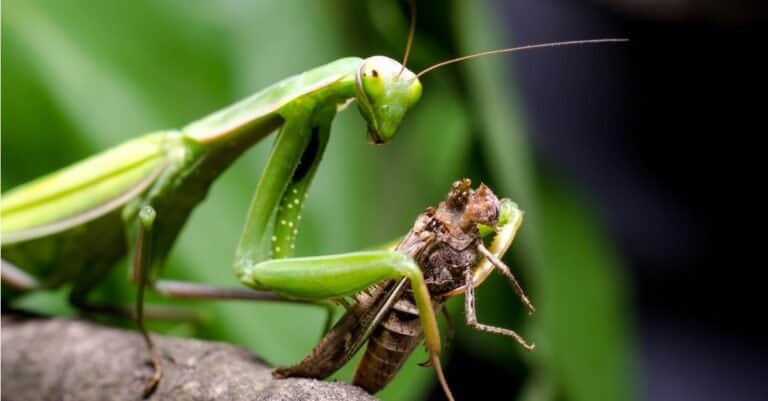
Mantises will consume almost anything they can grab. Flies, crickets, moths, grasshoppers, even small frogs and lizards aren’t safe from this mini-monster. Larger species have even been caught eating hummingbirds!
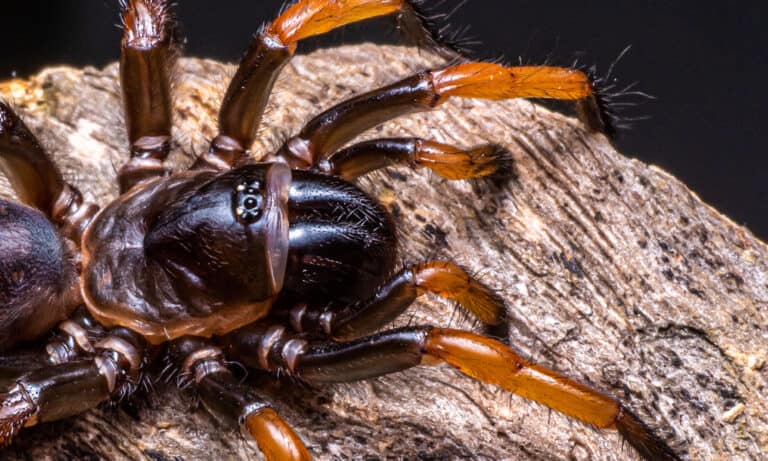
Once a mantis has its prey, it starts eating immediately, often while the victim is still alive. Spiders are formidable predators themselves, but mantids have the advantage of mobility, reach, and strike speed. As the footage reveals, the mantis grabbed the spider, preventing it from effectively using its venom, and dismantled it. And that dismantling was anything but gentle. Disturbingly, the mantis began gnawing on the spider while it was still struggling to break free. This is common mantis feeding behavior. Sometimes, this insect even begins its meal with the victim’s head!
The praying mantis: a living sleeper beast?
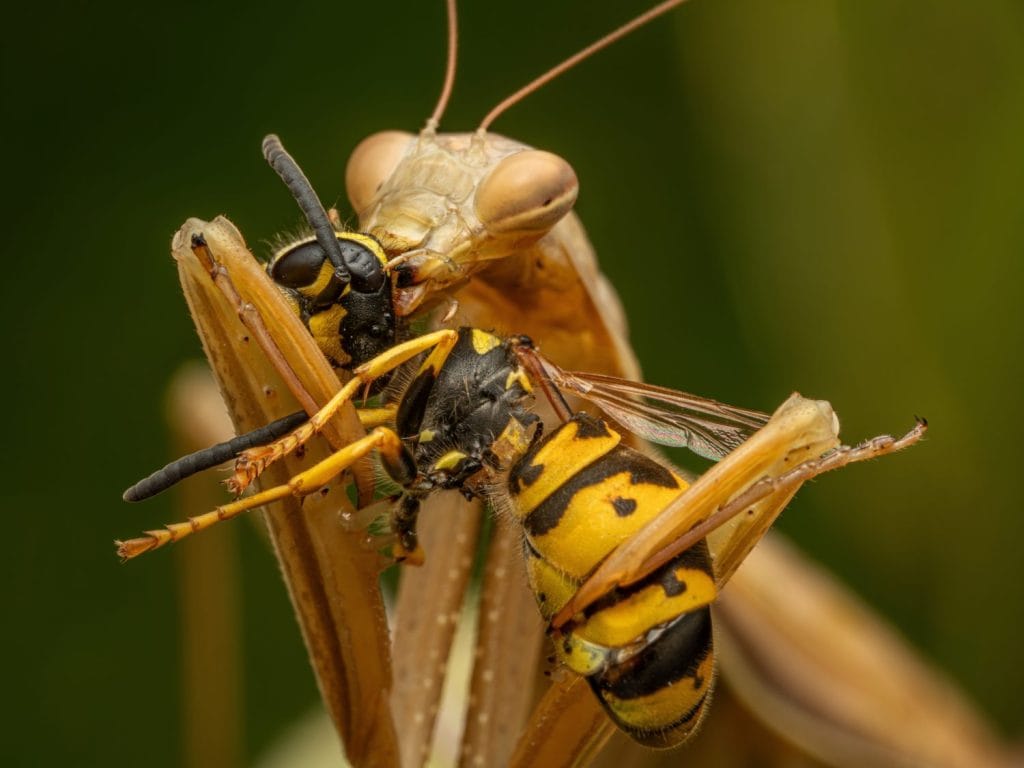
A “sleeper beast” refers to something that looks unassuming but actually packs a major punch – a term that perfectly fits the praying mantis.
©Szabadi Jeno Tibor/Shutterstock.com
The term “sleeper beast” usually refers to an object—more often than not a vehicle—that has been heavily modified for extreme performance while retaining a normal or unassuming external appearance. The name highlights the contrast between a hidden, “beastly” power and its unpretentious, “sleepy” exterior. Think of an Oldsmobile that can do zero to sixty in under two seconds.
That phrase can be used in the animal kingdom as well. Imagine a plump, lazy hippopotamus wallowing in the mud. That big lug happens to be one of the most dangerous animals in Africa, capable of running up to 30 miles per hour and killing more humans each year than lions. They’ll attack anything that enters their territory, including crocodiles and boats! Ever seen a cuddly koala hiss and growl and swipe its razor-sharp claws? Or an elegant swan batter an intruder with its wings?
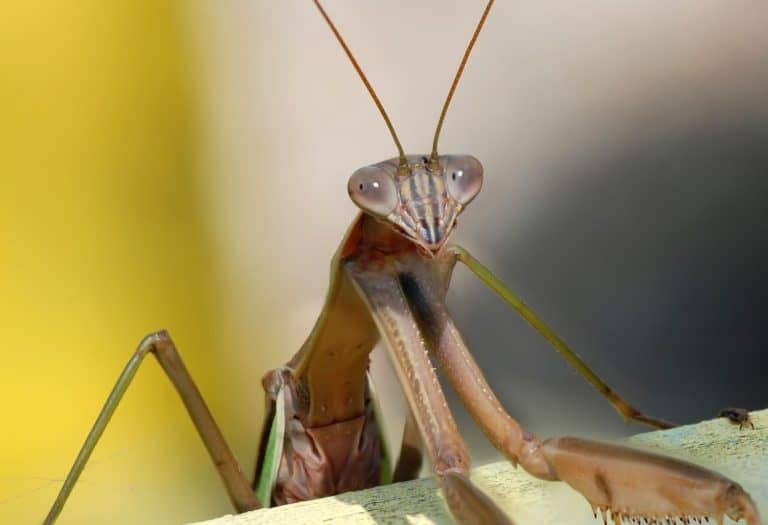
The praying mantis certainly falls into this “sleeper beast” category. They look passive and benign, hiding in plain sight. Waiting patiently. I mean, they appear to be praying for goodness sake! Perhaps the last thing one expects from an individual engaged in silent prayer is a surprise attack followed by vicious head consumption! But that’s the mantis’ characteristic move. Sleeper beast indeed!
Straight out of a horror movie!
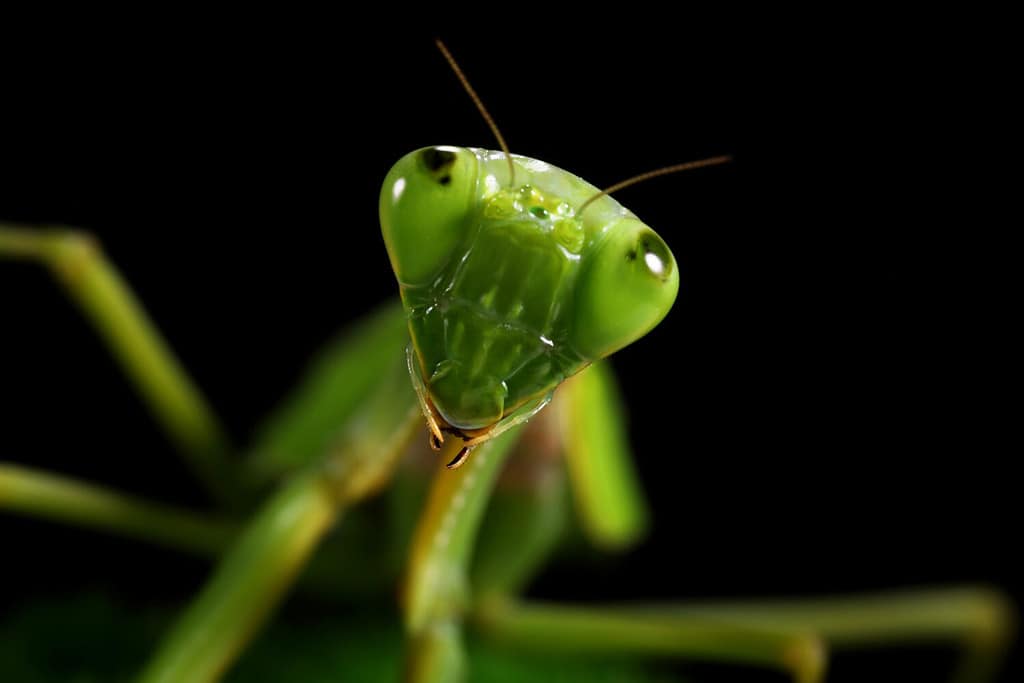
Given some of the details regarding praying mantises, it’s hard to believe this insect is real and not something invented for a horror story.
©Lauren Suryanata/Shutterstock.com
The provided reel is quite telling, revealing many disturbing truths about the praying mantis. The savage killer. The sleeper beast. But there is oh so much more to this insect than just its unpleasant dining methods. For example:
Mantises are the only insects that can swivel their heads nearly 180 degrees, an evolutionary advantage that gives them a panoramic view for spotting prey. Viewing a mantis in head-spinning action, as if they weren’t already scary enough, makes us feel like we’re watching The Exorcist.
They have five eyes. Two giant compound eyes for depth perception and three tiny “simple” eyes that detect light. Seriously, they’re starting to sound more and more like the sci-fi villain of a horror movie.
Their strike is faster than you can blink. A mantis can lash out in just 1/20th of a second. If you’re the spider in question, by the time you realize what happened, it’s already eaten your leg.
As mentioned above, some bigger mantises eat birds. Larger species like the Chinese mantis have been filmed taking down hummingbirds visiting feeders. Yikes!
They can hear bats and dodge them mid-flight. Mantises have a single ear in their chest (again… horror movie stuff!) that picks up the same high-frequency ultrasound bats use to hunt. When they hear a bat coming for them, they drop out of the air in a split second.
Their egg cases are tiny survival pods. Female mantises lay a foamy case called an ootheca, which hardens into a protective shell capable of surviving freezing winters. Then, in spring, hundreds of baby mantises pop out like confetti. (Seriously, I’m going to have nightmares.)
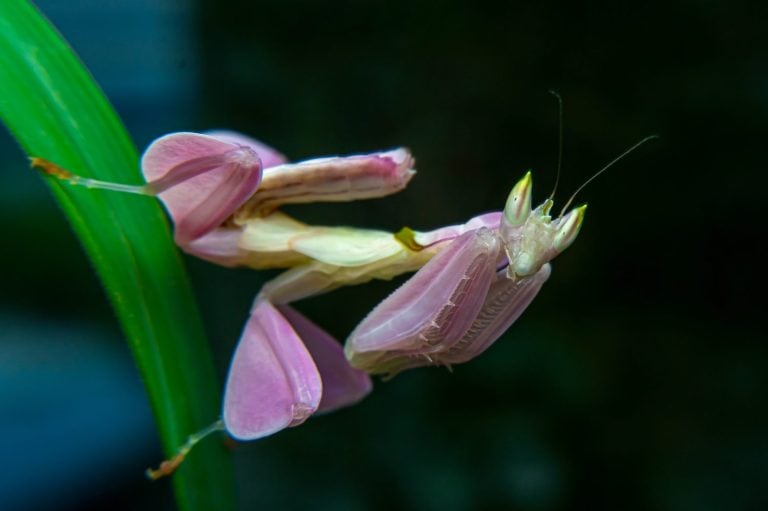
They’re masters of disguise. From typical leaf-mimicking species to the incredible orchid mantis that looks exactly like a pink flower, mantids use camouflage to both hide from prey and lure them close enough to grab.
They’re prehistoric predators. Mantises have been around for over 135 million years. That’s older than most dinosaurs, and they’ve barely changed in all that time. Being the efficient killing machines they are, they certainly don’t need to.
The dichotomy of nature
©dlamb302/Shutterstock.com
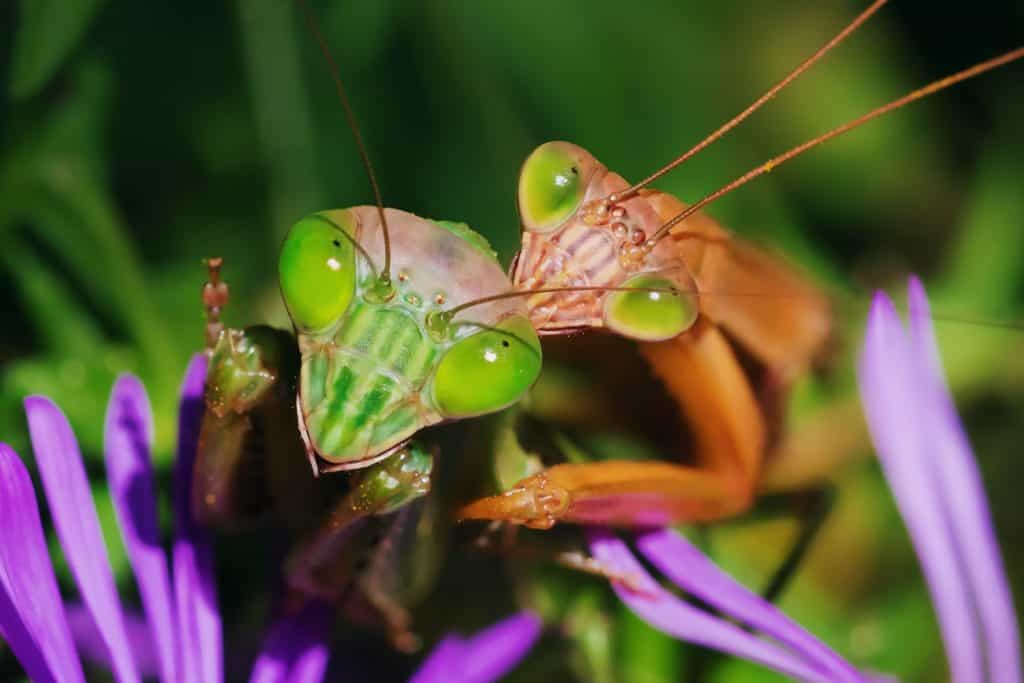
The praying mantis is a remarkable example of nature’s paradoxes: stillness and patience combined with ferocious action; beauty and camouflage concealing deadly intent; a predator that looks meditative yet acts with brutal efficiency. While we’ve spent a lot of time calling attention to the nightmarish qualities of the mantis, in truth, this insect is both fascinating to observe and a reminder that appearances can be deceiving, especially in nature.
But seriously, let’s all thank our lucky stars that the praying mantis is the diminutive size it is; just a few inches taller and it might eat us!