
Some bugs look like actual aliens. While many insects have that classic bug appearance and related attributes, a select few truly look like creatures out of a comic book or an entirely different world. In this Instagram Reels video, viewers are treated to an almost supernatural sight. A bug with chandelier-like proportions walks along the edge of a leaf. It has a normal body, but rising out of its head area is a unique structure. This structure almost looks like the sensor on top of a Waymo self-driving vehicle.
There are plenty of odd insects out there, but none have such outsized appendages as the treehopper. This family of small insects, found across the world, is known for its outsized pronotum, a formation that rises from their back and looks like armor. This form is said to mimic thorns or leaves and provides effective concealment. It is easily one of the strangest-looking bugs on Earth, but there is more than meets the eye when it comes to the treehopper. Let’s learn more about this Waymo-reminiscent insect, its fascinating body parts, and what it needs to thrive in its worldwide habitats.
Treehopper Technicalities
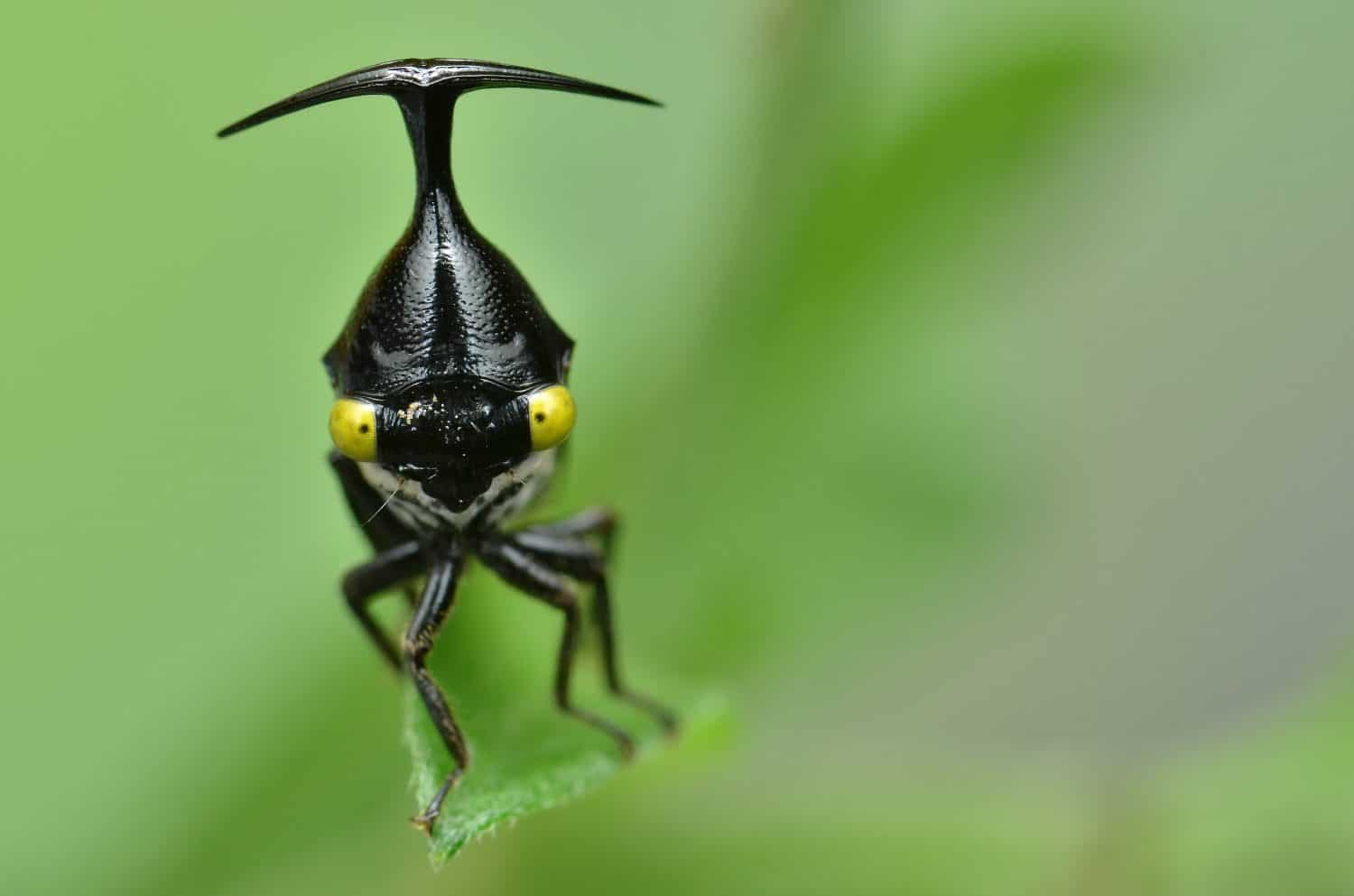
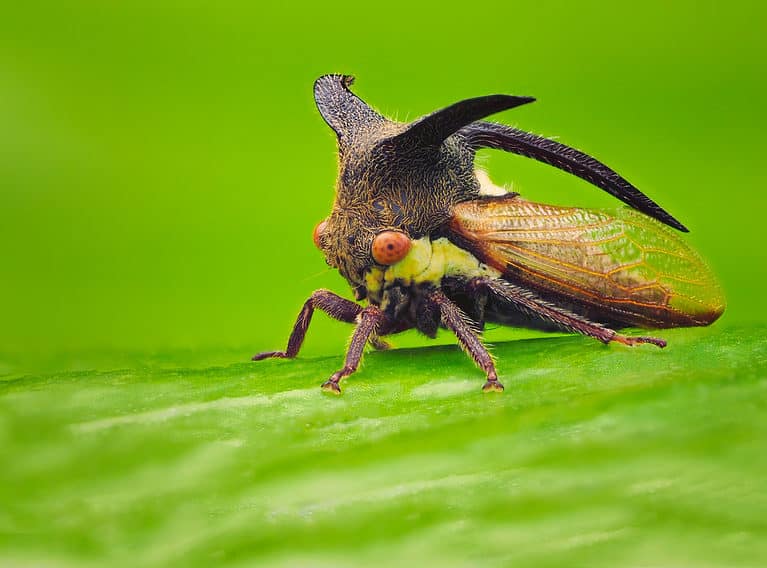
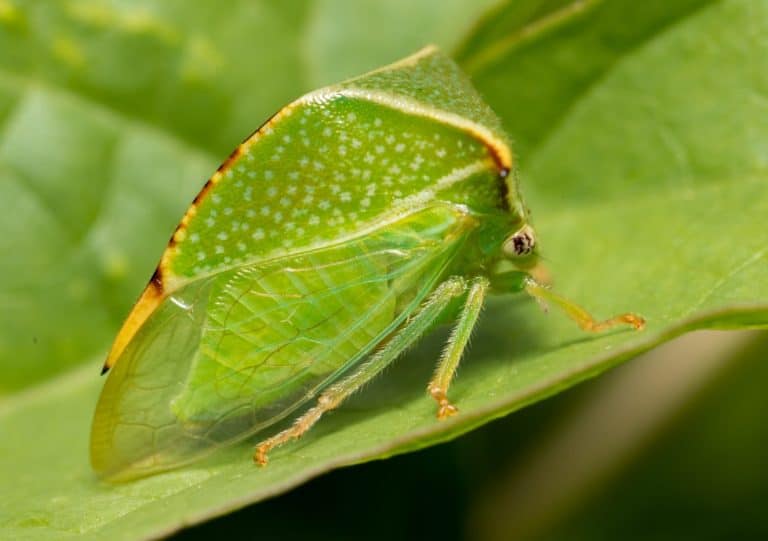
Treehoppers are a group of insects best known for the variety of protrusions that stick out of their backs and mimic thorns and leaves.
©SIMON SHIM/Shutterstock.com
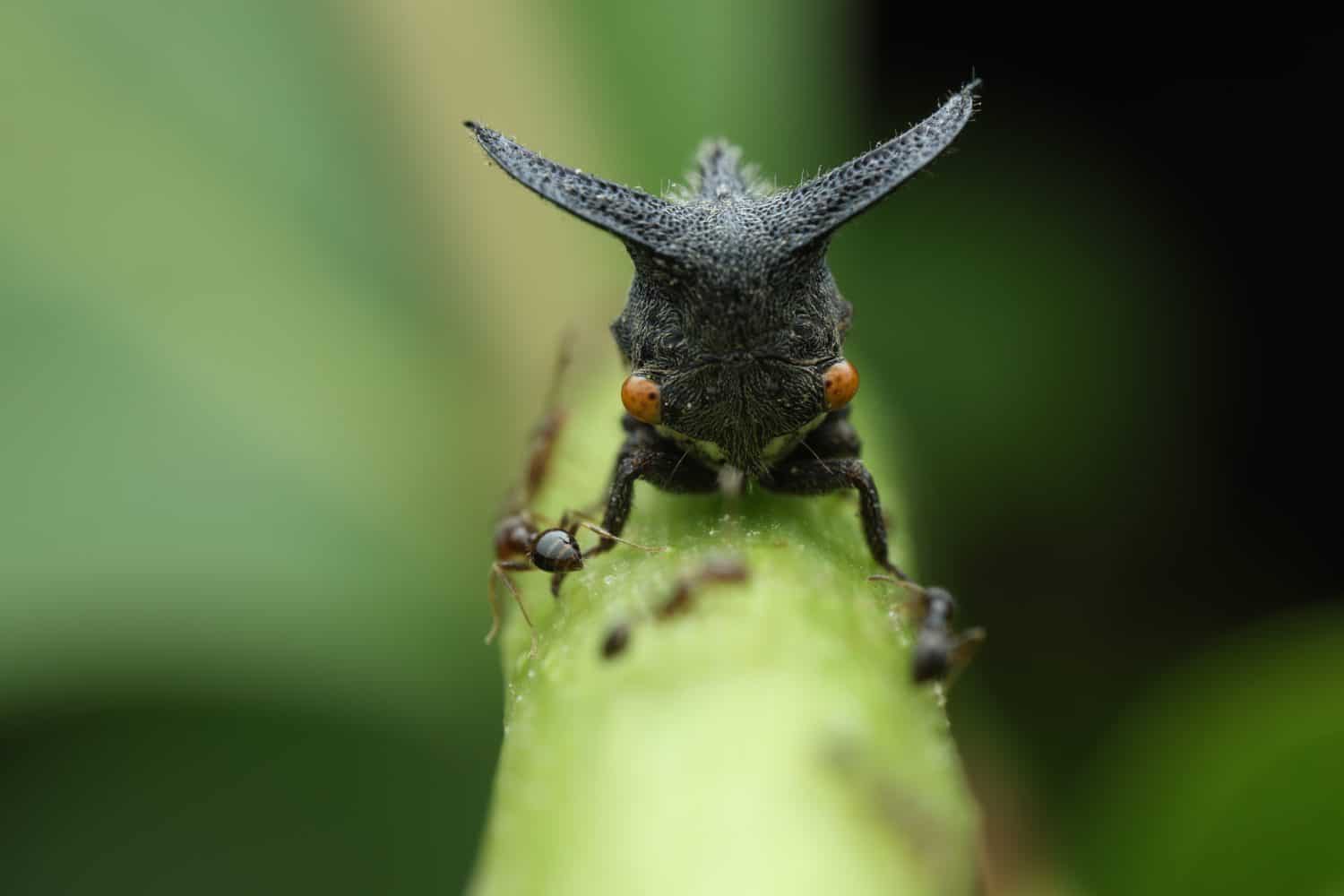
In this Instagram Reel, a strange insect called a treehopper walks along the top of a leaf. It has a normal enough-looking body, but an outsized protrusion that looks like a chandelier or a Waymo sensor. Treehoppers, also called thorn bugs, are a group of insects related to both cicadas and leafhoppers. They may look quite alien, but treehoppers are actually found on every continent except Antarctica. Scientists know of approximately 3,200 species of treehoppers that exist on Earth, though some estimates place the number as high as 3,500.
These insects have long interested people due to their strange appearance. Indeed, treehoppers have enlarged and complex pronotums, which are prominent plate-like structures that extend out of their thoraxes. These pronotums vary in shape and size, often serving as camouflage because they resemble thorns or leaves. Treehoppers are between five and 20 millimeters long, but their pronotums outshine their minuscule bodies with ease. Additionally, these organic structures make the insects resemble leaves, helmets, or even wasps.
Treehoppers are found worldwide but seem to thrive in tropical forests. They prefer trees, shrubs, and other plants, where they cling to stems or the undersides of leaves. It’s said that one shouldn’t judge a book by its cover, and treehoppers exemplify this idiom.
Many Masks
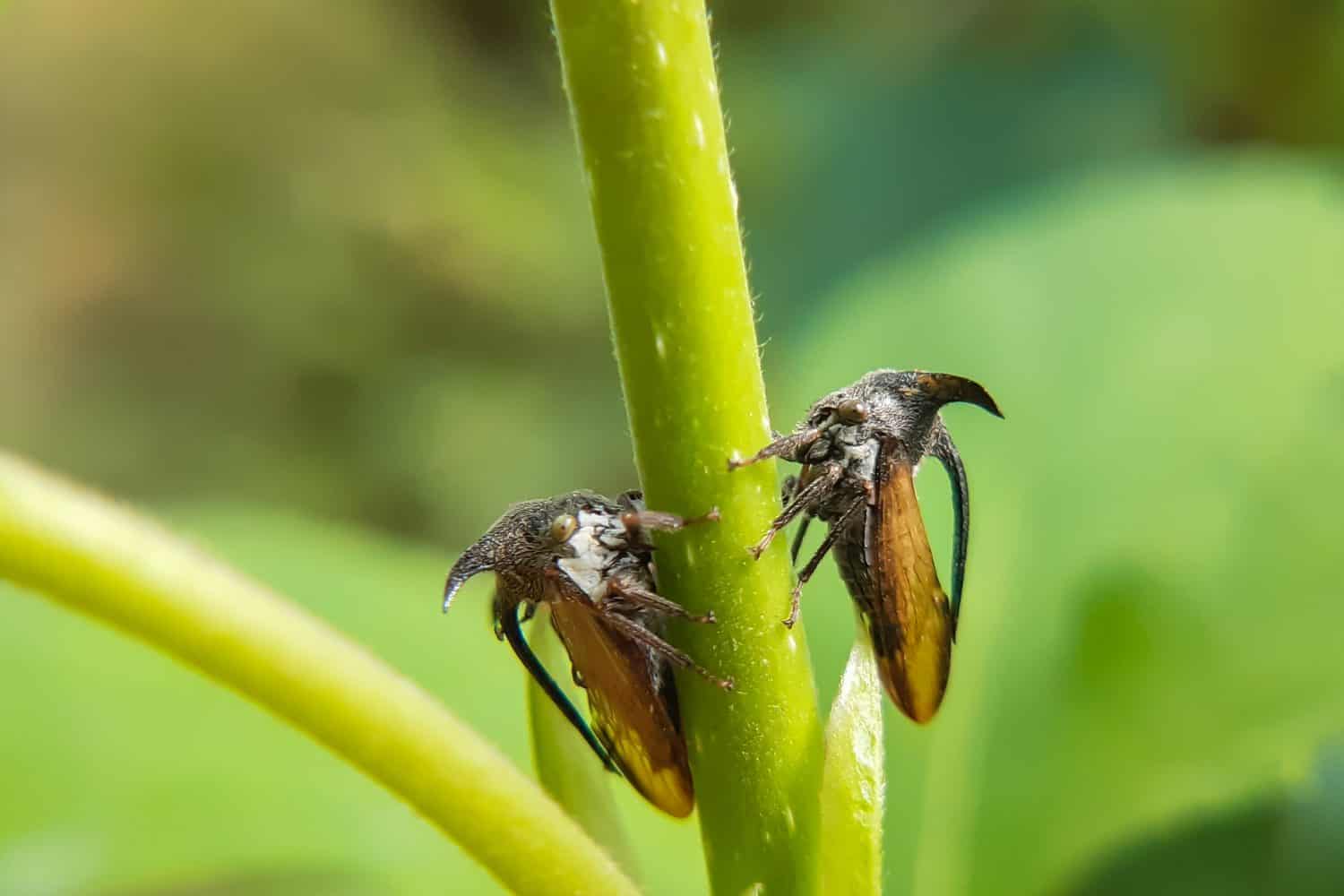
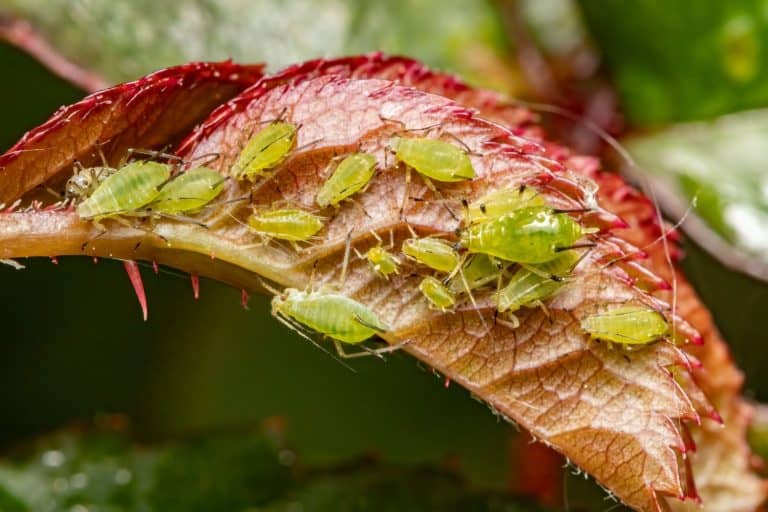
While many creatures prey upon treehoppers, these insects eat a diet that primarily consists of sweet plant sap.
©Jitender kumarj/Shutterstock.com
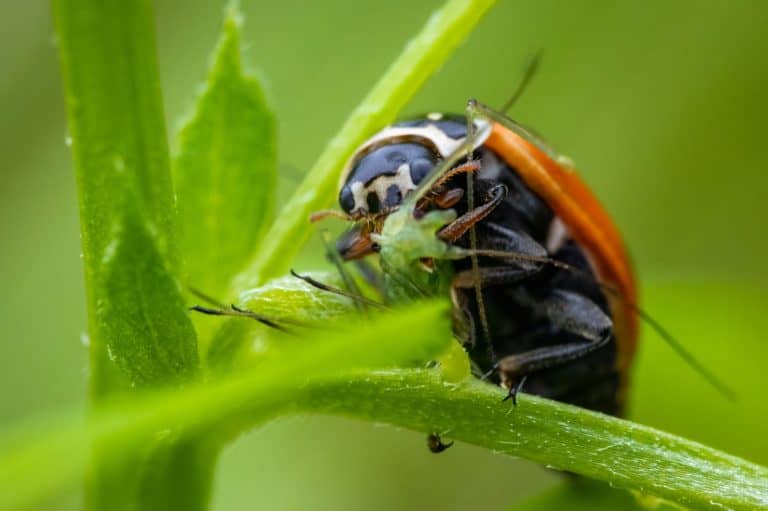
Treehoppers sit in the middle of the food web, which makes them a target for many larger predators. Birds, spiders, praying mantises, and lady beetles are known to prey on them, among other creatures. They are even threatened by small parasitic wasps, which lay eggs in or on treehopper nymphs. Suffice it to say, treehoppers need all the camouflage they can get, which explains their fascinating and conspicuous pronotums. As for their diet, they subsist primarily on plant sap, which they extract using piercing-sucking mouthparts called rostra. This phloem, as it is called, is rich in sugars and nutrients but low in protein, so treehoppers consume a lot of it. This diet, however, provides them with an unexpected ally: ants.
Funny Friendships
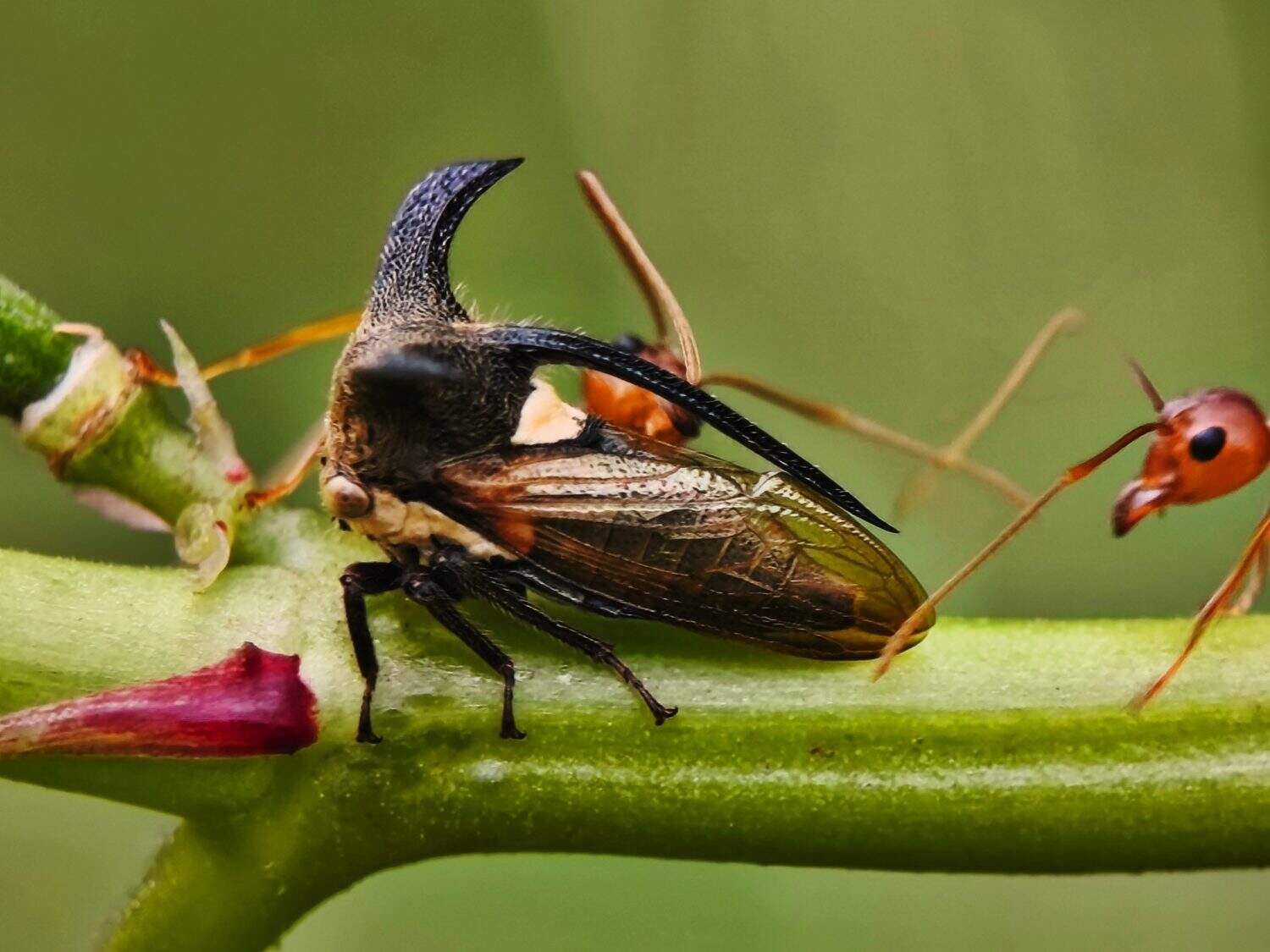
Treehoppers excrete honeydew, which makes them a beneficial ally to ants. In exchange for access to their honeydew, ants will protect treehoppers from many of their known predators.
©Vicky Wiedira/Shutterstock.com
Ants are often looking for honeydew, so they have an unexpected friend in treehoppers. Indeed, ants are known to protect treehoppers in exchange for some sweet, sweet honeydew. This mutually beneficial relationship can drastically improve the survival rate of an otherwise heavily predated insect like the treehopper. This honeydew is also collected by some bees, and fungi may grow on honeydew deposits. This makes treehoppers an integral part of forest and grassland ecosystems. When treehoppers lack allied ants to consume their honeydew in exchange for protection, these fascinating insects die off at an increased rate.
Other Attributes
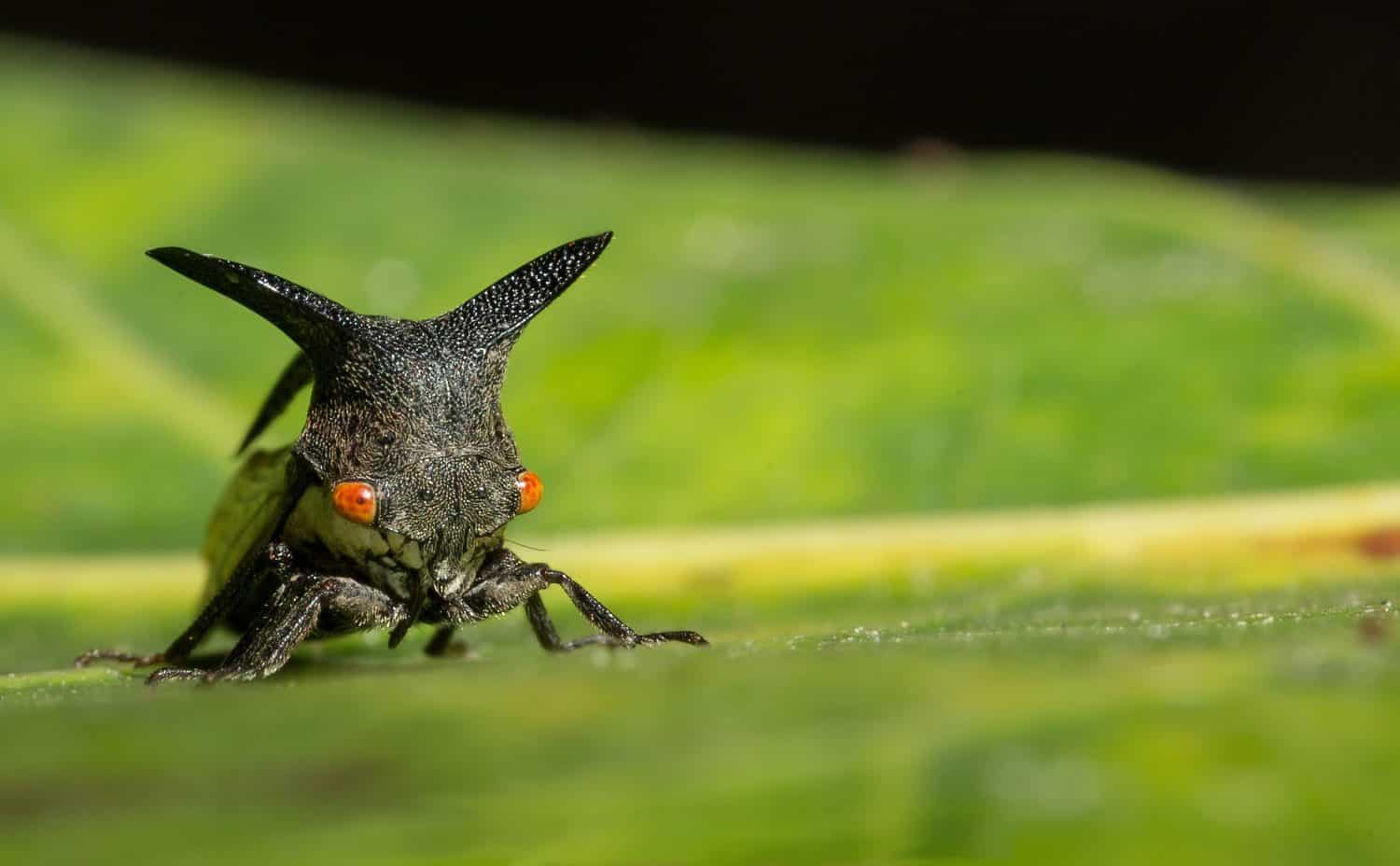
Treehoppers can communicate through vibrations and make massive leaps.
©Mr.tammanoon muangma/Shutterstock.com
This Instagram reel shows a treehopper and its strange appendage. While these insects are well-known for their varied, protruding forms, treehoppers have several other interesting attributes. For one, they communicate with each other using substrate vibrations. Indeed, they can use their legs to send vibrations through host plants to other treehoppers. This is most often used by males to advertise their mating prowess to prospective females.
Another interesting treehopper attribute is their jumping skills. These insects use a catapult-like mechanism to jump. Instead of using just muscle contraction to leap like other creatures, treehoppers use preloaded elastic elements in their hind legs to get serious air. Although they are known for their unusual features, treehoppers possess a wide range of fascinating traits.