
Hiding in plain sight, the orchid mantis is a true master of disguise. This sneaky insect doesn’t just blend in with its surroundings; it transforms into a part of the habitat itself, mimicking a beautiful flower to lure in unsuspecting prey. As stunning as these insects appear, they don’t start that way. As this YouTube video shows, the orchid mantis undergoes an incredible transformation, showcasing nature’s ingenious survival tactics and one of its most remarkable disguises.
A Floral Assassin
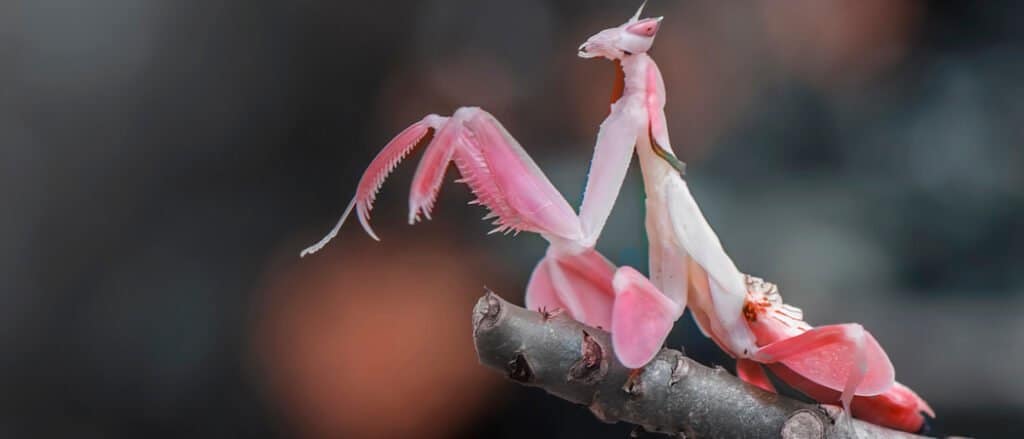
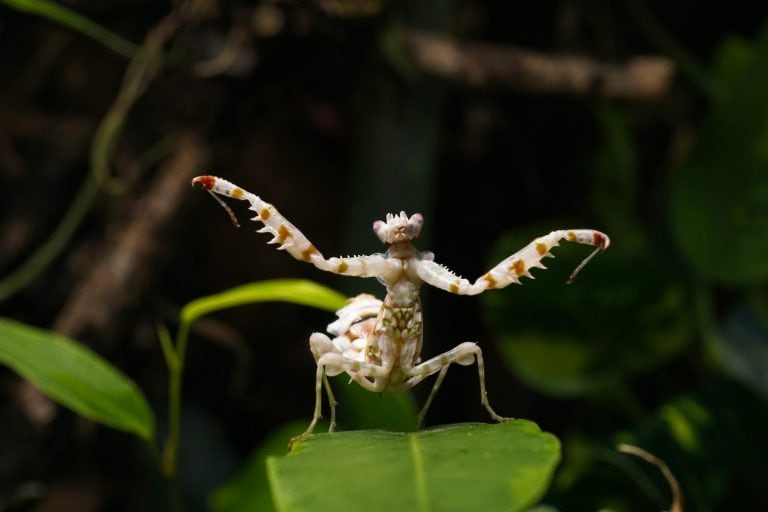
Female orchid mantises grow to about 3 inches long, while males only reach about an inch.
©Galuh M/Shutterstock.com
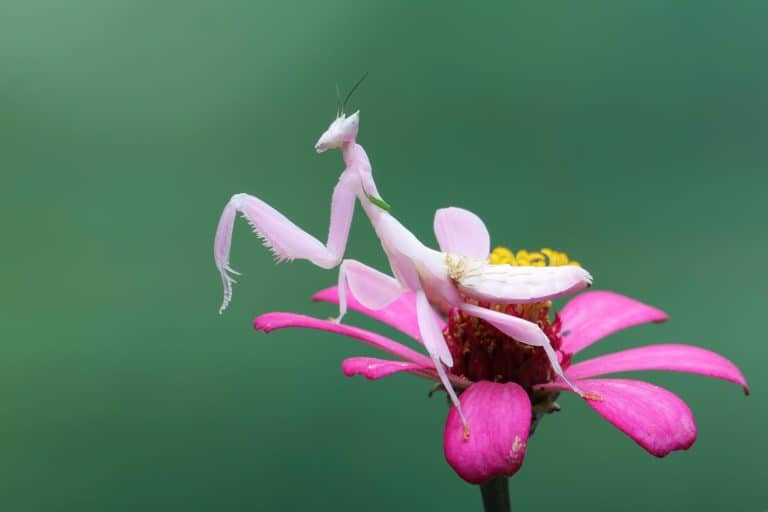
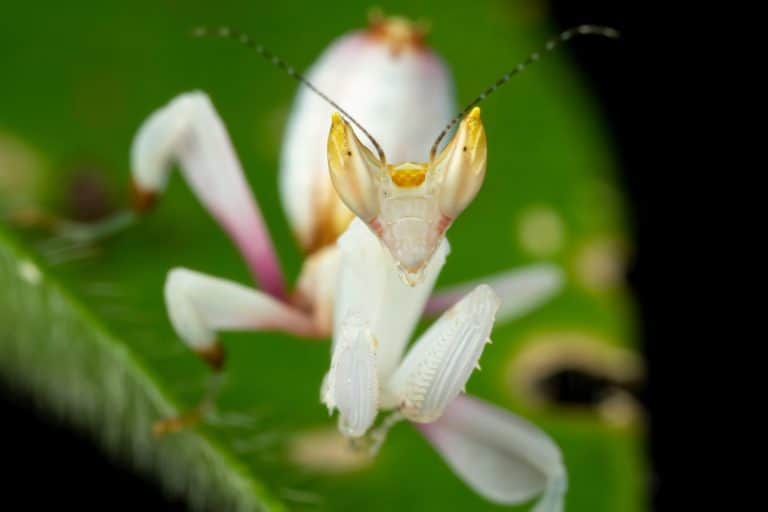
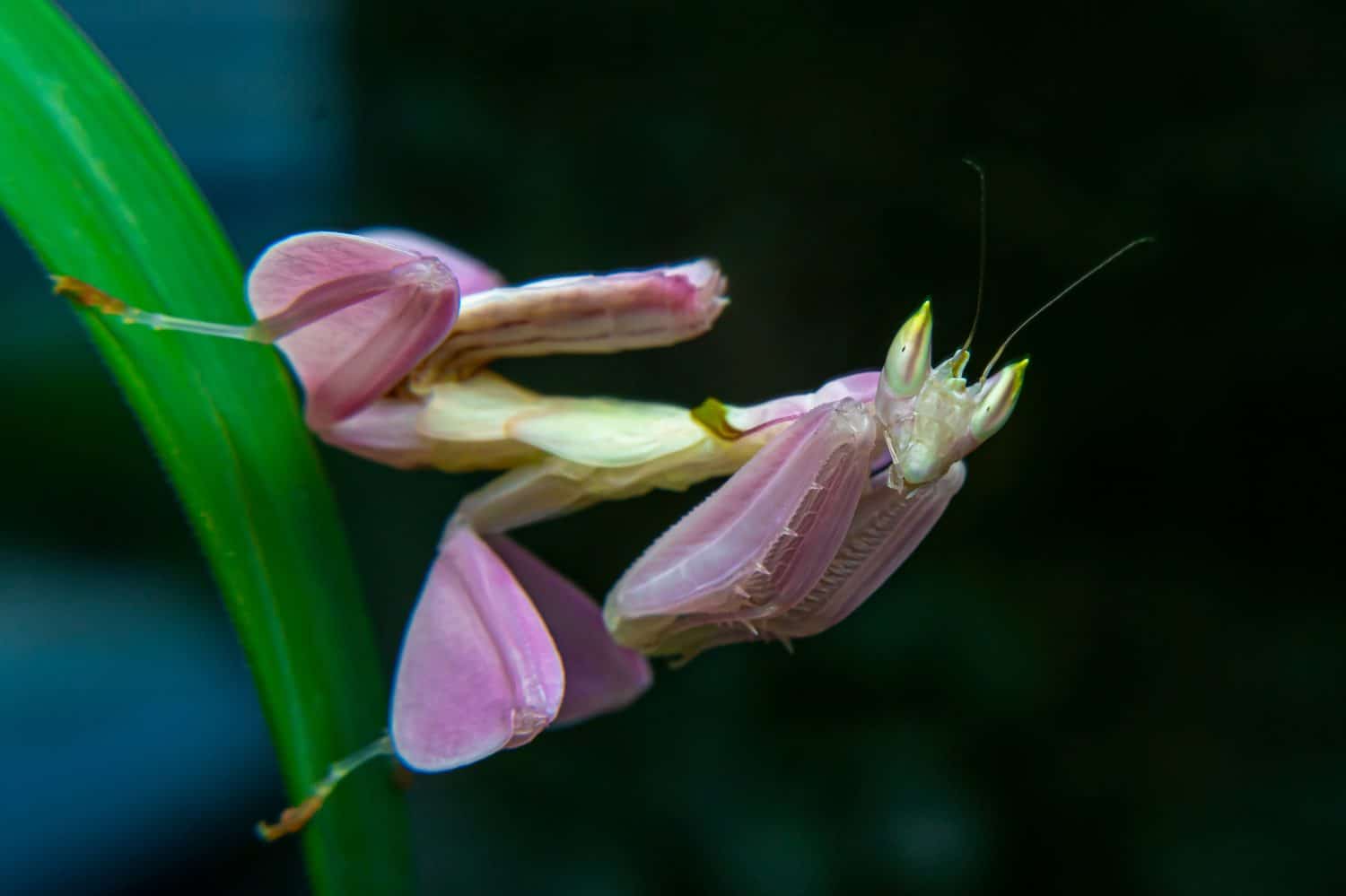
Found in the tropical rainforests of Southeast Asia, the orchid mantis (Hymenopus coronatus) is a species of praying mantis with a unique type of aggressive mimicry, allowing it to impersonate an orchid flower and ambush unsuspecting prey. The mantis’s four back legs are broad and flattened, resembling the delicate petals of a flower. Its powerful front legs, in contrast, are covered in spikes, designed to snatch and hold onto prey.
Orchid mantises have bright white bodies that absorb ultraviolet (UV) light and have very little color contrast, making them appear to be a single, unified flower when seen from a distance. With accents of pink, yellow, purple, or even green, they seamlessly match the orchid flowers in their environment. These clever insects can even shift their coloration over a few days to better suit their surroundings.
Interestingly, the orchid mantis doesn’t mimic a specific flower species. Instead, its appearance seems tailored to how pollinators like bees and butterflies see color. The mantis’s colors and patterns are in the same general range as the flowers around it, but they don’t exactly match any one species. By simply looking like a generic flower, the orchid mantis becomes a surprisingly effective lure for pollinators. Studies have even shown that orchid mantises can be more attractive to pollinators than the real flowers surrounding them!
The Scent of Deception
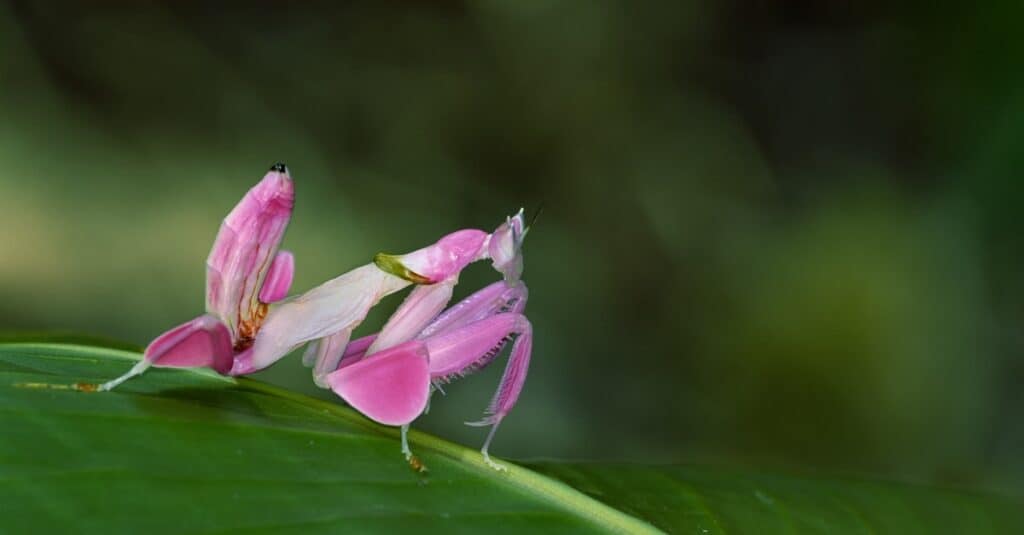
After mating, a female orchid mantis may decapitate the male and eat him.
©iStock.com/phittavas
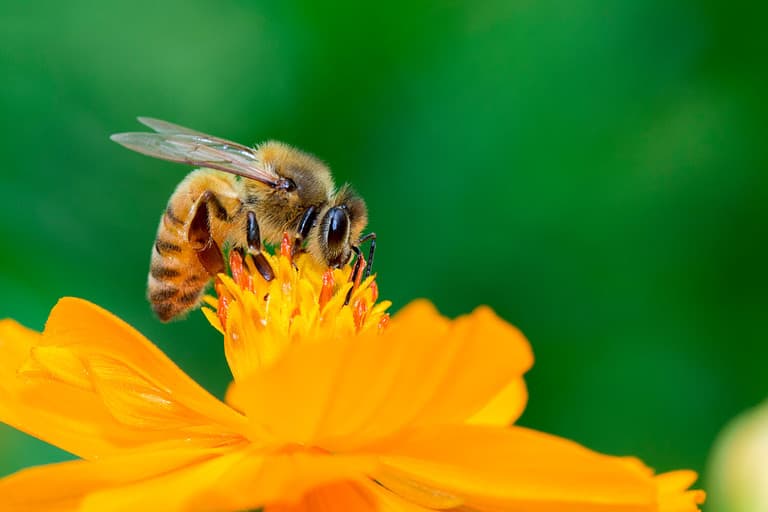
For a long time, researchers were stumped by the orchid mantis. While older mantises look more like orchid flowers, the younger ones are actually more successful at luring in pollinators, especially oriental honeybees. In a 2014 study, scientists discovered that there is more to the mantis’ deception than just its stunning appearance. Using advanced analysis, researchers found that orchid mantises use chemical cues to attract their prey. When actively hunting, the mantises release two specific chemicals into the air that oriental honeybees use to communicate with each other, drawing the bees in with both their appearance and their chemical allure.
What’s on the Menu

Orchid mantises prefer eating winged insects.
©Masayu Andrini/Shutterstock.com
Orchid mantises primarily eat other insects, with a preference for lepidopterans (butterflies and moths). However, their diet also includes beetles, fruit flies, crickets, bees, and other mantises — sometimes their own species, as seen in the YouTube video. These carnivorous insects are ambush predators that hide in plain sight thanks to their incredible flowery camouflage. When an insect gets close, the mantis strikes with lightning speed — just a fraction of a second — using its spiked front legs to capture the prey. Larger mantises are opportunistic and may occasionally prey on bigger creatures like baby mice, small birds, lizards, and frogs.
Hiding in Plain Sight
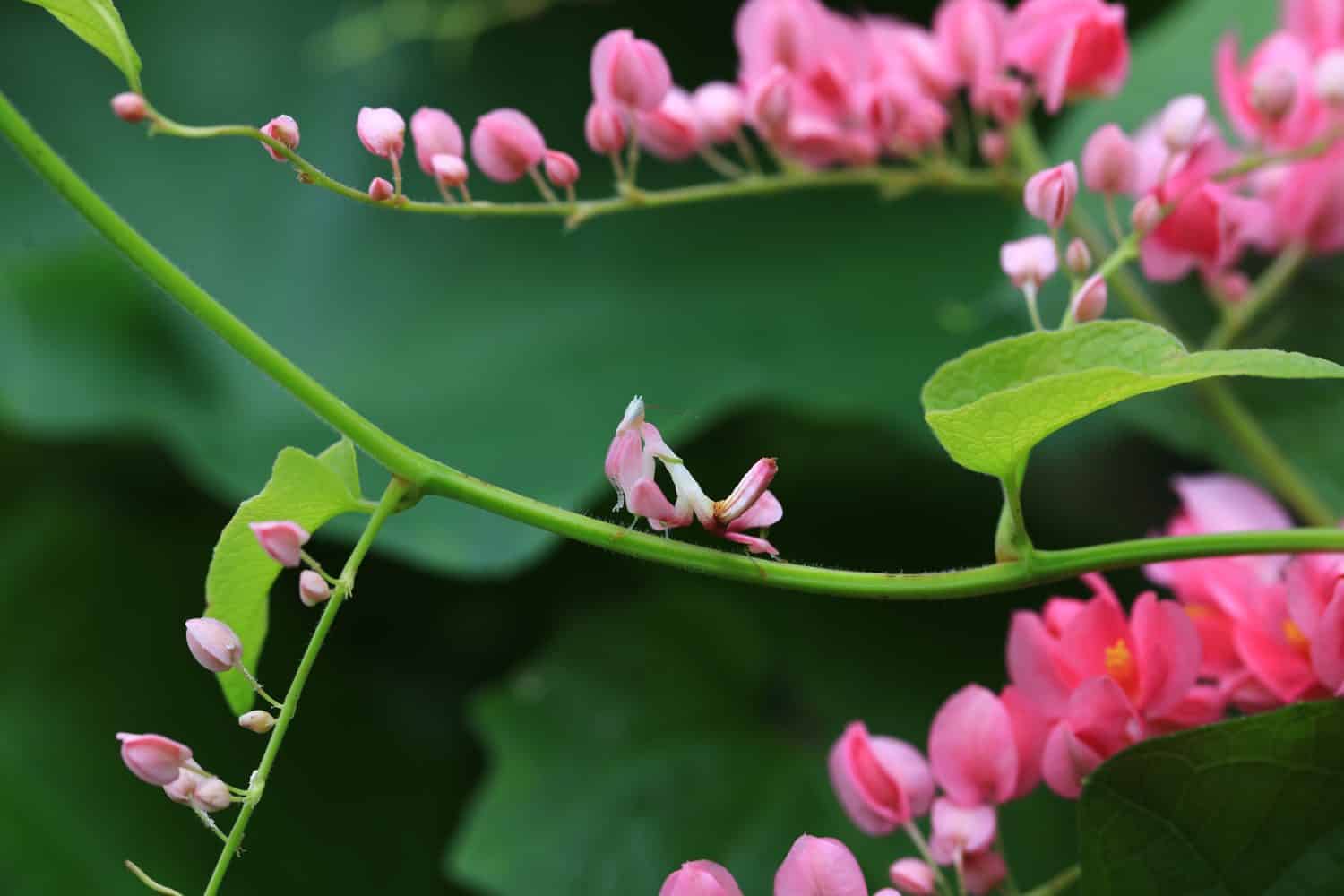
Female orchid mantises live longer than males.
©Jamikorn Sooktaramorn/Shutterstock.com
Interestingly, many of the orchid mantis’s typical predators are also animals they might prey upon, including snakes, lizards, frogs, and birds. Tarantulas, spiders, wasps, and other larger insects are also among the mantis’ predators. Fortunately, the orchid mantis’ flowery camouflage is a dual-purpose survival tool. Not only does it help the mantis to trick its own prey, but it also helps it hide from other predators. Researchers believe that the mantis’ flower petal-like back legs, while beautiful, are primarily a form of defense against predators, not an attempt to attract prey. If their camouflage fails, adult orchid mantises can fly away from danger using their two pairs of wings. Young nymphs, however, can only run and climb if they want to escape.
The Orchid Mantis’ Epic Transformation
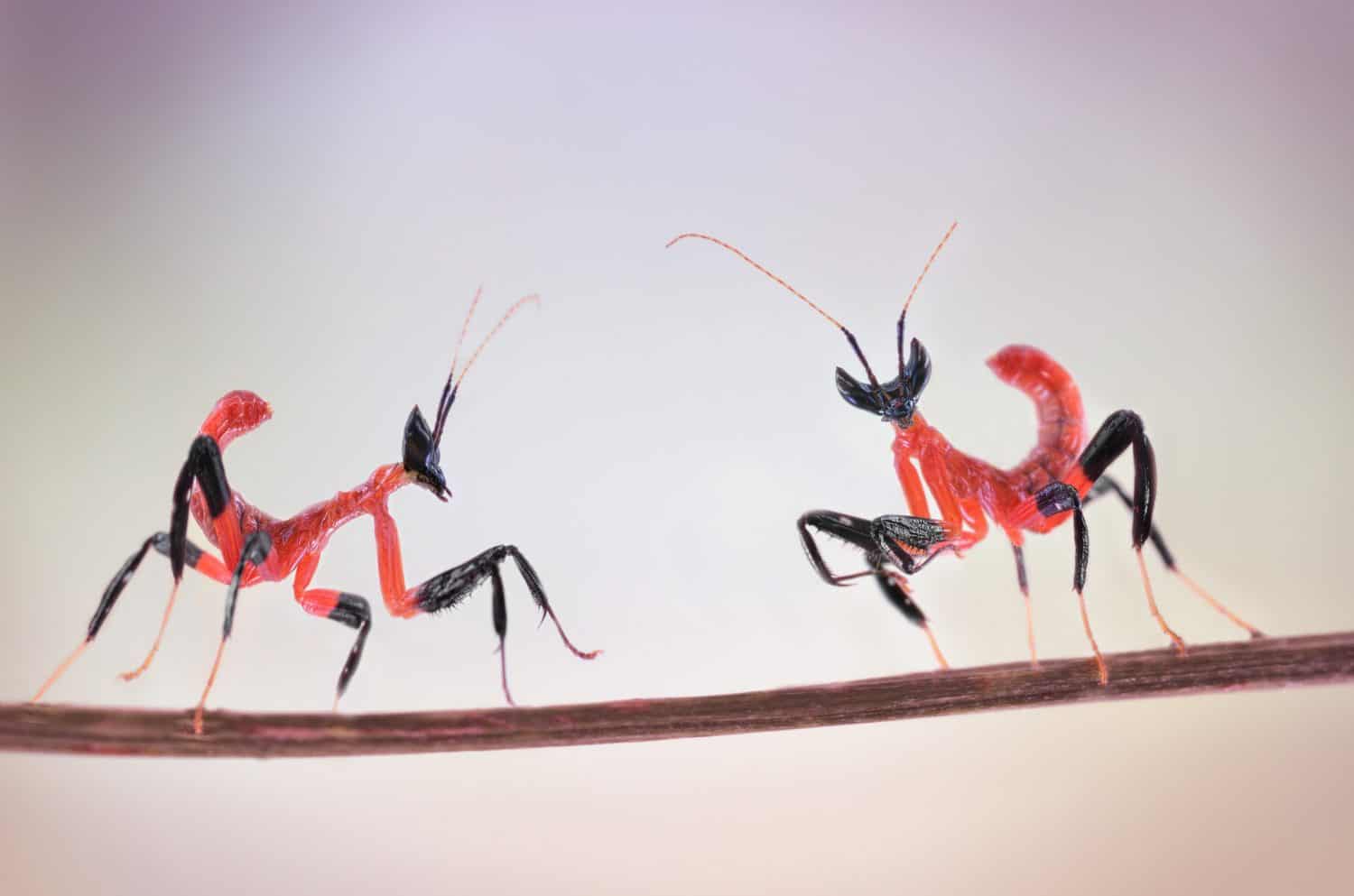
The orchid mantis is also called the walking flower mantis, the pink orchid mantis, and even the ninja mantis.
©Sebastian Janicki/Shutterstock.com
After mating, a female orchid mantis can produce up to 100 eggs, which hatch around six weeks later. Upon hatching, the young mantis nymphs must immediately fight for survival. Many turn on their own siblings, cannibalizing them for their first meal. These tiny, black and orange nymphs look nothing like their white, flower-mimicking parents. This stark coloring, however, isn’t meant for camouflage; it’s a form of aposematic mimicry, serving as a warning to predators. By mimicking the colors of toxic insects like stink bugs, the nymphs signal to potential threats that they are not a tasty meal.
However, within the first 10 days of hatching, orchid mantis nymphs undergo a remarkable transformation, orchestrated by a unique pigment transporter gene called “Redboy.” During the mantis’s first molt, Redboy pushes the red pigment out of the mantis’s skin cells. It also facilitates the accumulation of uric acid, which creates the white coloring of an adult mantis. With this bright white coloring, the mantis mimics the forest’s tropical orchid flowers, allowing it to hide from predators and lure in unsuspecting prey.