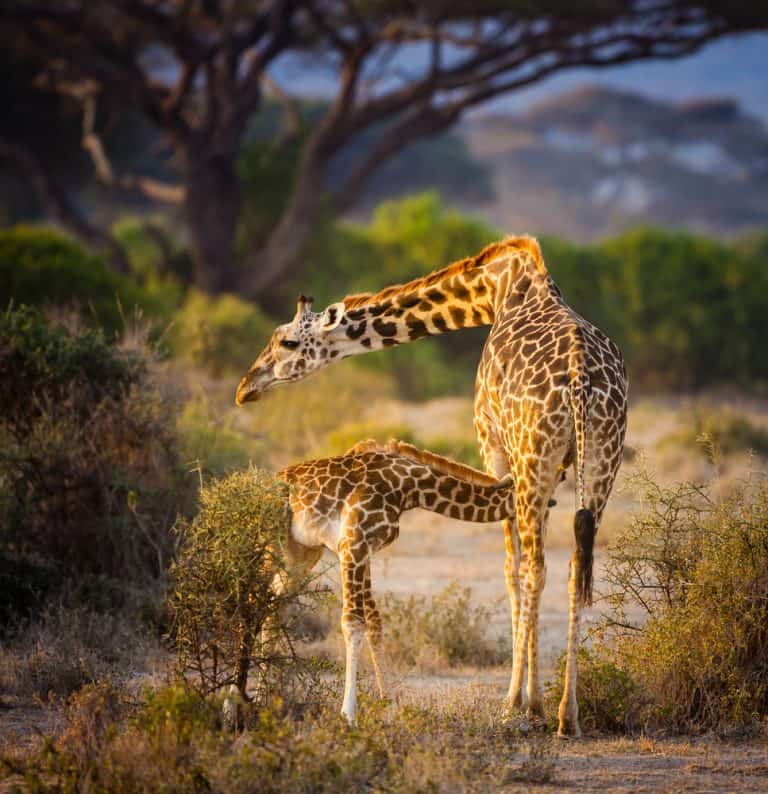
Zoos and wildlife parks across North America are home to hundreds of giraffes that awe millions of visitors each year. These gentle giants tower over the crowds, serving as living ambassadors for Africa’s vanishing wild herds. But a new genetic study led by researchers at the University of Illinois Urbana-Champaign and Morfeld Research & Conservation has uncovered a troubling truth: most giraffes in American collections are hybrids — genetic blends of several species — and that means that they may not be as useful to conservation efforts as once believed.
“The key message is that most giraffes we see in North American zoos and on private ranches no longer genetically represent the giraffes from the wild,” Dr. Wesley Au, the study’s lead author and a researcher at the University of Illinois Urbana-Champaign, tells A-Z Animals. “Our whole-genome analyses show that most of these animals are hybrids—primarily mixes of northern and reticulated giraffes—rather than good genetic matches to the distinct giraffe species now recognized.”
That discovery has big implications for conservation. “They are still incredibly important for education, outreach, research, and developing reproductive technologies,” Au says. “But as ‘assurance populations’ that could directly play a role in helping preserve the genetic distinctiveness of wild Nubian, reticulated, or southern giraffes, their conservation value has been sharply reduced.”
How Scientists Made the Discovery
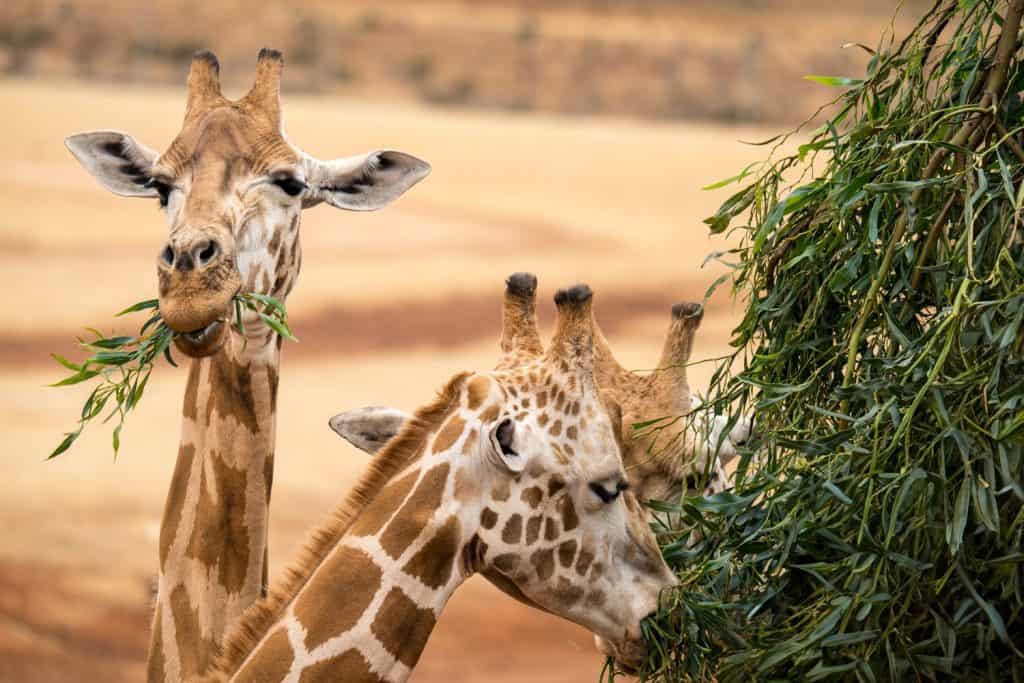
How genetically different are giraffes in zoos and ranches from their wild counterparts?
©Vincent_Nguyen/Shutterstock.com
To find out what species North America’s giraffes really represent, Au and his team collected DNA from 52 giraffes living in zoos and private facilities. “…we conducted the first large-scale whole-genome sequencing study of giraffes in North America,” Au explains.
However, not every species of giraffe was genetically analyzed. “Note that one species of giraffe, the Masai giraffe, is managed separately from the others, and our samples did not survey them, as we only included one Masai giraffe,” lead researcher Dr. Alfred Roca, a professor of animal sciences at the University of Illinois Urbana-Champaign, explains to A-Z Animals. “Masai giraffes may retain greater conservation value since they are managed separately by AZA institutions.”
By comparing the DNA from giraffes in zoos and private institutes with wild giraffes across Africa, the team could see how closely each animal matched known species.
The results showed that only a handful of giraffes were close genetic matches to a single wild species. “Only eight individuals reached about a 90% match to a single wild species,” Au notes. “The rest were a mix of two and sometimes three species.”
Most giraffes we see in North American zoos and on private ranches no longer genetically represent the giraffes from the wild.
Dr. Wesley Au, researcher at the University of Illinois Urbana-Champaign
A Genetic Patchwork
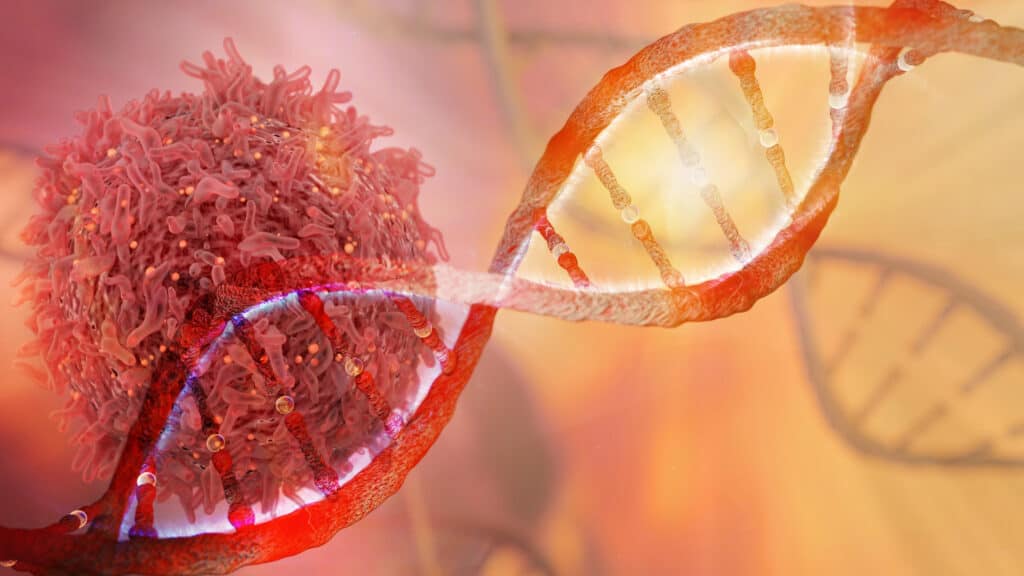
Looking at the genetic code is key to finding differences in giraffe species.
©CI Photos/Shutterstock.com
Besides finding a high number of hybrid species, other findings were especially surprising. “One revealing example came when we analyzed the ancestry of giraffes that had been thought to be ‘pure reticulated’ based on appearance and records,” Au says. “The genomic data showed that several of these animals actually carried significant northern giraffe ancestry, sometimes over 40%.”
He adds, “This kind of cryptic hybridization wouldn’t have been detected without genome-wide sequencing—it highlights how some record-keeping and physical traits alone can be misleading when species have been interbred over generations.”
The scientists also found that giraffe DNA in North America looks like a genetic patchwork quilt. “Instead of a uniform mix, we found patches of DNA from different species scattered along each chromosome, reflecting generations of crossbreeding,” Au says. “Seeing this ‘genetic patchwork’ made it clear how thoroughly the North American population has been reshaped over time.”
What Does This Mean for Conservation Efforts?
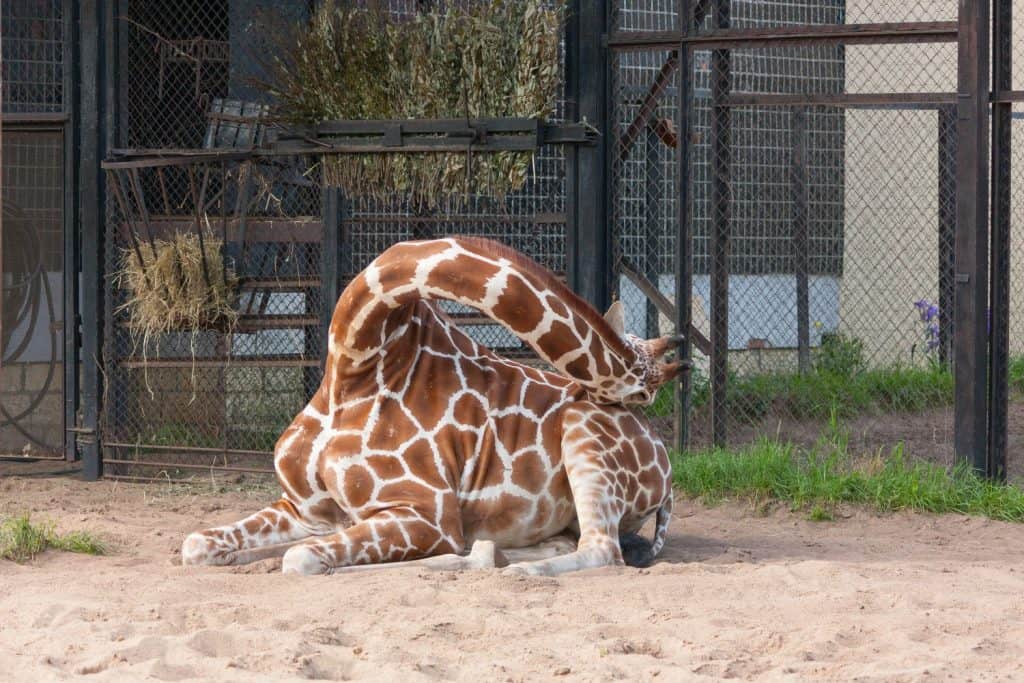
Unfortunately, most giraffes in zoos are a hybrid species.
©RU4077/Shutterstock.com
The new study reveals that most giraffes in North American zoos are hybrids — mixes of multiple wild species — and that creates serious challenges for conservation. Zoos have long been seen as holding “assurance populations,” or backup groups of animals that could help restore species if wild numbers collapse. But for that strategy to work, those captive animals need to be close genetic matches to their wild counterparts.
Because so many giraffes in captivity carry DNA from more than one species, they no longer represent any single wild population. A giraffe that’s half northern and half reticulated, for example, doesn’t fit cleanly into either group. If such an animal were reintroduced to Africa, it could blur the natural genetic boundaries between species that evolved separately over thousands of years. “Using such hybrids could muddy the genetic integrity and local adaptations of vulnerable wild populations. So, while hybrids remain valuable as individuals, their value as species-specific assurance populations is limited,” Au adds.
This means that giraffes in American zoos can’t easily serve as a reliable “genetic safety net” for their wild relatives. Even though these animals remain vital for education and research, their mixed ancestry makes them unsuitable for reintroduction or for maintaining the unique traits of wild giraffe species. To truly help conserve giraffes, experts say, breeding programs will need to focus on restoring pure lineages that match the genetic makeup of wild populations.
Could Private Giraffe Ranches Help?
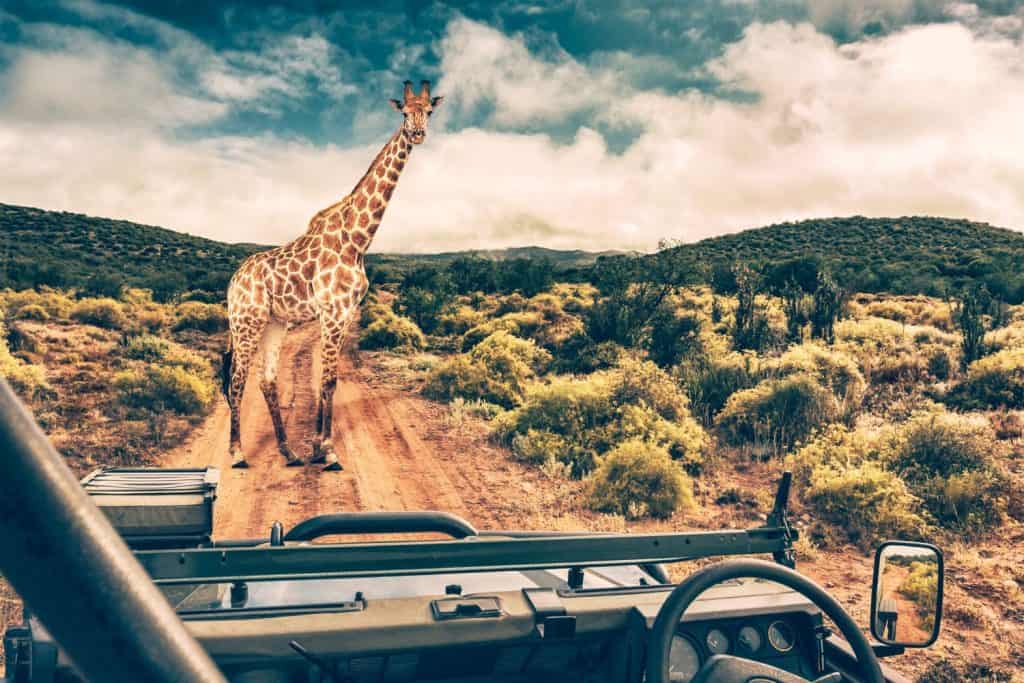
Could private ranches be a way to help giraffe conservation?
©Anna Om/Shutterstock.com
These findings put significant constraints on conserving wild giraffe species. However, some private facilities could play a role in helping with conservation. Across the United States, private giraffe ranches have become an unexpected attraction as sprawling properties where visitors can meet giraffes up close, feed them by hand, and experience a taste of an African safari without ever leaving the country. These private ranches combine tourism, animal care, and sometimes breeding programs in settings that look more like open countryside than traditional zoos.
One well-known example is Giraffe Ranch in Dade City, Florida, a 47-acre working ranch that mixes exotic wildlife with domestic cattle. Visitors can choose drive-through safaris, Segway tours, or even camel rides, all while getting the chance to feed giraffes and learn about their biology and behavior. The ranch describes itself as a licensed working facility dedicated to education and animal care, and it has become a popular spot for families seeking an up-close wildlife experience.
In Texas, the Natural Bridge Wildlife Ranch outside San Antonio offers another example. Spanning more than 400 acres, it’s home to over 500 animals from 40 different species, including reticulated giraffes. Guests explore the ranch in their own vehicles, passing through open fields where giraffes, zebras, and antelope roam freely. The experience blends the charm of a safari with the accessibility of a family road trip, and it has helped make Texas one of the country’s leading regions for exotic wildlife ranching.
Even though these ranches have hybrid giraffe species, experts suggest that private ranches could still play a valuable role in giraffe conservation if they choose to manage their animals responsibly. “If they are able to overcome the cost and hurdles of establishing new captive breeding programs directly from wild populations of the most highly endangered species and subspecies of giraffes, then they could contribute greatly to giraffe conservation by providing for an assurance stock with high genetic value,” Roca adds.
What Does This Mean for the Future of Giraffes?
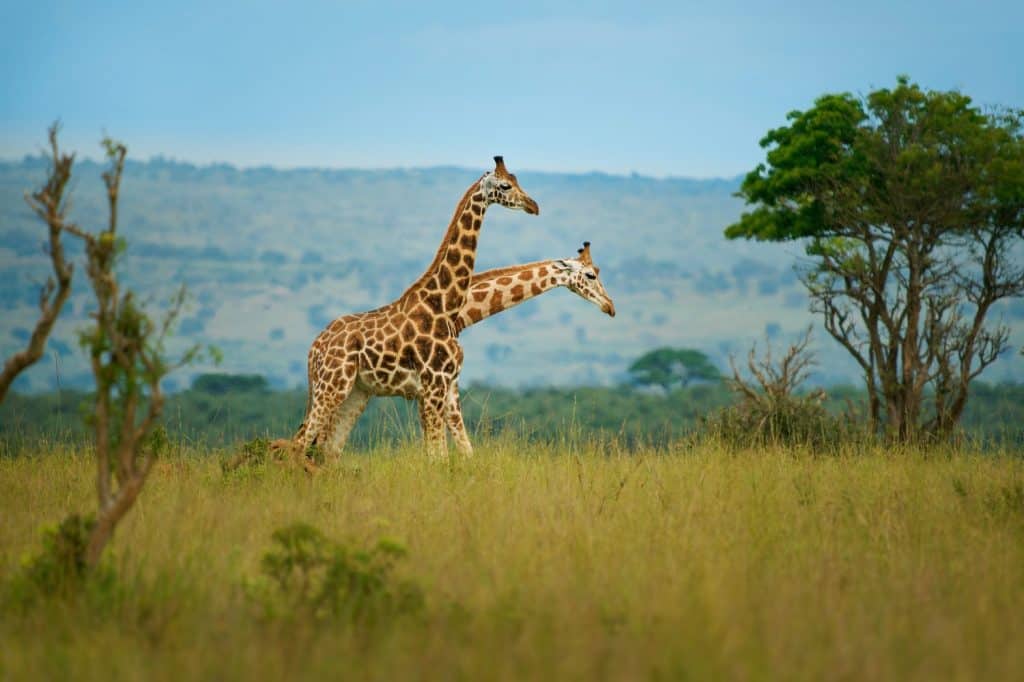
Ultimately, if we want to help giraffe conservation, it starts with protecting their wild habitats.
©Martin Pelanek/Shutterstock.com
The new genetic research offers a sobering but ultimately hopeful message: if we want to protect giraffes for future generations, we need to focus on preserving the true diversity that still exists in the wild. For zoos and private facilities, the path forward may lie in using science more carefully. Genetic testing can guide smarter breeding choices and help identify individuals that still match wild species closely. Over time, this could allow for the development of truly representative “assurance populations” that might one day support reintroduction or genetic rescue efforts.
But the greatest hope for giraffes will always rest in Africa itself, in protecting wild habitats, reducing poaching, and supporting the people who live alongside these animals. By combining on-the-ground conservation with responsible management in captivity, humanity has the chance to ensure that giraffes continue to walk the earth not only in parks and pastures, but under the same vast skies where their ancestors once roamed free.