
Quick Take
- Nakoda's striking white coat wasn't what most people assumed, and the real explanation changes how her story is understood. Discover the real cause →
- Parks Canada tried fencing, three relocations, and more, but every intervention failed for a reason that says more about Nakoda's intelligence than anyone expected. See every failed attempt →
- The one safety measure that finally seemed to work gave everyone hope. Then 2024 proved that hope wrong in the worst possible way. Find out what changed →
- A train, a highway, and 12 hours sealed Nakoda's fate, yet what kept her at the roadside even before that moment is the detail that lingers. Read Nakoda's final days →
Nakoda the grizzly bear was an instant sensation. After her first appearance in Banff National Park at Lake Louise in 2020, the white and blonde grizzly bear with a dark stripe down her back attracted attention wherever she went.
As seen in an Instagram video from a few years ago, Nakoda liked spending her time along the Trans-Canada Highway foraging for dandelions. This consistent closeness to vehicles and interaction with people who would pull over to take her picture made Nakoda comfortable being around both cars and humans.
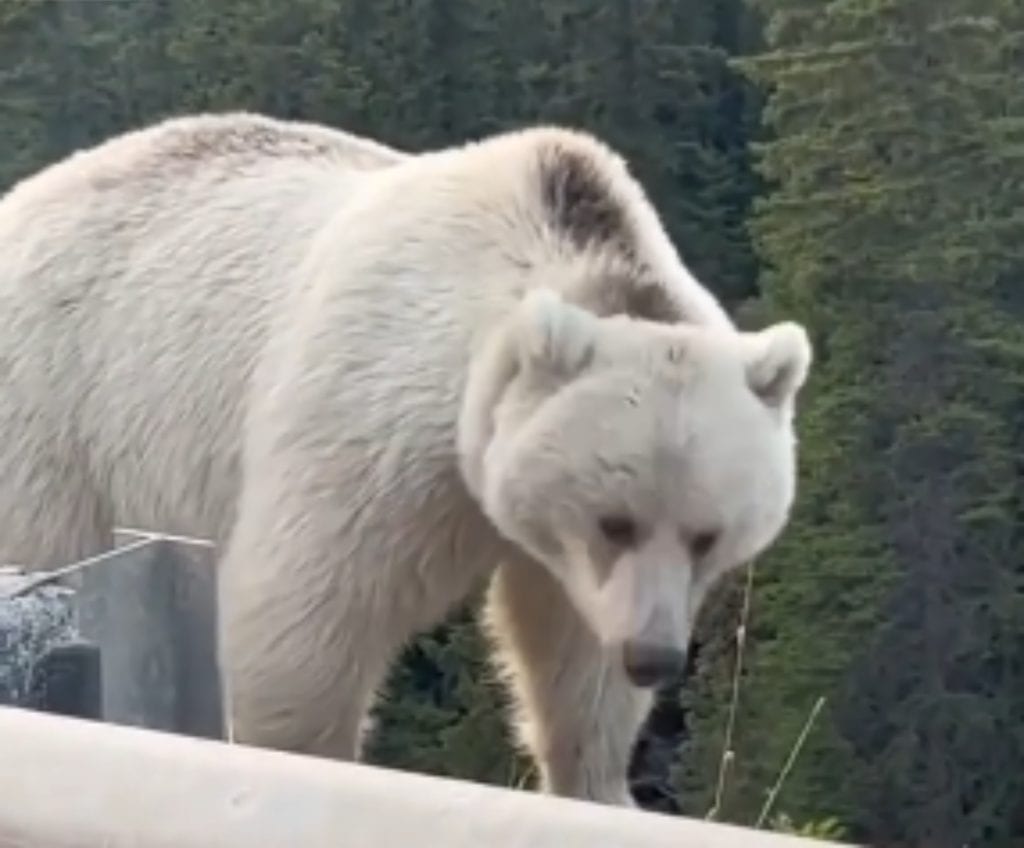
Nakoda, the white grizzly, was often seen on the side of the highway eating dandelions.
©@albertanow2 / Instagram – Original
Her fondness for foraging close to the road began when she was a cub. Along with her mother and sister, baby Nakoda was witnessed several times wandering dangerously close to traffic. While Nakoda would survive cubhood, her sister would not. She was struck and killed by a vehicle in 2022. Nakoda’s mother tragically lost her life to a vehicle collision as well.
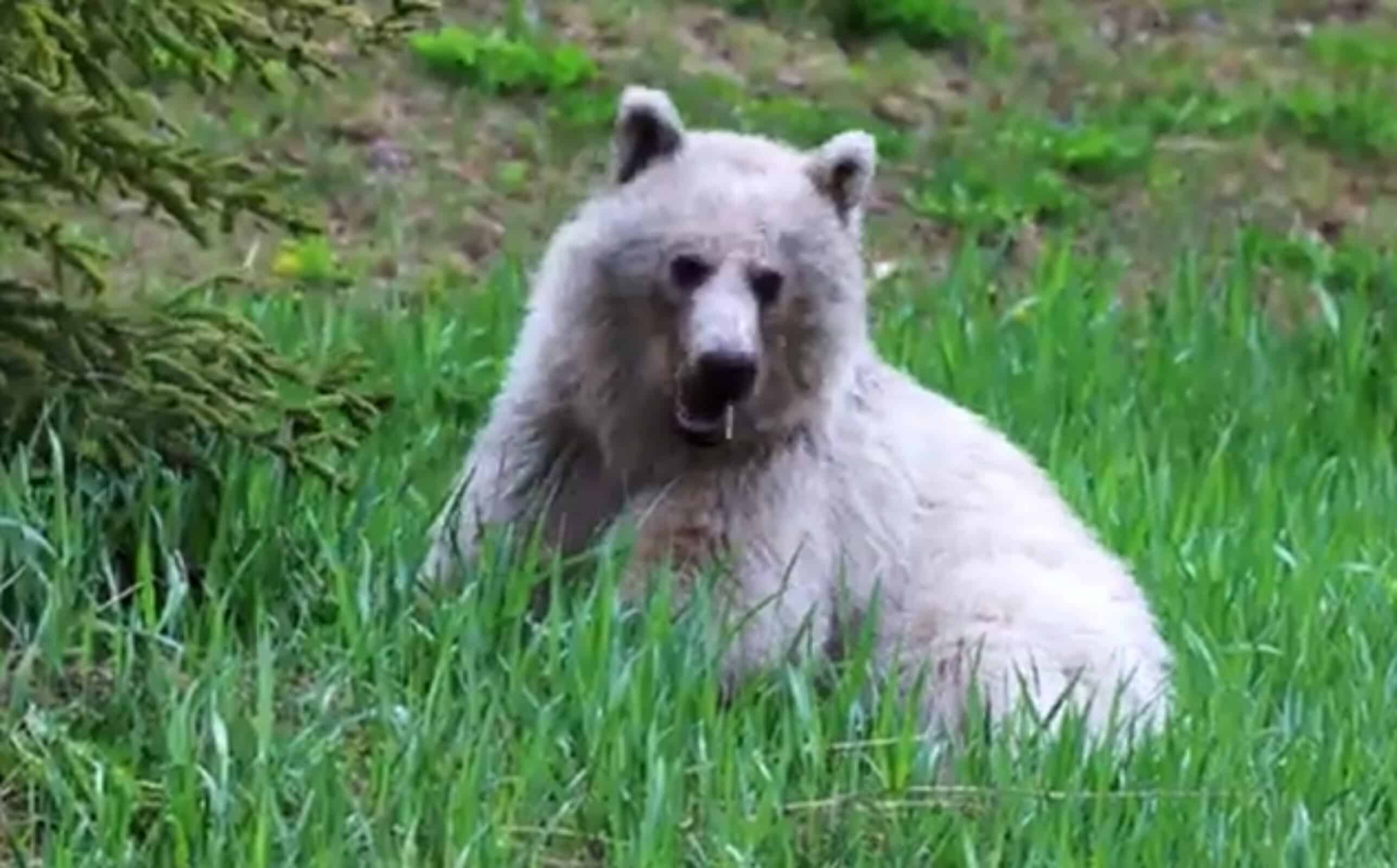
Nakoda Had White Fur but Was Not Albino
Nakoda was a grizzly with white fur. However, she was not this color due to albinism. Nakoda’s coloration was due to an entirely different reason.
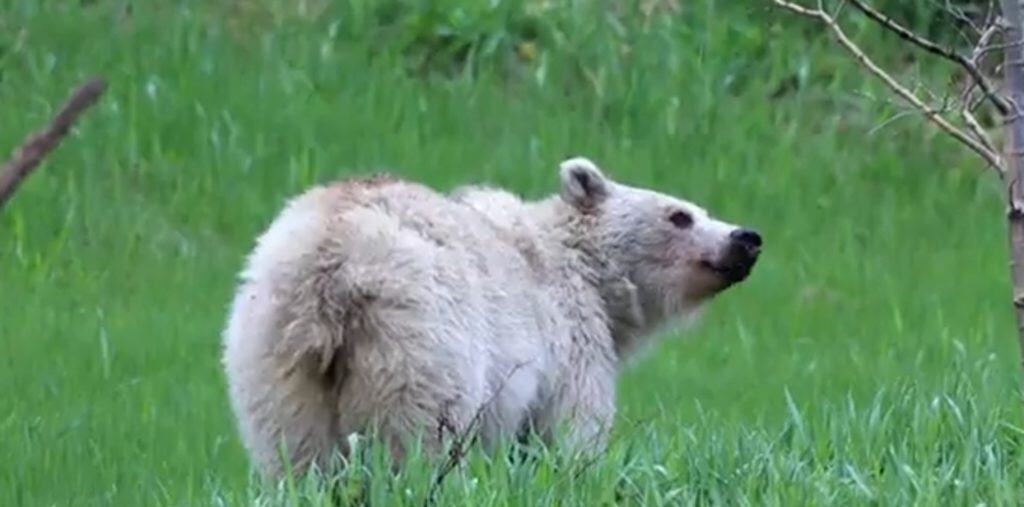
Nakoda was a grizzly with leucism, not albinism.
©Mike Hesla / YouTube – Original
If Nakoda were an albino, then her eyes and nose would be pink due to a full lack of pigmentation in her body. With a black nose and dark eyes, Nakoda instead suffered from leucism. This is where pigmentation is partially or completely lost from all parts of the body except the eyes and nose.
Leucism is not painful, but it is rare. Animals that have it can live long, normal lives. However, it does inhibit their ability to camouflage themselves in their habitats, which can be detrimental to their overall survival.
Redirecting Nakoda and Keeping Her Off the Highway Was Futile
Given how drawn Nakoda was to dandelions on the side of the highway, Parks Canada installed fencing to attempt to deter the grizzly. However, Nakoda was a smart bear who did not let fencing stop her. Nakoda simply learned how to climb the fence to get to the dandelions.
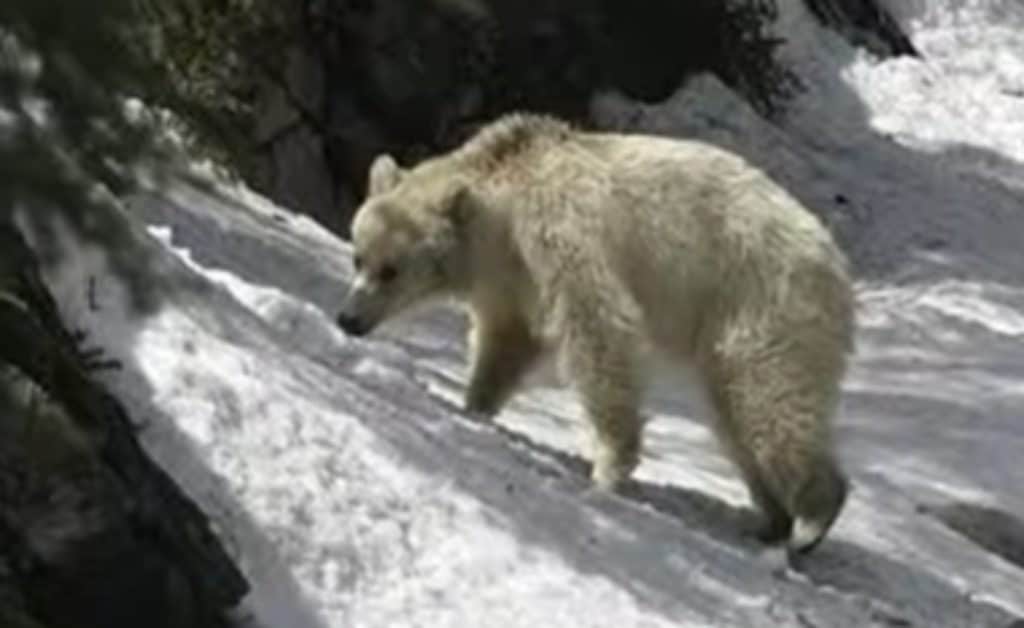
Nakoda was relocated and had electric fences erected near the highway, but that did not dissuade her from roaming the ditches alongside fast-moving traffic.
©Fox 31 KVDR.com / Facebook – Original
Nakoda was also relocated away from the highway within her home territory a total of three times beginning in 2022. Again and again, Nakoda found her way back to the side of the highway littered with dandelions.
After traditional methods of keeping wildlife away from the Trans-Canada Highway proved ineffective, Parks Canada installed electric fencing. This worked in 2023. Nakoda was not spotted in the area that year, instilling hope that the electric fencing had worked. However, as 2024 would prove, this was not the case.
What Happened to Nakoda?
Unfortunately, the end of Nakoda’s story is not a happy one.
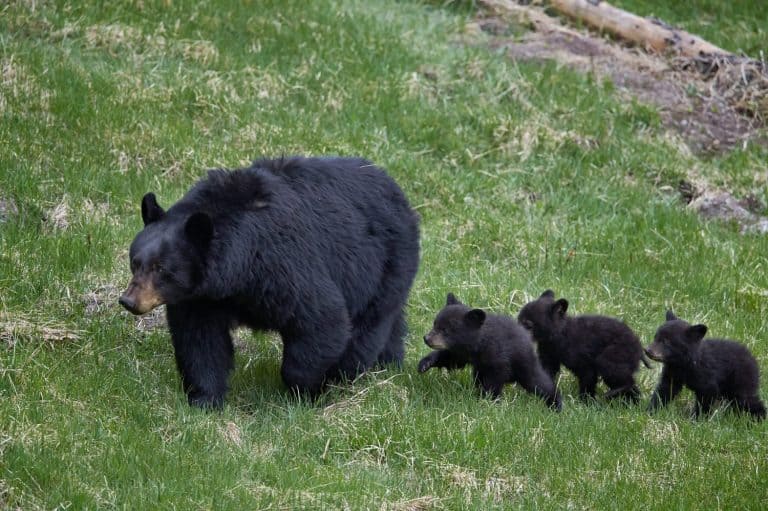
In early June 2024, Nakoda and her two cubs were dangerously close to traffic while foraging for food along the Trans-Canada Highway. That morning, the two cubs ventured into traffic and both were tragically killed.
Nakoda remained in the area after the death of her cubs. There are different schools of thought about why she stuck around, but Nakoda would not leave the grassy area beside the highway despite attempts to get her to do so.
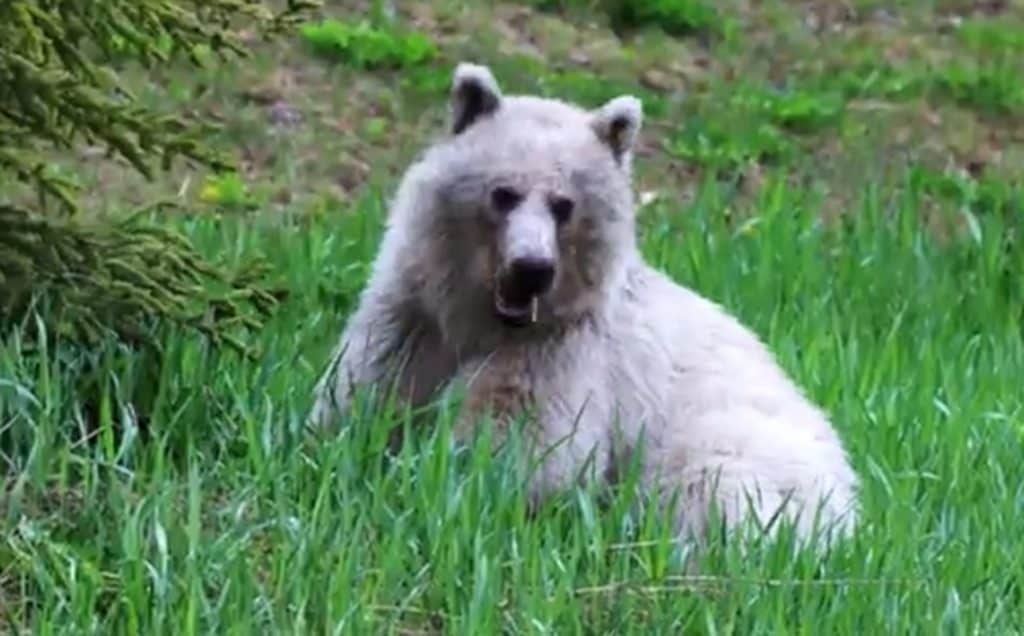
Sadly, Nakoda was struck by a vehicle and later died from the injuries sustained in June 2024.
©Mike Hesla / YouTube – Original
A short 12 hours later, a train startled Nakoda. She ran into the highway. One car managed to avoid hitting the grizzly. A second could not stop in time, striking Nakoda.
Nakoda did not die instantly. Many hoped that as she ran off into the forest, she would simply take some time to heal. But this was not to be. Instead, Nakoda suffered internal injuries. The inactivity alarm went off on her collar two days later, alerting to the fact that Nakoda had succumbed to her injuries.
Since Nakoda’s death, Parks Canada has been working to determine how to better protect wildlife along the Trans-Canada Highway. Hopefully, her passing will not be in vain.