
Quick Take
- Survival requires a Syrian hamster to transport 50% of its total body weight.
- The sacculi buccales reach the hips, creating a specific physical constraint during heavy transit.
- These internal storage pockets maintain a counterintuitive state of total dryness during use.
- Every domestic hamster initiates a mandatory caching sequence to manage its food supply.
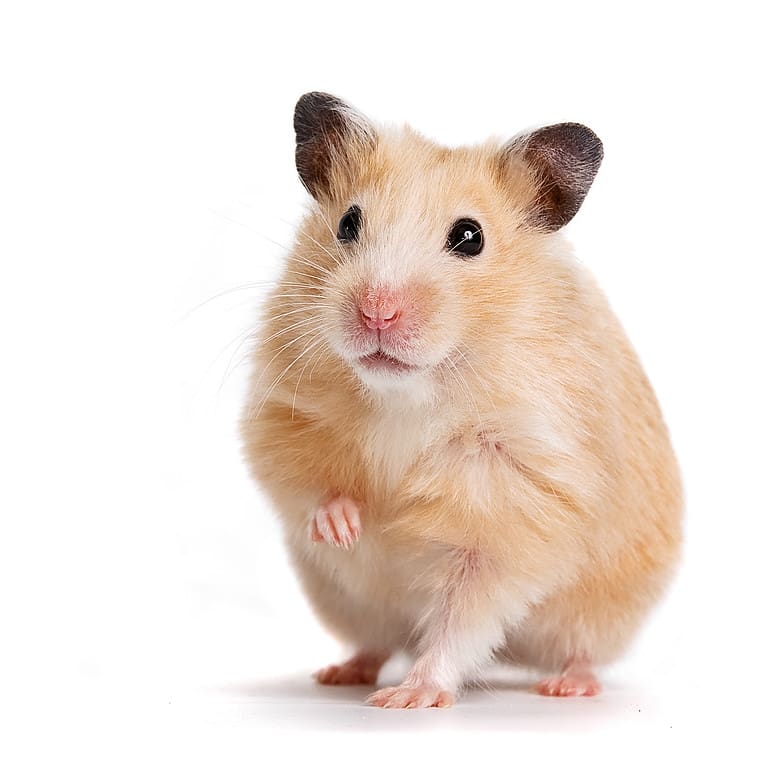
The hamster has a reputation for being a lovable, cuddly household pet. They may have a penchant for running on exercise wheels and eating sunflower seeds, but there is more to hamsters than meets the eye. Syrian hamsters, also called golden hamsters, have a special adaptation hiding beneath their soft folds of fur: organic backpacks.
Humans are forced to rely on external instruments to carry their stuff to and from places. However, hamsters have space for cargo built right into their bodies. Those flexible cheeks on a hamster’s face are actually massive internal backpacks. They extend as far back as the hips and are capable of holding a surprising amount of food. While many hamsters are kept as pets today, their internal backpacks help them survive their native Western Asian climate, holding considerable amounts of food and keeping it dry during transport back to their burrows. Let’s learn more about hamsters, their internal backpacks, and why this makes them one of nature’s most efficient survivalists.
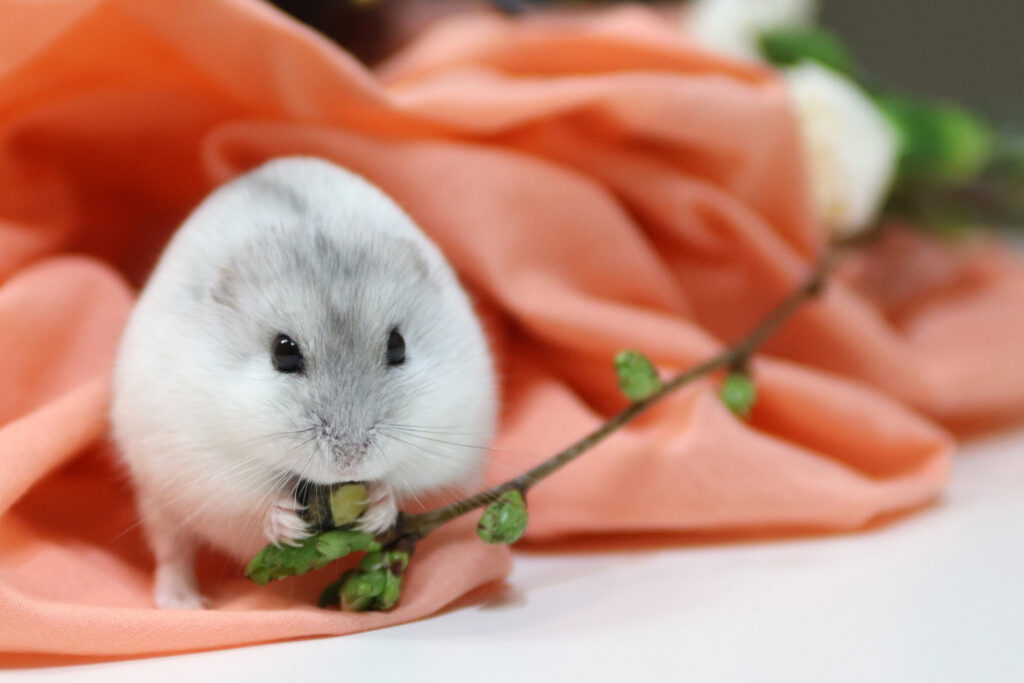
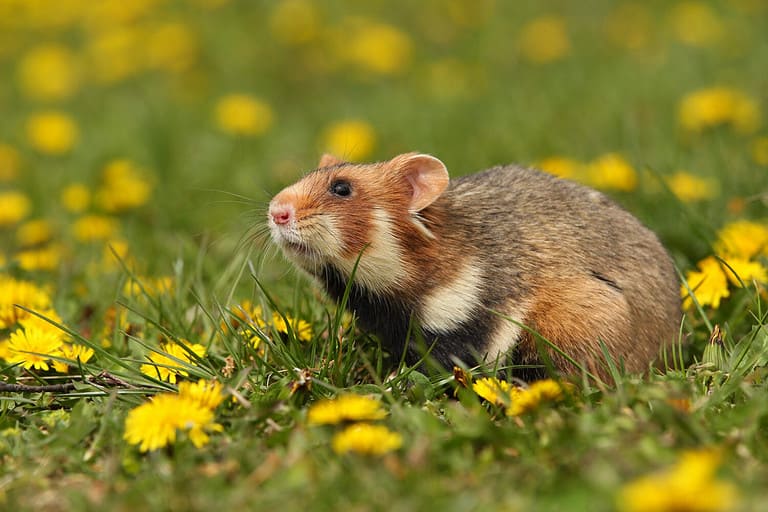
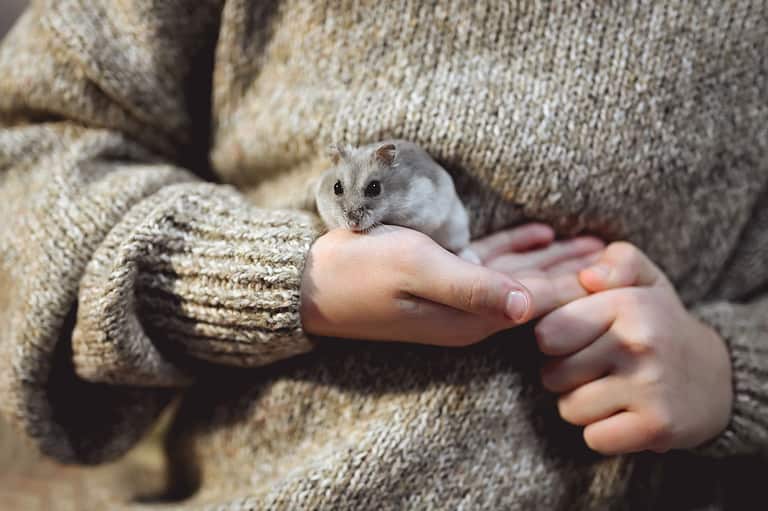
Hamsters have integrated into roles as domestic pets, but they are actually some of nature’s most efficient survivalists.
©Elena van den Akker/ via Getty Images
Logistical Wisdom
A person attempting to cross the arid desert regions of Syria would probably want to bring some supplies along. For a human weighing 180 pounds, carrying just 20% of their body weight means carrying a 36-pound bag. This may seem like a lot of cargo to shoulder, but it’s a standard practice for Syrian hamsters.
In the wild, hamsters are both solitary and territorial. Their natural environment can have fluctuating food availability, so they must maximize the output of every successful foraging trip. That 20% rule for humans is standard fare for hamsters, even though some hamsters have been seen carrying up to half their body weight in a single trip.
This hoarding of food is called caching. By storing up on food and transporting it long distances, wild hamsters can cut down on their exposure to the elements, predators, and more. Several successful foraging trips can provide hamsters with enough food to last through the winter. They manage this feat with their incredible cheek backpacks.
Anatomy of a Food Pouch
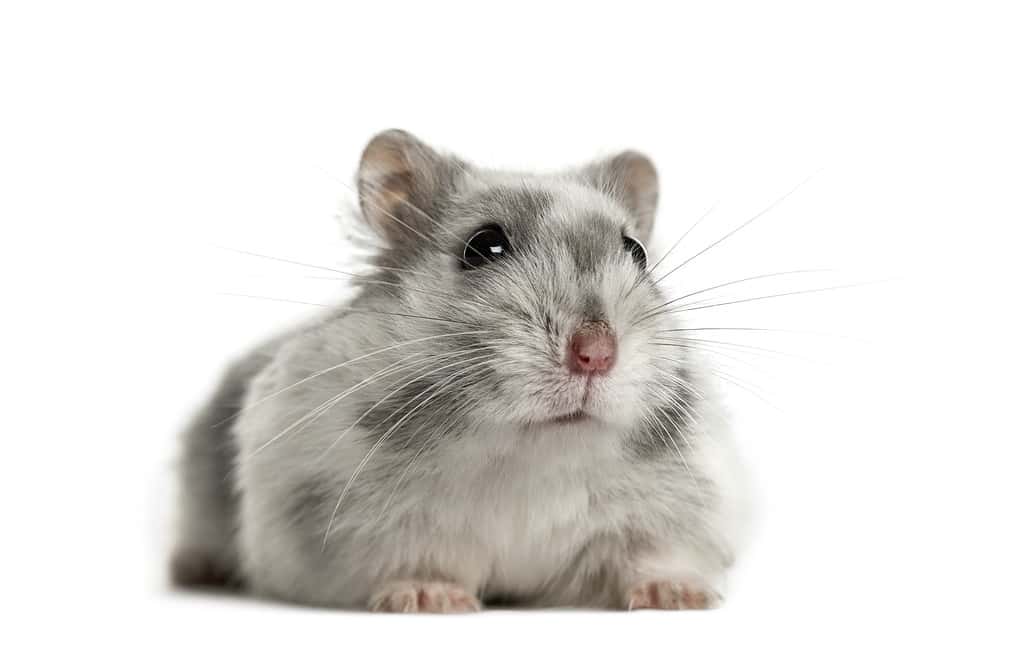
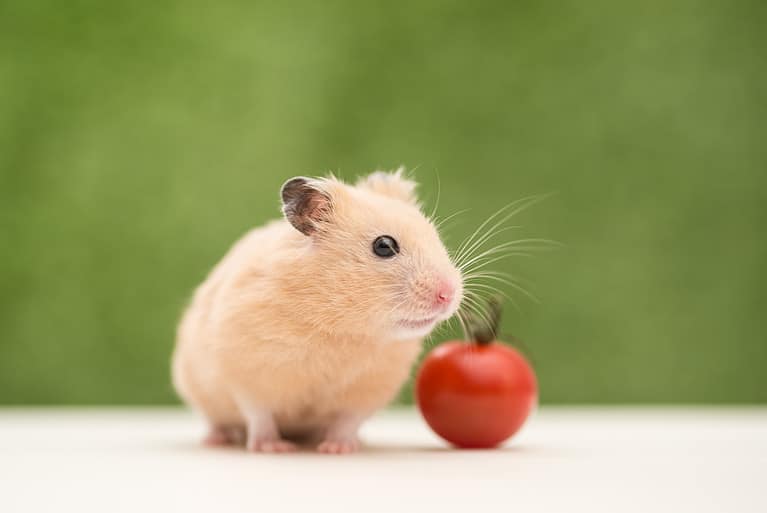
Hamsters have jowl-like internal pouches called sacculi buccales, which run from their mouths, alongside their heads, all the way down to their hips.
©GlobalP/ via Getty Images
The pouches that begin in a hamster’s cheeks are called sacculi buccales. They are, put simply, a folding of the outer layer of oral mucosa into a type of pocket or backpack. Human mouths are designed for immediate chewing and swallowing. A hamster’s pouch, however, completely bypasses its throat. They are long, muscular tubes that run alongside the head, over the shoulders, and down the length of their torsos to their hips.
Composed of flexible, elastic tissue, these pockets collapse into layers of wrinkled skin when empty. The more food a hamster stuffs in these pockets, however, the more the folds expand to carry it. Like a coat pocket with muscular control, a hamster’s cheek pockets are engaged by both buccinator and retractor muscles. The retractor muscle, in particular, allows hamsters to pull their pouches back towards their hips as they fill up with food. This prevents them from being too front-heavy and, therefore, more vulnerable to predators.
You might think that this pouch is full of saliva. However, the reason these internal pockets can maintain cargo for extended periods is their lack of moisture. Hamster cheek pouches do not contain salivary glands. This allows them to carry food like grain or seeds for hours or even keep it stored temporarily without running the risk of fermentation or rot. The idea of an internal pocket running the length of your body suggests diminished mobility. Hamsters, however, have skeletons that easily accommodate potential cargo. Not only do their pouches sit between the skin and muscle walls, protecting internal organs, but a hamster’s low center of gravity keeps its gait stable even when the pouches are full of food.
An Owner’s Dilemma
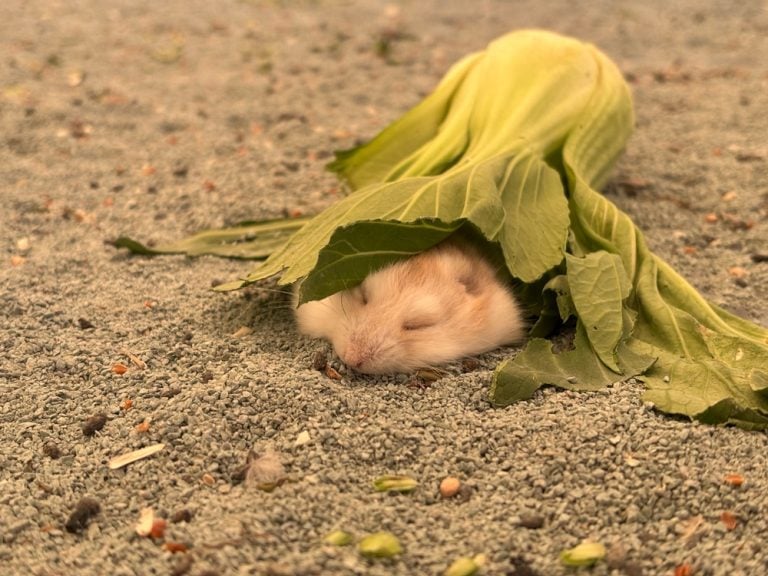
Domesticated hamsters may not need to use their cheek pouches for survival, but they retain both the anatomical feature and the instinct to use them. People who keep hamsters as pets often observe food bowls being emptied only minutes after filling them. That’s because their pet hamster did what it does best: storing all that food for a later date. Exposed food in an open bowl signals ‘unsecured resource’ to the hamster, so it stores the food, often transporting it from its internal backpack to a cage corner and covering it in bedding.
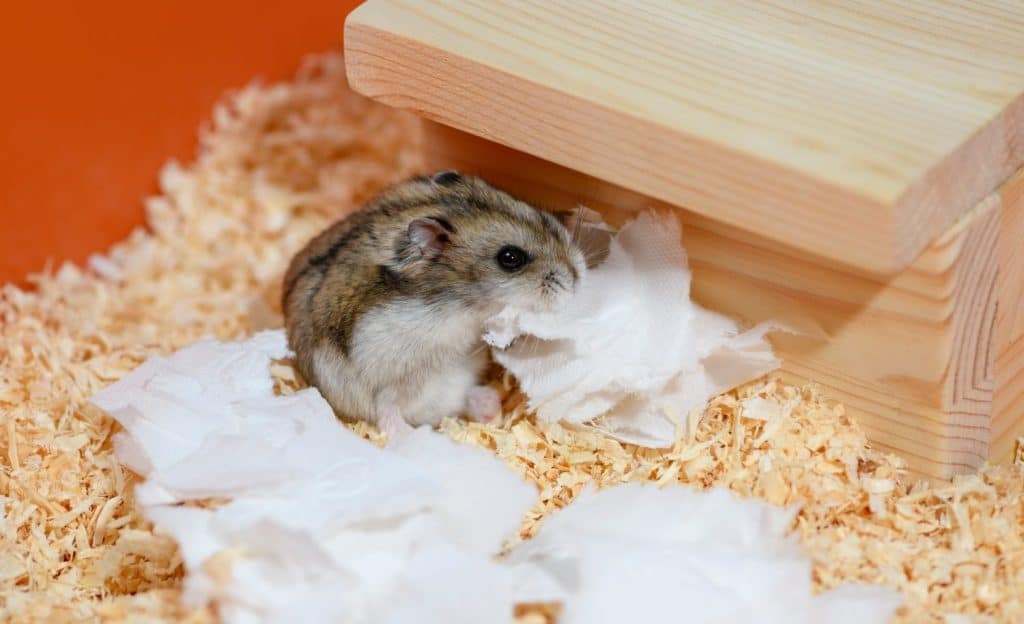
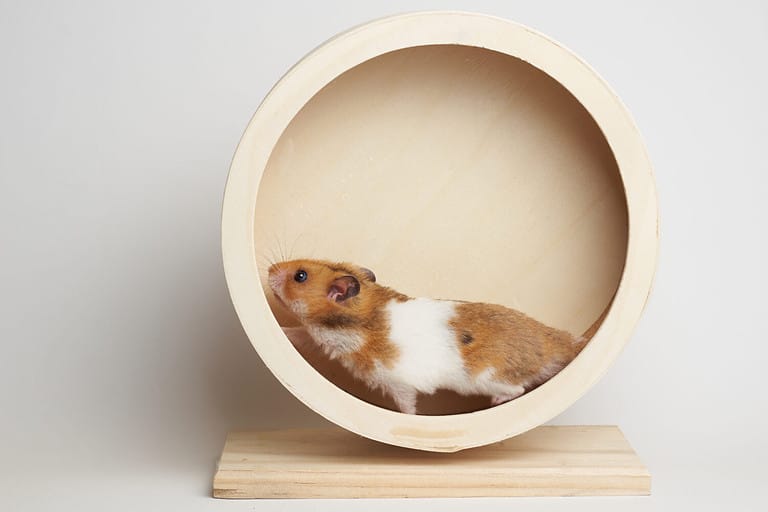
Domesticated hamsters may have lost the need for their pouches, but still have an instinct to use them.
©IRINA ORLOVA/Shutterstock.com
This burrowing and food-saving instinct often makes hamsters that much cuter. We have all seen pictures of hamsters with huge vegetables in their mouths. Those internal pockets make these photos all the more dramatic because hamsters can push food far back into their internal backpacks. They may be cute, but hamsters are also incredible investors, evolutionarily adapted to save for a rainy day.