
Quick Take
- Hamster skeletons are very flexible because, in the wild, they need to squeeze into small spaces.
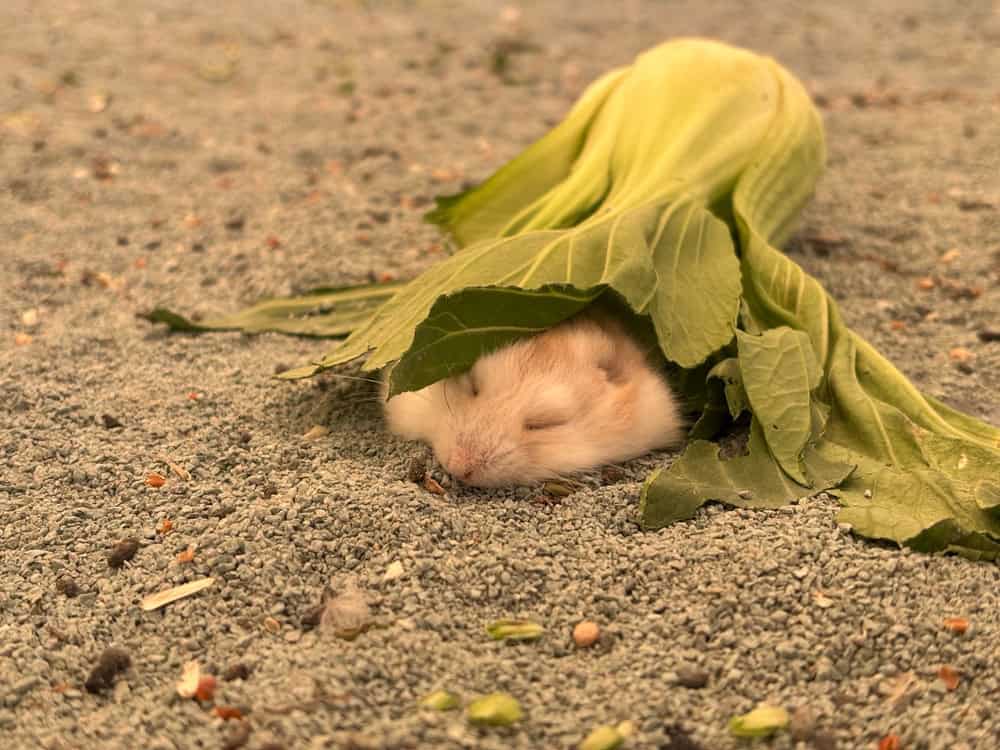
- When they sleep, this can make them look flat.
- Also, they have a lot of loose skin and fur that flattens when they rest.
Hamsters are super cute, round, and fluffy pets. That is, unless they are flat. Have you noticed that hamsters seem to deflate when they are resting or asleep? Take a look at this Instagram post, which perfectly illustrates what we mean. So, what is the explanation behind the hamster splat? Read on to find out.
About Wild Hamsters
Hamsters are rodents, and there are 18 to 20 species of wild hamsters, depending on the classification. Five of them have been domesticated. Popular examples include the golden hamster or Syrian hamster (Mesocricetus auratus) and the grey dwarf hamster (Nothocricetulus migratorius).
In the wild, they live across Europe and western Asia. Hamsters are nocturnal and generally prefer to live alone in grasslands, meadows, farmland, steppes, and fields. Importantly, they are excellent diggers who create burrows with multiple tunnels and chambers. Their survival depends on being able to squeeze into small spaces to escape predators.
Why Do Hamsters Deflate?
Hamsters have evolved with a very flexible skeleton that allows them to squeeze through small spaces. If their head can fit through a hole, their body likely can too. When they relax, their flexible little bodies sag and can make them look flat. At the same time, hamsters have a lot of loose skin and fur. This also compresses when they are asleep, giving them a level shape.
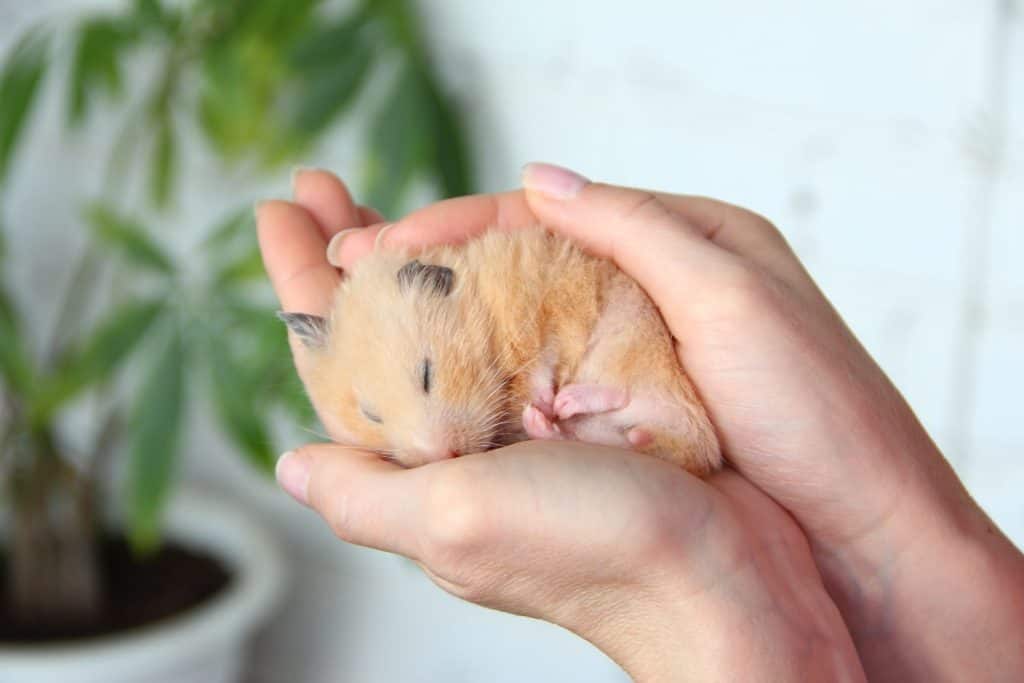
Hamsters are completely relaxed when they sleep.
©Alex Milan/Shutterstock.com
Hamsters have a habit of storing food in their cheek pouches and taking it to a secret stash in another area of their cage. When these cheek pouches are empty, hamsters can appear to have pressed down into the floor. When hamsters are sleeping, their muscle tone is reduced. If they are on a hard surface, this can make them look flat. Often, hamsters choose to sleep in shelters in their cage because they feel safer there. In these shelters, they curl up into a ball, making it less noticeable that their bodies have flattened out.