
Quick Take
- The bald eagle once teetered on the edge of extinction in the U.S., and the scale of its comeback will genuinely surprise you.
- One state outside Alaska has become a bald eagle hotspot that rivals the frozen north, and it is probably not the state most people would guess.
- Some states stopped officially counting their bald eagles, and the reason why is more encouraging than it sounds.
- Illinois sees a winter bald eagle surge that dwarfs most states' year-round populations, yet its resident breeding numbers tell a completely different story.
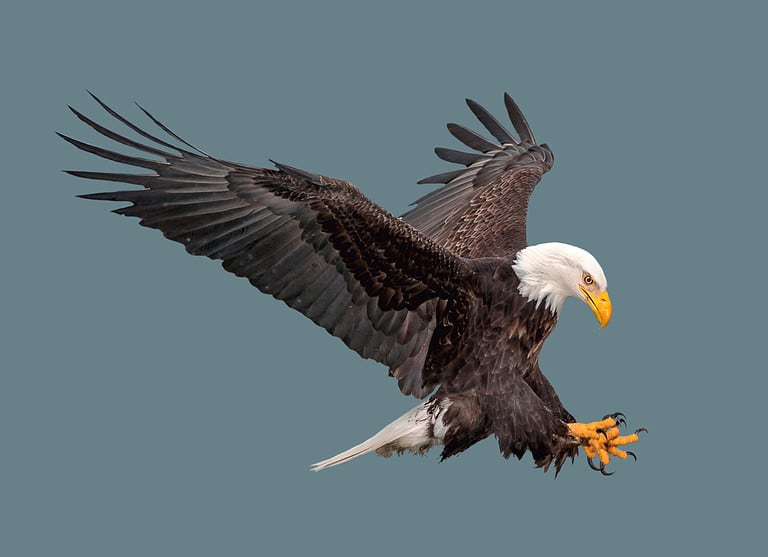
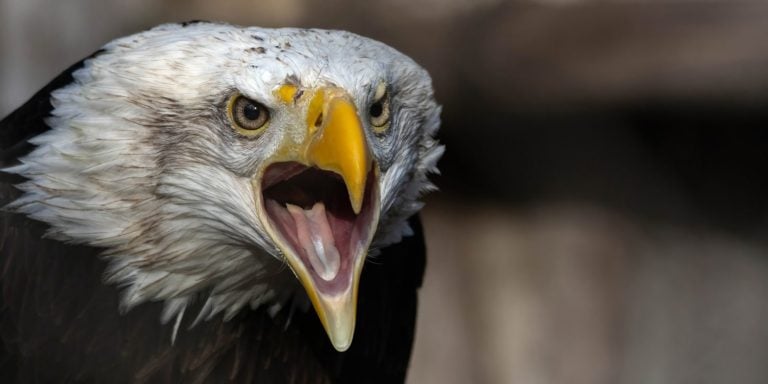
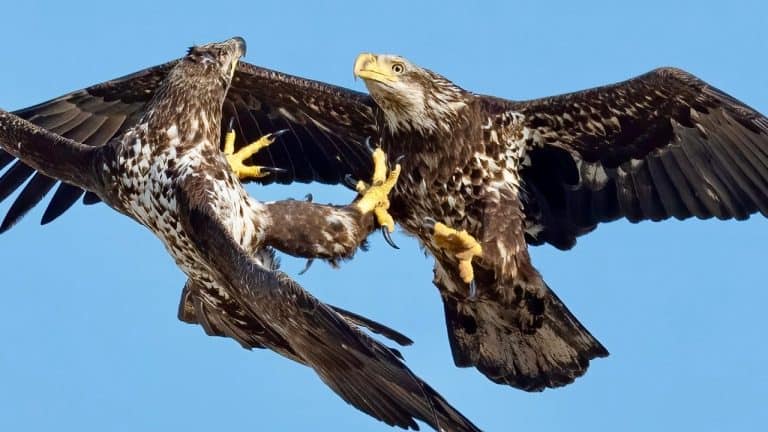
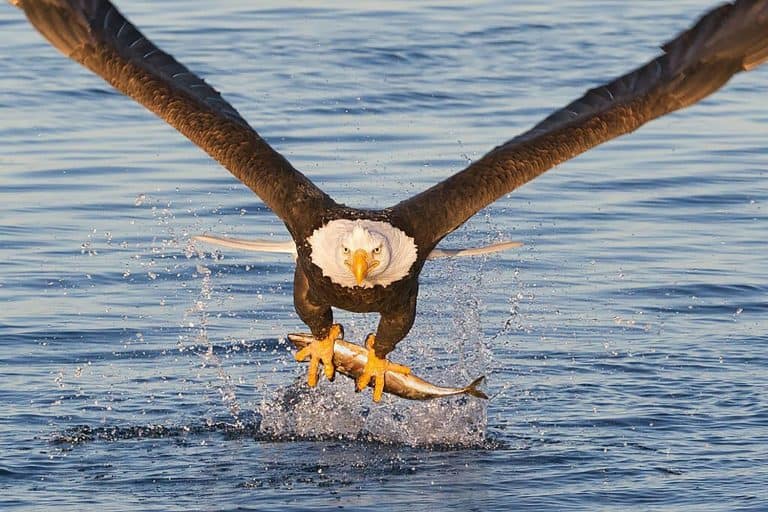
The bald eagle (Haliaeetus leucocephalus) is a large, predatory raptor native to North America. This brown and white eagle with its vivid yellow beak and feet is the national symbol of the United States. Bald eagles live across the entire continental U.S., inhabiting every state except Hawaii. Keep reading to learn the estimated bald eagle population by state.
Meet the Bald Eagle
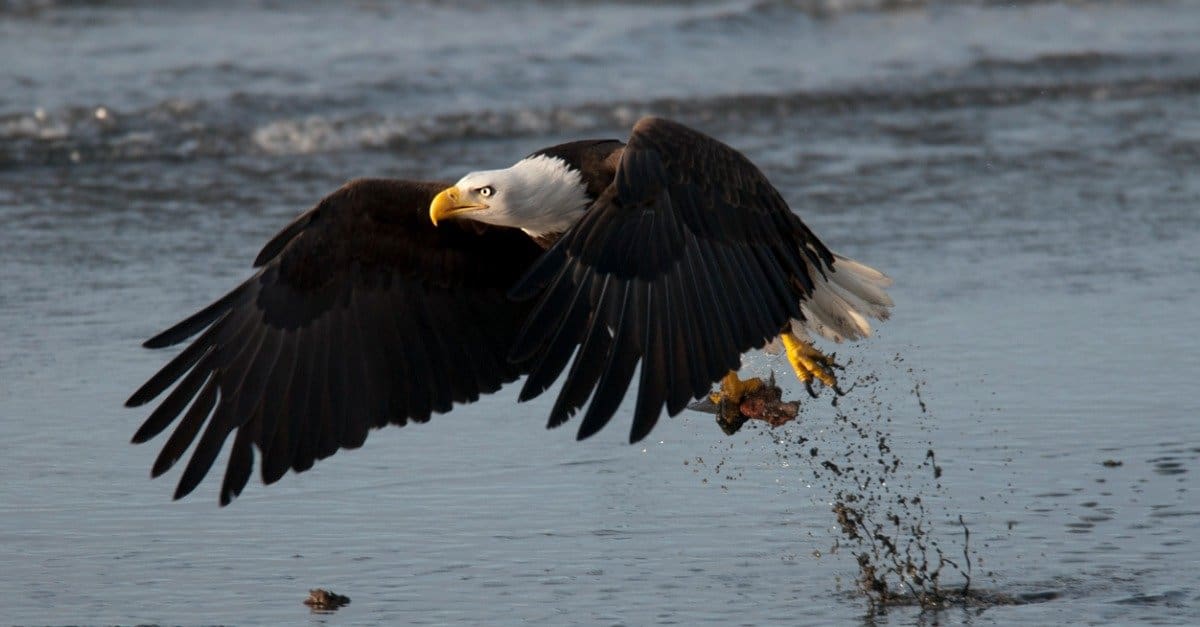
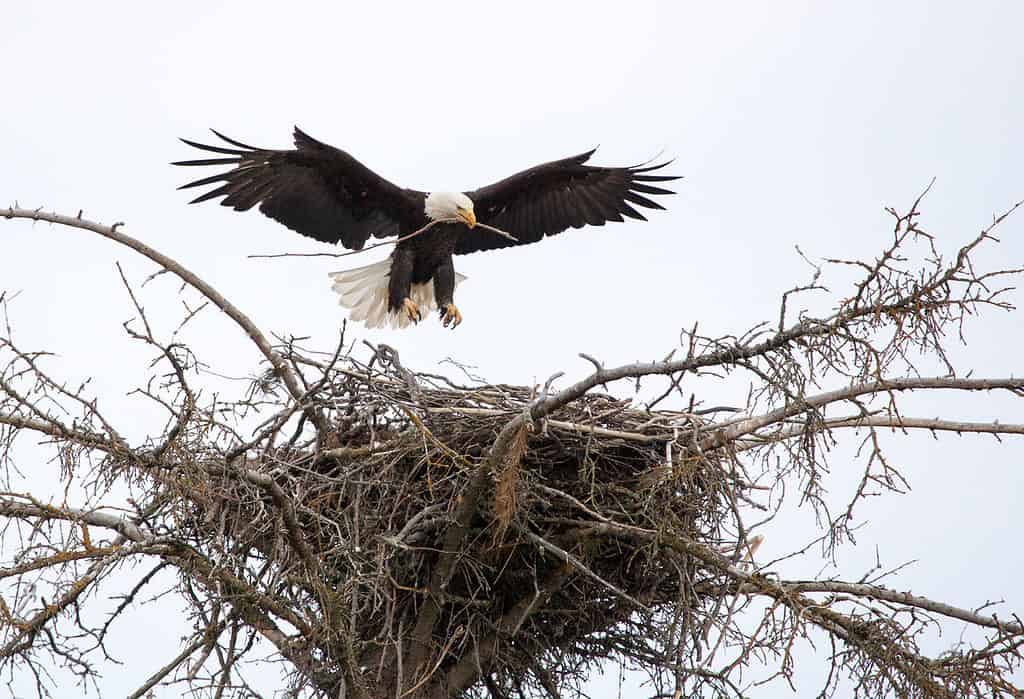
Bald eagles measure approximately 2.3-3.2 feet long and can weigh up to 14 pounds. Bald eagles live near water, and are often found near rivers, lakes, reservoirs, marshes, and along the coasts. They soar high in the sky, but they slowly flap low over the trees, where they frequently perch. Bald eagles build the largest nests among North American birds. They can be 5 to 6 feet wide and 2 to 4 feet deep.
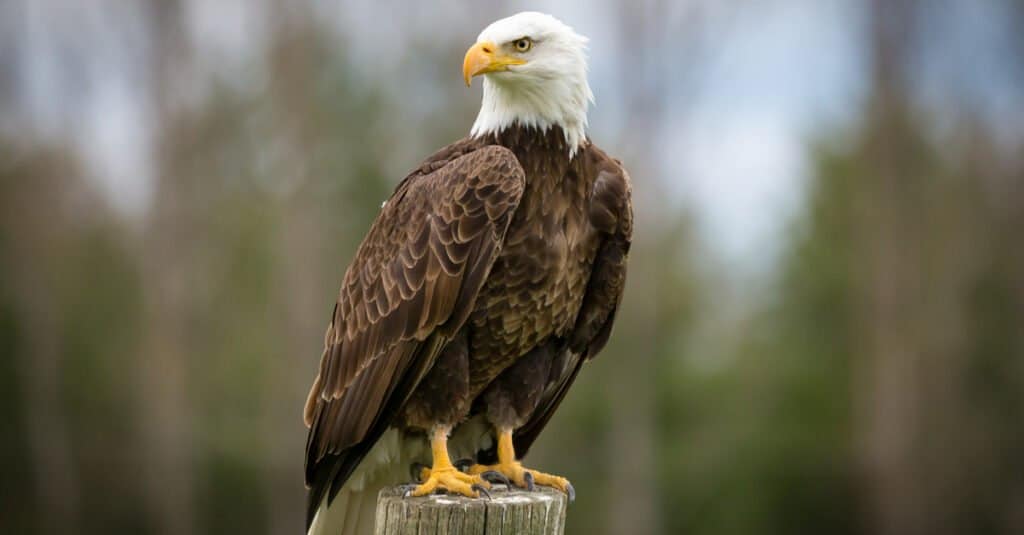
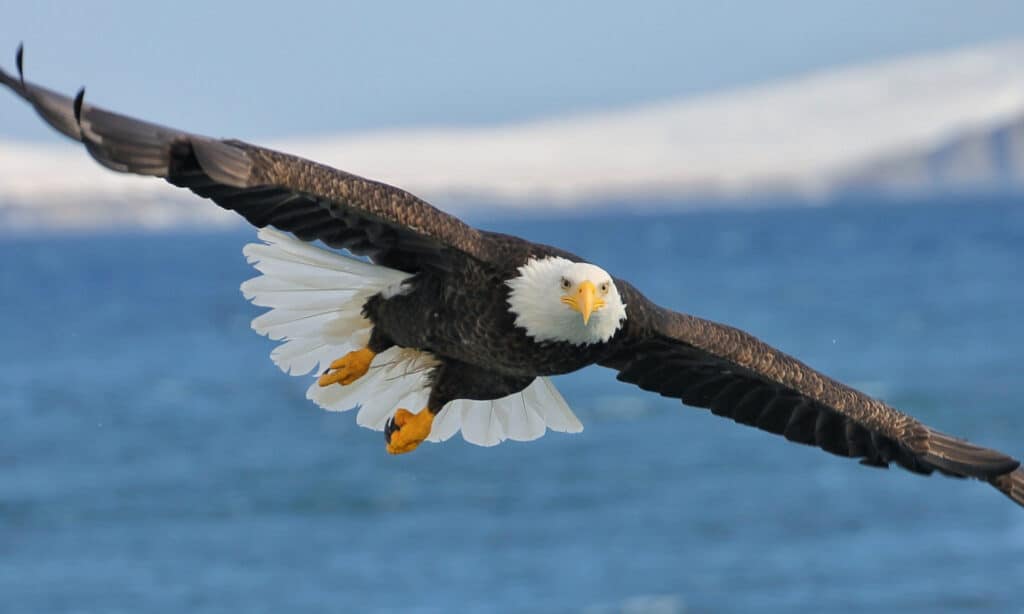
The bald eagle is the symbol of the United States.
©iStock.com/emranashraf
The Bald Eagle Population in the U.S.
In the 1950s, there were fewer than 1,000 bald eagles in the U.S. As of 2020, which is the most recent data available, there are an estimated 316,700 bald eagles in the lower 48 states, according to the Migratory Bird Program of the U.S. Fish and Wildlife Service (USFWS). Officials note that the bald eagle population has quadrupled since the data was last collected in 2009. This is excellent news for a bird that was once endangered.
Please note that some wildlife organizations count birds as breeding pairs or they count nests and/or fledglings. This is a good way to assess how well a bird population is doing. For our population numbers, we relied on information from each state’s Fish and Wildlife Department, Department of Natural Resources, or data reported from an official source.
Which States Have the Highest and Lowest Bald Eagle Populations?
Alaska has more bald eagles than any other state. The Alaska population is currently estimated at 70,000 birds. As we mentioned above, Hawaii has no bald eagles. The state is over 2,000 miles away from the North American continent. This is too far for bald eagles to fly across open water without food, rest, or fresh water.
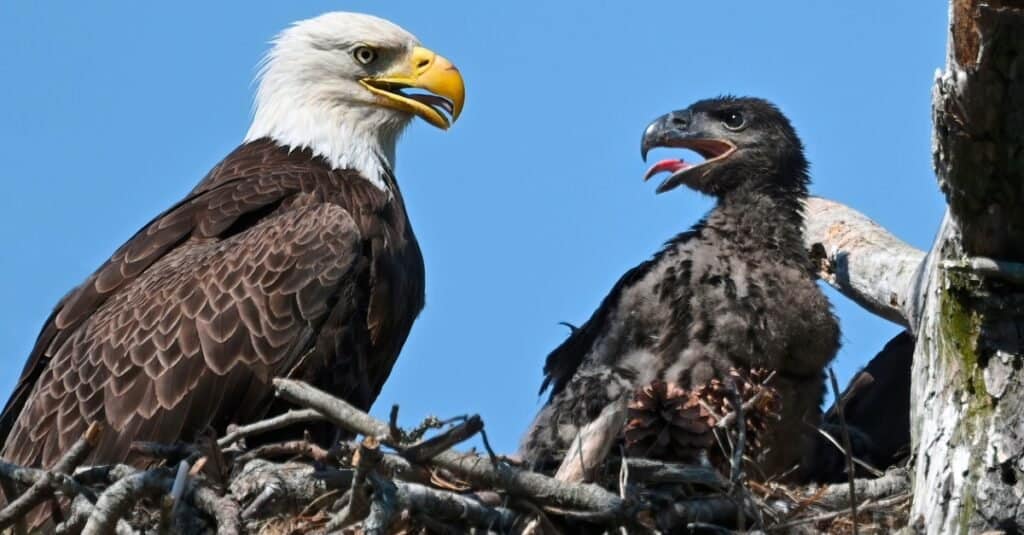
In the 1950s, there were fewer than 1,000 bald eagles in the U.S.
©iStock.com/BrianEKushner
Bald Eagle Population by State
Alabama
Alabama has about 100-150 birds. According to the Alabama Department of Conservation and Natural Resources, concentrations of bald eagles can be found on Pickwick Lake and Guntersville Lake near Guntersville State Park.
Alaska
Alaska has more bald eagles than any other state with 70,000 birds. They thrive along the state’s cold coastal waters. They also live in Alaska’s many interior lakes and rivers. The state is home to the Chilkat Bald Eagle Preserve.
Arizona
The state has taken many steps to protect bald eagles, and it has seen a steady increase in numbers as a result. According to the state’s Game and Fish Department, Arizona has around 90 breeding pairs, and a record 96 young bald eagles.
Arkansas
Although the Arkansas Game and Fish Commission does not have a formal survey for breeding pairs of eagles in the state, Karen Rowe, AGFC Nongame Bird Program Coordinator, estimates there are between 150 and 160.
California
The state has around 1,000 bald eagles who migrate to the state to spend the winter months. The state’s Department of Fish and Wildlife says the best times to view them are during the winter months from December to March. The state does not get many bald eagles who winter there.
Colorado
Colorado has about 300 resident breeding pairs of bald eagles that live in the state year-round. It also has around 1,000 pairs of bald eagles that spend the winter there.
Connecticut
Like many states, Connecticut lost its entire bald eagle population by the 1950s. Today, it is home to 82 healthy breeding pairs based on active nests. The state’s Department of Energy and Environmental Protection reports that Connecticut saw record-breaking numbers of active territories and successful nests. A total of 176 bald eagles have been recorded in total as of late 2022.
Delaware
Delaware has worked hard to improve its habitats for bald eagles. Many of the state’s breeding pairs can be seen close to the Delaware River. As of 2023, there were 82 active bald eagle nests observed in the state.
Florida
After Alaska, Florida is one of the best places in the U.S. to see these beautiful raptors. According to the Florida Fish and Wildlife Conservation Commission, there are an estimated 1,500 breeding pairs. They live along most coastal areas, rivers, and lakes of the state. Florida is also a favorite stop for visiting eagles.
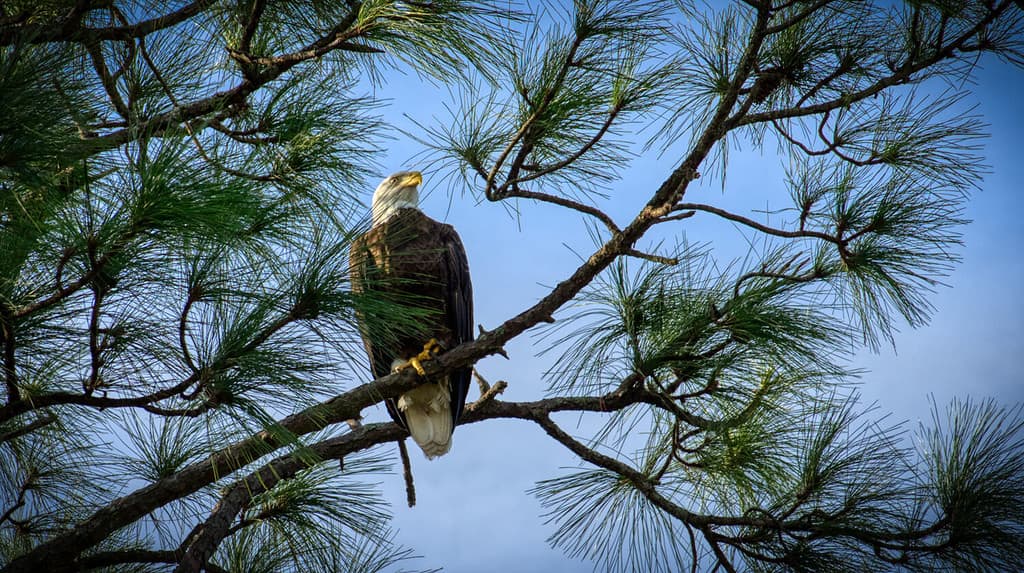
Florida is one of the best places to see bald eagles due to high population numbers.
©WebGuNet/Shutterstock.com
Georgia
Georgia has struggled to keep healthy bald eagle populations. The bird has been protected by the state’s endangered species laws. In recent years, the state has set aside conservation areas and introduced baby bald eagles into the bird’s former range. Officials note that there have been at least 200 nesting territories in the state per year since 2015. In 2025, out of 176 nests, 127 were successful, with 190 eaglets successfully fledging.
Hawaii
There are no bald eagles in Hawaii.
Idaho
In Idaho, migratory bald eagles are found at the state’s many wildlife refuges, especially Lake Coeur d’Alene, where the eagles feed on kokanee salmon. In 2023, the Bureau of Land Management (BLM) counted a record number of 409 eagles. 284 eagles were counted in 2024 and 294 were counted in 2025. BLM says eagle populations have continued to rise in the region over the last decade.
Illinois
Illinois has between 30 and 40 breeding pairs of bald eagles, but the state’s bald eagle population increases to more than 3,100 in the winter. Birds begin migrating to the state in December and continue doing so until April. This is the largest wintering population in the U.S. outside of Alaska. The state hosts yearly eagle-watching events called Bald Eagle Days during the winter months.
Indiana
As of 2020, the state of Indiana counted over 350 eagle nesting territories. According to Purdue researchers, the state supports a healthy population of 300 breeding pairs thanks to conservation and reintroduction efforts.
Iowa
Like other states, Iowa sees a huge increase in its bald eagle population in the winter months. Officials counted a total of 5,795 bald eagles were counted on the state’s Bald Eagle Midwinter survey. These birds frequently nest along the Cedar and Iowa Rivers.
Kansas
Kansas began reintroducing bald eagles about 30 years ago, and the state’s efforts have paid off. According to state wildlife officials, there were 248 nesting pairs in the state as of 2025. The Kansas Department of Wildlife, Parks, and Tourism launched a three-year program in 2020 to study the impact of wind energy development on bald eagle populations.
Kentucky
Kentucky’s bald eagles primarily live in the western part of the state, but in recent years they have been spotted in the central and eastern areas. In the Summary of Kentucky’s National Midwinter Eagle Survey Routes for 2020, officials counted 210 eagles.
Kentucky’s bald eagles mostly inhabit the western half of the state.
©iStock.com/June Jacobsen
Louisiana
Louisiana has a healthy, thriving bald eagle population. In 2015, the Audubon Society named the state a chief population center for bald eagles. It has over 350 breeding pairs that live in the state year-round, while around 2,900 pairs arrive in September for the winter season. Only Florida hosts more birds annually. According to the state’s Fish and Wildlife Service, the birds primarily live in Terrebonne Parish.
Maine
Maine has seen steady increases in its bald eagle population. In 2008, the state delisted the bald eagle from the state’s Endangered and Threatened Species List. In doing so, it cited the birds’ steady reproduction and the existence of protected areas. There are are over 750 nesting pairs in the state.
Maryland
State officials stopped counting bald eagle populations when evidence showed that its breeding populations were thriving. However, it is estimated that there are at least 1,400 breeding pairs in the state. Another estimated 2,000 bald eagles live around the Chesapeake Bay in areas that include both Maryland and Virginia.
Massachusetts
The state lists the bald eagle as a species of special concern, but state wildlife officials report that the current population is well on the way to recovery. As of 2023, officials estimated that there were more than 80 territorial pairs in Massachusetts.
Michigan
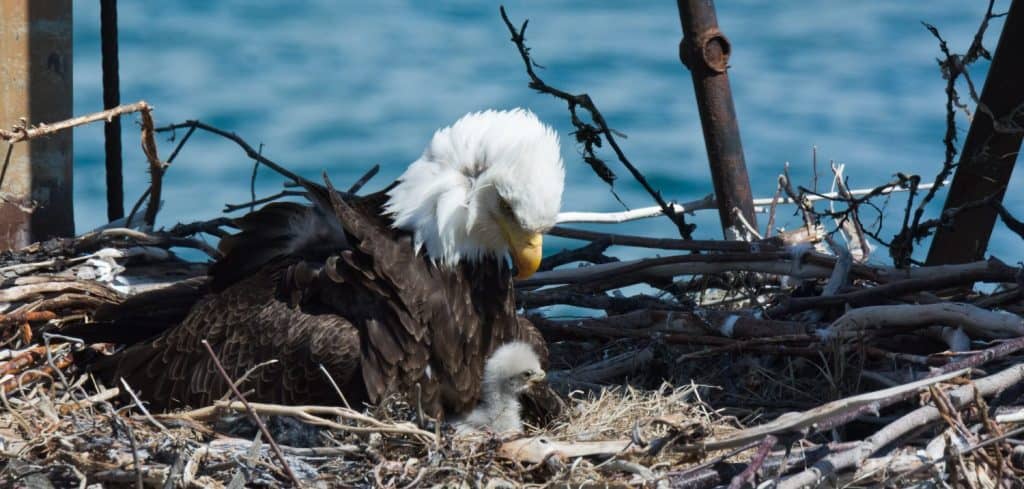
After being driven to near extinction in Michigan, the bald eagle has made an impressive recovery there. There are now around 900 breeding pairs of bald eagles in Michigan. Eagles nest along Lake Michigan, rivers, and inland lakes.
In Michigan, bald eagles nest along Lake Michigan, rivers, and inland lakes.
©Jack Molan/Shutterstock.com
Minnesota
Minnesota has a large, healthy bald eagle population. As of a 2019 estimate, there were 1,600 breeding pairs in the state. According to the state’s Department of Natural Resources, this includes 30 nesting pairs in the Twin Cities metropolitan area.
Mississippi
As of 2015, Mississippi reported about 46 active nests that are mostly found along the Delta and coastal wetlands.
Missouri
Missouri’s bald eagles live along lakes in the Ozark Mountains and the Missouri River. The state also welcomes many bald eagles that spend the winter there. The Missouri Department of Conservation hosts Bald Eagle Days to give visitors a close look at migrating bald eagles. In 2025, Missouri wildlife officials estimated that the state had more than 600 active nests.
Montana
Montana’s bald eagle population is growing, and the state says it can support even more breeding populations. Conservationists estimate that the number of nesting eagles is more than 500 state-wide.
Nebraska
Nebraska reintroduced bald eagles about 20 years ago, and their population has rebounded. The state also hosts several hundred visiting bald eagles every winter. After 2013, the state delisted bald eagles, as they were said to be recovered. From 1996 to 2011, officials reported that the average population increased to 990 bald eagles.
Nevada
Visitors flock to the Carson Valley to see the bald eagles each year. From 2013 to 2018, there were 731 bald eagles documented in Nevada.
New Hampshire
New Hampshire reached 128 nesting pairs in 2025, which was a new high for the state. Most of the state’s bald eagles migrate to other states during New Hampshire’s icy winters.
New Jersey
New Jersey’s bald eagles mostly live along coastlines and the Cape May shoreline. The 2025 New Jersey Bald Eagle Report 251 active nests in the state.
©Jon C. Beverly/Shutterstock.com
New Mexico
New Mexico’s bald eagle population has steadily increased in the past decades, and state wildlife officials say the birds have set up breeding sites in some parts of the state. However, the state does not count population numbers because these breeding sites are very recent. New Mexico hosts hundreds of bald eagles who spend the winter in the state every year. Recently, they have reported that there at least 4 reported pairs.
New York
The areas around the Saint Lawrence and Hudson Rivers attract many eagles in the winter. In 2017, there were 426 active breeding pairs and 209 young fledged. As of 2020, officials from the New York Bureau of Wildlife found that 256 nests were occupied with 292 young.
North Carolina
North Carolina introduced 29 bald eagles into the state in 1983. Since then, the population has steadily grown. Now, there are estimated to be more than 200 nesting pairs in the state. They are commonly seen at Jordan and Falls Lakes and at Lake Mattamuskeet.
North Dakota
As of 2026, there are over 400 known nesting pairs in the state. They can frequently be found along the Missouri River, the Red River, and around Lake Sakakawea and Devils Lake.
Ohio
Ohio has a growing bald eagle population. According to the Ohio Department of Natural Resources Division of Wildlife, as of the 2025 census, there were 964 confirmed active bald eagle nests. Most of the eagles live near Lake Erie.
Oklahoma
Oklahoma is home to 300 nesting pairs of eagles, but hundreds of bald eagles visit the state every winter. Officials explain that most Oklahoma eagles split their time between Oklahoma and northern states.
Oregon
According to the Oregon Department of Fish and Wildlife, there were 570 breeding pairs by 2010, which is the most recent complete year of data. Like many states, Oregon stopped counting the eagles when it reached its recovery goals, so the number is likely higher now.
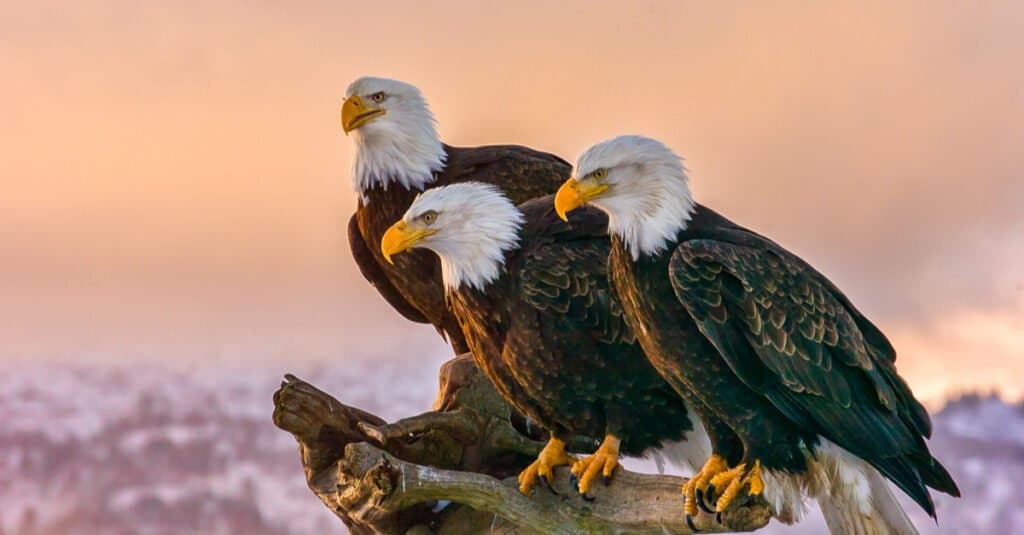
At last count, there were 570 breeding pairs of bald eagles in Oregon.
©FloridaStock/Shutterstock.com
Pennsylvania
The state stopped officially counting when the bald eagle met the criteria to be removed from the state’s threatened species list. At the last count in 2013, there were more than 270 breeding pairs in Pennsylvania. The state is also home to migratory bald eagles that visit the Susquehanna River during the winter.
Rhode Island
Rhode Island had six or seven breeding pairs as of 2024. The state has seen an increase in nesting sites and migratory visitors; however, the number seems to be rising.
South Carolina
South Carolina has met its recovery goals with more than 440 breeding pairs.
South Dakota
In 2015, the state delisted the bald eagle from the Endangered Species List. Based on 2015 monitoring and aerial surveys, the estimated number of active nests was 140-150. South Dakota’s eagles depend on the Missouri River and do not migrate.
Tennessee
Tennessee has a stable population of breeding pairs and hosts hundreds of migratory bald eagles in the winter. The most recent data from the Tennessee Wildlife Resources Agency shows there are 251 registered nests in the state. The best places to see them are Reelfoot, Dale Hollow, Kentucky, Chickamauga, Watts Bar, and Pickwick Lakes.
Texas
Texas bald eagles live along its rivers and lakes. Texas is also a favorite wintering site for many bald eagles, especially in the Panhandle and coastal regions. Bald eagles were delisted from protection status in 2007 due to the state’s recovery efforts. Officials state that the 2005 survey identified 160 active nests, which fledged at least 204 eaglets.
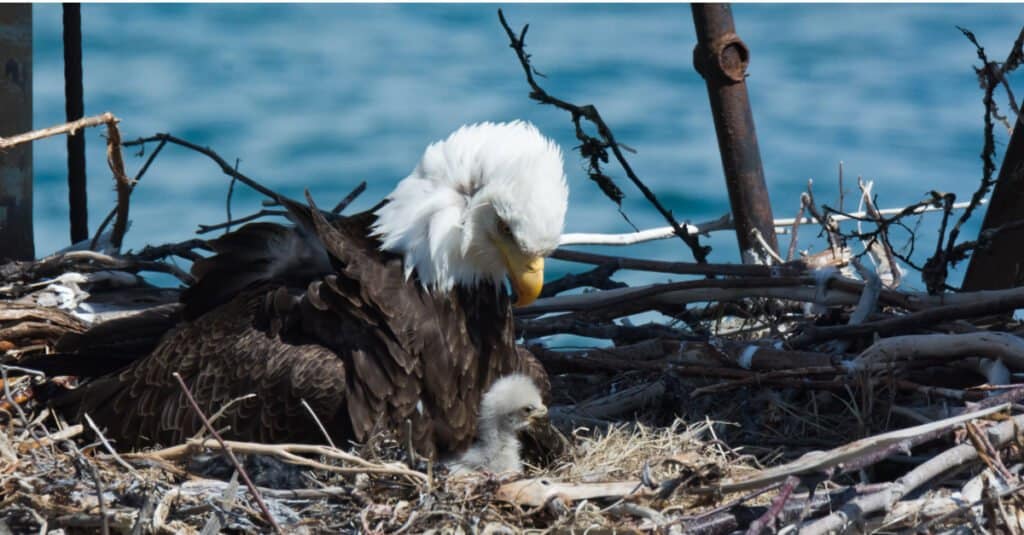
Texas is a favorite wintering spot for some bald eagles.
©Jon C. Beverly/Shutterstock.com
Utah
Utah welcomes thousands of wintering bald eagles every year. Researchers believe up to one-third of bald eagles west of the Rocky Mountains winter in the state. Officials estimate there are at more than 1,200 bald eagles in the state.
Vermont
Vermont was one of the last states to reintroduce bald eagles. It did so in 2003, and it has seen a steady increase in its bald eagle population since then. Vermont was up to 38 nesting pairs as of 2025, with most of those birds found along the Connecticut River.
Virginia
Virginia is another state where bald eagles have made an outstanding comeback. Officials note that as of 2025, there are estimated to be at least 1,500 breeding pairs in Virginia’s coastal plain.
Washington
The state also attracts many bald eagles from colder northern regions. An estimated 80% of the birds here have come from other states or Canada. The majority of the bald eagle population inhabits regions west of the Cascade Range. As of 2015, the total number of known bald eagle territories in the state was 1,334.
West Virginia
By 2024, the Mountain State reported that there were 300 nesting pairs along most of the state’s major rivers.
Wisconsin
Wisconsin’s wildlife officials say there are bald eagle nesting sites in all but one of the state’s 72 counties. Aerial nest surveys conducted by the Department of Natural Resources in 2019 found 1,684 occupied bald eagle nests.
Wyoming
Wyoming state wildlife officials say the bird has healthy nesting sites on all the state’s major river systems. The population seems to be on the increase, and data from BLM’s 2020 Midwinter Bald Eagle Survey counted 303 bald eagles.