
Quick Take
- On President’s Day 2026, a citizen saw a bald eagle in distress on a busy Bradenton, Florida city street and called the Bradenton PD.
- Police officers arrived and carefully transferred the eagle to the rear seat of a police cruiser, then called a wildlife rescue organization for help.
- Wildlife, Inc, based in Anna Maria, FL, responded and transferred the eagle to an emergency veterinary clinic.
- The eagle, believed to be 4-5 years old, had an infected wing from a prior fracture. It received treated and is under the care of certified wildlife experts.
Sometimes, all it takes is one person to make a difference. When it comes to helping animals, a good-natured decision can save a life. That was the case recently in Bradenton, Florida, when an eagle-eyed Good Samaritan noticed a bald eagle in distress.
A quick call to the local police department triggered a rapid response that ended on a successful note.
How the Eagle Rescue Unfolded
At around 11:30 am local time on President’s Day 2026, the Bradenton Police Department received a call about an eagle in distress in the city’s busy downtown area. Bradenton is located on Florida’s Gulf coast, approximately 12 miles north of Sarasota.
Local police officers quickly responded to the busy intersection of 8th Street West and Manatee Avenue. According to the Department’s post on X, when officers arrived, they found a “sizable bald eagle struggling to fly.”
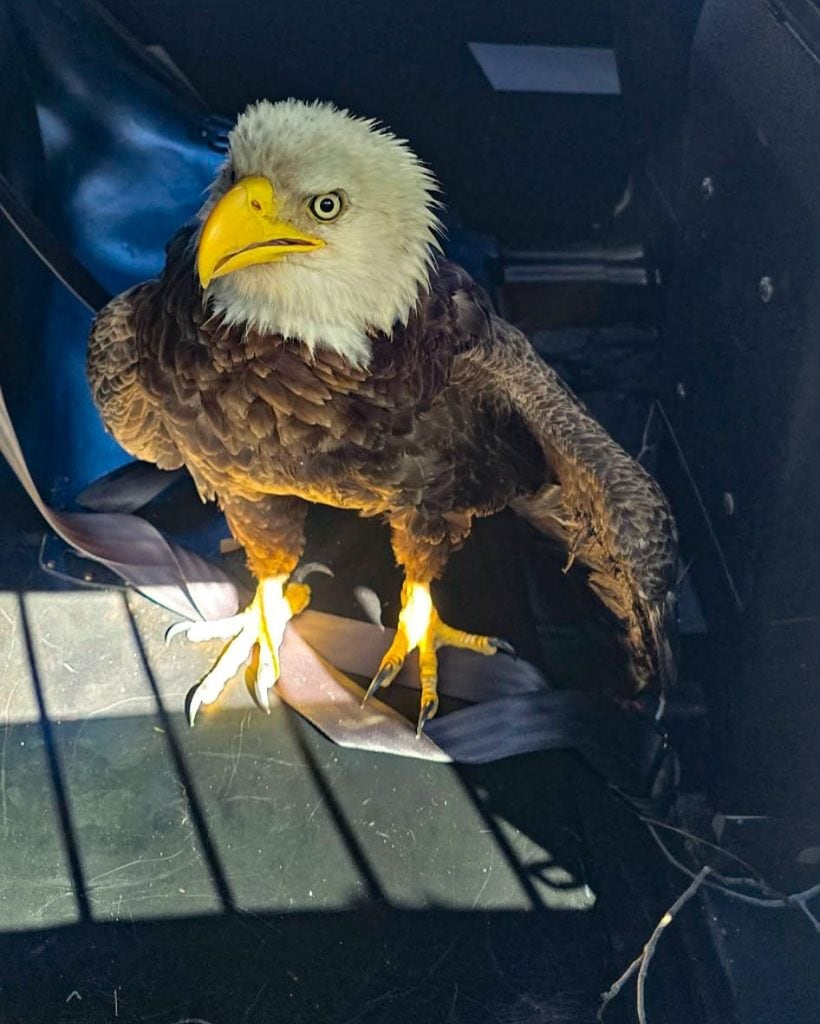
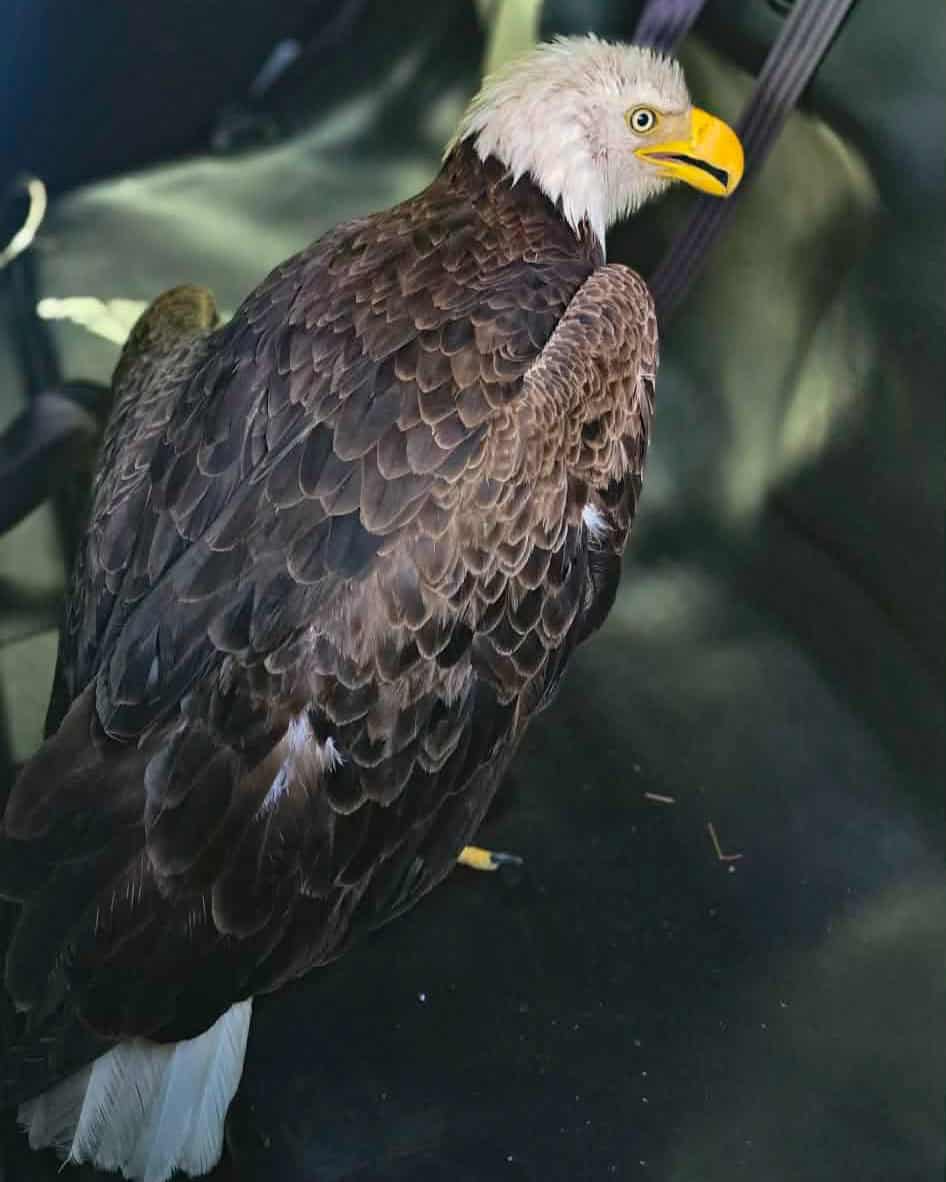
The rear seat of a police car is not where you’d expect to find a majestic bald eagle.
Meredith Censullo, Police Public Information Officer, told USA Today that the Good Samaritan stayed nearby, “keeping an eye on the bird.” She noted that the eagle “appeared to have a broken wing but was attempting to fly.”
Noting that the eagle “wasn’t happy” with its predicament, police officers carefully covered the bird with a blanket and moved it to a more secure location–the rear of the police car.
They then called Wildlife, Inc. Education & Rehabilitation Center in nearby Anna Maria for backup. The “talon-ted” team arrived and were able to securely transfer the eagle to a pet carrier, which they then transported to a local emergency veterinarian.
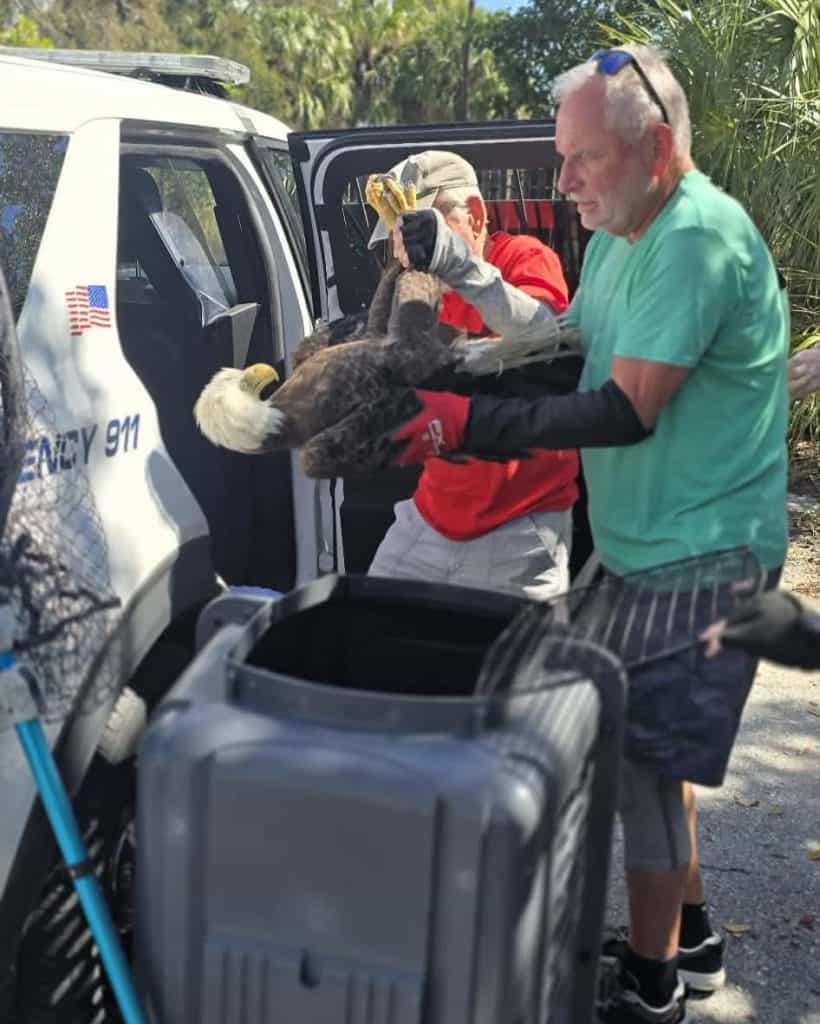
Volunteers from Wildlife, Inc. arrived to safely transport the eagle to an emergency vet for treatment.
The eagle, believed to be between four and five years old, received immediate treatment and is now under the care of certified wildlife experts.
According to an X update from the Bradenton PD, the bald eagle was named “Freedom” and is being treated for an infection in a prior wing fracture. They say he is eating well and enjoyed a rat for dinner after its rescue.
Everyone involved with the rescue is looking forward to Freedom again being able to soar over the Friendly City.
The Good Samaritan’s Role in Wild Animal Welfare
This is a feel-good story, for sure. But it also illustrates the importance that everyday people have in helping out wildlife at the most unexpected moments.
Often, people out for walks, bike riding, or simply running errands are the first to discover wildlife in distress. What happens next can mean the difference between the animal receiving help or continuing to suffer or even die.
If you encounter a sick or injured animal, whether in the wild or on a busy city street, your first step should be to alert the authorities or a wildlife rescue organization in the area. After calling for help, stay nearby and observe the animal until rescue arrives.
Since many wild animals, especially those in distress, can pose a threat to your safety, don’t approach or try to pick up the animal. Raccoons and bats can transmit rabies. Large raptors, like bald eagles, have long, sharp talons. Even usually docile wild animals can be a threat if they’re injured or in severe pain.
One of the best ways to help injured or sick wildlife is to be prepared. You can start by saving telephone numbers for local wild animal rescue groups in your phone. You’ll also want to have the phone numbers for animal control and 24-hour veterinarians handy, too.
You can also keep a “to-go” kit in your car. This includes cardboard boxes or carriers of varying sizes, liners like old towels, t-shirts, or blankets, a light sheet to cover the animal with to calm it, and masking tape to secure the box. If you are confident the injured or sick animal doesn’t pose a threat, for example, a small bird, you can use this “to-go” kit to safely transport the animal yourself to the nearest vet or wildlife rescue organization.
However you choose to help, the simple act of caring is what’s important. Your initial call can make a world of difference to the animal’s wellbeing and survival.