
Quick Take
- Short trails in Brazos Bend State Park and Goose Island State Park pass through dense habitat edges where many species gather in a small area.
- Visitors can spot wildlife ranging from American alligators and wading birds to migrating species along the Gulf Coast birding corridor.
- Ancient coastal live oaks and layered wetland ecosystems create natural biodiversity hubs that attract birds year-round.
Texas has plenty of famous wildlife stops, but the Great Texas Birding Trail is at its best when you treat it like a biodiversity puzzle instead of a checklist. You are not just searching for a single rare bird; you are seeking the habitat features that attract dozens of species to the same area, often within a short walk from your car.
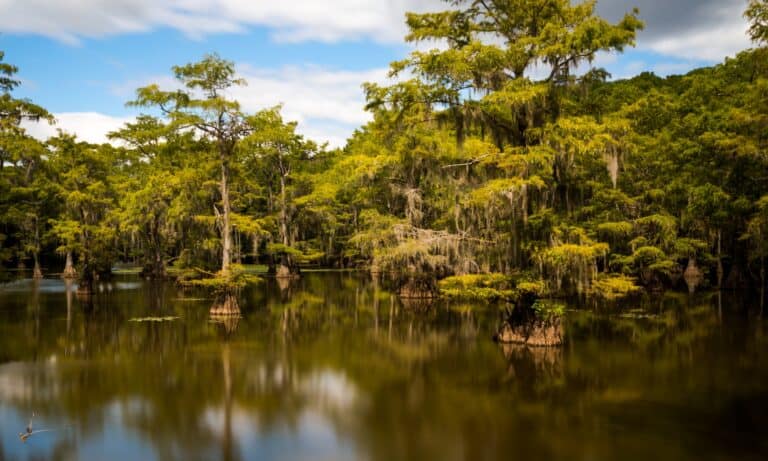
That is why a “Biodiversity Deep-Dive” works so well in two places that feel completely different on the map. At Brazos Bend State Park, freshwater lakes and bottomland hardwoods stack on top of each other, which is exactly how you get dense wildlife viewing in a relatively compact space. On the coast near Rockport, Goose Island State Park is quieter and windier, with bay edges, oak mottes, and coastal prairie that act like a refueling station for migrating species moving along the Gulf.
If you want alligators and a real shot at seeing whooping cranes in the same trip, the trick is to hike where the ecosystem does the work for you. The hikes below are considered ‘hidden’ because they are short, often overlooked, and focus on areas with high wildlife activity rather than covering long distances.
What Is the Great Texas Birding Trail?
Texas Parks and Wildlife curates a set of driving-map “wildlife trails” that point you toward both famous sites and under-the-radar pullouts, boardwalks, and parks across multiple regions, including the coast, where wintering whooping cranes draw birders every year on the Great Texas Coastal Birding Trail maps. It is less like a single path and more like a stitched-together route system that helps you stop in the right habitat at the right season.
Brazos Bend is part of the broader Gulf Coast ecological region, even though it is located inland. Goose Island is a classic coastal stop in the Rockport-Fulton area that puts you within easy striking distance of the wintering grounds that make Texas the most reliable place to see wild whooping cranes in North America, as long as you time it right.
Brazos Bend Is The “Serengeti of the South” for a Reason
If you have ever felt like Texas is “too big” to bird well without local knowledge, Brazos Bend is the antidote. TPWD points out that the park’s mix of ecosystems is exactly why it is known for species diversity, with lush wetlands, prairie, and woodlands supporting an enormous range of plant and animal life in one place on the Brazos River floodplain, as described on the park’s nature overview. This is also why it earns the “Serengeti of the South” nickname in the field. You can move a few hundred yards and shift your entire species mix.
The key to this area’s biodiversity is the intersection of freshwater lakes, marshy edges, and hardwood forests. Bottomland hardwood systems are widely recognized as high-value wildlife habitats because forests, swamps, ponds, and channels create many ecological niches simultaneously, including for migrating birds, as summarized in a Texas water and habitat analysis on bottomland hardwood importance. In plain terms, Brazos Bend is a place where “edges” are everywhere, and edges are where wildlife stacks.
Hidden Hike 1: 40 Acre Lake Trail
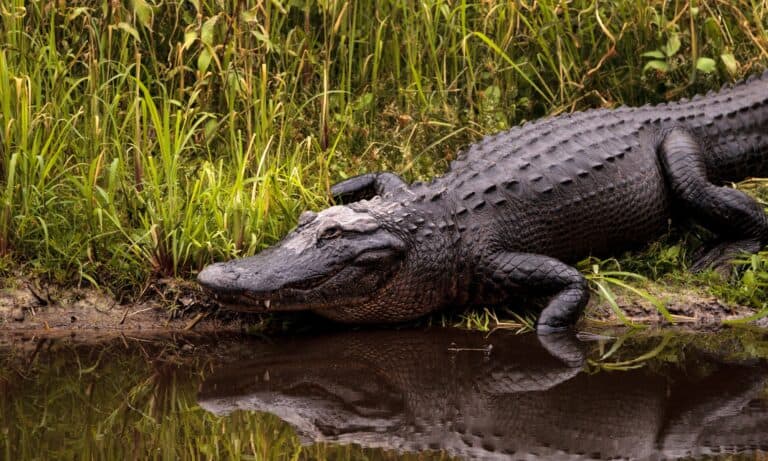
If your goal is to see American alligators with minimal effort, start with the 40 Acre Lake area. TPWD’s own trail description calls the 40 Acre Lake Trail an excellent way to view alligators because it runs through multiple aquatic habitats in a short distance, and the park’s trail map highlights an observation tower here for broad views across wetland and hardwood terrain (see the park’s trails map PDF).
On-the-ground reality: This is not a zoo boardwalk. You are in alligator country, and the best sightings often happen when you slow down near the bank and scan for the eye line and nostrils rather than a full body. TPWD’s Brazos Bend alligator guidance estimates hundreds of large alligators in the park’s waters and emphasizes distance and safety in visitor behavior on their alligator info page for the park, which is worth reading before you go in.
Make it worth it: arrive early, walk it once for birds, then do a second slow lap for reptiles when the sun is higher, and gators start using the edges to thermoregulate.
Hidden Hike 2: Elm Lake Loop
Elm Lake is the ‘stacked deck’ trail if you want to see a large variety of species in a single loop. TPWD describes the Elm Lake Loop as one of the best wildlife-viewing routes in the park, and the trail map calls out a dedicated wildlife viewing platform at Elm Lake that is designed for panoramic scanning (again, see the official trails map PDF).
On-the-ground reality: the platform changes how you bird. Instead of chasing songbirds in the brush, you can glass the lake for waders, scan the far shoreline for movement, and watch raptors working the thermals without constantly repositioning.
Make it worth it: bring binoculars and commit to ten full minutes without walking. The “nothing is happening” feeling often breaks into a sudden wave when a feeding flock shifts, a raptor passes over, or a heron moves out of cover.
Hidden Hike 3: Pilant Slough Trail
While Elm Lake is open and easy to navigate, Pilant Slough offers a more immersive bottomland forest experience. TPWD notes that the Pilant Slough Trail follows the slough as it meanders through bottomland forest, which is a fancy way of saying you are walking a wet corridor that concentrates sound and movement.
On-the-ground reality: This is the kind of trail where you hear things before you see them. Woodpeckers, rustling in the understory, the sudden silence that can follow a nearby predator, and the constant insect layer all tell you where to look next.
Make it worth it: pause at any spot where the water is visible through the trees and watch for the small stuff. Turtles surfacing, fish dimples, and frog calls often lead you to bigger sightings nearby.
Goose Island’s Big Tree Is Not Just a Landmark
Goose Island is where you switch modes. You are no longer in a freshwater alligator park. You are in a coastal system where wind, salt, and bay water shape everything, and where a single old tree can function like an entire neighborhood for wildlife.
TPWD’s long-running “Big Tree” coverage focuses on its size and age, describing it as an ancient live oak estimated at over 1,000 years old with an enormous crown spread in the park’s own Big Tree care release. In TPW Magazine, a Goose Island park interpreter explains why people gather there across generations, and the story also notes that the tree still produces acorns and is actively protected with supports and lightning mitigation as it ages in place on the coast, in the TPW Magazine feature.
Here is the biodiversity angle: an old, sprawling live oak is not just “big.” It has microhabitats. Deep bark texture holds moisture and insects. Branch architecture creates shelter from the wind. Cavities and rot pockets can form over time and become nesting sites. Acorn production is a seasonal food pulse for many species. A Texas live oak habitat paper notes how important live oak woodlands are for birds in the Coastal Bend, including migratory species moving through the region, in The Value of Live Oaks.
So when you stop at the Big Tree, you are not stopping for a photo. You are stopping at a living structure that makes it easier for migrants and residents to rest, feed, and hide in a coastal landscape that can otherwise be exposed.
Hidden Hike 4: Turks Cap Trail Into Warbler Way
For a short loop that still feels like a true habitat walk, start with Turks Cap. TPWD’s own self-guided hike notes at Goose Island describe a “moderate” option that follows the Turks Cap Trail and extends onto Warbler Way to stretch the walk, in the park’s First Day Hikes info. The official Goose Island facility map also labels Turks Cap Trail and Warbler Way in the park’s trail network, in the TPWD map PDF.
On-the-ground reality: The mosquitoes can be intense in warm months, and the bay breeze is not a guaranteed fix once you duck into vegetation. That is part of why this walk stays under most casual visitors’ radar, even though it is productive.
Make it worth it: treat it like a stopover scan. Watch the edges of small ponds, then check the oak and shrub layer for quick movement. Migrants often show as brief flashes, not long perched views.
Hidden Hike 5: The Big Tree Walk And Lantana Loop
The Big Tree spur is short, but it is high-yielding because it drops you into an oak motte setting with a famous, protected centerpiece. The same TPWD facility map that marks the Big Tree route also labels Lantana Loop nearby, making it easy to turn a “tree stop” into a real walk, again shown on the TPWD Goose Island map PDF.
On-the-ground reality: The Big Tree area is managed and protected for a reason. TPWD notes that the health of the surrounding motte matters because many roots are connected underground, and Big Tree’s condition depends on the grove around it, as explained in the TPWD special care release. That “connected grove” detail is part of what makes this spot biologically interesting. You are looking at a shared living system, not a single trunk.
Make it worth it: instead of rushing in for the photo, circle slowly and listen. In coastal oak habitat, bird activity often shows up as quiet feeding, not loud calls. If the canopy looks still, move to the edge where the oak meets open space and watch again.
Where Whooping Cranes Fit Into This Trip
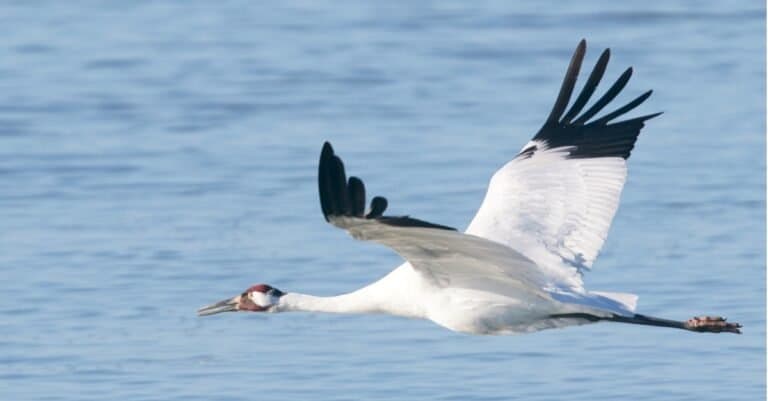
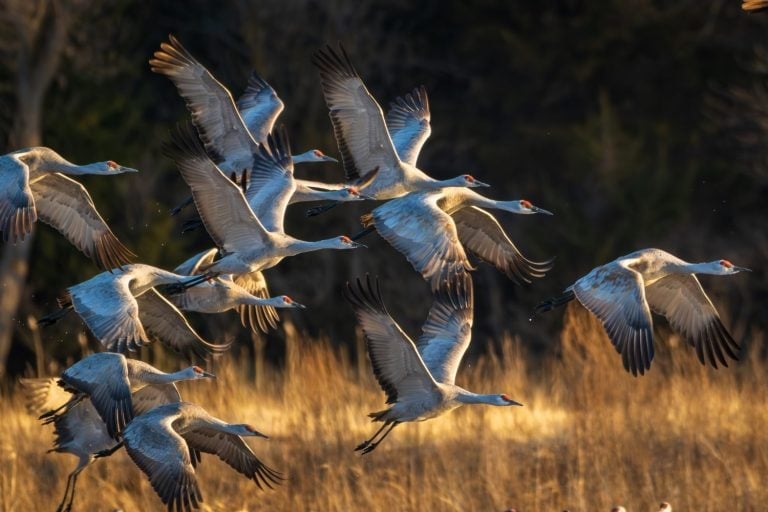
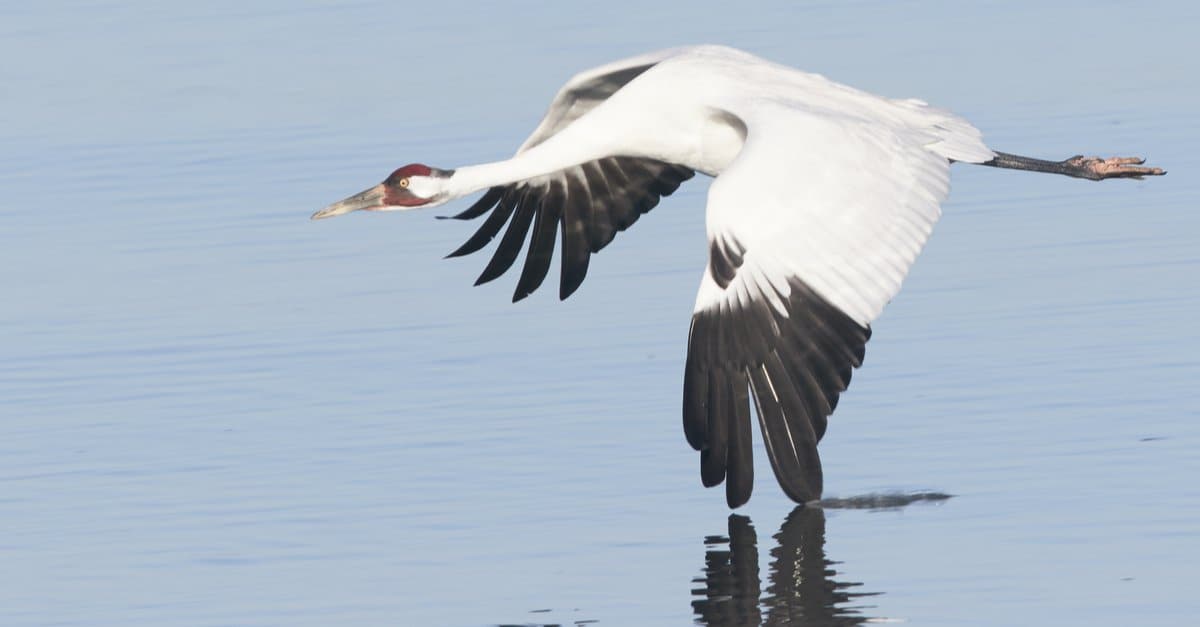
Whooping cranes are the headline species people dream about, and for good reason. They were pushed to the brink, and Texas remains the most important winter destination for the wild, self-sustaining Aransas-Wood Buffalo population. TPWD’s migration updates emphasize that whooping cranes can travel in mixed flocks with sandhill cranes and can be confused with other white birds at a distance, which is why they urge careful identification during migration periods in a TPWD migration release.
Recent reporting also reflects how winter counts along the Texas coast have reached record highs in recent years, with population growth tied to long-term conservation work, as summarized in the Axios Houston update. TPWD runs Texas Whooper Watch as a citizen-science effort to document sightings and learn more about stopover and wintering areas, as explained on the Texas Whooper Watch project page.
A Simple Way to Plan This as a Two-Ecosystem “Deep Dive”
If you have only one day, Brazos Bend is the best bet for guaranteed wildlife density and alligator sightings, especially on the lake-edge trails TPWD flags as strong viewing routes in their official trails list. If you have two days, stack the trip: freshwater biodiversity first, then coastal stopover habitat second. Goose Island is not a whooping-crane guarantee by itself, but it puts you in the coastal birding zone where cranes are part of the seasonal story, and the Big Tree stop is genuinely worth treating as habitat, not just heritage.
A final note: ‘hidden hikes’ in Texas often come with tradeoffs such as heat, insects, and exposed areas. However, the reward is experiencing ecosystems that remain vibrant and dynamic, with all the unpredictable and fascinating biodiversity they offer.