
Quick Take
- Over 80% of the migratory sandhill cranes in North America stop in Nebraska’s Platte River Valley during March as part of their annual northern migration.
- Nebraska, New Mexico, and Colorado are reliable states for sandhill crane viewing, though timing is everything.
- Many state parks offer guided or informative viewing opportunities, offering inexperienced bird watchers the chance to view sandhill cranes.
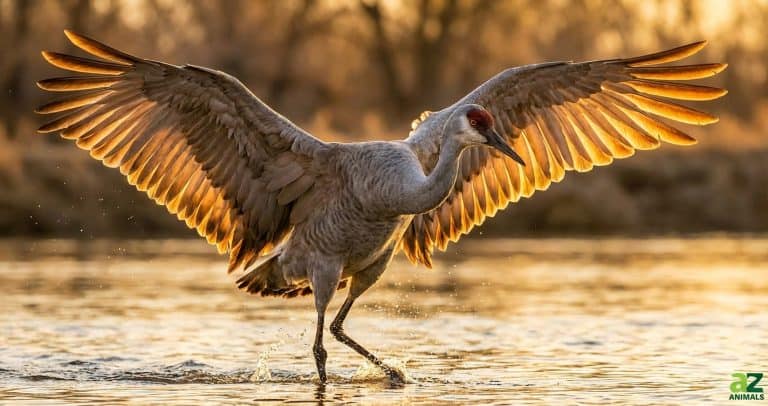
The impressive sandhill crane migration begins in earnest during the month of March, so much so that their calls fill the air to an almost deafening degree. In the Central Flyway, cranes gather in such high numbers that the sky can appear busy before sunrise, and Nebraska remains their preferred stop. In fact, the Nebraska Game and Parks sandhill crane guide says more than 80% of the world’s sandhill cranes stop in the central Platte River Valley, with peak numbers between early March and early April.
Sandhill cranes seek places that give them the safest nighttime roosts and an abundance of food, with ample room to gather before continuing to push north. Their sound is a huge part of the spectacle, enough to make anyone take notice of these fascinating birds. Their calls can carry up to 2.5 miles, turning Nebraska and other states into a natural orchestra of odd, throaty noises.
Where in Nebraska are you most likely to catch sight of the sandhill crane migration, and what other states have a shot at viewing their impressive display? Here’s everything you need to know about the Central Flyway and why March is a highly-trafficked month for sandhill cranes and beyond.
Why March Is a Busy Month for the Central Flyway
March is a bustling month for birding in many of the flyway’s best-known viewing areas because the weather is warming and multiple migrating species are on the move. Sandhill cranes typically arrive in Nebraska in February, with numbers peaking about mid to late March, occasionally stretching into early April. It’s a highly concentrated month for many birds, but especially sandhill cranes.
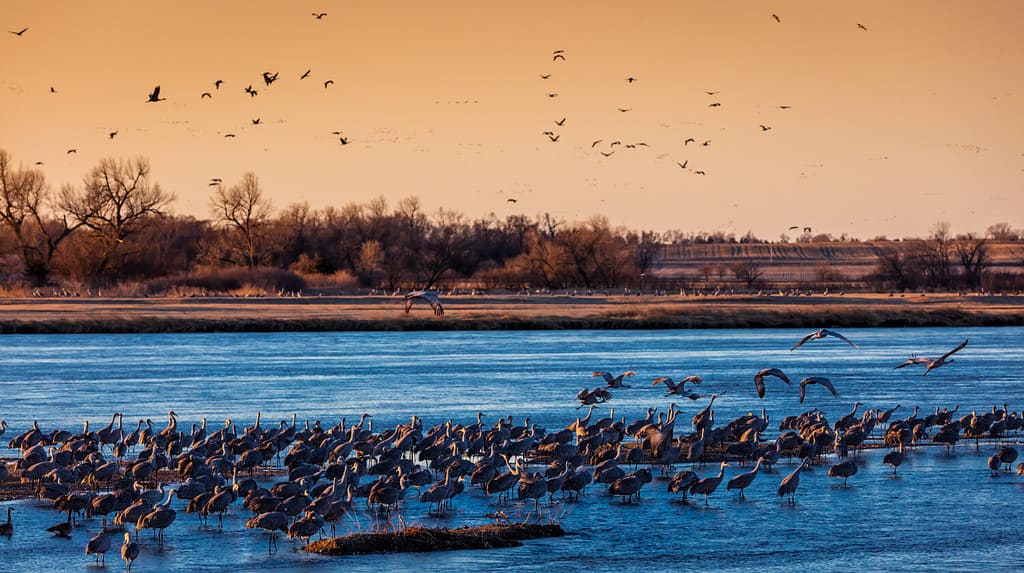
There are certain locations in the US that are best for sandhill crane viewing, given their preferred roosting spots.
©Joseph Sohm/Shutterstock.com
Colorado also sees peak migration numbers in March, though with a different population of cranes. In a current Colorado Parks and Wildlife update on the Monte Vista Crane Festival, the agency says more than 20,000 greater sandhill cranes stop over in southern Colorado during their annual spring migration. These migrants usually arrive by mid-February, leave by early April, and peak in early March.
If you live farther south, New Mexico can be a promising location, as cranes winter there in large numbers before many continue north. The U.S. Fish and Wildlife Service’s Bosque del Apache page mentions sandhill cranes as plentiful in this location, anytime from late fall into early spring, as Bosque del Apache is a major refuge for thousands of wintering cranes.
Why Do Cranes Arrive in Such Huge Numbers?
Cranes arrive at these locations in such large flocks because migration is a risky process for them, both in terms of energy and safety. They require places where food is easy to find and nighttime roosting is relatively safe, and the best stopovers offer both, which is why some locations are far more popular than others. Landscapes that offer combinations of shallow sandbars and damp meadows allow these birds locations that have clear predator sight lines and food availability.
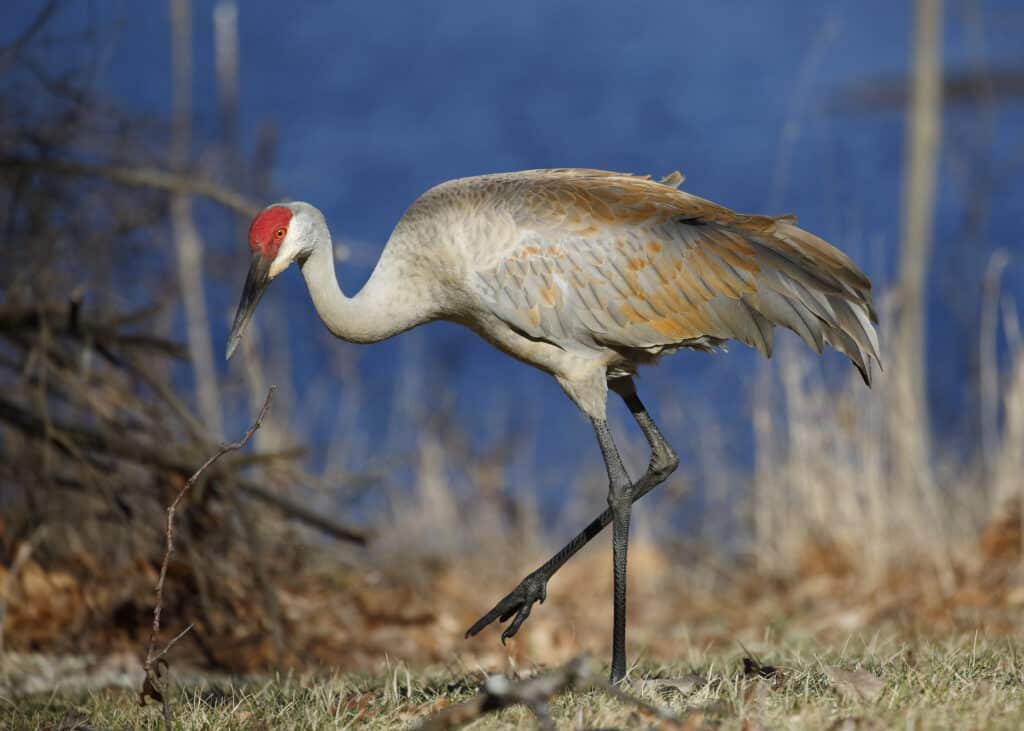
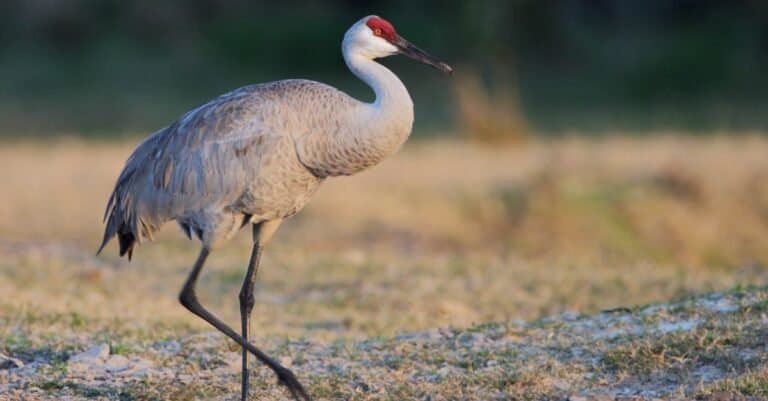
Sandhill cranes are large birds found throughout North America, with thousands migrating during the month of March.
©Brian Lasenby/Shutterstock.com
Nebraska’s concentration is especially famous because it is both biologically important and visually prominent. The Crane Trust’s 2025 migration updates track where birds are bunching week by week in the central Platte, and they also describe the Platte as one of the most critical stopovers on the Central Flyway. When water levels, sandbars, surrounding habitat, and food all line up, cranes use the corridor in massive numbers rather than spreading thinly across the region, as there’s always safety in numbers.
The Distinctive Calls of Sandhill Cranes
A flock of sandhill cranes flying overhead is obvious because of their distinct, unique calls. Cornell’s sandhill crane sound guide says the birds have loud, rattling bugle calls in flight as well as on the ground, and often in strings of repeated notes. Their unusual voice comes from their anatomy, specifically a long trachea looped into their breastbones, which deepens and enriches the sound, leading to a rattling trumpet that echoes across landscapes.
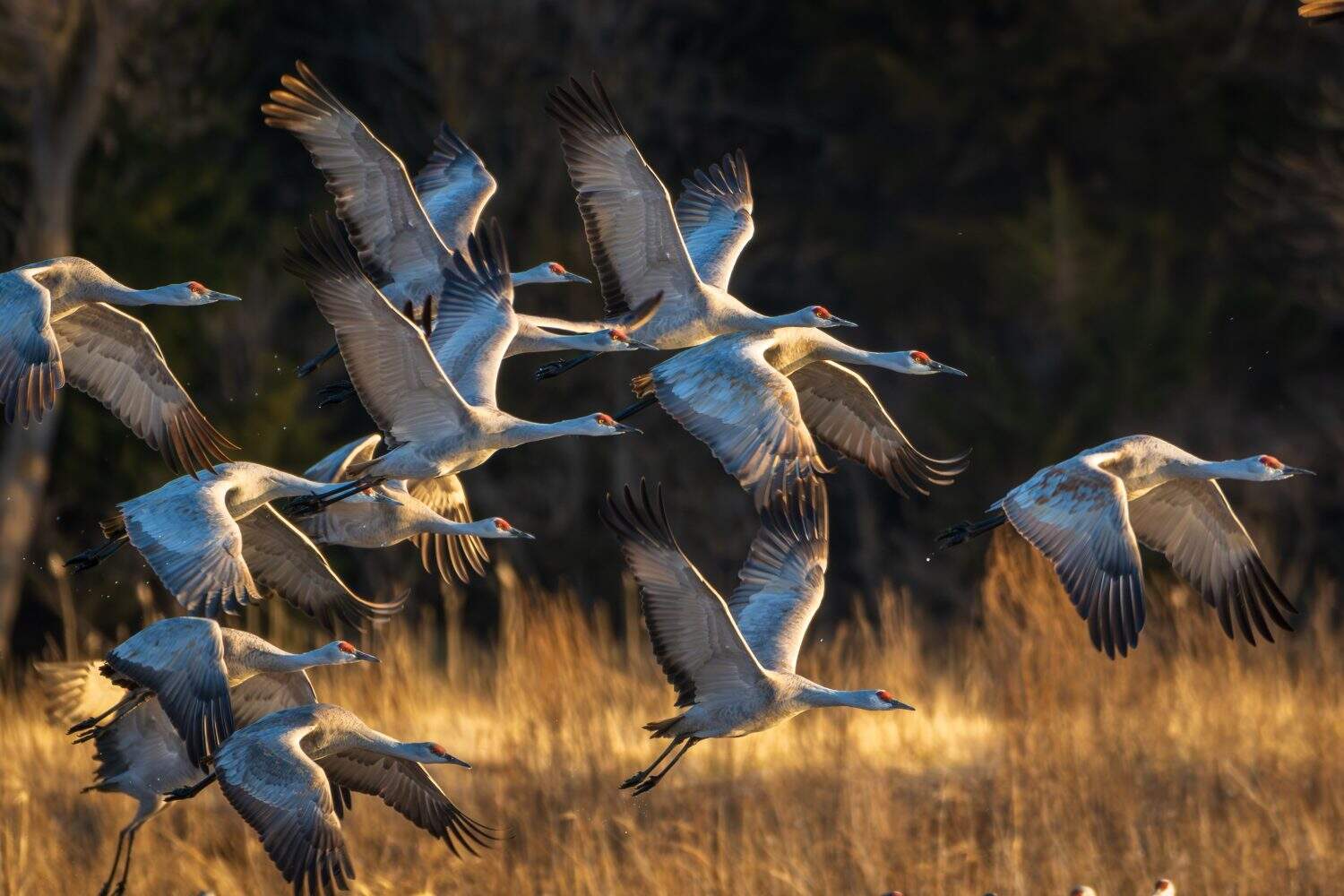
Their formations are also distinctive and easy for birdwatchers to recognize once they know what to look for. They can fly in lines, loose V formations, broken wedges, or ragged strings of birds that shift as the flock adjusts to wind and altitude. In March, they are also constantly moving between fields and river roosts, so you may see compact flight groups dropping low at dawn, with higher flocks overhead during midday and longer evening flights as they make their way back to their safe spots.
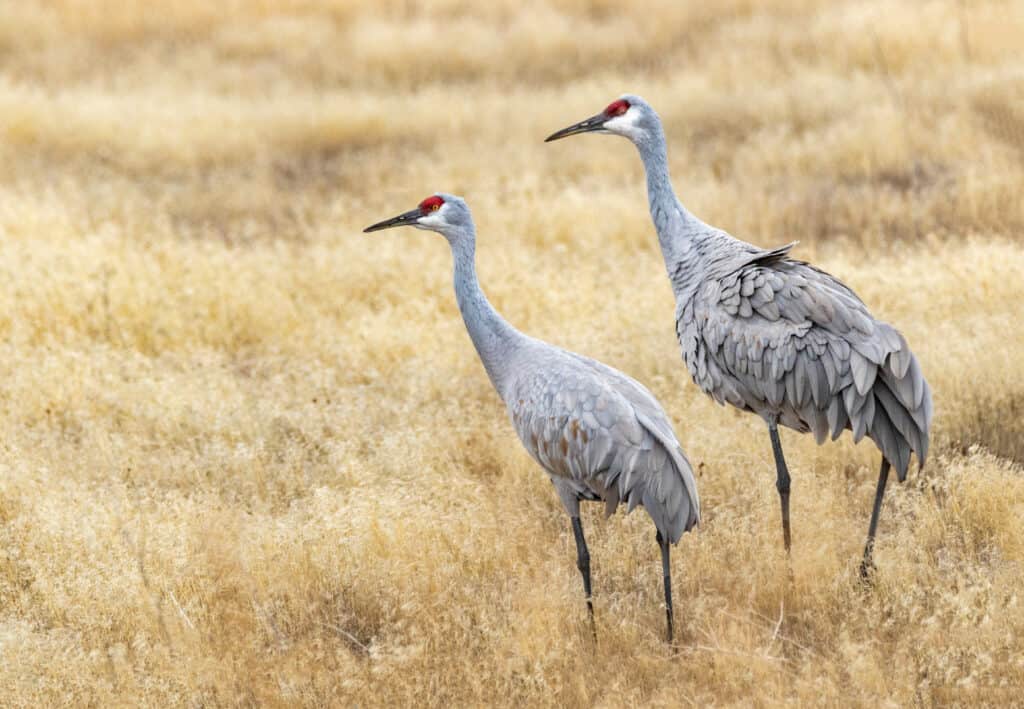
Sandhill cranes call deeply, with a distinctive, rattling trumpet; it often echoes for miles.
©Michael Chatt/Shutterstock.com
The best visual clue to watch for? Their long necks are typically stretched forward, with legs trailing behind, accompanied by steadier, deeper wingbeats compared to many duck or goose species. Because crane calls carry so far, many viewers pick up a flock by ear before they locate it by eye. However, it’s only a matter of time before you catch sight of their impressive formations.
Speaking of catching sight of these birds, where are some of the best locations for seeing sandhill cranes? Let’s check out the spots along the Central Flyway that consistently host this migration.
The Best Places to See Sandhill Cranes in March: Central Platte River Valley, Nebraska
If you pick only one place to see sandhill cranes migrating, it is hard to beat central Nebraska. Rowe Sanctuary places the heart of this migration in the Platte River Valley between early March and early April, with cranes feeding throughout the surrounding farmland and wet meadows during the day, flowing back to safely roost in the early evening.
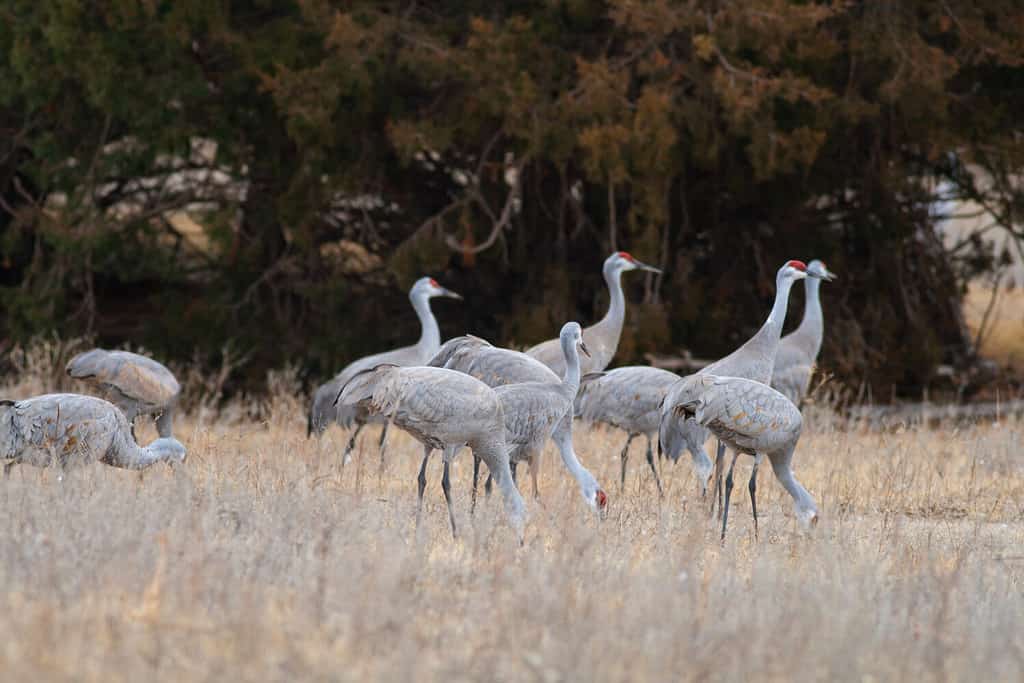
The Platte River Valley is your number one spot for viewing sandhill cranes.
©Benjamin Tillotson/Shutterstock.com
For first-time viewers, Rowe Sanctuary is one of your strongest options, as it is built around the migration itself and offers organized viewing opportunities. Fort Kearny State Recreation Area is another major base for migrating cranes, and Nebraska Game and Parks has designated viewing areas for viewers and visitors. Be sure to respect private land in this area, as much of the Platte Valley is not public property.
Responsible viewing of these birds is a must, as they are heavily concentrated at night and found on vulnerable roosts. Nebraska Game and Parks advises using your vehicle as a blind when viewing cranes in fields. Be sure to stay quiet, and never approach the birds; the whole reason they’re gathered on shallow river channels is to rest safely between flights, so be sure to respect that.
Another Major March Stop for Sandhill Cranes: San Luis Valley, Colorado
The San Luis Valley in Colorado offers a chance to see greater sandhill cranes, with sightings more dispersed across agricultural valley floors and wetland areas compared to the more concentrated crane viewing in the Platte. Peak spring migration for this species usually occurs in early March, so the time is now to head to the San Luis Valley.
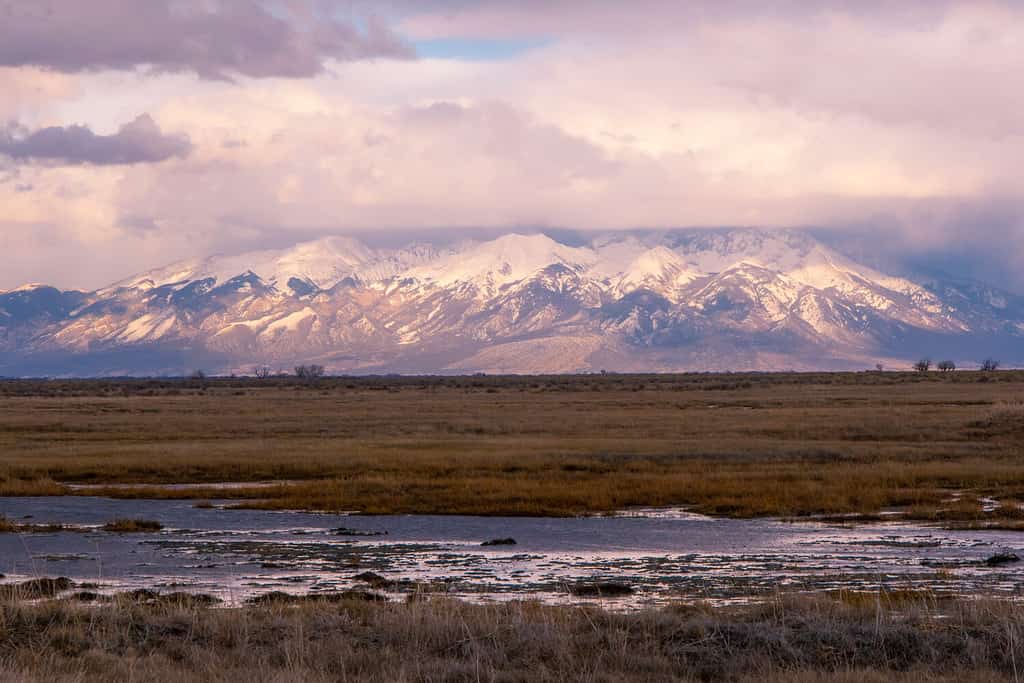
The gorgeous San Luis Valley has a sandhill crane stopover, with many other migrating bird species to view.
©Images by Dr. Alan Lipkin/Shutterstock.com
Monte Vista is the place most locals rely on, thanks to its long-running crane festival and formal viewing areas. Park staff and volunteers regularly assist at viewing sites, equipped with scopes that help new viewers separate actual crane sightings from the many geese and ducks that share the valley. The surrounding refuge system and wetlands create a reliable pattern of movement during the day, though conditions shift with water levels and weather.
It’s important to note that the Rocky Mountain population of greater sandhill cranes breeds primarily around the Greater Yellowstone region and winters mainly in the Rio Grande Valley, near Bosque del Apache, or farther south. In spring, the San Luis Valley becomes one of the most reliable places to intercept them on the move north, so plan your visit accordingly.
Other Reliable Stops for Sandhill Crane Sightings Along the Flyway
If you’re heading out now, Bosque del Apache in New Mexico remains one of the most famous crane locations in the country, though it is better known for winter and early-spring birds than for the giant March peak that defines Nebraska. March can still be productive, but it is more of a transition zone than a central roosting spot.
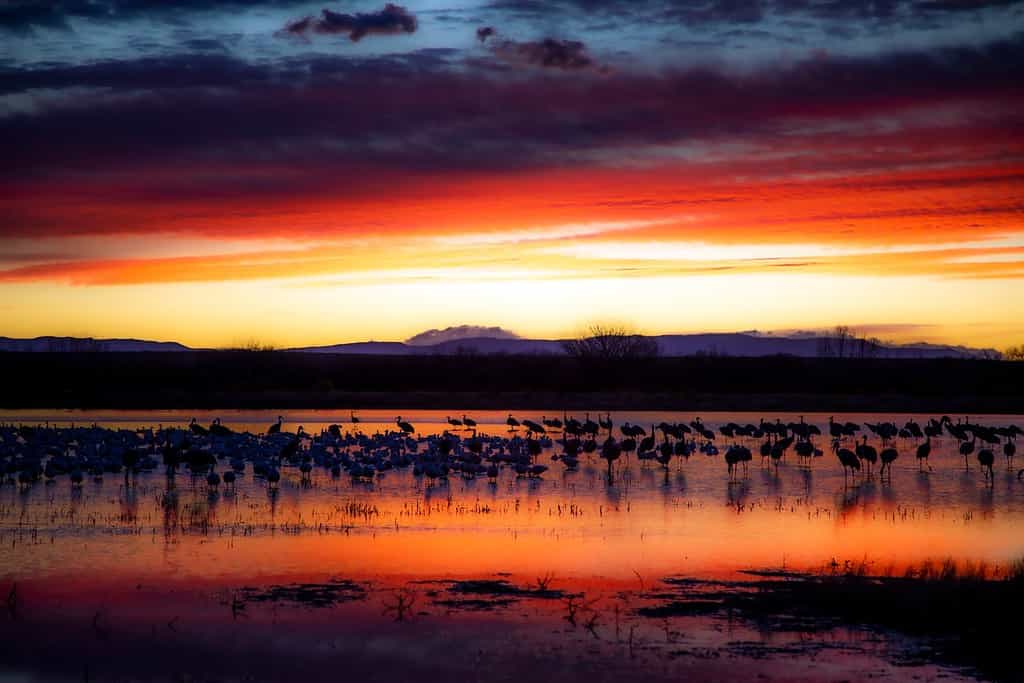
New Mexico is best for sandhill crane viewing at the beginning of March, as it is where the birds begin their migration.
©Lindsey Lu/Shutterstock.com
Quivira National Wildlife Refuge in Kansas is another place worth noting, especially for birders already moving north through the flyway. The refuge overview says most migratory bird activity at this location peaks from March to April, and this location is well known as a stopover for large numbers of cranes and other migrant species, making it an ideal spot for viewing many types of birds besides impressive sandhills.
How to Watch Cranes Without Disturbing Roosting Sites
The single most important rule of this migration is not to disturb cranes from the places they use to rest. If too many people crowd these areas, especially around sunrise and sunset, they interfere with one of the most important parts of the birds’ stopover routine. Allow plenty of space and quiet so that these birds can fully rest up.
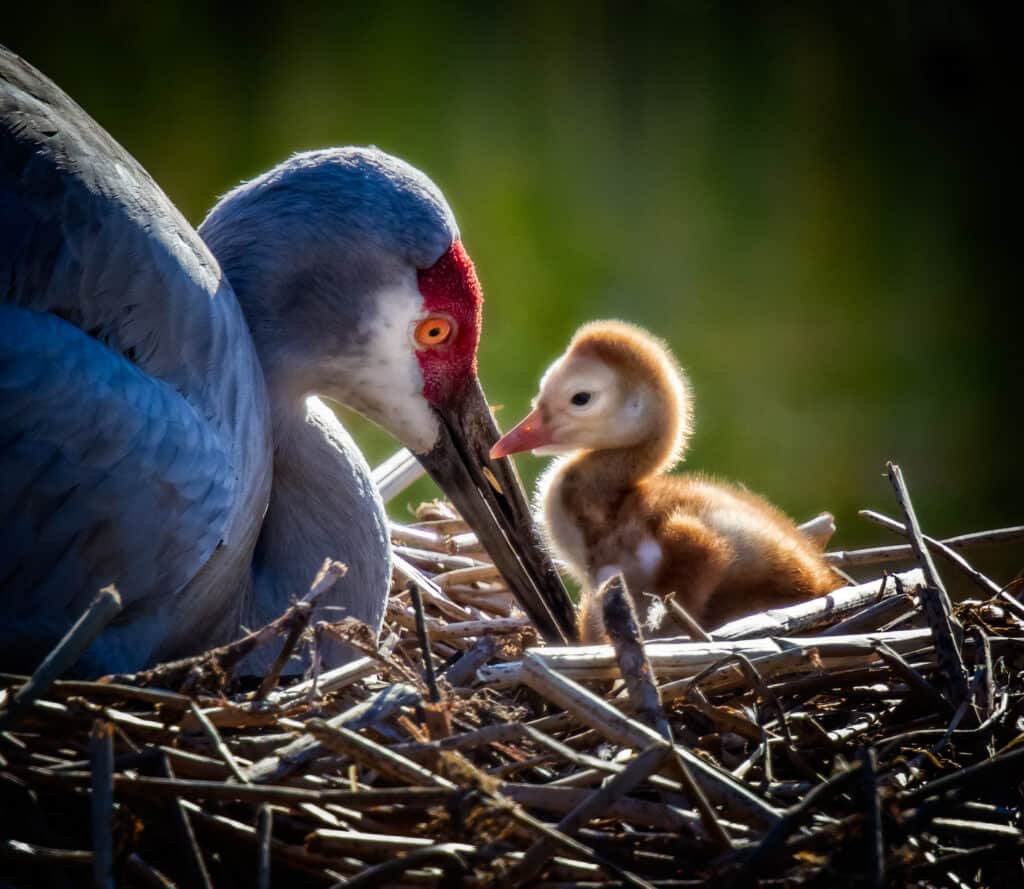
It’s important to maintain a fair distance from any sandhill crane roosts to keep them safe.
©jo Crebbin/Shutterstock.com
Need some practical tips on how to accomplish this? Use designated viewing sites only, respect private property, use your vehicle as a blind whenever you can, stay quiet, and do not approach cranes at any time. Always stay on official roads and overlooks; do not walk into fields to get closer. Remember that March cranes are often remarkably visible without any need to get too close, and the sound alone makes this migration viewing special.
Why the Sandhill Crane Migration Feels So Impressive
When you consider hundreds of thousands of birds, sometimes over 600,000, in one river valley, it’s no wonder the sight affects people so deeply. Watching intricate formations gather, bend, and shift, only to vanish, makes March a period when the atmosphere is most unforgettable. No matter what state you head to first, it’s worth heading to some of these locations.
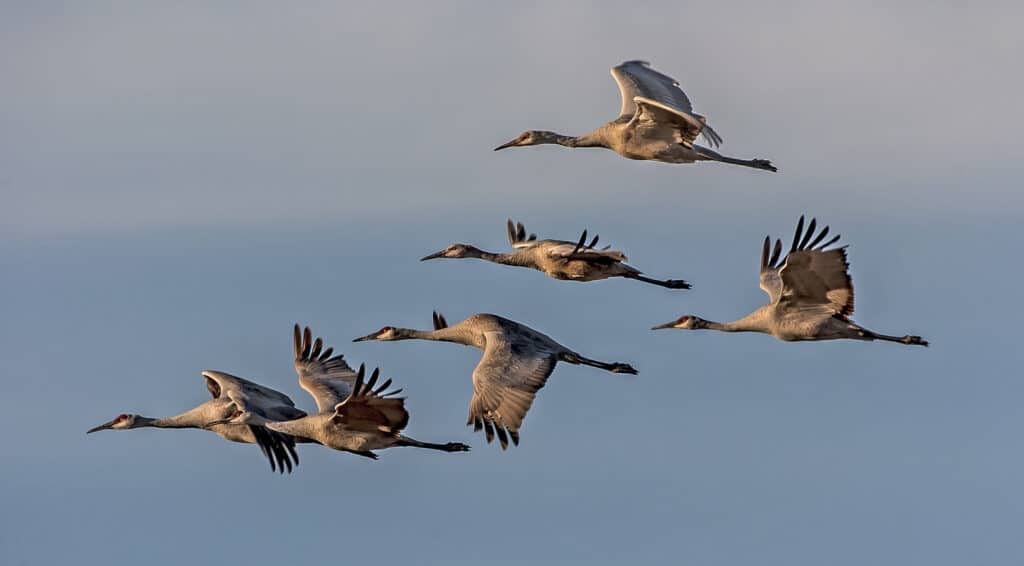
Sandhill cranes migrate in such a unique way that it can be a breathtaking viewing experience.
©Tom Zeman/Shutterstock.com
March is the most reliable month to view these birds; the cranes follow this route because it has worked for them for years. The combination of river, wetlands, fields, and roost sites matches what they’re looking for, and they aren’t about to change paths anytime soon. Ultimately, if you want to experience the loudest bird migration in the country, March in the Central Flyway is still the place to be.