Quick Take
- Researchers studied river otters by monitoring 18 specific latrines and collecting scat to gather high-quality ecosystem data.
- The study found that the otters are eating diverse fish species and considerable amounts of Maryland blue crab
- Many species of parasites were detected in the otter’s diet, including parasites of their prey
- DNA analysis allowed for high-resolution species data, highlighting the diversity of river otter prey
Biologists and ecologists have long wished to gather high-quality data on exactly what the animals they study are eating, but how can such observations be made without disturbing the natural patterns of the species?
One popular technique has been to examine the scat of a species under study, and biologists working for the Smithsonian Environmental Research Center (SERC) in Maryland’s Chesapeake Bay have been giving North American river otter (Lontra canadensis) poop a close look to find out more about the diet of this apex predator. Recently developed DNA technologies have given researchers the ability not only to study the animals that these otters are eating, but also to give them insight into the parasites in the otter’s prey.
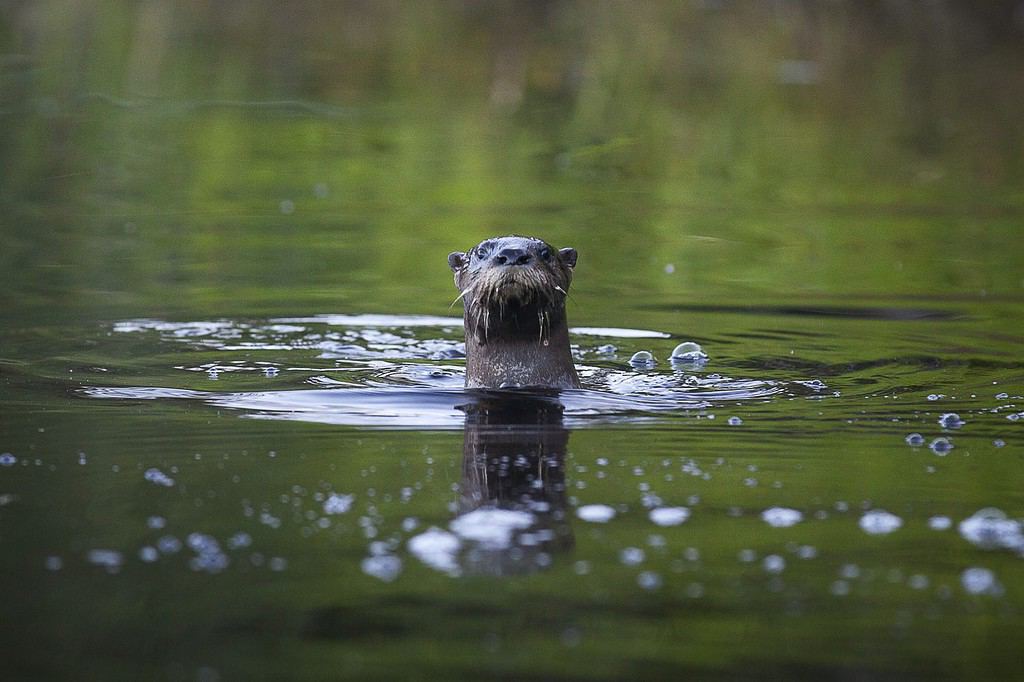
In a first-of-its-kind study, river otters along the Chesapeake Bay had their scat sampled and DNA tested to learn about their diets and parasites.
©Jeff Feverston/Shutterstock.com
Why Studying the Diets of River Otters Matters
For centuries, North American river otters have lived with a target on their backs. Not only were they hunted and trapped for their valuable fur, but they have also been killed because of their habit of preying on some of the same fish and crustaceans that humans like to catch. Furthermore, they have had their habitat disturbed or destroyed by human development and activities along the river and stream banks where they live. But in the Chesapeake Bay, as with many parts of North America, the species has been on the rebound, and ecologists are curious to learn how they are fitting into the diverse ecosystems they have returned to.
Otter pelts were once very valuable. Additionally, their propensity to eat the same fish and crustaceans humans eat gave them a reputation as a pest animal. Because of this, hunting and trapping river otters was unregulated for most of the 20th century. As that changed, and as wetland, riverside, and other ecosystem restoration became more commonplace, river otters began bouncing back. Ecologists now believe that they occupy most of their historic range along the Chesapeake Bay and its tributaries, and have once again become apex predators in their environments.
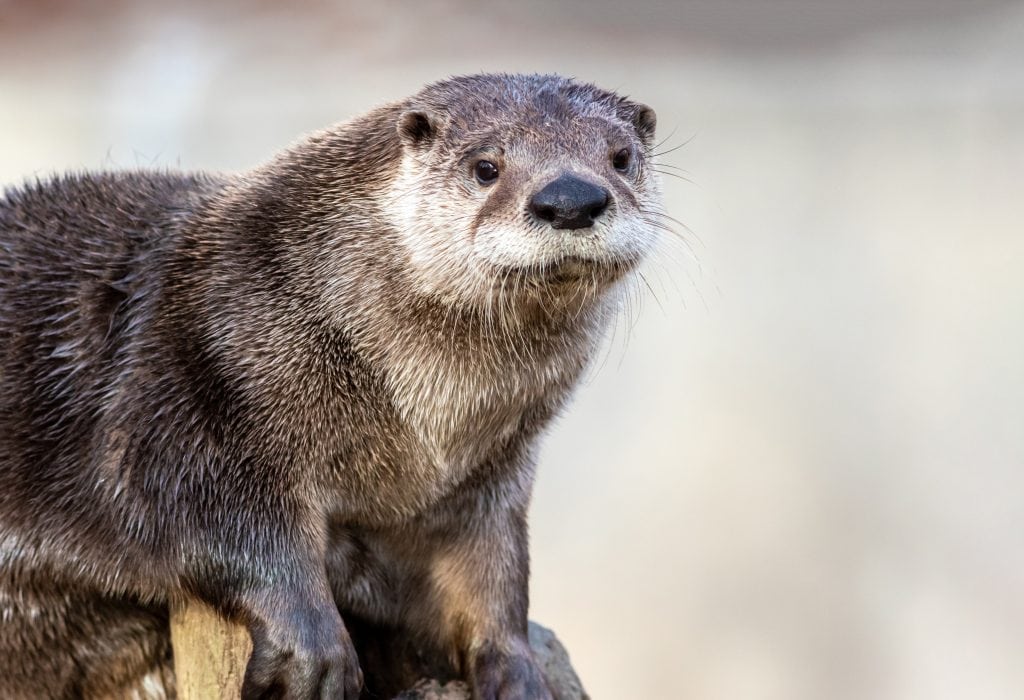
River otters have seen a significant rebound in their populations as more shorelines and waterways have become protected and as their hunting has been regulated in the latter half of the 20th century.
©Rabbitti/Shutterstock.com
Apex predators are at the top of their food chain, hunters without any of their own natural predators. They play a critical role in regulating populations of prey species, and in an environment as diverse as the Chesapeake Bay, gathering information about what they’re eating can help experts better understand the ecosystem’s health.
A Scatological Approach
Researchers at SERC in Maryland were intrigued when they spotted a watery poop with a bright red worm in it on one of their docks on Chesapeake Bay. After using video to confirm that the scat came from an otter, the researchers learned that the dock had become an otter latrine. This kicked off a study that examined 18 such latrines, which are places where river otters socialize, play, rest, eat — and defacate.
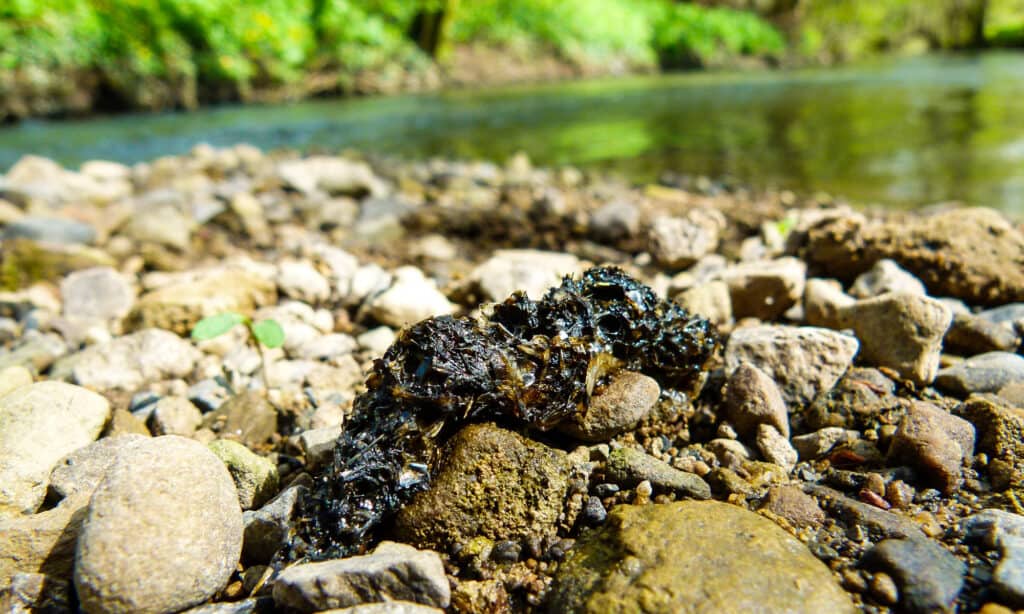
Qualitative and quantitative examinations of otter latrines and otter poop itself comprised the data sources for the SERC study.
©iStock.com/Cloebudgie
We spoke with Calli Wise of SERC, who was the lead author of the study. She highlighted the usefulness of studying otter latrines. “River otter latrines provide an opportunity to learn about otters by studying their scat or placing remote cameras without disturbing the animals. Latrines are semi-permanent features that can be used for many years, so it’s easy to return to the same latrine to collect scat and data over time.”
Life at the Latrine
For river otters, latrines are more than just what their name implies; they give these highly social animals a gathering space. They groom each other, raise pups, wrestle, and sniff around to see who is in the neighborhood. Like dogs and other social mammals, river otters use their urine, feces, and anal gland secretions to mark their territory and communicate with other members of their species. Though these animals had chosen several man-made areas as latrines, like the Smithsonian Institute’s dock and a shoreline staircase, they are quite shy around people. But because they’re predictable poopers, researchers had a perfect opportunity to learn about their diets and health without bothering the skittish creatures.

River otters use areas called latrines to gather and mark their territories.
©iStock.com/Artush
The study found that river otters chose beaches, shorelines with woody debris, and drop-offs providing access to water, as well as manmade structures. “We found river otters at SERC were using many manmade structures such as fixed and floating docks and shoreline staircases as latrines,” Wise shares. They also preferred to poop under a low canopy of trees and shrubs, as well as under manmade canopies at docks, possibly to protect their feces and help the message they are leaving for their fellow river otters last longer.
Parasites are vital parts of healthy ecosystems and are extremely important in food webs.
Calli Wise of Smithsonian Environmental Research Center and lead study author
The Story Scat Tells
The researchers employed both microscopic examinations and DNA sequencing to identify the species that river otters prey on, the animals that parasitize river otters, and even the parasites of their prey. From the microscopy alone, the scientists identified at least 18 species, mostly crustaceans and fish, but also found the remains of two birds and two amphibians. DNA analysis was able to detect even more species, including parasites that were difficult to detect with microscopes, like flukes, protists, and nematodes. Though most of the parasites in the samples likely came from the river otter’s prey, some of the parasites detected affect the river otters themselves; one cost that comes from living socially is a higher parasite load for the river otter and for similar animals.
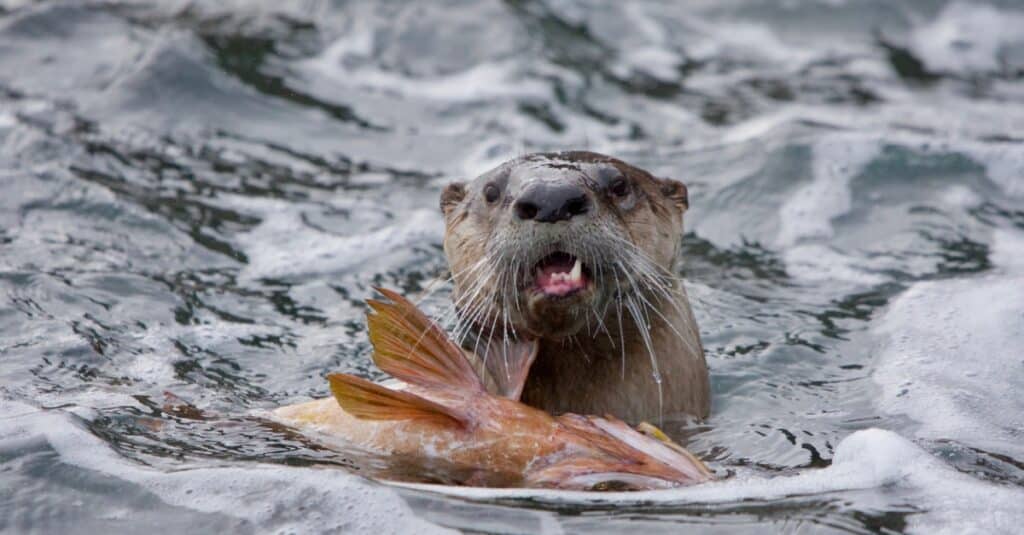
North American river otters are widespread across Canada and the United States.
©iStock.com/DanielLacy
River otters are generalists, meaning they take advantage of diverse prey, depending on availability and seasonal changes. A great example can be found in this study, where microscope data showed that the river otters were eating cicadas during 2021’s Brood X emergence. Though birds didn’t make up a large part of the diets of the river otters in this study, in some ecosystems, river otters have learned to become expert hunters of waterfowl. They are remarkably adaptable predators: in California’s Point Reyes National Seashore, river otters have been observed hunting pelicans in packs.
This study discovered that the otters on SERC’s campus were eating broadly; from the poop samples, they detected species including striped bass, gizzard shad, American Eel, crayfish, pupfish, herring, and gobies, to name just a few. A major part of their diet is a species of commercial and cultural importance in the Chesapeake, Callinectes sapidus, sometimes called the Maryland blue crab. The river otters were also found to be consuming two non-native species, common carp and white river crayfish.
Parasite Perspectives
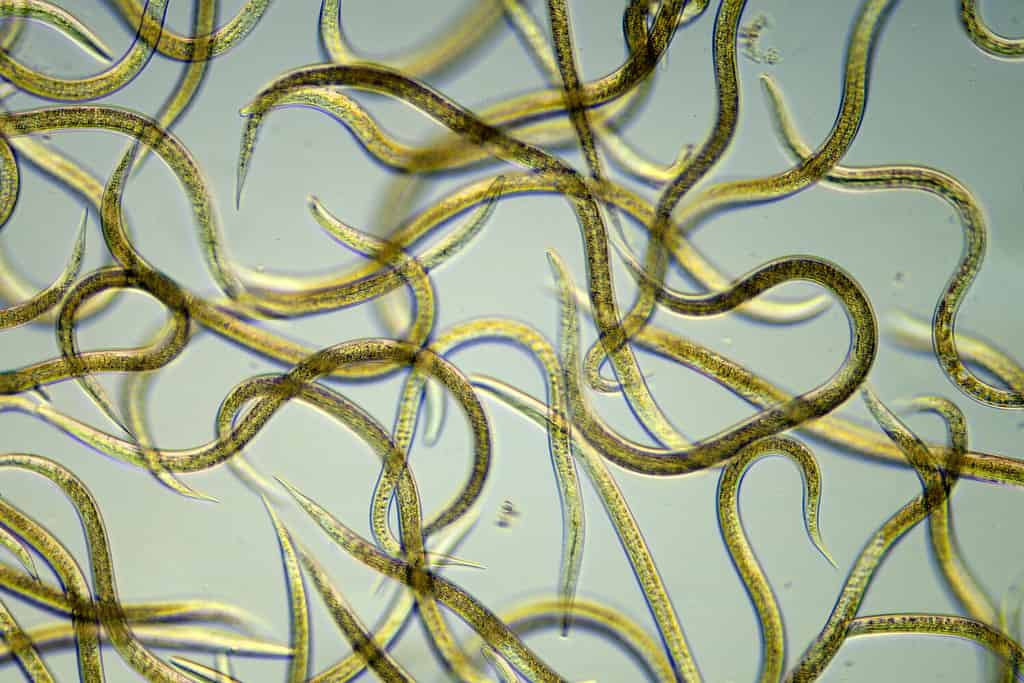
Some of the DNA detected in the study came from organisms that parasitize otters, including nematodes similar to the ones pictured above.
©D. Kucharski K. Kucharska/Shutterstock.com
One major advantage of using both microscopy and DNA analysis to detect species in the otter poop was that it was able to detect parasites that were affecting the prey of the river otters, along with parasites infecting the river otters themselves. “The fact that we found lots of parasites in river otter scat is actually a really good thing,” says Wise. “Parasites are vital parts of healthy ecosystems and are extremely important in food webs.” Animals infected with parasites are more likely to be preyed upon, and in this way, apex predators like river otters can help bring down parasite prevalence in healthy ecosystems.
“Using the otter as a ‘sentinel,’ we can monitor the change in parasite communities, which can indicate ecosystem health,” continues Wise. “It was interesting to find many of the parasites we identified are trophically transmitted and likely play a role in how energy moves through food webs.” For example, flukes found in the scat samples are parasites of both fish and mammals during different stages of their life cycles — but more research is needed to determine how river otters in the Chesapeake Bay are contracting or hosting parasites.
Studies like these can act as sentinels in other ways as well. Some parasites that infect river otters might also be able to harm humans, so when scientists can pick up such parasites in the DNA of local predator poop, they can help advise local health authorities about parasite risk levels, or even detect when novel parasites have entered an ecosystem.
What’s the Best Way to View River Otters in the Wild?
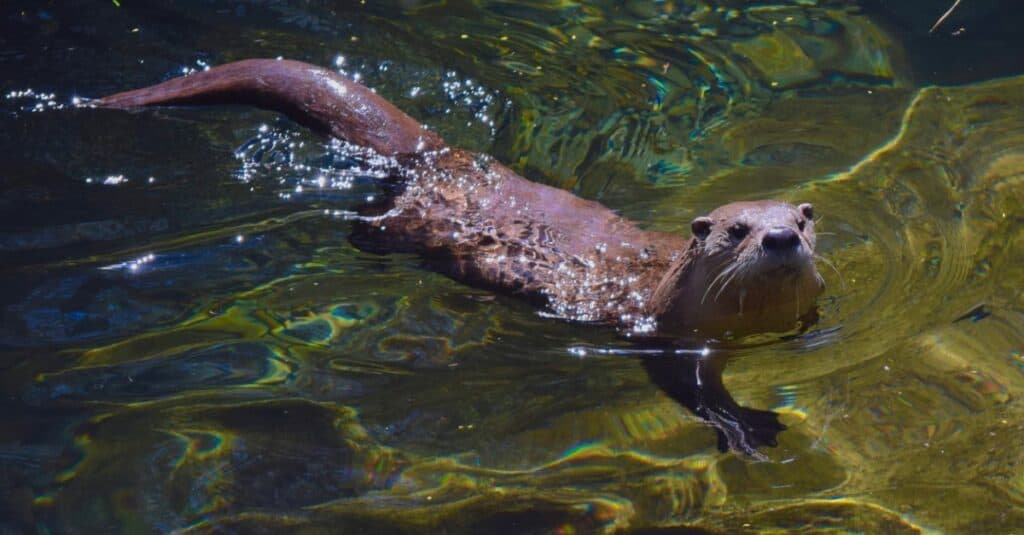
River otters can spend as much time on land as they do in water.
©iStock.com/Kathryn Farley
If you are looking to catch a glimpse of river otters in their natural habitat, look for areas of calm or brackish water, especially those that have beaches, drop-offs, or slides where otters can access the water. “River otters are fun to observe from a safe distance and most likely to be spotted at dawn or dusk along waterways or in coastal areas. Seeing signs of otters along the shoreline, like scat or tracks, can be a great indicator that otters are using the area,” advises Wise.
If you live in an area that hosts river otters, consider asking local naturalists what areas have been used as latrines by the local otter population. Find a position above the latrine, at least 25 yards away, and be patient. You might be rewarded with views of river otters emerging from the water with a meal!
How Can River Otter Populations Be Protected For Future Generations?
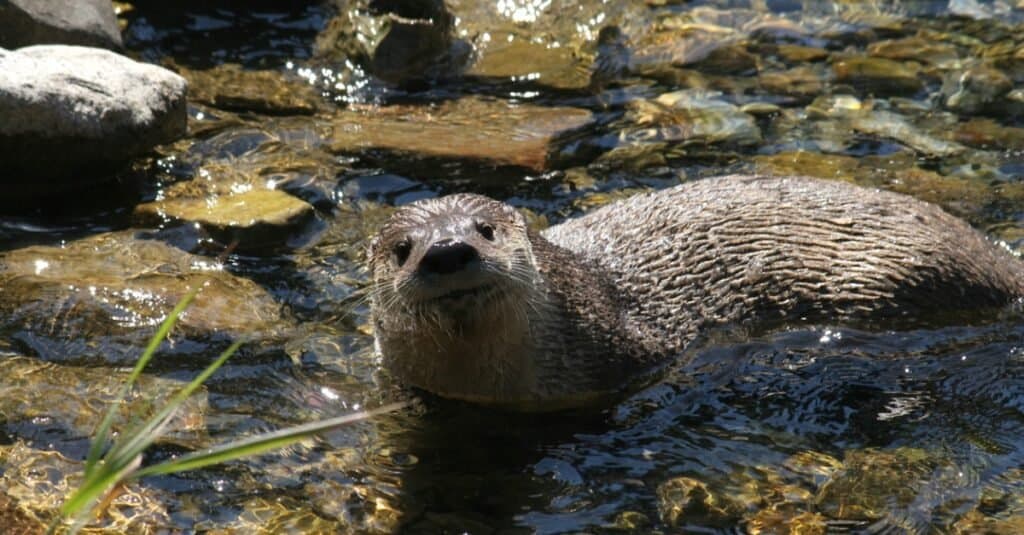
©iStock.com/MarcQuebec
River otters have seen a significant comeback due to shoreline restoration, improved water quality standards, and limits that were placed on the number of otters that could be trapped or hunted. Today, the river otter is listed as a “Species of Least Concern” by the International Union for Conservation of Nature, but the species still faces significant threats, especially from the development of the animal’s shoreline habitat.
Limiting development along waterways and advocating for clean water standards can help protect these precocious predators. “In general, clean waterways support healthy ecosystems which benefit both humans and river otters,” concludes Wise.