
Quick Take
- Otter poop is called spraint and typically contains fish scales and bones.
- River otters poop in communal latrines close to shorelines with open access to water.
- Otters often do a poop dance before they use the latrine, which is likely signaling behavior.
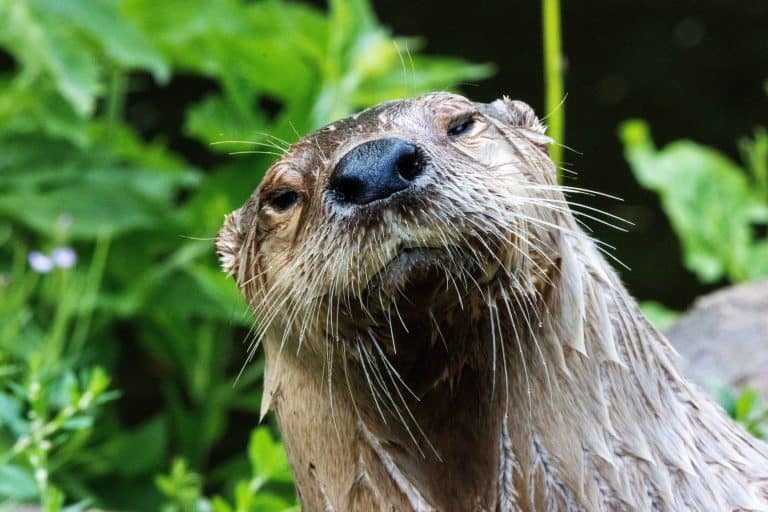
Otters are carnivorous mammals in the Mustelidae family, which includes minks, weasels, wolverines, badgers, ferrets, and more. There are 14 living otter species that inhabit aquatic habitats all over the world, with the exception of Australia and Antarctica. Most otter species are river otters that live partially in the water and partially on land. They establish specific places to eliminate waste, but that’s not all their public toilets are used for. Keep reading to learn all about otter poop, and discover how they use it to communicate.
How to Recognize Otter Poop
Otter poop is called spraint. It is usually a dark greenish color with a slimy-looking texture, although the color can vary depending on the otter’s diet. Spraint is generally cylindrical with a diameter of roughly one inch. It typically contains fish scales and bones, as well as fragments of crustaceans, mollusks, and insects. When the spraint is older, it will appear white or light grey in color.
Otter spraint has a strong, fishy odor. Some describe it as sweet and musky, with a scent reminiscent of lavender or jasmine tea mixed with the smell of a fresh fish market. Otters also excrete a substance referred to as anal jelly, which resembles spraint but lacks the undigested fragments. This mucus-like substance is believed to be produced in the gut to protect the digestive system and help them pass the bones and shells of their prey.
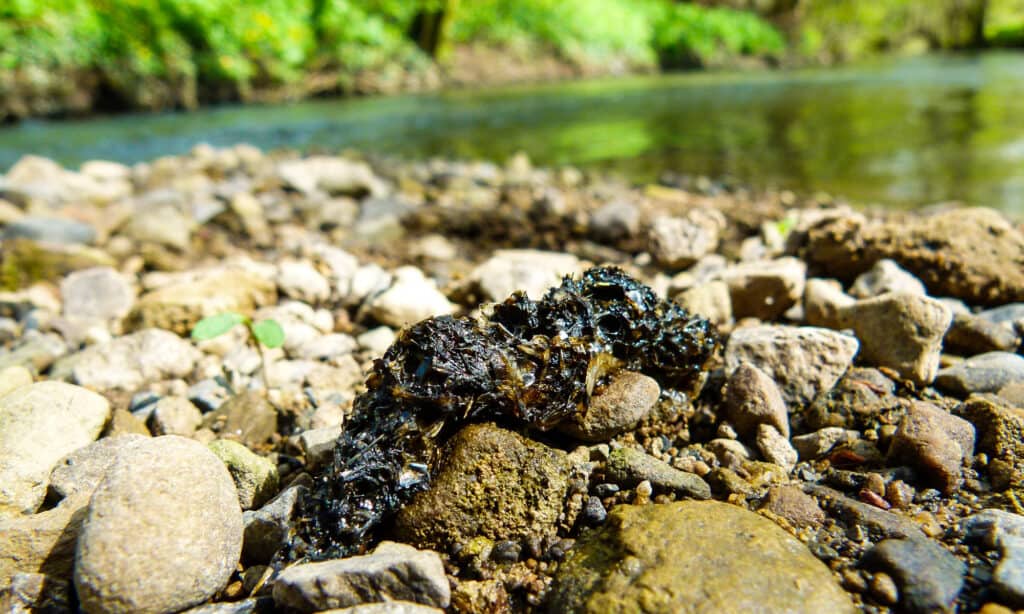
Otter poop typically contains fish scales, bones, and other undigested fragments.
©iStock.com/Cloebudgie
Where Do Otters Poop?
River otters poop in communal latrines. Their latrines are typically found in areas with woody debris, close to shorelines with open access to water. Latrines have also been found on man-made structures such as boardwalks and docks. However, otter latrines are not just community toilets. Latrines serve as social hubs where they not only leave spraints and urine, but they also scent mark the area using anal scent glands at the base of their tail. Otters use spraint to exchange information, conveying information about their species, identity, social position, and reproductive status. They can also indicate territorial boundaries, available resources, and the number of otters in the area.
Unlike river otters, which use land-based latrines, sea otters are almost fully aquatic. They typically defecate in the ocean, often while floating on their backs. All otter species have simple digestive systems and high metabolisms, requiring a high-calorie diet and rapid digestion to meet their energy needs and stay warm in the water. Sea otters have higher mass-specific metabolic rates than terrestrial otters, so they eat more frequently and eliminate waste more often.
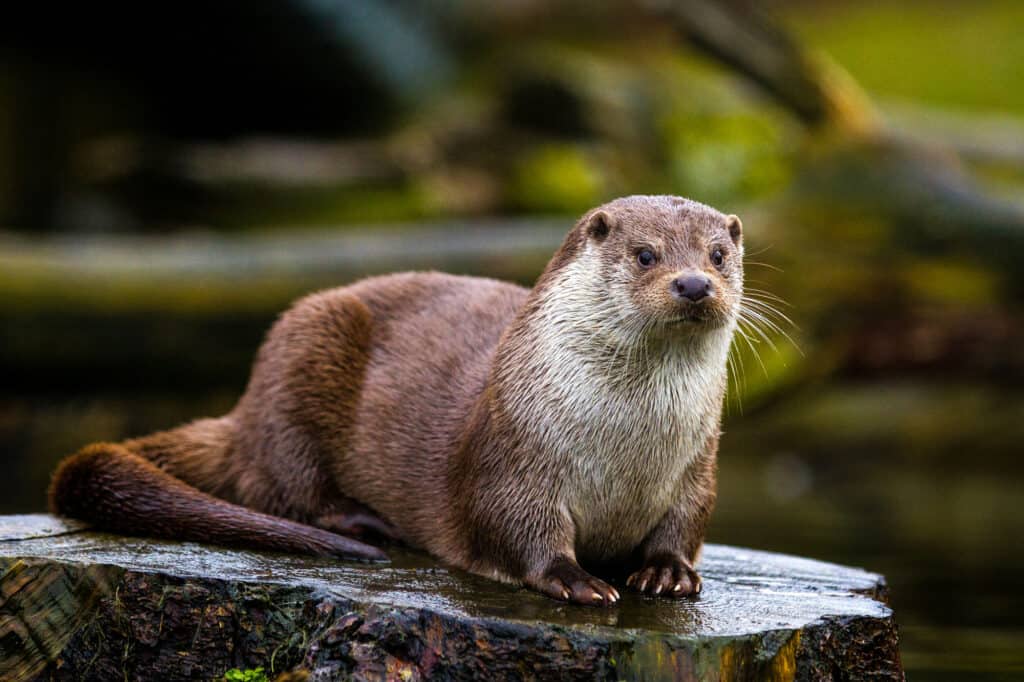
Otters have a dedicated spot known as a latrine, which serves as both a public toilet and a social hub.
©iStock.com/Cloudtail_the_Snow_Leopard
The Poop Dance
Otters also do a poop dance before they use the latrine. They lift their tails in the air, stomp their hind feet, and move from side to side. Scientists are unsure why otters dance before defecating, but one theory is that it helps spread their scent. Researchers have also observed other otters often joining in, leading them to believe it may be a form of signaling behavior.
This dancing has been specifically noted at crossover latrines where multiple trails or bodies of water meet. Larger groups typically congregate at these crossover latrines, but researchers have observed that the otters perform fewer social behaviors and more signaling behaviors. This suggests that gathering at crossover latrines may be a way for smaller groups of otters to collect information and determine which social group to join.
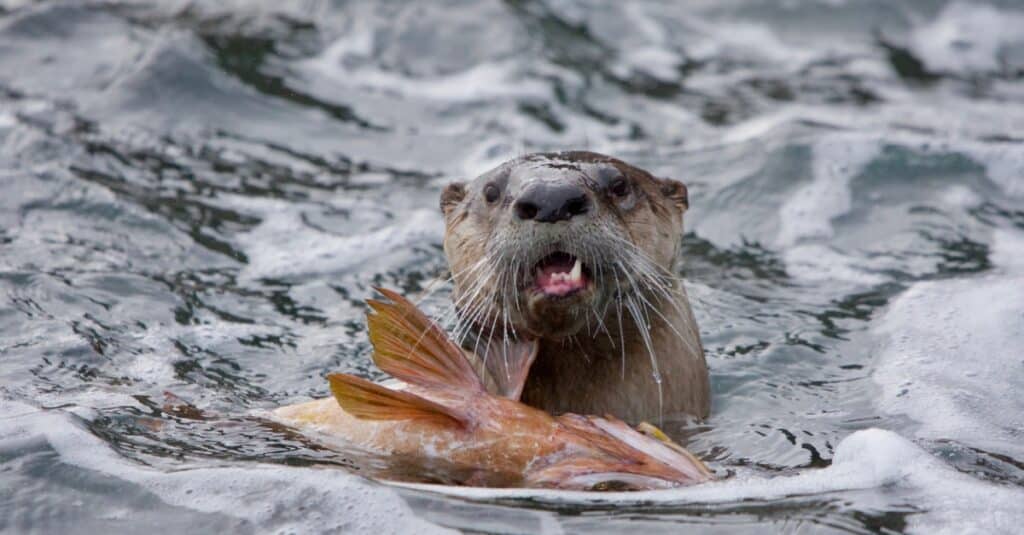
Analyzing otter spraint can provide scientists with information about the health of the entire ecosystem.
©iStock.com/DanielLacy
What Can Otter Poop Tell Humans?
Otter poop can also provide valuable information to human researchers. Analyzing spraint can help scientists assess their diets, which can provide valuable information about the health of the ecosystem. For example, by analyzing otter spraint, researchers in Maryland were able to identify which parasites were present in the otters’ prey and determine the hosts these parasites were most likely to infect. Scientists believe river otters help remove sick individuals from the gene pool, which may influence the evolutionary processes of prey species. Parasites that infect river otters could also infect other mammals, potentially alerting scientists to environmental risks that may affect humans.
Parasites in otter spraint can also help researchers detect water quality issues, such as sewage or other pollutants. Scientists in Seattle have analyzed otter scat from the Duwamish River and found that it contains high levels of contaminants such as PCBs, which are classified as probable human carcinogens. As otters are the top predators in their ecosystems, their poop offers critical data about the health of the entire waterway.