
Quick Take
- Some geckos prefer a solitary lifestyle and should not be housed in groups.
- While many reptiles do not display protectiveness of their own kind, some will engage in anti-predator cooperation.
- Many reptiles are actually known to neglect their offspring, making parental care rare in certain species.
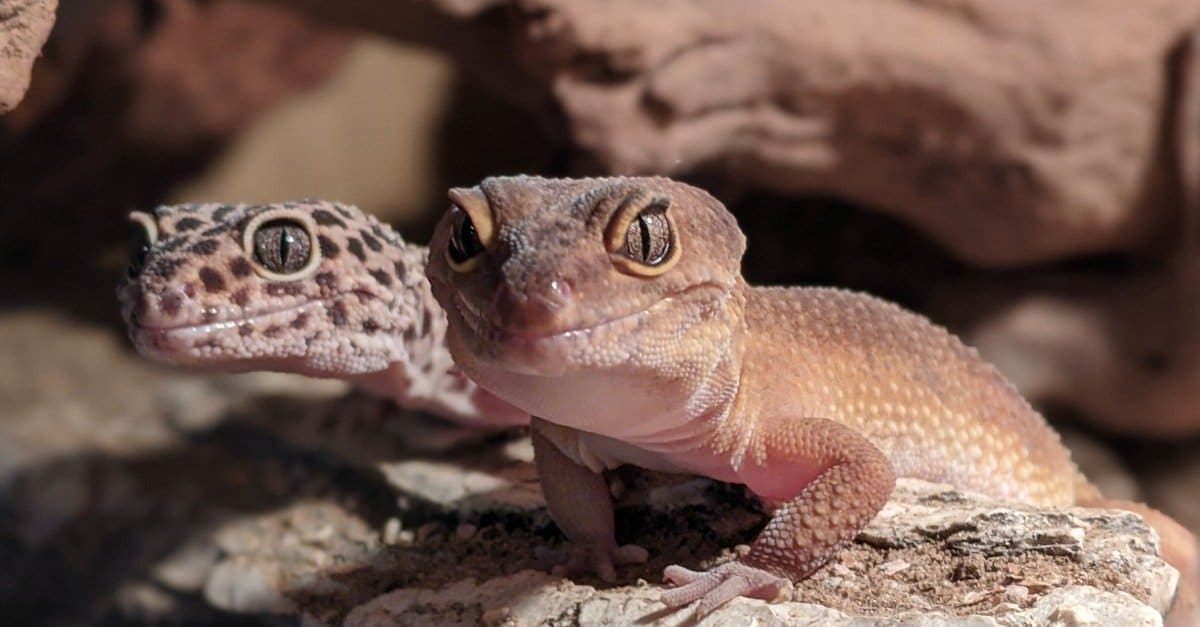
Geckos are known as solitary creatures, but according to some scientists, these little guys look out for one another. As you can see in this Instagram post, some geckos display protective behavior over their own kind. Many experts refer to this as “anti-predator cooperation,” which describes a collaborative effort to defeat a shared predator.
However, this behavior isn’t necessarily common among reptile species; in fact, many are known to neglect their own offspring. This begs the question: are geckos (and other reptiles) actually protective of one another? Let’s dive in.
Do Geckos Risk Their Lives for Each Other?
Most geckos are solitary creatures, meaning they don’t form bonds with other geckos. While some can live happily in groups, others might become territorial and aggressive toward one another. However, geckos will sometimes work together to take down a predator.
The majority of gecko species prefer being alone. Many experts even warn against pairing geckos together in captivity. In other words, if you’re looking to adopt multiple geckos as pets, you might want to keep them in separate enclosures. These reptiles often attack one another when housed together. You might be wondering, then: do geckos really risk their lives for each other, as shown in the Instagram video above? Or was this just a fluke?
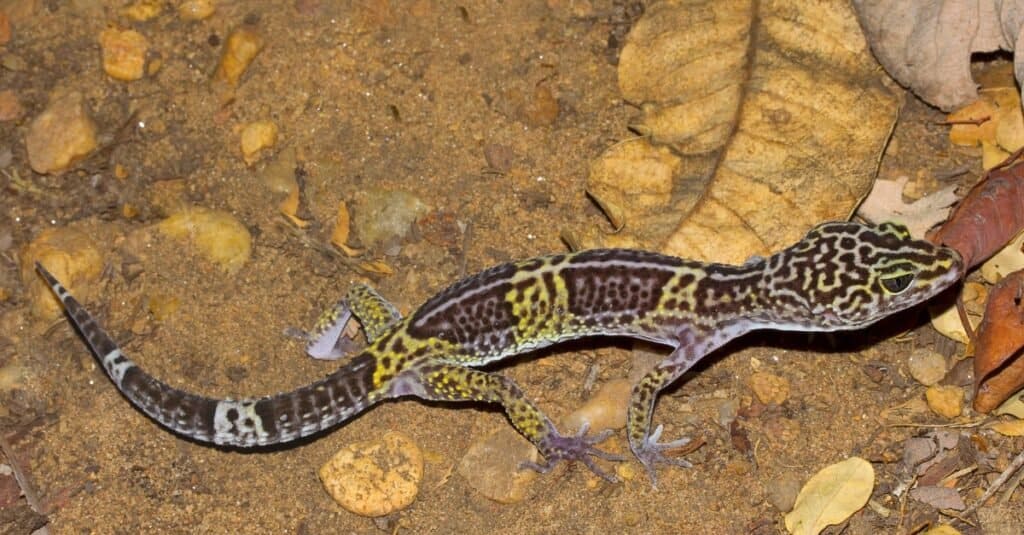
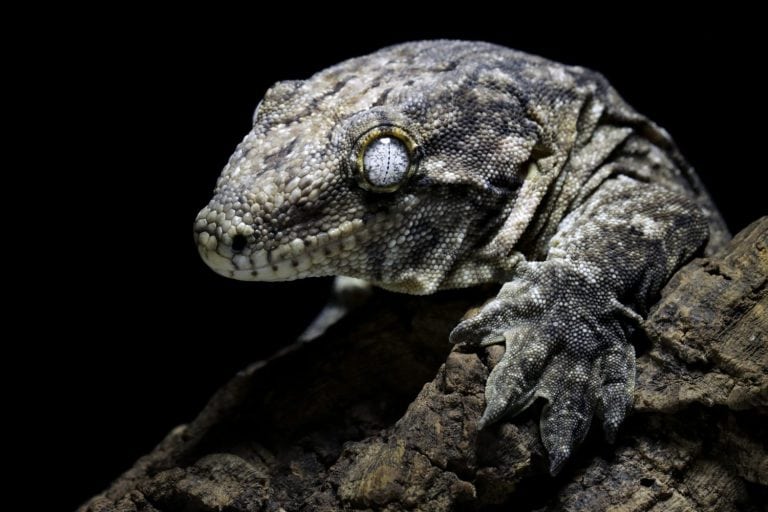
Geckos often prefer to live alone, but some can thrive when housed together.
©iStock.com/ePhotocorp
Despite their solitary nature, some gecko species can display “anti-predator cooperation,” which is likely what we witnessed in the clip. According to the Instagram page @explainingnature (which posted the video linked above): “When one gecko is in danger, another may linger nearby, make abrupt movements, or deliberately expose itself to pull the predator’s focus away. That split-second distraction can be enough to ensure at least one gecko escapes.”
The Instagram account also labeled this shared behavior as a form of “inclusive fitness.” Essentially, this refers to the collective protection of and within a species for the sake of survival. For example, if geckos protect their own, then they will be able to continue reproducing. These instinctive behaviors can help ensure the survival of the species as a whole. Overall, however, geckos typically prefer solitude unless they’re actively mating.
Are Reptiles Protective of Their Own?
Some reptiles are protective of their own kind, especially when it comes to their offspring or family. However, as with geckos, many reptile species are solitary animals that don’t spend much time in groups. If a reptile is protective, it’s likely due to territorial or maternal instincts. For example, they might be guarding a nest or defending offspring.
Research published in the journal Animal Behaviour investigated parental care in black rock skinks, Egernia saxatilis, from southeastern Australia. Through the study, researchers found that—despite previous reports stating otherwise—“some lizards do show postpartum parental care, and may thereby significantly benefit their progeny via reduced risk of infanticide and better access to thermal and nutritional resources.”
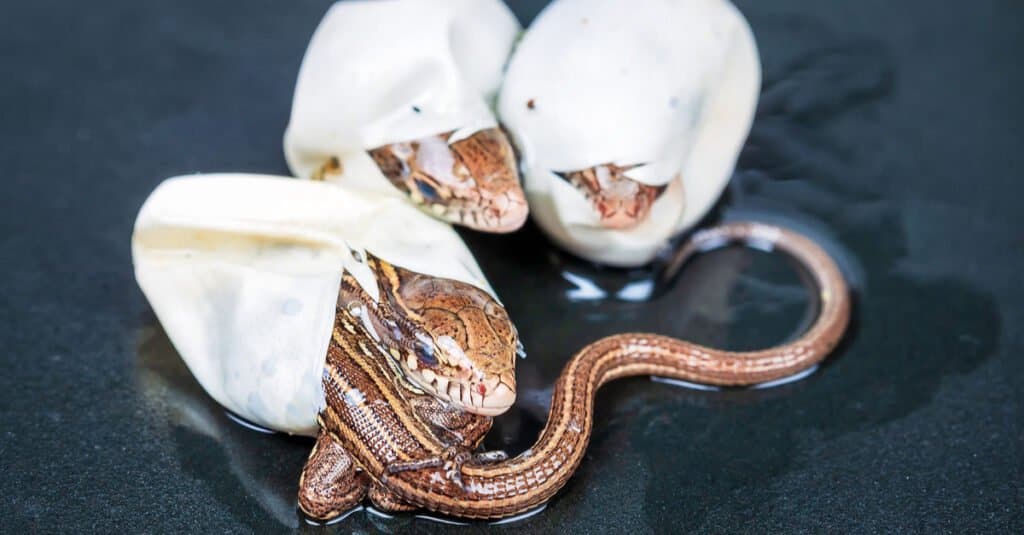
Many lizards abandon their offspring after laying eggs.
©Rashid Valitov/Shutterstock.com
Another study published in the Journal of Zoology explored the maternal care of neonates in the southern African python (Python natalensis). Professor Graham Alexander of the Alexander Herp Lab at the Wits School of Animal, Plant and Environmental Sciences labeled his research as “the first unambiguous report of maternal care of neonates in an oviparous snake.” In other words, his work contradicted previous studies that found a pattern of neglect within snake species.
Per ScienceDaily, Alexander explained that while some live-bearing snake species have displayed care for their young, “our python is the first egg-laying species that has been shown to care for its babies.” In conclusion, some reptile species do display protectiveness, primarily through maternal instincts. However, even this idea is an oversimplification, as many reptile species show no paternal care whatsoever, with some species even neglecting their young. Moral of the story: these solitary creatures usually do not risk their lives for one another, although rare instances of anti-predator cooperation, like the one shown in the earlier video, can occur.
What Is Anti-Predator Cooperation?
Anti-predator cooperation refers to members of a species working together to defend against a predator. As demonstrated in the gecko video linked above, some reptiles will work together to defeat a predator. The animals might use tactics like distraction, deflection, confusion, and even mobbing to take down the predator.
As @explainingnature explained in the caption of their video, “In certain gecko species, researchers have observed rare forms of anti-predator cooperation … Geckos are also well known for tail autotomy, and some will hesitate just long enough to trigger a chase, sacrificing safety to buy precious seconds for a companion.”