
Quick Take
- Tigers are the world’s largest felines.
- Tiger scat is similar to domesticated cat scat, but much larger.
- Tiger feces can cause disease in humans.
Tigers (Panthera tigris) are the world’s largest felines, renowned for their distinctive orange-red coats, white underbellies, and unique black vertical stripes. As powerful apex predators, tigers possess muscular bodies, strong jaws, and long teeth. Male tigers can be 10 to 12 feet long from their nose to the tip of their tail and can weigh as much as 660 pounds. Female tigers, called tigresses, are slightly smaller with a total length of 7.5 to 8.5 feet and a weight of up to 370 pounds. Tigers are obligate carnivores that must consume meat to survive. Their bodies are specifically adapted to digest animal protein, with teeth meant for tearing flesh rather than plant matter. Because tigers are strict carnivores with highly specialized digestive systems designed for meat, their feces have distinct characteristics that reflect this diet. Continue reading to discover everything you’ve ever wanted to know about tiger poop.
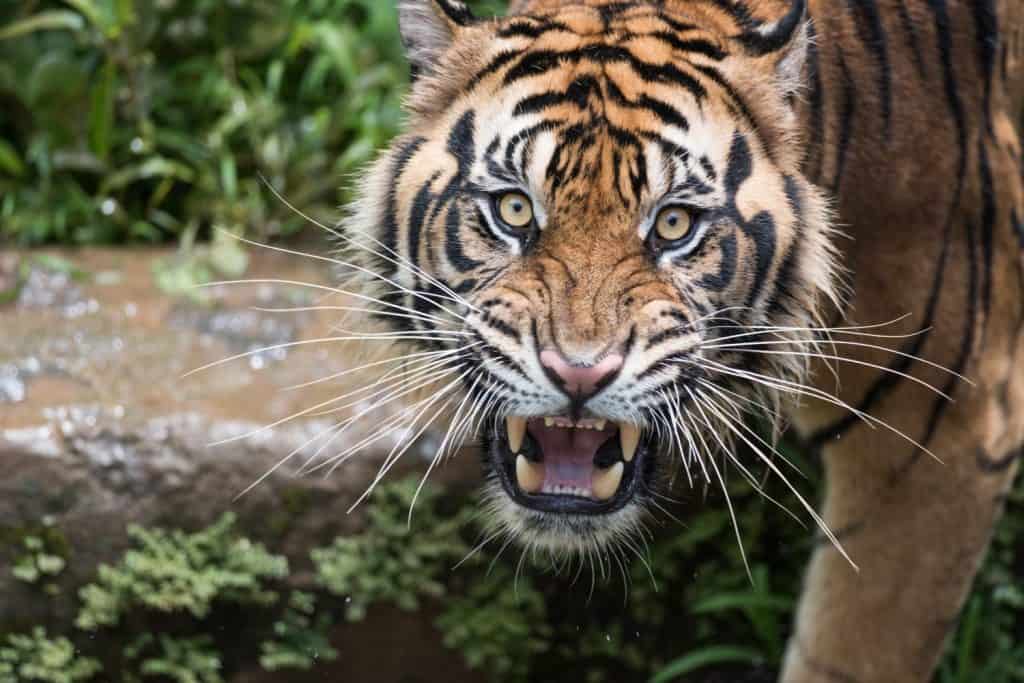
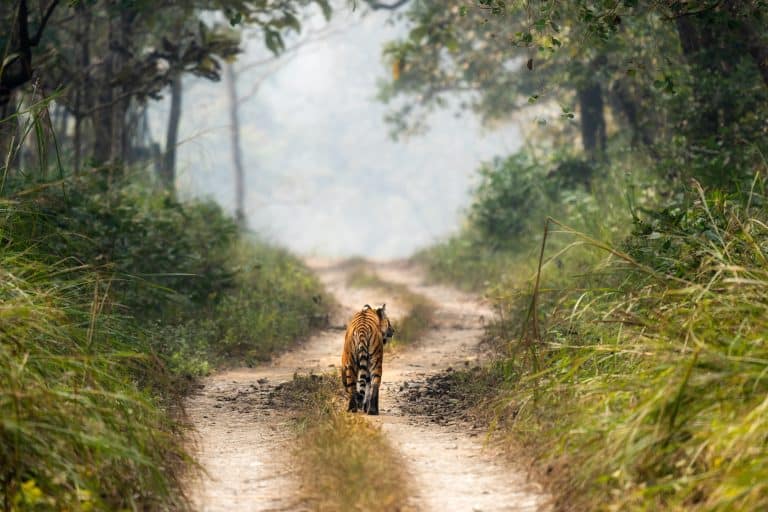
Tigers are apex predators with large teeth.
©dptro/Shutterstock.com
What Does Tiger Poop Look Like?
Tiger feces are large, segmented, cylindrical, or tube-shaped, often appearing as distinct, joined pieces approximately two to three inches in diameter. Their scat resembles that of a domestic cat, though it is much larger, typically about 100 times the volume. Unlike the scat of indoor domestic cats, tiger scat has a rough and fibrous texture and often contains identifiable remains such as animal fur, hair, or broken bone fragments.
Tiger scat may be dark brown or grayish, although it can appear bleached or white due to high bone content. Its odor is described as pungent and musky. Tiger feces are frequently accompanied by urine sprays, which have a comparatively pleasant scent. Tiger feces serve as vital territorial markers and are commonly used by scientists to identify individual tigers, analyze their diets, and assess their health through DNA analysis.
Unlike some animals that have a designated latrine area, tigers, especially males, leave scat uncovered and in visible areas to communicate their presence, dominance, and breeding status to other tigers. While dominant males tend to leave waste uncovered more consistently to assert territorial control, tigresses use a more flexible approach, balancing territorial communication with survival and cub protection.
Tigresses often bury their scat when they are within the core of their home range. This helps to avoid attracting the attention of other tigers or potential predators. To specifically protect their cubs from being detected by predators, tigresses have even been known to eat their own feces or those of their offspring to eliminate scent trails.
When a tigress is at the edge of her territory, she is more likely to leave her feces exposed. This serves as a clear olfactory signal to other tigers about her presence, identity, and reproductive status.
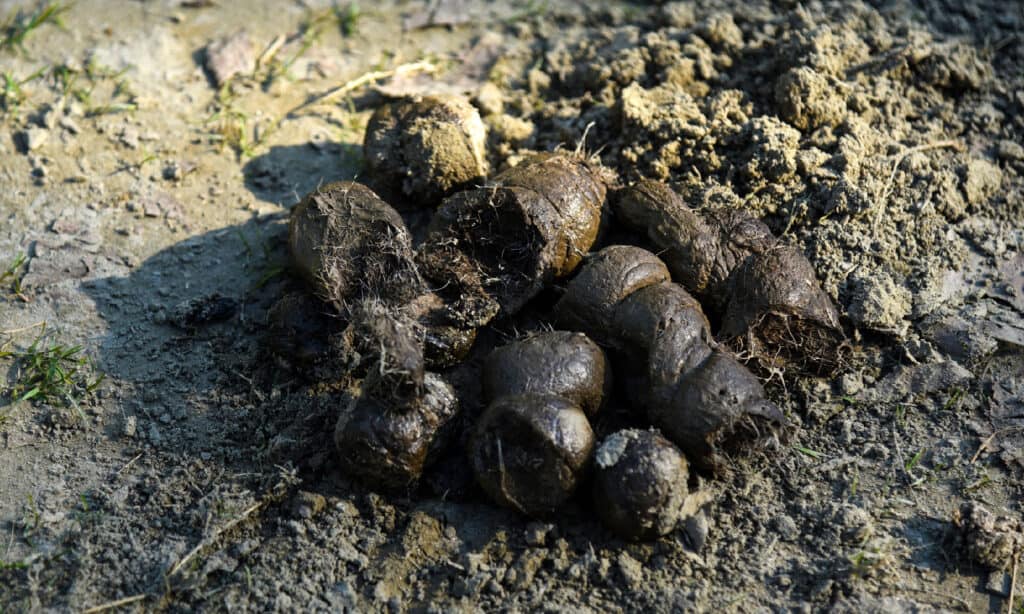
Tiger feces are usually a dark brown or grayish color.
©iStock.com/D. Talukdar
Is Tiger Poop Harmful?
Tiger scat presents significant health hazards to humans, primarily through the transmission of zoonotic pathogens, diseases that can spread from animals to humans. Tigers harbor parasites and bacteria from their prey, which can cause serious illness in humans. Tiger feces can contain parasitic worms, such as roundworms or hookworms, which may lead to serious intestinal issues in humans.
The feces may carry dangerous bacteria like Salmonella and Campylobacter, which are common causes of severe diarrhea. When dry, tiger feces can disintegrate and contaminate the soil with parasite eggs, which may remain infectious for months or even years.
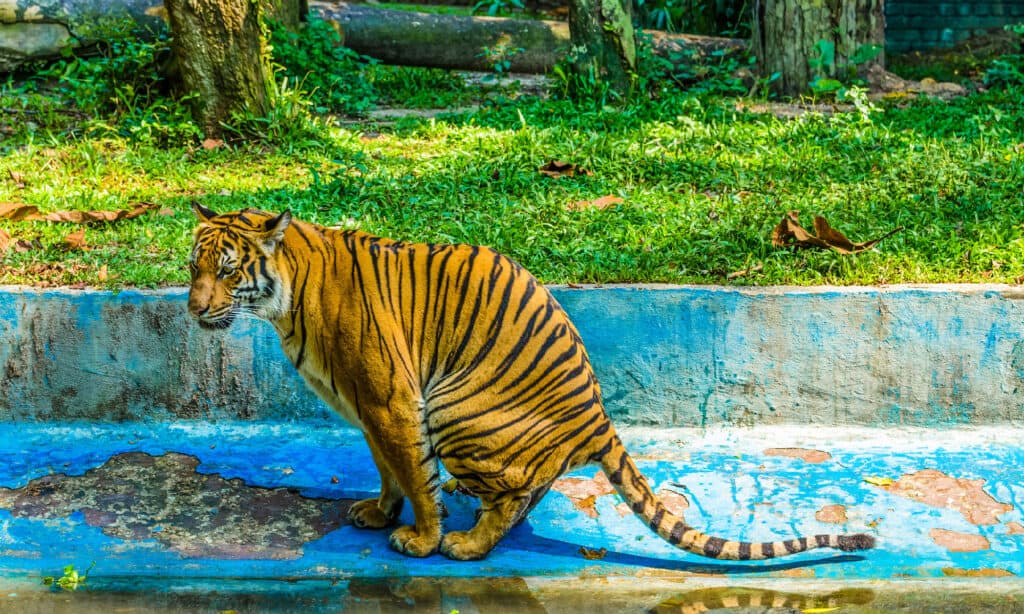
Tiger scat can be hazardous to humans.
©iStock.com/gracethang