
Quick Take
- Dogs need at least 30 minutes of daily activity for their mental and physical well-being.
- Excessive panting, limping, or reluctance to continue moving are signs that dogs may be exercising too much.
- Starting off slowly and gradually working up to longer walks or jogging will keep dogs from getting injured.
- If dogs show signs of exhaustion far from home, allow them to rest or call for assistance to drive them home.
Dogs are seen as walking and jogging companions for many. They motivate people to get out of the house and get their steps in, knowing that exercise is good for their four-legged friends, too. It can be a win-win situation for dogs and their pet parents alike.
While walks and jogs can be beneficial, some people do not consider whether their dogs are conditioned for long walks or jogs. This is especially true for dogs who have seemingly boundless energy. This raises the question: how much exercise is too much for a dog? Knowing the answer will make the time outdoors more enjoyable for both dogs and those who care for them.
Why Do Dogs Need Daily Exercise?
Dogs need daily physical activity. While some breeds are less rambunctious than others, staying indoors and only going outside to go to the bathroom can be a boring existence. Therefore, it is recommended that dogs get between 30 minutes and two hours of activity daily, with lower-energy dogs getting the former and higher-energy dogs the latter.
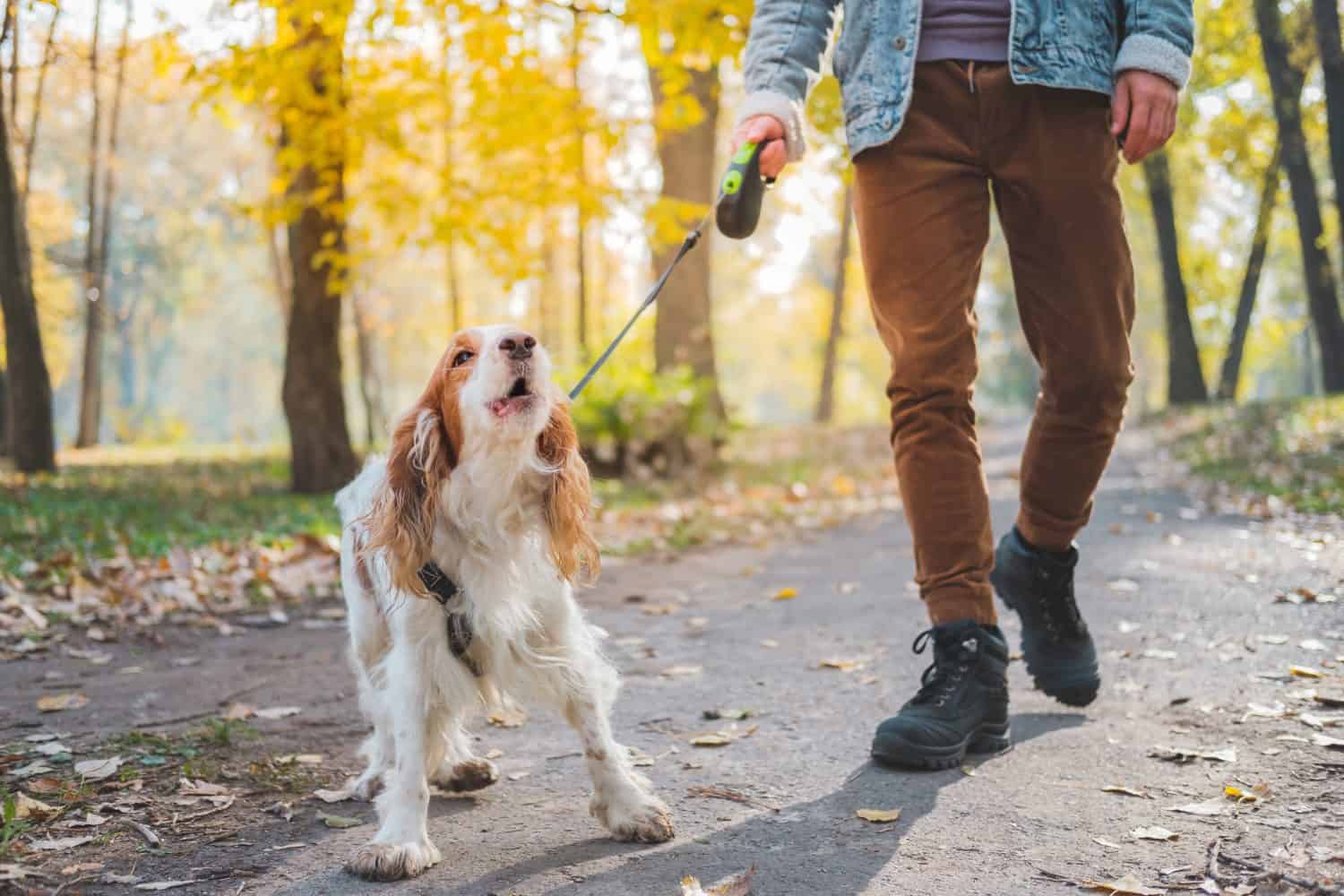
Dogs need daily exercise for their overall mental and physical health.
©Aleksey Boyko/Shutterstock.com
Outside of breaking up their day, there are plenty of reasons why dogs need daily exercise. Those reasons include:
- Prevents obesity
- Improves heart health
- Provides mental stimulation
- Makes dogs more physically fit
Just as it is unhealthy for people to lead sedentary lifestyles, it is also unhealthy for dogs. Daily walks are needed to keep dogs from becoming destructive out of boredom in the house or developing behavioral issues, all of which could be avoided by burning off excessive energy.
Starting a Daily Walking Routine
For those who have never established a daily walking routine with their dog, it is never too late to do so. Most dogs will be thrilled to get out of the house and explore, breaking the monotony of their day while becoming fitter in the process. The easiest way to set up a walking routine for a dog is as follows:
- Walk at the same time daily
- Consider walking in the morning to walk when temperatures are cool
- Begin with routes that have little to no traffic until dogs are used to outside noises
- Pick a harness or collar that is comfortable for the dog, with an indestructible leash
It is also important to remember to be consistent. The more consistent owners are with walking their dogs, the more quickly the dogs become accustomed to outdoor noises and improve their cardiovascular health.
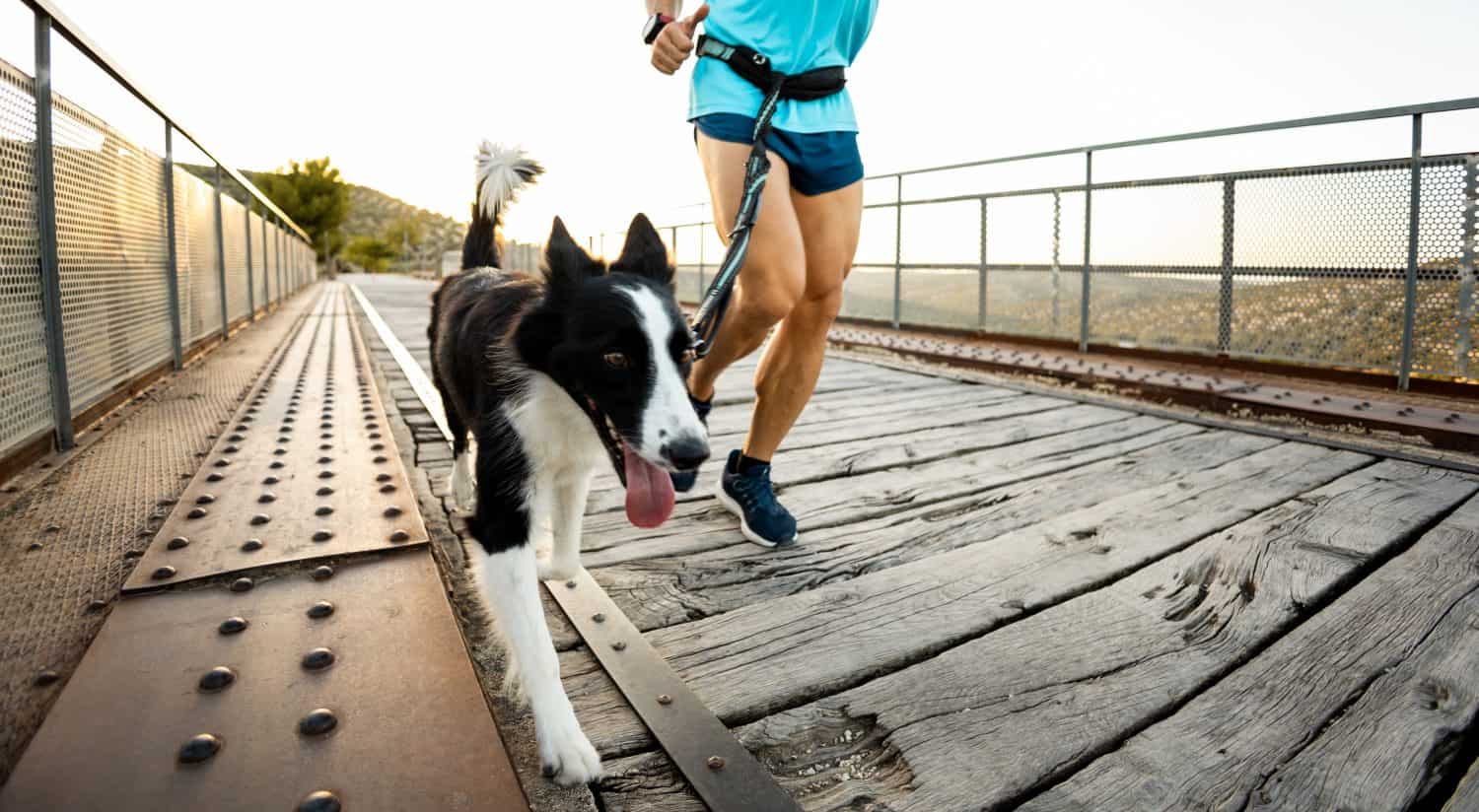
To prevent injury, dogs need to be eased into jogging or running routines.
©Yiistocking/Shutterstock.com
For those who want to jog with their dog, it will take time to go long distances. But with a little patience and time, dogs can become excellent runners. The easiest way to set up a jogging routine with a dog includes:
- Set a veterinary appointment to ensure a dog is healthy enough to run
- Start with short distances, and as dogs become comfortable, gradually increase them
- Watch for signs of fatigue in your dog and allow them to take breaks as needed
- Teach dogs running commands to keep them from colliding with their owners and causing injury to themselves or others
It is worth remembering that some dogs may not like running, just as not all people like running. If this is the case, and the dog has a lot of energy, long walks can be a good solution. Physical activity should be enjoyable for both pet parents and dogs. If it is not, neither party will have fun.
How to Start an Exercise Routine Back Up After a Long Winter
Oftentimes, people start off the new year wanting to get back into shape. Those with dogs bring their fur babies along for companionship, safety, and the dog’s health. However, it is often overlooked that dogs may lose some physical fitness over the winter if walks are limited by the weather. Just like their human counterparts, dogs also need to gradually get back into exercise to avoid injury, according to Alysia Reid, VMD.
“It’s important to gradually increase their exercise to prevent injury,” Dr. Reid explains to A-Z Animals. “Begin with short walks and slowly increase the distance over a few weeks.”
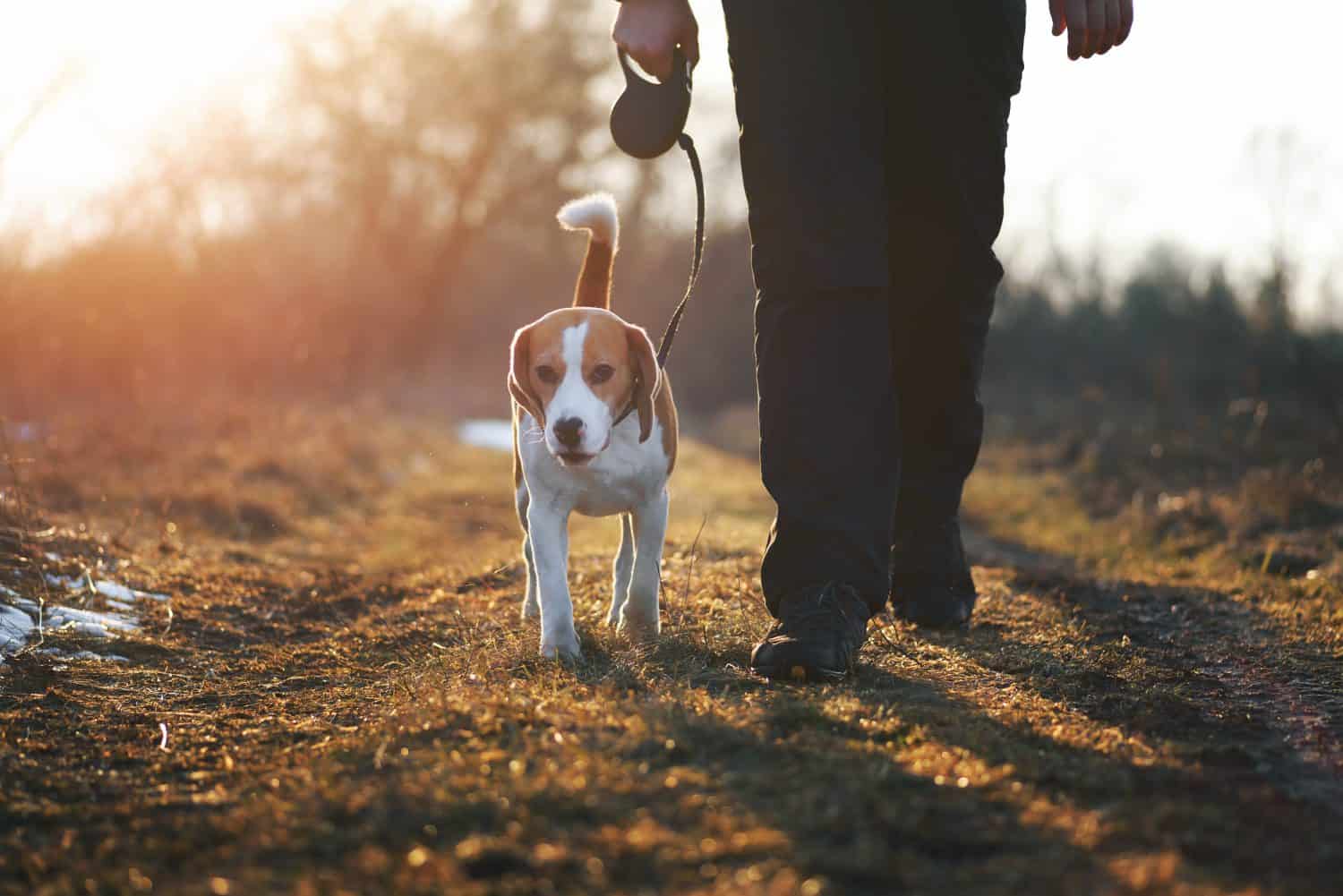
Dogs need to be eased back into their walking routine if they take the winter off.
©tetiana_u/Shutterstock.com
While temperatures may be comfortable enough to walk at any time of day during the cooler months, Dr. Reid cautions that as temperatures begin to rise, the timing of walking or jogging becomes crucial for preventing heat-related illnesses.
“Dogs can suffer from heatstroke, which includes symptoms like excessive panting, drooling, and weakness,” Dr. Reid, who practices out of Delaware, says. “It’s best to walk them early in the morning or late in the evening when it’s cooler.”
How Do You Know Your Dog Needs a Break?
People tend to be more cognizant of their dog’s health when exercising in warmer temperatures. However, Dr. Reid notes that dogs can also show signs of being overexerted during cooler months.
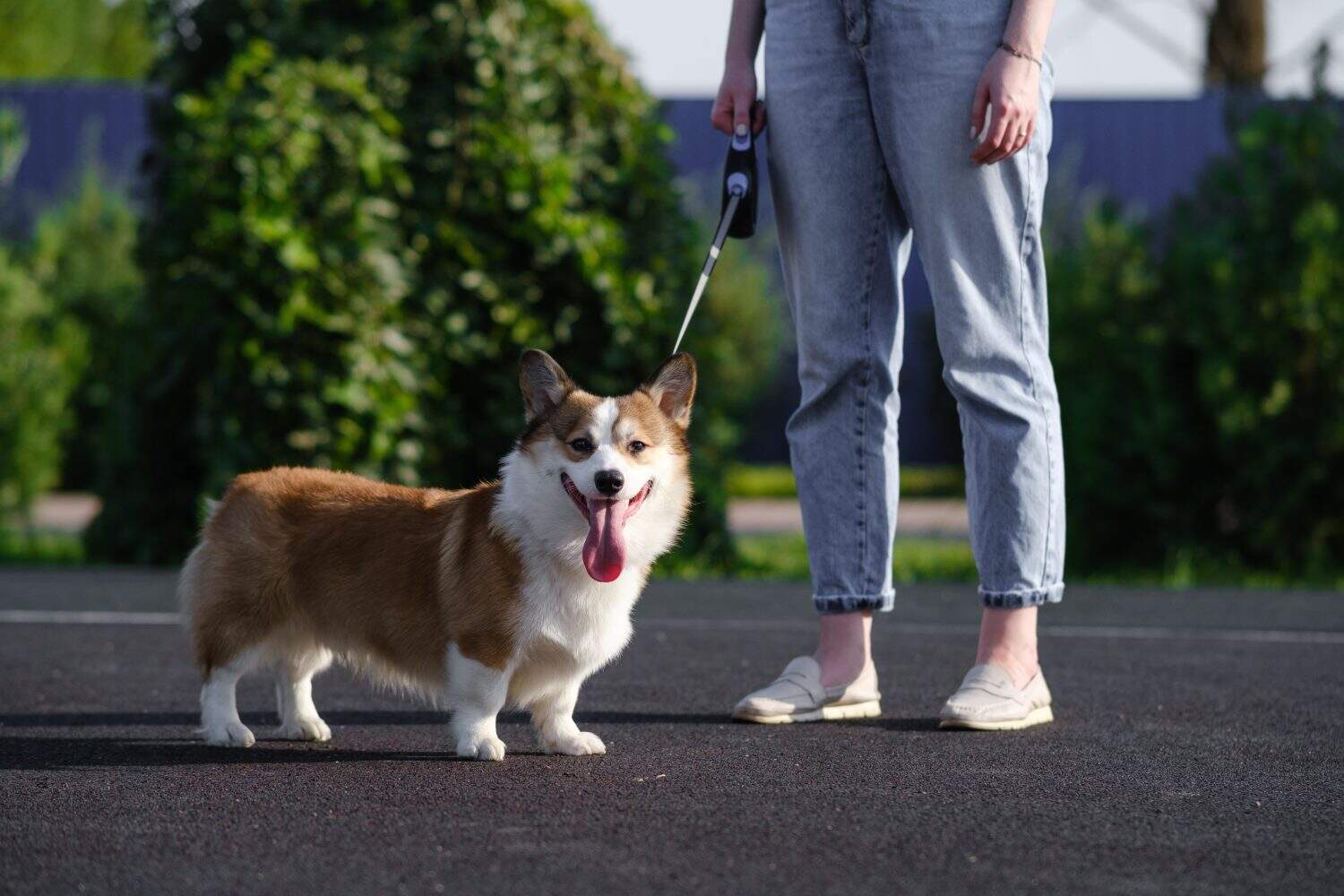
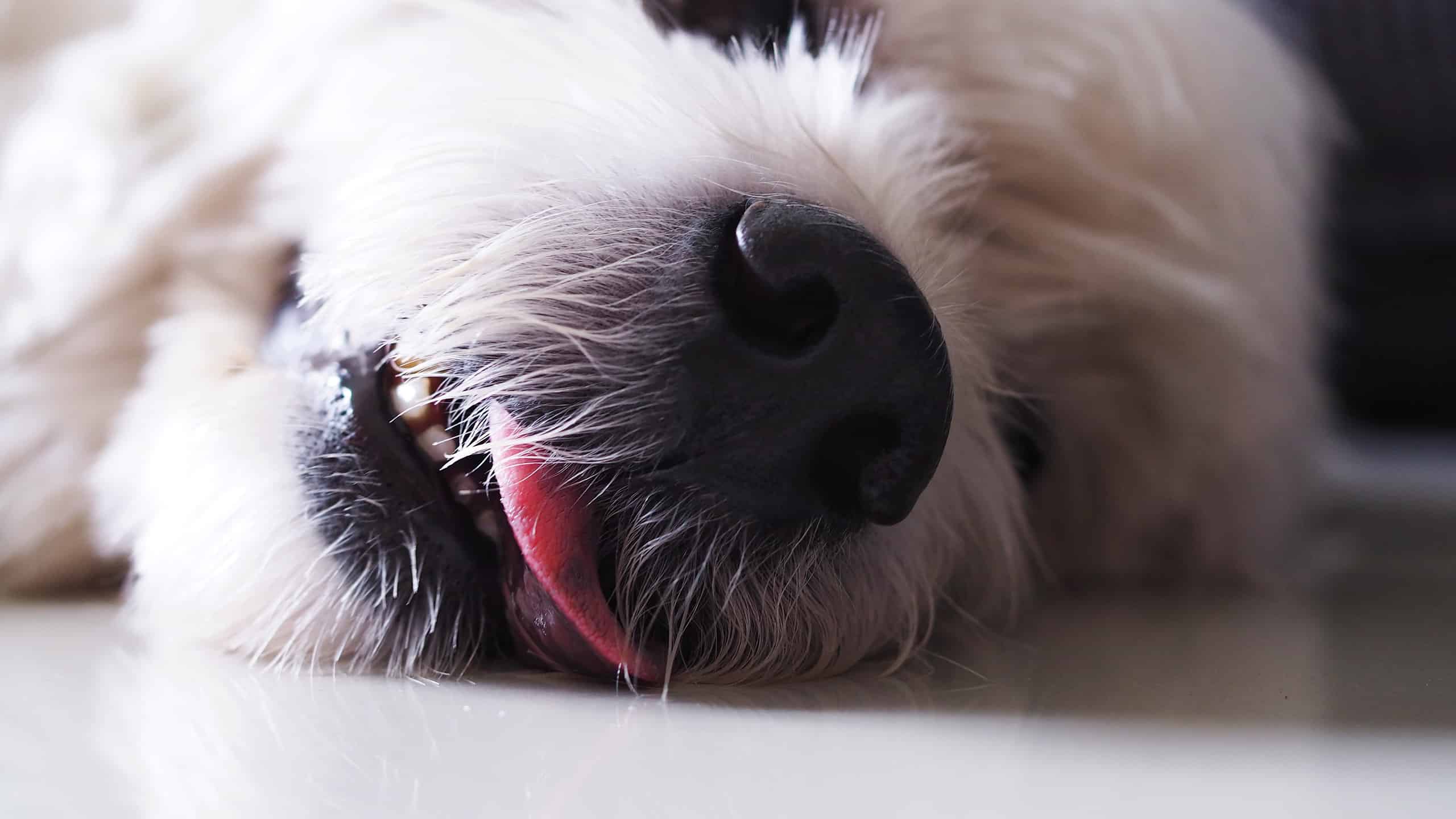
Excessive panting is a sign that a dog may be getting too much exercise.
©Ivan Gran/Shutterstock.com
“Look for excessive panting, limping, or reluctance to continue moving,” Dr. Reid explains. “These can be indicators that your dog needs a break.”
If dogs exhibit any of these signs, it is not recommended to keep pushing them. This could lead to further injury or illness and may even make dogs hesitant to participate in physical activity.
Look for excessive panting, limping, or reluctance to continue moving. These can be indicators that your dog needs a break.
Alysia Reid, VMD
Dogs That Are Better Suited for Jogging Than Others
Not all dogs are built the same. While all need physical activity throughout the day to prevent boredom and obesity, some are better suited to jogging than others.
“As far as breeds suited to longer exercise, there are a few that come to mind,” Dr. Reid explains to A-Z Animals. “The energetic breeds tend to have a lot of stamina.”
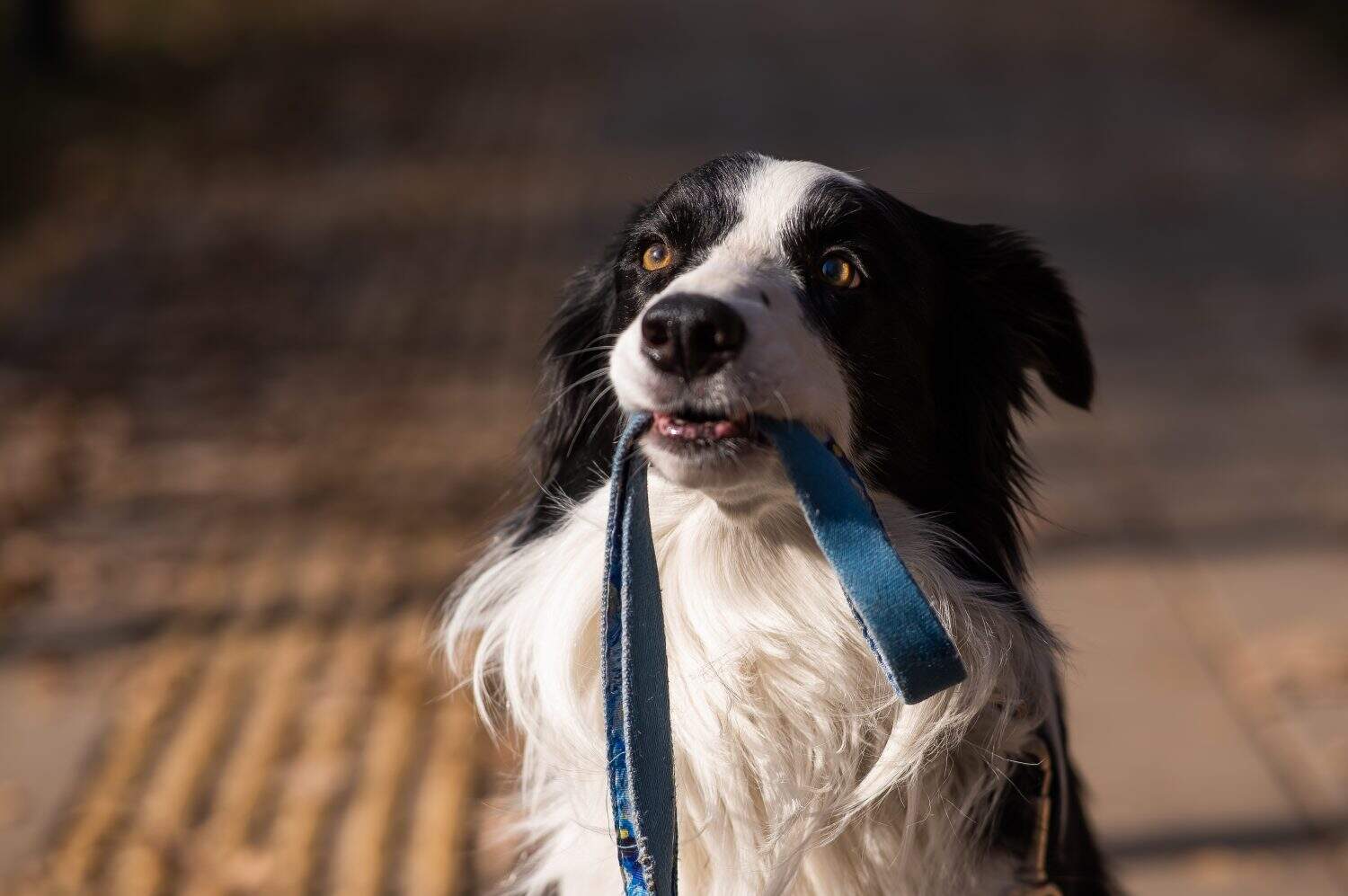
Border collies enjoy going on long-distance walks and running.
©Reshetnikov_art/Shutterstock.com
Dr. Reid states some such dogs include:
- Border Collie
- Australian Shepherd
- Labrador Retriever
- Golden Retriever
- Siberian Husky
- German Shorthaired Pointers
For those who want to run with their dogs or walk longer distances, these breeds will fit the bill. It should be noted that brachycephalic breeds, such as bulldogs, pugs, boxers, Shih Tzus, and others, should not be jogged, as they already have breathing issues. Strenuous activity could worsen their breathing problems and may even cause them to collapse. These dogs are healthier with multiple short strolls in cooler weather, which allows them to breathe more easily while still enjoying physical activity.
Dogs That Should Have Shorter Exercise Sessions
Even if dogs are breeds suited to longer walking or jogging sessions, there are times when this is not recommended—specifically, when dogs are young.
“In general, we don’t want young puppies to overtax their growing bodies,” Dr. Reid states.
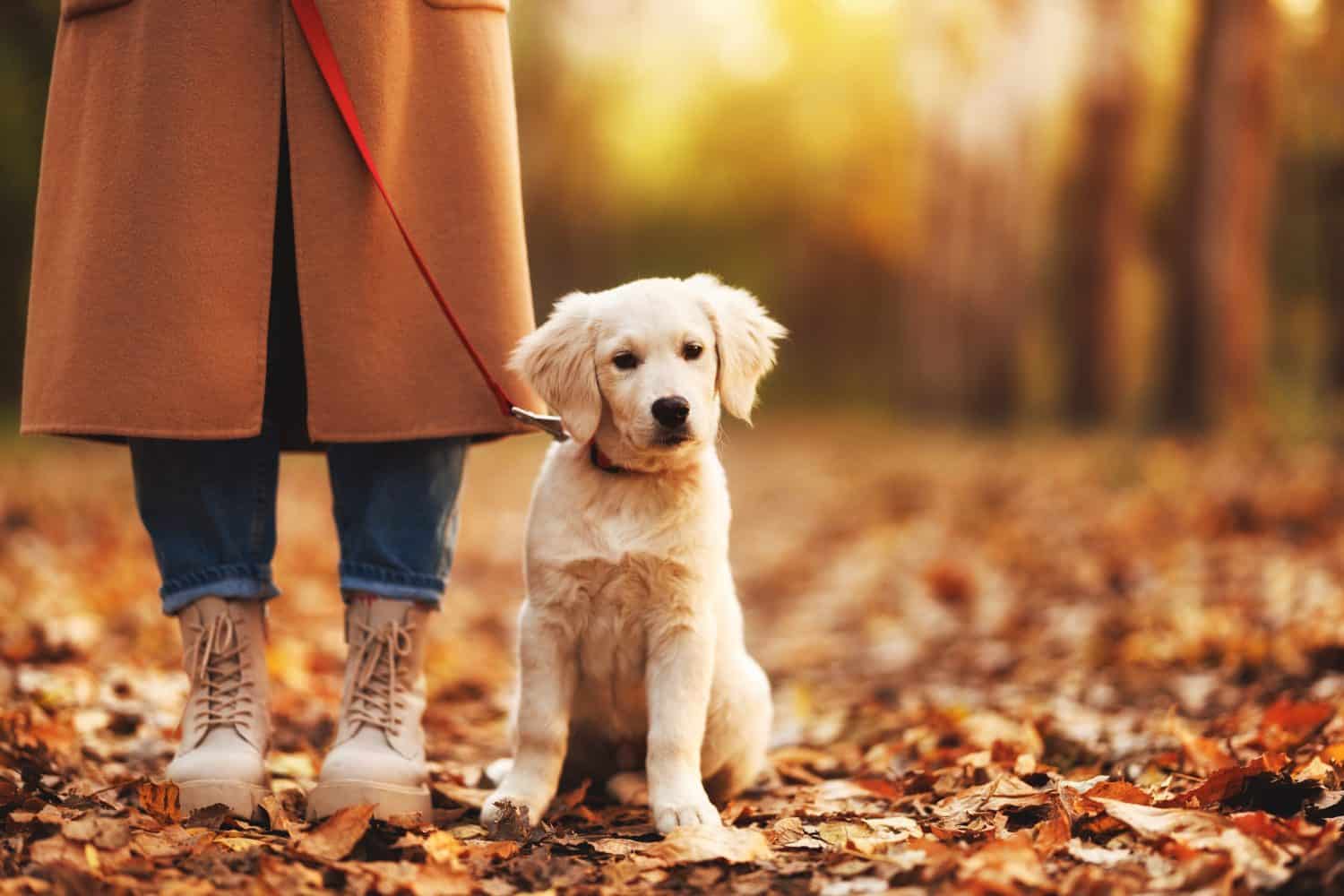
Puppies need to go shorter distances to not “overtax” their bodies.
©Evgeny Atamanenko/Shutterstock.com
Each individual dog should be monitored for any signs of ill health during exercise to determine if any restrictions are necessary.
“As far as restrictions,” Dr. Reid says, “it depends on the individual dog, their age, breed, and health issues.”
Even with all precautions, proper hydration, and cool weather, dogs may still become exhausted and show signs that they need to stop. This is why it is necessary to have a plan to get a dog home when exercising with them.
What to Do If a Dog Is Exhausted and a Long Way from Home
There are times when, no matter how much preparation is made for a walk or a jog, dogs become exhausted. If you are close to home, you can walk slowly or have a family member pick up your dog. But what should you do if you are far from home and no one is available to help? According to Dr. Reid, there are still options to help the dog.
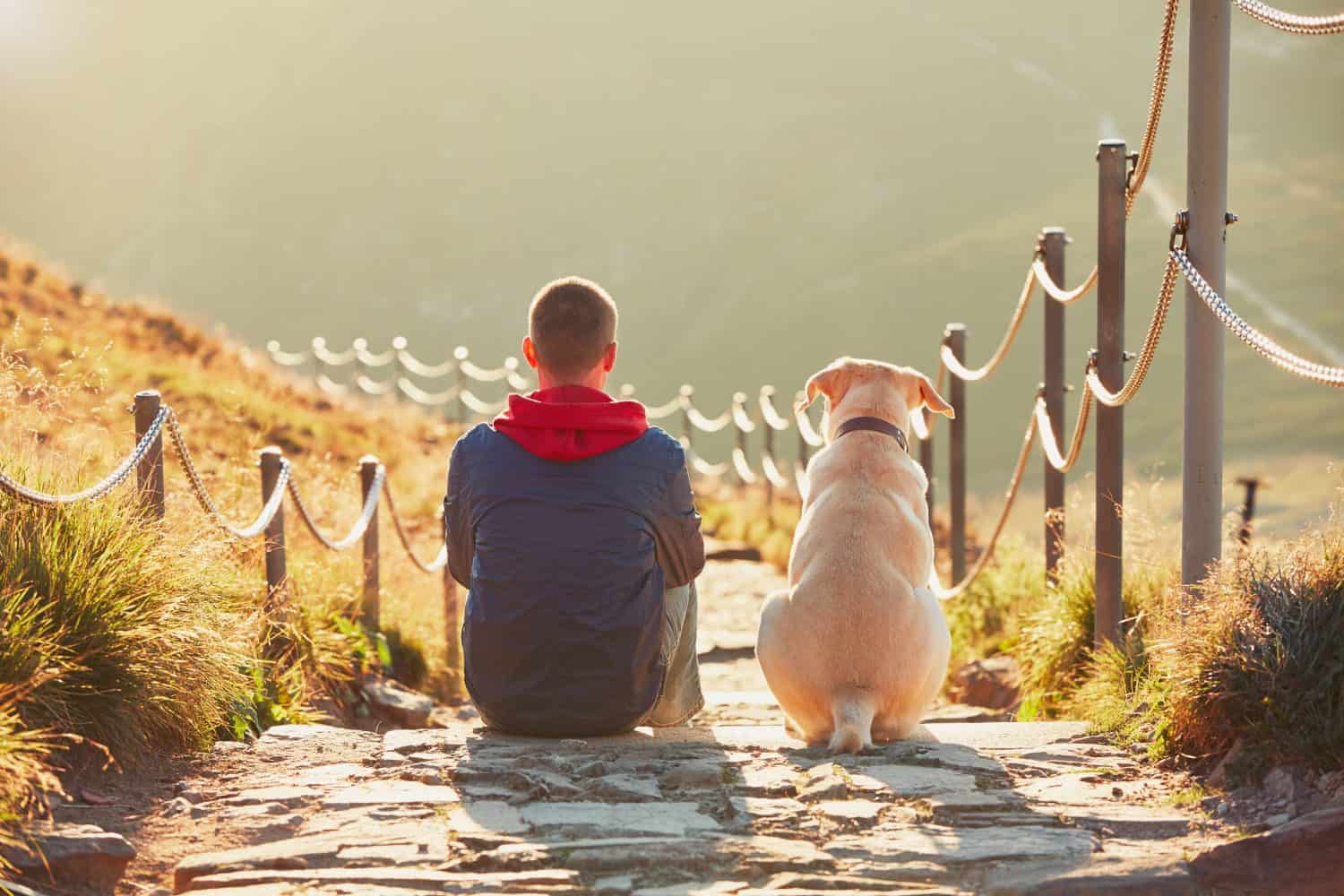
If dogs are showing signs of exhaustion far from home, it is recommended to give them a break until they recover.
©Jaromir Chalabala/Shutterstock.com
“If no one is around to pick you and your dog up, then stopping to rest until they are able to walk would be the best option,” Dr. Reid says. “Or, you could find an Uber driver who wouldn’t mind a little dog hair in their car.”
When preparing to walk or jog with your dog, especially after a long break, it is best to start slowly and gradually increase the distance. This will prevent injuries or heat-related illnesses and make dogs excited to get out and explore. Remember, the goal of exercise is to make dogs healthier, not to exhaust them to the point where they do not want to get up for the rest of the day. With a little time and patience, dogs will quickly return to their normal mileage and become the healthiest versions of themselves in the process.