
Quick Take
- Attaining legendary status in rainforests requires a 7-foot wingspan and 18 pounds of mass.
- The 2016 assessment of 500 mature individuals creates a dangerous survival constraint for the species.
- Hunting macaques is counterintuitive because these primates frequently fight back against the Philippine eagle.
- Executing a successful hunt requires a mandatory distraction phase and dual-eagle cooperation.
Meet the magnificent Philippine eagle! This huge bird stands three feet tall and has a wingspan of over six feet! Known locally as the ‘monkey-eating eagle,’ it has legendary status among the humid rainforests of the Philippine Islands. Sadly, this has not stopped it from veering to the edge of extinction. Check out this magnificent species in this Instagram reel by @AnimalSerenade.
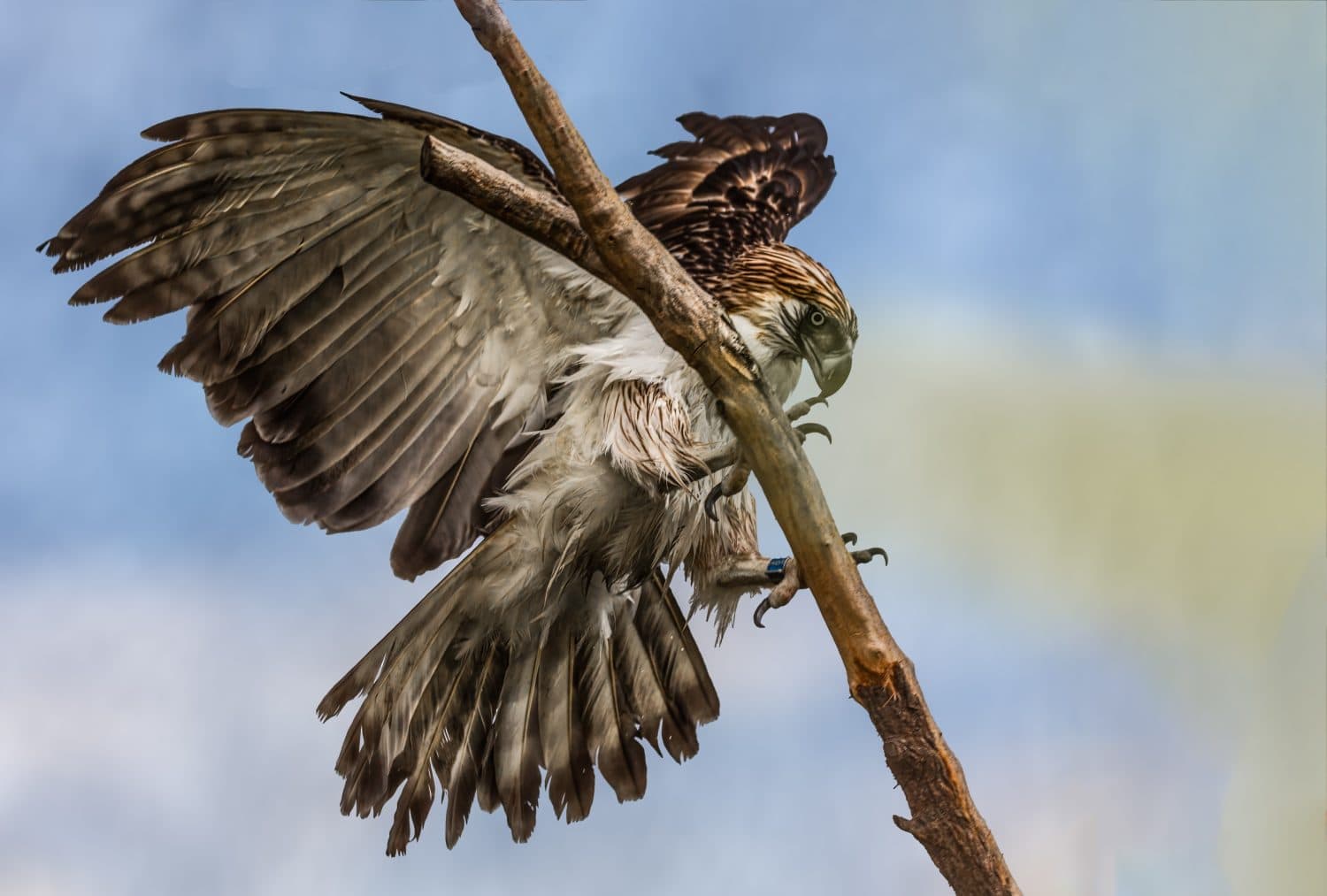
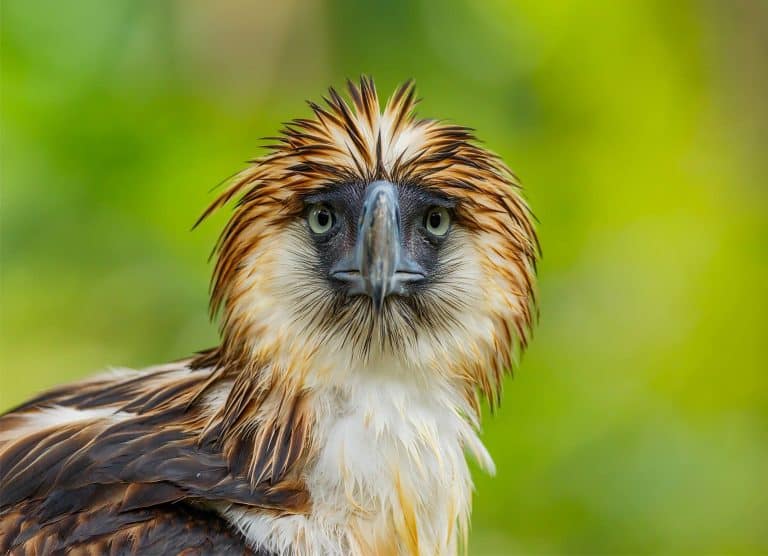
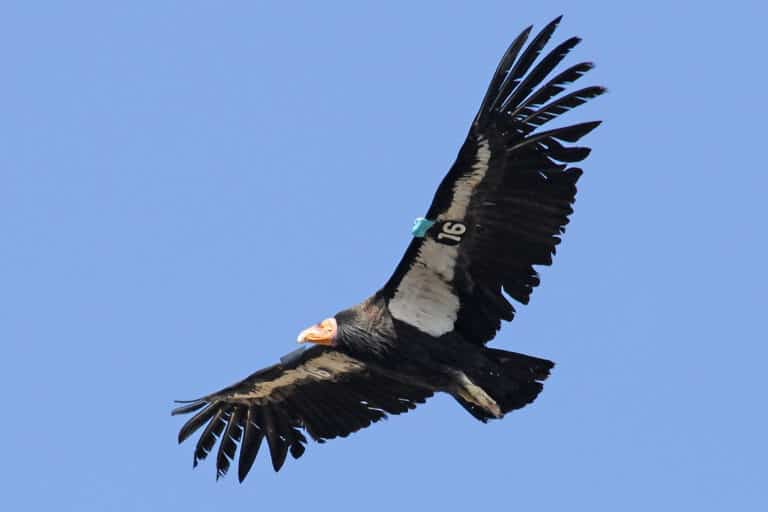
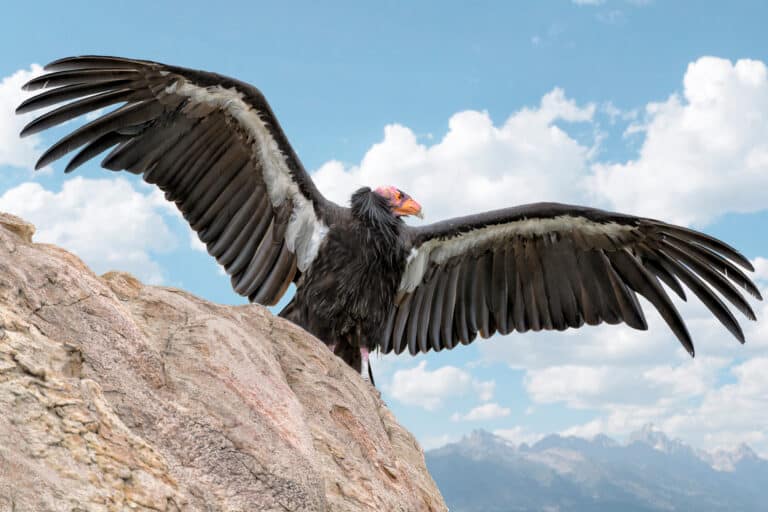
The Philippine eagle has an impressive 7-foot wingspan.
©Y.Kumar/Shutterstock.com
What Do Philippine Eagles Normally Look Like?
These are the largest eagles in the world in terms of length and wing surface, although they are not actually as heavy as the Harpy and Steller’s eagle. That said, these guys are no lightweights and can reach 18 pounds!
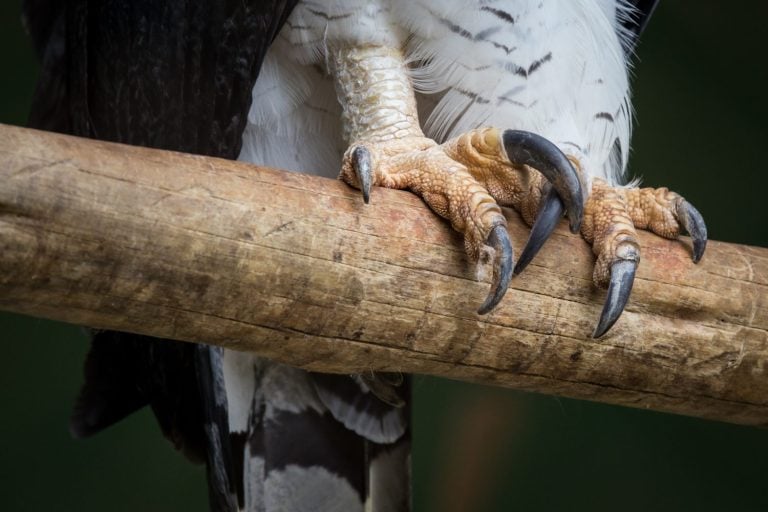
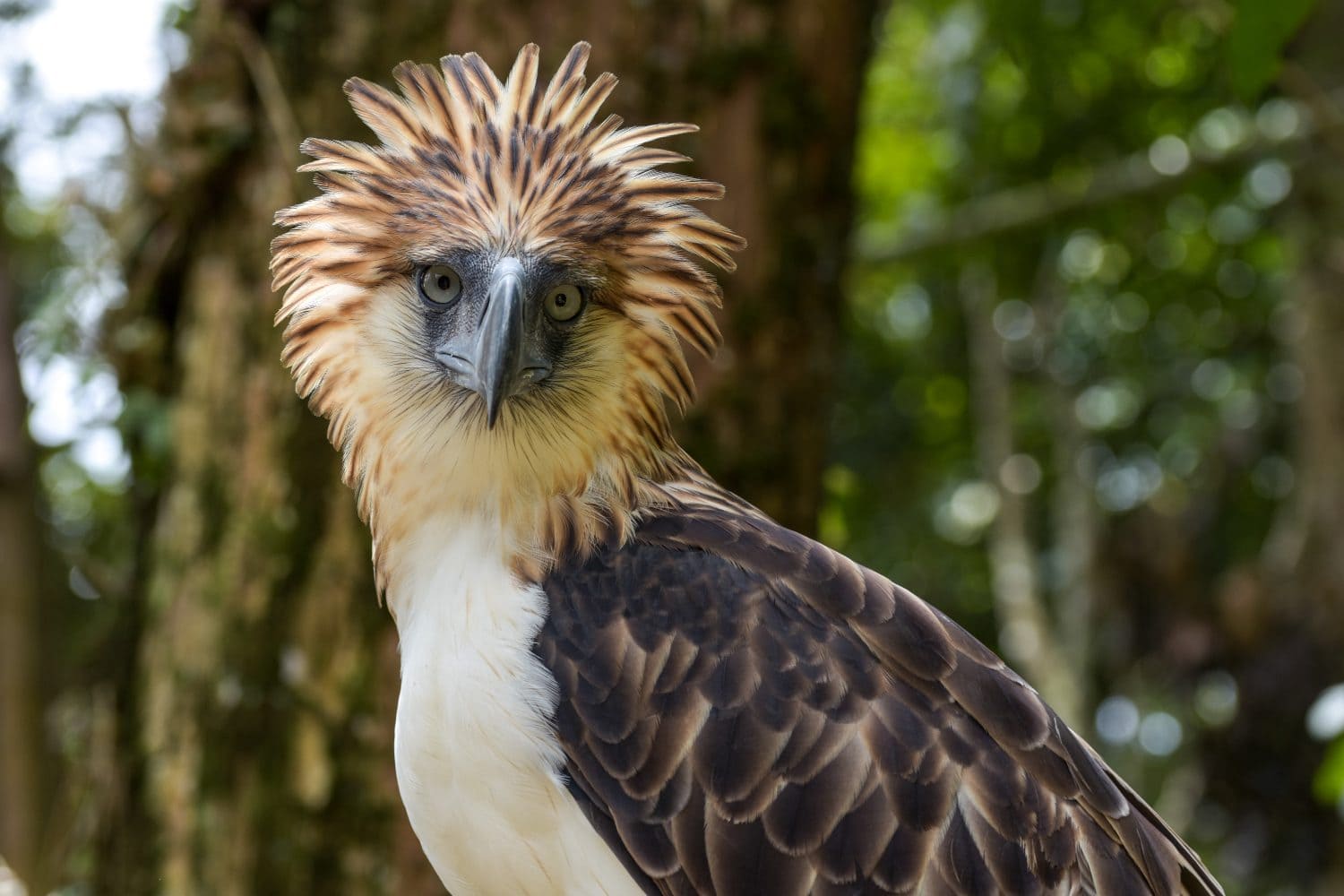
They have long, brown plumage on their backs, but their underside is white, while their face is a mixture of both. In between their piercing blue-green eyes, they have a high-arching blue-grey beak. Their talons are strong and powerful and are a great asset for hunting!
What Do Philippine Eagles Normally Eat?
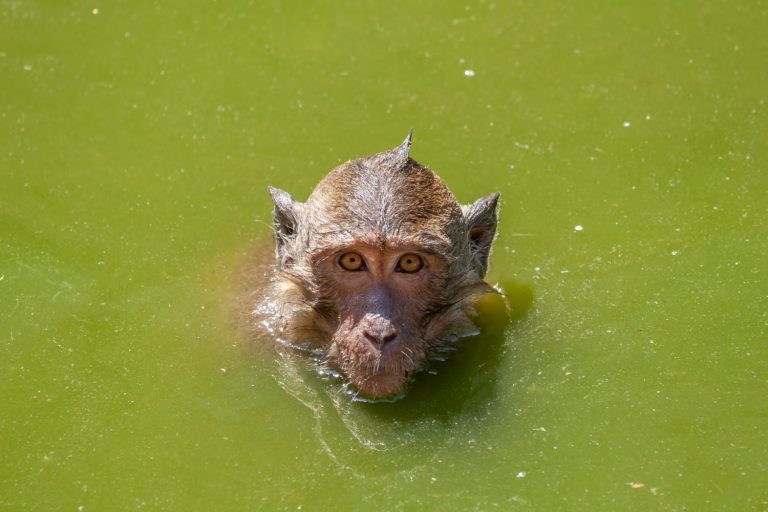
These birds do hunt monkeys, namely the macaques that live in the local forests. However, these monkeys are similar in size to the birds, so hunting them is a risky business. Monkeys often fight back. A successful monkey hunt requires a pair of Philippine eagles. One eagle causes a distraction whilst the other one swoops down and grabs the monkey.
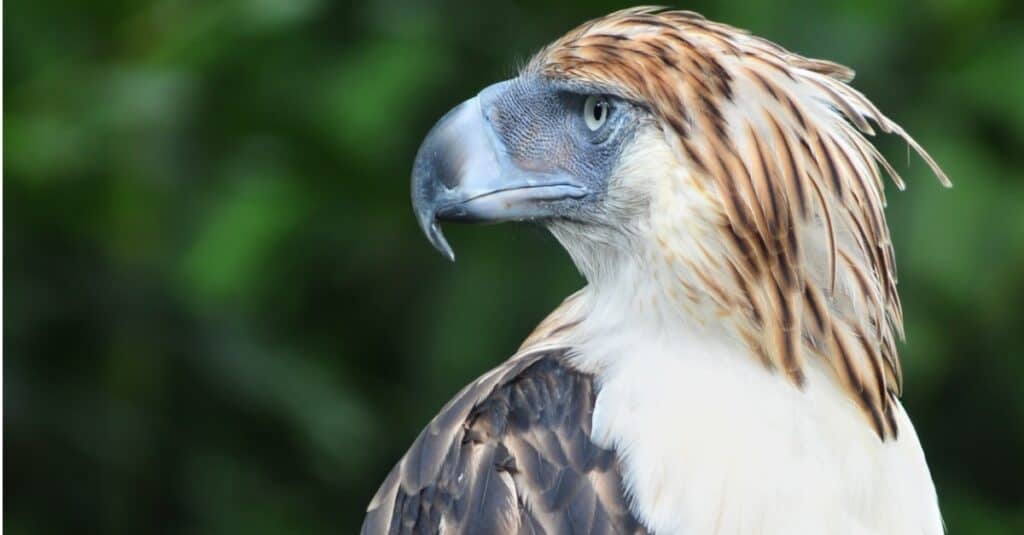
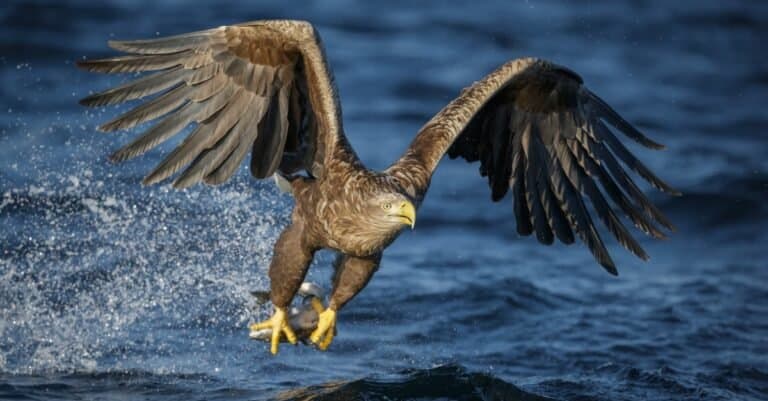
The Philippine eagle is also known as the “monkey-eating eagle.”
©iStock.com/LaserLens
It is more usual to see them hunting flying lemurs, squirrels, and fruit bats. They also hunt snakes, lizards, and smaller birds. In fact, these birds play a vital role in keeping the local mammal, bird, and reptile populations in check.
What Threats Do They Face?
There is no doubt that the Philippine eagle is a national treasure, but that has not secured its future. They only live in the Philippines and were declared the national bird in 1995 by President Fidel V. Ramos. They were even featured on a series of coins produced in the country between 1983 and 1994.
Sadly, this bird is categorized as critically endangered by the IUCN Red List. An assessment in 2016 identified only between 180 and 500 mature individuals in between 11 and 100 locations. What’s more, the populations are decreasing and are severely fragmented. Their main threats are habitat loss as a result of agriculture, mining, hunting, logging, and climate change. To counteract these threats, protected areas have been created, and these include Mt. Kitanglad and Mt. Apo Natural Parks on Mindanao and the Northern Sierra Madre Natural Park on Luzon.