
Quick Take
- Surviving a 1,000-foot plummet is often a requirement for eagle mates.
- DDT’s metabolite causes fatal eggshell thinning, which nearly eradicated the species.
- Female eagles require 25% more mass than males to effectively defend the nest.
- One tracked bald eagle lived nearly 40-years in the wild.
Of all the raptors on earth, eagles are one of the most impressive. With wingspans up to eight feet long and lithe, powerful bodies, they are kings of the sky. Any wild eagle commands respect, and it’s hard not to be in awe of their prowess when observing one. While their appearance and speed make them one of the world’s most interesting birds, their lore is even more mind-blowing.
They Engage in a Death Spiral to Mate
The death-defying mating ritual between male and female sets eagles apart from other raptors. To prove longevity and strength to their partner, eagles soar as high as their wings will take them. Then, they lock claws and fall into the infamous “death spiral.” The act is a test for each eagle to determine if they’re worthy of a lifelong partnership.

The “Death Spiral” sets mates apart in the eagle world.
©FloridaStock/Shutterstock.com
As they fall, sometimes for thousands of feet, they remain locked. Failure to disengage before hitting the ground is sometimes fatal for one or both eagles. However, if they survive, they have proved their devotion and endurance to their now-mate. This typically happens during mating season, but longtime mates also repeat this action throughout their lives.
Females Dominate Males In Size
Eagles have reverse sexual dimorphism, meaning females are larger than males. A female is roughly 25% larger, giving her significant leverage. This helps her defend the nest from predators and protect her territory. Since she spends more time in the nest than males, her buff appearance is an effective intimidation tactic.
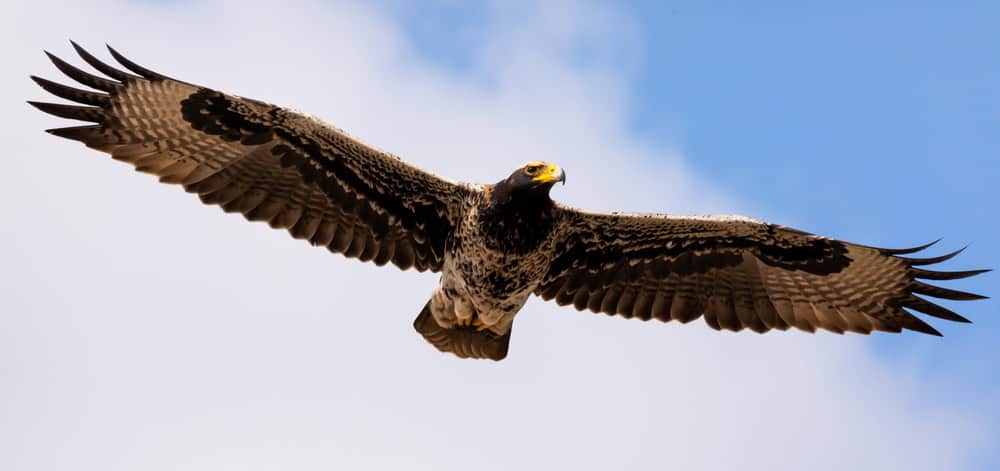
For raptors, wingspan length matters.
©Mark Booysen/Shutterstock.com
The size of female eagles also helps during mating rituals. The larger and stronger the raptor, the more likely they’ll be chosen as a mate. The females’ extra mass is also better for egg incubation and egg-laying. Smaller males take on the role of hunting, which they excel at due to their agile bodies.
They’re Faster Than a Sports Car
Most sports cars are impressive at 180 miles per hour. But the golden eagle has that beat with a whopping 200 miles per hour dive speed. Their natural cruising speed is 28-32 miles per hour, which is still speedy for a bird.

You’d have trouble tracking an eagle with a pair of binoculars.
©Todd Maertz/Shutterstock.com
In comparison, bald eagles have a cruising speed of 30-45 miles per hour. This is slightly slower than a car cruising down the highway. At their top speed, they can dive up to 100 miles per hour. The only thing that can slow this raptor down is recently-caught prey, and even then, they still clock approximately 30 miles per hour in the air.
Their Nests Are the Size of a Bus
A bald eagle nest is easy to spot due to its sheer size. These eagles have the largest nests of any other bird in North America, with most measuring 4 to 7 feet in length. They’re typically 3 to 6 feet high.
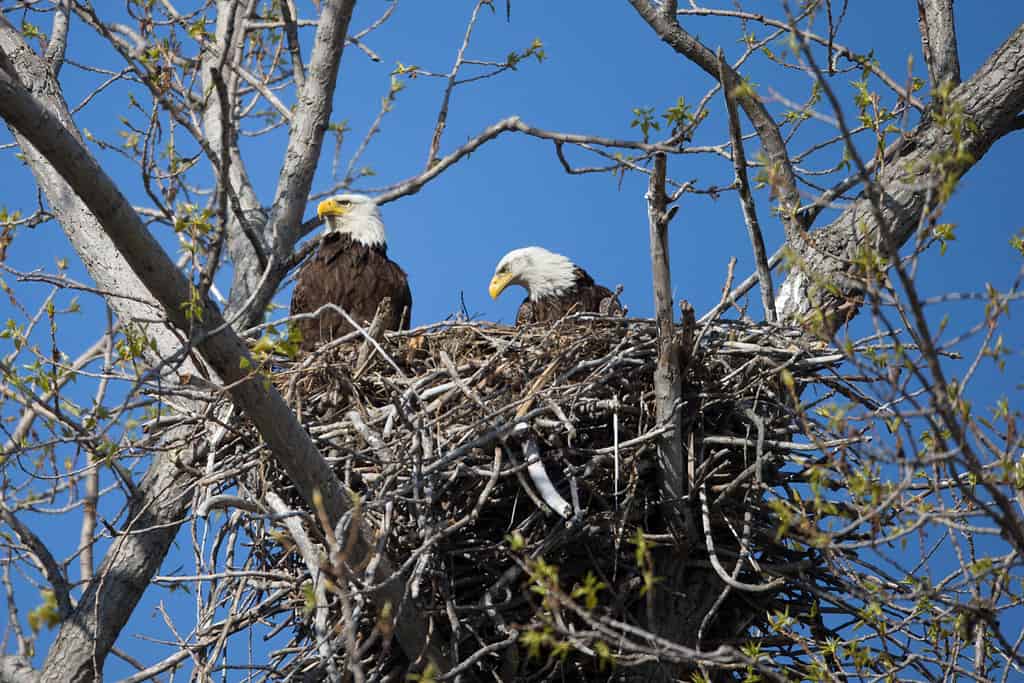
Nests often last decades and are reused by the same mates.
©Dennis W Donohue/Shutterstock.com
Unlike many other bird species, eagles reuse the same nest year after year. Its weight grows every time new material is added. Some bald eagle nests have been recorded weighing over 4,000 pounds and can be decades old.
The Oldest Eagle in History Lived Over 30 Years
Most bald eagles live 20 to 30 years in the wild. This is a long life for a raptor, but the oldest recorded bald eagle was close to 40 years old at the time of his death. Born in 1977, he was known by his identification code of 629-03142.

The Bald Eagle is America’s famous national bird.
©Chris Hill/Shutterstock.com
The eagle, who was 38 years old, tragically passed away in 2015 after being hit by a car in Henrietta, New York. This incredible bird may have lived even longer were it not for the accident. In captivity, some bald eagles can live 47 years, but it’s extremely rare.
A Common Pesticide Almost Wiped Them Out
Bald eagles have few natural enemies except for humans. From the 1940s through the 1970s, the species population declined drastically. Scientists discovered that a common pesticide, DDT, was responsible for the fatalities.

Pesticides have unintended consequences for birds.
©alberto clemares exposito/Shutterstock.com
The chemical metabolite of DDT led to thinning of eggshells. Bald eagle hatchlings died before they had a chance to grow within the eggs. With no new hatchlings, bald eagles suffered a significant loss of their future generations.
Stealing Prey Is a Common Eagle Move
Eagles are opportunistic hunters, despite their fierce talons and wicked speed. They won’t hesitate to pick apart carrion or swoop in on vulnerable prey. While they do actively hunt, most prefer a meal that’s readily available to one that requires energy.
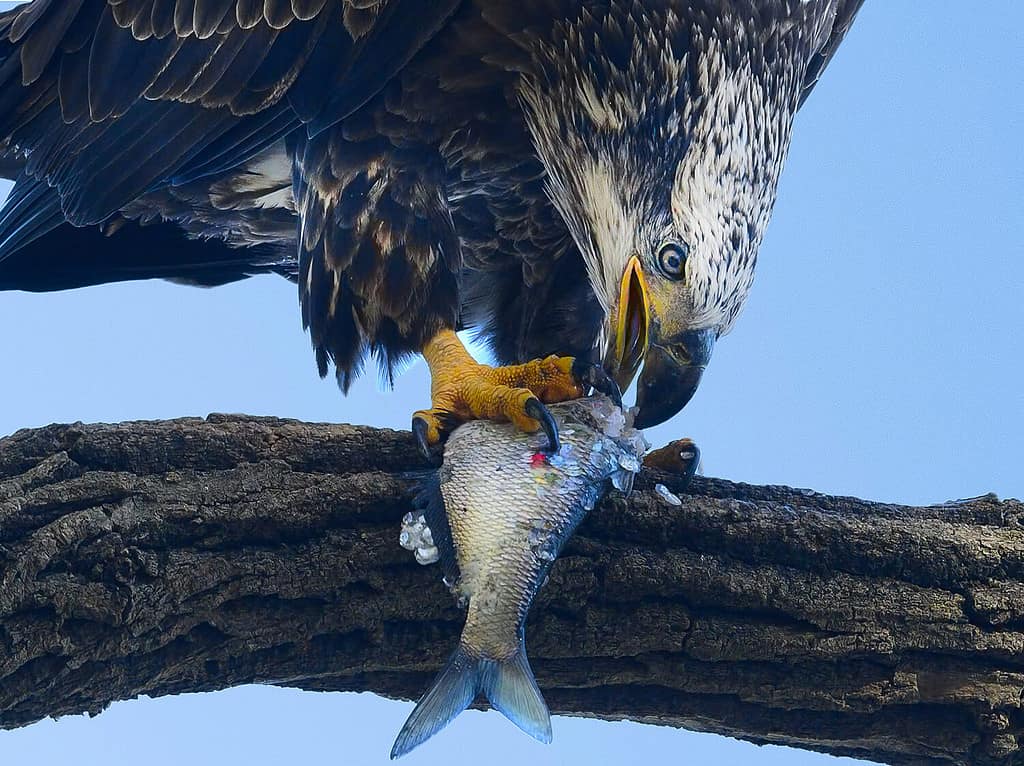
An easy meal is one that’s worth the energy.
©Brian E Kushner/Shutterstock.com
That means no method of finding food is off the table, including stealing from other animals. An eagle isn’t afraid to swoop in and steal a kill, which it usually successfully flies off with, thanks to those 100-mile-per-hour speeds.