
Quick Take
- Joining the 350,000 documented beetle species requires achieving a unique flat anatomy.
- Measuring only 1 inch presents severe movement restrictions for the Tenebrionidae family.
- A flat exterior is counterintuitively the ultimate defense against aggressive desert predators.
- Initiating a nocturnal foraging cycle is necessary for detritivores to avoid climate extremes.
Insects come in all different shapes and sizes, a result of thousands of years of evolution. Beetles are extremely diverse and are the largest order within the Insecta class. With over 350,000 described species, there is always something new to learn. One interesting beetle is the pie-dish beetle, which is distinct due to its flat back. This Instagram post by @theotime.colin shows a video of this beetle running around. Read here to learn more about this flat-shell beetle.
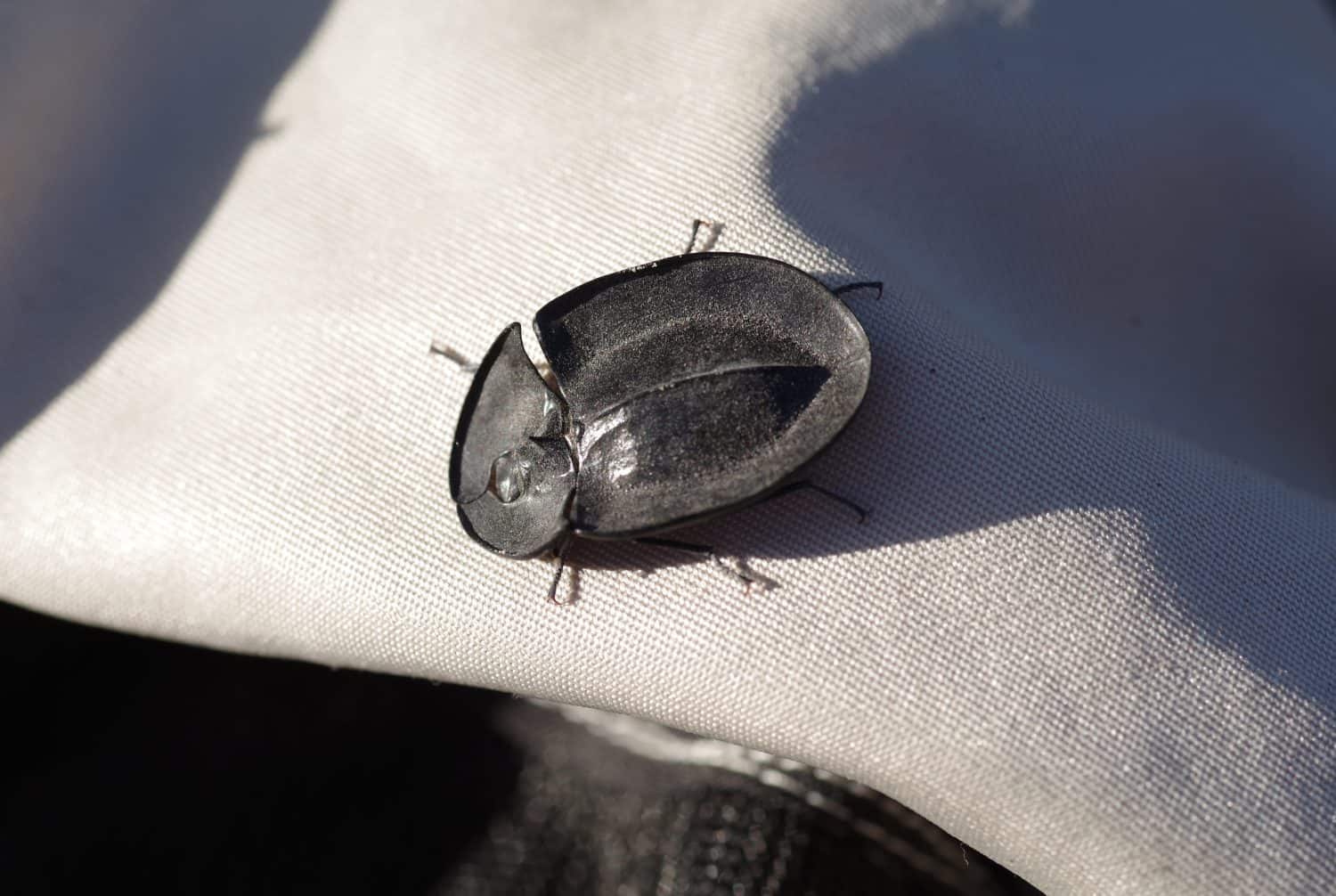
The pie-dish beetle gets its name from its dish-like appearance.
©GeoffBoyes/Shutterstock.com
Pie-Dish Beetle
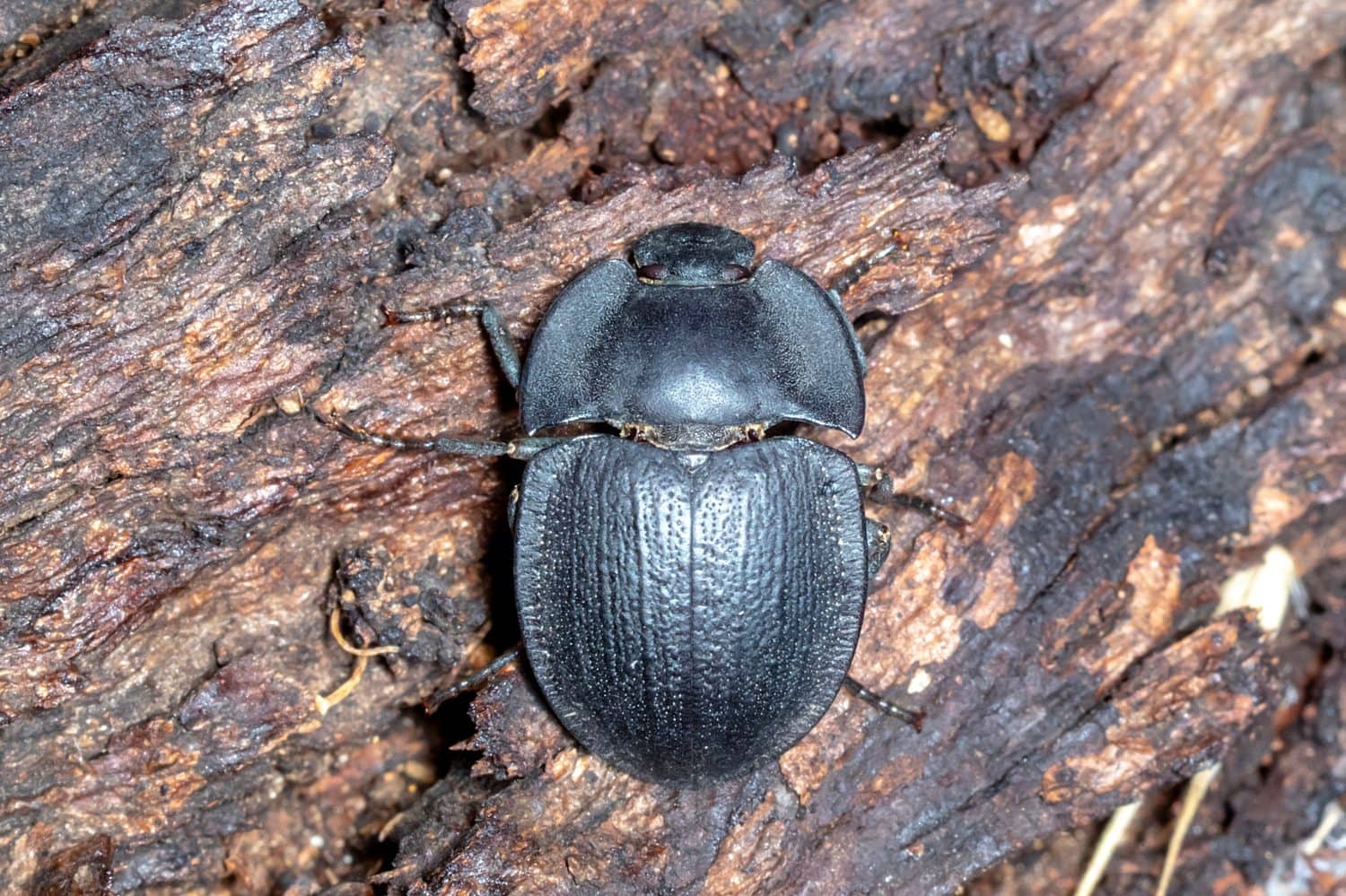
The pie-dish beetle is the common name for a group of darkling beetles within the family Tenebrionidae. These beetles are native to Australia. Famous for their unusually flat and oval bodies, they get their name from their pie plate or dish-like appearance. They inhabit the deserts and dry woodlands across the continent and are primarily found in Western and South Australia.
The beetles are nocturnal, foraging throughout the night and hiding under leaves and logs in the day. Pie-dish beetles grow to about an inch long and are stout and wide. They are blue-black in color, and the hue typically depends on the specific species. Like many other beetles, pie-dish beetles are detritivores. Detritivores feed on dead plant material, aiding the decomposition process.
Why Are Their Backs Flat?
While their flat backs may appear unusual, they serve as important adaptations. For one, they offer defense from predators. The wide rims help protect the beetle’s soft underside, head, and legs. When threatened by predators such as spiders and scorpions, they can tilt their bodies to shield themselves. In this way, they essentially have a built-in shield.
The flat body also helps them navigate. Their flat shape allows them to squeeze into narrow spaces, such as under bark, stones, or leaf litter. Because their arid habitats offer limited cover, this adaptation helps them take full advantage of their environment. Although these beetles may have a humorous name and appearance, they are strong and well-adapted to their harsh environments.