
Quick Take
- One bug on this list is nearly identical to a bed bug. Even experts need a microscope to tell them apart. See how experts tell them apart →
- Some of these lookalikes are completely harmless, but misidentifying them could lead you to treat the wrong infestation entirely. See which bugs don't bite →
- One common household bug can swell to 100 times its original size, and you might be surprised by how easily it gets confused with a bed bug. See ticks' dramatic size change →
- Not every bug you find in your bed is actually interested in your blood, which changes everything about how you should respond. Meet bugs that skip the blood →
Finding a bug in your bed can be shocking and anxiety-inducing. What if you are dealing with dreaded bed bugs? Whether you have a possible infestation or are simply curious to learn how to differentiate bed bugs from other kinds of bugs, this article is for you. We will go over tiny bugs that look like bed bugs. We’ll learn all about them, including their appearance, size, diet, habitat, and, of course, how to differentiate them from bed bugs.
Bed bug: Overview
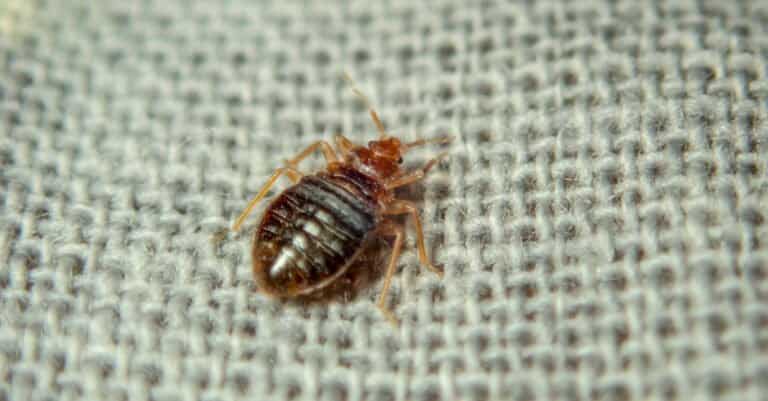
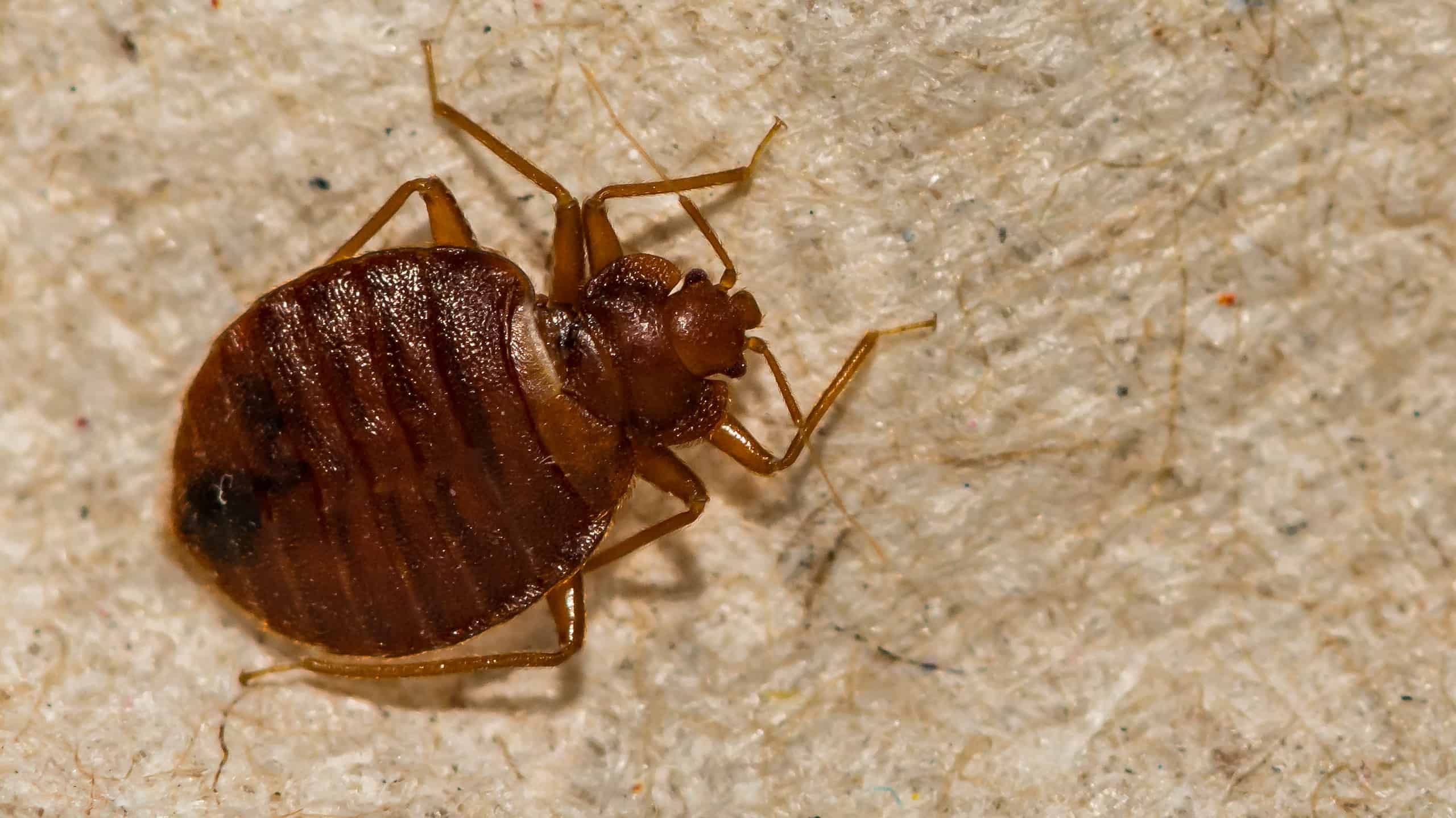
The bed bug (Cimex lectularius) is a small, nocturnal ectoparasite found worldwide, where it thrives in proximity to humans. Adult bed bugs average about 5 mm (3/16 to 1/4 inch) in length, or about the size of an apple seed. They have a flattened oval body that allows them to hide easily in tight crevices.
Macro of a bed bug on bed linen.
©Antidote Nuisibles/Shutterstock.com
Their shape changes dramatically, becoming swollen, oblong, and dark red after a blood meal. Immature nymphs resemble adults but are smaller, translucent, or yellowish-white, making them difficult to spot until they feed.
Cockroach Nymphs
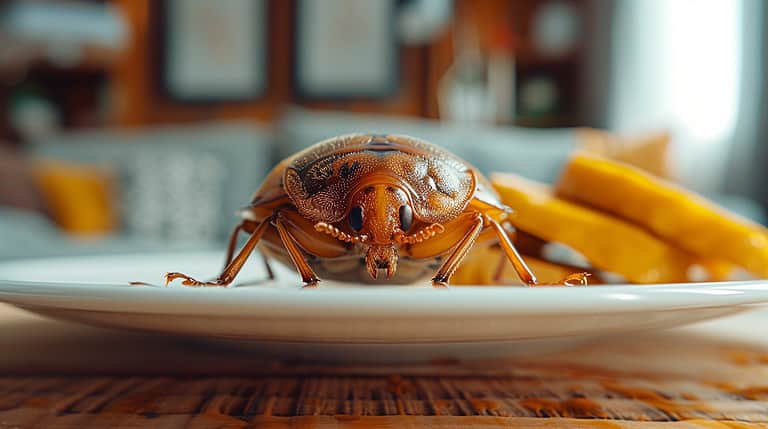
Cockroach nymphs (Blattodea) are baby cockroaches. Unlike other bugs, cockroaches do not start out life as larvae; instead, they crawl around as miniature versions of themselves. Nymphs are oval-shaped and have six legs and long antennae. They come in various sizes, and their coloring depends on the species, ranging from red-brown and dark brown to tan and even black. Since cockroach nymphs have similar coloring to bed bugs and can be very tiny, it is possible to confuse them for bed bugs.
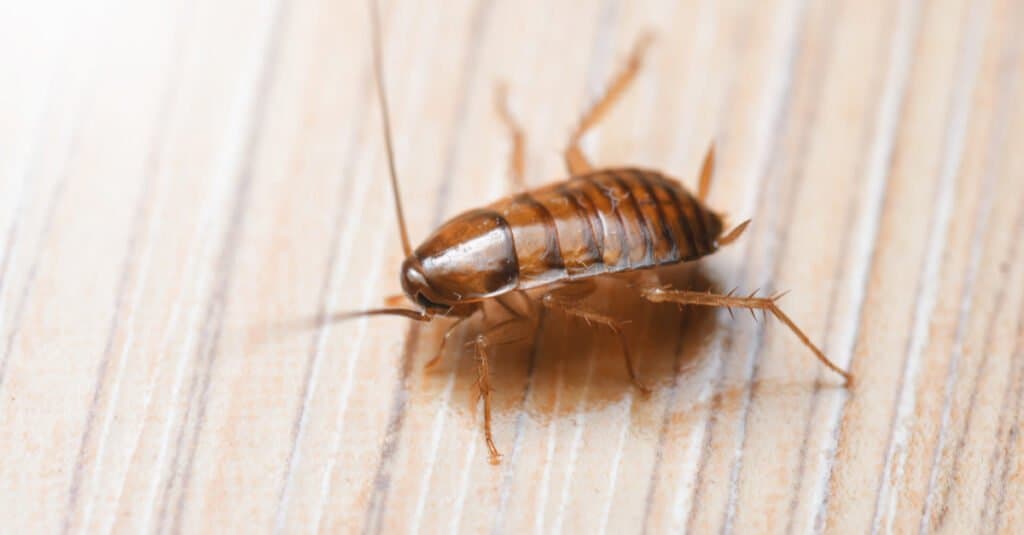
Cockroach nymphs are essentially baby cockroaches.
©bamgraphy/Shutterstock.com
Like adult cockroaches, these nymphs will eat almost anything, from food scraps and hair to decaying matter. Just like their adult counterparts, cockroach nymphs are hardy and can adapt to many environments. They especially love to hide in dark, humid areas during the day. In a home, you might find them behind kitchen appliances, in cracks and crevices, or near food sources. As they prefer warm environments, they often hang out in kitchens and bathrooms.
How to Distinguish Cockroach Nymphs From Bed Bugs
While both cockroach nymphs and bed bugs are small, oval-shaped insects with six legs, there are key differences in their appearance, behavior, and habitat. Cockroach nymphs are much faster and have larger and longer antennae than bed bugs. The bed bug is generally smaller than the cockroach nymph. Both pests have similar coloring, but bed bugs are always reddish-brown, whereas cockroach nymphs can come in a range of colors, including reddish-brown, tan, black, and brown.
Bed bugs primarily infest areas where people sleep, such as mattresses and bed frames, as they feed on blood. Cockroach nymphs usually hide around the kitchen or bathroom areas where there is food and moisture.
Booklice
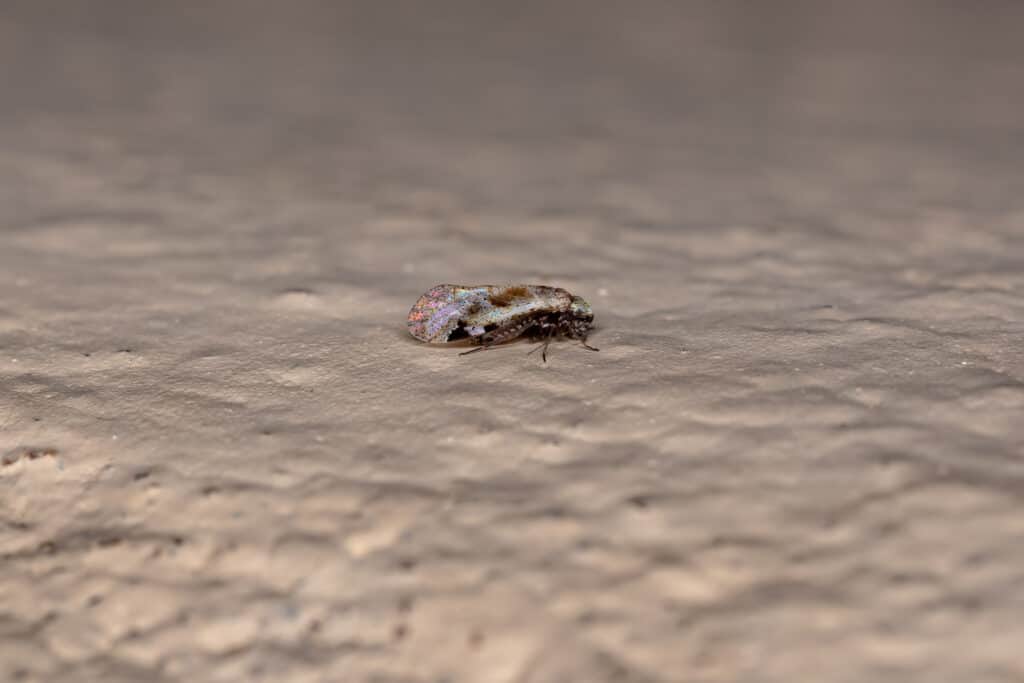
A tiny bug that looks like a bed bug is the booklouse.
©iStock.com/ViniSouza128
Booklice (Psocoptera) are extremely small and difficult to spot as they are typically less than 1/10 of an inch long. They sometimes look like specks of dust with legs, as their coloring varies from translucent or pale white to gray or brown.
Unlike bed bugs and cockroaches, these insects are actually not interested in human blood or food scraps. Instead, they feed primarily on fungi, mold, and algae, but are also known to feed on starchy household items like grains, book bindings, and wallpaper glue. As booklice thrive in moisture and undisturbed places, you’ll often find them in libraries or bookcases where they feed on books and papers, as their name suggests. They also inhabit damp places like bathrooms, basements, and kitchens.
How to Distinguish Booklice From Bed Bugs
Both booklice and bed bugs are small insects that invade homes, but they couldn’t be more different. In terms of appearance, booklice are extremely tiny and are often translucent in color, as opposed to the reddish-brown coloring of bed bugs. Booklice also have soft exoskeletons and are more hourglass-shaped, whereas bed bugs have more of an oval-shaped body, almost like an apple seed. These two insects also inhabit different parts of the home. Booklice love damp areas like inside books and in walls and they don’t bite, while bed bugs usually swarm about the bed and bite humans in the night to feed on blood.
Spider Beetles
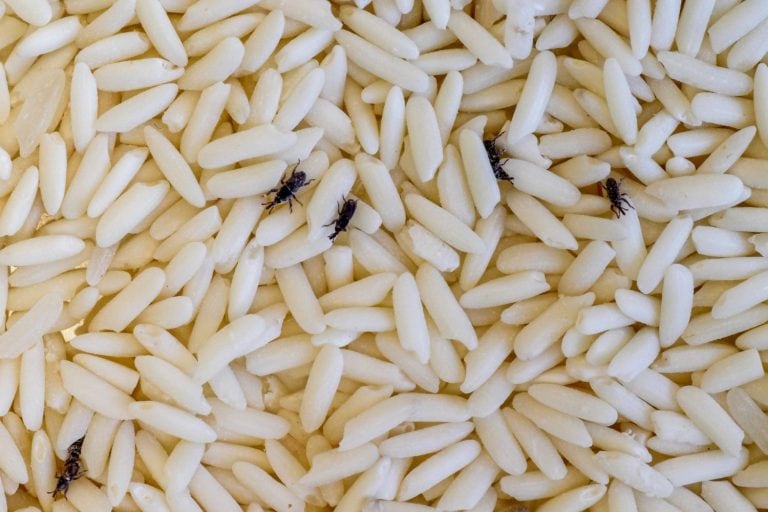
Spider beetles (Ptininae) are named for their resemblance to small spiders or large mites. These beetles have long legs and large, round abdomens. They generally range from 0.04–0.20 inches in length. Spider beetles look very similar to bed bugs at first glance, as they are both oval and reddish-brown in color.
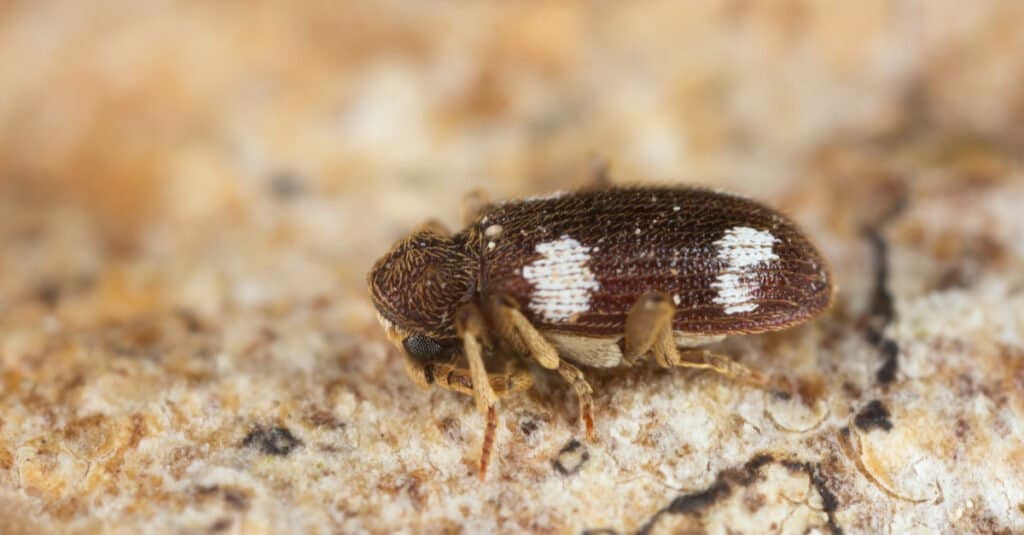
Ranging in size from 1 to 3 mm, spider beetles look like tiny bed bugs.
©Henrik Larsson/Shutterstock.com
Spider beetles are dedicated scavengers. They’ll eat almost anything they can find, including a wide range of pantry items like grains, cereals, dried fruits, and pet food. They are also known to feast on dead insects, animal droppings, and natural fibers like wool and silk. These beetles live in cozy hidden spots, such as cracks, crevices, and dark corners of your home, and usually come out to forage at night.
How to Distinguish Spider Beetles From Bed Bugs
Despite bed bugs and spider beetles having very similar anatomical structures and colors, they can be differentiated by the distinctive rounded appearance that spider beetles have. Bed bugs have flat, oval-shaped bodies. At first glance, spider beetles may look like bed bugs that have just eaten. Their size differs, too, as bed bugs are much larger, with a body length of up to 0.25 inches compared to the spider beetle’s 0.10-inch length. But, of course, the easiest way to distinguish between the two is their habitat. Spider beetles can be found all over the home, whereas bed bugs are typically found in bedding.
Fleas
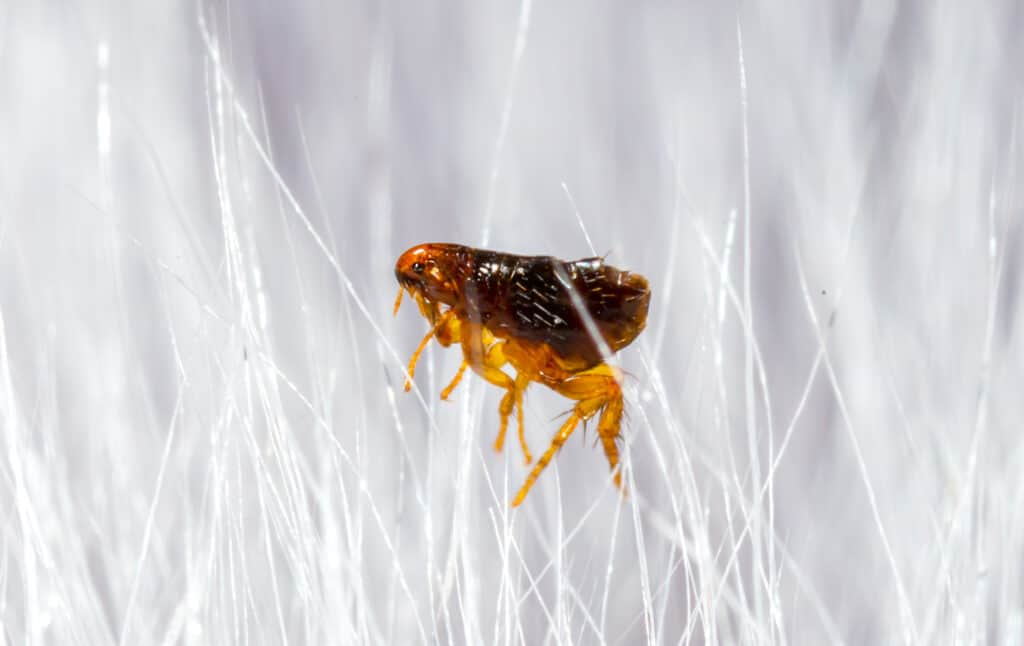
A flea is a common tiny bug you’ll see in homes with pets.
©Vera Larina/Shutterstock.com
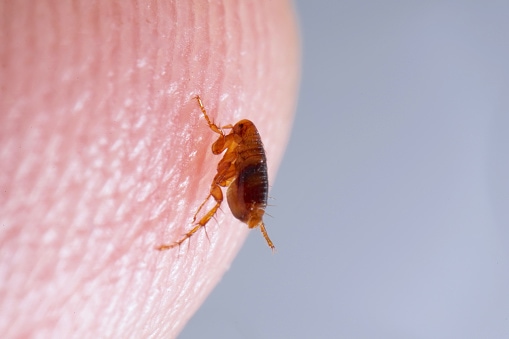
If you’re a pet owner, you’ll already be very familiar with fleas (Siphonaptera). Fleas are tiny, blood-sucking insects that can transmit a variety of different diseases. Though they are usually no more than 0.10 inches long, their bites can cause reactions in both humans and pets. Like bed bugs, fleas are reddish-brown in color and are flightless. But this doesn’t stop them from leaping into the air with their strong legs, which bed bugs are not able to do.
Fleas generally feed on the blood of warm-blooded animals, including pets and humans.
How to Distinguish Fleas From Bed Bugs
Fleas often get confused with bed bugs because both are small, reddish-brown, wingless insects that can cause itchy rashes on your skin. However, fleas generally look skinnier and longer rather than flattened, and they have an amazing ability to jump from one object or host to another. Fleas will generally find their host within the dense fur coat of your pets, while bed bugs tend to inhabit beds and couches.
Ticks
A parasitic arachnid, ticks (Ixodida) are also blood-sucking parasites that may pose a threat to you and your pets. Ticks reproduce slowly compared to fleas and bed bugs. They are experts at hiding in dark, humid places in your home and in the grass. These opportunistic arachnids have a flat, oval-shaped body with eight legs.
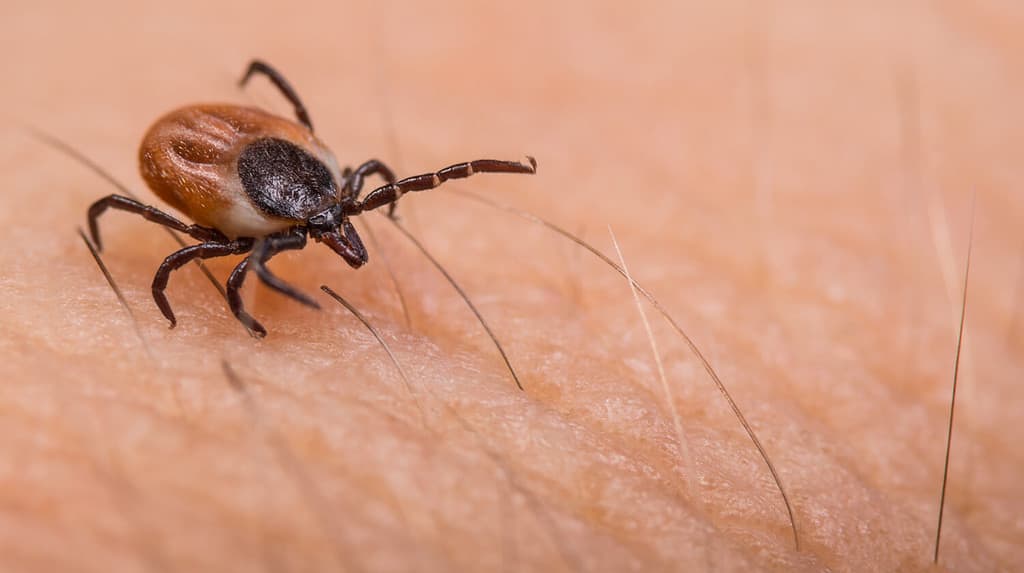
Like bed bugs, ticks love to feed on human blood.
©KPixMining/Shutterstock.com
They can be brown or black depending on their age and species, and can vary in size from as small as a pinhead to as large as a fingernail. A tick’s body size varies, especially after having a full blood meal. Their body will be engorged with blood as they feed, and they may become up to 10 times their original size — and in some cases, certain females can swell to as much as 100 times their pre-meal size! Ticks can be found hiding in grassy patches and wooded areas, waiting for a host to come by.
How to Distinguish Ticks From Bed Bugs
Bed bugs and ticks may often be mistaken for each other, but one of the main differences between the two is the number of legs. As arachnids, ticks have 8 legs, while bed bugs only have 6. But since these two pests are very small, you may not be able to count their legs. Other ways to distinguish ticks from bed bugs include looking at their body shape. Ticks have a more oval and scaly appearance, especially when engorged, whereas bed bugs have a flattened, oval shape.
If you have an indoor pet who sleeps with you, it may be difficult to differentiate between these two bugs as they both may be found near your bed or on the couch. However, another difference is that bed bugs are only active at night, whereas ticks are active either day or night depending on the species.
Bat Bugs
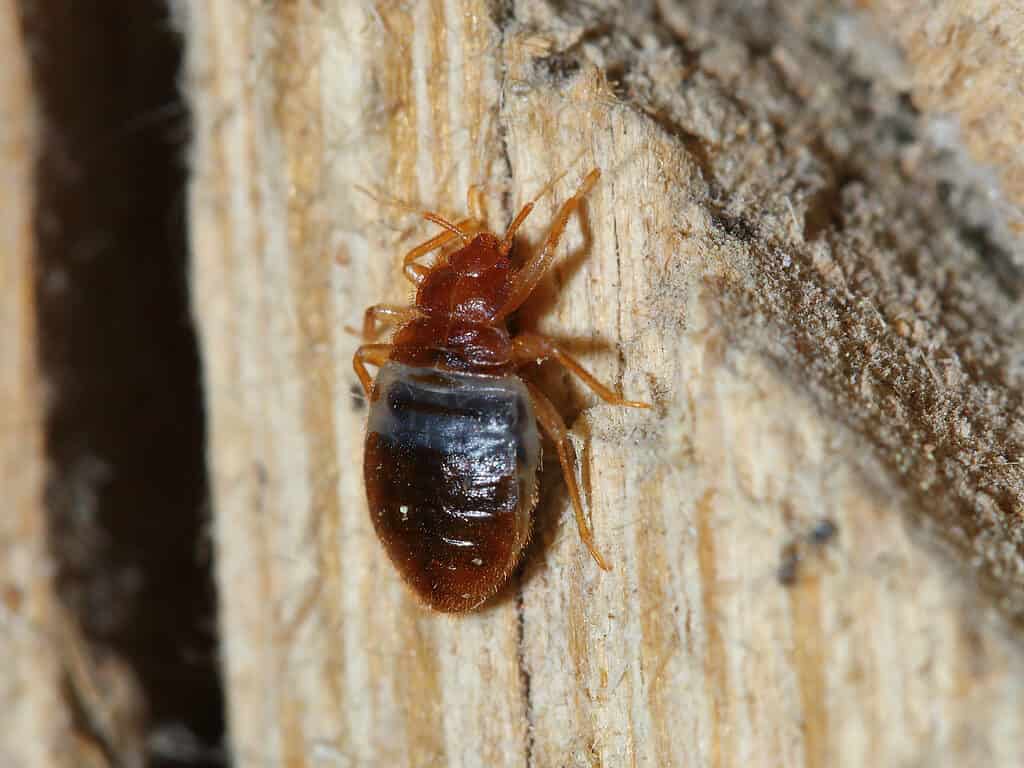
Bat bugs are oval-shaped insects that love to feed on the blood of bats and other hosts.
©iStock.com/Zdenek Macat
As their name suggests, bat bugs (Cimex pilosellus) are a type of blood-sucking parasite that feeds primarily on bats. However, in the absence of bats, they may bite humans. They look very similar to bed bugs, to which they are closely related. Just like bed bugs, they have oval-shaped bodies, but bat bugs are lighter brown in color. These two bugs also grow to around the same size.
In homes, bat bugs are often found where bats are, such as in attics, chimneys, or abandoned buildings. However, if you remove the bats from your home, the bat bugs may stay and wander about your home, looking for new hosts.
How to Distinguish Bat Bugs From Bed Bugs
Distinguishing between bat bugs and bed bugs can be tricky because they look very similar. However, there are subtle differences to watch for. Notably, bat bugs typically have longer hairs on their thorax, making them look hairier than bed bugs. Their hairs are often darker at the tips, which gives them a slightly two-toned appearance. However, with that said, this is generally difficult to see without the help of a microscope!
Furthermore, while both bugs feed on blood, bat bugs prefer bats as their primary hosts and may be found near bat roosts. Bed bugs, on the other hand, are more commonly associated with human hosts and are often found in and around beds and furniture.
Head Lice
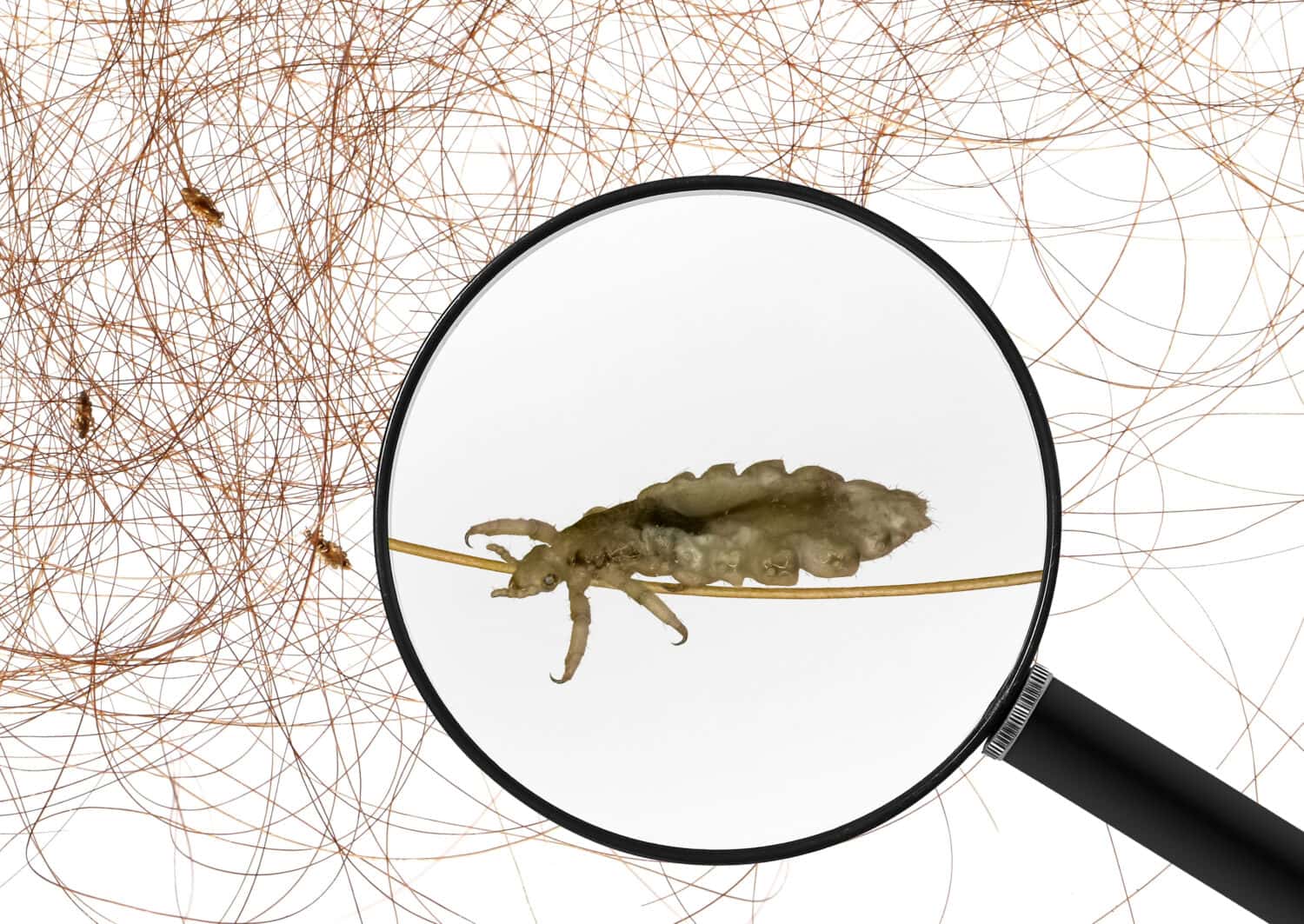
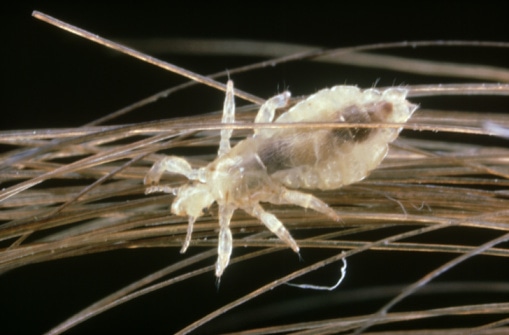
While both head lice and bed bugs feed on the blood of humans, there are a few ways to distinguish the two.
©Protasov AN/Shutterstock.com
Head lice (Pediculus humanus capitis) are tiny, wingless insects that are often a source of anxiety for people all over the world. These tiny bugs cause itching and discomfort on the scalp due to their feeding habits. At first glance, head lice might be confused with bed bugs, primarily because of their small size. Unlike bed bugs, they live almost exclusively on the human scalp and do not infest bedding.
Head lice are incredibly small, typically measuring about 0.14 inches in length. Also, they have an elongated and flattened body shape, usually a pale gray or tan color. In fact, they’ll look almost translucent when they haven’t fed on blood! Head lice are primarily active on the scalp and in hair, where they feed and lay eggs. They do not venture far from their host.
How to Distinguish Head Lice From Bed Bugs
Head lice and bed bugs can be difficult to distinguish from one another, as both are tiny bugs that feed on human blood. However, there are a few notable differences. Head lice are smaller and lighter-colored than bed bugs. The most notable difference between the two insects is that head lice infest the human scalp, whereas bed bugs live in crevices in mattresses and other furniture.
Carpet Beetles
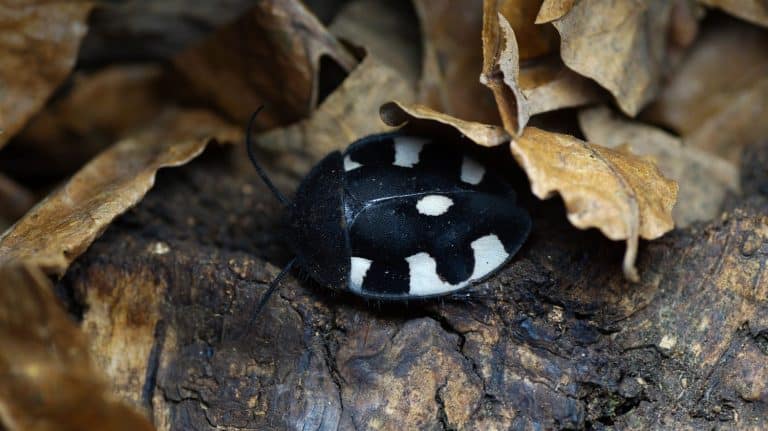
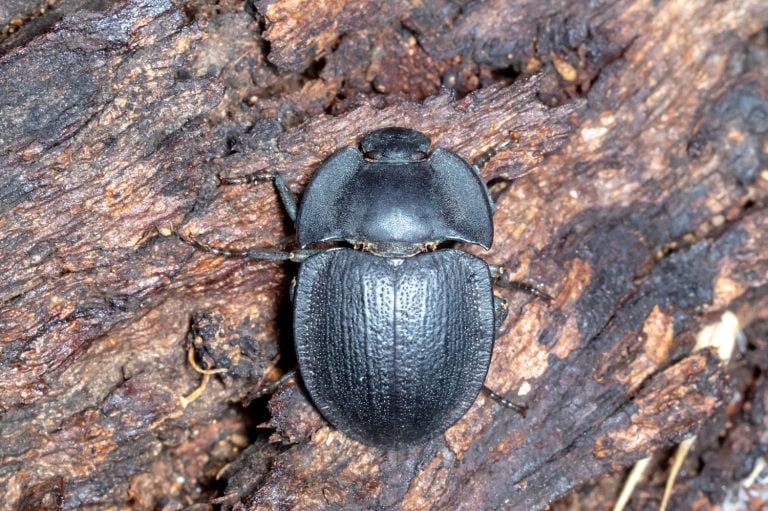
Carpet beetles (Dermestidae) are a common household pest that feeds on natural fibers and can often be mistaken for bed bugs due to their small size and appearance, including an oval-shaped body. However, these beetles are smaller, averaging 0.14 inches in length. Carpet beetles also have a mottled pattern or are fully black in color.
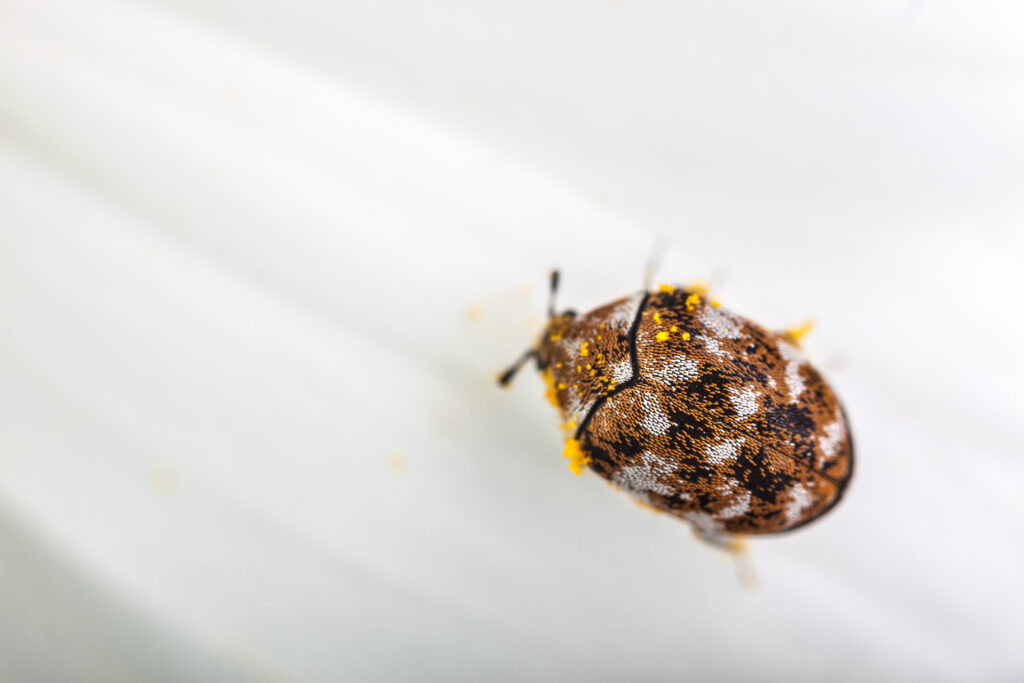
Another insect that looks like a bed bug is the carpet beetle.
©iStock.com/porpeller
These tiny bugs eat natural and animal-origin materials, such as furs, wool, silk, cotton, feathers, and leather. Interestingly, most carpets today are made of synthetic material, so carpet beetles are not too interested in them. That said, they may still infest your carpet if your synthetic carpet is filled with sweat, oils, food, and animal fur. Besides carpets, these pests can be found in closets and drawers, where they might be able to find fabrics and textiles.
How to Distinguish Carpet Beetles From Bed Bugs
Carpet beetles are typically smaller than bed bugs. They have an oval-shaped body, similar to bed bugs, but their coloring varies. While some carpet beetles are fully black, others have a mottled pattern of white, brown, and yellow scales. The main difference between these two bugs is that bed bugs are attracted to human blood, and carpet beetles are attracted to natural fibers. These beetles also do not bite humans or feed on blood like bed bugs.