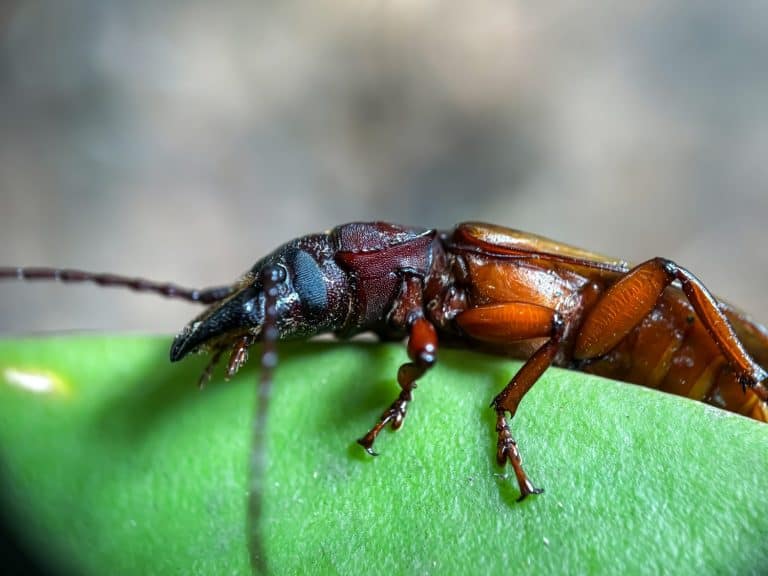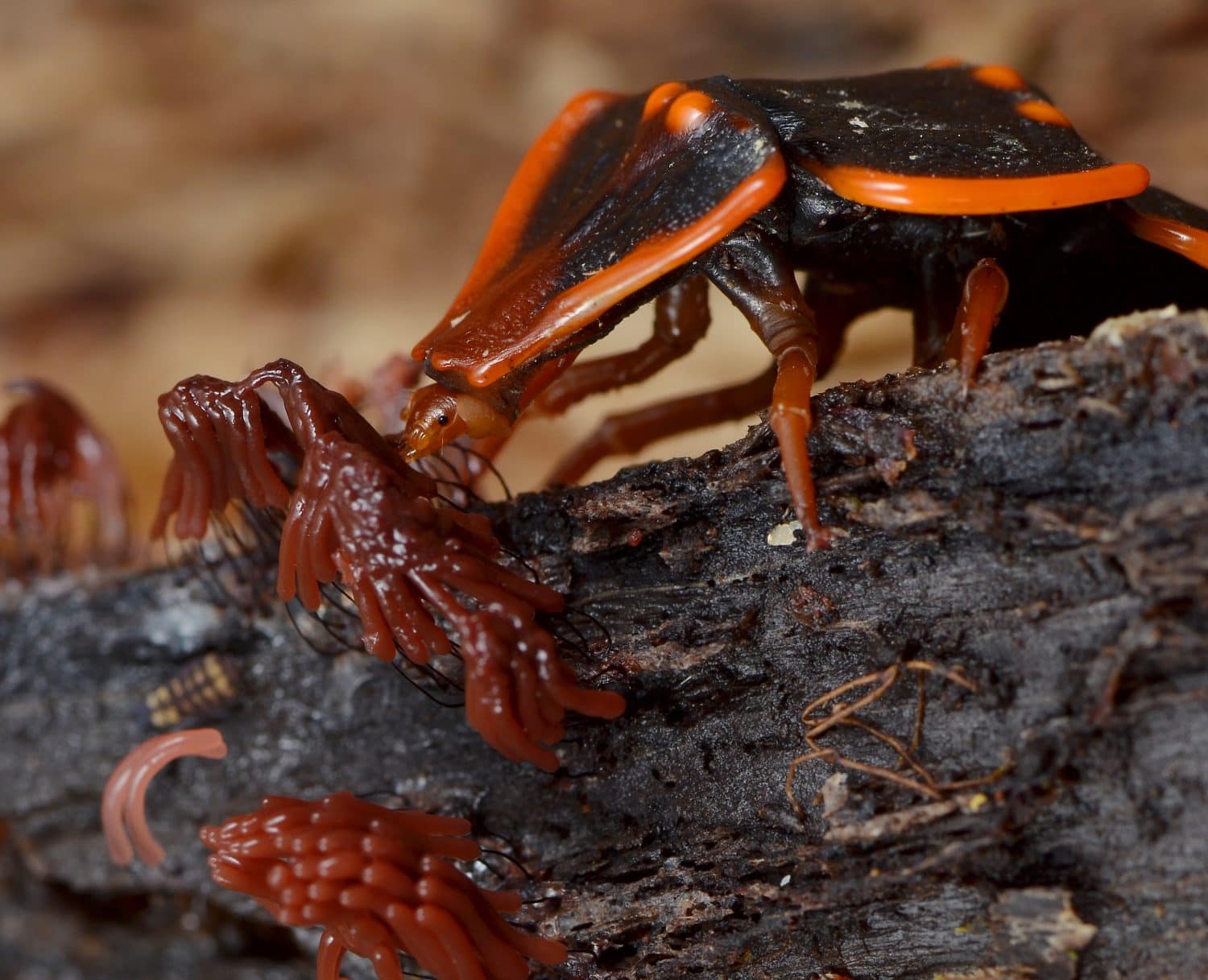

At first glance, the trilobite beetle resembles a leaf or a plant. Seeing a picture of a trilobite beetle, however, could easily make you think it’s a creature from another epoch, roaming the earth hundreds of millions of years ago. However, despite their ancient appearance, trilobite beetles are alive and well, roaming around Southeast Asia as you read this. In this YouTube video, a man shows the camera a trilobite beetle and explains their fascinating characteristics.
Trilobite beetles may live in the jungles of Southeast Asia, but they would fit right in any cabinet of curiosities or bizarre insect collection. They may look like trilobites, but the relation to these long-extinct marine arthropods ends there. Nevertheless, trilobite beetles are positively alien in appearance and behavior. They are extremely dimorphic, rare, and mysterious, making them an enduring and fascinating subject for scientists and oddity collectors alike. Let’s learn more about this mysterious insect, its characteristics, habits, and more.
Trilobite Beetle Background

There are over 30 described species of trilobite beetles in the genus Platerodrilus, with more likely awaiting discovery in Southeast Asia.
©Zety Akhzar/Shutterstock.com
There are over 20, possibly 30 species of trilobite beetles that belong to the genus Platerodrilus. This mysterious and enigmatic insect was first described by naturalists studying the jungles and rainforests of Southeast Asia. Due to their appearance, uncannily similar to ancient trilobite crustaceans, trilobite beetles got their name. Don’t be fooled by this ancient-sounding name, however, as these insects land squarely in the beetle order Coleoptera, and specifically in the family Lycidae (best known for its brightly-colored, soft-bodied members). In this YouTube video, a man shows one of these rare insects up close and personal.
While entomologists have found and described more than 20 species of trilobite beetle, there are probably even more. All of these beetles live deep in Southeast Asia’s remote and often impenetrable rainforests, making further exploration and discovery difficult. Furthermore, their evolutionary history remains an enigma. Those are not the only mysterious aspects to trilobite beetles, either. Due to the eye-popping differences between male and female trilobite beetles, they may be the most dimorphic insects (if not creatures) on Earth.
On the Hunt
For centuries, scientists have attempted to uncover the secrets of trilobite beetles to varying success.
©Kirsanov Valeriy Vladimirovich/Shutterstock.com
Since their discovery in the 19th century, trilobite beetles confounded scientists because there didn’t seem to be any males around. Every specimen found by these initial discoverers was female, regardless of how big, spikey, or colored they were. Judging by these early samples, it seemed like female trilobite beetles reproduced with themselves somehow. However, even the most gullible scientist knew this couldn’t be the case. A Swedish scientist named Eric Mjoberg headed to Borneo in 1922, determined to solve the puzzle of the male (or lack thereof) trilobite beetle. Despite traipsing around in the jungle for months, he only found females. Mjoberg tried stringing several females up in the trees to attract males during mating season, but to no avail.
Finally, a year later, he employed locals and offered ten dollars to the first person who found a male. This proved to be a success. One day, a collector showed Mjoberg two trilobite beetles secured in a banana leaf, in the midst of mating. Seeing the conjoined pair with his own eyes, Mjoberg realized he had finally found a male, but it looked nothing like he expected. It looked so different from its female counterpart, in fact, that only further testing could definitively prove that both specimens belonged to the same species.
Massive Morphological Differences
Female trilobite beetles are so much bigger and bonier than males that they are easily confused for separate species.
©SIMON SHIM/Shutterstock.com
It took a little less than 100 years before another scientist witnessed a pair of trilobite beetles mating. In 1995, a Singaporean entomologist named Alvin T.C. Wong observed the second act of procreation. Even so, he failed to get the beetle’s eggs to hatch. Wong has continued to flip over logs looking for trilobite beetles, but much of their story remains unwritten in human terms.
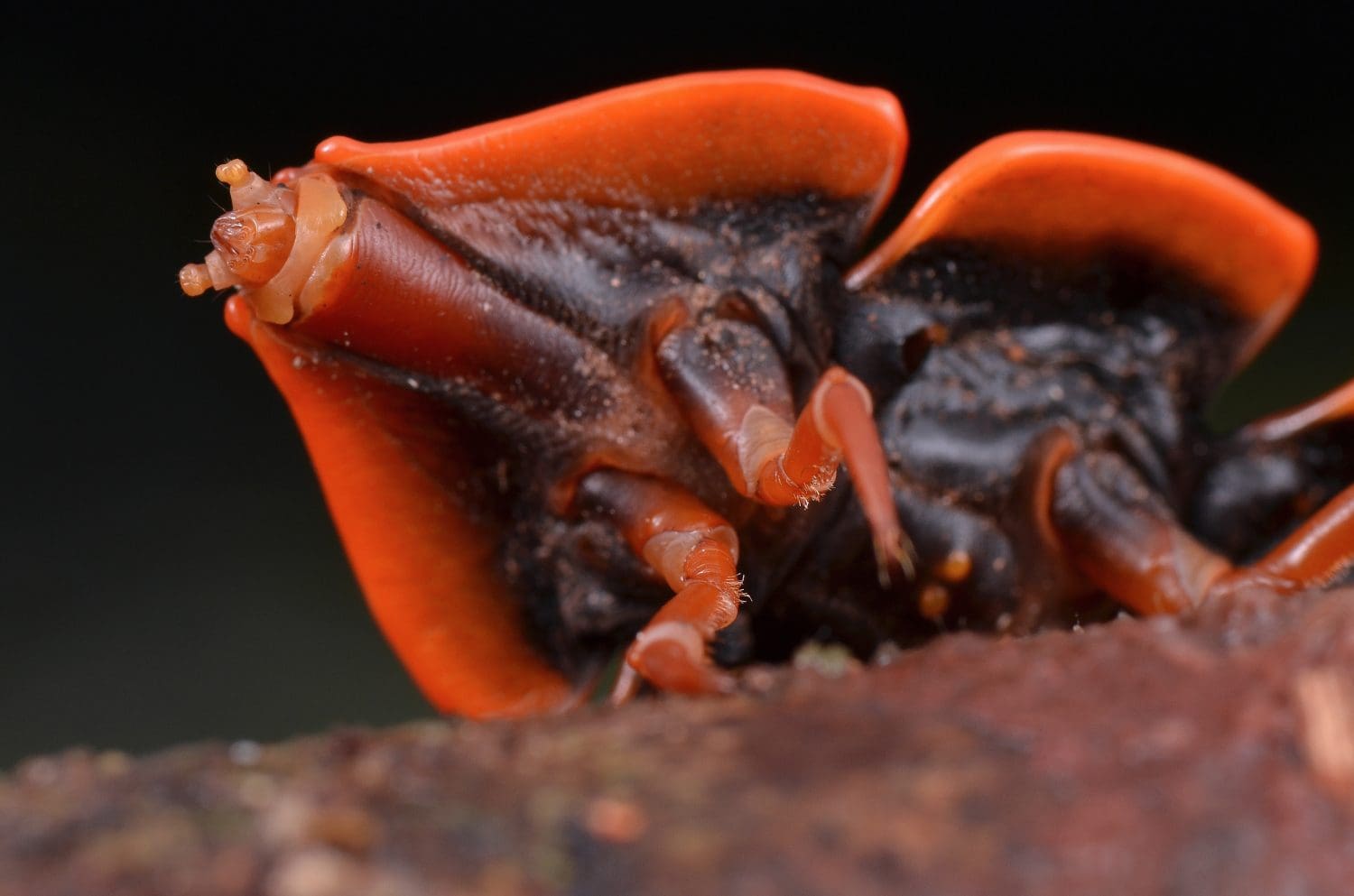
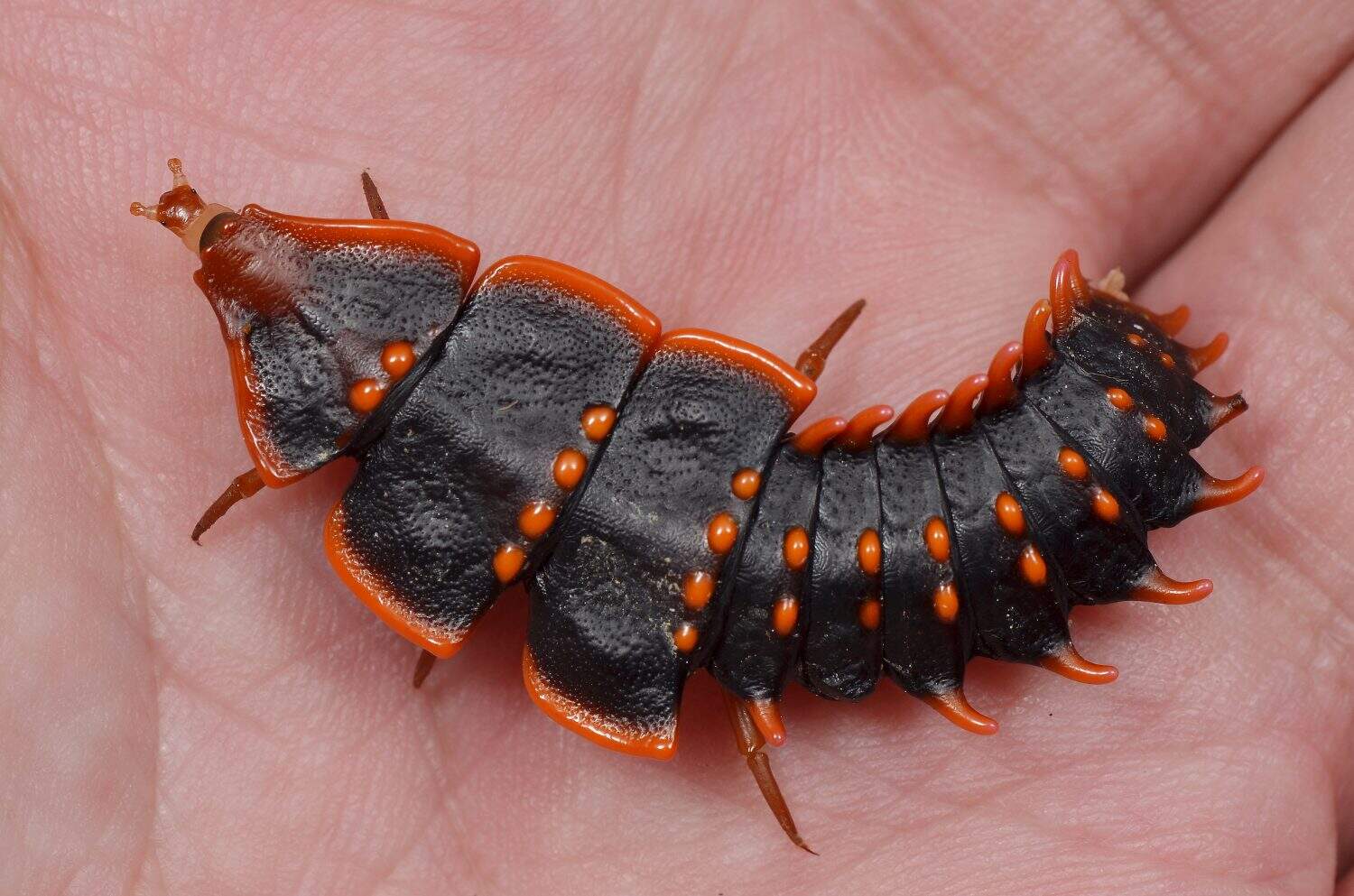
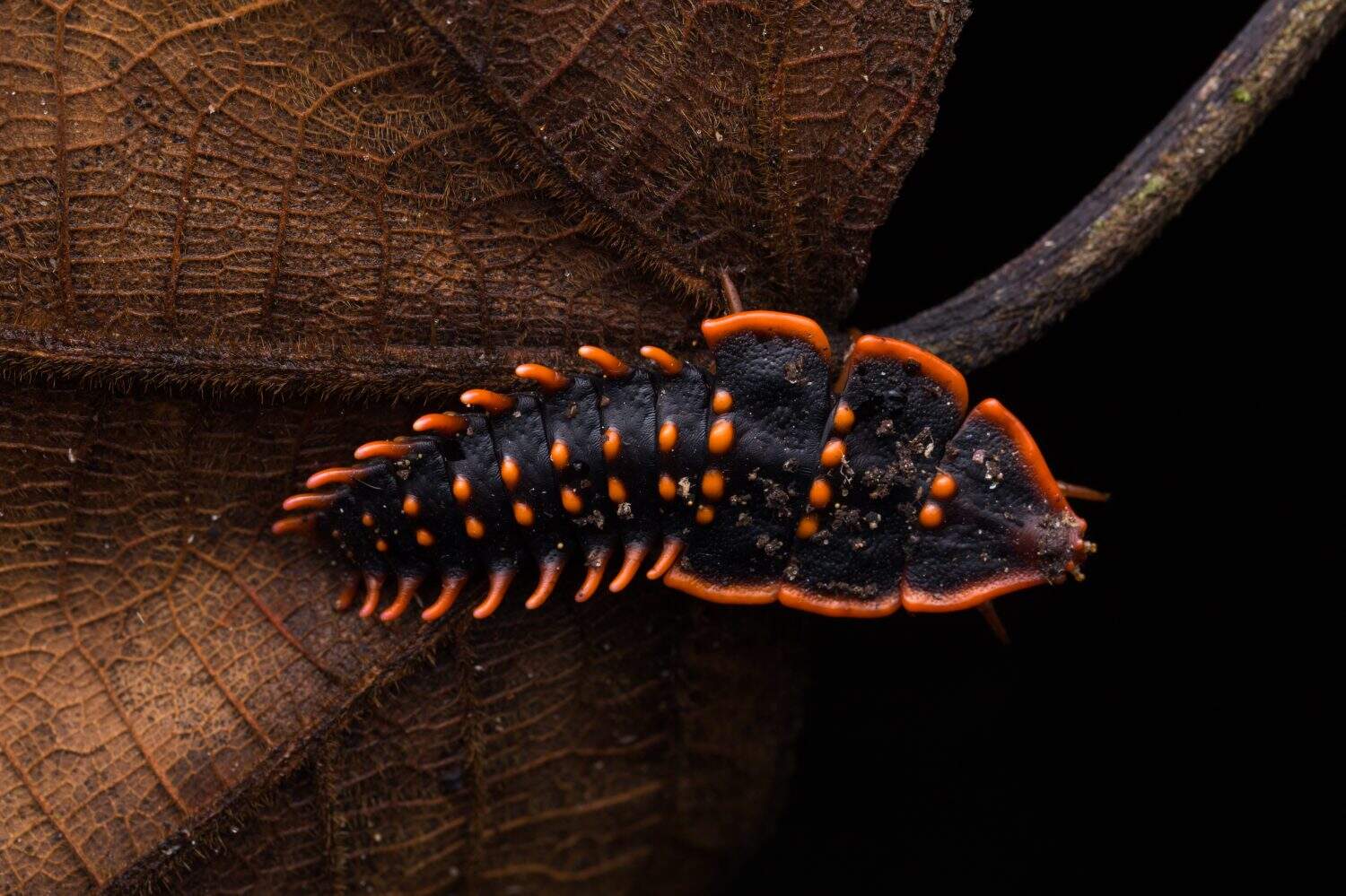
What scientists do know about trilobite beetles is just how different males and females are. Females are neotenous, which means they keep larval-like body structures their entire lives. Most types of beetles undergo metamorphosis, but female trilobite beetles remain wingless, flat, and armored. Due to extended dorsal plates, they look like ancient crustaceans. Females in some species of trilobite beetles grow up to 8 centimeters, which is massive compared to other beetles in the Lycidae family.
Males look so different from females that they are easily mistaken for other species of insects. That said, male trilobite beetles look more like other Lycidae family members. They have thin bodies, wings, and short lives once they pass their pupal stages. If females resemble rhinos, then males resemble flies.
Trilobite Beetle Traits
These beetles live in Southeast Asia and are often found under rotting logs and in plant debris near forest floors.
©SIMON SHIM/Shutterstock.com
In this YouTube video, a man finds a female trilobite beetle in the wild and films it up close. It’s hard to deny that the specimen looks remarkable. It is about two inches long, greyish-black in color, with a frame that would look at home in a prehistoric fossil. What’s more, its tiny head is retractable, moving in and out of its hard-shelled body like a turtle. While many aspects of these beetles’ lives remain unknown, meticulous and decades-long research efforts have allowed scientists to reach some conclusions about the lives of these prehistoric-looking insects. At the very least, they know where these insects live: the wet, dense forests of Southeast Asian countries, like Borneo, Malaysia, and Thailand. There, the rare specimen is usually found under rotting logs or leaf litter, often near the forest floor.
Scientists believe the enduring armored body shape of female trilobite beetles plays some role in defense. Their hard, bony plates protect a soft body underneath and likely make them unappetizing or difficult for birds and lizards to eat. Plus, like other members of the Lycidae family, female trilobite beetles spray chemicals to ward off predators.
However, not much is known about the life cycles or diets of these insects. Scientists know that only males pupate and grow wings, while females remain in a larva-like state. Since mating has only been observed a handful of times, scientists guess that males find females through scent cues. As for diet, some experts suggest that larger females may eat insect larvae, snails, or other invertebrates, like earthworms. Other scientists, however, believe females subsist on fungi or slime molds found on rotting logs. The males live such short lives that they may not even eat at all.
Curious Adaptations
Females may grow so big to stay protected from predators and conserve energy for egg production.
©Alen thien/Shutterstock.com
So little is known about this ancient-looking insect that scientists don’t have much information to go on, much less answers to conclude. While other insects like fireflies and glowworms show neotenous characteristics (retaining larval forms into adulthood), none are as pronounced as in female trilobite beetles. Judging by other species and the proverbial “rule of the jungle,” it’s likely that females retain wingless, armored states for several reasons.
For one, a hard exterior protects them from potential predators, like birds or lizards. This neotenous state also keeps them energy efficient. Females don’t have to expend precious energy growing wings or seeking distant food sources. Instead, they can move slowly, remain resistant to threats, and devote their energy to finding nearby food and producing eggs. Males, however, develop wings. Given the possibility that they don’t even eat during their short lives, this adaptation likely allows them to travel far to find mates. This type of strategy allows for local reliability and sufficient genetic mixing.
Scientists have uncovered a lot about this mysterious insect, but there is still much more to learn. Until then, trilobite beetles will continue to confound entomologists and remain the ultimate prize in a true collector’s cabinet of curiosities. As this YouTube video illustrates, there aren’t many living insects like them.