Quick Take
- Cow tipping is based on the false idea that cows sleep deeply while standing, but they only lightly doze on their feet and must lie down for REM sleep.
- Adult cattle weigh 1,000 to 1,800 pounds, have a low center of gravity, and can quickly shift their weight, making tipping them physically unrealistic.
- Attempting to tip a cow would more likely result in injury to the person than the animal, as startled cattle can kick, charge, or trample.
I grew up in a relatively rural part of southern Maine. While I myself wasn’t raised on a farm, there were plenty of them around. And where there are farms, there are cows.
I heard about “cow tipping” for the first time when I was in middle school—around the late 80s and early 90s. It was one of those hijinks you always heard about the older kids getting up to—right up there with “mailbox baseball,” or placing a flaming paper sack of dog poop on your least favorite teacher’s front porch, ringing the doorbell, then watching the poor schmuck stamp it out. It all sounded like such great fun. I couldn’t wait till I got to high school so I could also engage in such delightful pranks.
But back to cow tipping: You see, cows sleep standing up, in a very deep slumber, and are quite top heavy. At least, that’s what the legend states. So, to engage in cow tipping, you and some buddies sneak out at night, find yourselves a cow pasture, sidle up to a sleeping cow, give her a hard shove, and laugh your teenage buns off as she tips over. Hilarious, right?
Oh, how I admired these juvenile pranksters who came to school on Monday morning bragging of how they’d snuck out and gone cow tipping over the weekend.
I never went cow tipping myself, but I never questioned these harrowing tales. Even well into adulthood, I often thought of those wild boys who used to sneak out at night to knock over barnyard animals—though the older I got, this practice began to seem less comical, and actually just cruel.
But here’s the thing: cow tipping isn’t real. It never was. All those kids who used to boast about it—they were liars.
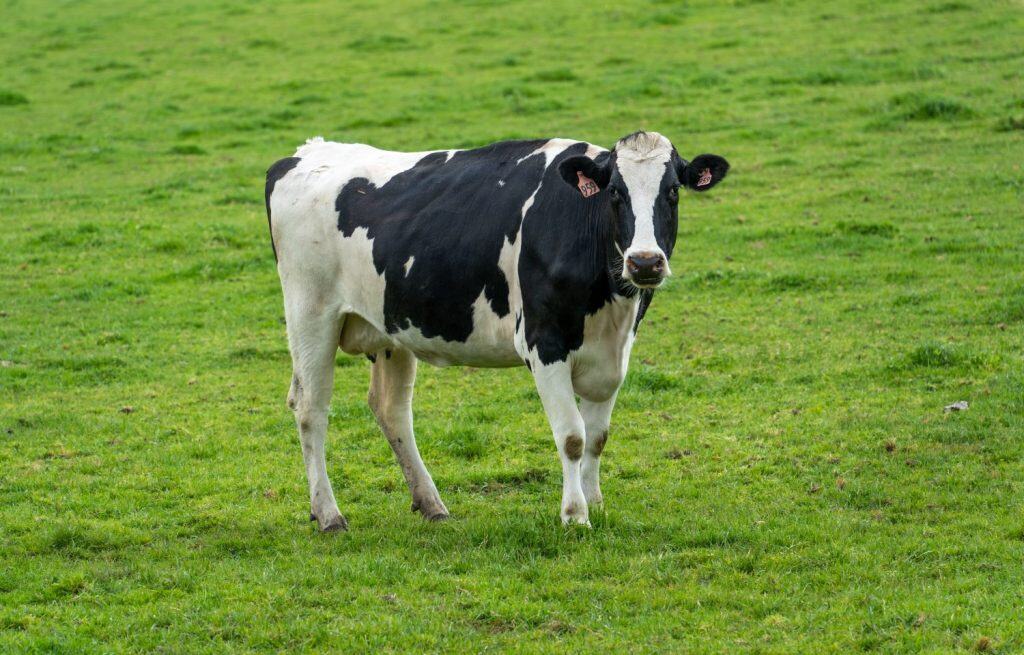
Cow tipping stories first appeared in American campus folklore in the 1970s and quickly spread as a rural rite-of-passage tale.
©Wirestock Creators/Shutterstock.com
Where Did This Myth Come From?
The urban legend claims that you can sneak up on a standing, sleeping cow at night and push her over. This idea depends on two assumptions being true: first, that cows sleep standing up in a deep, unresponsive state, and second, that they’re balanced in such a way that a few determined teenaged humans could knock them sideways.
Seems reasonable—at least to a 12-year-old boy in Maine.
Folklorists trace cow tipping stories back to at least the 1970s, when it began appearing in collections of American campus folklore. It seems to have flourished as a rural rite-of-passage tale. Whether it was high schoolers daring each other or college students spinning stories about their hometowns, cow tipping became shorthand for mischievous country fun.
By the 1980s and 1990s, it was firmly embedded in pop culture. It appeared in comedy sketches and films and was often treated as a pastime everyone in farm country had participated in at least once.
Yet actual farmers have consistently said otherwise.
Do Cows Sleep Standing Up?
A key pillar of this myth is the belief that cows fall into a deep sleep while standing and won’t wake up if approached quietly.
Nope. Sorry. That’s not how cows work.
According to Dee, a cattle farmer in Alberta, Canada:
“Cows don’t truly ‘sleep’ while standing. Their legs don’t lock in the same way a horse would, and their muscles are not relaxed due to differences in tendon and musculature structure. In horses this is called a ‘stay apparatus.’”
The stay apparatus in horses allows them to lock their legs and rest without falling. Cows do not have this same ability. They can doze lightly while standing, but they’re not in a deep sleep.
Dee continues: “A cow can doze or lightly nap on her feet, but she needs to lie down to enter REM sleep. Horses also need to lie down for REM but in much shorter lengths. Hours at a time for a cow vs. minutes at a time with horses.”
Research from agricultural universities and veterinary sources confirms this. Cows spend several hours a day lying down, and that’s when they enter deep sleep and ruminate. When they’re standing, they’re alert or only lightly resting.
That alone makes the premise shaky. An animal that’s alert is not easy to surprise.
Cows are prey animals, which is another often overlooked factor. Even domesticated cattle retain strong instincts to detect and respond to potential threats.
Dee explains it plainly: “Cows are also prey animals which means when they’re standing, they’re fairly alert and during idle—dozing/light sleep—they will be woken up very easily. They’re heavy and sturdy so it would be near impossible to get up to a cow and surprise her enough to tip her. More likely she would take off or kick.”
That last sentence should give anyone pause.
Adult cattle can weigh anywhere from around 1,000 pounds for smaller breeds to over 1,800 pounds for larger ones. They can run up to 25 miles per hour. They can kick with tremendous force. And they don’t appreciate being startled in the dark.
If you approached a cow at night, the most likely outcome wouldn’t be a slow-motion topple—it would be a startled animal moving away quickly, possibly right through you.
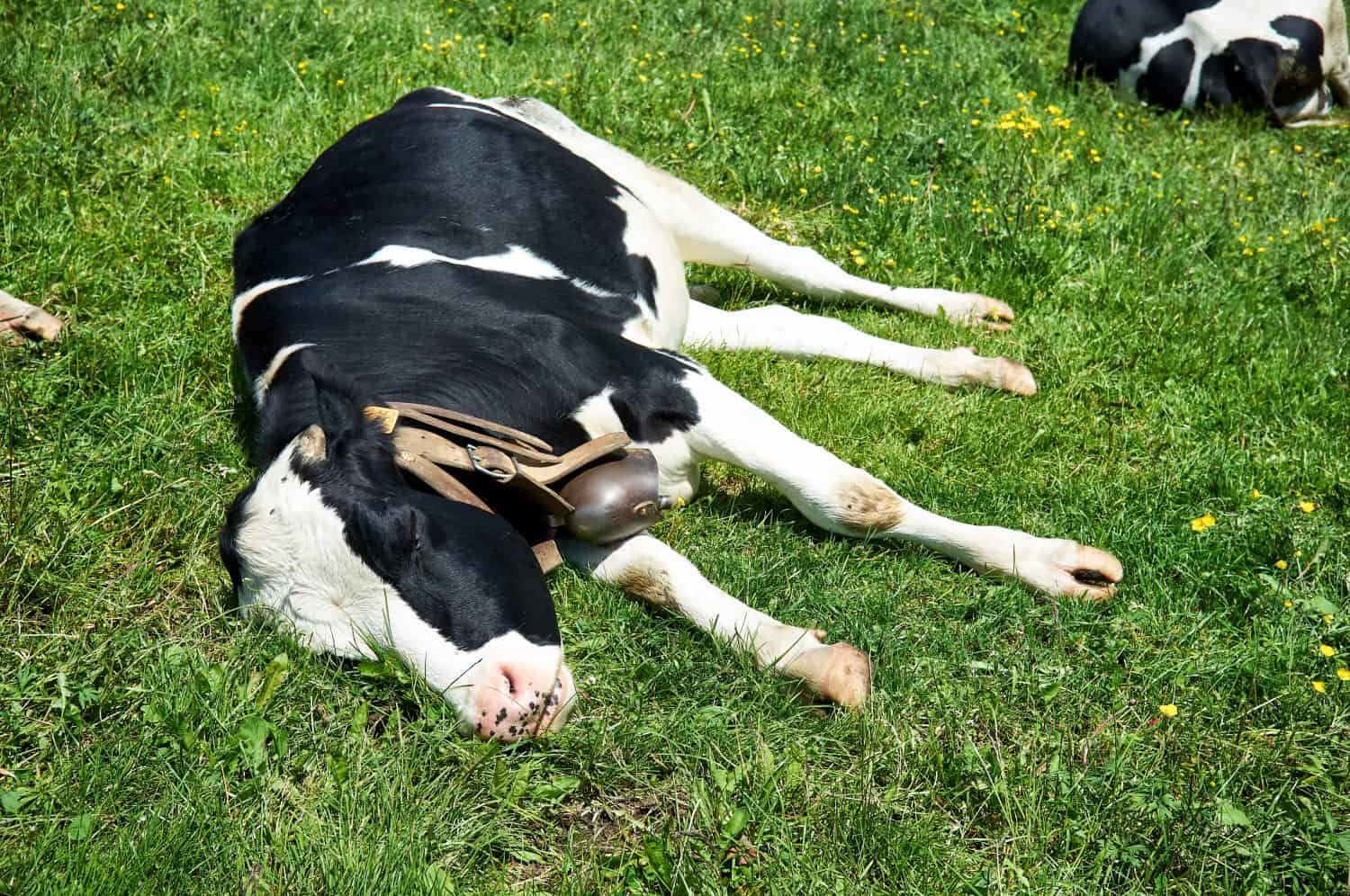
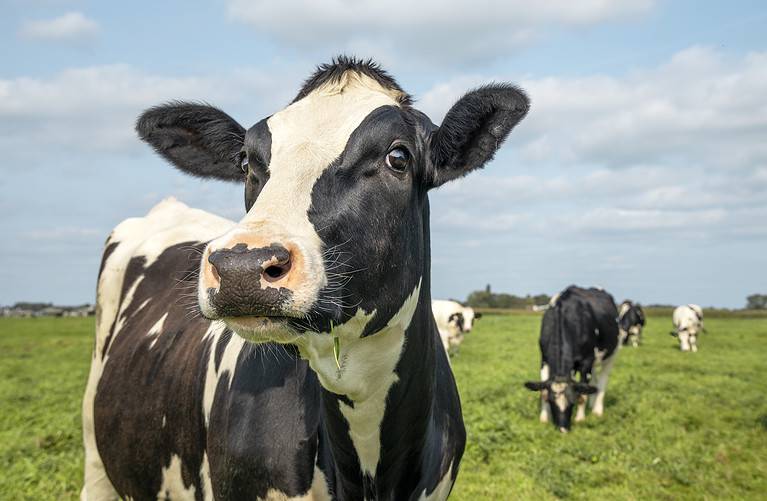
Cows can doze on their feet, but they must lie down for REM sleep, often resting on the ground for several hours each day.
©giocalde/Shutterstock.com
The Physics Don’t Add Up
Let’s say, for the sake of argument, that you managed to sneak up on a calm, standing cow. Could you physically push her over?
Short answer: not easily, and probably not at all.
An adult dairy cow weighs well over half a ton. Her center of gravity is low and spread over four widely spaced legs. Unlike a rigid object, she can shift her weight instantly in response to pressure.
Dee puts it this way: “As for the actual physics of tipping a cow, you would need multiple people on one cow. They’re heavy, bulky, not rigid and will resist being pushed.”
In other words, a cow isn’t a refrigerator. She’s a living, responsive animal with muscles actively working to keep her upright. It would take several strong people pushing simultaneously to even have a chance of unbalancing a cow. And that’s assuming the cow didn’t simply step away.
What Would Happen If You Actually Tried to Tip a Cow?
The most realistic outcome is that the cow simply moves. Or kicks. Or runs. But DO NOT try to tip a cow.
Cattle cause dozens of fatalities and many more serious injuries each year in North America, often due to kicks, crushing, or trampling. A frightened shove from a 1,400-pound animal can knock a person down. A defensive kick can break bones. If someone did attempt cow tipping and startled the animal, the risk would be entirely on the human side.
There are also animal welfare concerns. Spooking cattle at night can cause stress, injuries, and even miscarriages in pregnant cows. Trespassing in pastures can expose both people and animals to danger.
In short, if cow tipping were actually attempted, it wouldn’t be funny. It would be reckless.
They’re heavy and sturdy so it would be near impossible to get up to a cow and surprise her enough to tip her. More likely she would take off or kick.
Dee, a cattle farmer in Alberta, Canada
But Hold On—Don’t Farmers Sometimes Have to “Tip” Cows?
There are situations where cows are deliberately brought to the ground, but in practice, it looks nothing like the legend.
Sometimes, for medical treatment or hoof trimming, a cow must be gently laid on her side using ropes and specific techniques.
Dee explains: “Sometimes you need to tip a cow while she is standing for medical reasons, but it involves casting her with ropes and knots in correct places while gently bringing her to the ground. All this takes time and an alert cow.”
This process, known as casting, is done carefully and methodically. It requires knowledge, training, and proper equipment. It’s controlled and designed to prevent injury.
It’s the opposite of sneaking up in the dark and shoving.
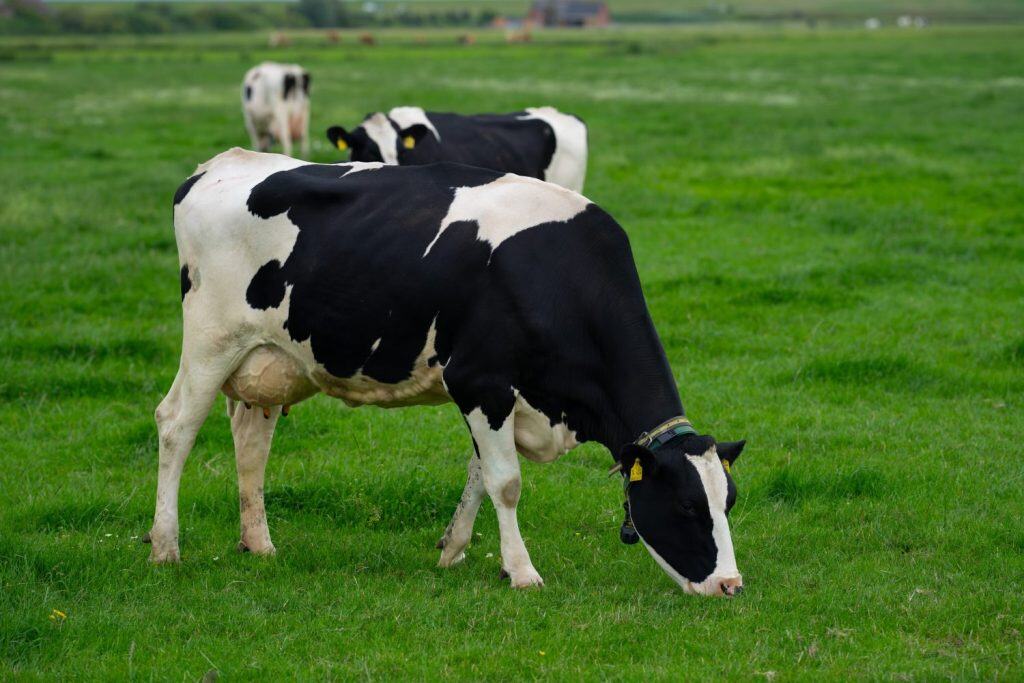
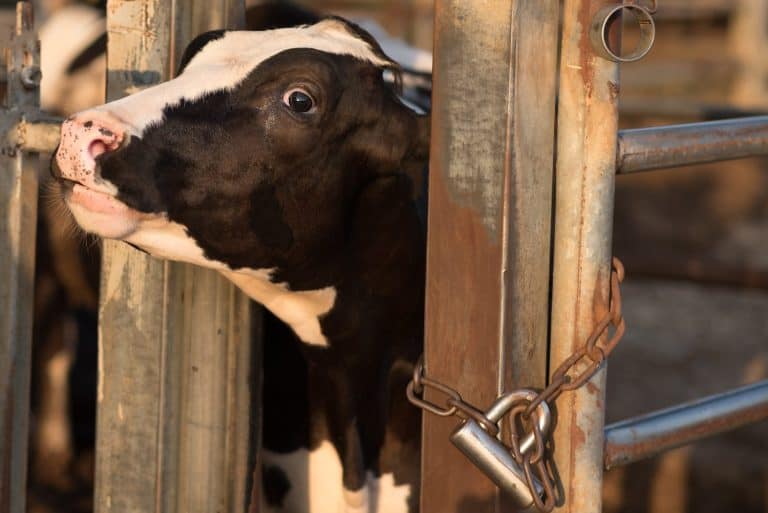
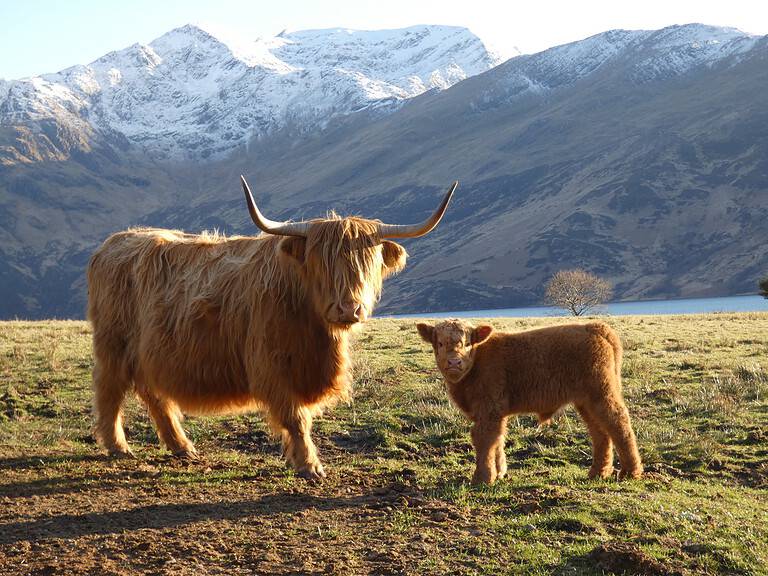
An adult cow can weigh up to 1,800 pounds and can instantly shift her weight, making it nearly impossible to push her off balance.
©K-Shoot Background/Shutterstock.com
Are There Verified Stories of Cow Tipping?
Okay, fine, you might be thinking, that’s all well and good, but my friend So-And-So is the exception to the rule. He actually DID tip a cow.
No he didn’t.
Despite decades of storytelling, there are very few credible, verified accounts of successful cow tipping attempts. Most stories are anecdotal, secondhand, or clearly exaggerated.
There are, however, numerous documented injuries involving cattle when people behave unpredictably around them. Agricultural safety publications frequently describe incidents where people were trampled or crushed while handling or startling cattle. These aren’t framed as cow tipping attempts, but they do demonstrate how dangerous it can be to interfere with large livestock—and a likely outcome were one to actually try tipping a cow.
The lack of verified cow tipping cases is telling. If it were a common prank, there would likely be news reports, police records, or farm insurance claims specifically referencing it. Instead, what we find are myths, jokes, and farmers shaking their heads.
Dee sums it up bluntly: “Cow tipping is a myth and without proper casting techniques the best you could hope for is scaring a cow on uneven/slippery ground and causing her to trip on her own rather than a human pushing her.”
That’s not tipping. That’s causing a potentially serious accident.
Does the Legend Still Persist?
I was hearing about this in the late 80s and early 90s. In the age of the internet, this myth can’t possibly still have any traction, right?
Well, it’s still around, but mostly as a joke.
Cow tipping’s heyday was probably the 1980s through early 2000s, when it was a regular punchline in movies and television. Today, with greater awareness of farm safety and animal welfare, it’s less commonly presented as something people actually do.
Still, the phrase lives on. It’s part of rural folklore, repeated by people who’ve heard about it but never tried it. In many ways, it functions like other tall tales—it’s a way of signaling small-town authenticity or farm-country mischief.
Actual farmers rarely take it seriously.
So why does cow tipping stick around? Part of it is visual humor. The image of a giant animal slowly toppling over is absurd. It sounds just plausible enough to imagine, especially if you don’t know much about cows.
In reality, they’re large, alert, and perfectly capable of defending themselves. And they will.
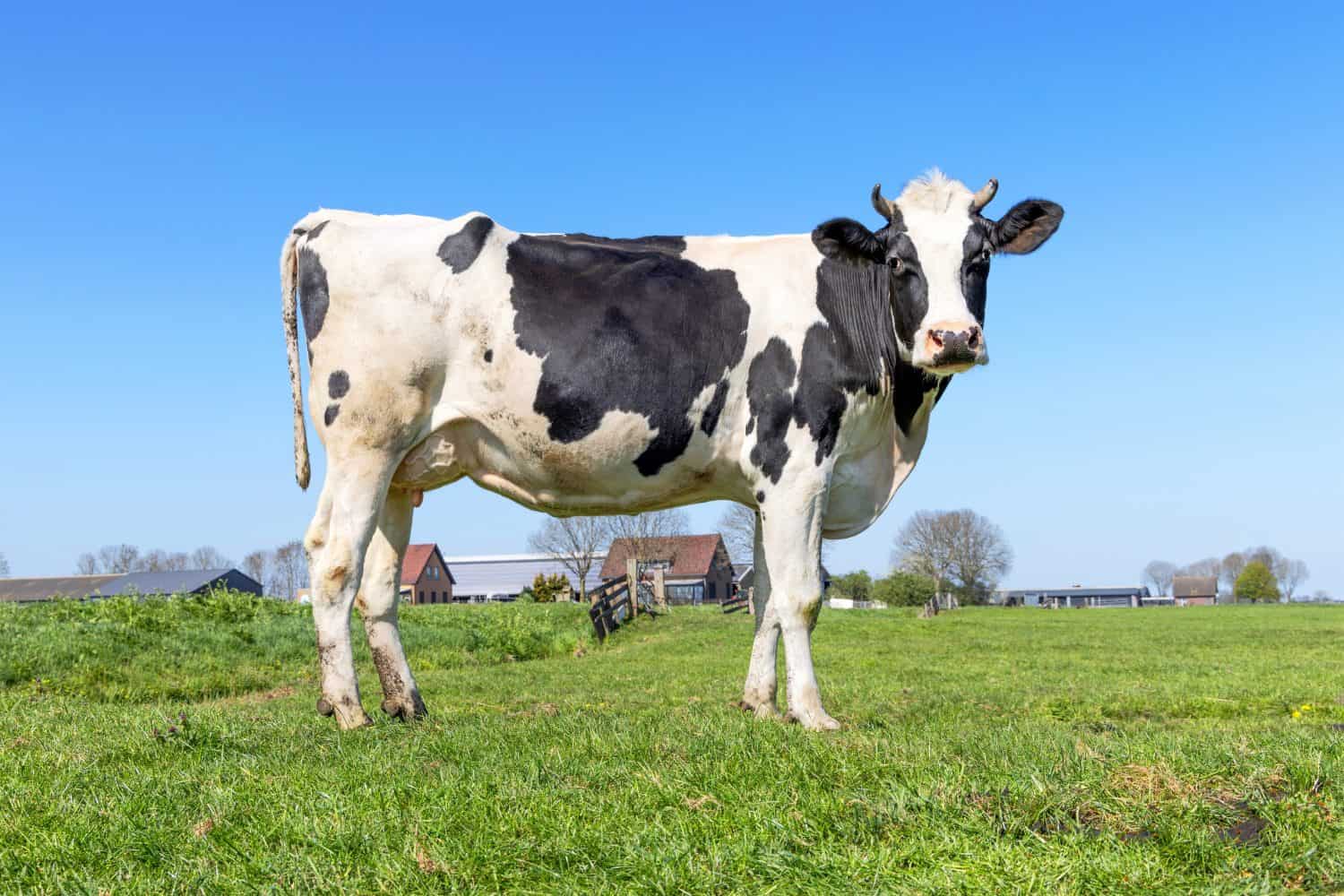
Cows are alert, heavy, and built for stability, and science shows the classic image of tipping one over is far more fiction than farm reality.
©Clara Bastian/Shutterstock.com
Don’t Try It
The myth of cow tipping has been around for decades, fueled by movies, campus lore, and rural stereotypes. But when you look at the biology, physics, and firsthand accounts from farmers, the myth falls apart.
Cows don’t enter deep sleep while standing. They don’t lock their legs. They’re alert prey animals that wake easily and react quickly. And at 1,200 pounds or more, they’re not something you casually shove over.
As Dee the cattle farmer makes clear, even professionals who need to bring a cow to the ground use ropes, technique, and patience. A group of teenagers in the dark isn’t going to outmuscle an alert animal that outweighs them by half a ton.
In my school days, I heard about dozens of guys who went out cow tipping. As science and logic have just shown us, these were all lies. Not only did they not actually tip the cow, but I doubt any of these braggadocious storytellers even attempted it—otherwise at least a handful of them would have shown up to school on Monday with a few broken ribs from a good, hard hoofing.
It seems as though the myth is mostly debunked at this point. But even if you’re still clinging to the legend and just have to try it for yourself: please don’t. The cow will almost certainly stay on her feet. And you almost certainly will not.