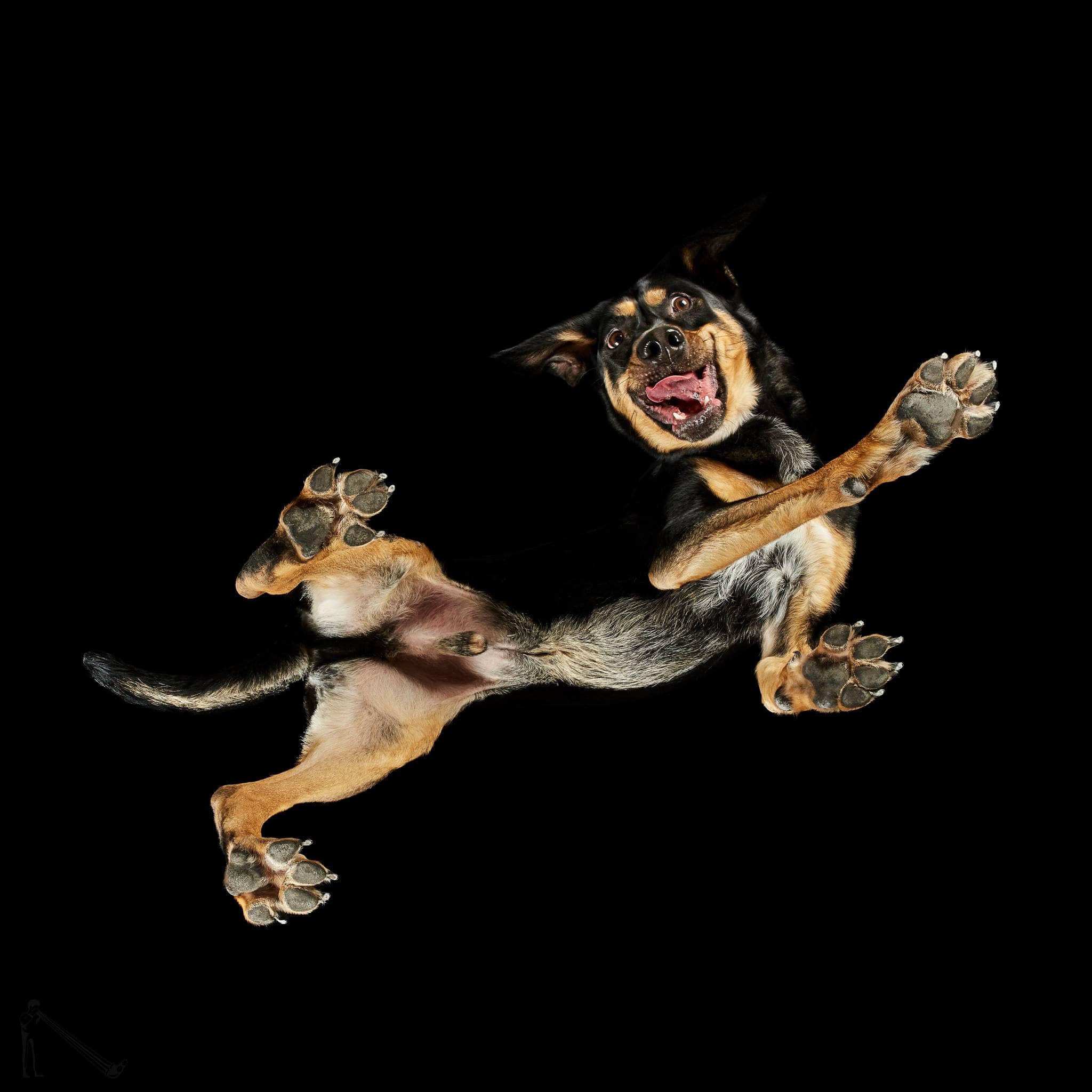

There are photographers who chase light and photographers who chase moments. And then, there’s the rare breed who chase entirely new perspectives. Lithuanian photographer Andrius Burba, creator of the viral Underlook Project, falls squarely into the last category … and likely invented the category along the way. From cats and dogs to horses—and soon, cows, tigers, and elephants—Burba has dedicated his career to showing us what the world would look like if the ground beneath us were made of glass. And it all began with paws. More specifically, cat paws.
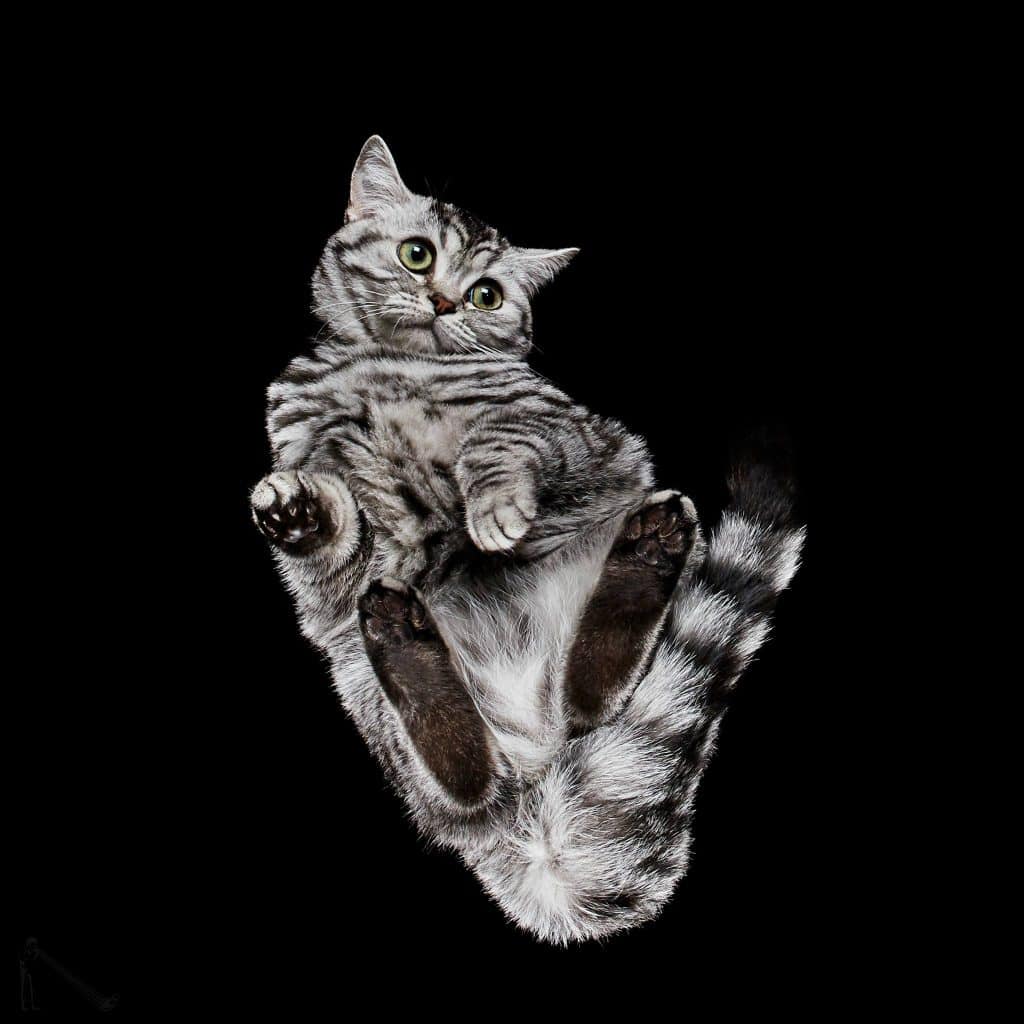
“Everything changed when I discovered the idea of photographing the world from underneath,” says Photographer Andrius Burba about launching the Underlook Project. “That moment completely shifted my path and eventually became the foundation of my full-time work today.”
©Underlook Project – Original
Burba is currently based in Vilnius, Lithuania, and he says his path into photography began the way many teenage passions do: with curiosity. “At first, I was simply fascinated by cameras and the technical side of how images are created,” he explains. What started as a simple fascination grew into a full-blown career in fashion and advertising photography. Still, he felt something was missing — something that would shake him loose from the creative repetition he saw around him. That shift arrived in the form of a cat on a glass coffee table.
The Spark That Changed Everything
Burba remembers the moment vividly. One day, he stumbled upon a set of photos taken from beneath cats lounging on glass tables. One image in particular, of a cat sleeping with its paws tucked neatly underneath, transported him straight back to his childhood. His own cat used to sleep the same way, but he had never actually seen what those mysterious tucked paws looked like from below.
“Seeing that photo from below was the first time I realized how it really looked,” he says, “ and I thought, Wow, I’ve never seen this before. What else could I discover if I photographed more cats from underneath?”
The idea lived quietly in his mind for almost a year. But ideas, as they tend to do, waited for the right moment. That moment arrived when his girlfriend suggested they visit a cat show — one location, hundreds of potential models, problem solved.
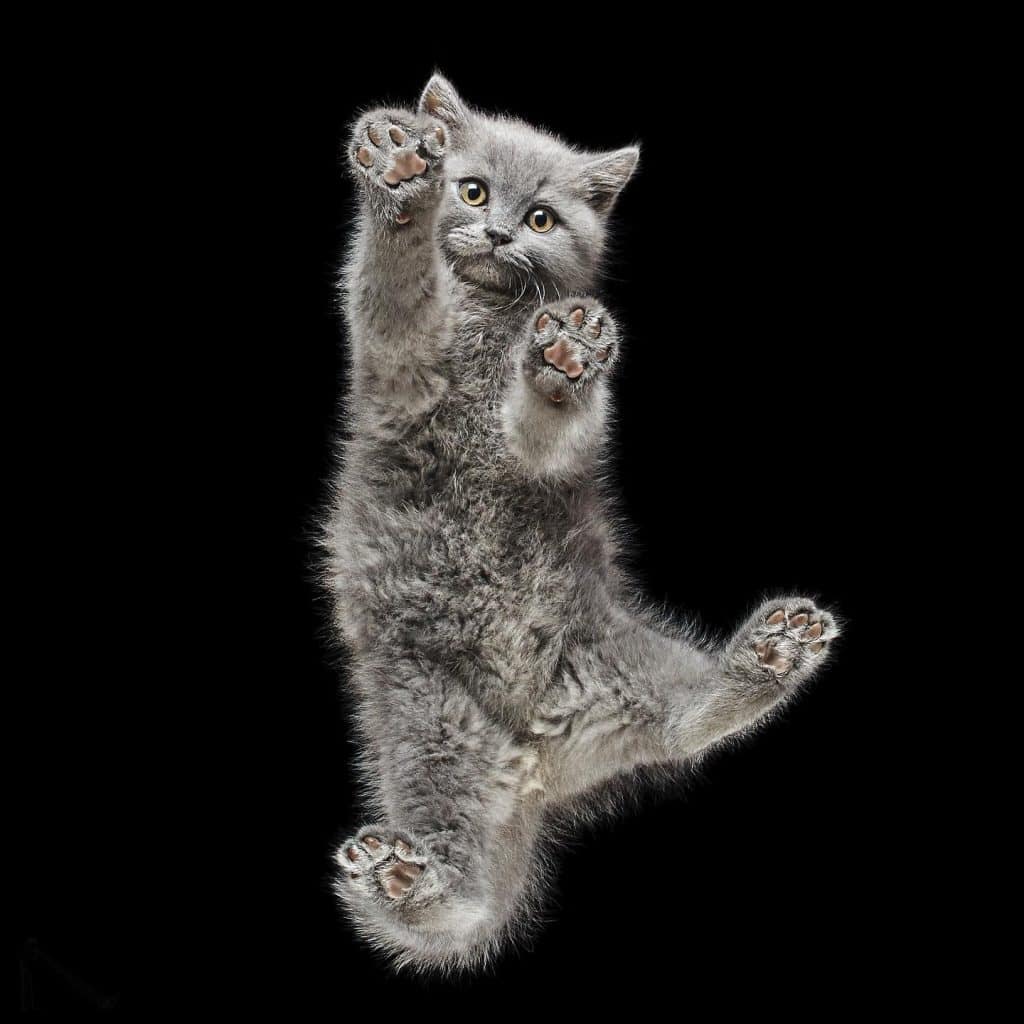
This fluffy little explorer shows off its underside for the Underlook Project’s unforgettable perspective.
©Underlook Project – Original
Two days before the show, Burba built a tiny studio with a glass platform. The next morning, he was shooting.
“That shoot changed my entire life,” he says.
It later became the foundation of what the world now knows as Underlook: a project devoted to photographing animals and objects from below, as if we could step inside the earth and peer upward through a transparent floor.
The First Shoot: Doubts, Surprises, and then Viral Magic
The inaugural Underlook shoot (starring cats with varying degrees of cooperation) gave Burba the confirmation he didn’t know he was looking for.
“The moment the first images appeared on the screen, I saw something I had never seen before,” he recalls. “Their paws looked like fluffy clouds, their expressions were full of personality, and the whole scene felt both funny and intimate. That was the moment I thought, I’m onto something completely different.“
Despite the magic appearing before his eyes, Burba spent three months retouching the images while quietly battling a nagging doubt: What if no one cares? It’s the kind of worry every creative person understands intimately — spending months on something, releasing it into the world, and then … crickets. Except that isn’t what happened at all.
“When I finally released the images, they spread across the world almost instantly,” he says. “The reaction was overwhelming. People were laughing, sharing, translating the captions, tagging friends. That was the moment I understood that this idea had a universal emotional impact, something far beyond what I had imagined.”
Underlook had arrived.
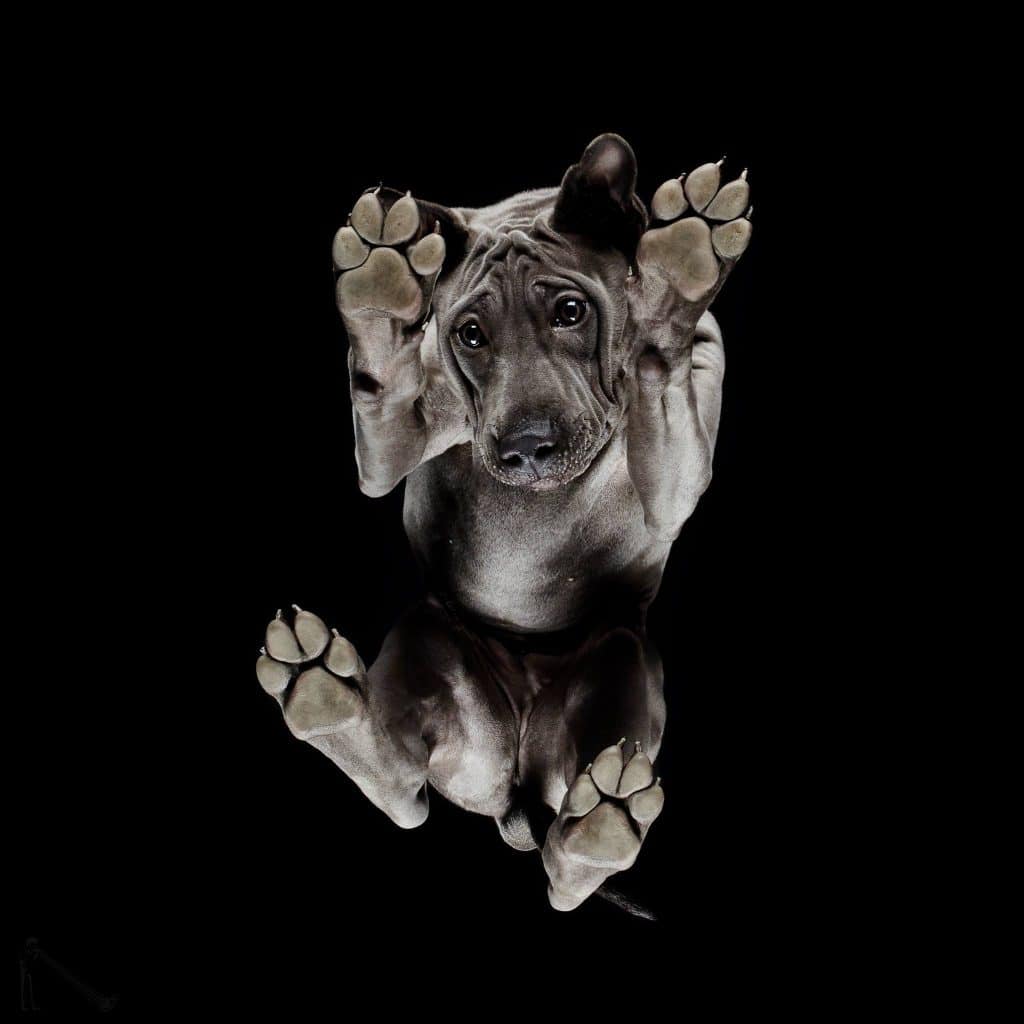
A puppy’s paws and personality, captured from underneath through Andrius Burba’s inventive lens.
©Underlook Project – Original
How to Photograph the World From Below (Hint: It Involves Engineering)
For a series that looks whimsical and effortless, the behind-the-scenes reality is … well, intense. Underlook isn’t just art. It’s a fusion of photography, engineering, architecture, physics, animal handling, and a menagerie of glass-cleaning products.
“The entire process is built around a custom-made glass platform and a camera placed underneath it,” Burba explains, “but in reality, it’s much more complex than it looks. When you change the perspective, all the usual photographic rules change with it.”
Burba says the most important element is the glass, because “the animal is essentially standing on the ‘last lens’ of my camera.” The glass must be strong, spotless, and perfectly stable. Lighting, which normally comes from above or the side, suddenly becomes a challenge of reflections — flashes and softboxes bounce unwanted shapes off the glass like little lighting gremlins. Each project requires adjustments, experiments, and sometimes entire construction crews.
“For large animals, like horses, everything becomes an engineering project,” he says.
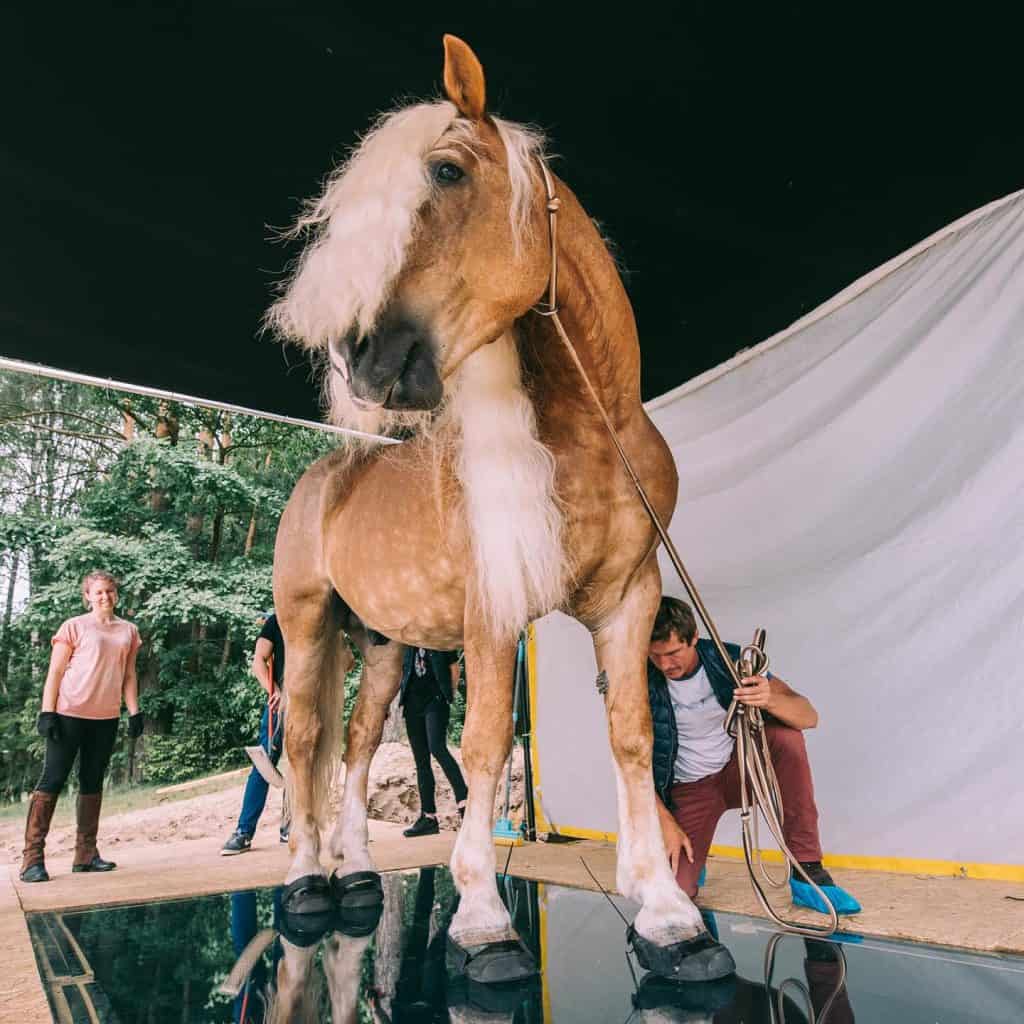
A close-up look at the preparation behind the Underlook Project’s horse series, where engineering meets art.
©Underlook Project
He means this literally. For the Under-Horse series, Burba needed a glass surface weighing 400 kg that could support a 900-kg horse. To get the right angle without distorting the animal with a fisheye lens, he dug a three-meter pit into the ground and positioned his camera below the platform.
It’s a level of commitment that would make even the most seasoned photographer say, “You dug how deep?”
Over the years, he has rebuilt his setups multiple times: different types of glass, reinforced structures, new ways to reduce reflections, and custom designs for species of all shapes and sizes. If there were an Olympic event for photographic problem-solving, Burba would win the gold.
When you change the perspective, all the usual photographic rules change with it.
Andrius Burba, photographer and creator of the Underlook Project
Keeping Animals Happy (and on the Glass)
Burba chooses his subjects based on curiosity. “I’m always drawn to subjects I’ve never seen from underneath before,” he says. This approach has taken him from household pets to exotic creatures, and each species requires its own dance of patience and preparation.
Cats generally approach the platform with skepticism and caution. “They want to understand where they are, whether it’s safe, and what exactly is happening,” Burba says.
Meanwhile, dogs often take one look at the setup and think, Are treats involved? “If I offer food, many dogs immediately try to catch it,” he says. “They make all sorts of funny poses as they jump or stretch toward the treat.”
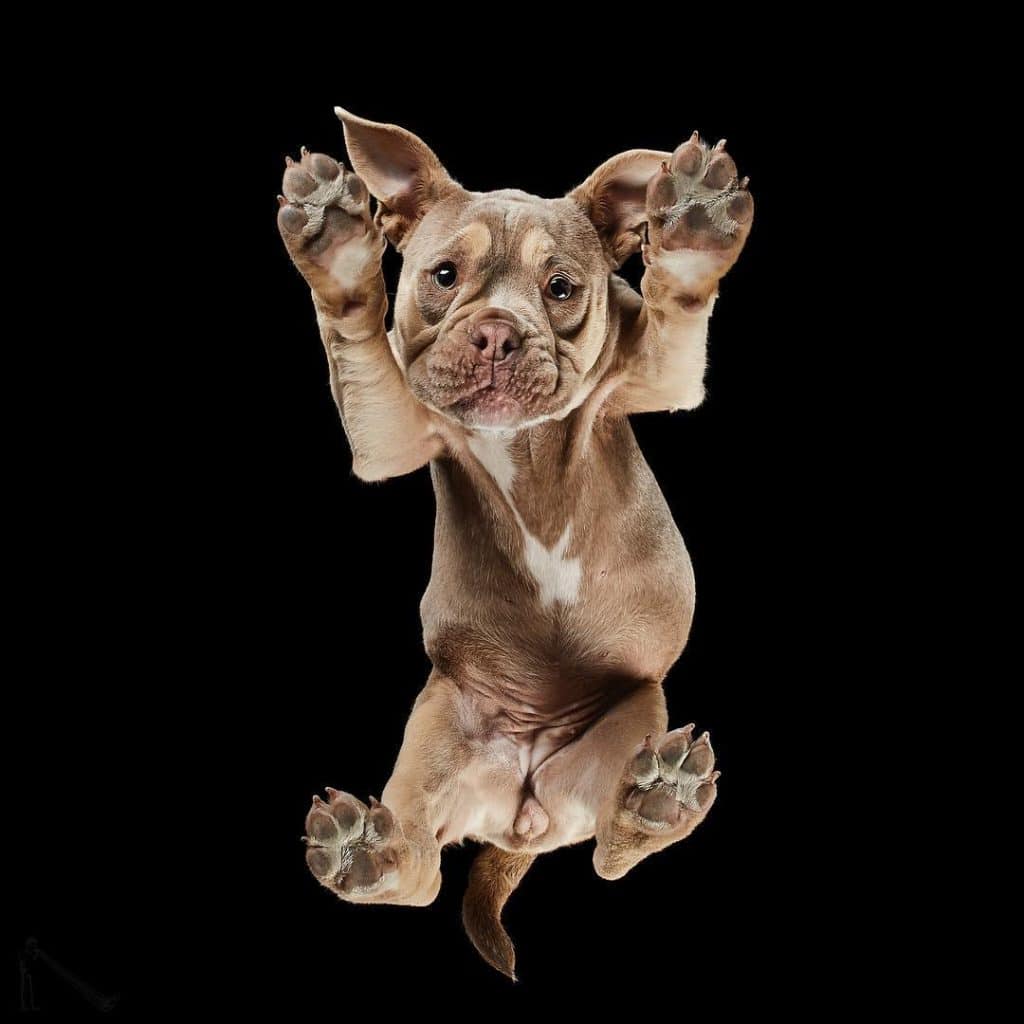
Dogs often forget to be cautious. This one hopped onto the glass, ready for treats and attention!
©Underlook Project – Original
Some dogs walk onto the glass as if it’s the most normal thing in the world. Others freeze slightly, unsure of what’s expected of them. Burba watches every detail closely. If any animal shows true discomfort, he stops the shoot immediately. And then there are the big animals, such as horses, who are experiencing a shiny, slippery surface for the first time.
“Some walked onto the glass with total confidence, as if it was nothing new,” he says. “Others were more careful: they looked around, sniffed, tried to understand the setup.”
One chameleon even wrapped its tail tightly around its body during the shoot, its natural instinct kicking in when it realized there was nothing to grip. Each moment reveals something unexpected, and those surprises are what keep Burba returning to the glass.
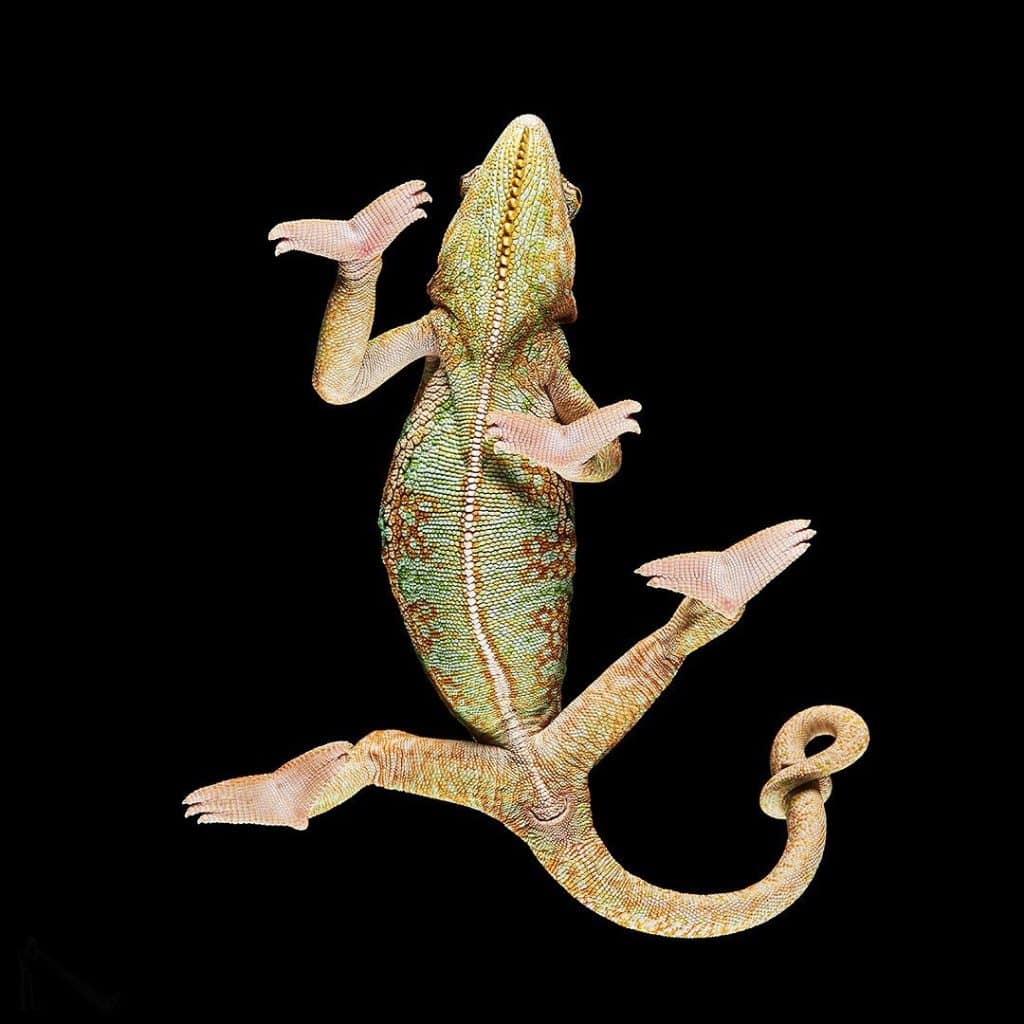
With nothing to climb, this chameleon improvised — wrapping its tail tight while perched on the glass.
©Underlook Project – Original
Seeing Animals in a Whole New Way
Burba believes the power of Underlook comes from its ability to reveal something we’ve never seen before, even though we live alongside these animals daily. From underneath, we discover the architecture of a rabbit’s feet, the delicate balance of a dog’s stance, the hidden softness of a cat’s paws.
“Animals appear more vulnerable, more honest, and sometimes even more humorous,” he says. “Their poses are natural and unfiltered. They don’t pretend or pose like people do. You see their real character, whether it’s cautious, playful, confused, or confident.”
That quality, along with the sheer novelty, helps explain Underlook’s global appeal. These are images that make people smile, gasp, tilt their heads, and sometimes question whether what they’re seeing is even real.
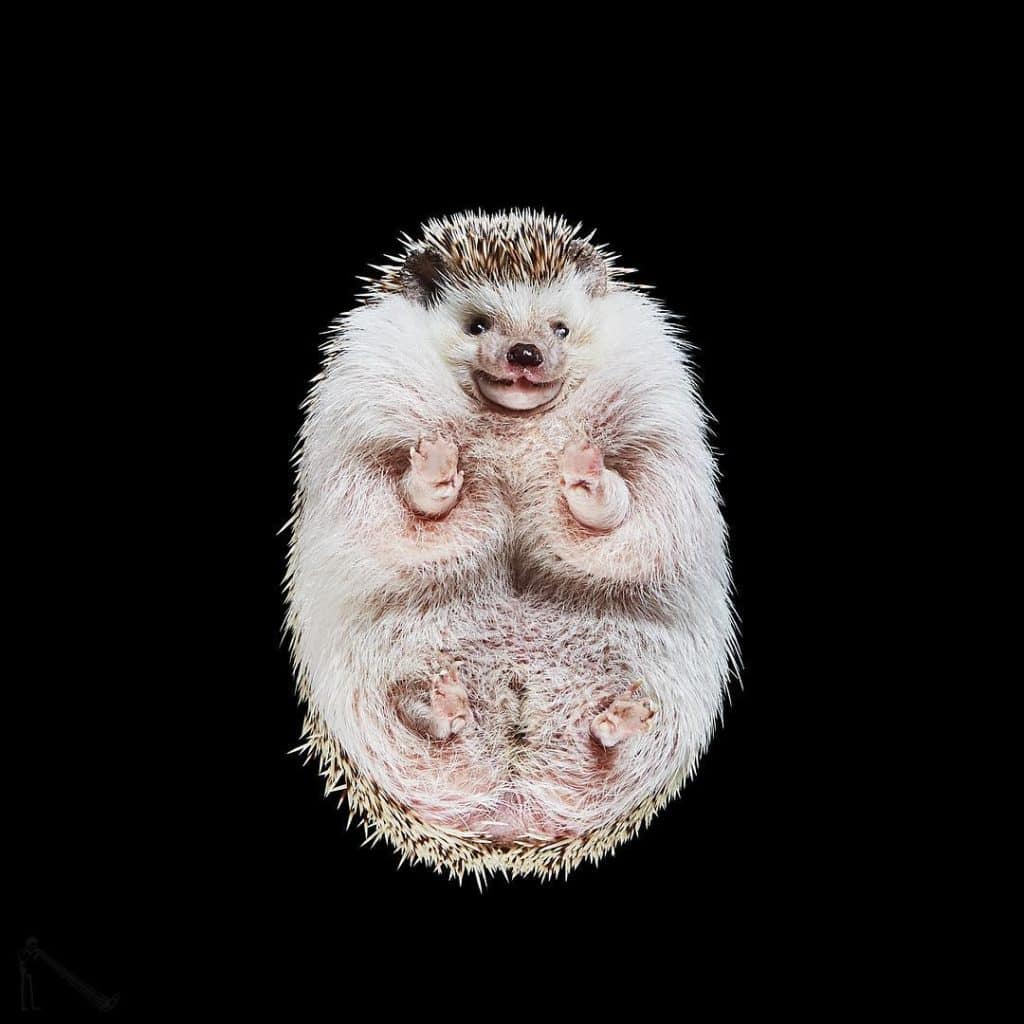
A prickly little explorer pauses on the glass, giving the Underlook Project a rare underside view.
©Underlook Project – Original
For one woman, the emotional impact ran so deep that she cried when she saw the underside portrait of her own pet. For Burba, those reactions prove that Underlook is much more than an amusing perspective; it’s a way for people to reconnect with the animals they love.
The Future of Underlook: Cows, Tigers, Elephants, and Beyond
The next five years of Underlook have already been mapped out like an ambitious scientific expedition. Burba envisions permanent Underlook studios — experimental labs designed specifically for glass-based photography. He’s even acquired land near Vilnius where he plans to build them.
He has also set a five-year plan:
Year 1: Under-Cows
Year 3: Under-Tigers
Year 5: Under-Elephants
These projects require engineering, collaboration, and a bit of fearlessness. But that’s what fuels Burba. It’s the discovery and thrill of showing people something they’ve never seen before.
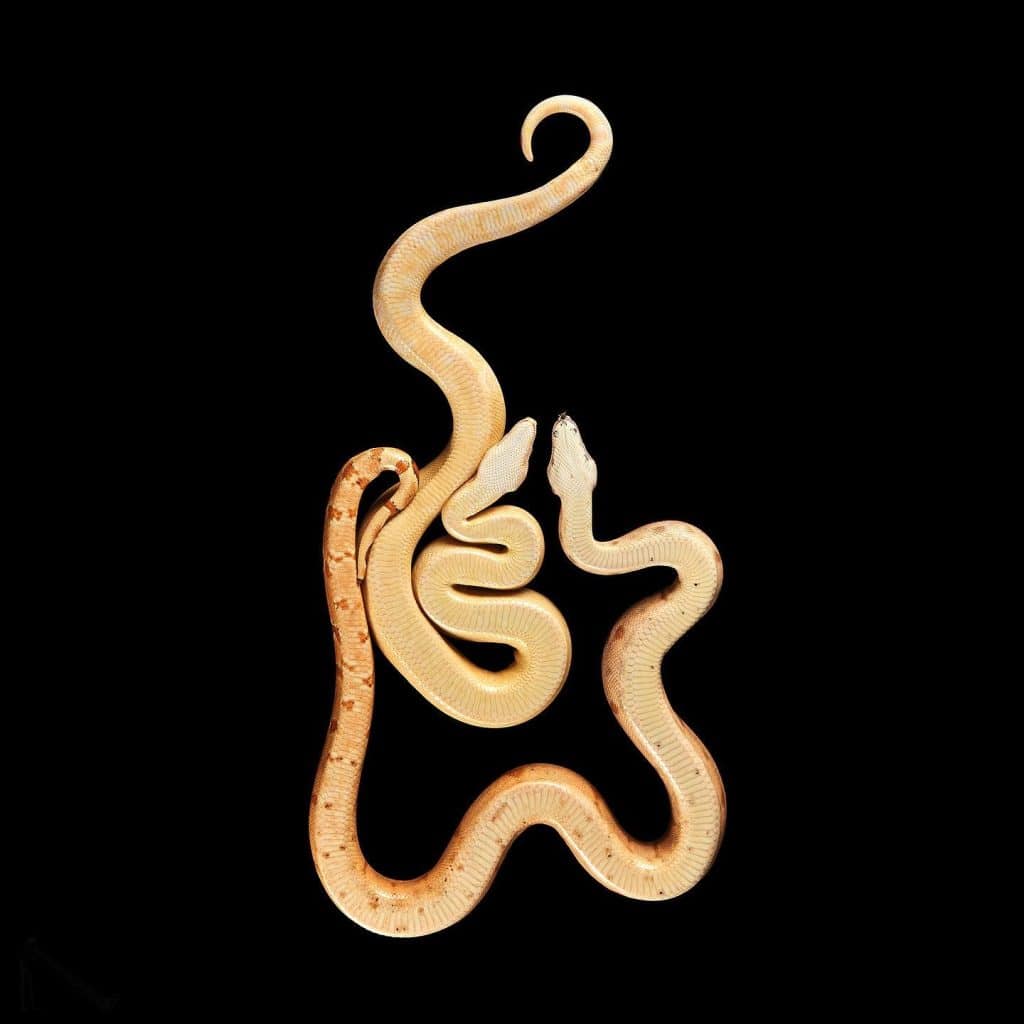
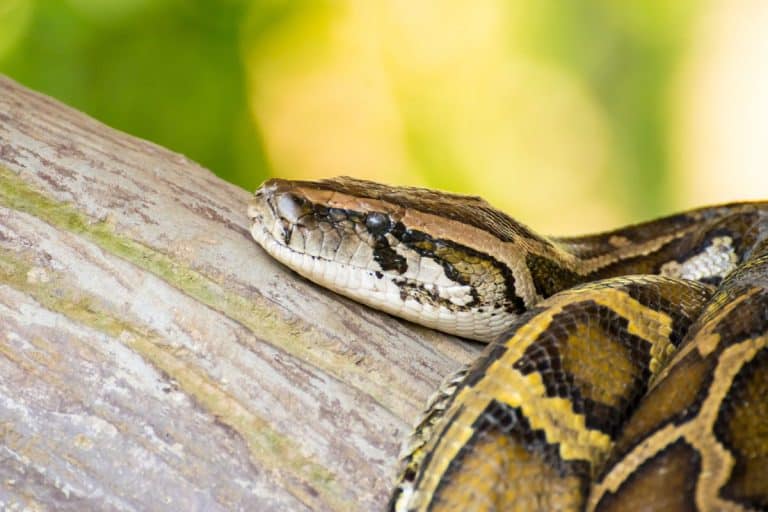
These two snakes twist across the glass, revealing patterns and shapes rarely visible from above.
©Underlook Project – Original
He’s also experimenting with multi-layered glass platforms. Imagine a cat on one level and a mouse on another, or even photographing natural phenomena like campfires from below. Underlook isn’t slowing down. It’s growing, expanding, evolving.
The Photography Session That Stole His Heart (and His Nerves)
Of all the shoots Burba has done, one still stands above the rest: the Under-Horse project, and specifically, a brown horse named Epas — nicknamed “Rabbit.”
The image earned international recognition, ranking among the top 80 out of 171,000 entries in the Sony Photography Awards. But beyond the accolades, Epas’s story is what stayed with Burba. The horse was a rescue with an extraordinarily long mane (the longest recorded in Lithuania!) and a gentle spirit.
Capturing him from below required engineering courage and trust. “Even though the 30 mm glass was engineered to hold around 1,500 kg, I still climbed out of the three-meter pit the first time he stepped onto the glass,” Burba admits.
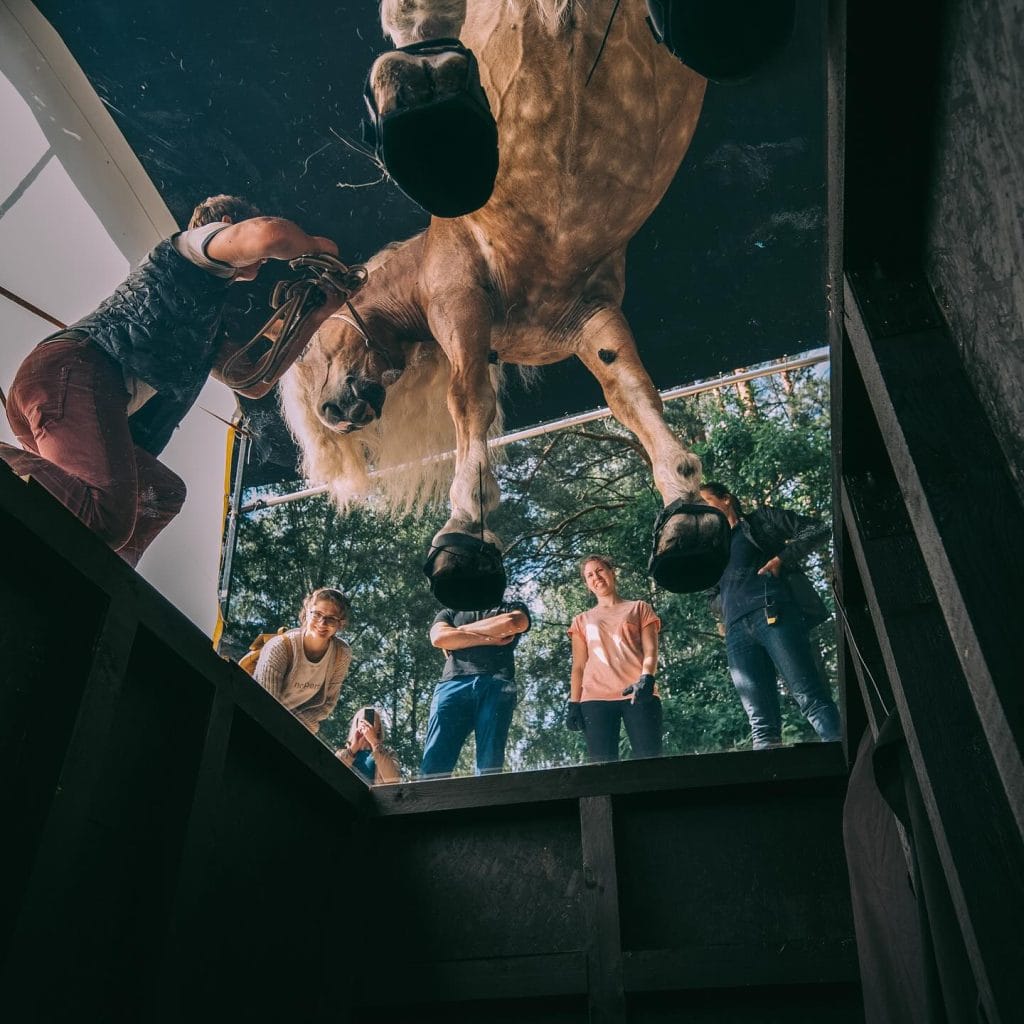
Andrius Burba positions himself under the reinforced glass — the only way to capture his iconic Under-Horse images.
©Underlook Project – Original
It wasn’t just a photo. It was a symbol of strength, survival, and second chances. And that’s what Underlook is, at its core: a project that reveals the unseen, celebrates the unexpected, and invites us to rediscover the world from a new perspective.