
Quick Take
- One woman's tick problem was so bad her dogs couldn't go outside. That changed when she tried something most backyard farmers completely overlook. Meet Doloris's tick solution →
- There's a common food found in many yards that can be deadly to guinea fowl, and most new owners have no idea it's there. See the toxic foods to avoid →
- Raising guinea fowl from scratch sounds logical, but experts say it's actually the harder path. Most people are surprised to learn that the easier route is something else entirely. Find the easier starting path →
- Guinea fowl eggs look inferior on the shelf, but the nutritional comparison to chicken eggs tells a very different story. See the nutritional comparison →
More people are looking for ways to control pests naturally. Chickens are a go-to for many, but often the guinea fowl is forgotten. While noisy, they are effective at reducing insect populations. This is why guinea fowl make a strong case for pest control.
Guinea Fowl Are Wonderful Pest Controllers
For those dealing with a pest problem, it may seem like using chemicals and poison is the only solution. However, a viral YouTube video shows that a more natural solution is possible.
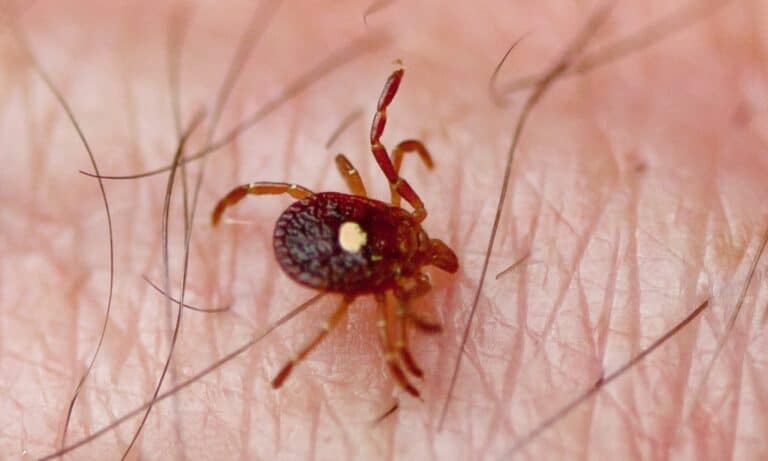
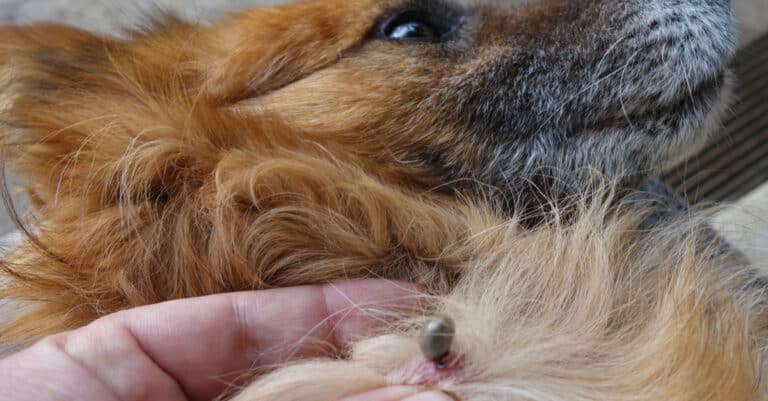
Doloris Richardson had a horrible tick problem at her home. She could not go outdoors without wood ticks hitching a ride on her or her dogs. Richardson heard that guinea fowl were a “solution to the wood tick problem” and decided to adopt some.
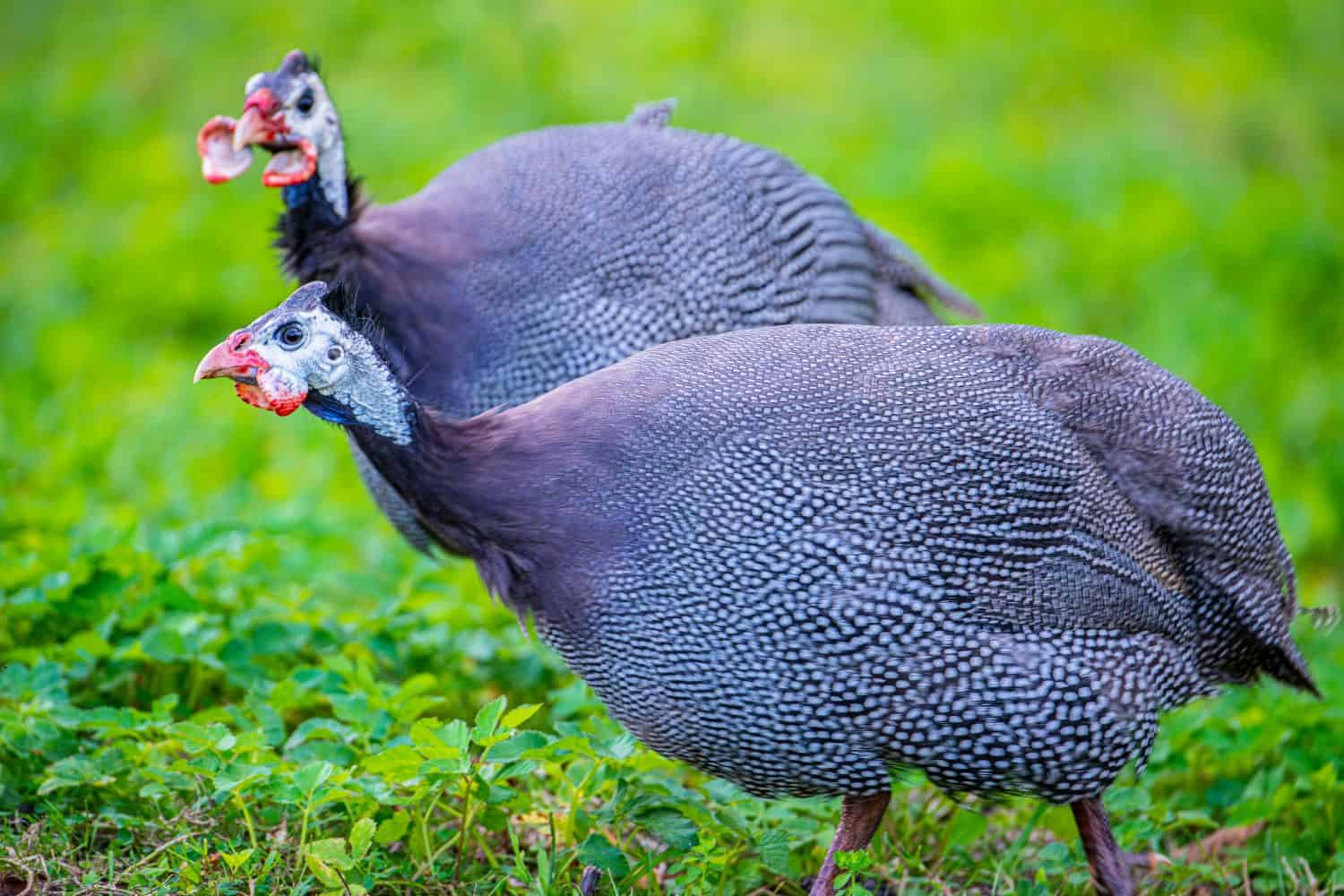
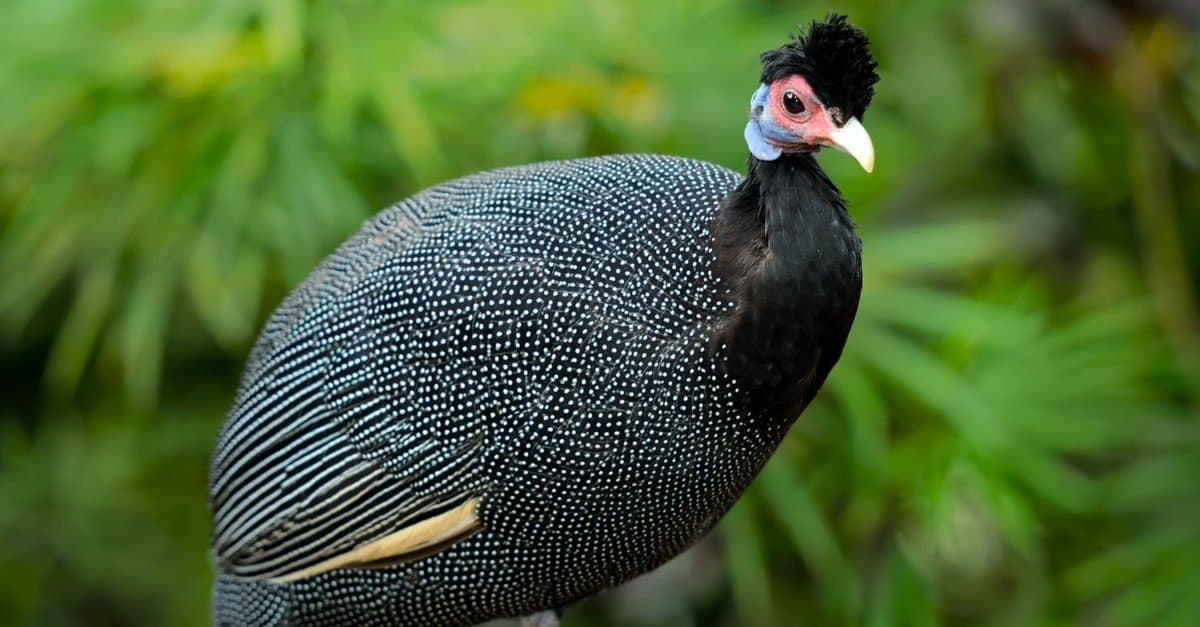
Guinea fowl make excellent pest control.
©Kuttelvaserova Stuchelova/Shutterstock.com
“They get the grasshoppers. They sit on the windowsills and pick off the little baby flies,” Richardson explained to CBC News Saskatchewan. “We haven’t got a fly problem. They eat all kinds of bugs.”
Richardson explained that her westies no longer have to be treated with tick medication because the wood ticks have disappeared. The guinea fowl were truly a game changer for Richardson and her property.
What Is a Typical Diet for Guinea Fowl?
These birds need supplemented diets to be in the best health possible. Fortunately, guinea fowl are omnivores and feeding them is fairly easy.
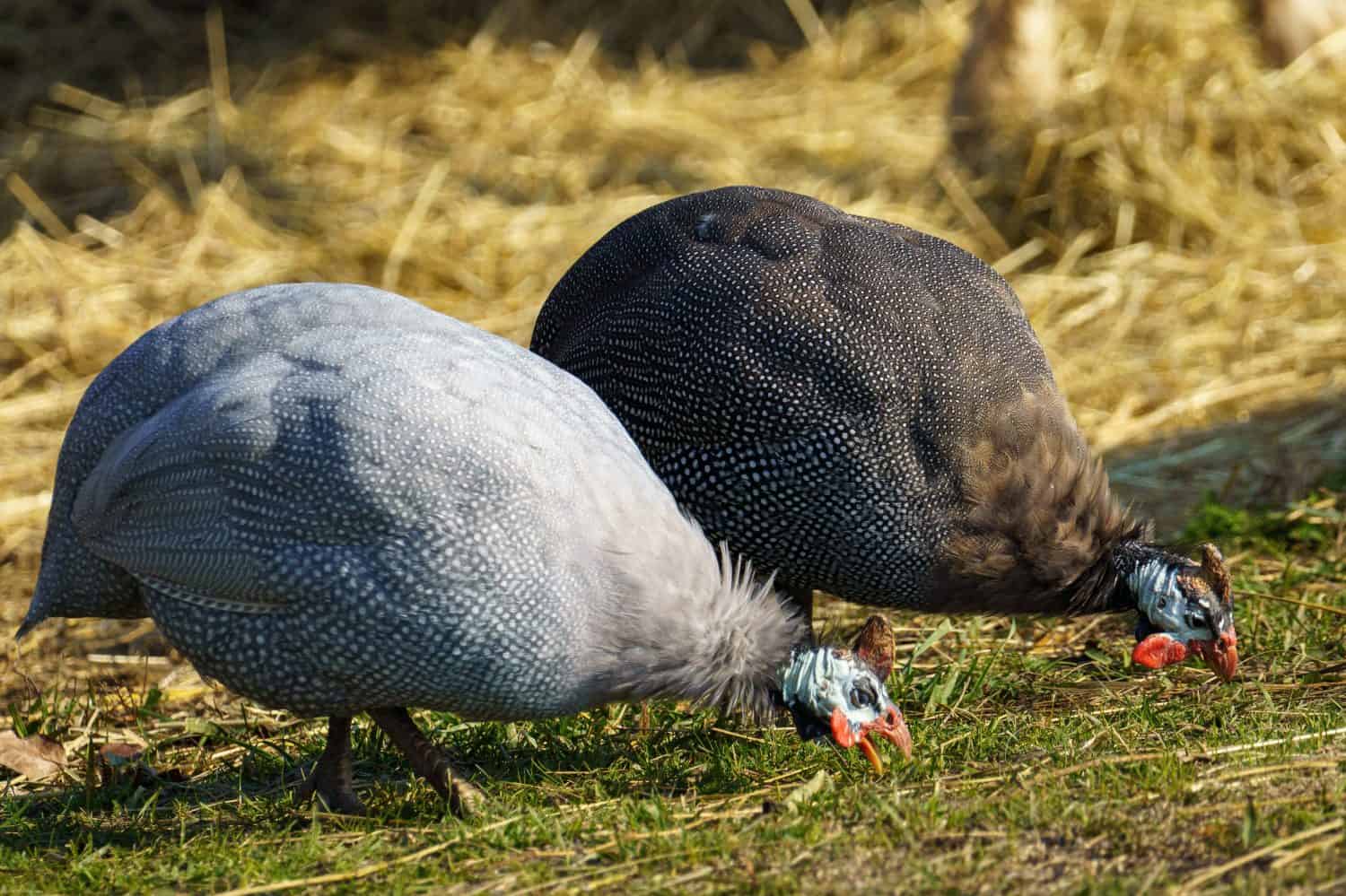
Guinea fowl are omnivores.
©A. Laengauer/Shutterstock.com
Aside from the insects and other critters guinea fowl consume as they forage, their diet can be supplemented by the following:
- Fruits
- Vegetables
- Seeds
- Pelleted turkey feed or game bird feed
Acorns and oak leaves should be avoided as they are toxic to guinea fowl.
Best Time to Secure Guinea Fowl for Property
Instead of trying to hatch baby guinea fowl from eggs, it is recommended that those new to the world of guinea fowl raise keets instead.
Keets are guinea fowl that are less than 12 weeks old. Keets have an easier time learning where they should return to daily as they imprint on their pens at a young age, starting around four weeks old. They require a bit more effort than adults, but there is less training involved.
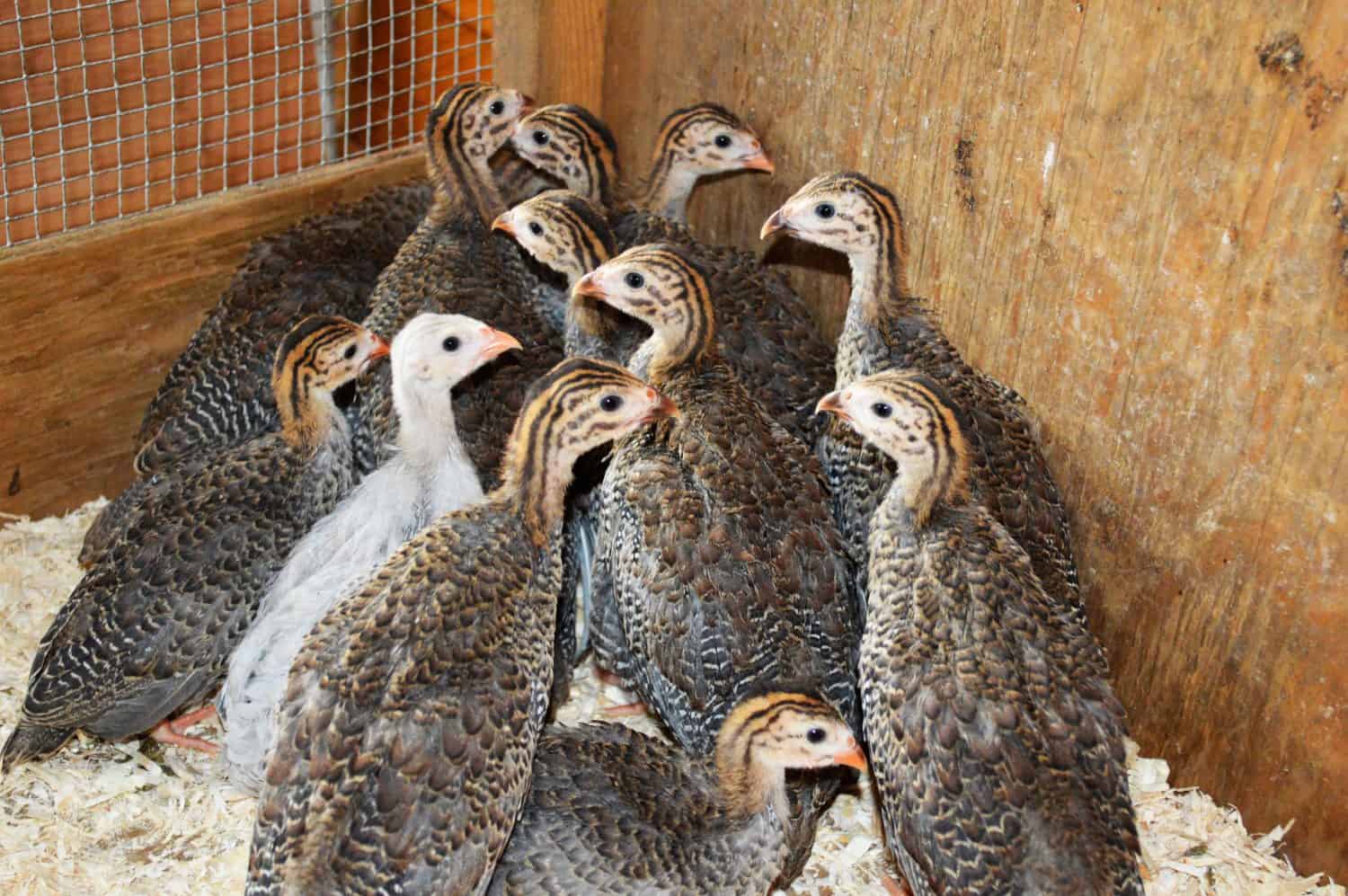
Guinea fowl keets can be easier to train than adults.
©Magdalena Luchter/Shutterstock.com
Adopting adult guinea fowl is an option too. However, guinea fowl have an innate drive to roost in trees. Therefore, newly adopted adult guineas will need to be trained to return to their pens.
To help train adult guinea fowl to return to pens at night, the following is recommended:
- Keep adults in a secure pen for up to eight weeks
- Feed only in the pen
- Keep several adults together, as these birds are highly social
- Release the guinea fowl and return them to their pens at the same time daily
It will take time for newly adopted adult guinea fowl to adjust to their new homes. But once they learn the routine, they will come back to their pens nightly for safety.
Requirements to Successfully Raise Guinea Fowl
Caring for guinea fowl will vary slightly depending on whether your birds are keets or adults, as the former requires a bit more attention than the latter.
Raising keets means having a warm, predator-proof environment for the first eight weeks of their lives. For those under four weeks of age, they will be kept in a brooder that has a starting temperature of approximately 95°F. This will be decreased by 5°F weekly until the keets reach four weeks old. The keets will also need lukewarm water and high-protein feed.
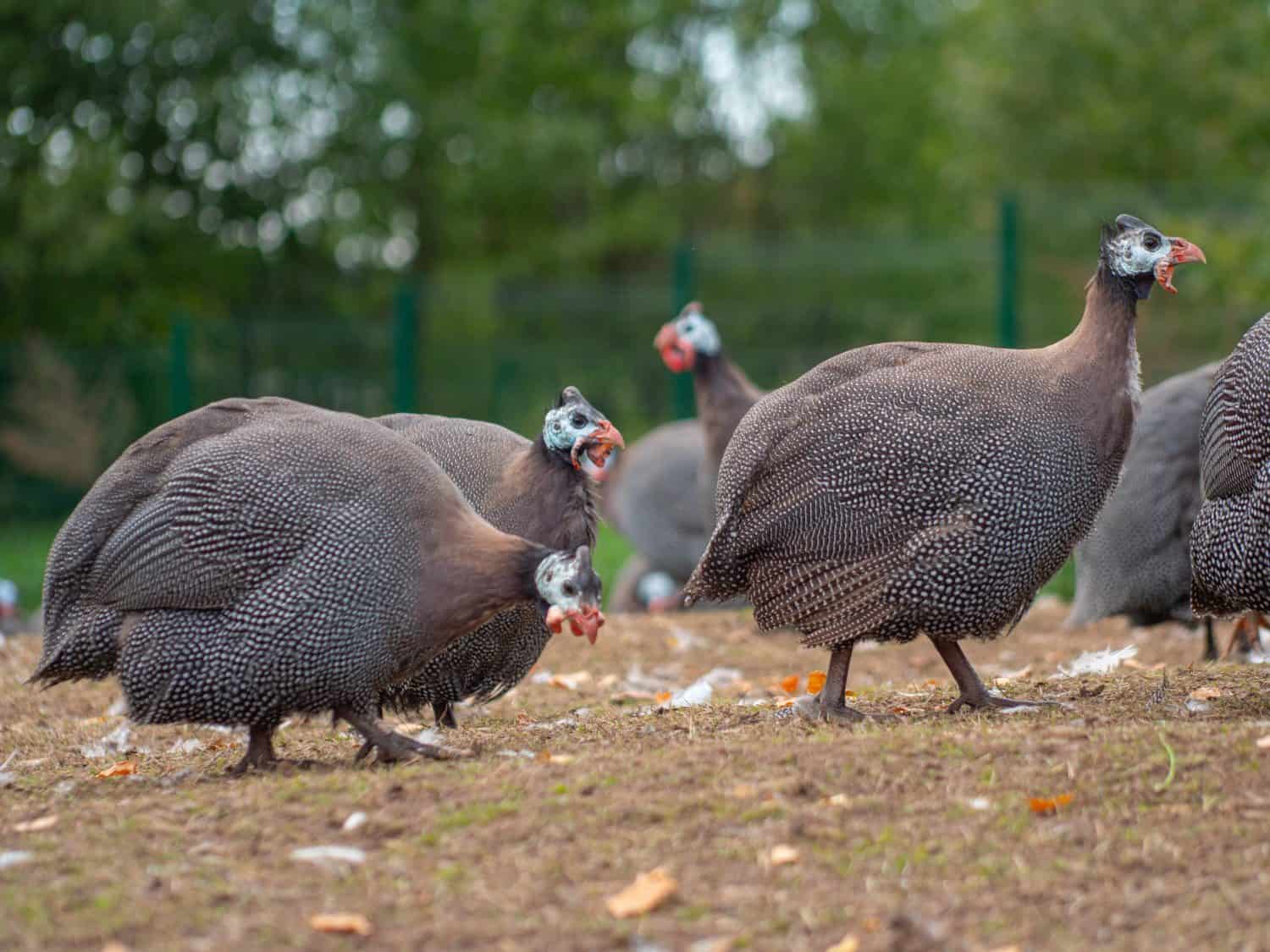
Guinea fowl adults and keets have different requirements when it comes to caring for them.
©Jolanta Mosakovska/Shutterstock.com
By the time they reach eight weeks old, keets are ready to head outdoors. At this age, they have grown their feathers and can fly to get away from danger.
Adults are a bit easier to care for. Adult guinea fowl require a pen with perches that allows each bird three to four square feet of space. The pen should be moisture-free and able to keep the guinea fowl warm in winter and cool in summer. Fresh water should be changed daily, and protein-rich food should be provided.
Even if they are free-range, guinea fowl need a secure location to return to at night because they are vulnerable to predators.
Can You Eat Guinea Fowl Eggs?
Like chickens, guinea fowl lay eggs. These eggs are not only edible but also have more nutrition than those laid by chickens.
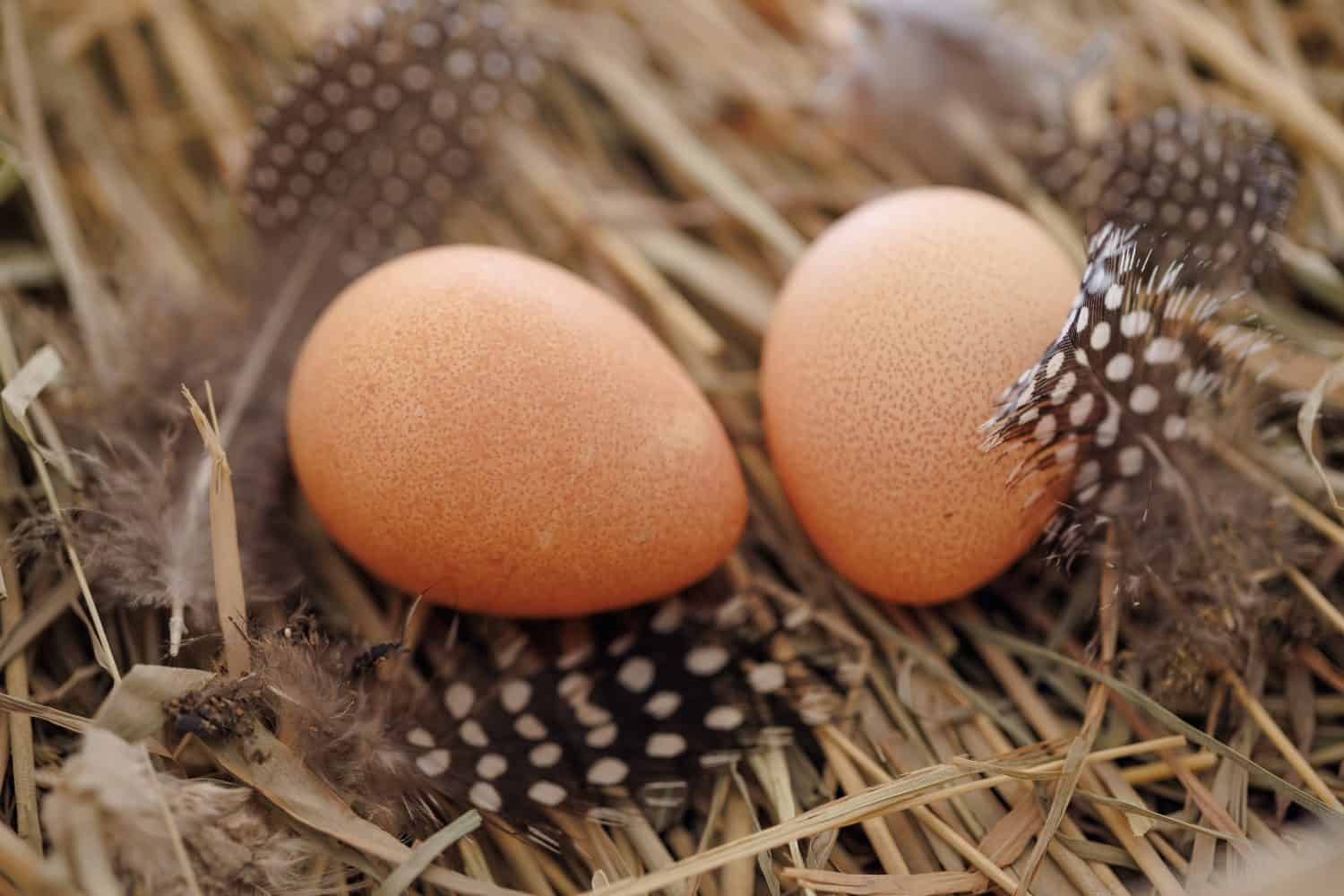
Guinea fowl eggs are more nutritious than chicken eggs.
©sergey kolesnikov/Shutterstock.com
Guinea fowl eggs have higher amounts of protein and fat than chicken eggs. However, the eggs are significantly smaller, with two guinea fowl eggs equating to one chicken egg.
Guinea fowl tend to lay fewer eggs than chickens. With that said, guinea fowl eggs have a richer taste, so fewer may be required when looking to satiate a craving for eggs.