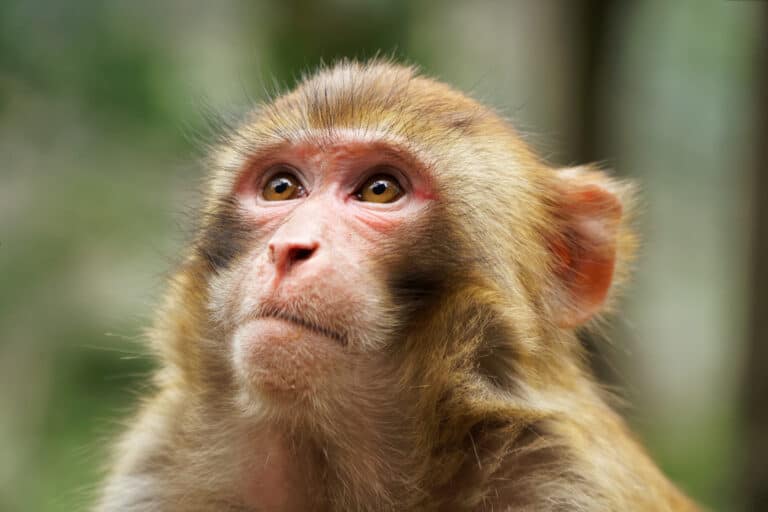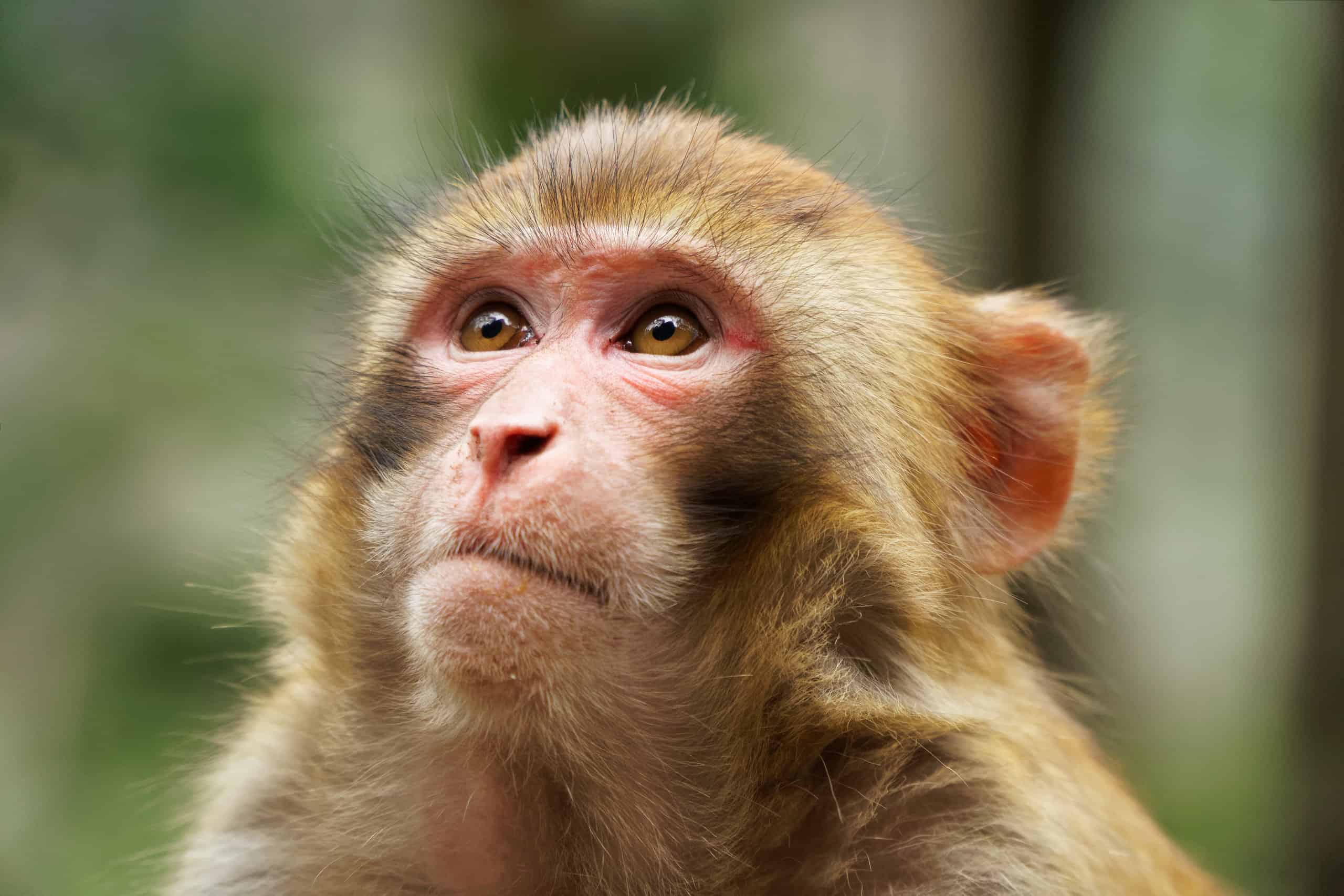

Monkeys falling from the sky is one of the last things you’d expect to see while kayaking in Florida. Barring a flying-monkey-type scenario, monkeys don’t typically go airborne. But apparently, that’s precisely what happened at Silver Springs State Park one sunny day in October—the only difference is that these monkeys didn’t have wings, just velocity.
Trenda Kitchen, a Florida native, was canoeing at Silver Springs when suddenly monkeys began plopping into the water around her. As their tiny bodies sent wakes toward her canoe, she delighted in the sight. She began recording, and the footage, posted by ABC7, shows dozens of rhesus macaques propelling themselves from the trees above. As they hit the water and swam to shore, viewers have only one question: What made these monkeys jump? The answer, as it turns out, isn’t as simple as wanting to take a refreshing dip.
How Invasive Monkeys Invaded Florida
If it sounds strange that monkeys live in Florida, that’s because it is. Rhesus macaques were introduced to Florida’s shores in the 1930s by a man named Colonel Tooey. He released a small troop of them in the same place where they can be seen catapulting from the trees today: Silver Springs State Park. Colonel Tooey intended for them to become a tourist attraction, but the outcome was far from ideal. The monkeys quickly became a problem.
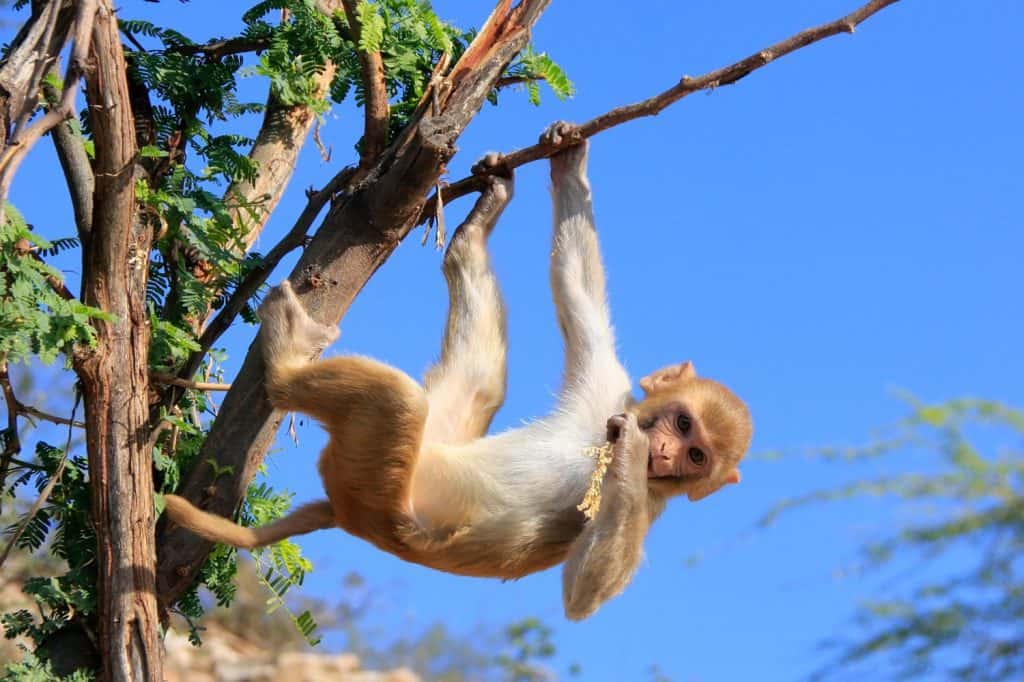
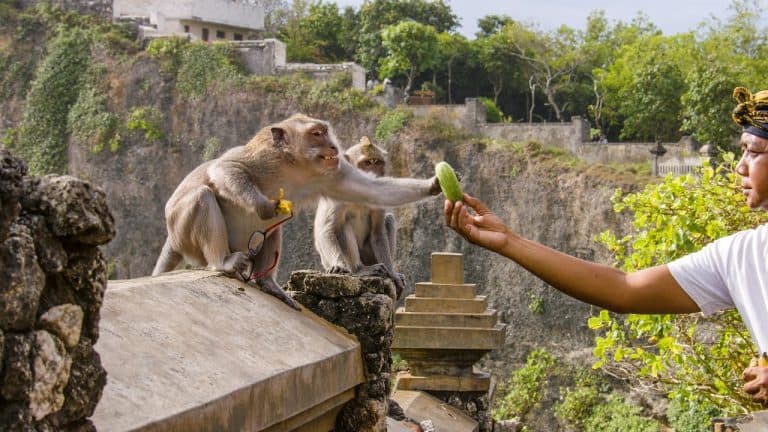
Rhesus macaques are skilled climbers, spending much of their time in trees.
©Don Mammoser/Shutterstock.com
One thing the colonel did not expect was for rhesus macaques to migrate and procreate so quickly. They’re adept swimmers and had little trouble swimming to other parts of the state. As they did, they mated, creating more baby rhesus macaques until the population spiraled from a tourist attraction into a significant ecological concern. One of the biggest issues is that rhesus macaques are not picky about what they eat; they consume a wide variety of vegetation and have also developed a taste for local crabs. Florida rapidly became an all-you-can-eat buffet for the new arrivals as their numbers grew.
An Effort to Corral the Rhesus Monkeys
As Florida’s native flora began to disappear, experts realized they had a choice: allow the rhesus macaques to destroy the plant life or try to get rid of them. One of the biggest expulsions happened during the early 2000s. Rather than kill the monkeys, officials captured them and sent them to biomedical research facilities. This decision disappointed animal rights activists, who were immediately concerned about the monkeys’ well-being. However, even after their transfer to medical testing centers, the population continued to grow. As seen in the video shared by Kitchen, estimates suggest that about 200 rhesus macaques currently inhabit Silver Springs State Park.
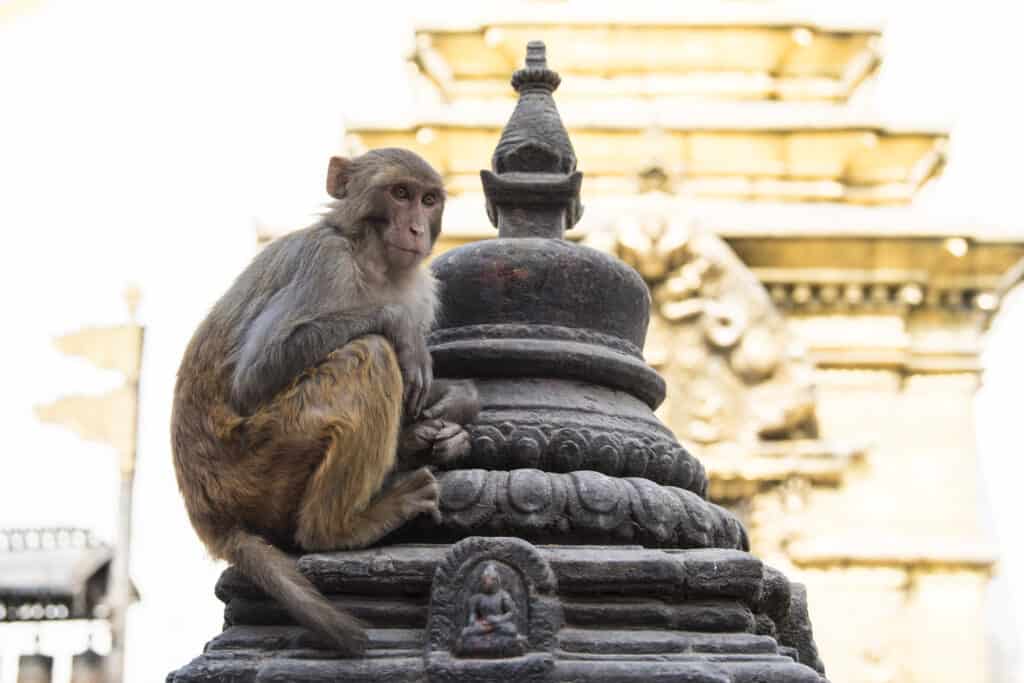
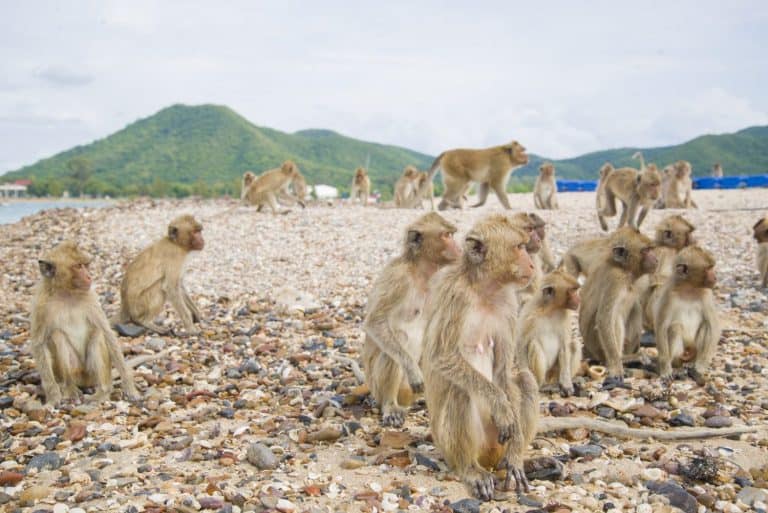
Rhesus macaque monkeys are native to various regions throughout Asia.
©iStock.com/3yephotography
In addition to their ecological impact, rhesus monkeys also pose a biological threat. Rhesus macaques can potentially carry the herpes B virus, and while there are currently no documented cases of monkey-to-human transmission, it’s still a concern. Monkeys that feel threatened can also attack, bite, or scratch humans, posing a threat to visitors at places such as Silver Springs State Park. There have been no documented cases of this, but visitors should still exercise caution around wild animals like these. Fortunately, the rhesus macaques in Kitchen’s video didn’t seem too interested in their human observers. But that leaves many asking: What were they running from?
Why So Many Rhesus Monkeys Took the Plunge
There are several possible reasons why so many rhesus macaques dove into Silver Springs at once. It’s important to note that they learn to swim by the time they’re two days old. They’re well-suited for water travel, making this video seem a bit less out of the ordinary. Even so, it doesn’t explain the urgency of the swim, especially when so many of them hit the water with such violent plops. One theory is that they may have been running from something. Making their way into and across the water is a valuable tactic for escaping predators. Unfortunately, we don’t know what was behind them, so this theory has yet to be confirmed.
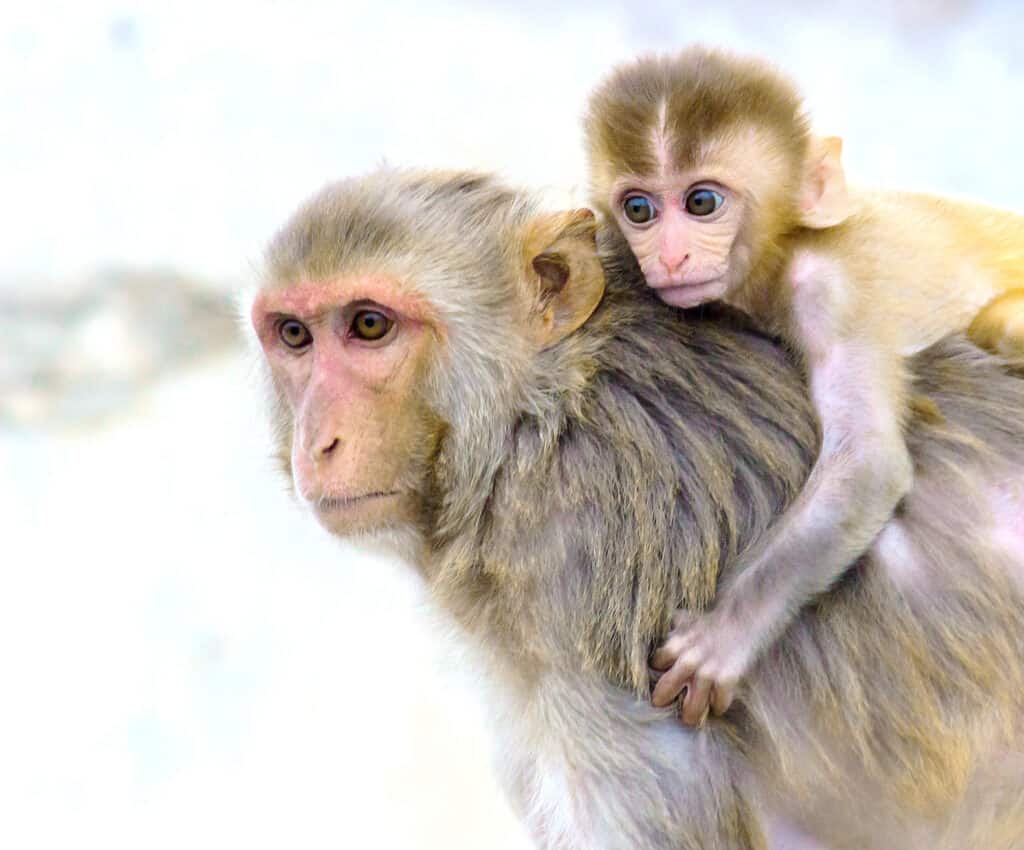
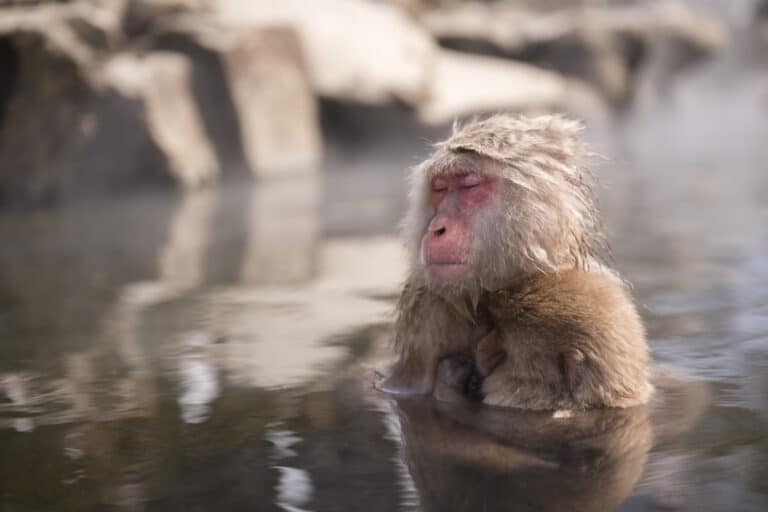
Rhesus macaques may look cuddly, but they naturally carry herpes B, which can be deadly to humans.
©Robert Ross/Shutterstock.com
Another theory is that the monkeys were searching for food. While this doesn’t fully explain the urgency with which many of them swan-dived into the water, it remains a plausible reason. Some even surmise the monkeys may have been regulating their body temperatures, or even playing with one another, according to researchers at the Wisconsin National Primate Research Center during an interview with USA Today. Whatever the reason, one thing is clear: these rhesus macaques were far more interested in their dramatic plunge than in the people watching from canoes.