
Do you ever wonder what wild secrets your home state holds? We often think of the familiar animals that roam our backyards and local parks — like squirrels, rabbits, and the occasional deer — but many of the United States’ other wild inhabitants may surprise you. Each state is home to unusual animals that defy expectations, thriving in environments you might never have imagined. Here are the most surprising animals living in each state.
Alabama
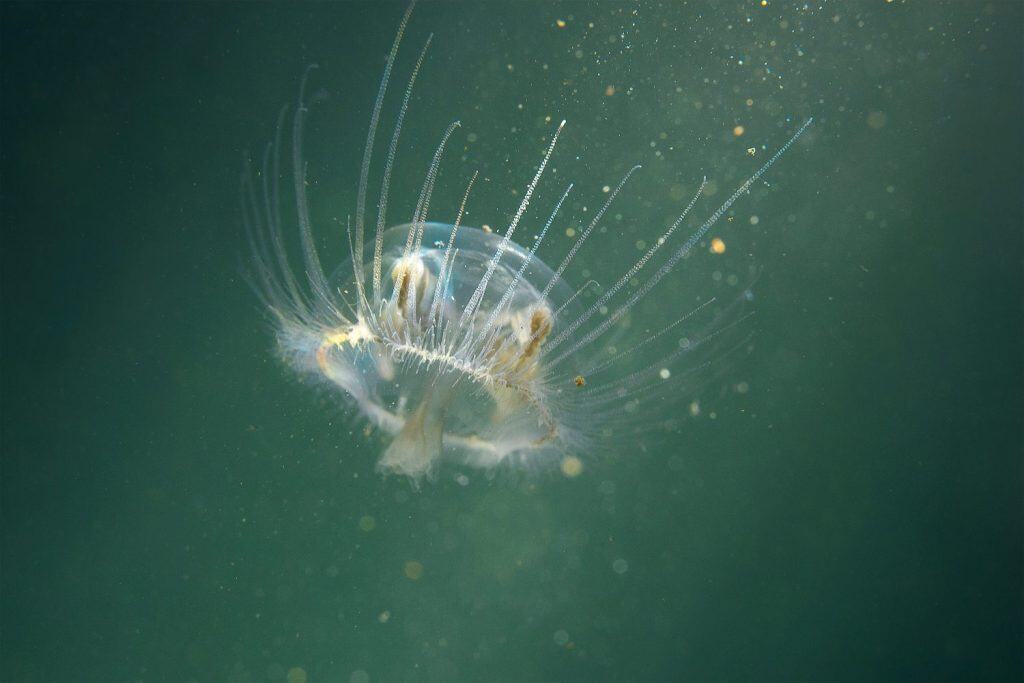
Freshwater jellyfish have four long tentacles for swimming and many smaller tentacles for feeding.
©Rostislav Stefanek/Shutterstock.com
While it’s not uncommon to see a jellyfish in the ocean, you might be surprised to spot one in a freshwater lake. These freshwater jellyfish, or peach blossom jellyfish (Craspedacusta sowerbii), are native to China’s Yangtze River. However, you can also find them in a few of Alabama’s lakes, including Lake Martin and Lake Smith. They are tiny, mostly transparent creatures, typically no bigger than a quarter, with a slight milky-white or greenish tint.
Alaska
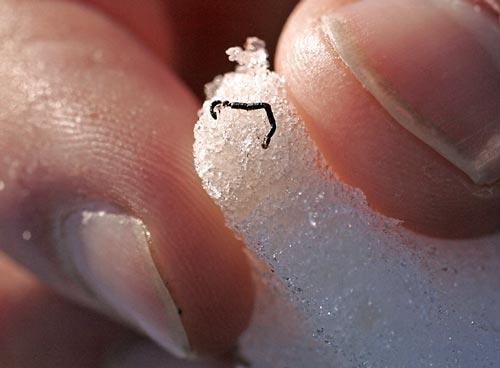
The ice worm’s species name, solifugus, means “sun-avoiding.”
©Southwick3 / CC BY-SA 3.0 / Wikimedia Commons – Original / License
Icy glaciers may seem like an unlikely home for a worm, but in Alaska, they’re surprisingly common. These cold-loving creatures are known as ice worms (Mesenchytraeus solifugus) and are usually black, white, or blue. Although they thrive in cold temperatures, they are protected from extreme temperatures inside glaciers thanks to an insulating layer of snow, which helps maintain a stable temperature near 32 degrees Fahrenheit. But if their temperature rises to about 39 degrees Fahrenheit, the worms’ bodies will literally melt.
Arizona
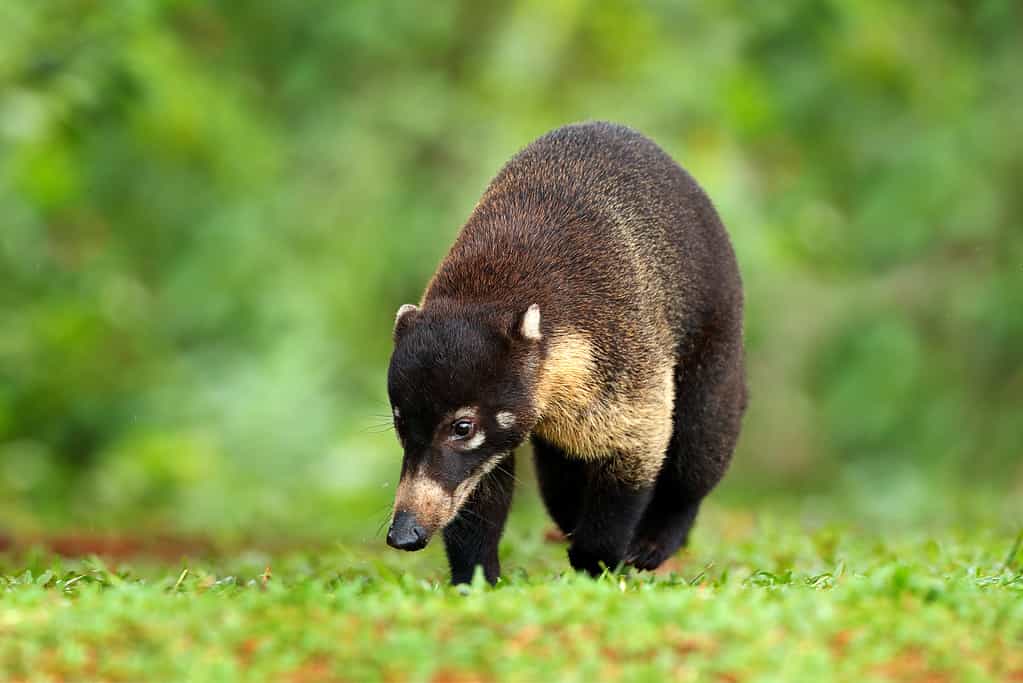
Coatis use their long snouts to poke into tight spaces and sniff out food.
©Ondrej Prosicky/Shutterstock.com
Though often associated with the rainforests of South and Central America, the white-nosed coatimundi, or white-nosed coati (Nasua narica), is a surprising resident of Arizona. These small, slender members of the raccoon family have reddish-brown or black fur, white facial markings, and a long, flexible snout. Weighing between 6.5 and 13 pounds, coatis typically measure around 26 inches, with tails nearly as long as their entire body.
Arkansas
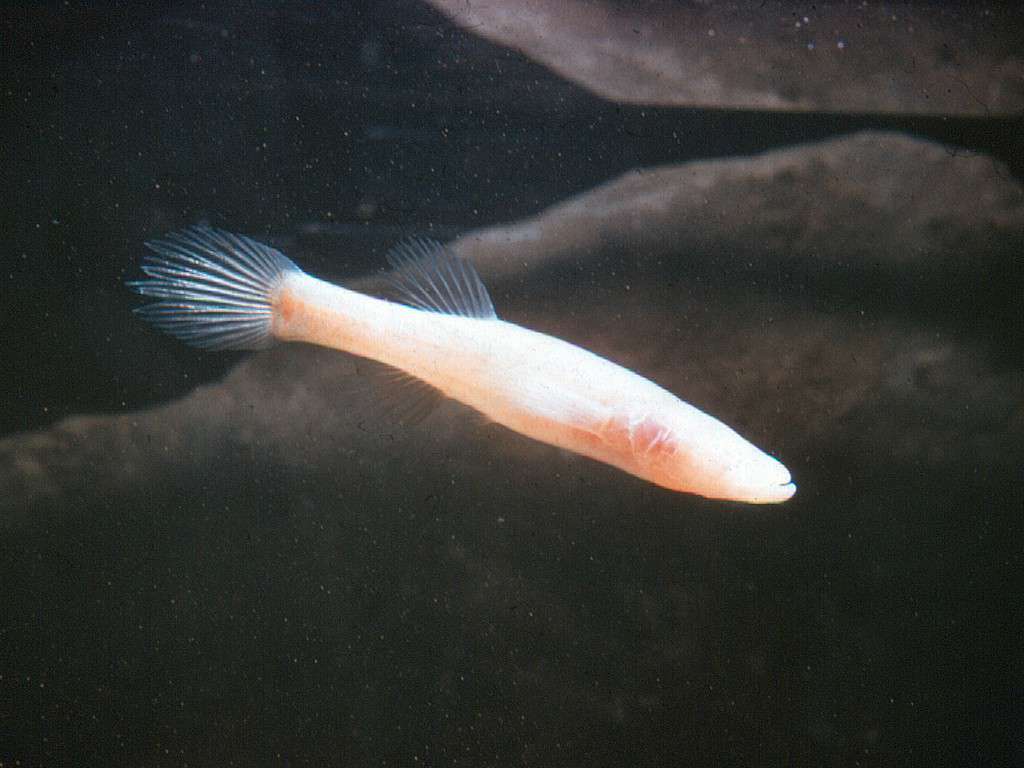
Ozark cavefish are found in only eight caves in Arkansas.
©National Park Service Digital Image Archives / Public Domain – Original
These small, pinkish-white fish are born without eyes, a unique evolutionary adaptation for surviving in complete darkness. Since sight is useless in their isolated cave systems, Ozark cavefish (Troglichthys rosae) have instead developed other sensory organs to help them navigate and find food. They primarily feed on whatever organic matter is carried into their caves, such as bat guano, salamander larvae, isopods, plankton, crayfish, and amphipods.
California
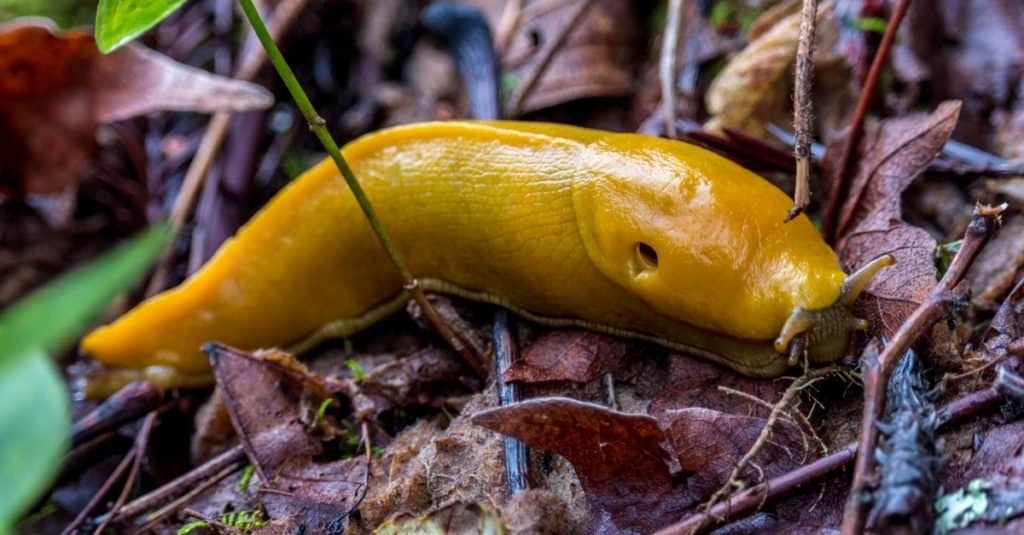
UC Santa Cruz’s mascot is a banana slug named Sammy.
©MC Creative/Shutterstock.com
A large resident of California’s cool, moist redwood forests, the banana slug (Ariolimax) is one of North America’s largest slugs, growing up to 10 inches long. Proposed as California’s state slug in 2024, it shares a unique relationship with the state tree, the coast redwood (Sequoia sempervirens). The slugs help young redwoods thrive by eating competing plants. In return, the redwoods’ forests provide the essential cool, moist habitat the slugs need to survive.
Colorado
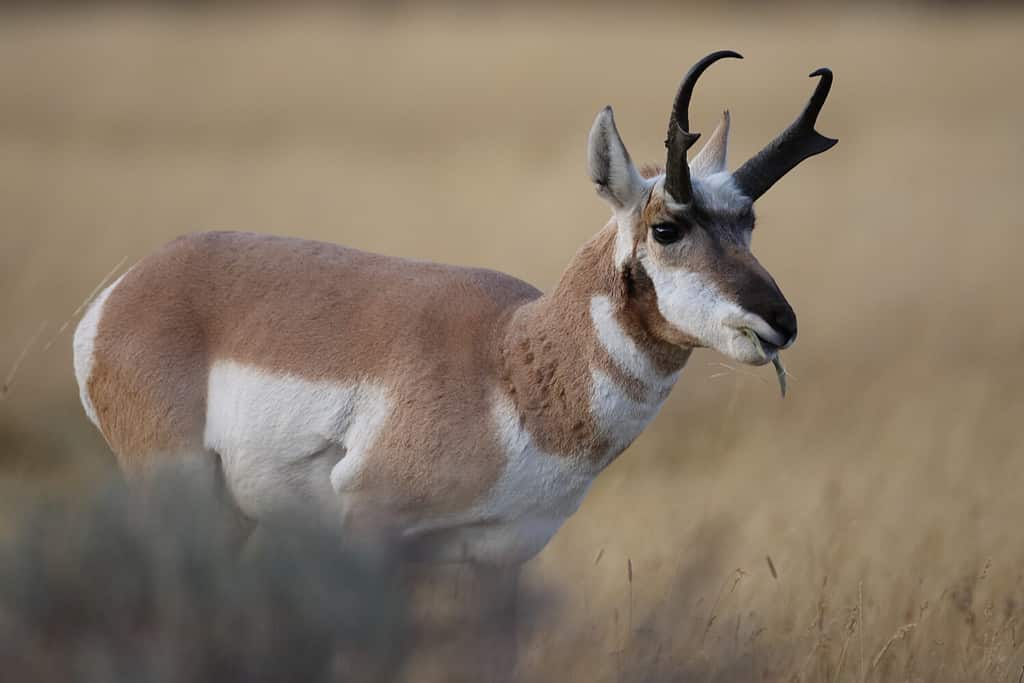
Unlike the solid bone of antlers, pronghorn horns have a permanent bony core.
©Greens and Blues/Shutterstock.com
Many people are surprised to learn that Colorado is home to the pronghorn (Antilocapra americana), the second-fastest land mammal in the world. Reaching speeds of up to 60 miles per hour, these antelope-like animals are second only to the cheetah in terms of speed. Both males and females have horns, although only males typically have branched horns.
Connecticut
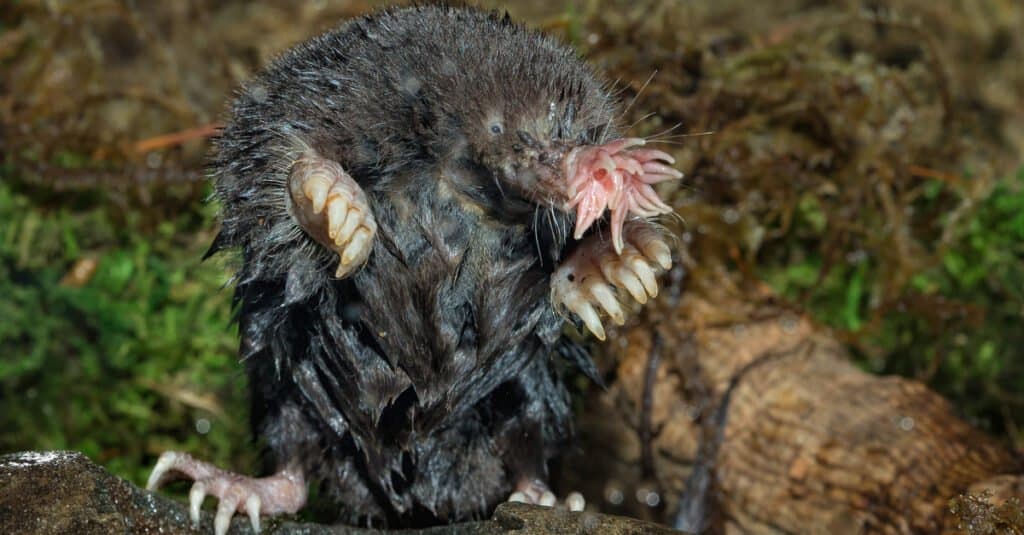
Star-nosed moles spend much of their time in the water and will even swim under the ice.
©Agnieszka Bacal/Shutterstock.com
Typically known for its Ivy League schools and colorful fall foliage, Connecticut is also home to a rather surprising animal: the star-nosed mole (Condylura cristata). While its body resembles that of other mole species, this unique animal has a rather unusual snout, which consists of 22 fleshy, pink tentacles arranged in a star shape. Each tentacle is covered in sensitive touch receptors, which help the mole locate its prey. These highly specialized star-nosed moles are semi-aquatic animals and prefer swampy, wet areas throughout Connecticut.
Delaware

Delmarva fox squirrels have fluffy tails that can grow up to 15 inches long.
©Dennis W Donohue/Shutterstock.com
While native to Delaware, the Delmarva fox squirrel (Sciurus niger cinereus) is a surprising animal to see within the state. This special tree squirrel was once listed as an Endangered species and nearly disappeared from the state completely. Thanks to successful conservation efforts, however, these large, fluffy squirrels can now be found in a few isolated populations in Sussex County. Delmarva fox squirrels are one of the largest squirrels in North America. On average, they measure 30 inches long and weigh up to 3 pounds.
Florida
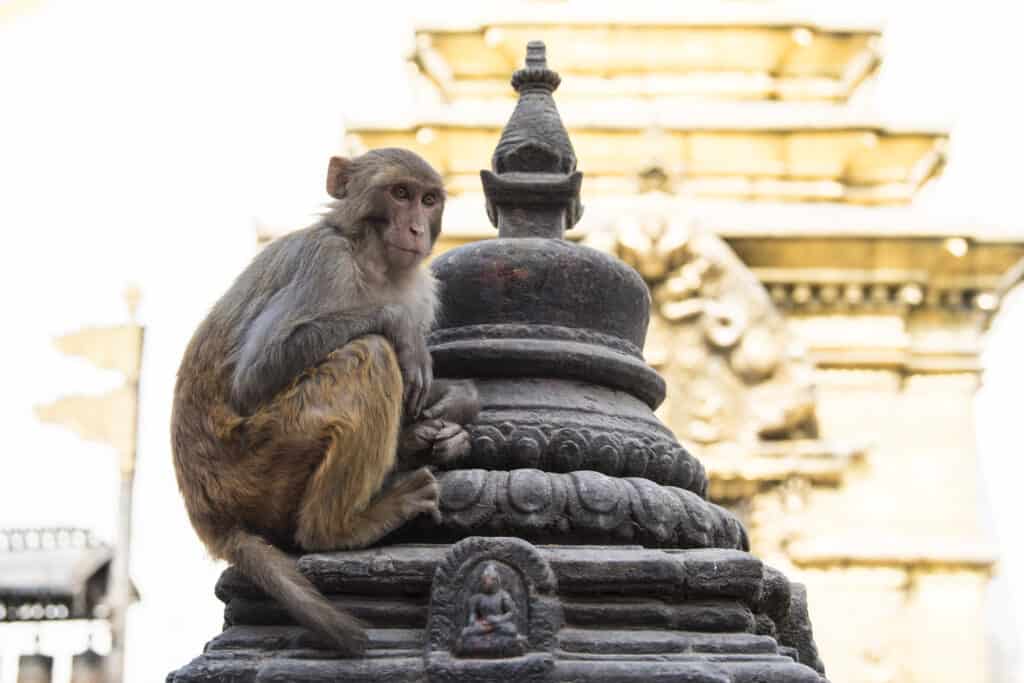
In the 1970s, biomedical research laboratories also introduced rhesus macaques to two islands in the Florida Keys: Key Louis and Raccoon Key.
©iStock.com/3yephotography
The tropical habitats of Florida are home to a surprising array of wild animals, including the rhesus macaque (Macaca mulatta). Rhesus macaques are native to the Middle East and Asia, but were brought to Florida in the 1930s by a riverboat captain for a tourist attraction. However, he underestimated the monkeys’ excellent swimming skills. The macaques quickly escaped and adapted to the hospitable habitat along the Ocklawaha River and what is now Silver Springs State Park.
Georgia
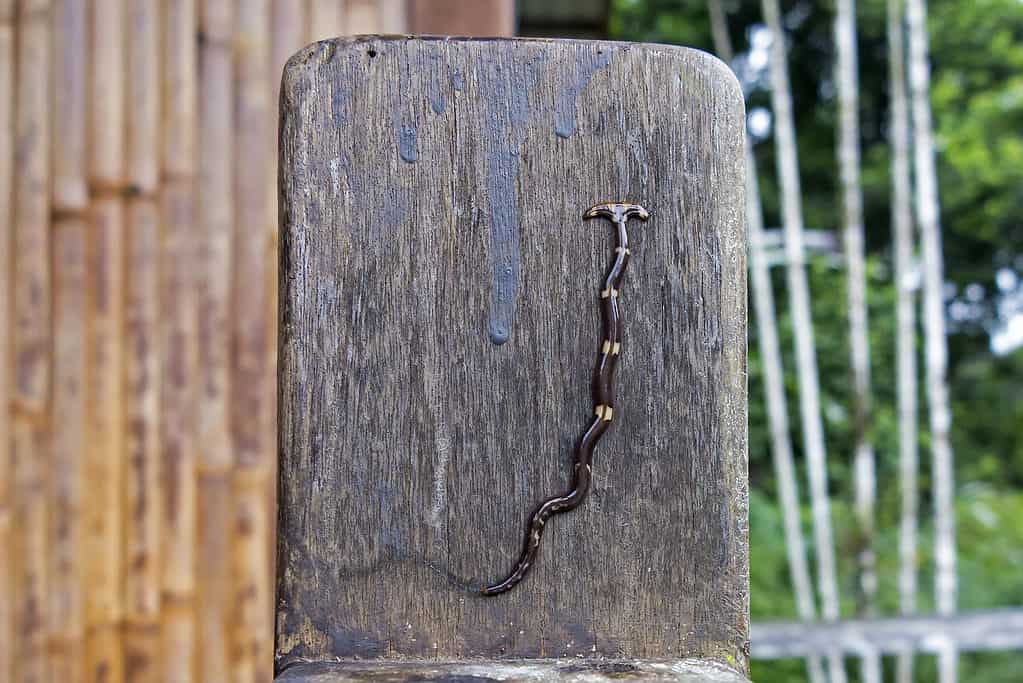
Hammerhead worms have a ciliated, or “hairy,” surface on their undersides that helps them glide smoothly over the ground.
©Wright Out There/Shutterstock.com
Georgia is home to a very unusual and surprising species: the hammerhead worm (Bipalium). Unlike most other worms, it has a unique fan-shaped head, much like the shape of a hammer. Native to Asia, hammerhead worms were introduced to the United States in the early 1900s. They are carnivorous and mainly eat earthworms. They subdue their prey using a type of neurotoxin called tetrodotoxin (the same toxin found in pufferfish).
Hawaii
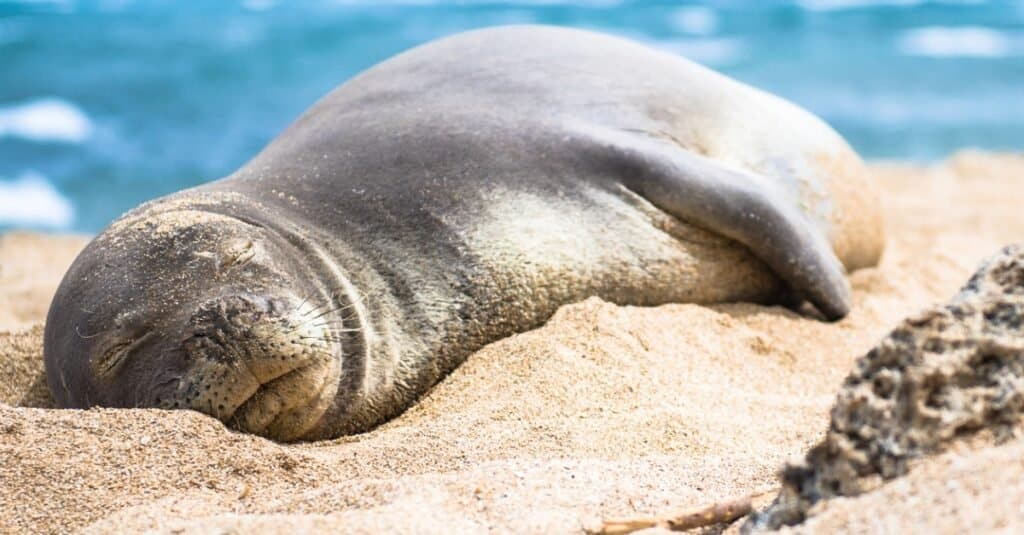
Hawaiian monk seals grow 6 to 7 feet long and weigh 400 to 600 pounds.
©greghonda/Shutterstock.com
While most seals prefer the frigid waters of the Arctic and Antarctic, the Hawaiian monk seal is a surprising exception. This unique animal has adapted to a tropical lifestyle and lives only in the Hawaiian archipelago. Unfortunately, Hawaiian monk seals are one of the most endangered seal species on Earth. However, in 2021, their population rose above 1,500 for the first time in 20 years, thanks to dedicated conservation efforts. Currently, there are around 1,600 seals in the wild, and hopefully, this growth pattern will continue moving forward.
Idaho
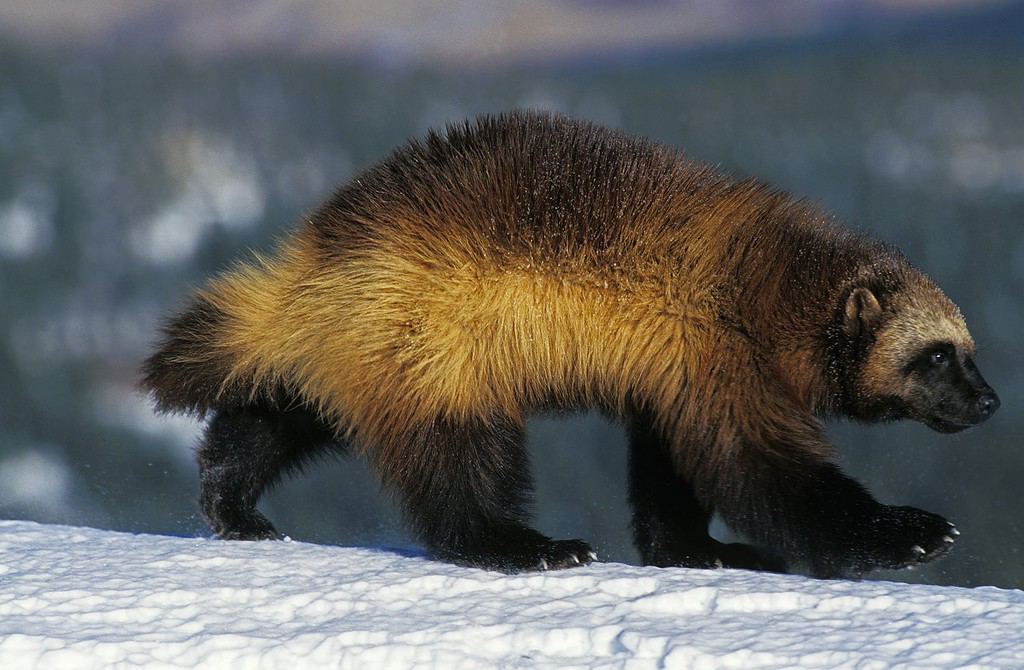
The wolverine is considered a species of concern and is listed as threatened in some states, but is not federally listed as threatened in the United States as of 2025.
©slowmotiongli/Shutterstock.com
The wolverine (Gulo gulo) is a rare animal found in Idaho and one of the most elusive creatures in the United States. This solitary predator is a tough animal that can climb, dig, and travel through deep snow. Often living in the tundra habitats of the Arctic, wolverines migrate seasonally, spending their summers at higher elevations and moving to slightly lower ones in the winter. Wolverines can weigh 17 to 40 pounds, but they are very difficult to study.
Illinois
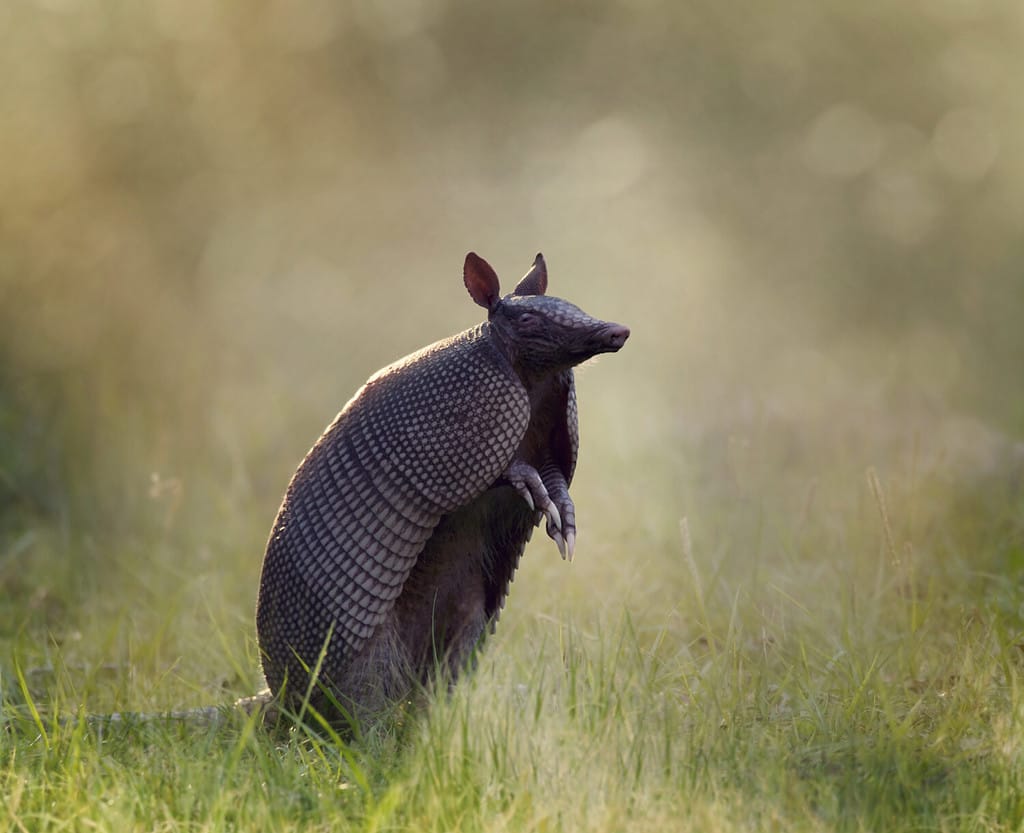
Nine-banded armadillos have short legs and strong claws for digging.
©Svetlana Foote/Shutterstock.com
Though originally native to the warmer climates of Central and South America, the nine-banded armadillo (Dasypus novemcintus) has been expanding its range north into Illinois. Armadillos can be spotted throughout the state, although they are far less common in northern Illinois due to cold temperatures. These unique mammals are 24 to 33 inches long and weigh between 8 and 17 pounds, with leathery skin and bony plates like a custom suit of armor.
Indiana
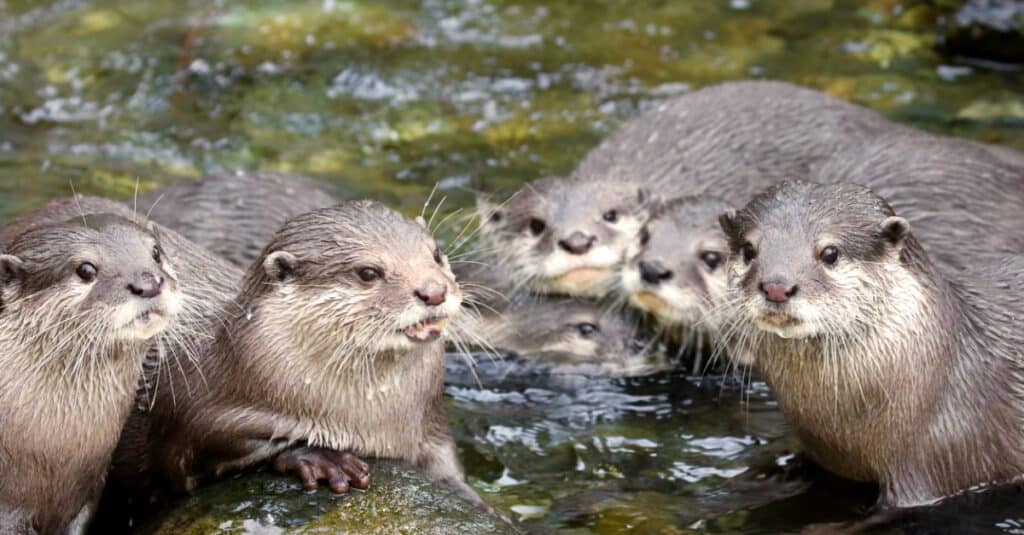
River otters in Indiana rebounded so strongly that they were removed from the state’s endangered species list in 2005.
©iStock.com/Mirko_Rosenau
In Indiana, the river otter (Lontra canadensis) is a surprising animal with a comeback story. Once native to the state, these aquatic animals were completely eradicated by 1942 due to unregulated trapping. Weighing 11 to 20 pounds, their dense fur repels water, making them high-value targets for fur trappers. However, river otters were reintroduced to the state in 1995, and now you can find them throughout Indiana.
Iowa
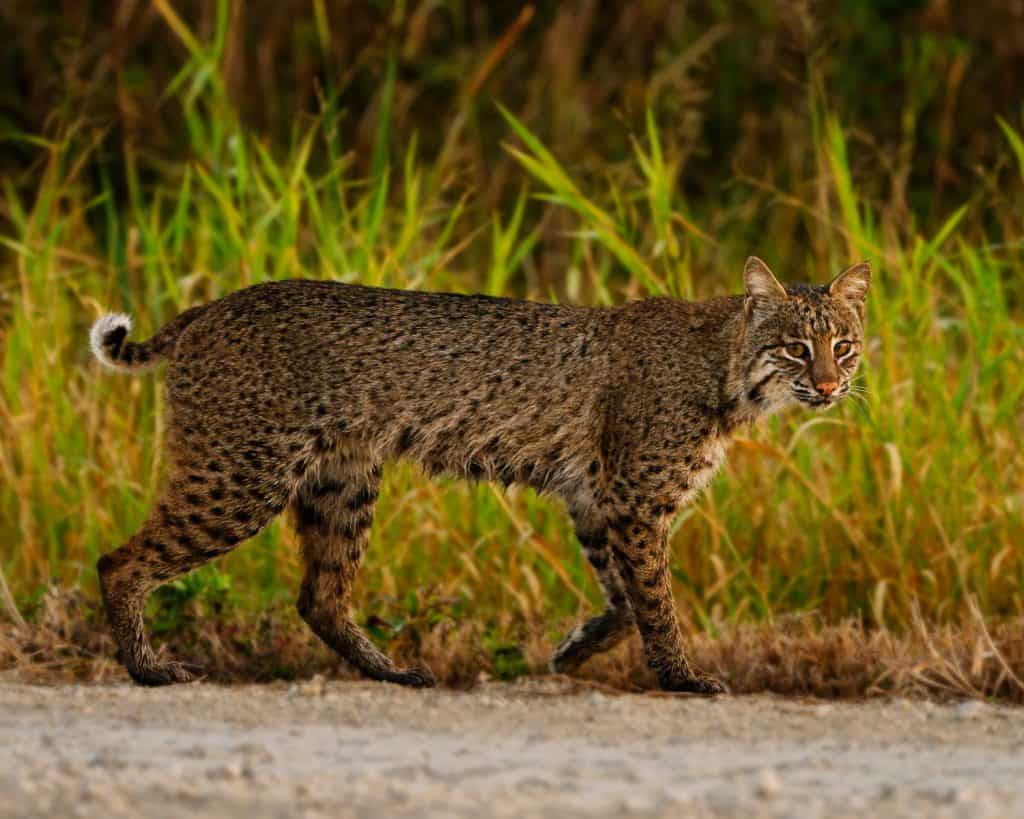
Bobcats are only about 3 feet long and weigh 20 to 30 pounds.
©WIlliam Falla/Shutterstock.com
Although Iowa was once home to mountain lions, lynxes, and bobcats, both mountain lions and lynxes have been eliminated from the state. Bobcats almost followed, with their population dropping so low that they were listed as an endangered species in 1977. Since then, their numbers have slowly rebounded. However, they are so elusive that spotting one in Iowa is a surprising and rare event.
Kansas
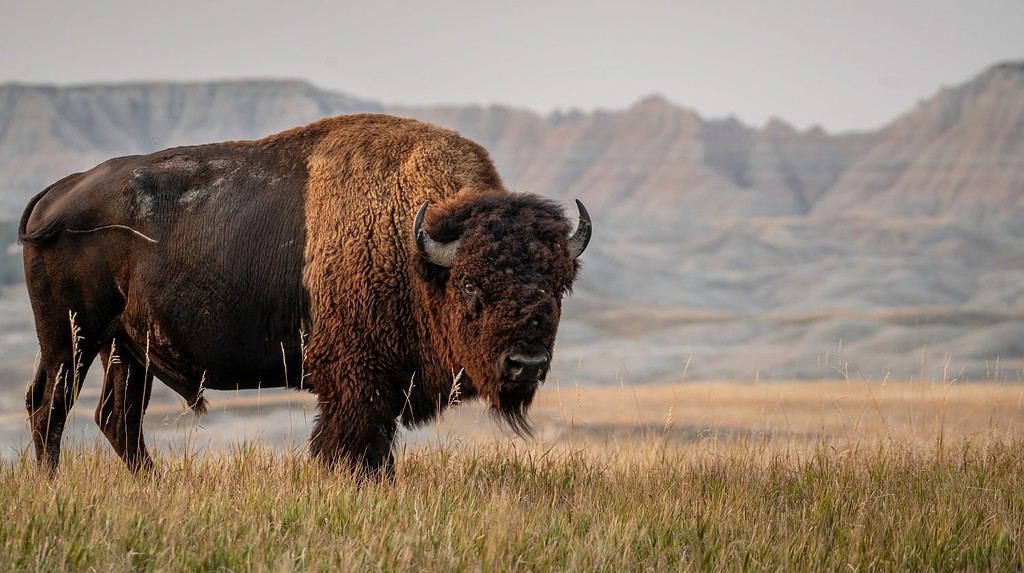
American bison played a vital role in grassland ecosystems across the United States.
©Tim Malek/Shutterstock.com
Like much of the United States, Kansas was once home to herds of American bison, or American buffalo (Bison bison). However, by the late 1800s, bison had been hunted to extinction in the state. Ironically, a former hunter named Charles “Buffalo” Jones is largely responsible for the species’ survival. Although an avid bison hunter, Jones gave up the sport to create his own herd. Today, you won’t find bison roaming free through Kansas, but many still thrive in wildlife preserves and refuges across the state.
Kentucky
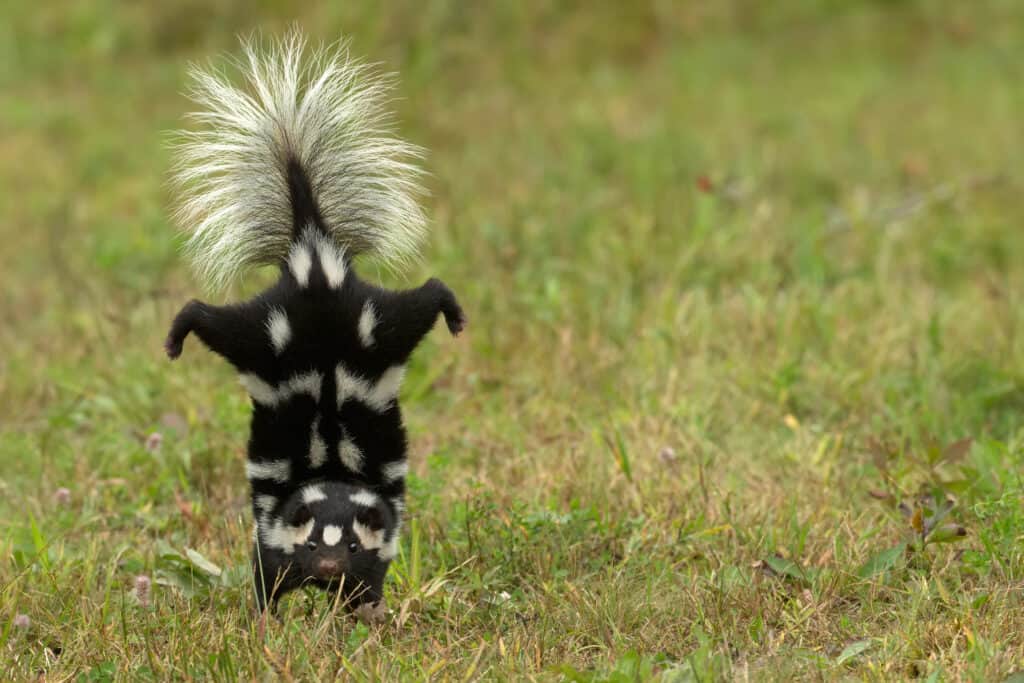
Eastern spotted skunks in Kentucky are endangered or threatened.
©Agnieszka Bacal/Shutterstock.com
You might be surprised to find this unique and endangered animal in Kentucky. Sometimes called a polecat or civet, the eastern spotted skunk (Spilogale putorius) is much smaller than its striped cousin, weighing only 1 to 4 pounds. Eastern spotted skunks are elusive animals and excellent climbers. When threatened, they perform impressive handstands with their tails stretched high in the air, then spray a noxious odor.
Louisiana
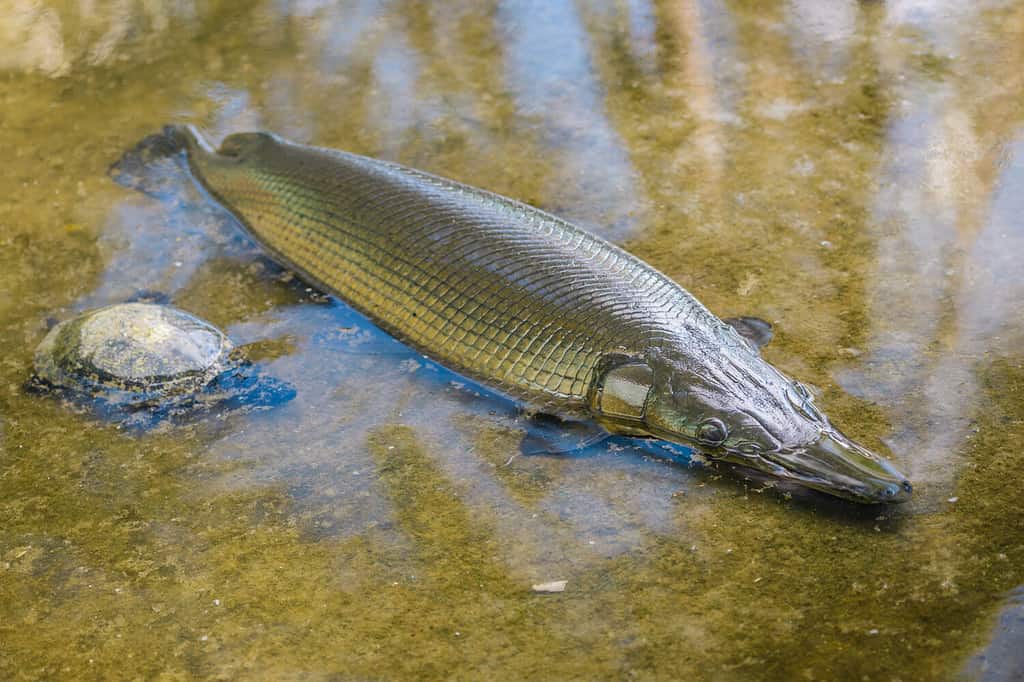
Alligator gar can live in both freshwater and coastal saltwater.
©DeepGreen/Shutterstock.com
Louisiana is home to many unique creatures, but few are quite as strange and surprising as the alligator gar (Atractosteus spatula). Despite its reptilian name, it is actually a freshwater fish. The alligator gar has a prehistoric appearance, with a long body and a snout like an alligator. It can grow up to 10 feet long and weigh over 300 pounds. However, the average alligator gar in Louisiana is usually around 4 to 6 feet long and 100 to 150 pounds.
Maine
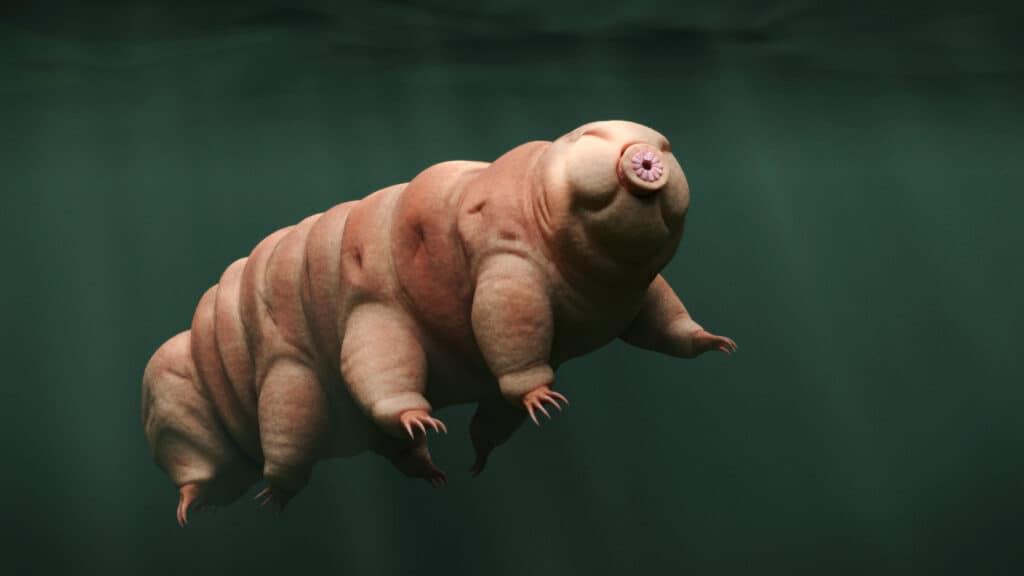
Tardigrades are pudgy and round, usually only 0.02 inches (half a millimeter) long.
©Dotted Yeti/Shutterstock.com
Although microscopic and difficult to see, Maine’s tardigrades (Tardigrada) are surprisingly tough animals. Nicknamed “moss piglets” and “water bears,” these unique invertebrates are invisible to the naked eye. They can survive in some of the most extreme environments on Earth, including scalding hot springs, the deep ocean, and under glaciers.
Maryland
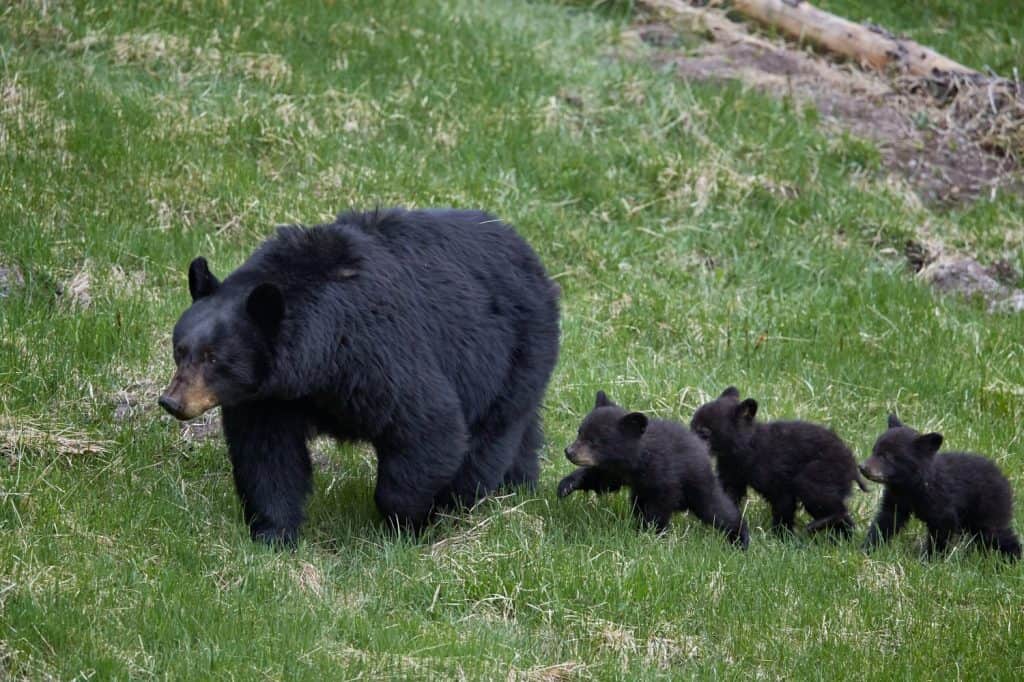
Maryland residents occasionally spot black bears in other parts of the state during the spring.
©Robert Harding Video/Shutterstock.com
You may not expect to find black bears (Ursus americanus) in the eastern United States, but their population has been growing in western Maryland. The state’s largest populations are found in Allegany and Garrett counties, with smaller groups of bears in Washington and Frederick counties. However, despite their growing numbers, black bears are still a rare sight in Maryland. A 2022 survey revealed that only 12 percent of the state’s residents have ever seen one.
Massachusetts
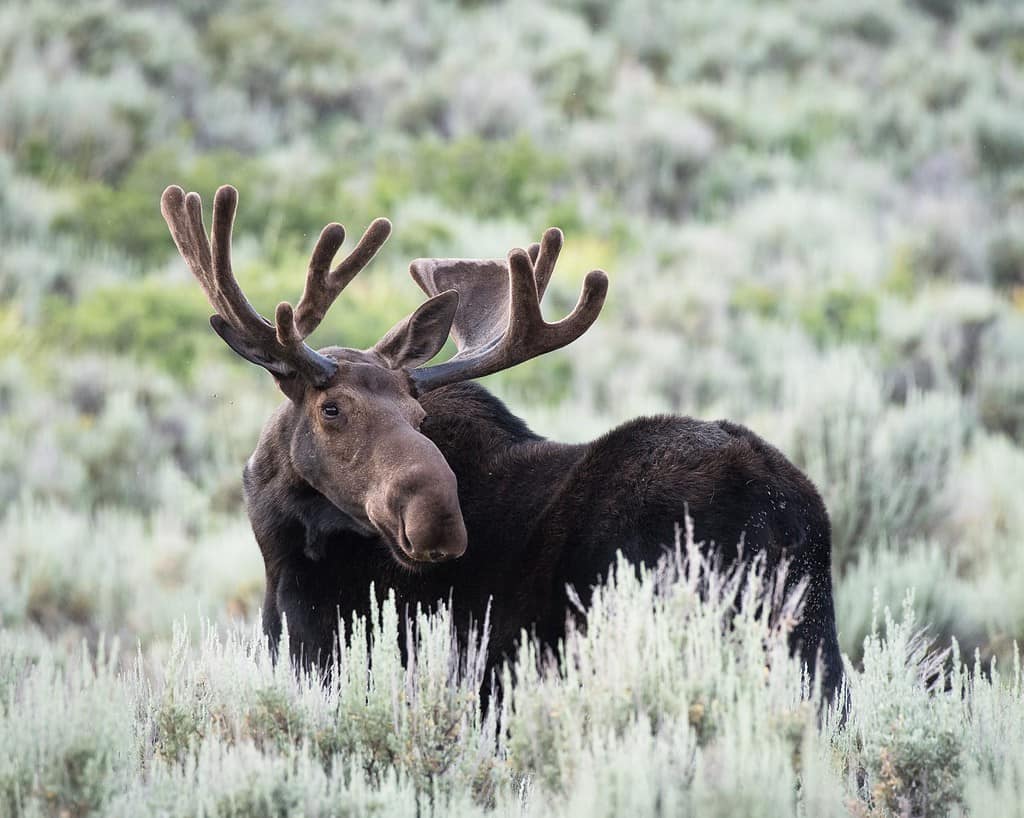
Moose in Massachusetts are protected by law.
©Justin Crook Photography/Shutterstock.com
Though most residents don’t know it, moose (Alces alces) once lived in Massachusetts before disappearing by the early 1700s. In recent decades, however, these enormous animals have started to return and can occasionally be spotted in the state’s western and central regions. Despite their size (they can weigh over 1,000 pounds and stand up to 6 feet tall at the shoulder), moose are surprisingly adept at staying hidden, but you might catch a glimpse during the fall breeding season or late spring.
Michigan
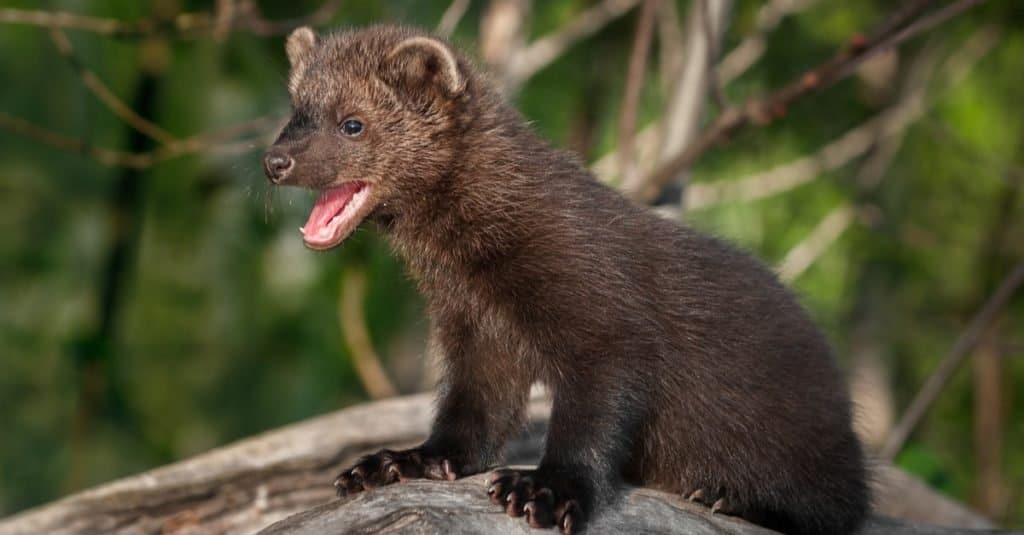
Fishers are excellent climbers and spend much of their time in trees.
©Holly Kuchera/Shutterstock.com
In 2013, Michigan’s Department of Natural Resources officially confirmed the surprising return of fishers (Pekania pennanti) to the Lower Peninsula. Fishers had previously vanished from the state by 1936 due to unlimited hunting and deforestation. Later, they were reintroduced to the Upper Peninsula, but it took decades for the animals to make their way south. Often called “fisher cats,” these slender animals aren’t cats, and they don’t eat fish.
Minnesota
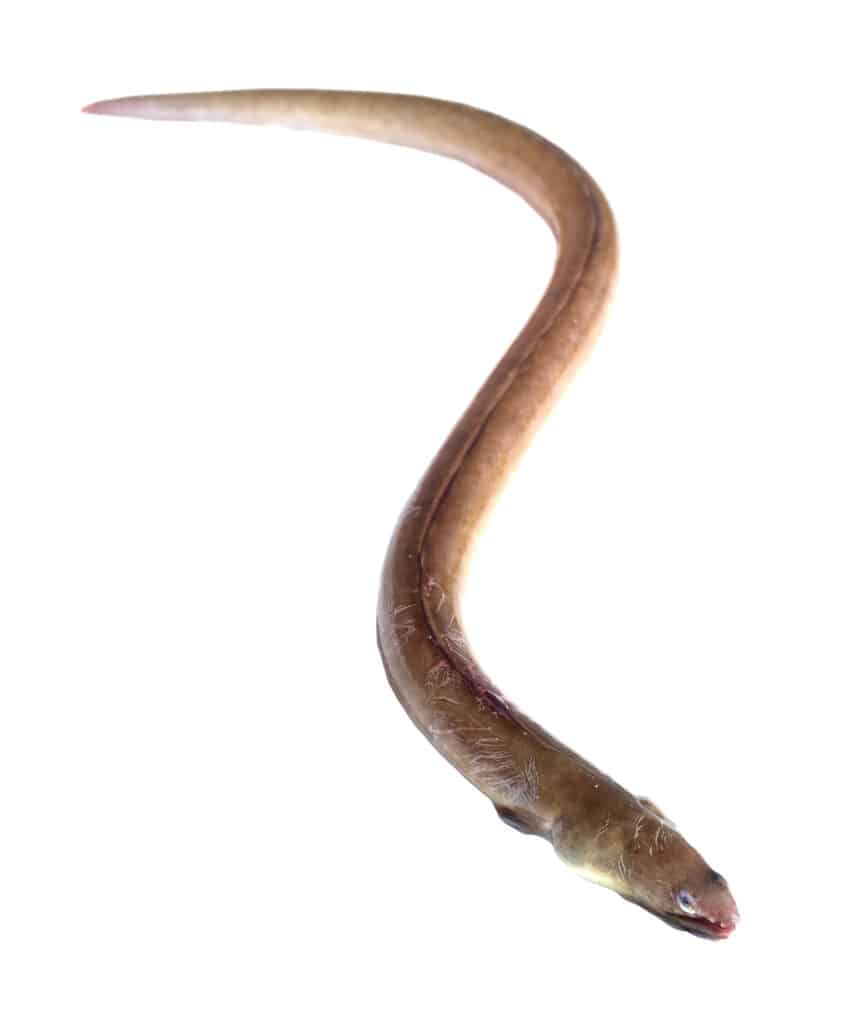
In 2013, the American eel was officially designated a species of special concern in Minnesota.
©IrinaK/Shutterstock.com
You may not expect to see eels in a U.S. freshwater river, but the American eel (Anguilla rostrata) has made a home for itself in Minnesota. These long, snake-like fish, typically olive to dark brown, travel up the Mississippi River to the state’s muddy rivers, channels, and dams. Unfortunately, since 2000, their population has sharply declined in North America.
Mississippi
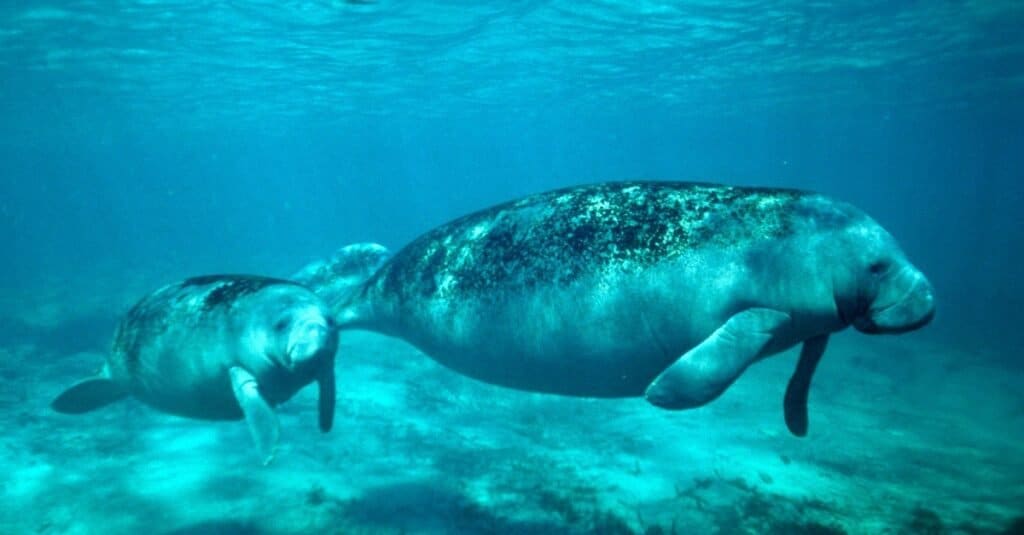
West Indian manatees will often spend the summer in Mississippi before returning to Florida in October when temperatures drop.
©iStock.com/stammphoto
While manatees (Trichechus manatus) are a common sight in Florida, you probably wouldn’t expect to see one in Mississippi. The state’s waters are too cold for manatees in the winter. However, as the weather begins to warm in April or May, these gentle giants often migrate to the northern Gulf of Mexico. Manatees prefer shallow water, such as rivers, springs, bays, and coastal areas.
Missouri
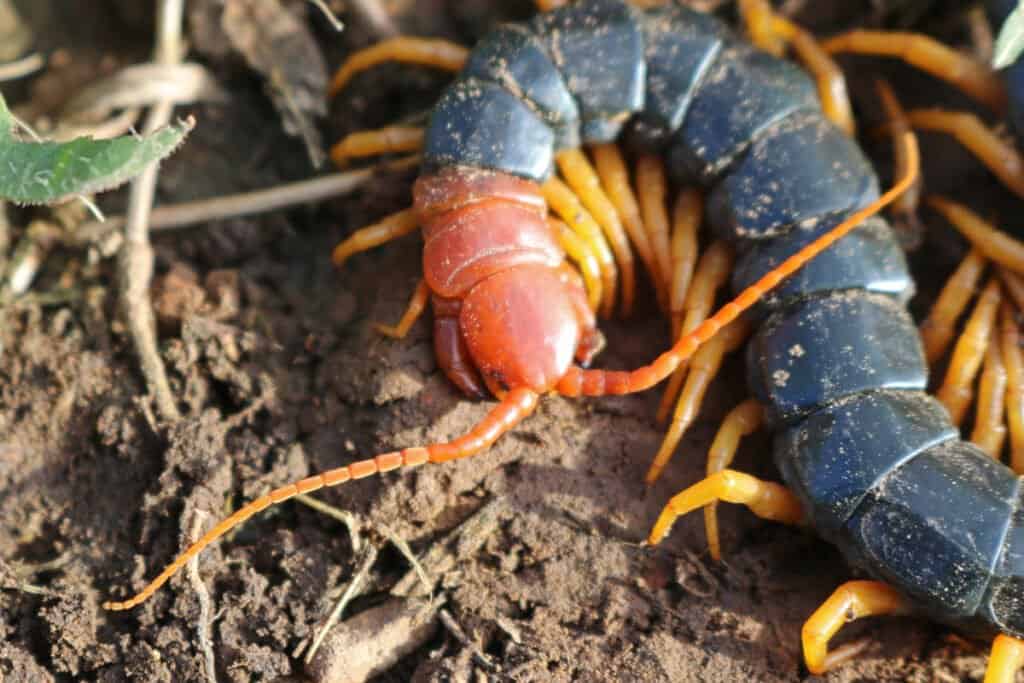
Giant redheaded centipedes prey on small amphibians, snakes, newborn mice, and other arthropods.
©Creeping Things/Shutterstock.com
While Missouri’s woodlands are home to many creatures, you might be surprised to find the giant redheaded centipede (Scolopendra heros) among them. At up to 8 inches long, it is North America’s largest centipede. These giant arthropods live along the state’s southern border, often hiding in rocky, wooded areas under logs and in piles of wood. They are venomous and don’t like to share their space, so if you encounter one, it’s best to keep your distance.
Montana
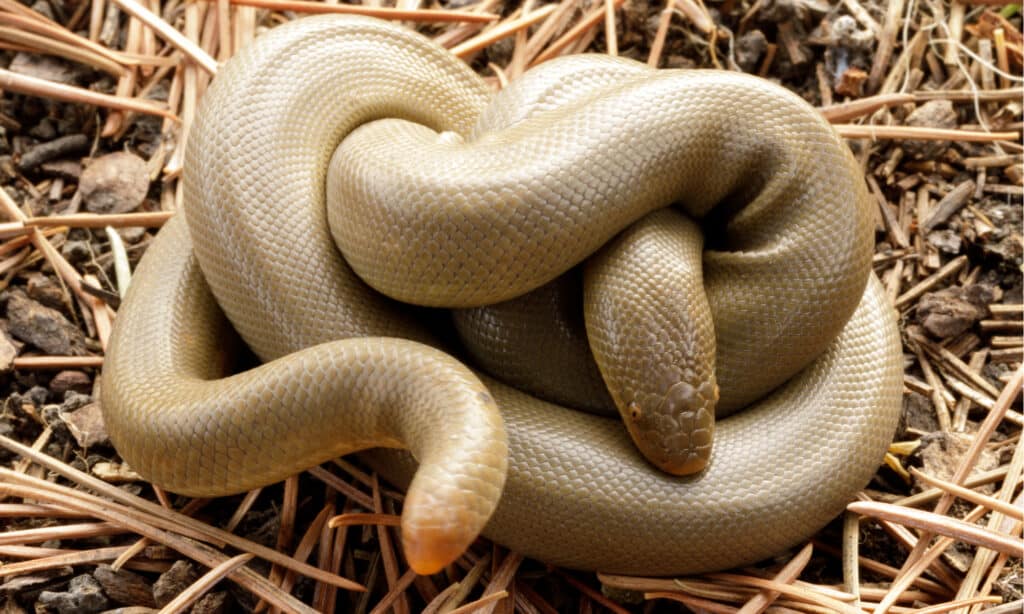
Hunting primarily at night, rubber boas prey mainly on small underground mammals like shrews, deer mice, and voles.
©yhelfman/Shutterstock.com
When you think of a boa constrictor, you probably picture a snake living in a tropical jungle. However, the northern rubber boa (Charina bottae) is native to North America and makes its home in Montana. Unlike their tropical relatives, these boas do not prefer heat but are surprisingly adaptable to a variety of environments. In Montana, they are most commonly found in the western and central regions of the state.
Nebraska
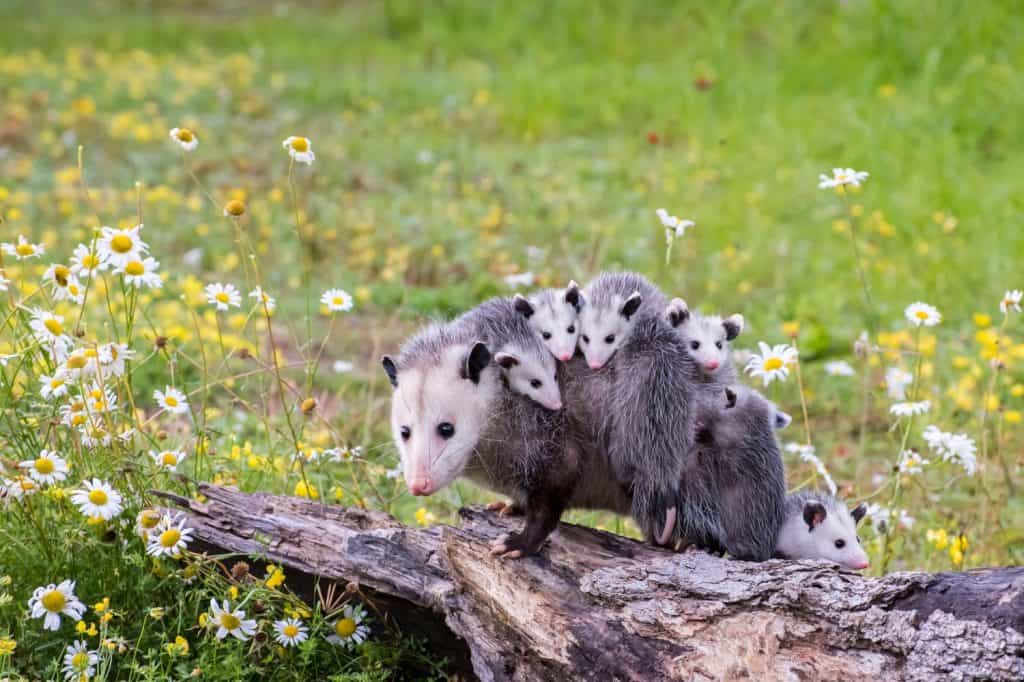
Opossums are peaceful, non-destructive animals.
©Evelyn D. Harrison/Shutterstock.com
Nebraska is well known for prairie dogs and deer, but it is also home to North America’s only native marsupial: the opossum. Though common throughout the state’s eastern regions, these housecat-sized animals are rarely seen during the day due to their nocturnal habits. Despite being seen as pests by some residents, opossums are extremely beneficial. They feast on worms, insects, snails, ticks, mice, and rats, and they pose little to no health risk to humans.
Nevada
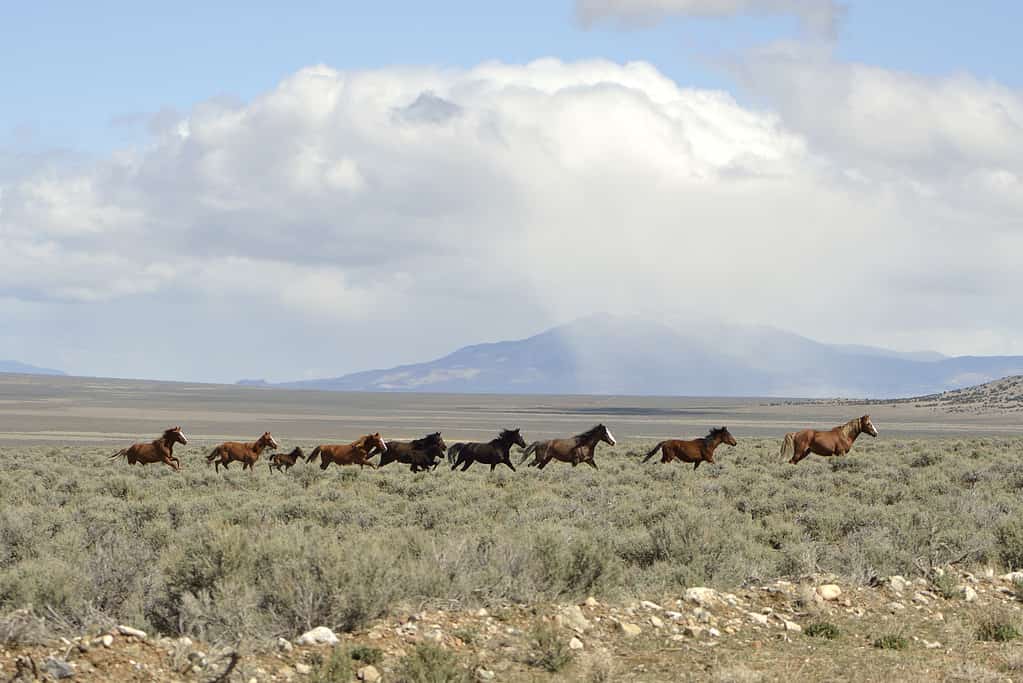
The Bureau of Land Management (BLM) manages tens of thousands of wild horses and burros across several areas of Nevada.
©mlharing/iStock via Getty Images
Among the most surprising animals you’ll find in Nevada are the state’s wild horses and burros. These animals make up the largest wild horse population in the entire United States. Although we may refer to them as “wild,” these animals are actually considered “feral” because their ancestors were domesticated, originally brought to Nevada in the 1500s by the Spanish. However, after centuries of living in a wild state, they have since become an iconic part of the state’s untamed landscape.
New Hampshire
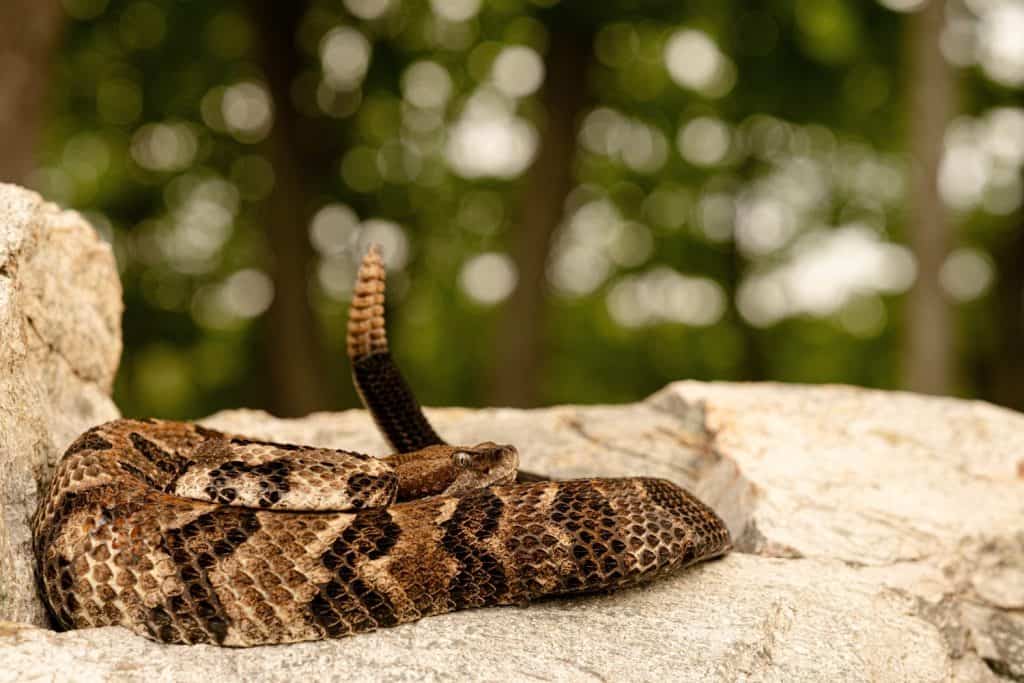
Timber rattlesnakes are typically found in rocky areas of northeastern New Hampshire.
©Radiant Reptilia/Shutterstock.com
Although many residents may not know it, New Hampshire is home to a rare and elusive venomous reptile: the timber rattlesnake (Crotalus horridus). This endangered reptile is considered critically imperiled in the state, with only a single population remaining. Unfortunately, increasing development in New Hampshire is fragmenting the rattlesnake’s natural habitat, making conservation efforts more difficult.
New Jersey
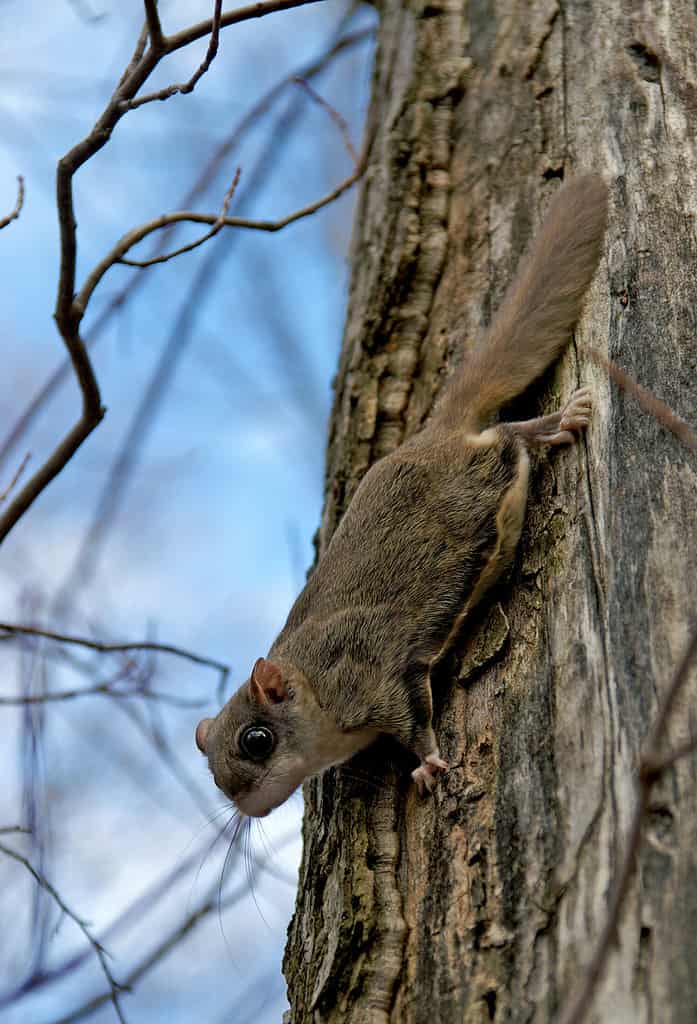
Flying squirrels spend their nights gliding from tree to tree and their days hidden away in nests and tree cavities.
©IrinaK/Shutterstock.com
Few are lucky enough to see them, but there are two species of flying squirrels living in New Jersey. The more common southern flying squirrel (Glaucomys volans) is found throughout the state. The northern flying squirrel (Glaucomys sabrinus), in contrast, prefers the fir and spruce trees of northwestern New Jersey. Both, however, are rarely seen due to their nocturnal habits.
New Mexico
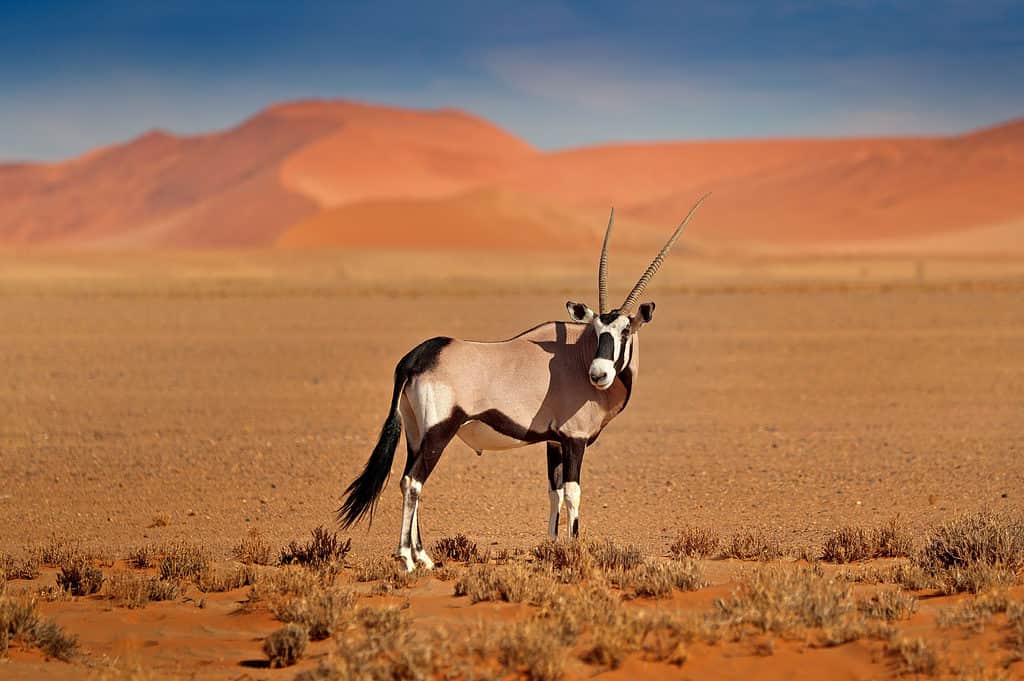
New Mexico’s deserts provide plenty of food for the gemsbok, including mesquite bean pods, desert grasses, and yucca.
©Ondrej Prosicky/Shutterstock.com
Native to Africa, gemsbok, also known as African oryxes (Oryx gazella), now thrive in southern New Mexico. In the 1970s, a few exotic game species — including the ibex, African Barbary sheep, and oryx — were released in the state to establish new game populations. Today, thousands of oryx live in and around the White Sands Missile Range. They have adapted quickly to New Mexico’s deserts due to the lack of predators and an abundance of food.
New York
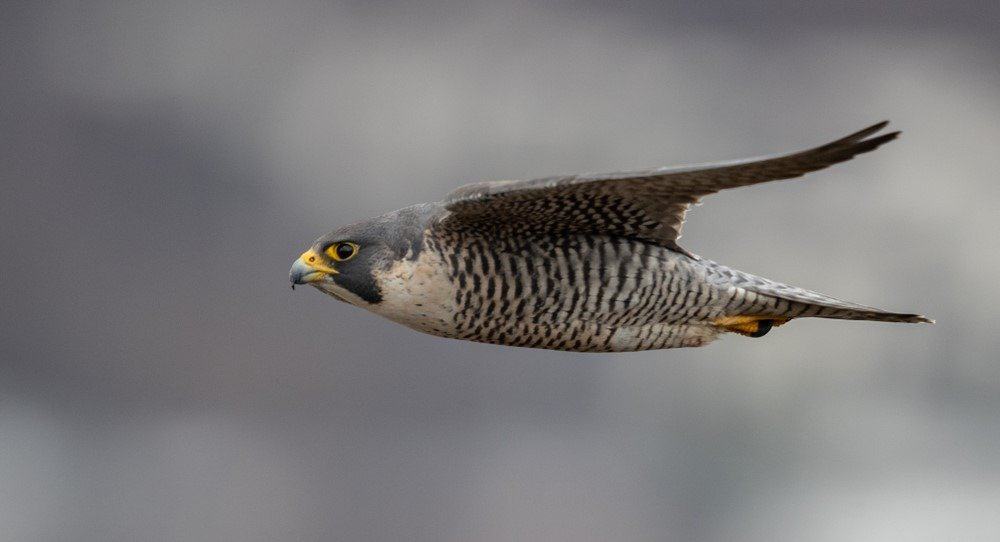
New York City may now have the world’s largest urban population of peregrine falcons.
©Harry Collins Photography/Shutterstock.com
While you might not expect to see much wildlife in New York’s bustling cities, peregrine falcons commonly occupy the state’s towering skyscrapers. These lightning-fast birds, capable of flying up to 60 miles per hour, were once driven to extinction in the state due to pesticides like DDE and DDT. Although still considered endangered, a thriving population has returned to New York thanks to conservation efforts and the release of captive-bred birds.
North Carolina
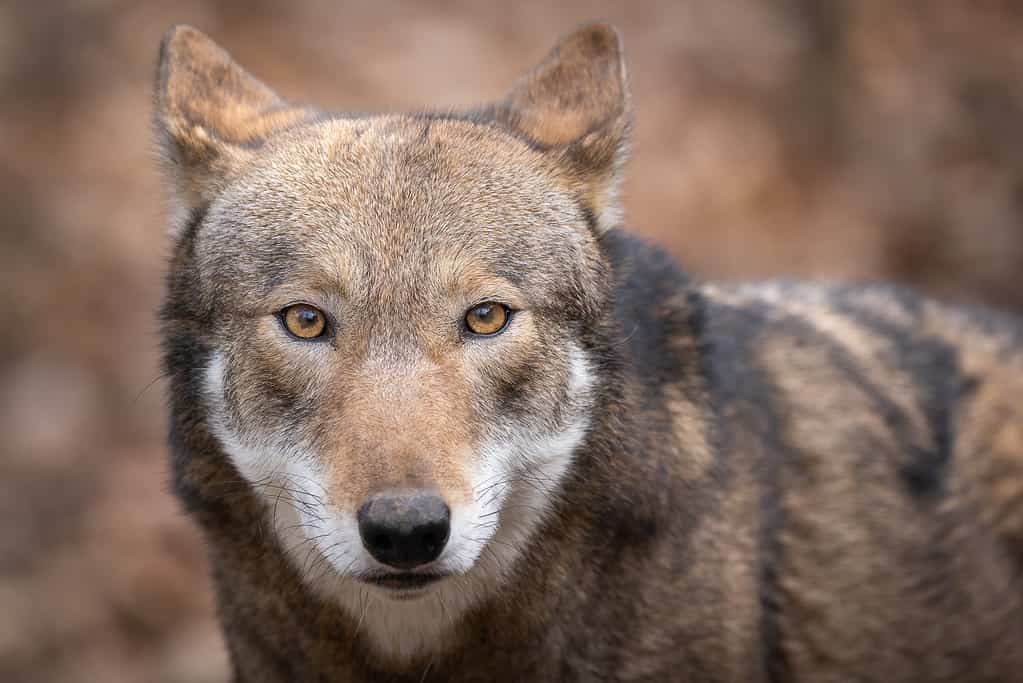
Red wolves are naturally shy and do their best to avoid humans.
©Cavan Images/iStock via Getty Images
Wild red wolves, one of the most endangered wild animals in the United States, are found only in North Carolina. These beautiful animals once roamed the eastern seaboard but have since been reduced to a single population on the Albemarle Peninsula. Due to habitat loss, human conflict, and vehicle strikes, their numbers plummeted by over 85 percent between 2010 and 2020.
North Dakota
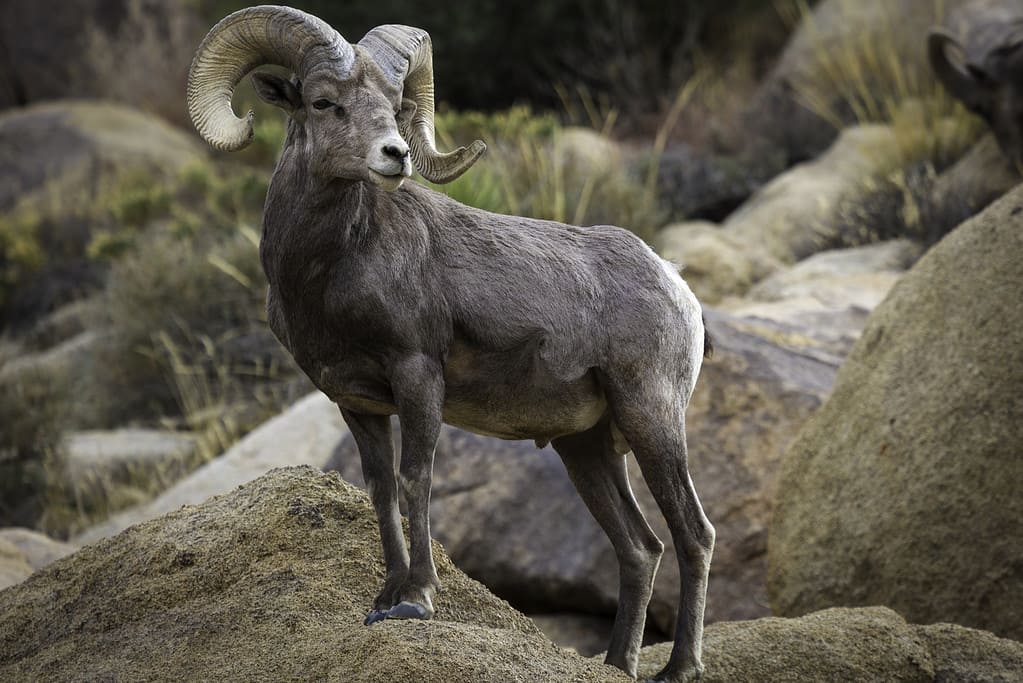
Bighorn sheep have large spiral-shaped horns, which can weigh up to 30 pounds.
©desertsolitaire/iStock via Getty Images
A surprising sight in a state known for its flat plains, bighorn sheep (Ovis canadensis) live in North Dakota’s rugged badlands and the North Unit of Theodore Roosevelt National Park. After vanishing from the state, reintroduction efforts beginning in the 1950s have brought back a small population of 400 to 500 of these animals.
Ohio
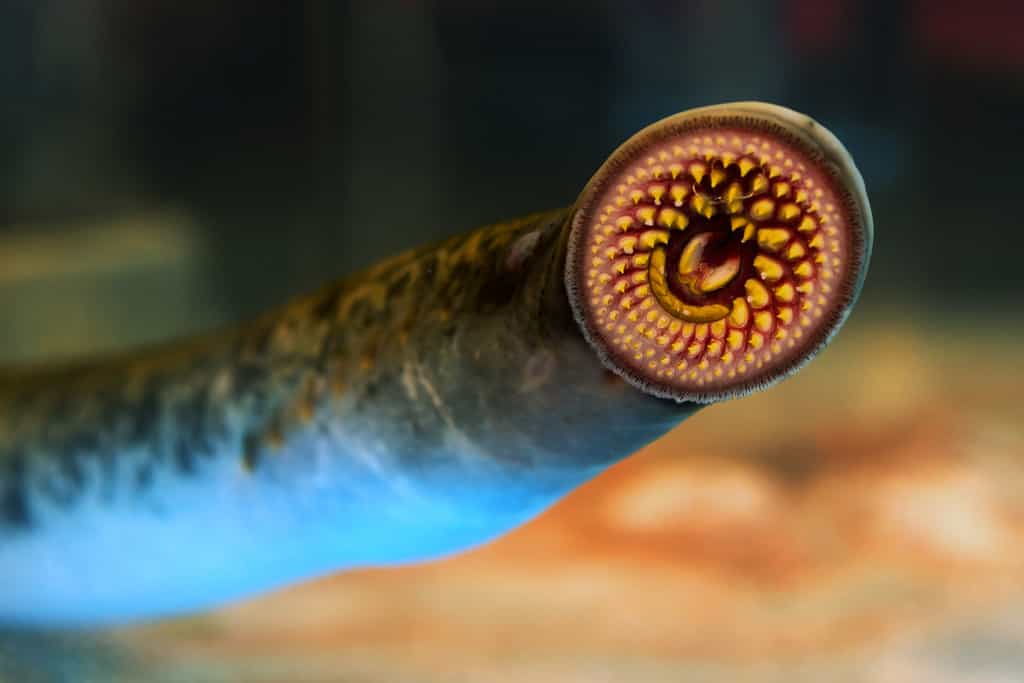
Although their appearance is a bit alarming, Ohio’s lampreys do not prey on humans.
©Gena Melendrez/Shutterstock.com
Lampreys are certainly not creatures that most people think of living in the United States. However, the freshwater rivers of Ohio are home to these truly bizarre fish. Lampreys have long, scaleless bodies and lack jaws. Their round, sucker-like mouths are lined with rows of sharply curved teeth. Some species, like the Ohio lamprey (Ichthyomyzon bdellium), are parasites and latch onto other fish and feed on their body fluids.
Oklahoma
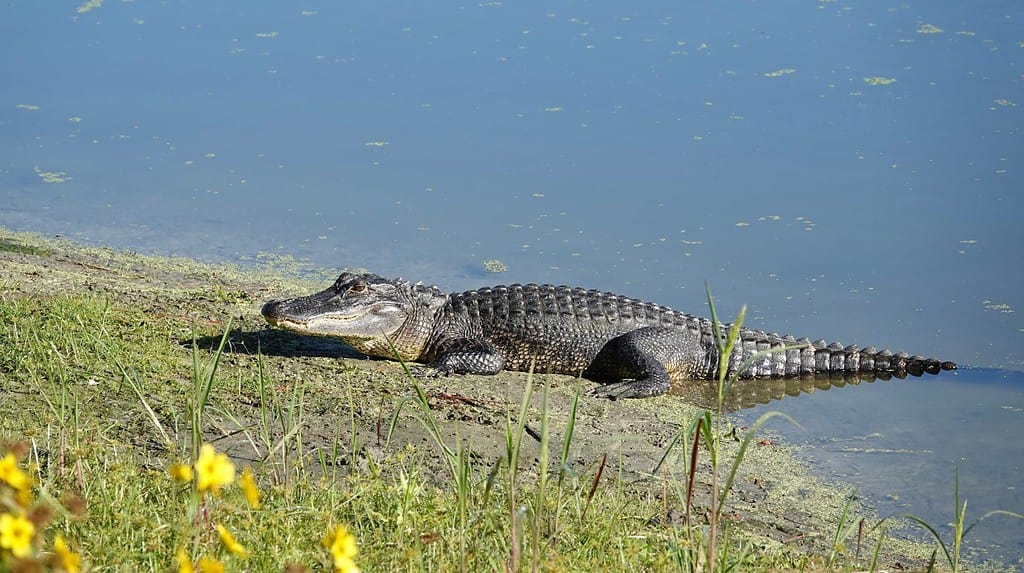
Alligators survive Oklahoma’s chilly winters by creating a breathing hole in the ice to access air just above the surface.
©Chris Klonowski/Shutterstock.com
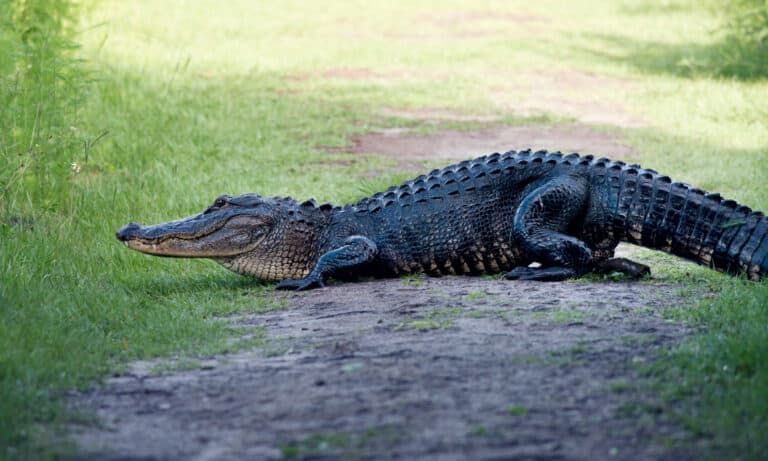
Did you know there are alligators (Alligator mississippiensis) in Oklahoma? It may seem unlikely, but these reptiles are actually native to the state’s southeastern corner, in McCurtain, Choctaw, Bryan, and Love counties, which is the westernmost part of their natural range. They are quite elusive, but you can find them in the marshes and swamps of the Little River National Wildlife Refuge and the Red Sough Wildlife Management Area.
Oregon
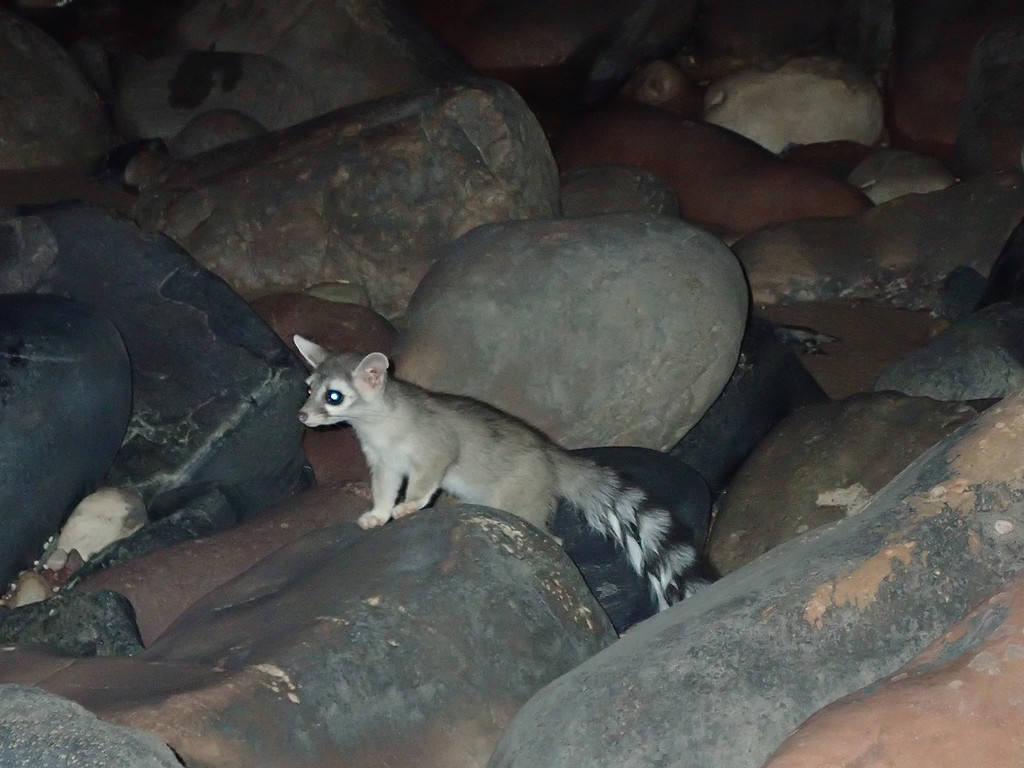
The ringtail gets its name from the ring patterns on its long, bushy tail.
©lorentrager/iStock via Getty Images
Oregon is well known as a thriving hub for Pacific wildlife, but the ringtail (Bassariscus astutus) is one of the state’s more surprising residents. This curious creature is a relative of the raccoon but is roughly the size of a ferret. Primarily found in southwestern Oregon, ringtails are expert climbers and can scale rocky cliffs, trees, and even vertical walls.
Pennsylvania
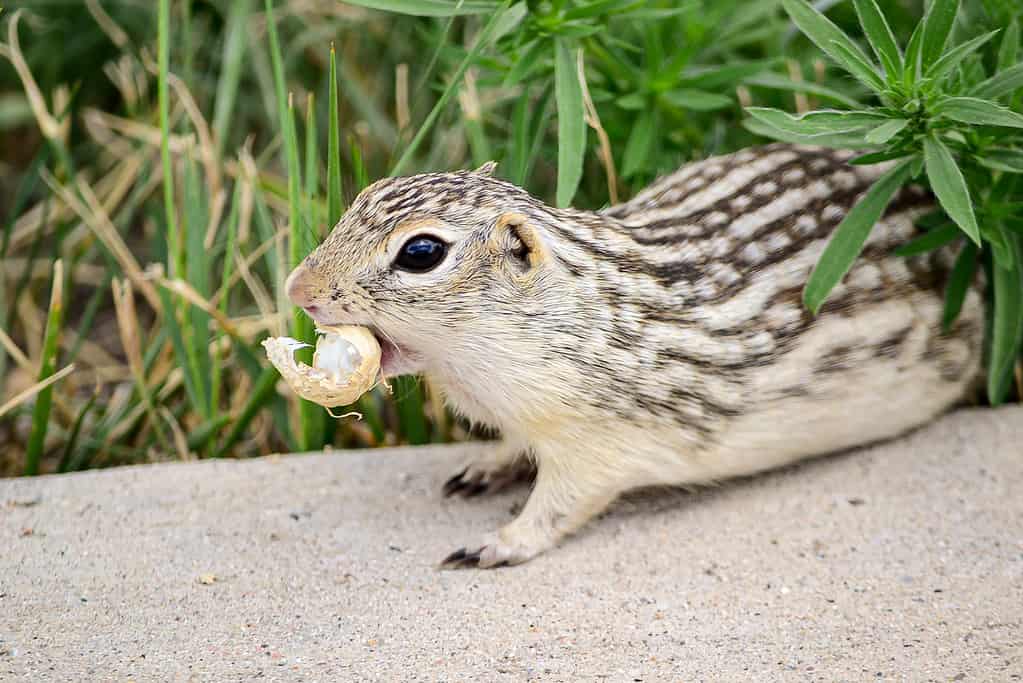
Thirteen-lined ground squirrels grow to about 10 inches long and weigh around 8 ounces.
©BT Images/Shutterstock.com
Although not native to Pennsylvania, the thirteen-lined ground squirrel (Ictidomys tridecemlineatus) has established a permanent home in the state after a single pair escaped captivity in 1919. Often mistaken for a rat-sized chipmunk, this animal gets its name from the thirteen light-colored stripes that run down its back. It is native to the grasslands and prairies of the North American Great Plains, but its range now extends from Canada to Texas and New Mexico.
Rhode Island
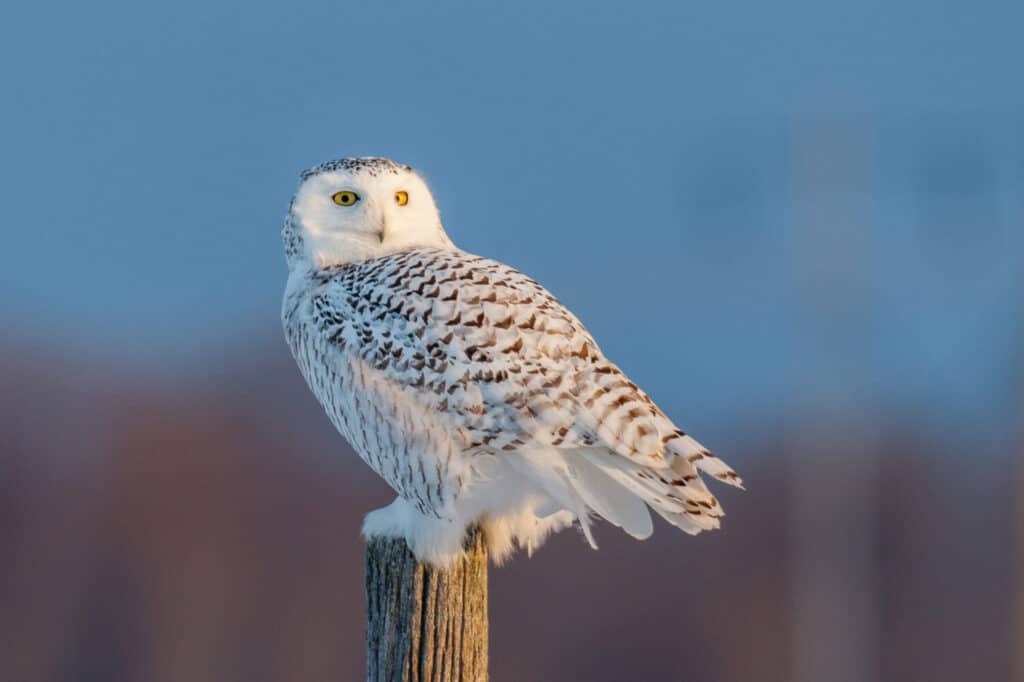
Rhode Island’s residents have reported spotting snowy owls on the rocky shoreline near the ocean.
©Guoqiang Xue/Shutterstock.com
Snowy owls (Bubo scandiacus) are native to the Arctic, but they can be spotted in Rhode Island during their annual winter migration. These beautiful birds are known to frequent open areas like Napatree Point and the Sachuest Point National Wildlife Refuge. However, spotting a snowy owl can be a challenge, as their brilliant white feathers act as camouflage against the winter landscape.
South Carolina
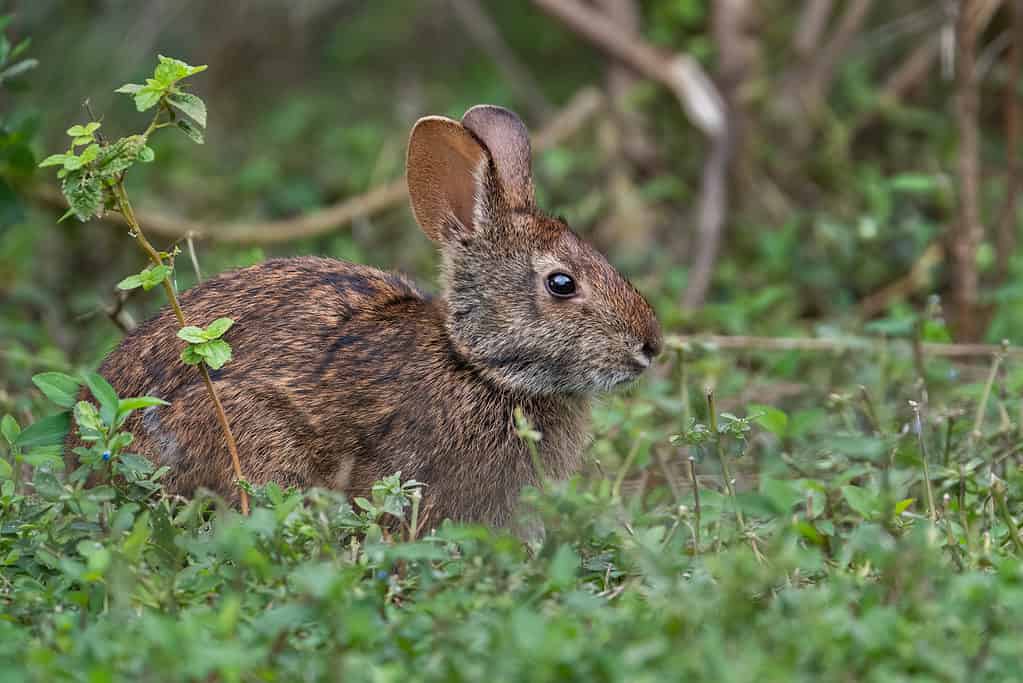
Marsh rabbits dive into the water to escape predators.
©iStock.com/MattCuda
We often picture rabbits living quietly in grassy fields or woodlands. However, South Carolina is home to the surprising marsh rabbit (Sylvilagus palustris), which lives in the watery landscapes of the state’s lowcountry. Unlike their woodland cousins, marsh rabbits are excellent swimmers and thrive in salt marshes and floodplain forests.
South Dakota
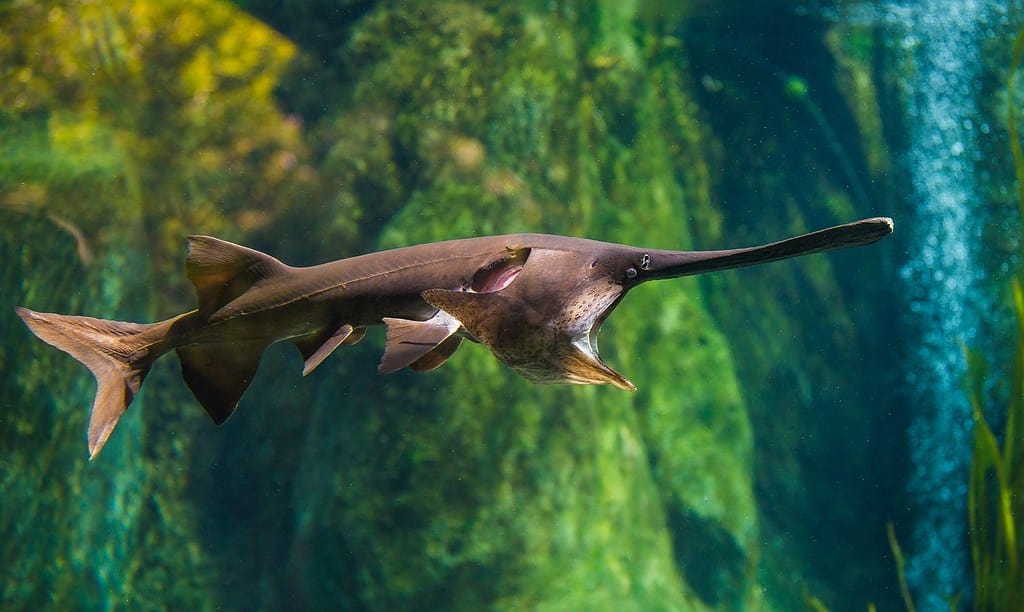
Paddlefish prefer quiet, slow-moving waters.
©Saran Jantraurai/Shutterstock.com
While the paddlefish (Polyodon spathula) looks like a deep-sea creature, it’s actually one of the largest freshwater fish in North America. Reaching lengths of over 6 feet and weighing more than 100 pounds, it gets its name from its remarkably long, paddle-shaped snout. In South Dakota, paddlefish are mainly found in the Missouri River and its reservoirs.
Tennessee
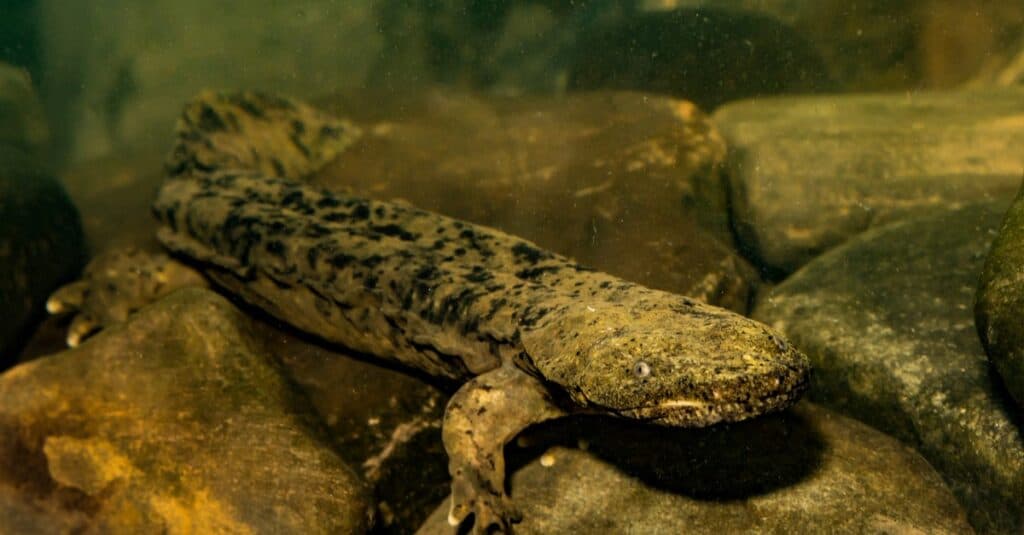
The hellbender is listed as endangered in Tennessee.
©Jay Ondreicka/Shutterstock.com
Growing up to 30 inches long, the eastern hellbender (Cryptobranchus alleganiensis) is the largest salamander in North America. Despite its size, this nocturnal creature is surprisingly difficult to spot, and its population has declined dramatically throughout its range. Hellbenders in Tennessee are scattered across the eastern two-thirds of the state.
Texas
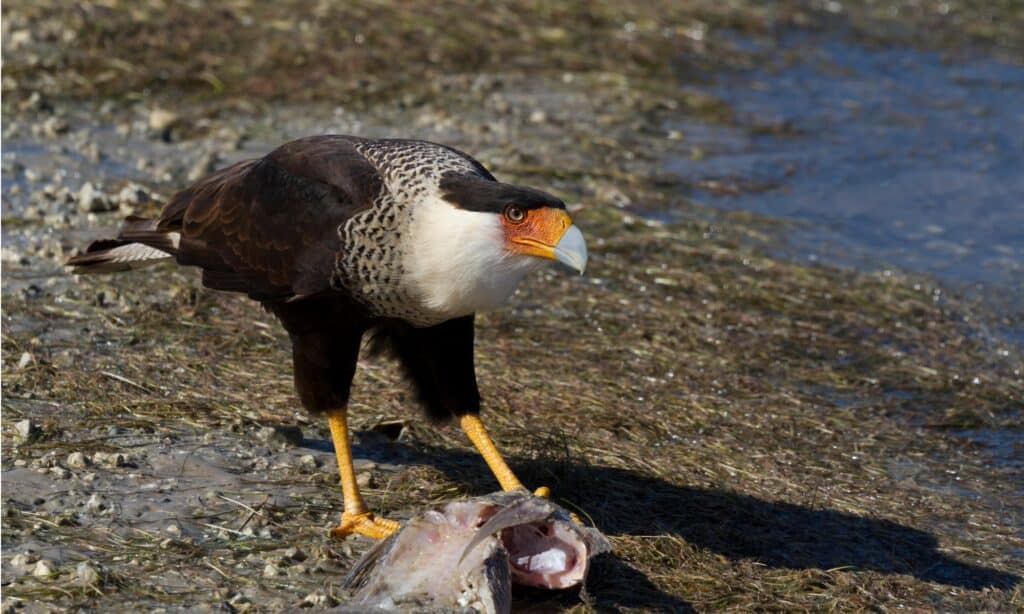
The crested caracara has a wingspan of up to 4 feet.
©iStock.com/Florence and Joseph McGinn
An exotic-looking raptor with a taste for open land, the crested caracara (Caracara plancus) is a surprising bird that calls Texas home. While it is native to Mexico and Latin America, its range extends into the southernmost United States. Unlike many other hawks, the crested caracara isn’t known for its graceful flight. Instead, it prefers to scavenge for food and spends much of its time on the ground.
Utah
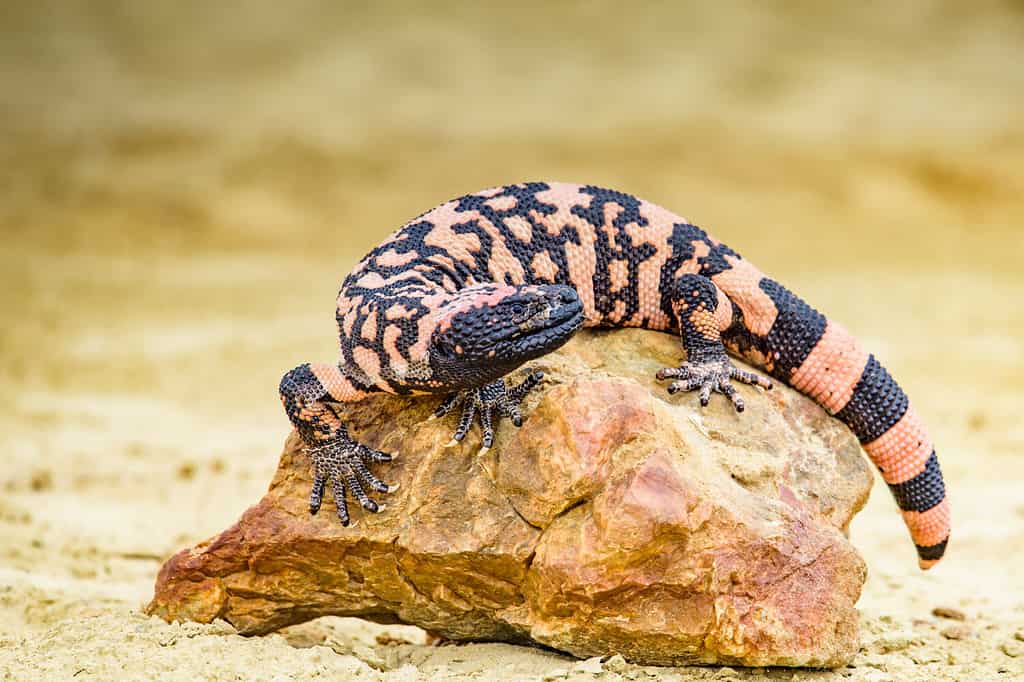
Because their bodies use energy slowly, Gila monsters don’t need to eat often and only spend about 5 percent of their time above ground.
©Vaclav Sebek/Shutterstock.com
An ancient and elusive reptile, the Gila monster (Heloderma suspectum) is a surprising resident of southern Utah. These lizards, which once co-existed with dinosaurs, are the largest native lizards in the United States, growing up to 2 feet long. They are one of the few venomous lizards in the world and can deliver a painful bite.
Vermont
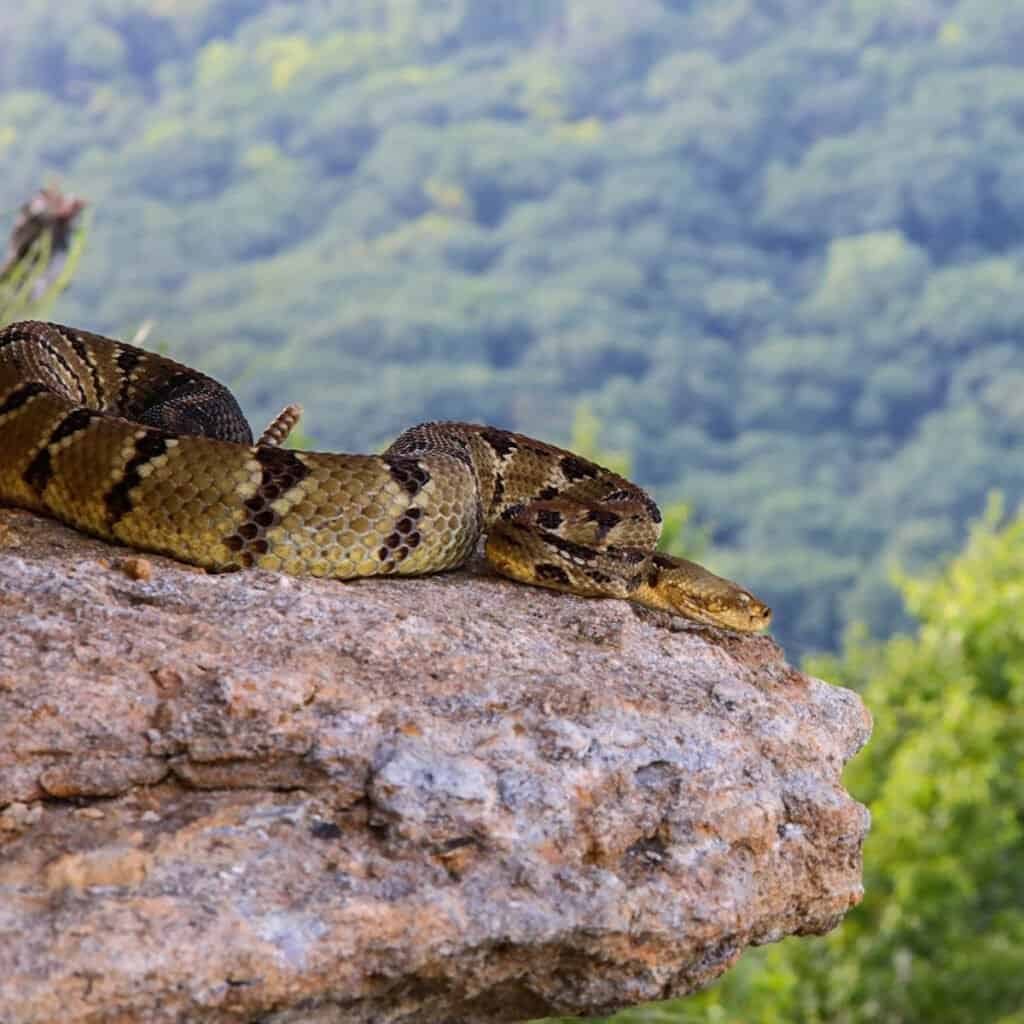
Timber rattlesnakes prefer rocky habitats with nearby woodlands.
©bradenjalexander/Shutterstock.com
It may come as a surprise, but there actually are rattlesnakes in Vermont. The timber rattlesnake (Crotalus horridus) is the state’s only venomous snake. These large, thick-bodied reptiles can reach 2 to 4 feet long and often have dark patterns on their bodies. Despite their dangerous venom, timber rattlesnakes are not aggressive. Timber rattlesnakes are an endangered species in Vermont. They are listed as a “Species of Greatest Conservation Need” due to their rarity and dwindling numbers.
Virginia
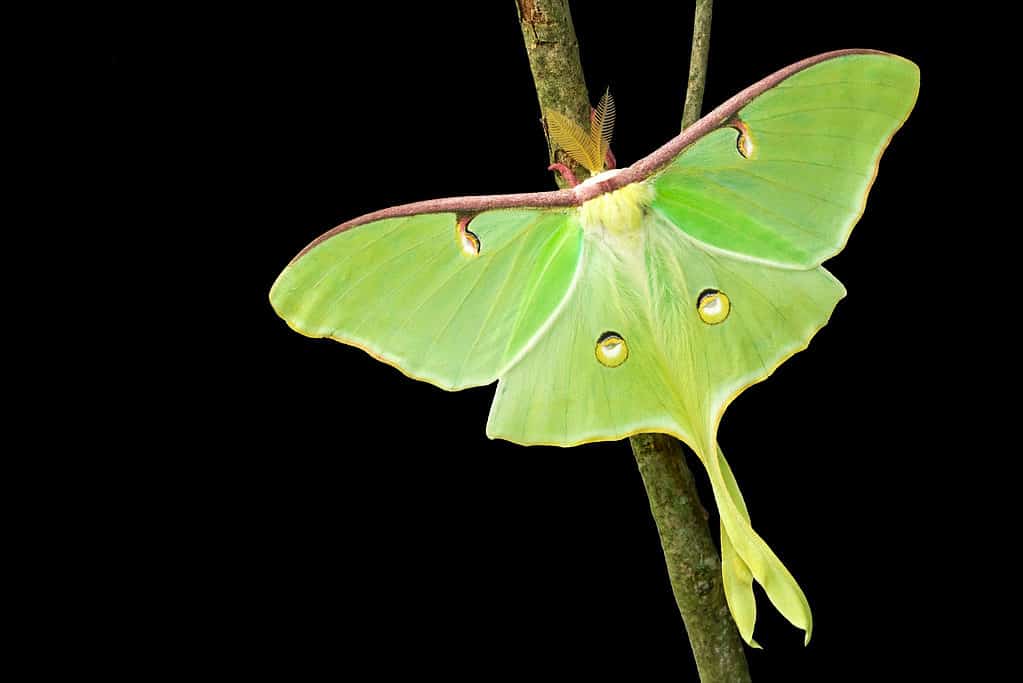
Luna moths are large insects with striking lime-green wings and long, elegant tails.
©JasonYoder/Shutterstock.com
Although native to the state, few residents ever get to see a luna moth (Actias luna) in Virginia. These stunning insects are active only at night and have a lifespan of just one week, making them a very rare sight. The luna moth’s life is so brief that adults don’t even have mouthparts, as they do not need to eat.
Washington

The largest geoduck on record weighed over 8 pounds.
©Nicolas-SB/Shutterstock.com
One of Washington’s most peculiar and unexpected animals is the geoduck clam (Panopea generosa), which is common in the Puget Sound. Weighing about 2 pounds on average, geoducks have long siphons, which can stretch up to 3 feet long. It takes them about 15 years to reach their maximum size, but they can live for over 170 years. They spend most of their lives buried 2 to 3 feet deep in the ground and are only visible during low tides.
West Virginia
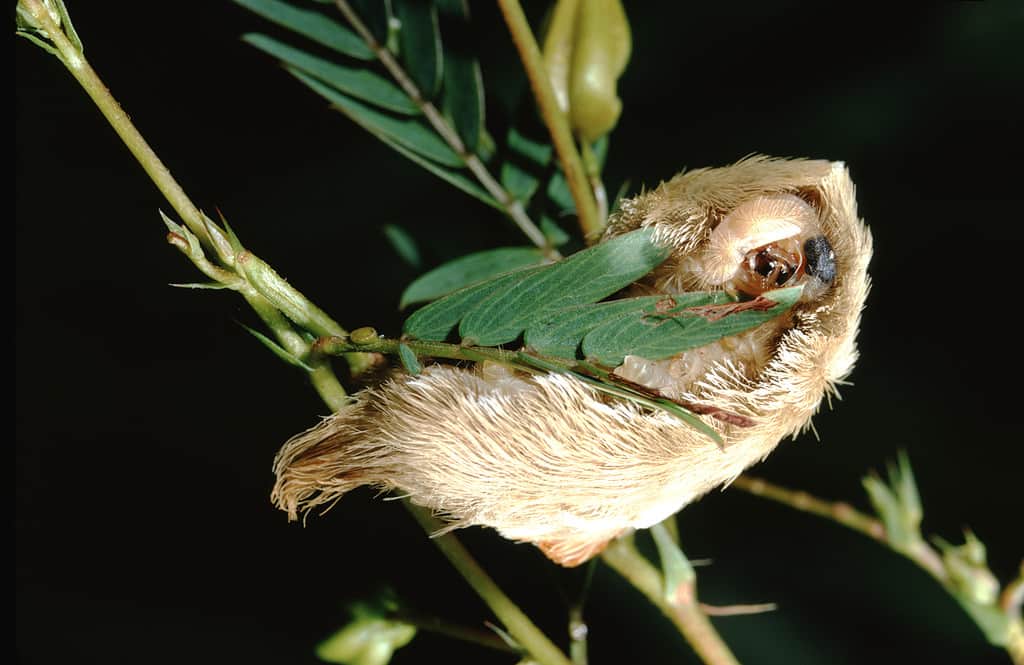
Puss caterpillars don’t sting intentionally, but even accidentally brushing one can be quite painful.
©Weber/iStock via Getty Images
It may sound like something out of a nightmarish fairytale, but furry, venomous caterpillars are very real, and surprisingly, they live in West Virginia. The puss caterpillar is the larval stage of the southern flannel moth (Megalopyge opercularis). Its soft-looking hairs, known as setae, hide venomous spines that can deliver a painful and dangerous sting if touched.
Wisconsin
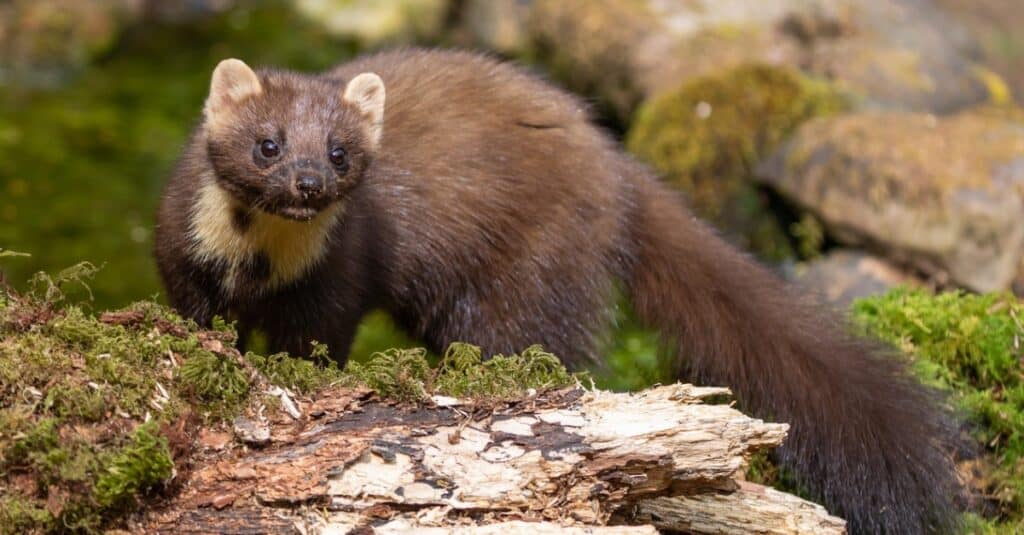
The American marten is a state-endangered mammal in Wisconsin.
©David OBrien/Shutterstock.com
The American marten, or pine marten (Martes americana), is a surprising animal found in Wisconsin. Unregulated trapping and logging caused the animal’s population to disappear almost entirely by the 1930s, but it is now slowly making a comeback in Wisconsin. Conservation efforts have focused on reintroducing these special animals to the Nicolet and Chequamegon National Forests. As a result, small populations of martens have been reestablished along Wisconsin’s northern border.
Wyoming
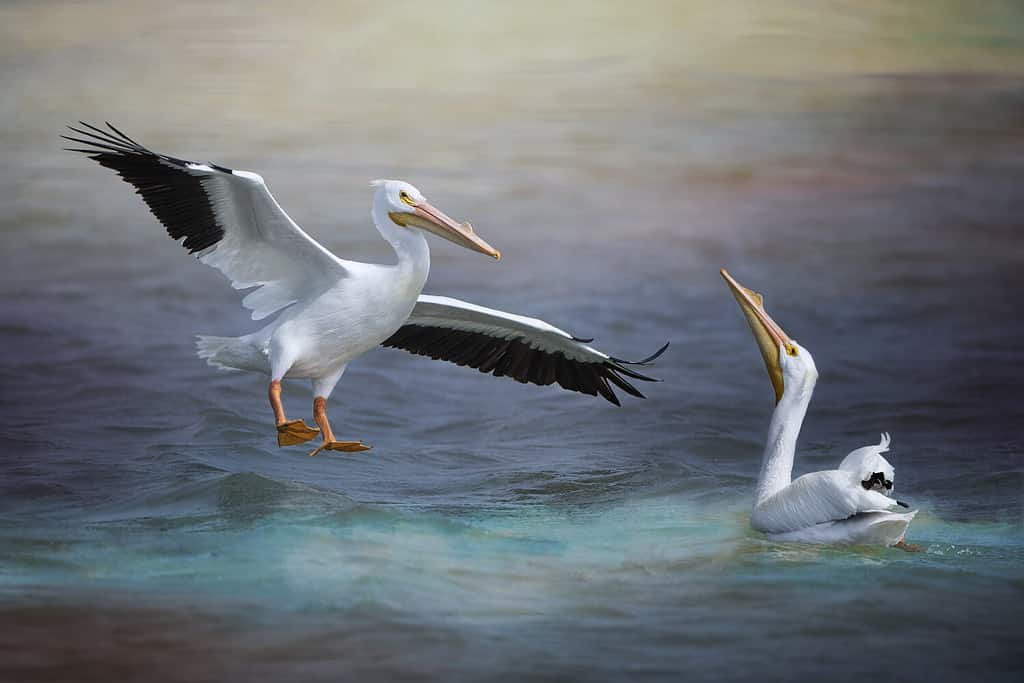
In Wyoming, American white pelicans primarily breed in Albany, Carbon, and Fremont counties, as well as in Yellowstone National Park.
©Bonnie Taylor Barry/Shutterstock.com
Although it is a landlocked state, Wyoming is home to a surprising number of American white pelicans (Pelecanus erythrorhynchos). As migratory birds, pelicans do not live in Wyoming year-round, but they often fish and nest on islands in the state’s large inland lakes during the breeding season.