
The Great Smoky Mountains National Park straddles North Carolina and Tennessee. It spans more than 520,000 acres and includes part of the Great Smoky Mountains and the Blue Ridge Mountains. The park attracts 12 to 13 million visitors per year and is particularly popular with both hikers and climbers. There are around 850 miles of trails in the park, as well as several campsites. However, if you’re visiting the park, then you might also want to know what animals you’re likely to encounter, so take a look at the list below!
Bats
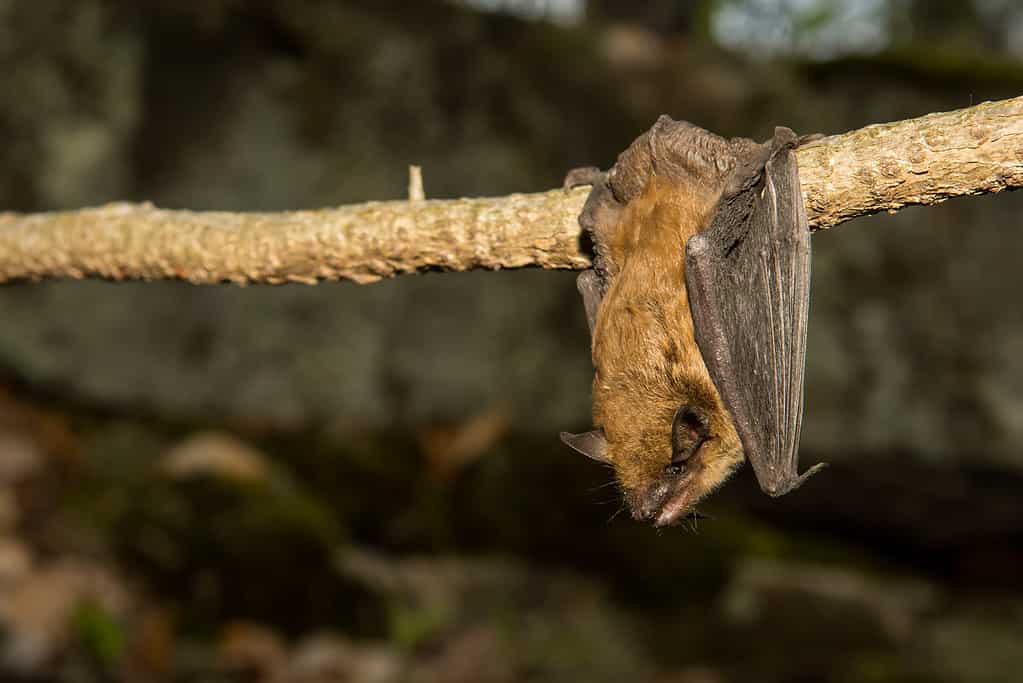
Big brown bats are one of thirteen species in the national park.
©JasonOndreicka/ via Getty Images
There are thirteen species of bats in the Great Smoky Mountains National Park, and they can often be seen in the evening and during the night. Common species include the big brown bat (Eptesicus fuscus), which has a wingspan of approximately 13 to 14 inches. However, the park is also home to the Indiana bat (Myotis sodalis), which is a federally endangered species. Unfortunately, the bats in the park are threatened by a fungal disease called white-nose syndrome.
Bobcat
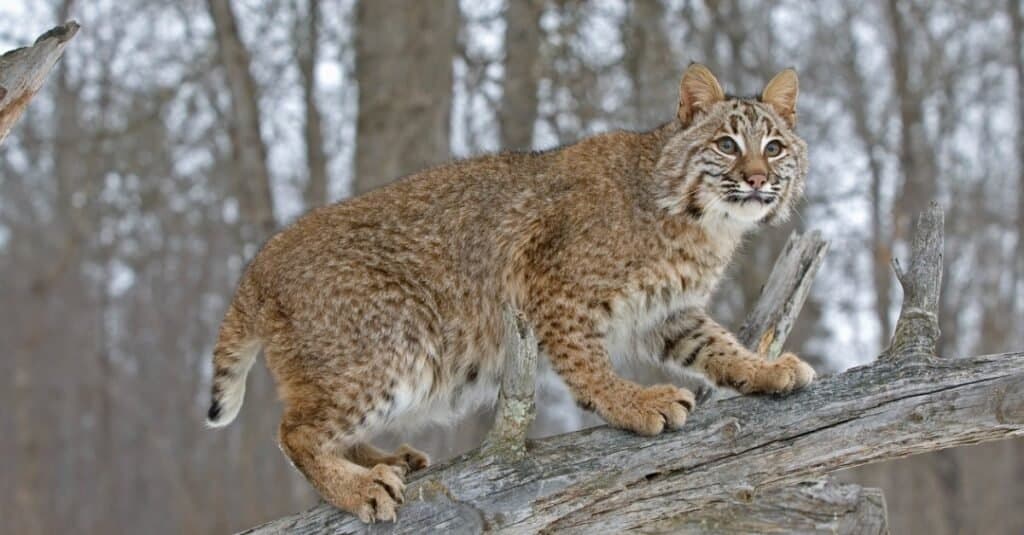
Bobcats can be found in forests and woodlands.
©iStock.com/JohnPitcher
One of the most elusive animals in the park is the bobcat (Lynx rufus), which inhabits forests and woodlands. Bobcats are medium-sized animals and can be up to 50 inches long, not including their short tail, which is typically only four to seven inches long and is their most distinctive feature. However, they also have short, pointed ears with black tufts. Bobcats are excellent hunters and usually prey on birds and small mammals.
Bears
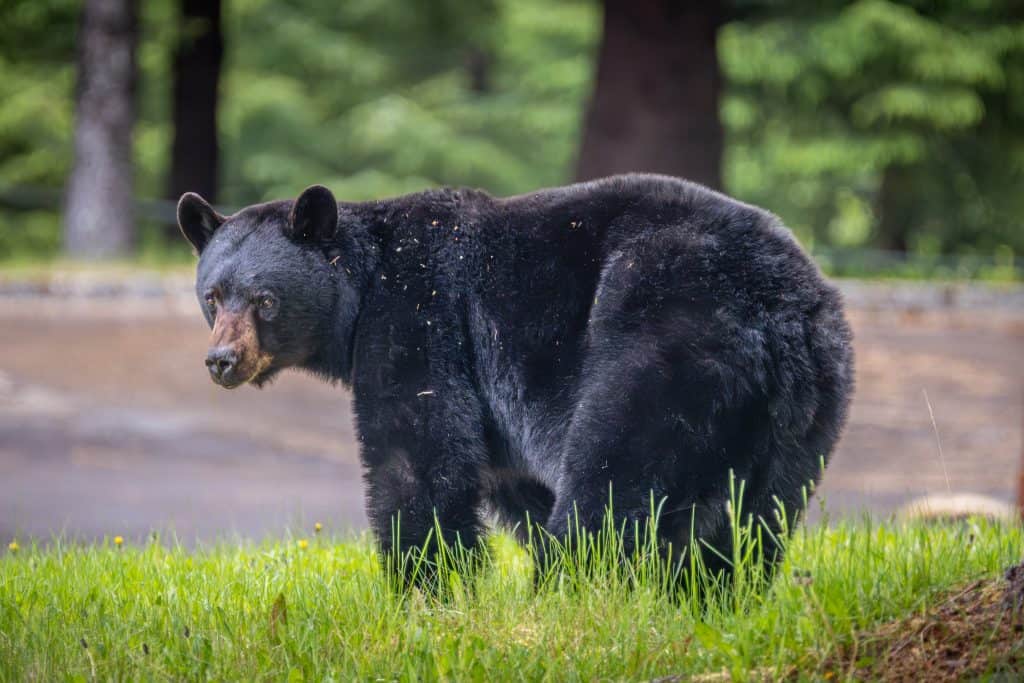
Black bears can be found all over the park.
©Freaktography/Shutterstock.com
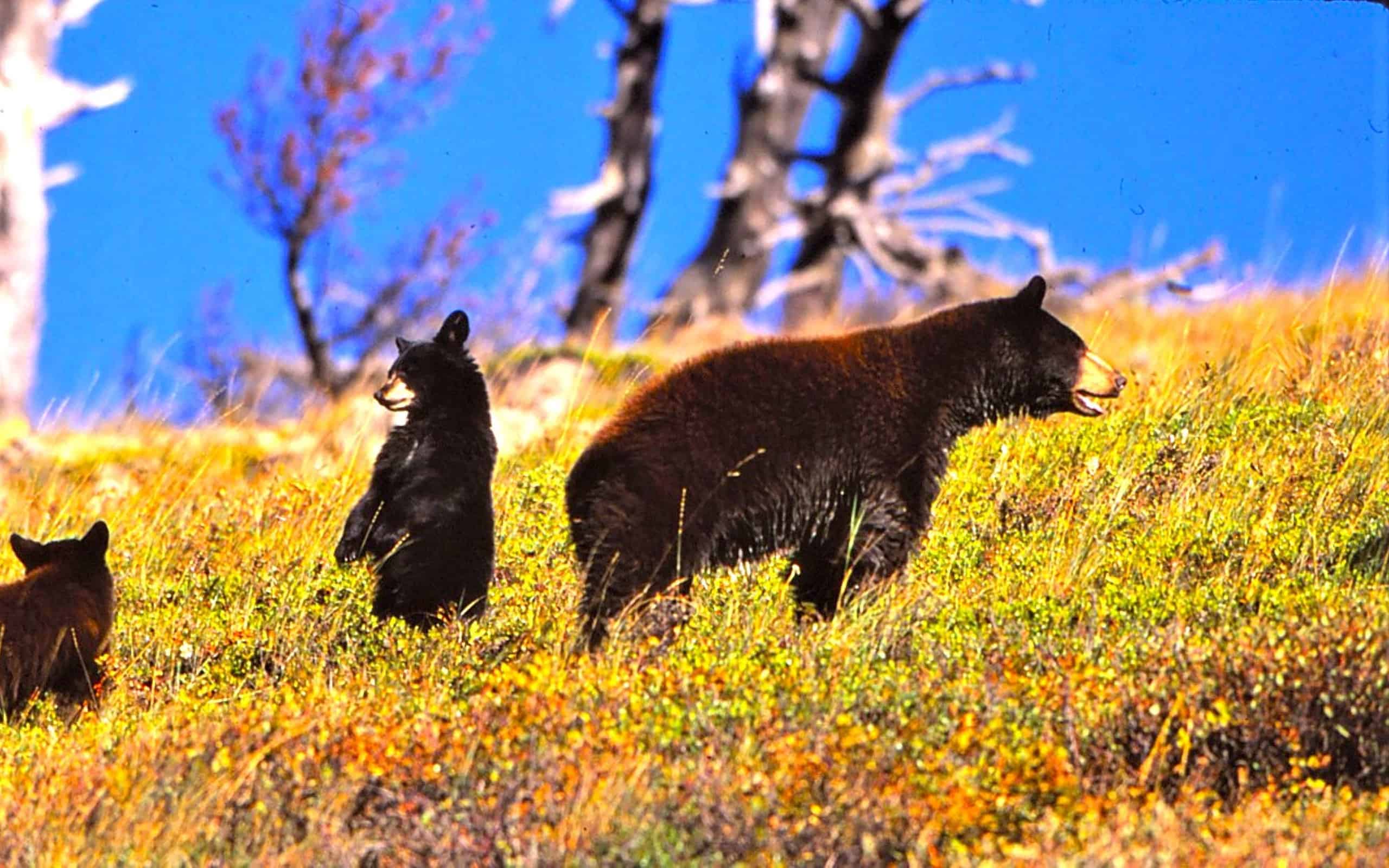
One animal that you’ll definitely need to look out for is the black bear (Ursus americanus), which lives in habitats right across the park. Although black bears aren’t the largest bear species, they are still powerful animals and can weigh up to 500 pounds. They eat a variety of vegetation and berries, but they can also prey on animals such as deer. The park has one of the largest black bear populations in North America so you should always be aware of the possibility of an encounter and follow the park’s bear guidelines.
Coyote
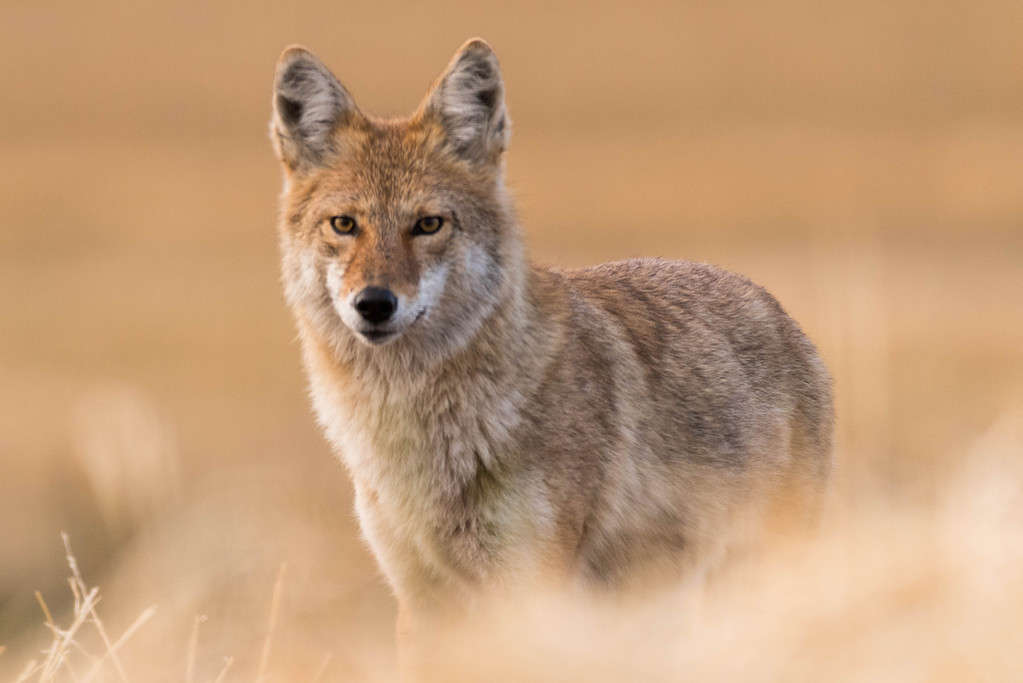
Coyotes live in a variety of habitats within the park.
©hartmanc10/iStock via Getty Images
You might also spot coyotes (Canis latrans) while you’re in the Great Smokies. Coyotes are extremely adaptable animals and can be found in many different habitats. They are excellent hunters and prey on animals such as birds, rodents, rabbits, and amphibians, although they also sometimes prey on larger animals like deer. Coyotes live in small family units and hunt alone or in pairs. They are most active at dawn and dusk but can also sometimes be spotted throughout the day.
Elk
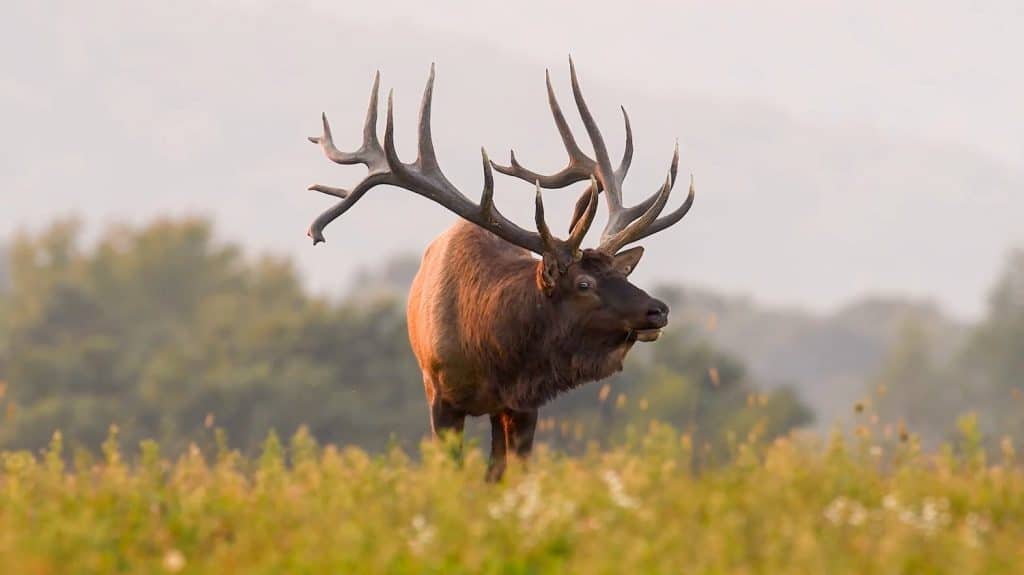
The Cataloochee and Ocanaluftee Valleys are good places to spot elk.
©Swaroop Pixs/Shutterstock.com
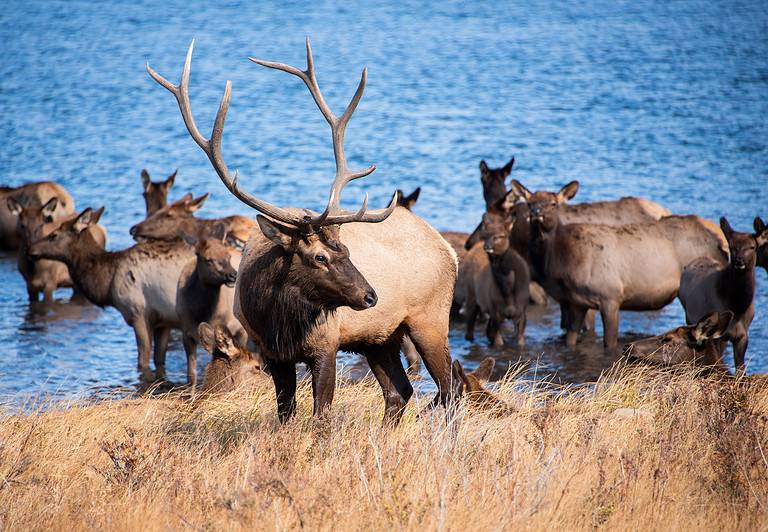
Elk (Cervus canadensis) are some of the largest animals in the park, reaching approximately five feet at the shoulder. They were once extirpated from the area due to overhunting, but they were successfully reintroduced in 2001. Elk live in a range of habitats but are most often spotted around the Oconaluftee and Cataloochee Valleys.
Foxes
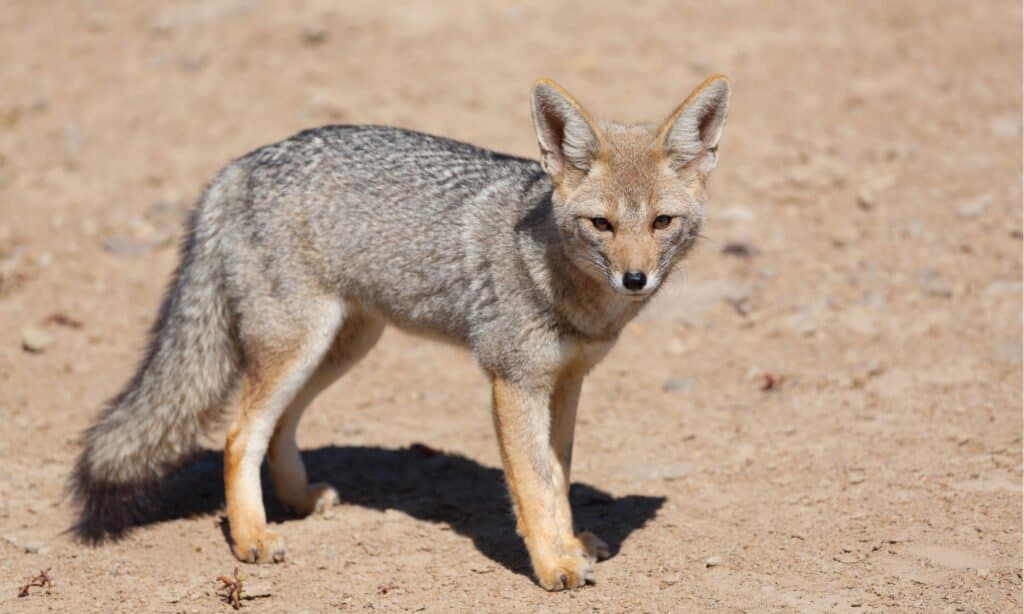
Gray foxes are quite common in the Great Smokies.
©sunsinger/Shutterstock.com
Two species of foxes live in the Great Smoky National Park — gray foxes (Urocyon cinereoargenteus) and red foxes (Vulpes vulpes). Gray foxes are more abundant than red foxes but favor thick forest regions, so they’re not seen as often. However, red foxes are capable of living in a variety of different habitats.
Frogs
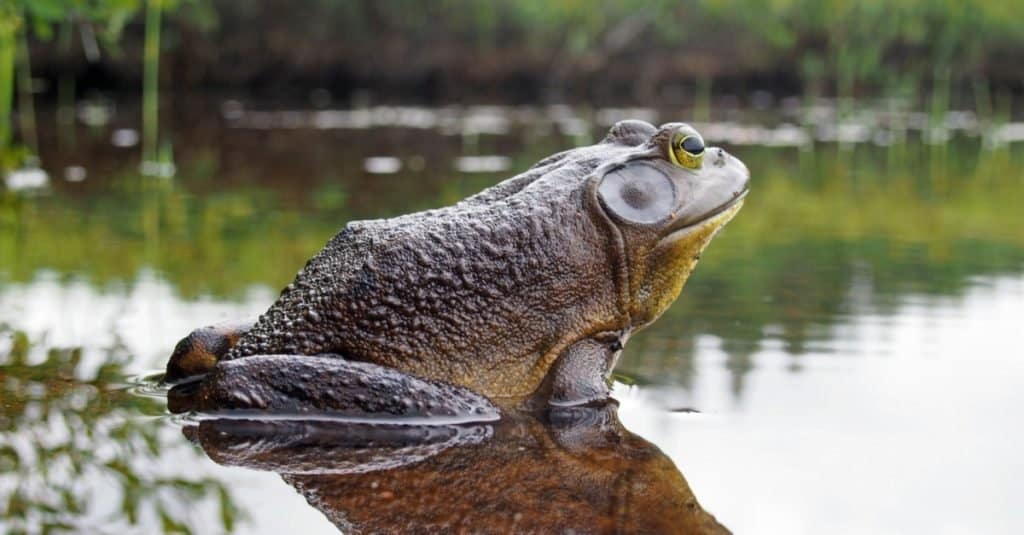
Frogs can be found in most freshwater habitats.
©Christian Ouellet/Shutterstock.com
Approximately ten species of frogs live in the national park, and bullfrogs, wood frogs, and spring peepers are the most common. Spring peepers (Pseudacris crucifer) are chorus frogs and are known for their high-pitched “peep” call, which is heard most frequently during the spring months as the males are searching for females.
Hawks
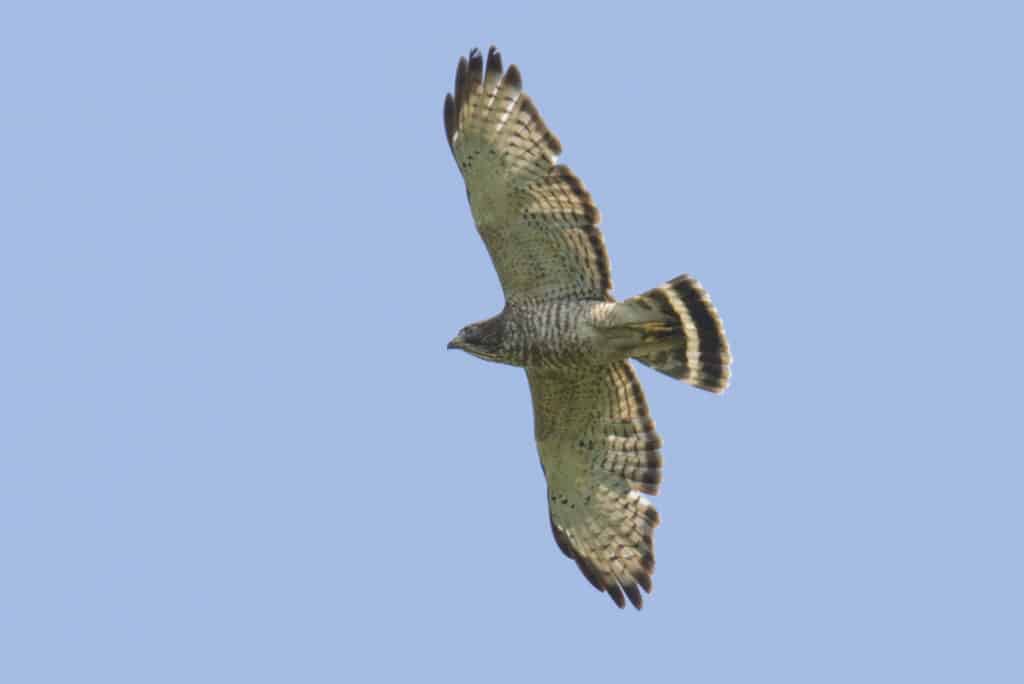
The broad-winged hawk is one of the most common hawks in the national park.
©iStock.com/lrh847
Hawks are also frequently spotted in the park, and there are several species in the region. One of the most common species is the broad-winged hawk (Buteo platypterus), which is dark brown with a white belly. Other species include the red-tailed hawk, northern goshawk, and Cooper’s hawk, although they are not spotted as often.
Hummingbirds
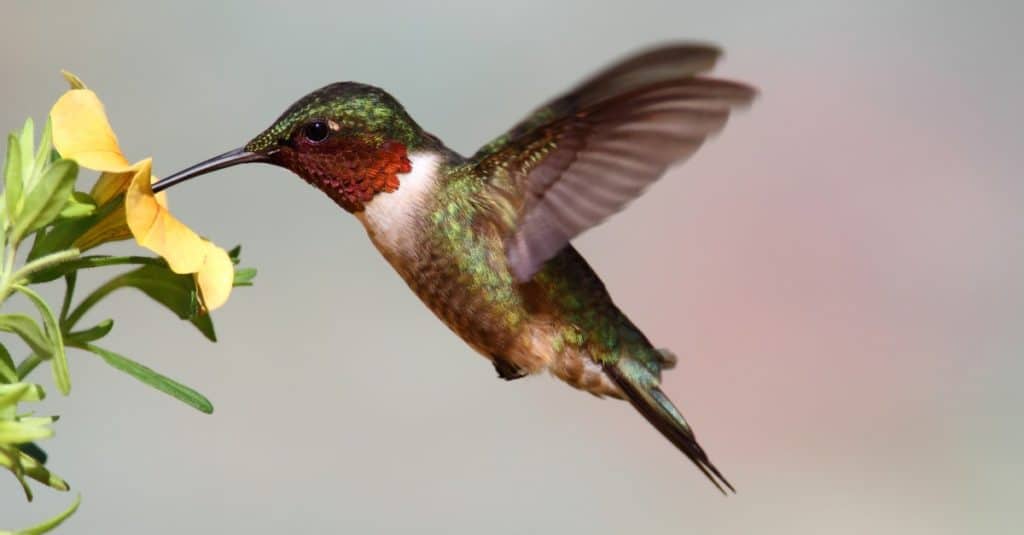
Tiny ruby-throated hummingbirds have a stunning appearance.
©Steve Byland/Shutterstock.com
Hummingbirds are some of the smallest birds in the Smokies. Ruby-throated hummingbirds (Archilochus colubris) are the ones that you’re more likely to see and are approximately three inches long. Males are slightly smaller than females and can be distinguished by their bright, ruby-colored throat patch. Rufous hummingbirds are a similar size, but males have a reddish-orange throat patch.
Lizards
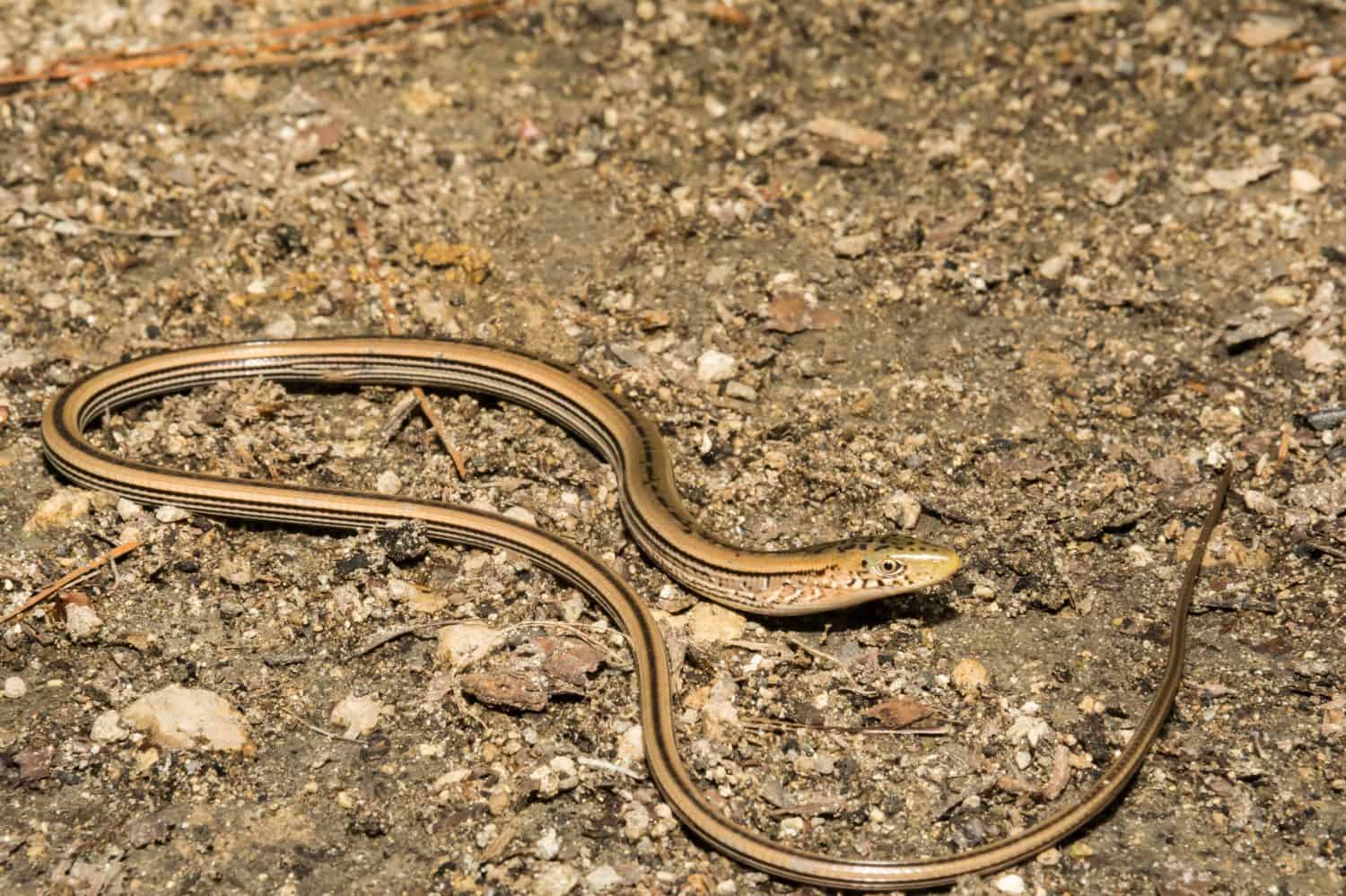
Although it looks like a snake, the eastern slender glass lizard is actually a lizard.
©Jay Ondreicka/Shutterstock.com
There are nine species of lizards living in the Great Smoky Mountains National Park, and these include eastern slender glass lizards, eastern fence lizards, and broadhead skinks. The eastern slender glass lizard (Ophisaurus attenuatus longicaudus) is the most unusual lizard in the park, as it lacks legs and instead resembles a snake. They’re also known for their ability to break off part of their tail to escape predators, although the tail does not fully regenerate. Lizards can typically be found in habitats at low elevations within the park.
Northern Cardinal
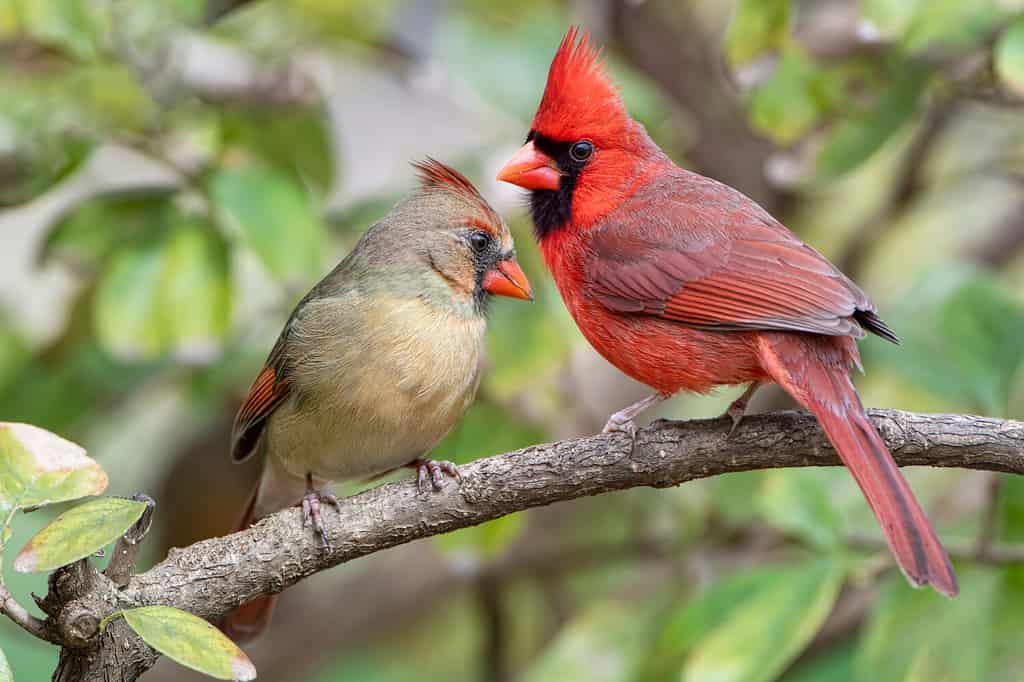
Northern cardinals are easily recognizable by their bright appearance.
©Bonnie Taylor Barry/Shutterstock.com
The northern cardinal (Cardinalis cardinalis) is one of the most stunning birds that you could see. Males are bright red with black markings over their eyes, while females have fawn plumage with a reddish tinge. Males are a little larger than females and are around eight to nine inches long. Northern cardinals often live in forests and woodlands, where there is plenty of food for them to forage. Their diet consists of fruit, grains, seeds, and insects.
Rabbits
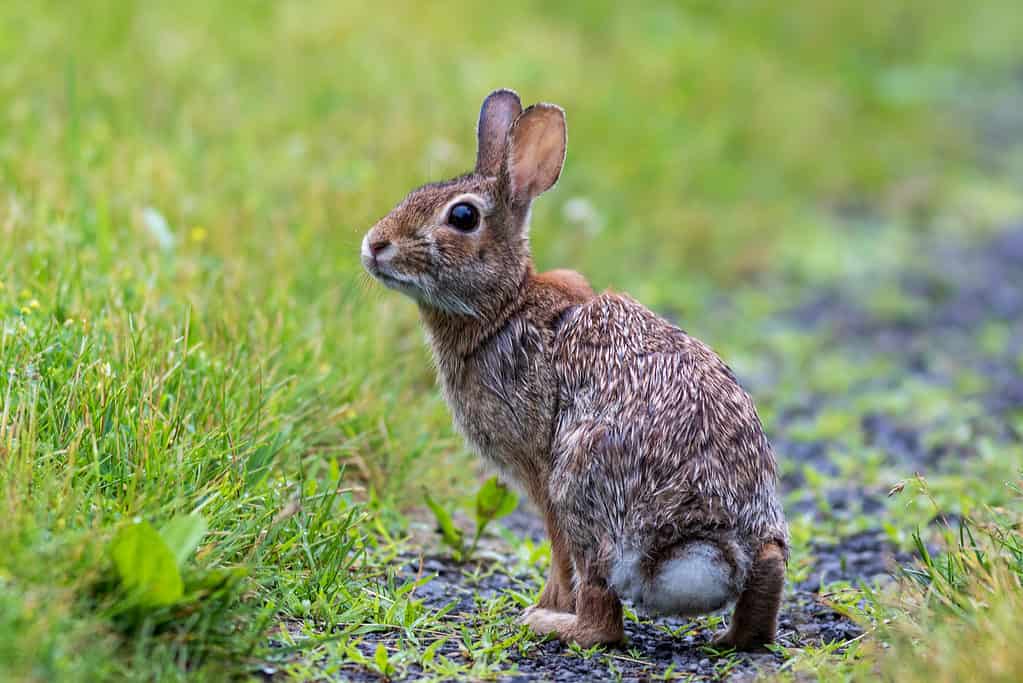
There are two species of rabbits in the national park.
©Rabbitti/Shutterstock.com
Rabbits are another common animal in the park, and the two species present are the eastern cottontail (Sylvilagus floridanus) and the Appalachian cottontail (Sylvilagus obscurus). You’re more likely to spot eastern cottontails, as they are present in a range of habitats, including meadows and grasslands. However, Appalachian cottontails are much rarer, as they are endemic to the Appalachian Mountains, and in the park, they are only found in forests at high elevations — typically between 2,000 and 2,500 feet.
River Otter
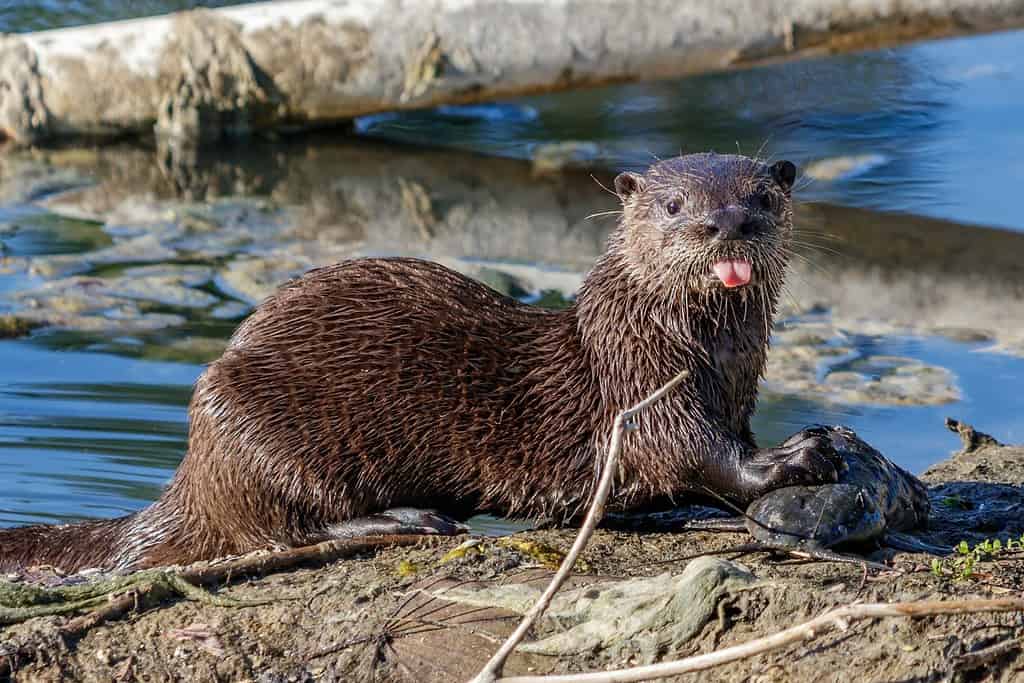
River otters were successfully reintroduced to the national park.
©Microfile.org/Shutterstock.com
Although they were once eradicated from the area, river otters (Lontra canadensis) were successfully introduced to the national park. Over the course of eight years, from 1986 to 1994, 137 otters were released in the area, allowing the species to once again thrive. River otters build their dens in the riverbanks or under logs where they have easy access to the water. They typically prey on a variety of fish, crustaceans, and amphibians.
Salamanders
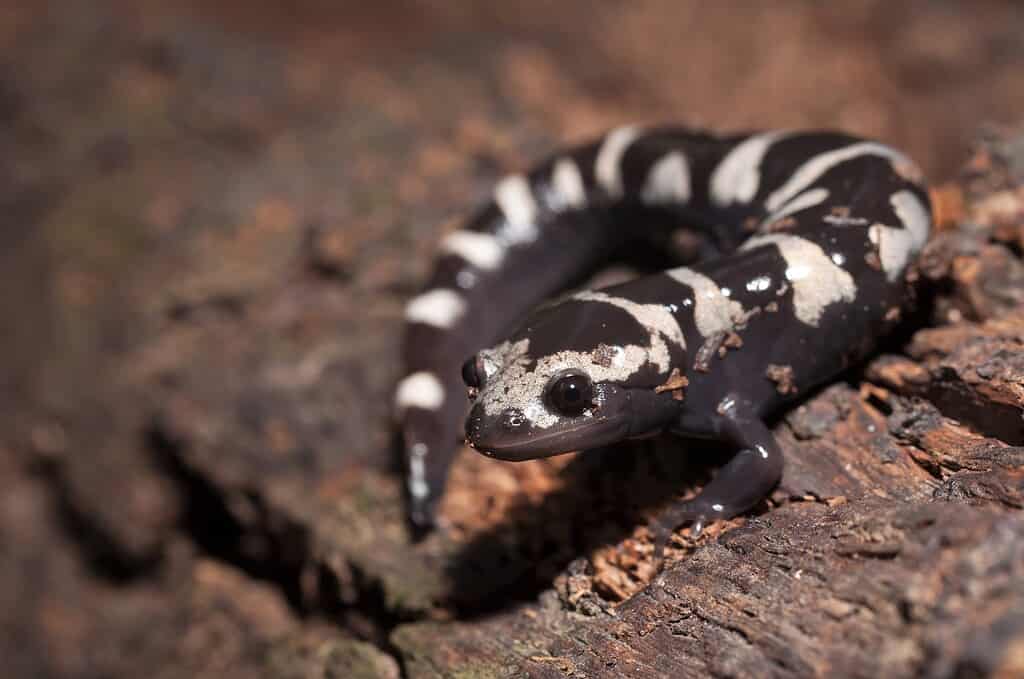
The Great Smokies are home to around 30 species of salamanders.
©Mike Wilhelm/Shutterstock.com
If there’s one thing that the Great Smoky Mountains National Park is known for, then it’s salamanders. It’s estimated that there are around 30 different species living in the Great Smokies. Incredibly, 25 of these species are “lungless”. This means that they lack lungs and instead “breathe” through their skin and the lining of their mouth using gas exchange. Salamanders can typically be found in forests and around rivers and streams.
Snakes

There are only two venomous snakes in the national park.
©Creeping Things/Shutterstock.com
The national park is home to a lot of snakes, and there are 23 species living within its boundaries. Thankfully, only two of these species are venomous — the copperhead (Agkistrodon contortrix) and the timber rattlesnake (Crotalus horridus). Timber rattlesnakes tend to inhabit forests, mountains, and rocky areas, while copperheads can be found in forests, rocky areas, and wetlands. Some of the non-venomous species include corn snakes, rat snakes, ring-neck snakes, and northern water snakes.
Squirrels
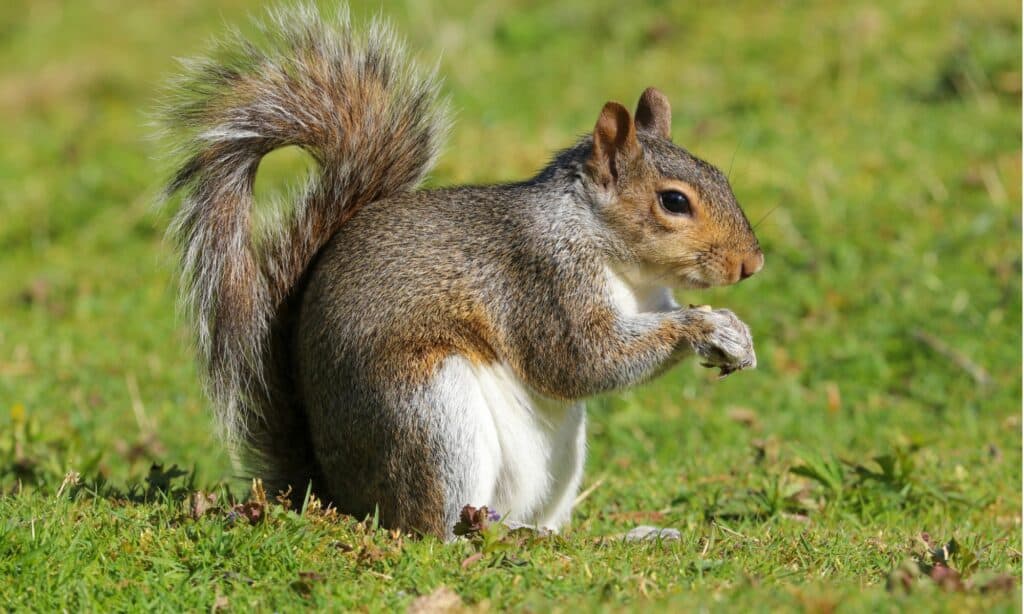
Gray squirrels are some of the most common animals that you’ll see.
©iStock.com/Helen Davies
You’re also likely to spot squirrels during your visit, as they’re frequently found both in forests and around picnic areas. Red and grey squirrels are common species, as is the southern flying squirrel. Rarer species include the eastern fox squirrel and the Carolina northern flying squirrel. Southern flying squirrels (Glaucomys volans) and Carolina northern flying squirrels (Glaucomys sabrinus coloratus) are both more active at night. Despite their name, neither species is capable of true flight. Instead, they glide using a fold of skin called a patagium.
Toads
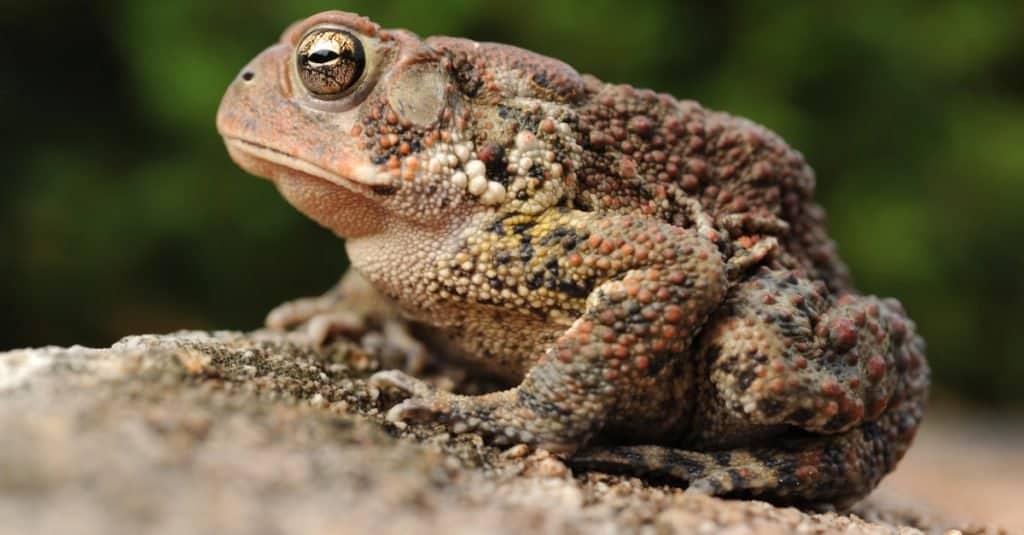
Toads can be found in freshwater habitats around the park.
©Miles Boyer/Shutterstock.com
There are also a few species of toads in and around the freshwater habitats, but American toads (Anaxyrus americanus) are the most common. American toads are approximately two to 3.5 inches long and can be green, brown, black, or yellow in color. Other toads in the area include Fowler’s toad and eastern narrow-mouthed toads, although both are much less common.
Turtles
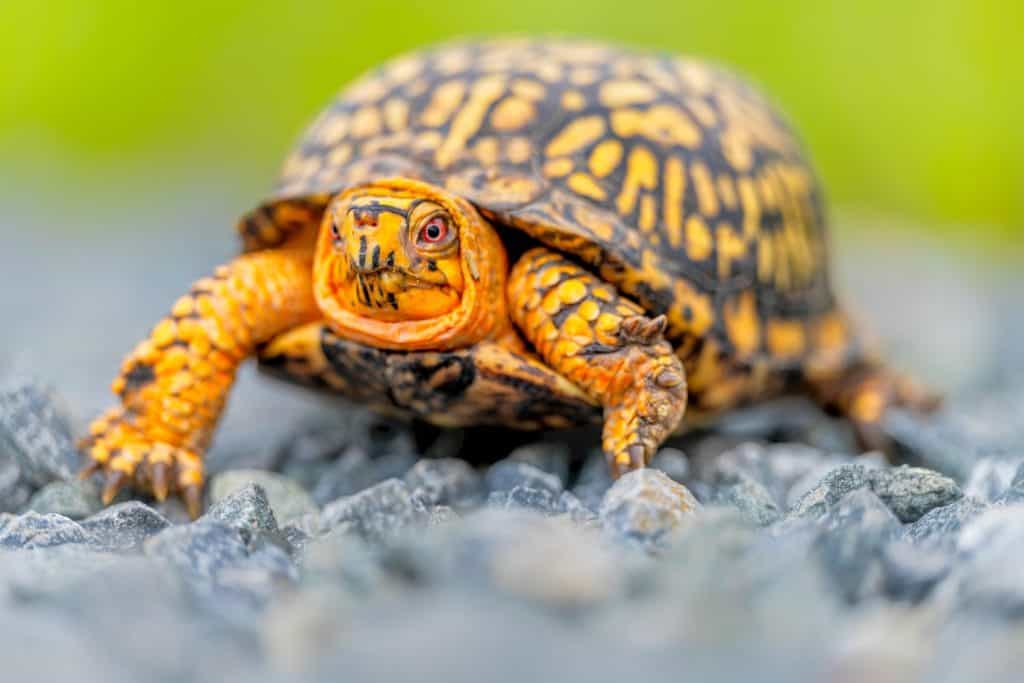
Eastern box turtles can be found in the Great Smokies.
©Buvana Bala/Shutterstock.com
You can also find eight different species of turtles in the national park — including snapping turtles, painted turtles, and box turtles. Turtles can be found in freshwater habitats such as rivers, ponds, and streams throughout the region. One of the most common species is the eastern box turtle (Terrapene carolina carolina), which tends to favor moist forests. They can be distinguished by their high-domed shell and bright markings, which are usually yellow, orange, or red.
Vireos

Yellow-throated vireos are small but stunning songbirds.
©JoshuaGoddard/Shutterstock.com
Vireos are also widespread across the park. The most common species are the red-eyed vireo (Vireo olivaceus) and the yellow-throated vireo (Vireo flavifrons). Both species are found in forests and woodlands in the park, but migrate to South America during the winter. Red-eyed vireos are particularly vocal birds and are known for their ability to sing continually for long periods of time.
Warblers
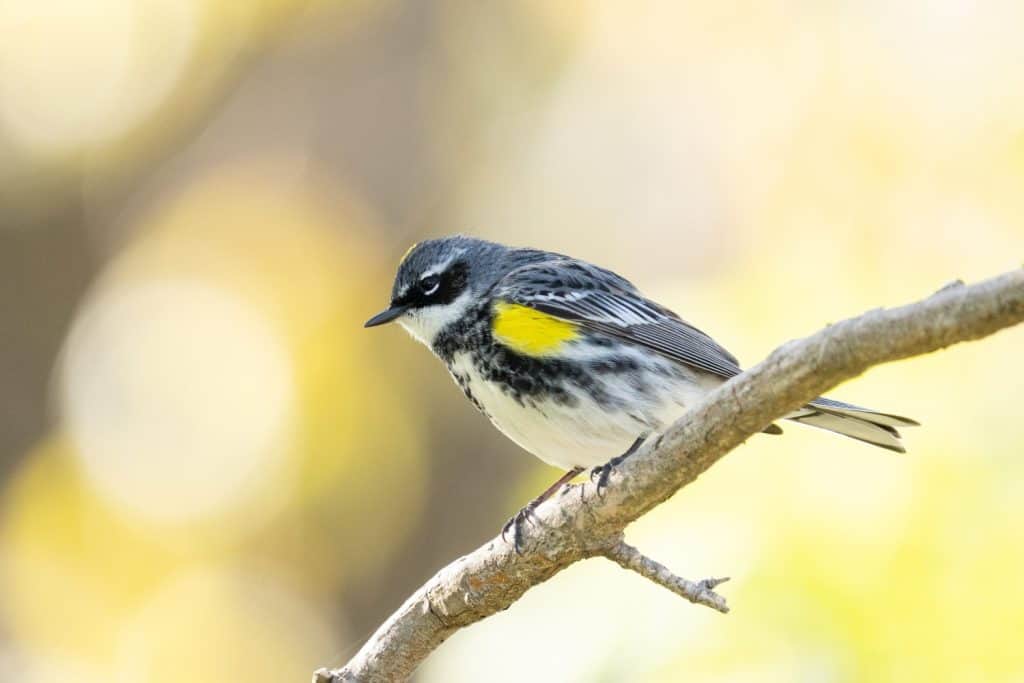
There are several species of warblers living in the national park.
©Griffin Gillespie/Shutterstock.com
You might also spot some warblers during your visit, as there are numerous species present in the park. Some of the most common species are the yellow-rumped warbler, chestnut-sided warbler, and the Blackburnian warbler. Yellow-rumped warblers are approximately four to five inches long and are distinguished by their yellow markings. They prefer forest habitats during their breeding season, but favor more open habitats during the winter.
White-Tailed Deer
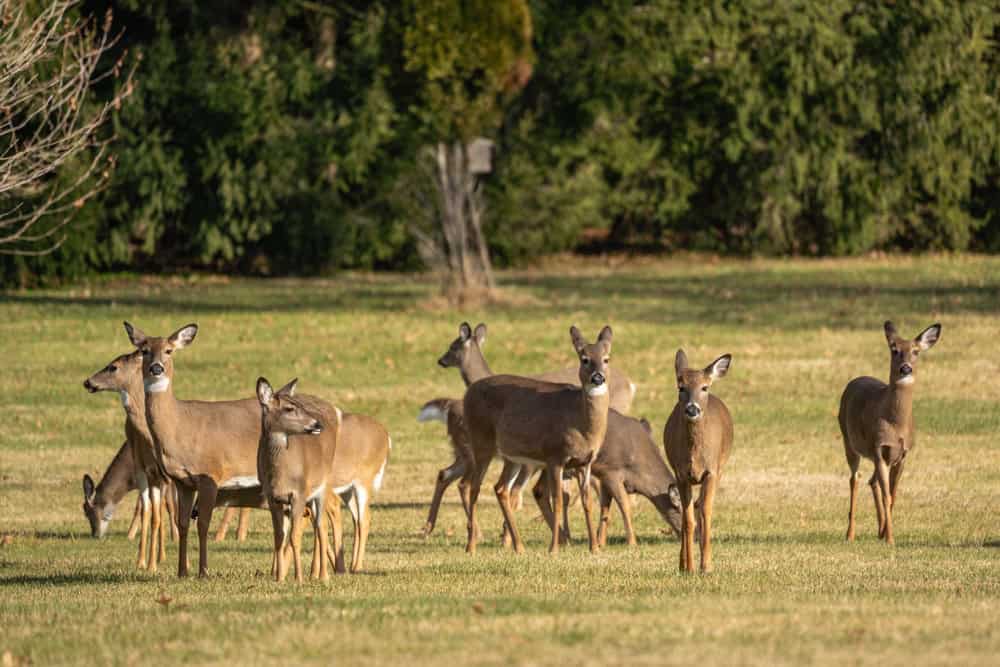
White-tailed deer can be found around Cataloochee Valley and Cades Cove.
©Amy Lutz/Shutterstock.com
You’ll also find white-tailed deer (Odocoileus virginianus) in the park. They’re easily recognizable due to the white patch on the underside of their tail. This patch is most visible when they lift their tail up, which they typically do when they are alarmed or disturbed. White-tailed deer tend to prefer open habitats in the park and can usually be spotted around Cataloochee Valley and Cades Cove.
Woodchuck
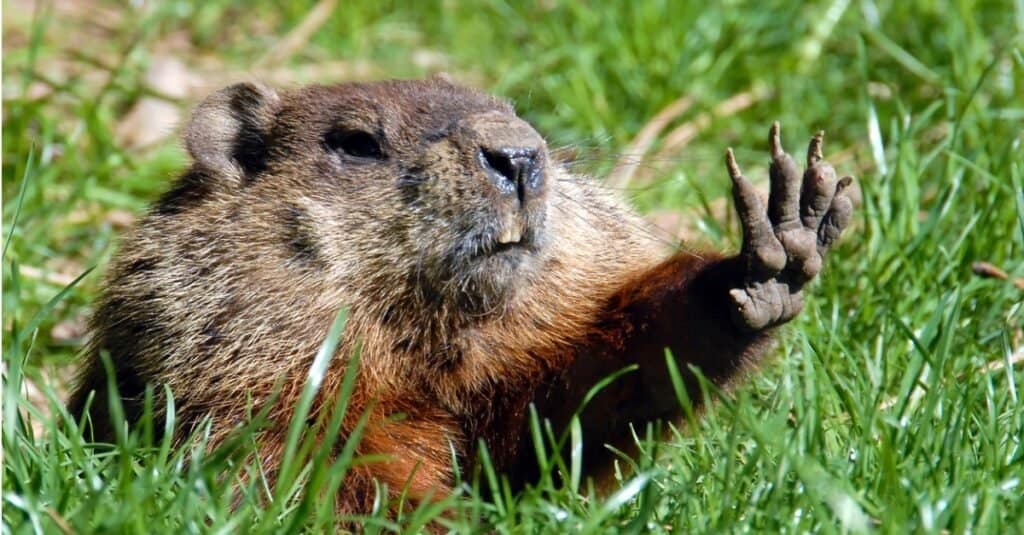
Groundhogs can be spotted in lowland grasslands.
©iStock.com/mirecca
Another rodent you might spot in the Smokies is the woodchuck (Marmota monax), which is also known as the groundhog. Woodchucks are mainly found in grasslands in the lowland regions. They are burrowers and quickly retreat to safety if disturbed.