
Quick Take
- In Russian folklore, frogs are added to milk to keep it fresh.
- Scientific investigations have shown that some frog skin contains antibacterial peptides.
- Some frog skin peptides can inhibit the growth of some bacteria on a similar scale to modern antibiotics.
Modern food preservation methods are significantly different from those that our ancestors had at their disposal. Refrigeration is a modern concept, so people who lived hundreds of years ago needed to use alternative methods to keep their milk fresh. The idea of putting a live frog in a pail of milk may sound bizarre to you, but this approach has its roots in Russian folklore and also has some scientific basis.
Frogs and Milk in Folklore
Humans have been drinking milk from domesticated animals for at least 10,000 years. Before the advent of refrigeration, however, preventing spoilage was a challenge. The natural bacteria in milk multiply rapidly at room temperature, so it turns sour in a few days. Spoiled milk is both unpalatable and potentially harmful.

Milk does not last in warm temperatures.
©Mustapha GUNNOUNI/iStock via Getty Images
In Russian folk tradition, frogs are a symbol of endurance and transformation. In some folk tales, this is linked with milk. One story tells how two frogs fell into a milk can. One gives up hope and perishes, but the other keeps swimming so vigorously that it churns the milk to butter, and it climbs out.
In another tale, a mystical grandmother hopping frog character called Babushka-Lyagushka-Shakusha swims in a milk bath. In some other cultures, there is also a link between frogs and freshness.
Real-Life Frogs in Milk
There are more modern accounts of frogs ending up in milk, which is plausible since frogs are attracted to bodies of water. In a letter to the editor of the New York Times in 1854, a farmer recounted how he submerged his cans of milk in a cold spring to keep them cool. He sometimes found frogs in the milk, yet found that the milk was still drinkable. It’s possible that this may have led to the belief that frogs kept milk fresh. If Russian frogs behaved similarly, this could explain how the folklore originated.
Is There a Scientific Basis for Frogs Preserving Milk?
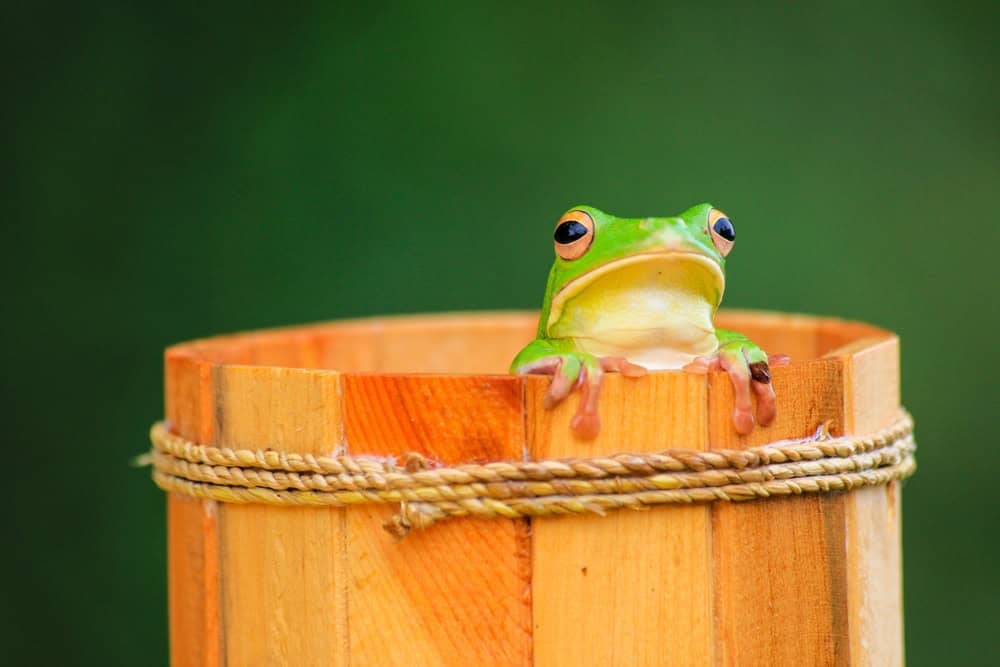
Frog skin is unique. Since these amphibians lack teeth and claws for defense, many species produce skin secretions that help protect them. In 2012, a group of scientists led by a Russian chemist published a study on the composition of frog skin secretions.

Frog skin is coated with essential secretions.
©iStock.com/BrianLasenby
They analyzed the secretions on the skin of brown Russian frogs (Rana temporaria). The chemical activity of the secretions was impressive. It included large proteins called peptides. The scientists then tested the antibacterial activity of the skin secretions in general and of one individual peptide called Brevinin 1Tb.
They found that their ability to inhibit the growth of two common bacteria, namely Staphylococcus aureus and Salmonella enterica Serovar typhimurium were similar in scale to that of some modern antibiotics. While we do not recommend using this preservation method today, there may be some truth behind the folklore after all.