
Quick Take
- Mangalica pigs originate from the Austro-Hungarian Empire and grow a genuine winter fleece.
- Growth is slow, reaching market weight in 12 to 18 months, unlike 6 months for standard pigs, enabling intramuscular marbling.
- Winter care requires dry bedding and a high-quality winter diet to maintain insulation and health.
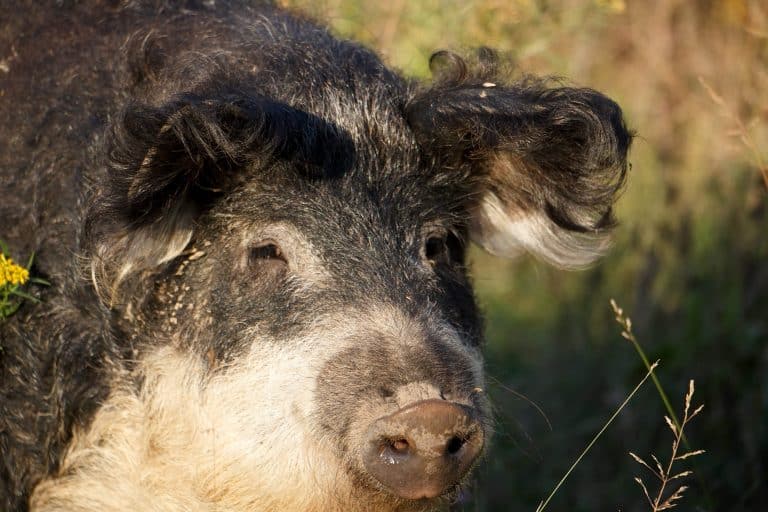
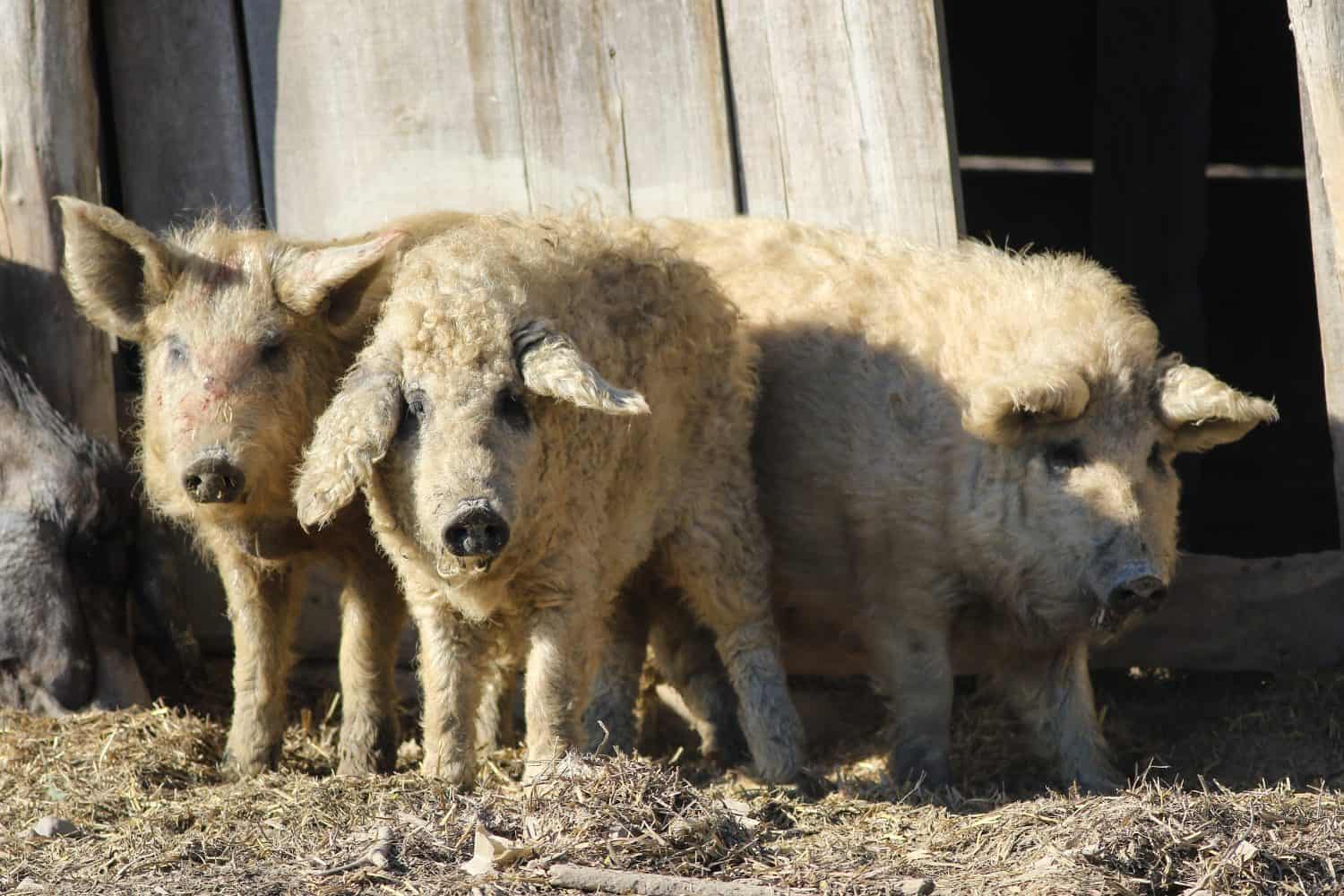
If you ever happen to encounter a herd of Mangalica pigs on a foggy morning, you might think you had stumbled onto a sheep farm. Wrapped in thick, tight curls of coarse hair, the Mangalica (also spelled Mangalitsa or Mangalitza) is the only pig in the world that grows a genuine winter fleece.
Often referred to as the “Sheep-Pig,” this unique breed is a living piece of history from the Austro-Hungarian Empire. When it was developed in the 1830s, it was bred specifically as a “lard pig” and was highly valued for providing the cooking fat and cured meats that were staples of the era.
However, by the 1990s, the Mangalica had nearly vanished completely. As the world moved toward lean, industrial pork, the breed’s population in Hungary plummeted to less than 200 registered animals. Today, the Mangalica population has recovered, with several thousand breeding sows now maintained primarily in Hungary and a few other countries. While it has certainly become a hit on social media, its real value lies in its durability — those famous curls make it much hardier outdoors than the thin-skinned, pink pigs found on modern commercial farms. However, that doesn’t mean that these woolly pigs are necessarily easy to care for.
*This article has been updated to include additional insights and expert commentary on caring for this breed from Barbara Meyer zu Altenschildesche, founder of Royal Mangalitsa USA, following a 2026 interview regarding the breed’s heritage and preservation.
Why Do Mangalicas Grow Wool?
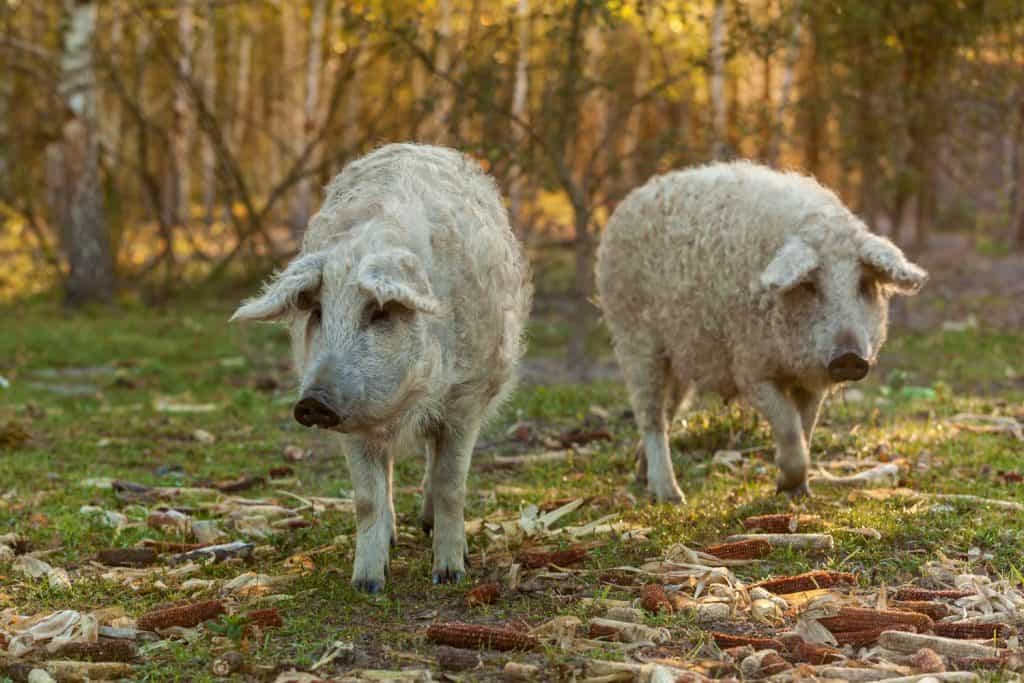
When purchasing a Mangalica pig, be sure to ask the breeder to show you their parents.
©Photosite/Shutterstock.com
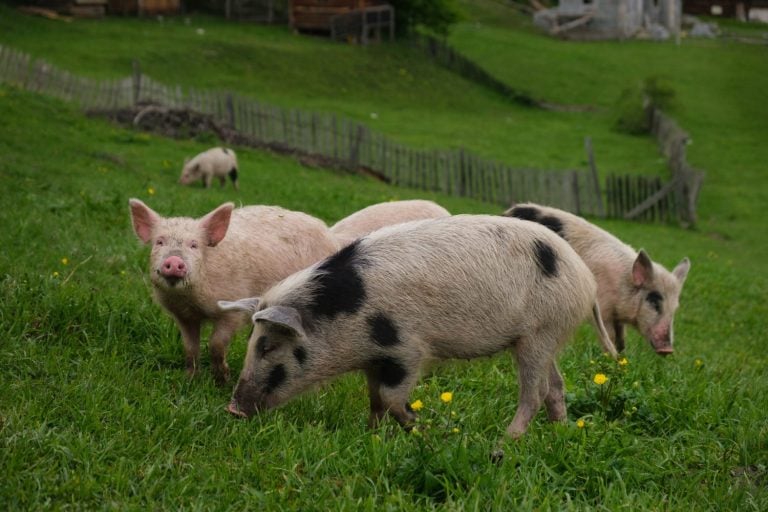
The Mangalica is a medium-sized pig, standing about 25 to 27.5 inches tall and weighing 200 to 225 pounds. In the 1833s, the blonde variety was the main color.
Breeders in the Austrian Hungarian empire created a red variety by breeding the Blonde Mangalica with the Red Szalonta pig to improve the lard quality. The same was done with the Black Croatian Szirmium pigs, which resulted in the Swallow-Belly variety. In the U.S. today, you can find Mangalica pigs in three distinct colors: Blonde, Red, and Swallow-Belly.
Swallow-Belly Mangalicas have dark hair on their backs and lighter hair on their bellies.
©Barbara Meyer zu Altenschildesche / ©Royal Mangalitsa USA
The solid Black Mangalica pig was extinct but the Hungarian Mangalitsa Breed Organization started a scientific program 25 years ago to rebreed them. The Black Mangalitsa became a recognized breed in Hungary once again in 2020.
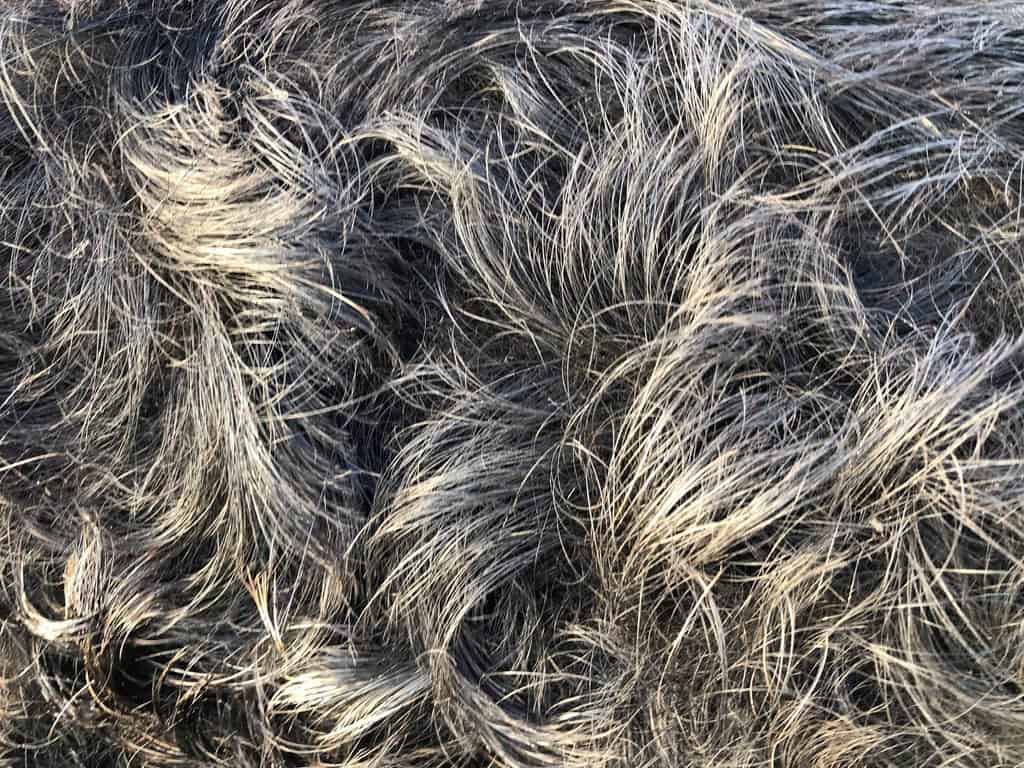
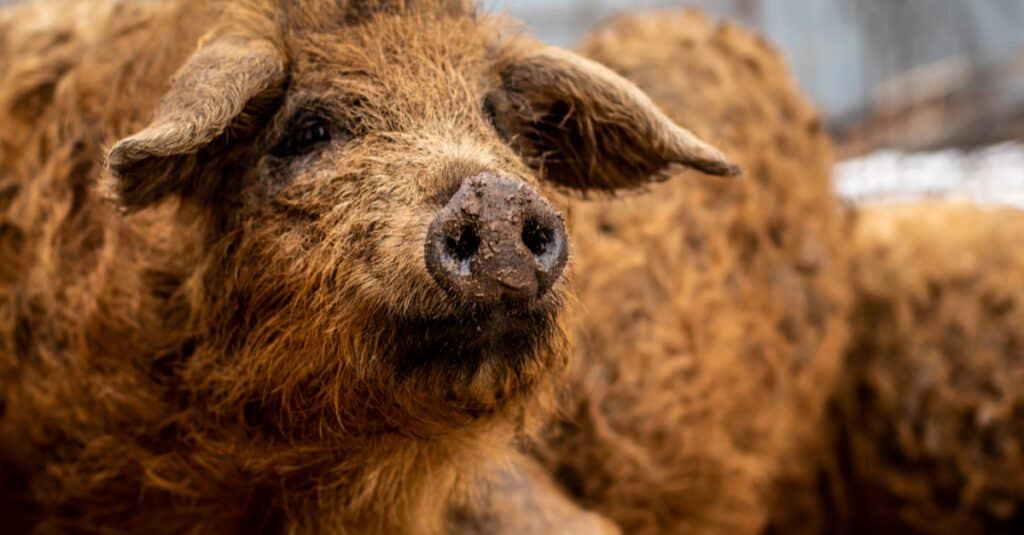
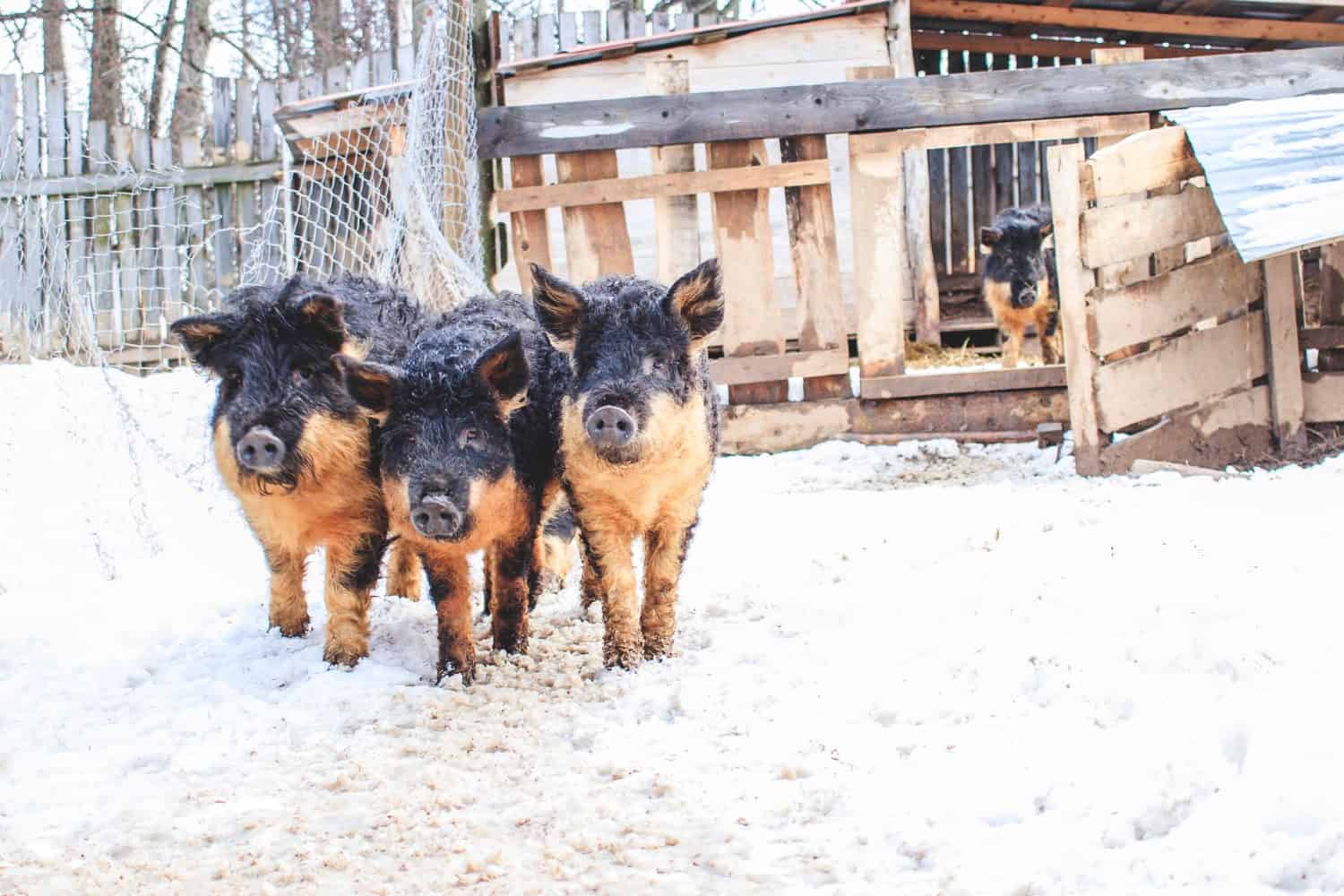
Unlike the thin, prickly bristles of a standard farm pig, the Mangalica has a specialized, dual-layer coat that changes with the seasons. In the summer, most Mangalicas shed their thick, long, and often curly coat. This cooler-weather coat has a softer, small, curled undercoat that acts like the loft in a high-end down jacket; these ringlets trap air pockets against the pig’s skin. The animal’s body heat warms the air, creating a thermal shield that keeps the Mangalica comfortable even in sub-zero temperatures, and snow stays on top of the fur.
Separating Fact From Fiction
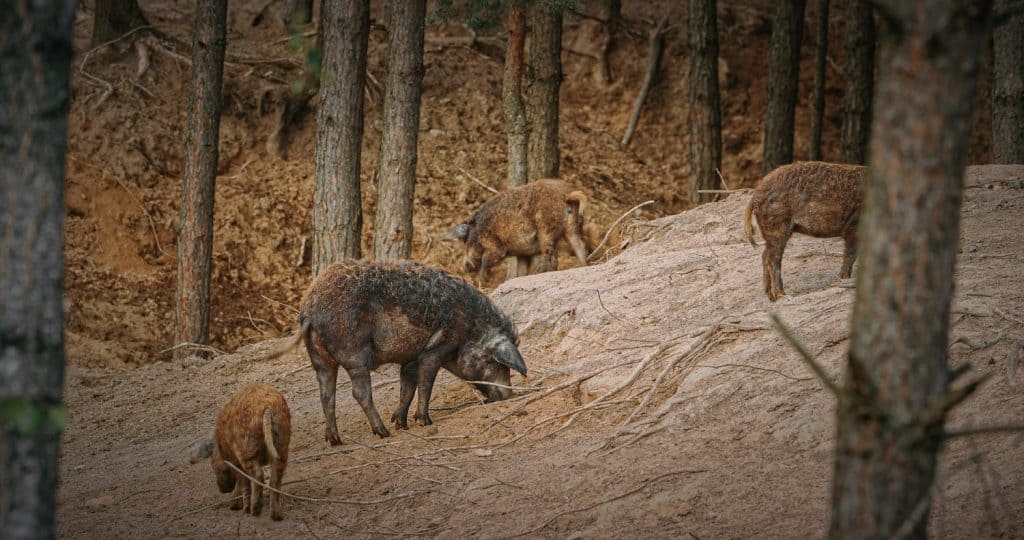
Mangalica pigs need a lot of space to forage throughout the year.
©George Trumpeter/Shutterstock.com
When you first see a Mangalica in a winter field, you may wonder, “Is that a sheep, a pig, or some weird hybrid animal?” While these pigs look like creatures from a fairytale, successful farming requires understanding the real science behind their mysterious-looking fluff — particularly when it comes to a few common myths about the Mangalica.
Myth 1: They are always fluffy.
It often shocks new owners to see their “woolly” pig start to look a bit mangy or scraggly in the spring. Mangalicas may have a full, woolly coat in the winter, but they are seasonal transformers. They shed their heavy winter curls in favor of a much thinner and smoother summer coat. So, if you see a pig in July that isn’t curly, don’t worry — the wool is just waiting for the first frost.
Myth 2: They are a cross between a sheep and a pig.
Biologically, this is completely impossible — the Mangalica is 100 percent swine. Its “wool” is actually a very dense, curly bristle. While it looks soft from a distance, it is actually quite coarse to the touch. This special coat is designed to protect the animal from brambles and the freezing temperatures of the Carpathian Basin.
Most Mangalica piglets have stripes when they are born, but not all.
©Barbara Meyer zu Altenschildesche ©Royal Mangalitsa USA
Myth 3: They don’t need shelter because they have “fur.”
It’s a very dangerous mistake to think you can leave Mangalica pigs out in a snowy field on their own. Their coats are insulators — not built-in heaters. When their hair gets wet with freezing rain or mud, it loses its ability to trap heat. Mangalica pigs need a dry, draft-free shelter to thrive. They also have a slower metabolism and need high-quality food in the winter to keep the thick layer of fat that warms their hair and helps to keep them alive.
Myth 4: They are feral, wild, and mean.
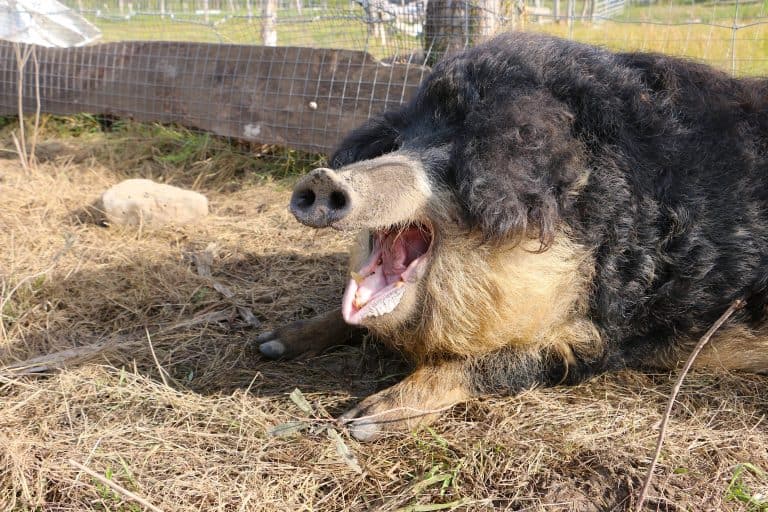
Because of their long snouts, woolly hair, and striped piglets, people often assume Mangalicas are aggressive animals, similar to wild boar. In truth, however, Mangalicas are famously docile and are often described as having a “dog-like” personality. They are curious, friendly, and generally much easier to handle than modern industrial breeds, as long as they are well-fed, cared for, and respected.
Why Slow Growth Matters
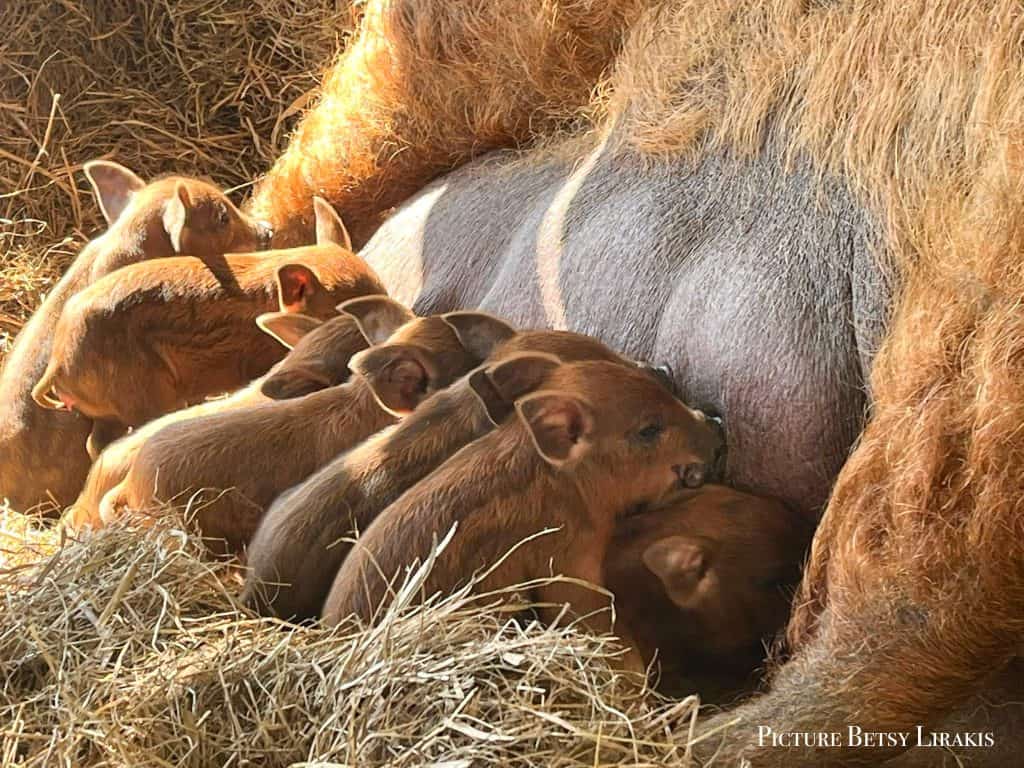
Mangalica pigs typically have four to eight piglets in a litter.
©Waidelotte/Shutterstock.com
The Mangalica’s curly coat is a gift from nature, but the world-class meat it protects takes time. You simply cannot produce Mangalica-quality pork on a factory-farm schedule. The name Mangalica literally translates to “hog with a lot of lard.” In the early 20th century, these pigs were prized for producing up to 70 liters of clean, white fat. Today, this means a carcass that is much fattier than what most modern consumers are used to seeing at the grocery store.
A standard commercial pig is ready for market in about six months. A Mangalica, in contrast, needs 12 to 18 months to reach the same weight. This slow growth is essential; those extra months — especially the cold winters — allow the pig to develop its signature intramuscular fat (marbling).
Because Mangalica fat is high in monounsaturated oils (similar to those in olive oil), it has a lower melting point than regular lard. This creates a “melt-on-the-tongue” texture. It’s the reason this pork is the gold standard for high-end charcuterie, like traditional European salamis and air-dried hams.
Caring for Mangalica Pigs in the Winter
Female Mangalicas have strong maternal instincts.
©Waidelotte/Shutterstock.com
The Mangalica’s curly coat requires a specific management style on the farm. While these pigs were built for the cold, “hardy” doesn’t mean indestructible. For a successful winter, you’ll need to focus on diet, dryness, and density.
A Mangalica can comfortably nap in a snowbank at 5 degrees Fahrenheit as long as its skin is dry and its curls can trap warm air against its body. However, if the pig is stuck in cold mud or muck, the hair becomes matted and cannot insulate. These pigs need deep, dry bedding, such as barley straw or wheat straw. They will naturally build their own nests using their snouts, creating a communal burrow that keeps the whole herd nice and toasty.
The pig’s internal insulation is just as vital as its wool. During the winter, their caloric needs spike because they must maintain a thick layer of fat to help keep them warm. Mangalicas need a diet rich in complex carbs and healthy fats, which they find in nuts or acorns during the winter. Not only does this help them survive and grow well, but it also directly affects the flavor of the meat later. Heated waterers are also essential to keep them hydrated; you cannot rely on snow and ice alone.
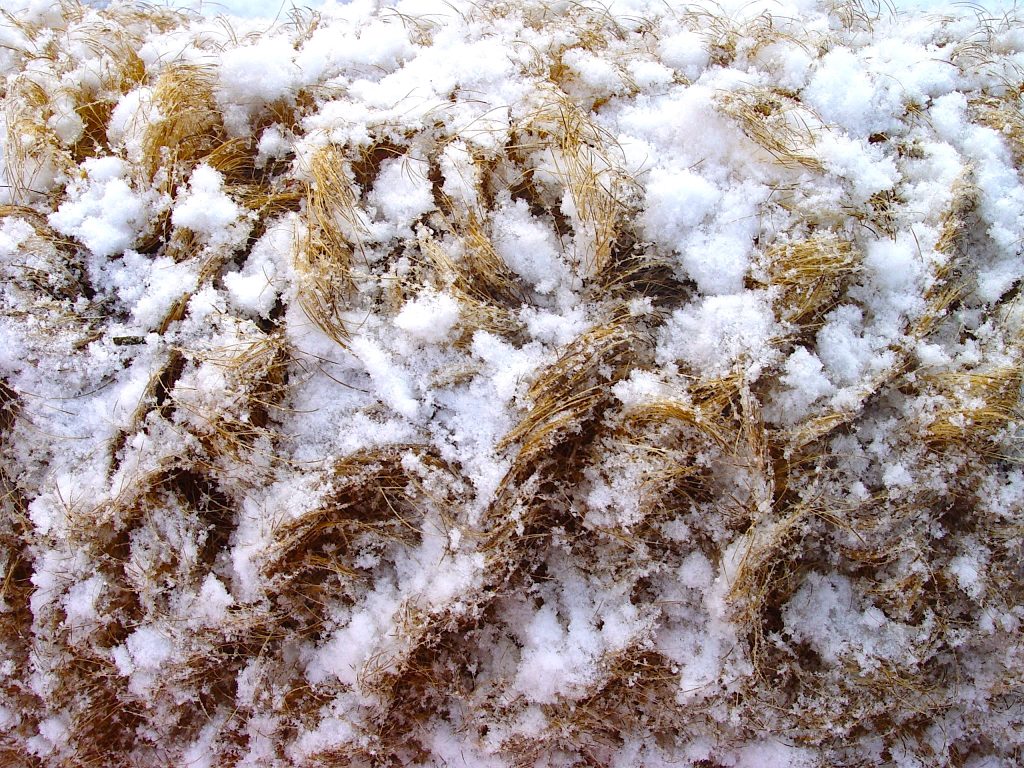
The Mangalica’s dense, curly coat helps to protect them from snow, keeping their bodies dry and insulated.
©Barbara Meyer zu Altenschildesche ©Royal Mangalitsa USA
The Mangalica’s beautiful, dense coat can, unfortunately, hide problems like mites and lice. It’s important to check the skin behind the ears and under their legs periodically, and pay attention to pigs that rub excessively against fence posts. In addition, mud can “ball up” in their curls and freeze into heavy weights. To help keep their fleece clean, provide a well-drained, gravel-based feeding area.
Caring for the Mangalica in the Summer
While the Mangalica is famous for its ability to thrive in freezing temperatures, the high humidity of North American summers presents a different — and often more lethal — biological hurdle. According to Barbara Meyer Zu Altenschildesche of Royal Mangalitsa, while the breed can handle dry heat up to 40 degrees Celsius (104 degrees Fahrenheit) in its native Central Europe, the combination of heat and humidity in states like Florida or Alabama can be pushed past the animal’s natural limits.
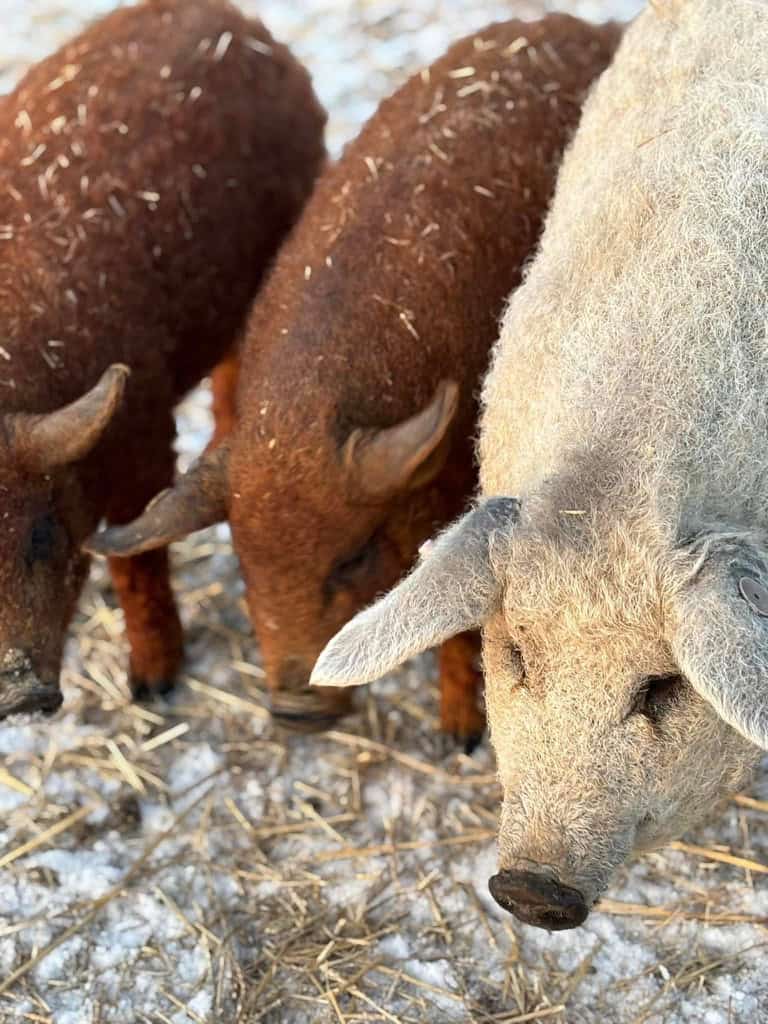
Mangalica pigs are difficult and expensive to care for in the U.S.
©Barbara Meyer zu Altenschildesche / ©Royal Mangalitsa USA
“In the U.S., you can now find this breed in all 50 states, including Hawaii, Arizona, Texas, New Mexico, Florida, Georgia, and Alabama, where it gets hot and humid,” Barbara explains. “Most Mangalitsas cannot cope easily with these conditions; while they may adjust over time, certain biological limits remain. I recently spoke with a breeder in Arizona who lost two large boars to heat stroke. Despite providing shade, water, and a wallow, he still lost both.”
Even with standard precautions, the biological toll of a humid summer can be devastating on these pigs. But the heat doesn’t just threaten the animal’s life; it impacts the entire lifecycle of the herd.
Summer Husbandry and Growth
To maintain a healthy and productive farm, Barbara suggests several adjustments to standard management:
- Avoid Summer Farrowing: Farrowing (birthing) should be avoided in hot months, as sows need an immense amount of water to produce milk. Additionally, piglets do not drink as much when it is hot, so they do not grow well.
- The Movement Gap: High temperatures also discourage movement. Since the pigs stay stationary to stay cool, they build less muscle, which ultimately impacts meat quality and yield (less movement means less muscle growth, and less muscle growth results in less meat).
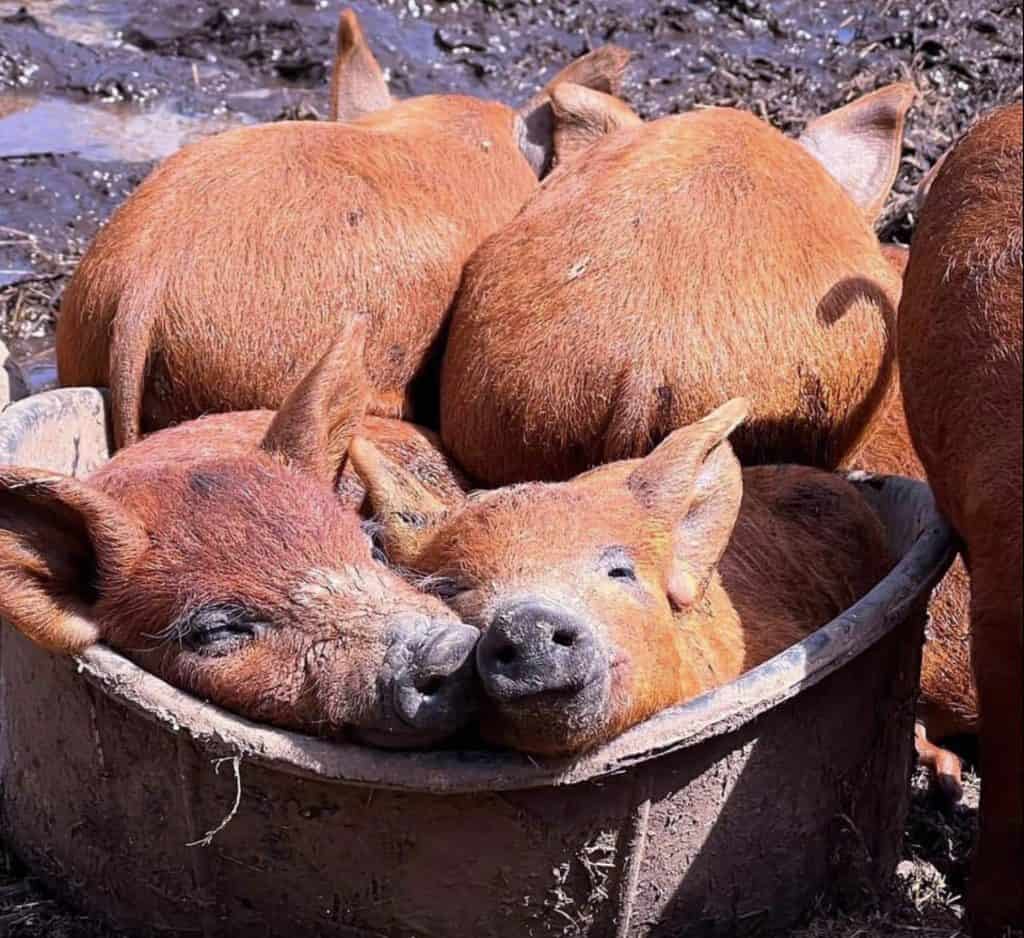
Mangalitsas need wallows to help them stay cool.
©Barbara Meyer zu Altenschildesche ©Royal Mangalitsa USA
Rethinking Shelter and Hydration
Proper summer care requires moving beyond basic “huts.” Barbara points out that enclosed structures without guaranteed airflow often become “heat traps” that are hotter inside than out. “When pigs are kept on pasture without natural tree shade, they may retreat into a hut for relief,” she explains. “But it can actually be hotter inside than outside. This deceives them; they overheat, cannot cool down, and can suffer — sometimes resulting in death.”
To keep pigs cools, trees are the gold standard. “Natural shade is the best as trees also provide a microclimate,” Barbara explains. If trees aren’t available, use a large tarp or a structure with only a roof and no walls to ensure maximum airflow.
Stagnant water in a wallow can become a breeding ground for bacteria and, in high-humidity areas, may never cool down enough to actually lower a pig’s body temperature. “Breeders need to rotate wallows so the old ones can dry out while new ones are filled with fresh water,” Barbara advices. “This is a particular challenge in Florida, where it rains every day in the summer.” She advises rotating wallows out every one to two weeks to allow old ones to dry out.
Long story short: Winters are tough on the Mangalica, but hot summers are even tougher.
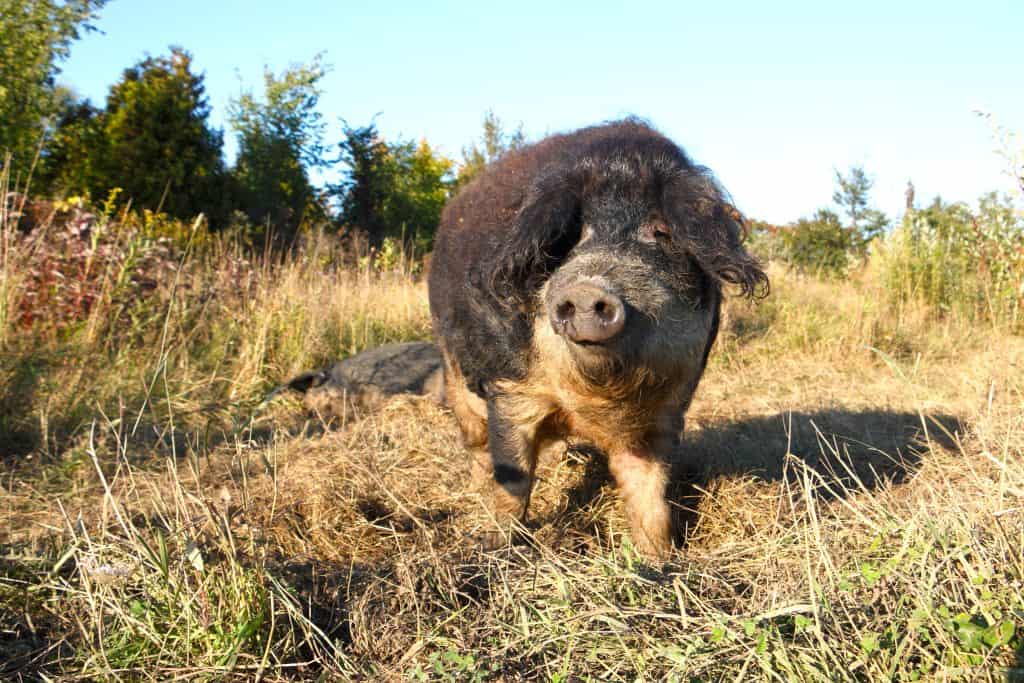
Summers in the United States can be very hard on these pigs.
©Barbara Meyer zu Altenschildesche ©Royal Mangalitsa USA
How to Provide What Mangalitsas Need
- Natural Shade: This is best, as trees provide a microclimate. If trees aren’t available, use a large tarp or a structure with only a roof and no walls to ensure maximum airflow.
- Fresh Wallows: Provide wallows, fill them with fresh water, and move them every one to two weeks.
- Sprinklers: These are a great help, as they allow pigs to get wet without needing to lie in a wallow all day. As Barbara explains, “Believe me, sometimes they stay in the water for hours just to get a little relief from the heat.”
- Ventilation: Building a large, open stable with industrial ceiling fans works very well, though it is expensive.
- Bedding: Do not provide bedding during hot weeks; cool dirt is better than a nest made of straw for these pigs.
- Monitoring: Check on the animals at least twice a day (or more if you can!). If the pigs become lethargic, electrolytes may help, but your priority should be hosing them down to cool them off.
Hydration Is Essential
It is essential that Mangalitsa pigs drink enough. Unlike humans, pigs do not sweat, but they do urinate more in the summer, so they can get dehydrated very quickly.
However, a nipple watering system is not a good idea for a summer water supply. “Think of it this way,” Barbara explains. “If you are thirsty and I give you a glass of water, you’ll drink it in a few gulps. But if I give you that same glass with a tiny, thin straw, you might take a few sips, get tired of the effort, and stop before you are truly hydrated.” It is the same for these pigs; the water flow from a nipple is often weaker than a mediocre straw, so they don’t drink as much and don’t get enough hydration.
Furthermore, the nipples get hot in the sun. “Pigs will try to stay where the water is, even when shade is available further away.” Barbara explains. “But you want them to have both the shade and good fresh drinking water. You want your pigs in the shade with fresh drinking water located right next to them.”
Is the Mangalica Right for You?
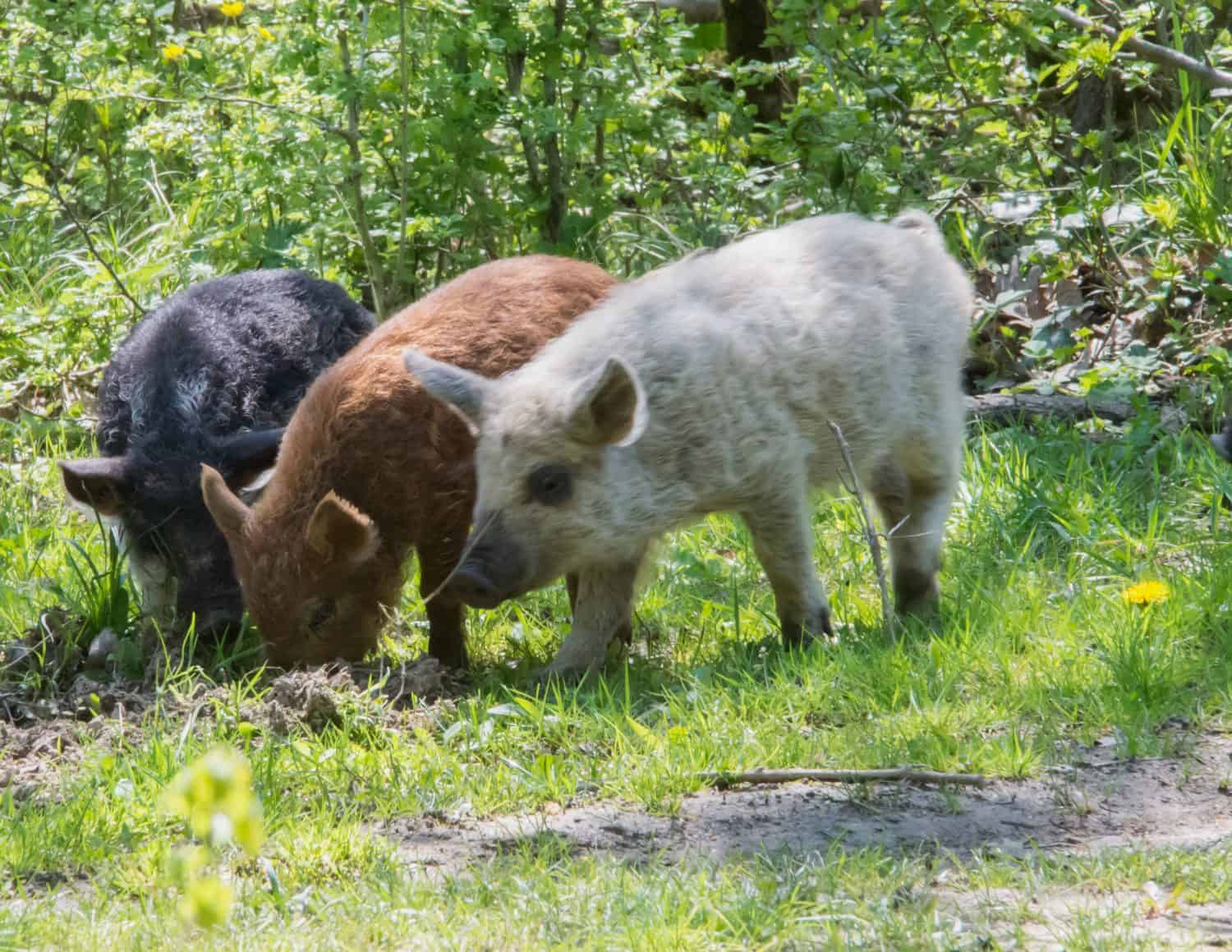
Mangalica pigs are typically friendly and docile.
©WindVector/Shutterstock.com
While the Mangalica is one of the most rewarding breeds a small farmer can raise, don’t let those charming curls fool you. There is a common misconception that because these pigs are “woolly,” they are “easy.” People often assume that their hardy coat means they can just be left alone in a field to fend for themselves, but that couldn’t be farther from the truth.
Before you fall in love with the aesthetic, you need to decide if you are truly ready for the “slow food” lifestyle. Raising a Mangalica is a major commitment. Their unique biology — from their specialized diet to their long growth cycle — requires a farmer who is patient and attentive. They are not low-maintenance animals; they require attentive, high-quality care.
In the end, choosing the Mangalica is about more than just farming — it’s also about preserving history. When you see a herd of curly pigs thriving in a snowstorm, you aren’t just looking at livestock; you’re looking at a piece of agricultural heritage that was almost lost to time.