
Quick Take
- Parrotfish construct sleeping cocoons.
- It appears to be a facultative behavior – which means that it is optional.
- Only certain genera, including Chlorurus and Scarus, create these cocoons.
- The exact function of the cocoons has not yet been determined, though it is likely connected to hiding scent from predators and/or protection from parasites.
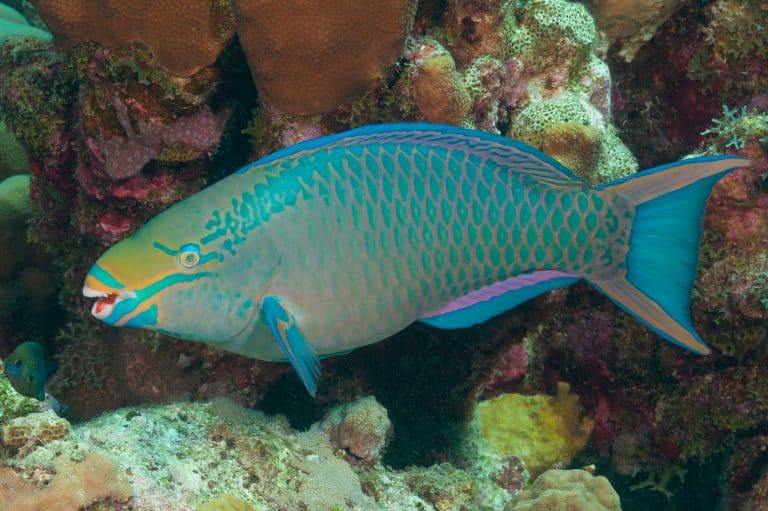
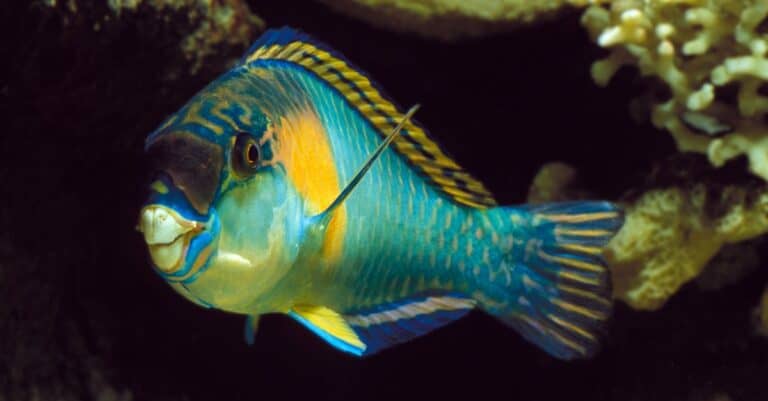
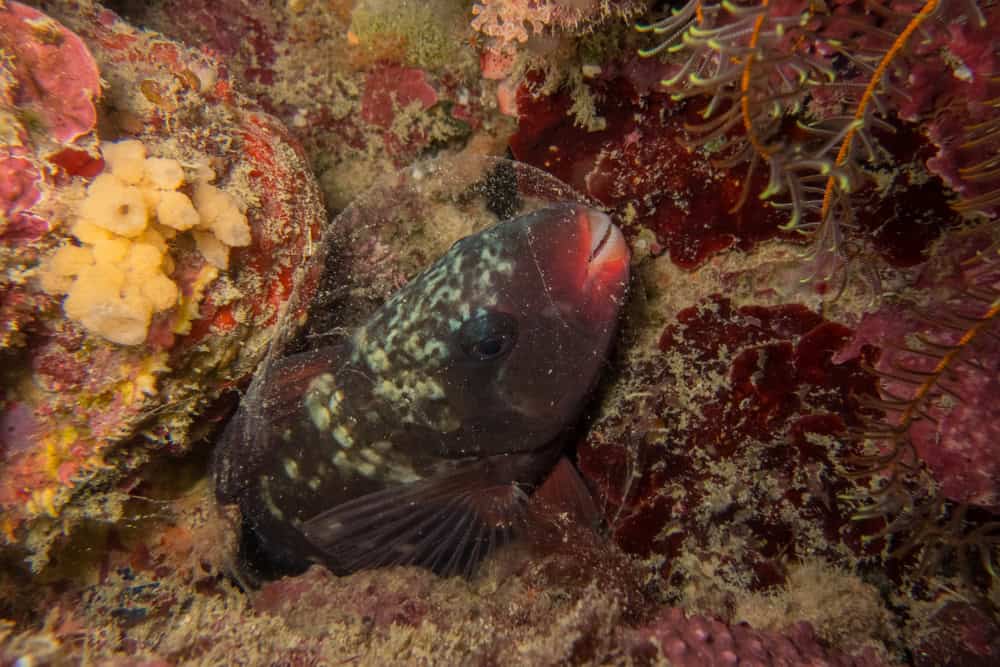
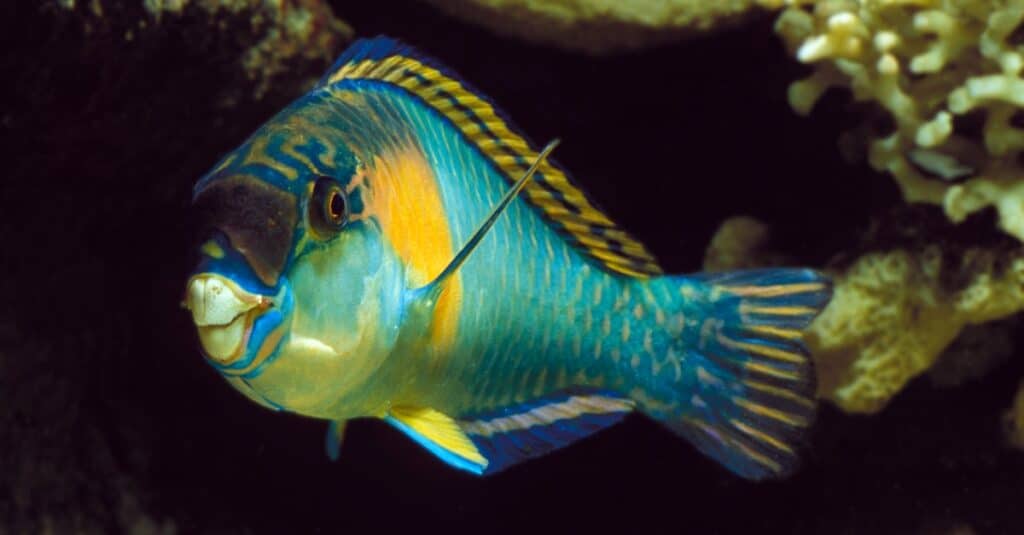
Take a look at the gorgeous parrotfish in a tropical ocean scene in this Instagram post. The vibrant fish shows off its bright blue and yellow coloration. Now, take a closer look. Can you see the transparent ball surrounding the fish? This is not manmade! The parrotfish made it, and we will explain how and why.
What Are Parrotfish?
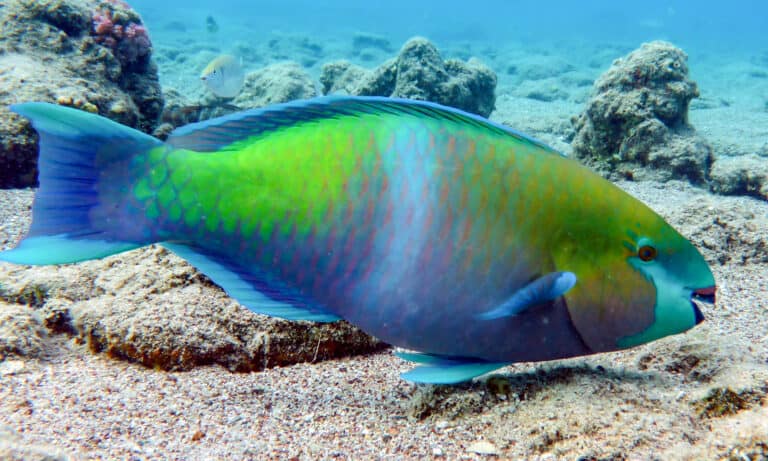
Parrotfish are members of the family Scaridae, which was previously considered a subfamily within the wrasse family (Labridae), but is now generally recognized as a separate family. There are about 100 different species, and they live on coral reefs, seagrass beds, and rocky coastlines. They get their name from their beak-shaped mouthparts, which are actually fused teeth.
Parrotfish make a clear cocoon of mucous around their body before falling asleep.
©slowmotiongli/Shutterstock.com
They mostly feed on algae but also eat organic matter, seagrasses, sponges, and other small marine invertebrates. These fish perform a vital function, maintaining the health of coral reefs because they prevent algae from overgrowing. For the most part, they are regular tropical fish, but when they sleep, they do something incredible.
Constructing a Personal Cocoon
In 2023, a group of researchers published their observations of parrotfish constructing sleeping cocoons. To construct the transparent cocoon, the fish gradually excrete the mucus from their mouth. However, they found considerable variation of cocoon formation among and within species. It appears to be a facultative behavior – which means that it is optional. Only certain genera, including Chlorurus and Scarus, do it.
They don’t do it more often when sleeping in exposed areas, and no other environmental factors (such as site complexity or habitat type) appeared to trigger the behavior.
Why Do Parrotfish Build Cocoons?
Parrotfish are not the only type of fish to do this; wrasses have also been observed designing cocoons. The exact function of the cocoons has not yet been determined, but it is likely connected to hiding scent from predators and/or protection from parasites.
In a previous study, scientists exposed sleeping parrotfish (Chlorurus sordidus) to ectoparasitic gnathiid isopods, which feed on the blood of fish. Fish without mucus cocoons were attacked more often by gnathiids than fish with cocoons. So, perhaps the cocoon functions like a personal mosquito net. As it only takes 2.5 percent of the fish’s daily energy budget to make one, it’s a worthwhile investment.