
When you think of sleeping, you probably don’t picture yourself hanging from a tree branch, floating in the ocean, or gathering into a big pile on the floor with your family members. Of course not! These are just a few examples of how some animals sleep. Continue reading to discover ten animals that don’t sleep like you and me.
Meerkats — Sleep In A Heap
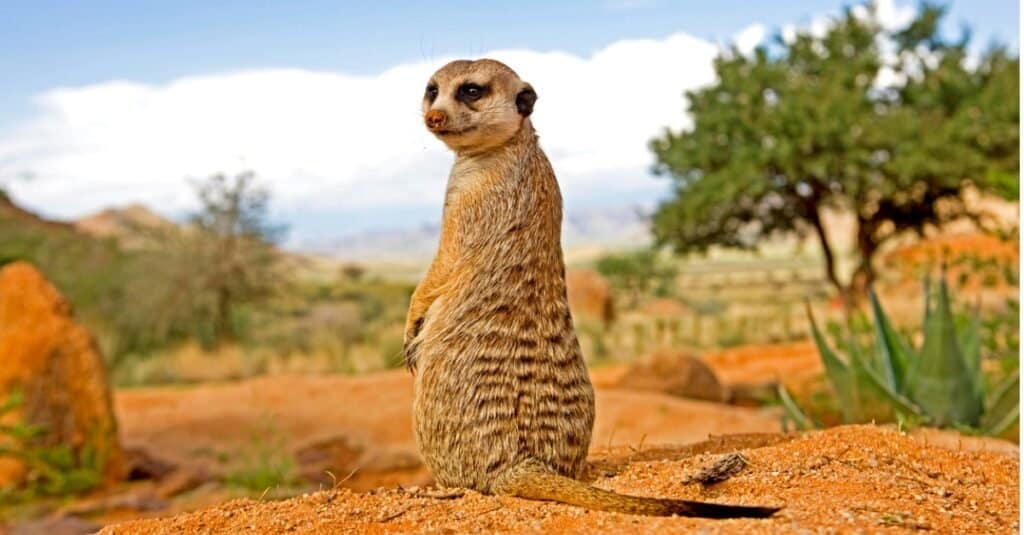
Meerkats pile on top of one another to help protect themselves from predators.
©iStock.com/slowmotiongli
The meerkat (Suricata suricatta) lives in the Kalahari and Namib Deserts in southwestern Africa. With a body that stands about 12 to 14 inches high and weighs between 1.3 and 2.1 pounds, meerkats live in groups called gangs, which protect them from predators. Not only do they live together, but they also sleep together in heaps.
These small mammals pile on top of one another before going to sleep. So, if a predator such as a snake or an eagle enters their habitat, one meerkat can awaken the rest, and they can take cover. Meerkats also sleep in piles to stay warm on cold nights.
Dolphins — Sleep While Afloat
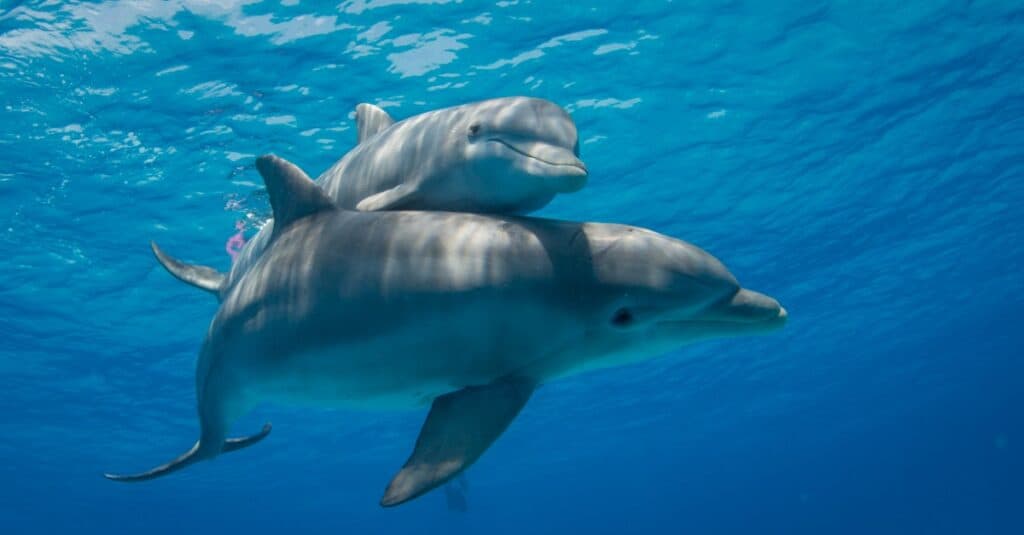
Some dolphins sleep horizontally, floating motionless in the ocean.
©iStock.com/NaluPhoto
Dolphins must be in water to survive. So, how does this aquatic mammal sleep? Well, they have a couple of methods. One is called logging. Logging is when a dolphin positions itself horizontally and floats on the surface of the ocean, looking like a log, hence the name. Some dolphins position themselves vertically to sleep, but this is uncommon.
Dolphins also sleep in groups. Staying together provides protection if a predator approaches. They can alert each other and take off through the water. In this method, pairs of dolphins swim next to each other. This pairing method is used for short naps as opposed to long sleeps. The key is that only part of the dolphin’s brain becomes inactive while it sleeps. Dolphins are always alert to some degree, even when their bodies are resting.
Ducks — Work Together To Snooze
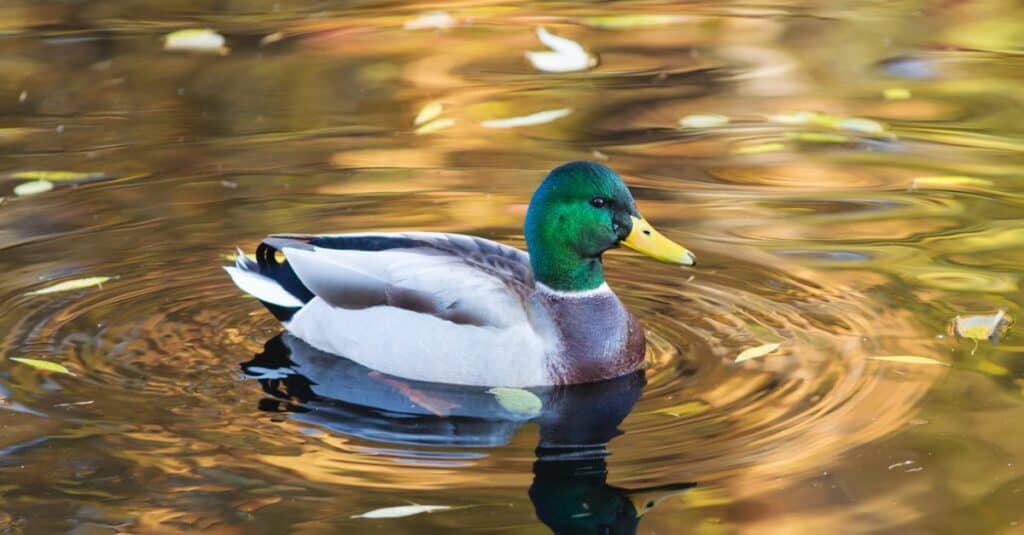
As the phrase suggests, ducks do, in fact, sleep in a row.
©iStock.com/Argument
Get your ducks in a row. When humans say it, they mean to be prepared or get organized. But did you know it’s based on actual duck behavior? Ducks get in a row on the shore of a pond, lake, or other body of water when they sleep.
They stay close together to protect the flock. Each duck turns its head around to bury its beak into the feathers on its back. Take a closer look and you’ll see there’s more going on than meets the eye in this row of sleeping ducks.
Each duck on the far end of the row has one eye closed and the other open. This allows them to get a light nap while still monitoring the environment for predators like cats and foxes. The ducks in the middle of the row close both eyes to get a deep sleep. After a while, the ducks get up and change places, allowing the ducks on the ends of the row to switch to the middle to get a full sleep. This cooperation gives every duck a rest!
Flamingos — Sleep On One Leg
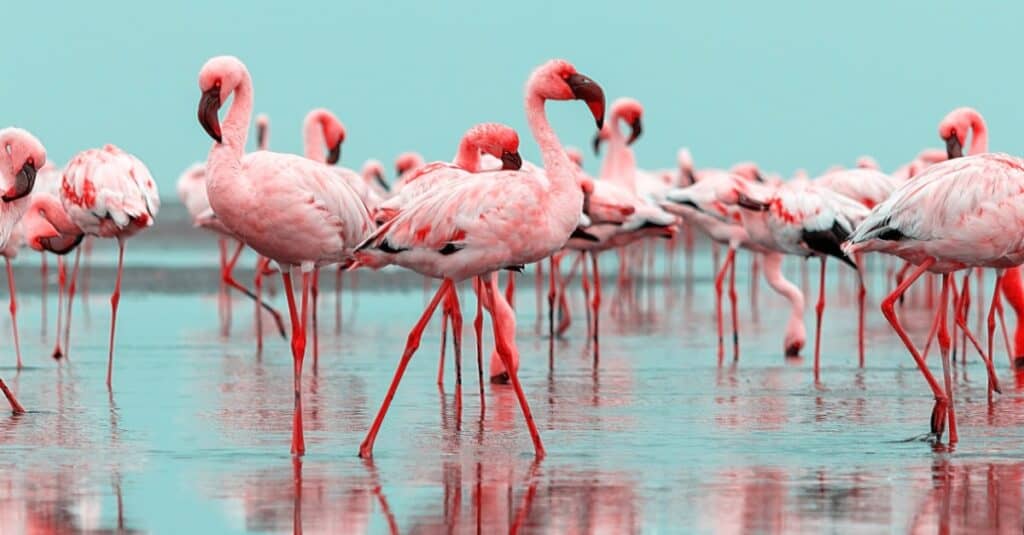
Flamingos never fully sleep. Half of its brain is always awake and alert.
©iStock.com/YULIIA LAKEIENKO
We know this bird with brilliantly colored feathers can stand on one foot while awake. But what does it do when it’s time to get some sleep? The same thing! Flamingos sleep standing on one leg! These birds bend their long neck to place their beak into the feathers of their back. Though it looks like these birds are fully asleep, they are not. Half of this bird’s brain is still awake and aware of its surroundings. Called unihemispheric sleep, it allows flamingos to remain alert while getting rest, without making themselves completely vulnerable to predators like pythons and vultures.
Sloths — Sleep In Comfort
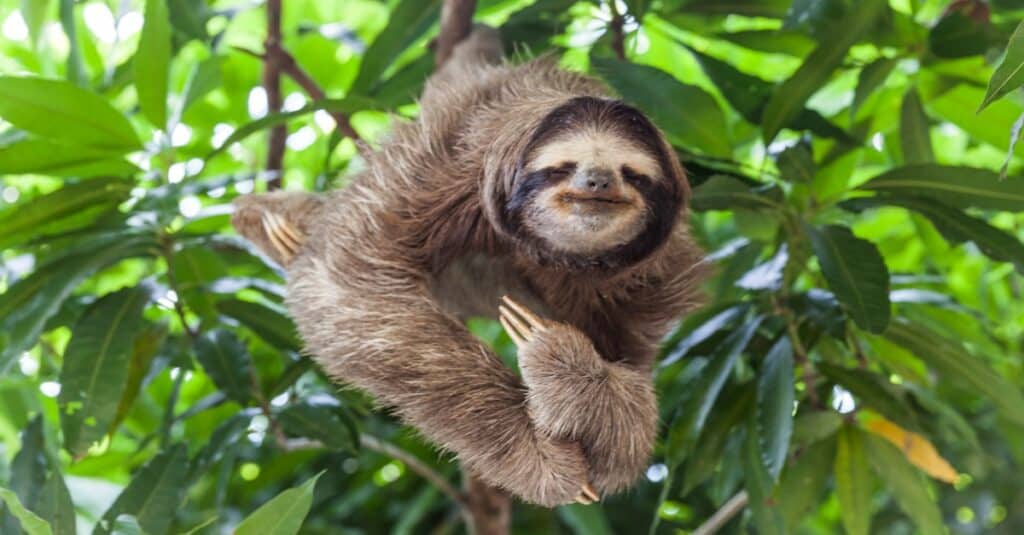
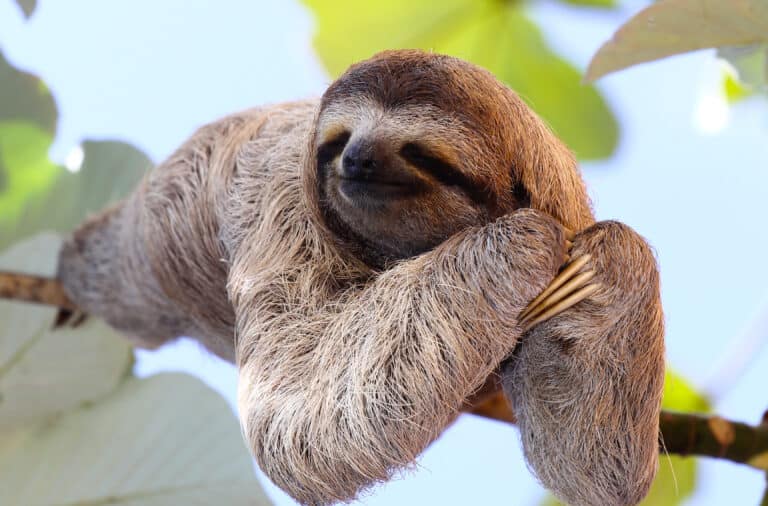
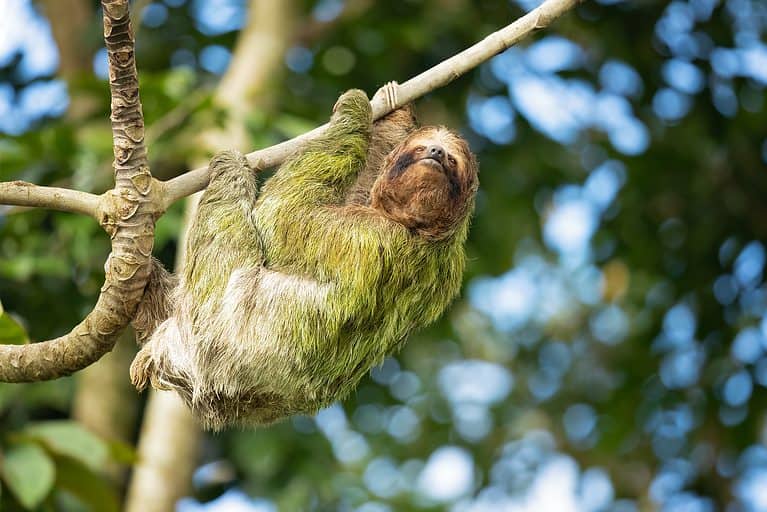
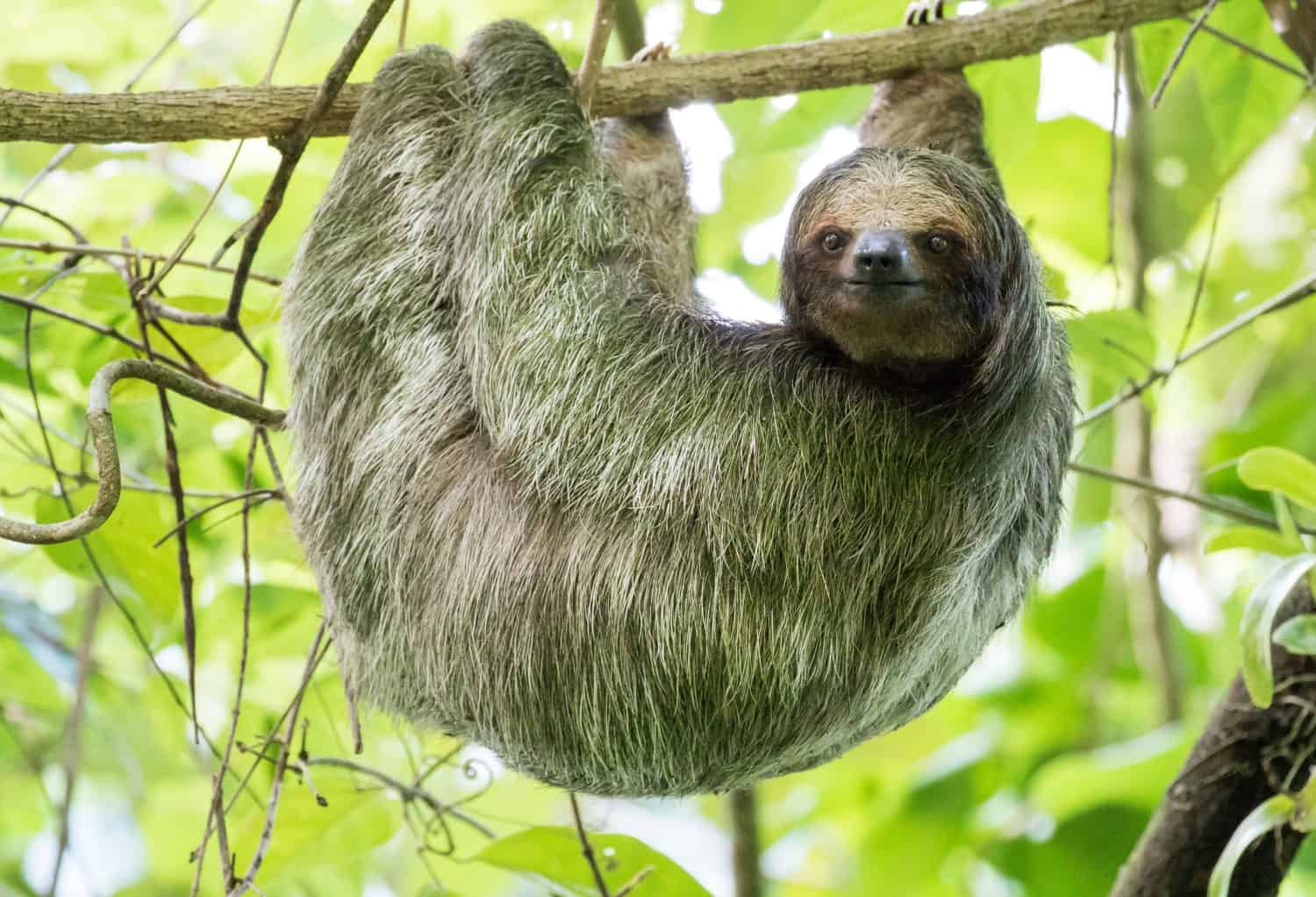
Some sloths sleep while hanging upside down in a tree.
©iStock.com/Parkol
It’s no secret that sloths like to sleep. While these slow-moving animals sleep 8-10 hours in the wild, their captive counterparts can snooze up to 15 to 20 hours per day. Sloths have a few ways of sleeping.
Some sloths find a forked branch high in a tree on which to sleep. A forked branch is a single one that divides into two smaller branches. The middle of a forked branch serves as support for the back of the sloth. When a sloth sleeps this way, it looks like it’s sleeping in a cradle.
Other sloths sleep hanging upside down from a tree branch. Their long claws help them to suspend themselves from a branch securely.
Bats — Hang Around To Sleep
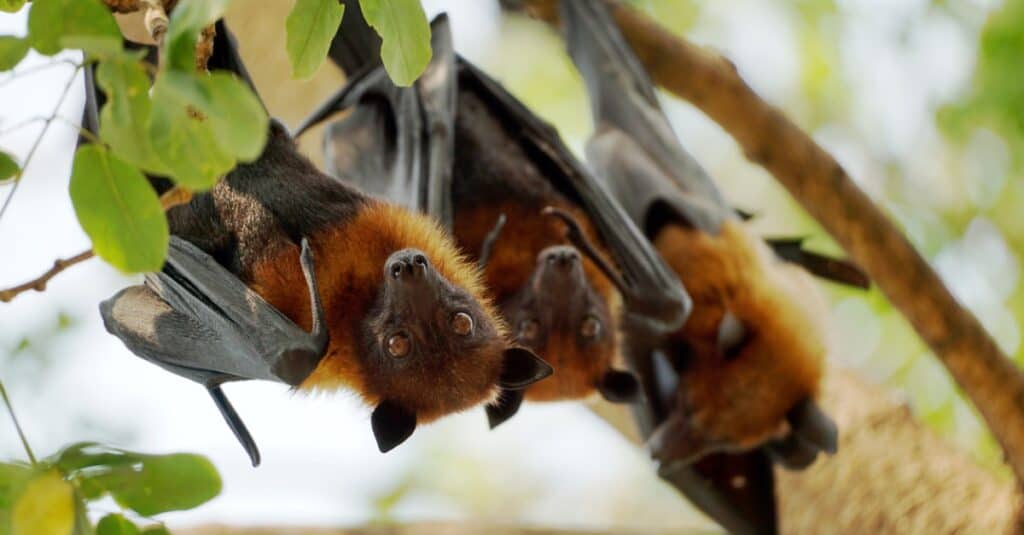
Like sloths, bats hang upside down to sleep.
©iStock.com/nymphoenix
Bats have a well-earned place on any list of animals that don’t sleep like humans. Bats hang upside down by their clawed feet to sleep. They may hang from a tree branch, the ceiling of a cave, or dangle from an area beneath the eaves of a home. But do they ever fall to the ground after falling asleep?
The answer is no. Special tendons in their feet prevent bats from falling while asleep. When a bat hangs on a branch, the tendons in its feet lock it into place, allowing the bat to remain safely suspended in the air for hours. When it wakes up, its tendons unlock and it flies away.
Bats sleep in a group or colony as a means of protection from predators. They also sleep in a colony for warmth.
Horses — Sleep On Their Feet (Sometimes)
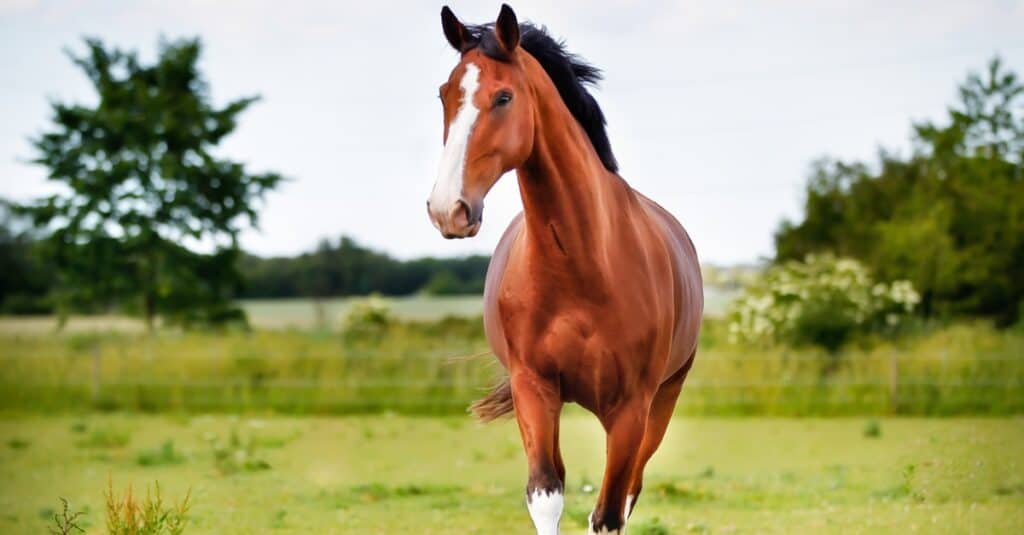
The way a horse sleeps depends on how much sleep it needs.
©iStock.com/Bigandt_Photography
Horses don’t sleep lying down like humans do. They are able to lock their legs and sleep while standing for short periods. When they need to sleep for several hours, horses lie down on the ground and tuck their legs in front of them. It’s rare to see a wild horse lying down. This prone position makes a wild horse vulnerable to predators. Domesticated horses sleep standing up as well. But they feel safer than wild horses and are more likely to lie in a sunny field with their head down on the ground.
Parrotfish — Sleep In A Cocoon
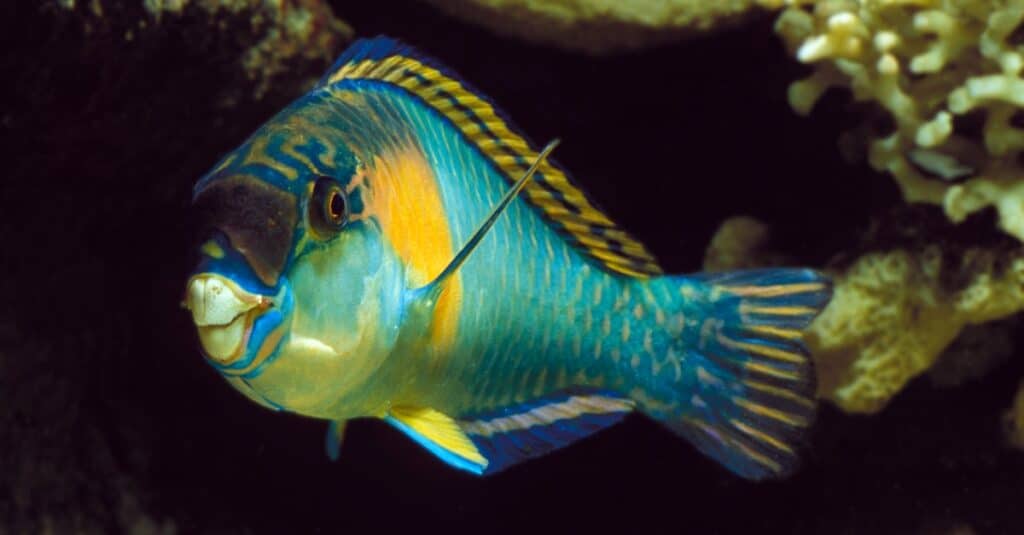
Parrotfish make a clear cocoon of mucus around their body before falling asleep.
©slowmotiongli/Shutterstock.com
This colorful fish lives in the nooks and crannies of coral reefs around the globe. Their predators include sharks and moray eels. So, how do these fish sleep? Well, before falling asleep at night, they have a special means of protecting themselves.
The parrotfish makes a clear cocoon of mucus that fits around its body. The fish can breathe inside the cocoon. If a predator bites the cocoon, this fish is able to dart away, leaving the predator holding the cocoon. The cocoon also makes the scent of the parrotfish undetectable.
Sharks — Sleep Soundly
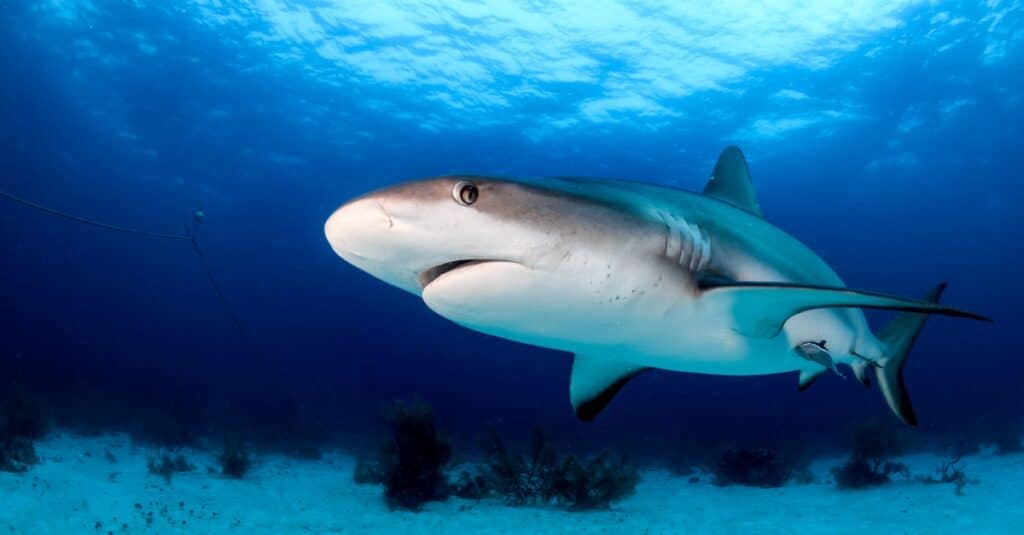
When sharks sleep, they face the flow of the current, allowing it to rest while the moving water continues supplying oxygen.
©Richard Whitcombe/Shutterstock.com
When you think of a shark, you likely picture it speeding through the water. But sharks have to rest too! After transitioning to a very slow speed, a shark faces the flow of the current. This allows it to rest while water continues to move over its gills, supplying it with oxygen. Sharks don’t go into a deep sleep.
Compared to parrotfish, dolphins, and other sea creatures, it’s easier for sharks to rest, as they have very few natural predators to consider as they catch some Zzzzzzzzzzz.
Koala Bears — Hang Out And Sleep
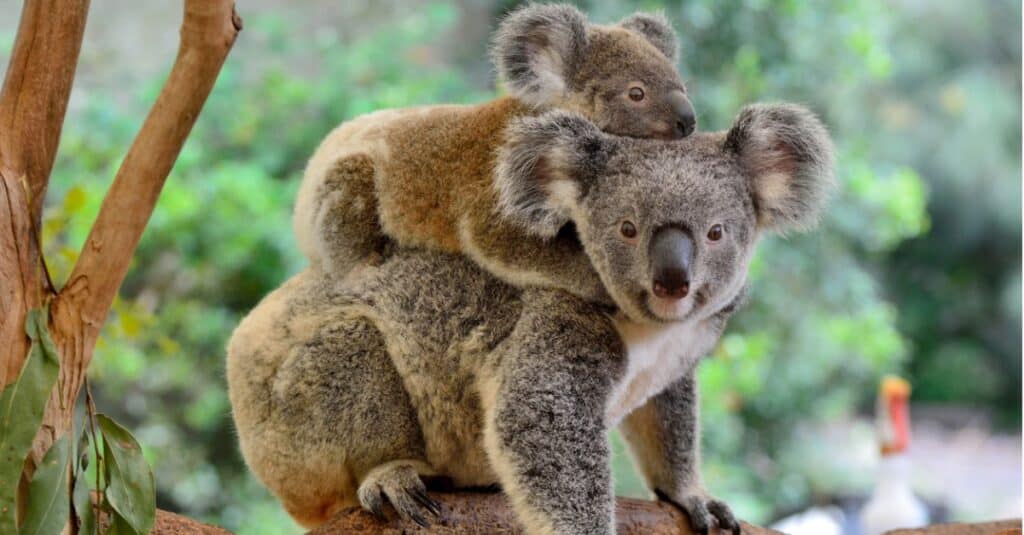
Koala bears wedge themselves into a forked branch to help prevent falling.
©Alizada Studios/Shutterstock.com
Koalas are certainly animals that don’t sleep like the average human. For starters, Koalas sleep around 20 hours each day! Therefore, it makes sense that they need a safe and reliable sleeping method.
A Koala bear wedges its thick tush into a forked branch high up in a tree. With the help of its long claws, it sleeps sitting in this wedged position without fear of falling. Solitary mammals that don’t have the advantage of a group alarm, koalas are safer from predators like dingos if they stay in trees.