
Quick Take
- Not every parrotfish builds a snot cocoon. The specific conditions that push queen parrotfish to do it reveal something unsettling about their nightly world. See how the cocoon forms →
- The mucus bubble isn't just a physical barrier. It pulls off at least four separate survival tricks at once, and one of them has nothing to do with predators. Explore the four survival tricks →
- Queen parrotfish only get one cocoon per night, and if a predator pops it early they face a high-stakes gamble with no reset button. See the one-cocoon risk →
- The body part queen parrotfish use to spin their bubble is far stranger than you'd guess. Discover the strange body part →
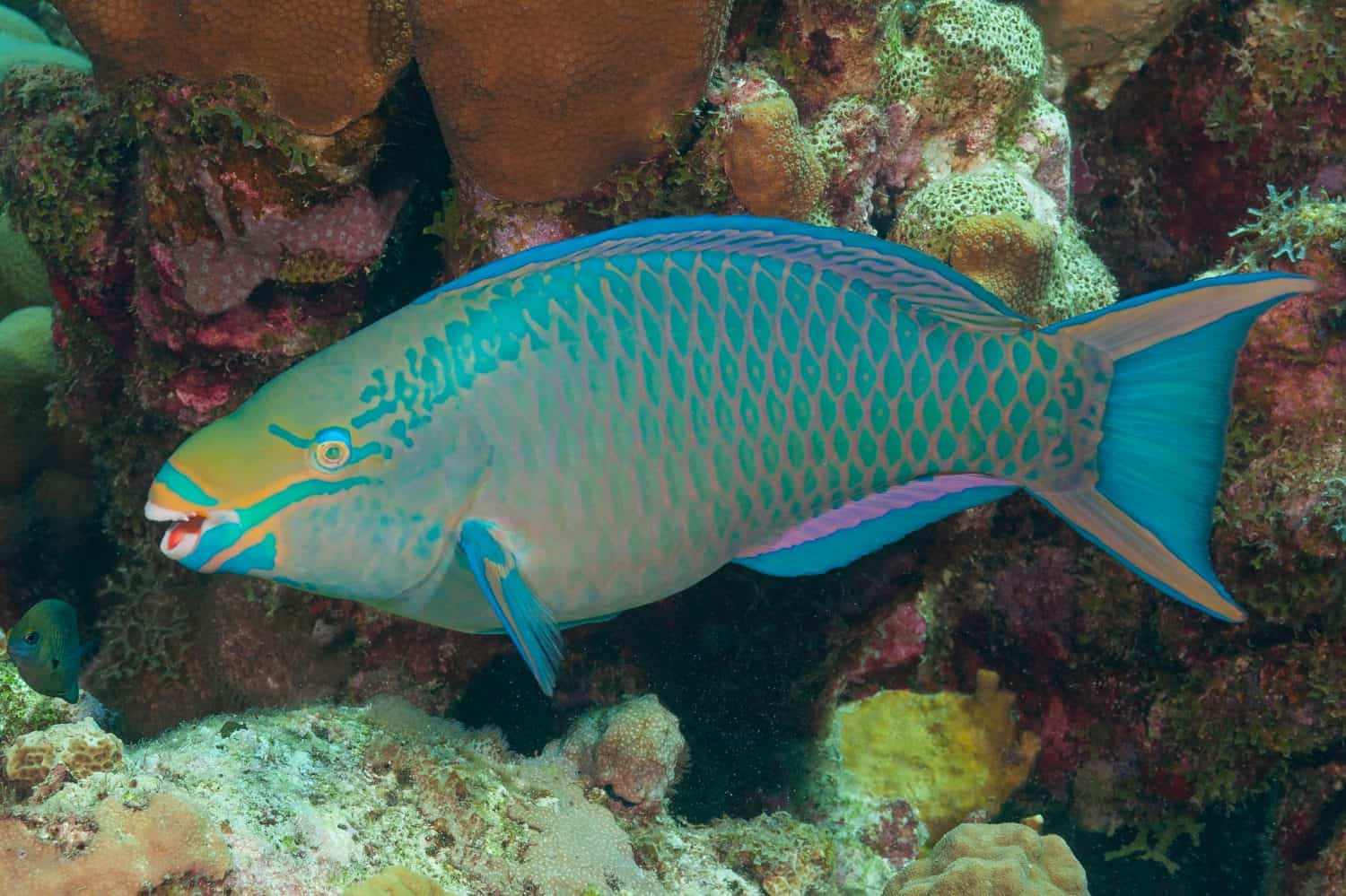
Tropical reef fish tend to use the reef as protection from predators. One fish, however, takes its safety a step further by creating and sleeping in a snot bubble. Thanks to this nightly defense mechanism, the queen parrotfish can get the rest it needs to be productive during daylight hours.
Queen Parrotfish Create a Nightly Sleep Mucus Cocoon
All types of creatures have ways of protecting themselves from danger. Uniquely, the queen parrotfish surrounds itself in mucus to achieve this feat.
Queen parrotfish spend their days swimming around reefs, removing algae, and cleaning reefs of dead coral. They are not fast swimmers. Therefore, they rely on both the reefs’ hiding places and the harems they swim in for protection.
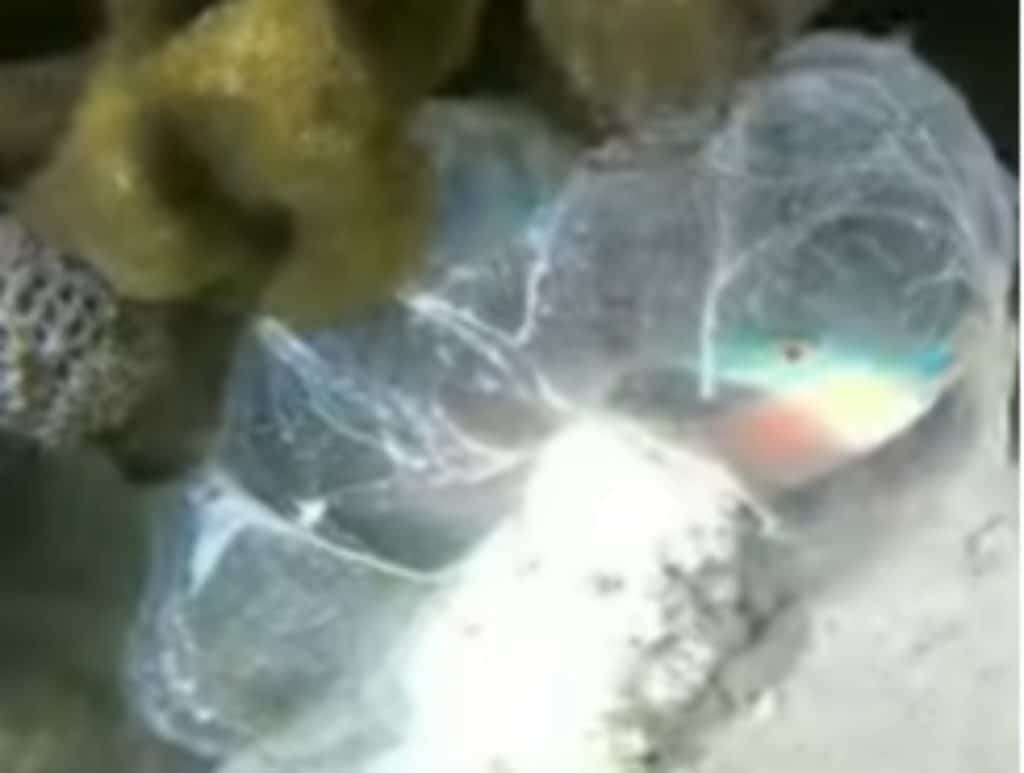
©WildBites / YouTube – Original
After cleaning all day, the queen parrotfish needs to rest during the evening hours. Because there are predators lurking during this time, parrotfish have devised a protective system to keep them safe during twilight hours.
As evening approaches, a queen parrotfish first tucks itself into a protective area within the reef. Then, the fish begins to secrete mucus from a gland near the gills. The translucent mucus spreads around the parrotfish’s entire body, creating a bubble. The bubble hardens on contact with saltwater, offering the queen parrotfish external protection as it rests.
Why Queen Parrotfish Create Mucus Cocoons
It should be noted that not all parrotfish create mucus cocoons. Queen parrotfish do because they live in areas where there are both threats of predatory attacks at night and high parasite populations.
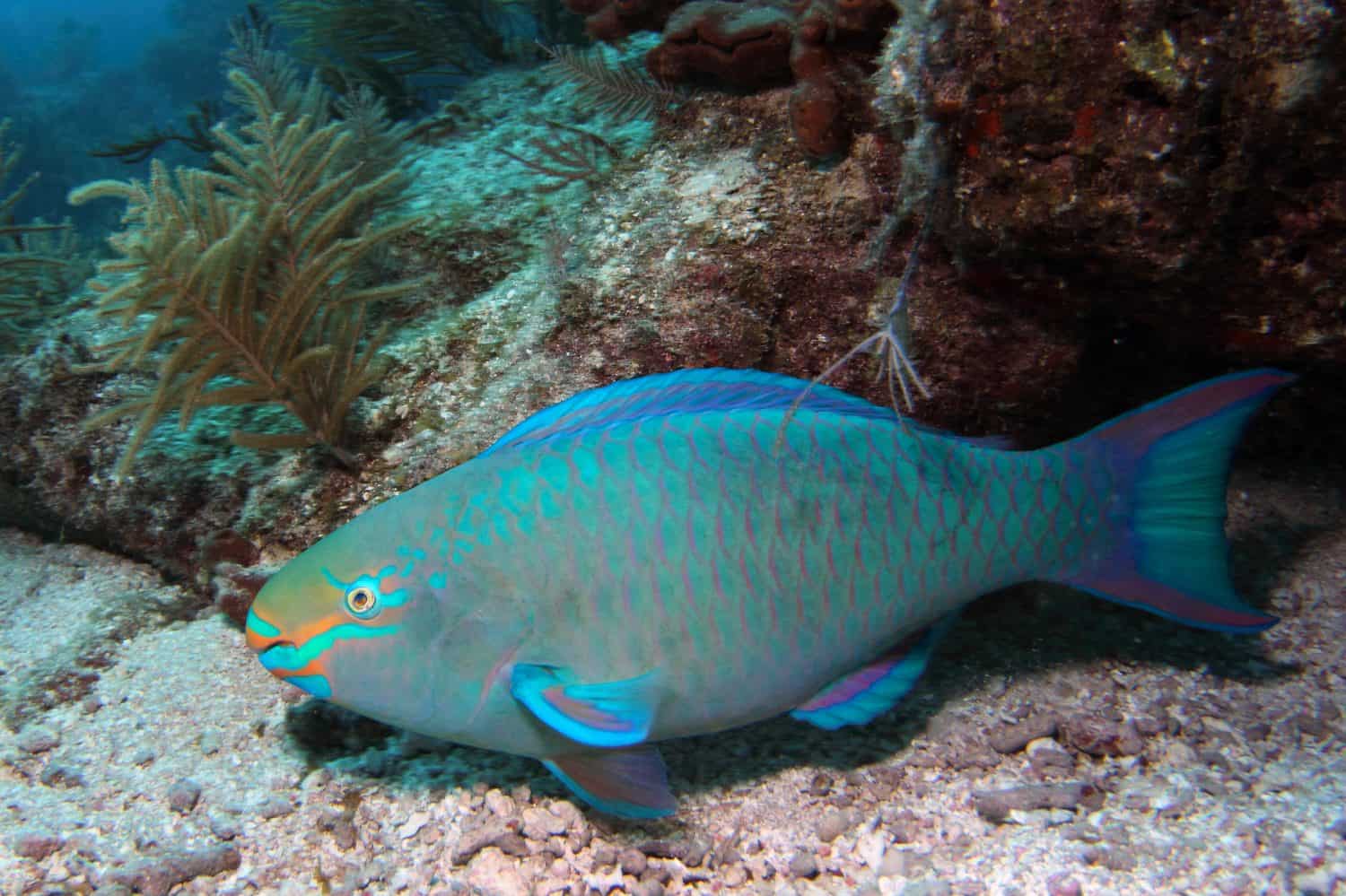
Queen parrotfish blow mucus bubbles around their bodies to protect against predators and parasites.
©Joe Quinn/Shutterstock.com
According to IERE, the mucus cocoon:
- Acts as a warning system, allowing parrotfish to escape from predators
- Masks their scent from nighttime predators
- Stops parasites from feeding on the fish at night
- Provides a shield from environmental stressors
This unique shield offers a level of protection not many other reef creatures can attain.
Queen Parrotfish Remain in Mucus Cocoons at Night
To get the most relaxing sleep possible, the queen parrotfish take 30 to 60 minutes to create their mucus cocoon. Once completed, the parrotfish do not emerge from the cocoon until morning.
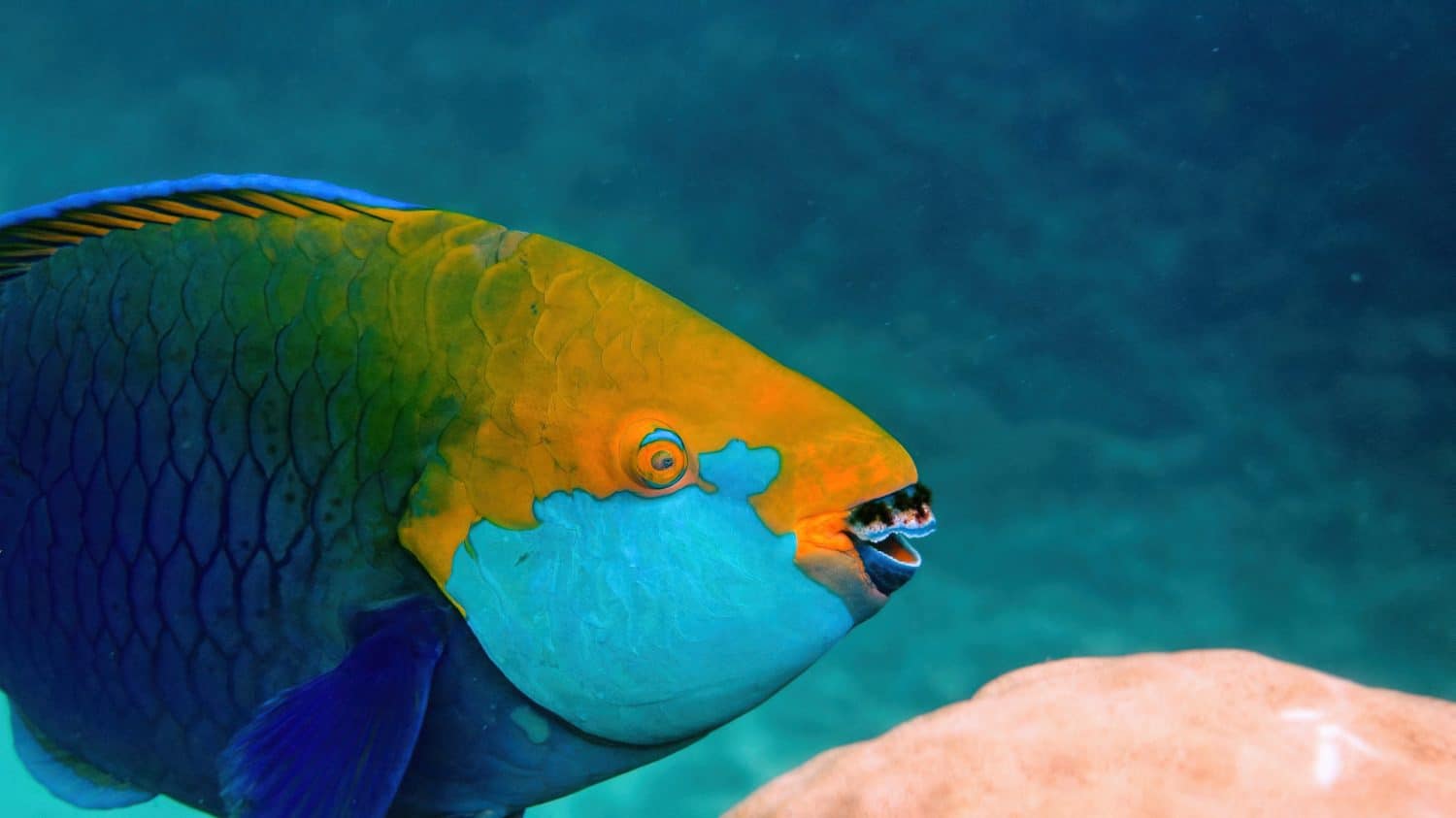
Queen parrotfish create their mucus cocoons to stay in from dusk until dawn.
©Molishka/Shutterstock.com
With the protective mucus cocoon around them, parrotfish do not have to be on high alert. If a predator is detected nearby, the fish can rapidly wriggle free of the cocoon and flee to safety.
What Happens If the Mucus Cocoon is Popped?
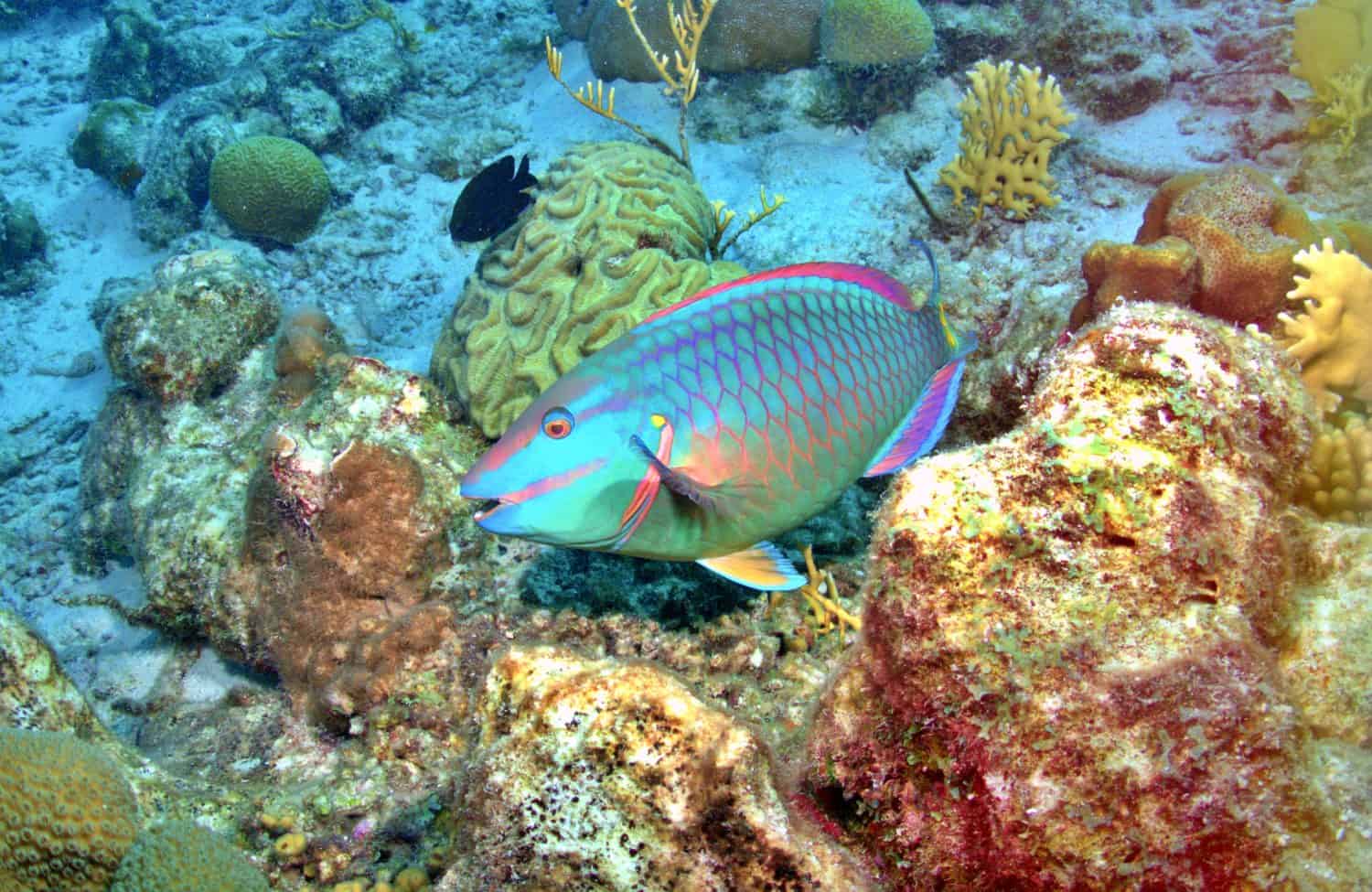
If a queen parrotfish’s mucus cocoon is popped, they retreat from danger.
©Joseph M. Bowen/Shutterstock.com
If a predator physically contacts the cocoon, it can tear or rupture it. The previously slumbering fish must respond quickly to get away. But with only one mucus cocoon formed nightly, the queen parrotfish will remain unprotected if it attempts to continue sleeping after the disturbance.
In some instances, the predator going after the queen parrotfish may be too quick for the parrotfish to outrun. Therefore, the mucus cocoon may be a barrier, but it is not a foolproof shield.