
Quick Take
- Large-body sharks in the Lamniformes family appeared 15 million years earlier than science previously claimed.
- Understanding shark evolution can be difficult because sharks are cartilaginous, so only their vertebrae and teeth survive fossilization.
- A richly biodiverse ocean during the Late Cretaceous period allowed gigantic sharks to coexist with other apex predators.
As a shark tooth and fossil hunting enthusiast, I often have people ask me why I find fossils so fascinating. To me, the answer is simple: I’m astounded by the fact that I can walk along the beach in 2026 and find a remnant of a creature that existed anywhere from two million to 35 million years ago. My fossils and teeth are fragments of the past. With each tooth I find, I become more curious about our world’s history. My curiosity was only amplified during a recent trip to South Carolina, where I discovered one of my bucket list finds (a Megalodon tooth!) on Morris Island. I immediately began wondering about these giant sharks and what the ocean was like when these sixty-foot-long, 70-ton fish existed.

My one-inch Megalodon tooth is big, but nowhere near the largest ever found (which came in around 7.5 inches!).
©Jessica Lynn
As I dove into research, including an October 2025 study published in Communications Biology, I realized there’s a ton we still don’t know about megalodons and other large-body lamniform sharks. Ancient lamniform sharks (sometimes called the Lamniformes, given the order) were the precursors to today’s great white sharks, thresher sharks, short-finned makos, goblin sharks, and salmon sharks, among others. In fact, the new research in Communications Biology even changes the timeline of when those sharks grew to be as large as they are. The study, based on fossilized vertebrae found in Australia, suggests gigantic sharks, likely precursors to the megalodons, were present in the ocean a stunning fifteen million years before previously thought.
How Did This Finding Occur?
Five large vertebral specimens from the Darwin Formation, found in Australia’s Northern Territory, were being housed at the Museum and Art Gallery of the Northern Territory when paleontologists took a look at them. These specimens ranged in size from 114 to 126mm in diameter, or around 4.5-4.9 inches. For context, that’s about half the diameter of a basketball, or about an inch larger in diameter than a softball. After evaluating the vertebral specimens, researchers stated these belonged to ancient Cardabiodontidae sharks.
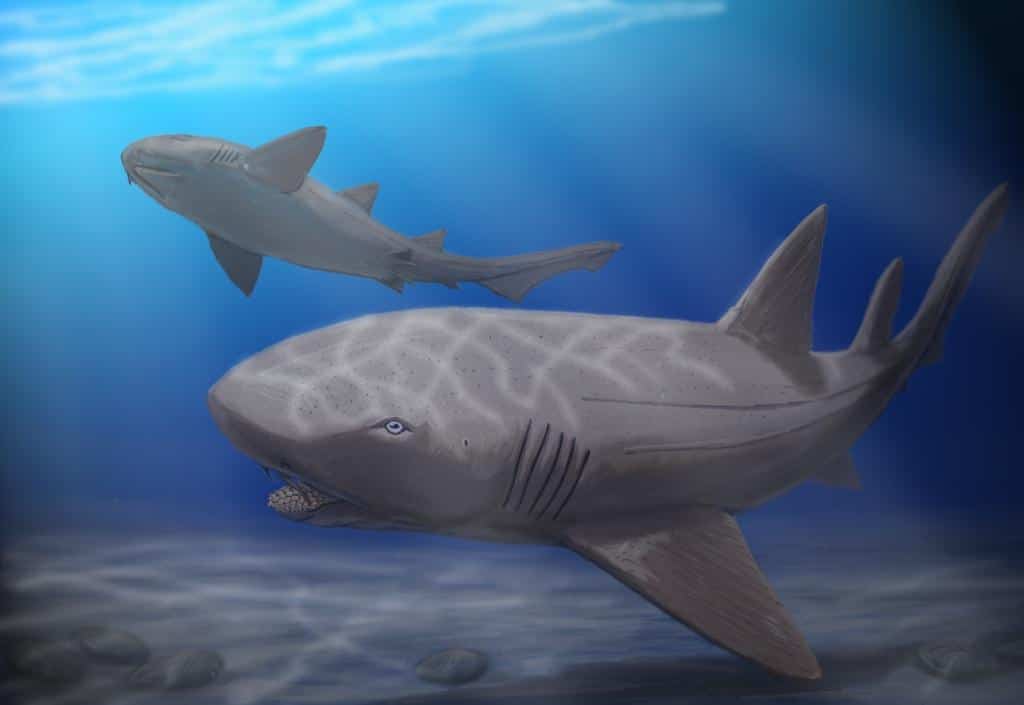
This family of sharks existed during the Late Cretaceous era and included sharks such as:
- Cardabiodon
- Dwardius
Because sharks are cartilaginous, which means their skeletons are made almost solely of cartilage rather than bone, the opportunity to evaluate shark vertebrae such as these from Cardabiodontidae was a huge deal.
Evaluating the Cardabiodontidae Vertebrae
When these specimens were initially collected, researchers didn’t yet have the tools to fully and soundly evaluate them. However, by the time this study was run, science had significantly advanced.
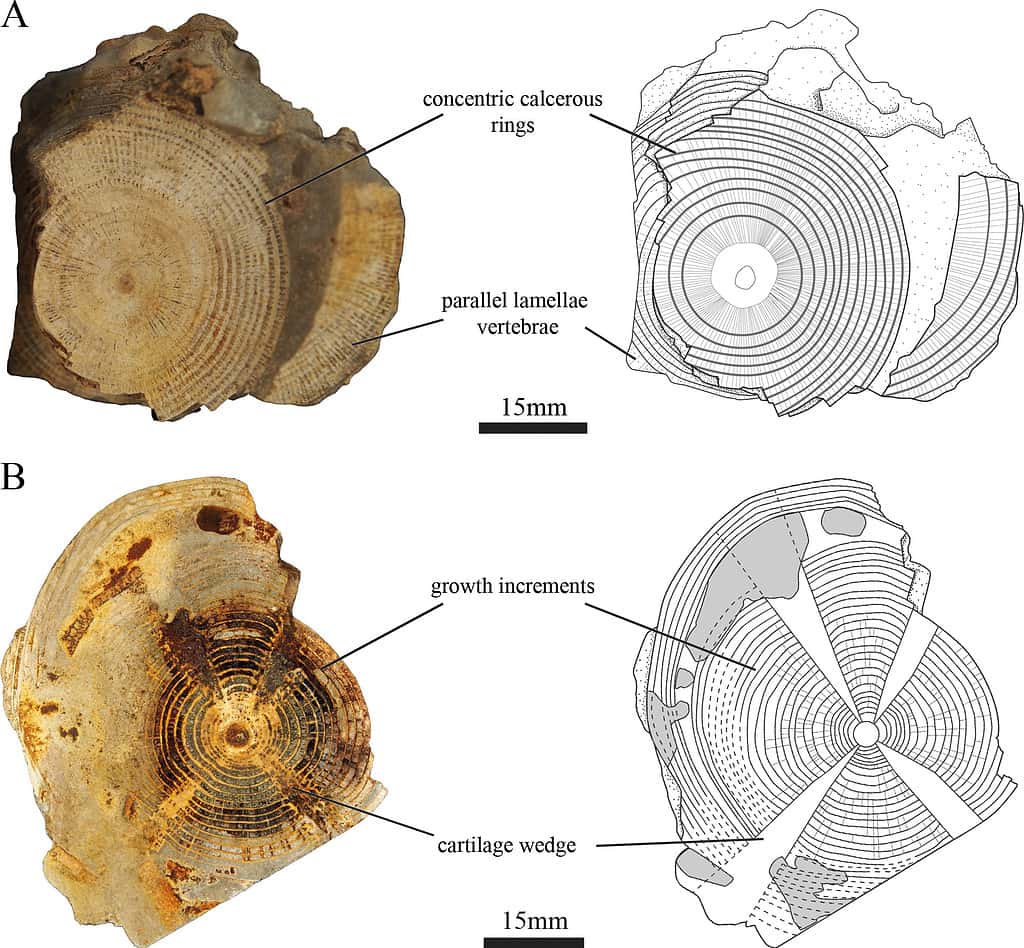
The middle of a shark’s vertebra is densest and most likely to fossilize, while outer rings can give insight into a shark’s potential age.
But how could the researchers take these large vertebrae and use them to understand how large these ancient sharks really were? Fortunately for researchers, modern lamniform sharks are useful for comparison. In today’s sharks, vertebral diameter aligns with a shark’s body length and mass. Essentially, if you look at a modern shark vertebra, you can tell how large the shark is.
The researchers decided to use Carcharodon carcharias, also known as a great white shark, to develop what they called allometric growth models. To do this, they took length, body mass, and vertebral diameter measurements from 111 great white sharks, which gave researchers a stronger idea of how vertebral changes reflected a shark’s growth over time.
Let’s Get Scientific…
After developing the allometric growth models, the researchers wrote, “This produced strong negative allometry between dorsal centrum diameter (CD) and total length (TL), and CD and body mass (BM).” I know this sounds complicated, but let’s break down what this means.
Negative allometry basically means that one part of an animal’s body grows more slowly. As the animal gets larger, that specific part (in this case, the vertebrae) becomes proportionally smaller. Even gigantic sharks have smaller vertebrae compared to their overall length and mass.
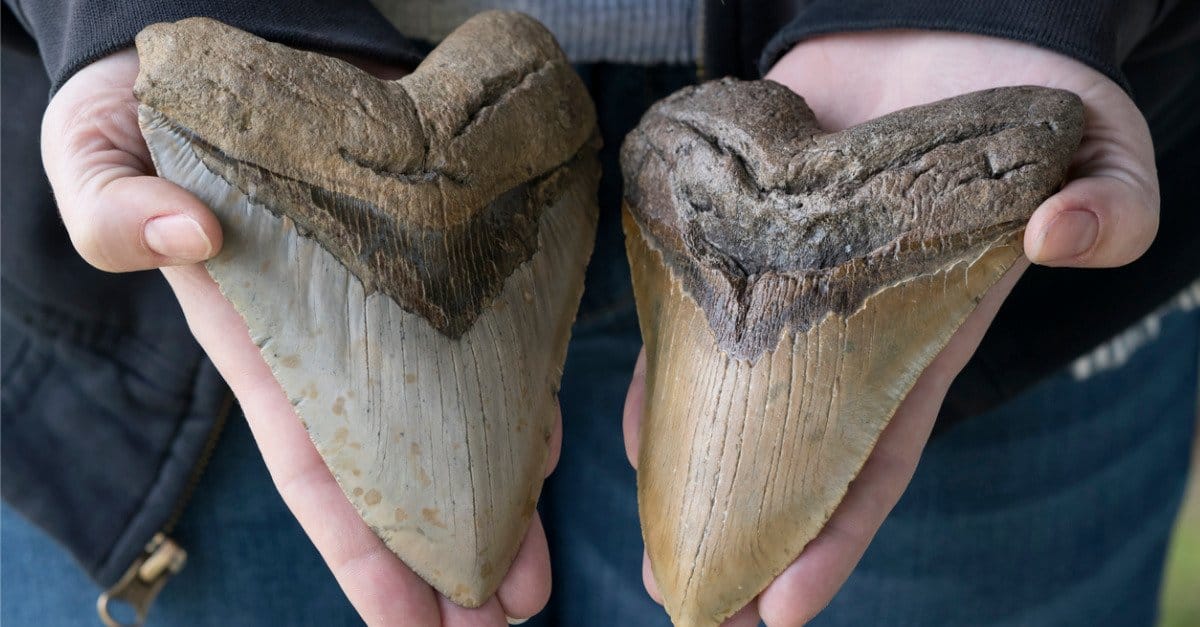
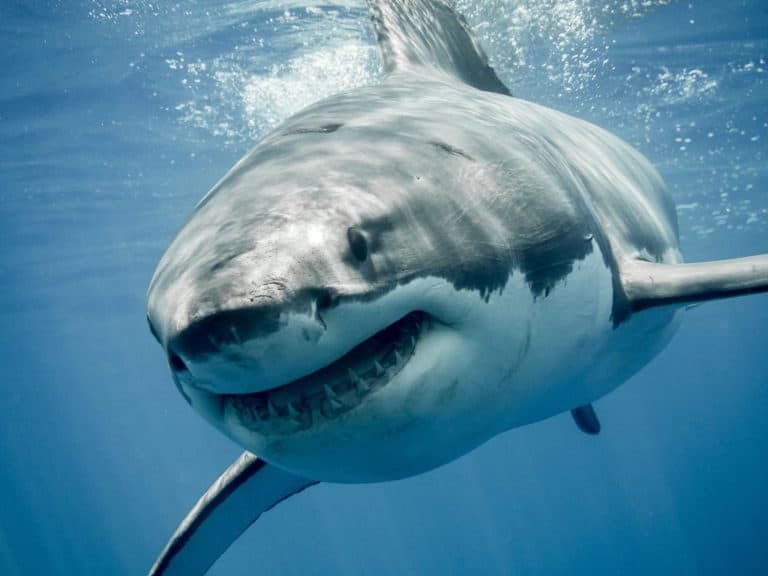
Just by looking at their teeth, you can tell that Megalodons and other large-form lamniform sharks were serious predators in ancient oceans.
©iStock.com/Mark Kostich
While vertebral size still remains the best way for researchers to estimate the body size of these gigantic Cardabiodontidae sharks, these sharks could have been even larger than we can imagine. The study authors acknowledge this, writing, “We therefore view them as conservative and suspect that the Darwin Formation cardabiodontid might have attained even larger body sizes than those proposed here.”
How Big Were Ancient Large-Body Lamniform Sharks?
Researchers later applied the allometric growth models to the Cardabiodontidae vertebrae to estimate these sharks’ size. The models suggested these sharks spanned six to eight meters (approximately 19.7 to 26.25 feet) in length. Further, the sharks potentially weighed up to three tons.
Earlier, I mentioned the size of ancient megalodons. It’s clear, from these findings, that ancient Cardabiodontidae sharks did not reach the size or scale of megalodons. However, knowing sharks this large were patrolling the oceans at this time was a huge find for scientists.
Why is that? As the researchers write, “Fossils correlate their initial development of mega-body size ( ≥ 6 m) with ecological radiation as marine top-predators during the later part of the mid-Cretaceous (after the late Albian, ~100 Ma).” In short, past scientific consensus agreed mega-sharks over six meters long did not appear until the late Albian period. But these fossils suggest mega-sharks were already in existence, and top predators, in the upper Aptian period, some fifteen million years earlier.
What That Tells Us About Large Shark Evolution
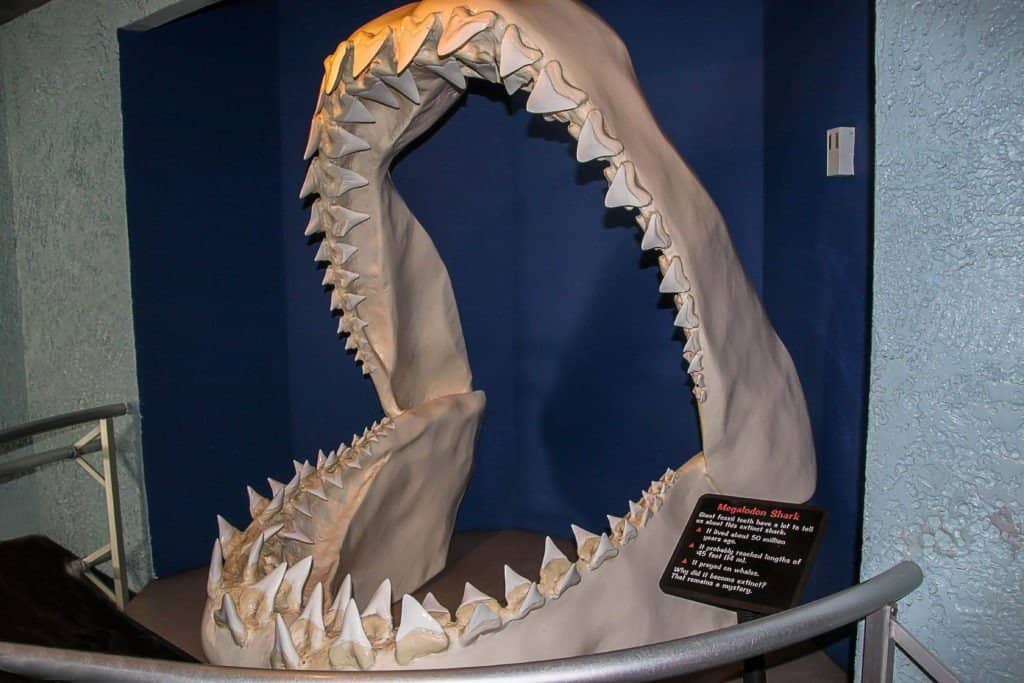
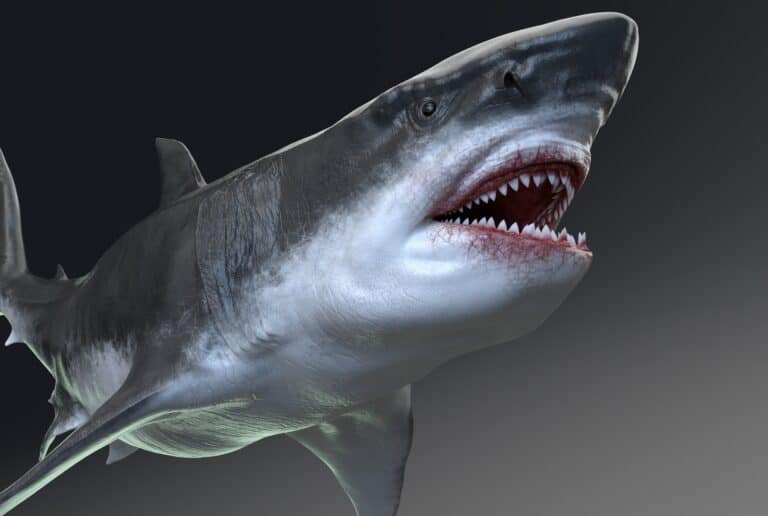
Megalodon sharks were considered the largest to ever exist, even with the new findings.
©Mulevich/Shutterstock.com
Going back to the scientific consensus, researchers have long believed that lamniform sharks evolved to have large bodies over tens of millions of years. But these vertebrae flip that idea on its head. Similar vertebrae from lamniform sharks, including a 17cm (6.6 inch)-diameter vertebra found in the upper Albian Kiowa Shale of Kansas, suggest sharks evolved towards gigantism several times throughout lamniform development, even across different continents.
Even more interestingly, the findings also provide a more complex look of how Cardabiodontidae existed within their ecosystem.
An Evolution of Size
First, the vertebrae suggest Cardabiodontidae evolved more rapidly than once thought. The authors believe the changing temperatures of the late Cretaceous period might have played a role. During the Early Cretaceous period, the Earth was generally warmer than it is today. Some scientists even refer to the Early Cretaceous as having a “hot greenhouse climate.” Yet areas around the Darwin Formation experienced cold, or sometimes freezing, waters.
Scientists surmise Cardabiodontidae gigantism emerged from a need to adapt to colder waters. In addition to mesothermy (where sharks could keep their body temperature warmer comparable to surrounding waters), the sharks also began filter-feeding, supplementing their otherwise meat-heavy diet, which the study authors say is comparable to great white sharks today. Having a larger body size supplemented temperature control by reducing heat loss. Cardabiodontidae could also swim farther to feed on smaller prey.
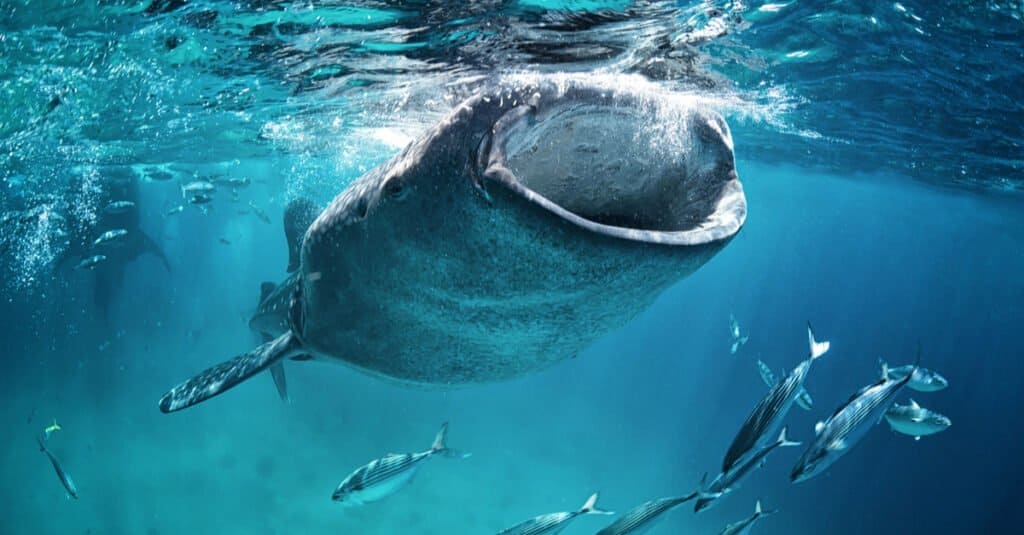
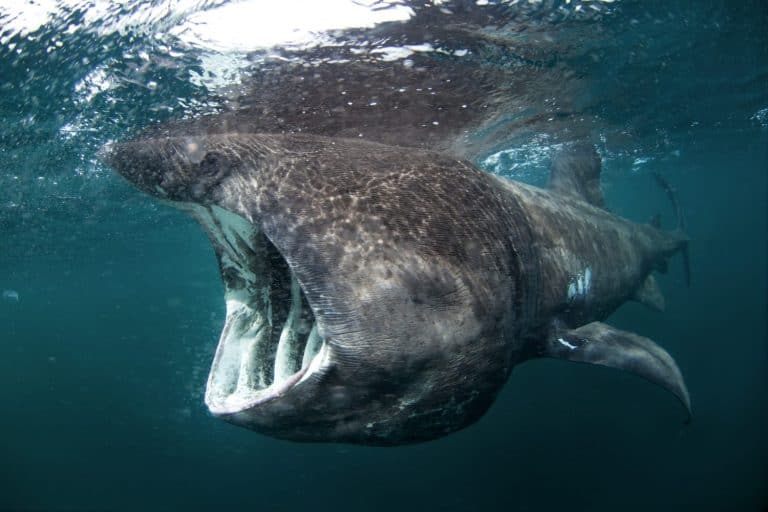
Filter feeders, like the whale shark, strain small prey like plankton from the water through unique filtering gills.
©Fata Morgana by Andrew Marriott/Shutterstock.com
Ocean Environment
Interestingly, fossils from the Darwin Formation typically skew towards medium-sized marine reptiles like plesiosaurs, leptocleidid, or medium-sized ray-finned fish. The study authors note the Darwin Formation is located on a shallower shelf of the Money Shoals Platform. This could suggest that Cardabiodontidae evolved to be larger in shallower habitats, and it wasn’t until later that these sharks moved deeper into the open ocean.
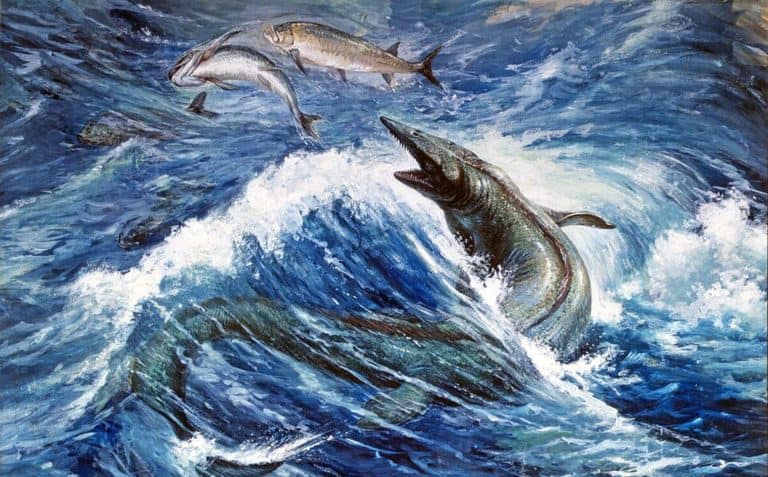
Fossil findings in the area also highlight how Cardabiodontidae coexisted with other apex predators. These sharks were likely opportunistic feeders. The study authors note these sharks likely fed on fish and aquatic tetrapods, such as sea turtles, ichthyosaurs, or marine mammals. Cardabiodontidae existed at the same time, and in the same general area, as Kronosaurus. However, researchers note the sharks likely hunted in shallower water, while Kronosaurus and other large marine mammals hunted in deeper water.
Because these apex predators navigated the same waters, we know the ocean at the time was likely full of diverse species and prey. Perhaps late Cretaceous oceans were even more diverse than the ocean ecosystems we have today!
Today’s Lamniform Sharks
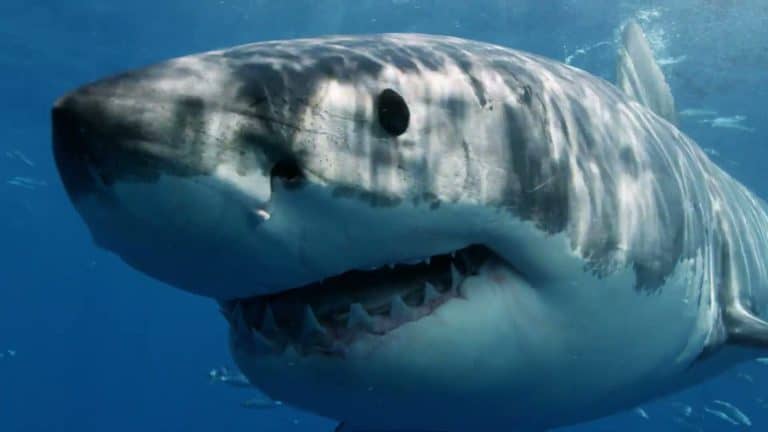
In today’s oceans, the great white shark is a formidable predator. Yet it pales in size comparison to its Late Cretaceous ancestors and especially to megalodons. While great white sharks lack the same size, however, certain traits like opportunistic feeding and the ability to control body temperature were passed down.
Is this because ecological and environmental conditions have changed? Did certain shark lineages have a genetic component to gigantism that others did not? And will modern oceanic changes, such as ocean acidification or global warming, promote similar gigantism or body size changes in today’s lamniform sharks? Ultimately, we don’t yet have the answers to these questions. But the more we discover in our fossil record, the closer we get to understanding the changes in our ocean and its creatures throughout history.