
Quick Take
- This worm has nothing to do with Christmas, but the name fits perfectly once you see why. See how it got its name →
- It hides most of its body out of sight, and what it does with that hidden part surprises most people. Discover its hidden body →
- This tiny worm could help scientists detect one of the ocean's most alarming ecological crises. Explore its role as bioindicator →
- The worm's relationship with coral isn't one-sided. Each gets something the other desperately needs. Unpack the symbiotic relationship →
With a name like the Christmas tree worm, you’d expect this creature to appear on the 25th of December or at least to live on Christmas trees! In fact, it is a marine animal that plays an important role in the health of coral reefs. So, where does that name come from?
What Are Christmas Tree Worms?
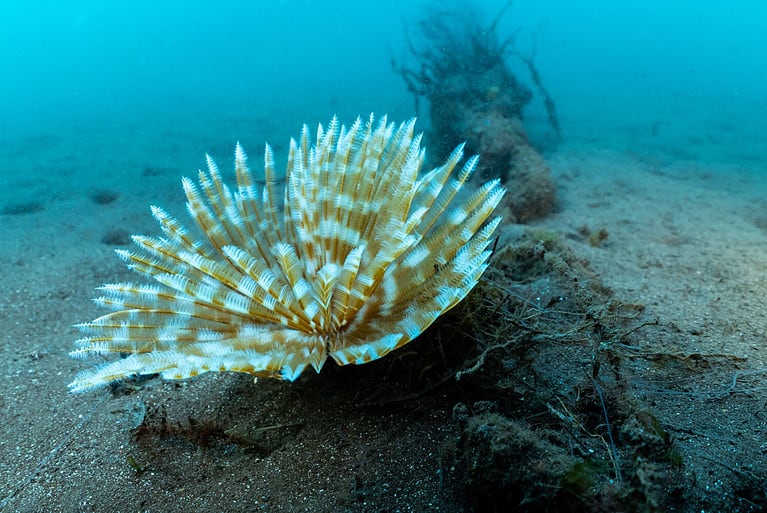
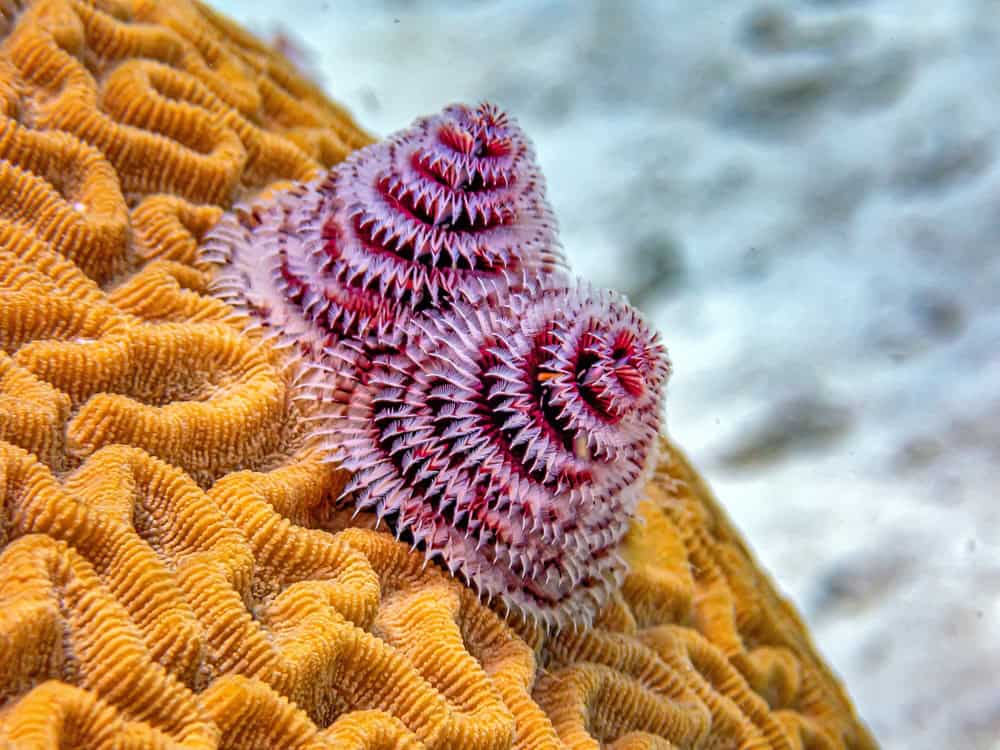
The scientific name for the Christmas tree worm is Spirobranchus giganteus, and it is a polychaete worm in the Serpulidae family. They are found throughout tropical and sub-tropical coral reef regions from the Caribbean to the Indo-Pacific. The worms are typically shorter than your thumb and hide most of their body inside a burrow/tube. The part that sticks out resembles a small Christmas tree—hence the name!
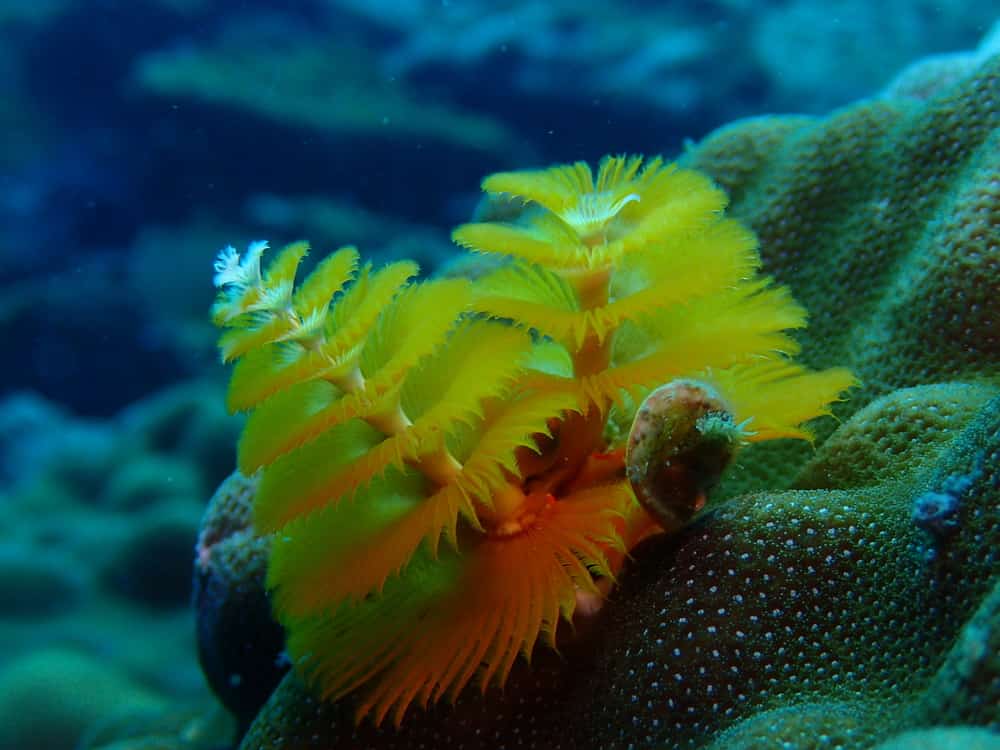
Christmas tree worms are brightly colored.
©Beau_G/Shutterstock.com
They have two brightly colored crowns called radioles, which are hair-like appendages radiating from their central spine. Radioles are used for respiration and for catching prey. These worms feed on microscopic plants, or phytoplankton, in the water. If startled, they retract very quickly into their burrow. They then cover the entrance with a trapdoor-like structure called an operculum.
What’s the Link Between Christmas Tree Worms and Coral?
Christmas tree worms are obligate associates of coral, meaning they require coral to survive. The worm larvae live freely in the water column but eventually settle on the surface of specific host coral species, where they construct a calcareous tube. Over time, this tube becomes covered by coral growth, making it appear more like a burrow.
The host coral provides support and protection to the worm. In return, the Christmas tree worm enhances water circulation for coral feeding. They also provide a hiding place for coral polyps so that they don’t get eaten by sea stars. This symbiosis means that the Christmas worm may serve as a potential bioindicator for detecting environmental changes in coral reef ecosystems. Indeed, studies suggest that Christmas tree worms could serve as potential bioindicators of coral reef health and may be useful in detecting major coral bleaching events.