
Quick Take
- There are over 1,700 species of sea cucumber in marine environments all over the world.
- Sea cucumbers are detritivores and scavengers, consuming small particles of food that float in the water and settle on the ocean floor.
- Primary foods include algae, bacteria, plankton, invertebrates, and other organic matter.
- The digestive processes of sea cucumbers are crucial to the health of coral reefs.
Sea cucumbers belong to the phylum Echinodermata like their closest relatives, sea urchins, sand dollars, and starfish. There are over 1,700 species of sea cucumber living throughout all of the world’s oceans. These seafloor dwellers can be found at all depths, from shallow coastal waters to the deepest ocean trenches.
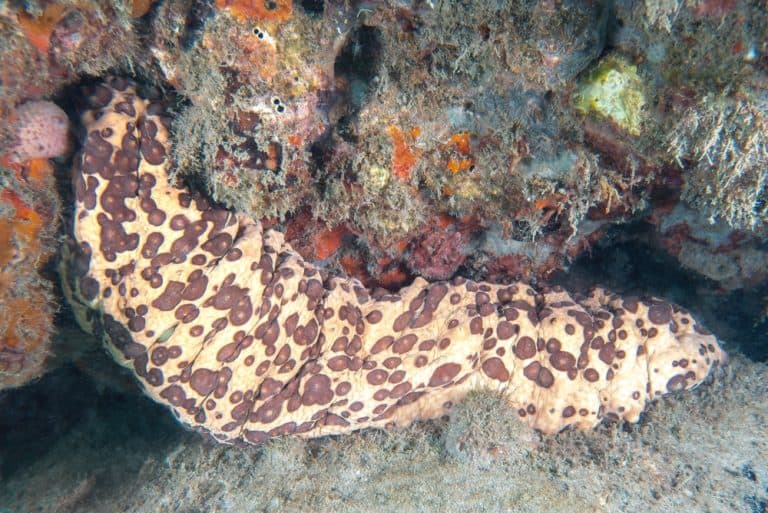
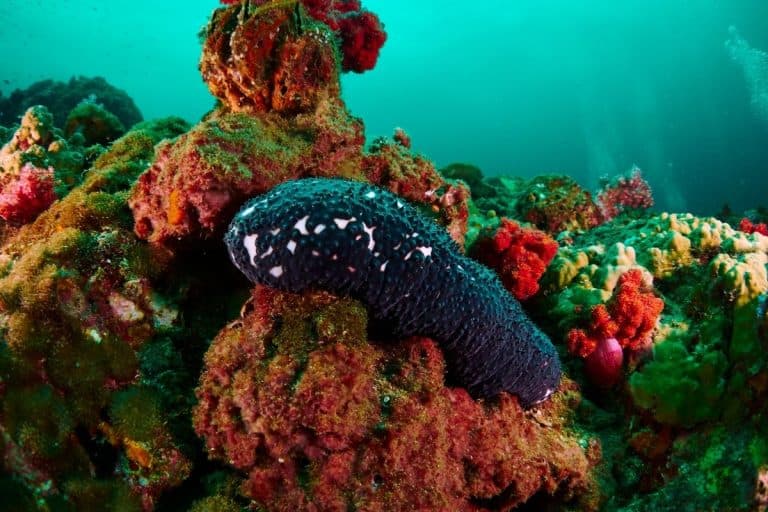
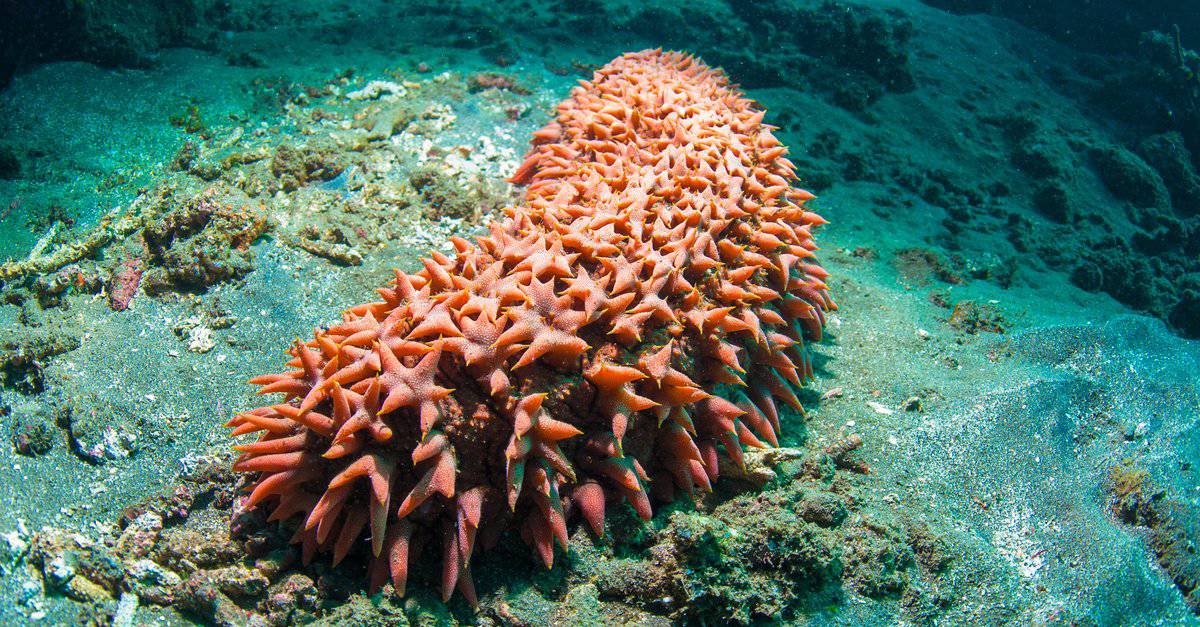
Sea cucumbers are named for their elliptical shape resembling a garden cucumber. They are invertebrates that come in a variety of colors, shapes, and sizes, with some growing to over 3 feet in length. Sea cucumbers have soft, leathery bodies with no eyes and no brains. They have just two openings on their bodies: a mouth and an anus. They also have a type of lung in their anus through which they can extract oxygen from the water. Yet, how do they eat, and what makes up the sea cucumber diet? Read on to find out.
What Do Sea Cucumbers Eat?
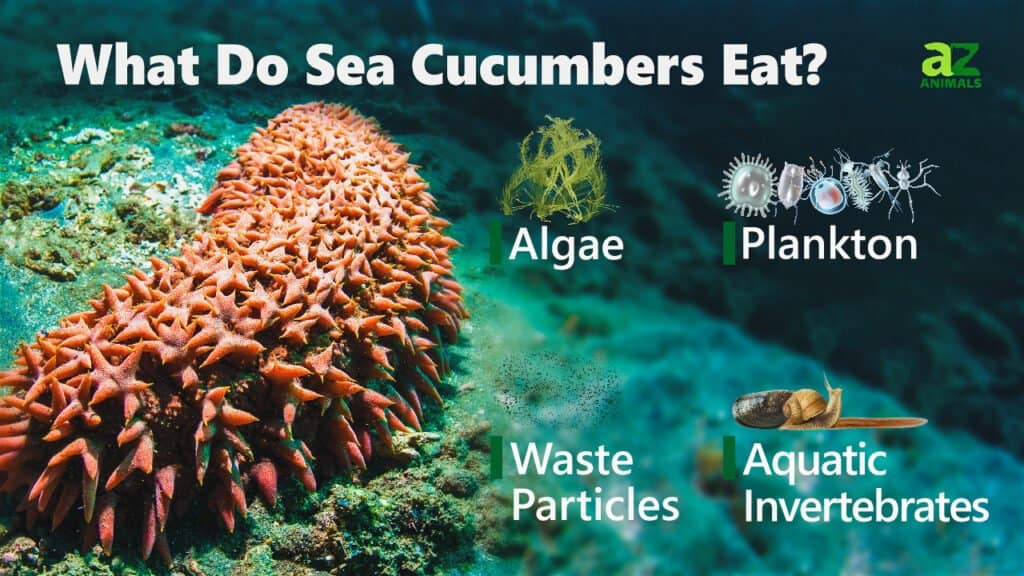
Nearly all sea cucumbers are considered detritivores and scavengers. This means they consume the small pieces of food that drift through the ocean and settle on the sea floor. However, some species also consume both living and non-living organisms.
While there may be slight variations due to species and geographical location, sea cucumbers primarily eat:
- Algae
- Bacteria
- Plankton
- Decaying carcasses
- Small crustaceans and other invertebrates
- Eggs and larvae
- Decaying plants and other organic matter
- Other waste material
How Sea Cucumbers Eat
Sea cucumbers are either deposit feeders or suspension feeders. They have from 10 to 30 tube-like feet, or tentacles, surrounding their mouths. Deposit feeders slowly crawl along the seafloor, using these feet to pick up tiny particles of food from the sediment that has settled at the bottom of the ocean. Suspension feeders use their feet to snag food particles or small organisms floating in the water.
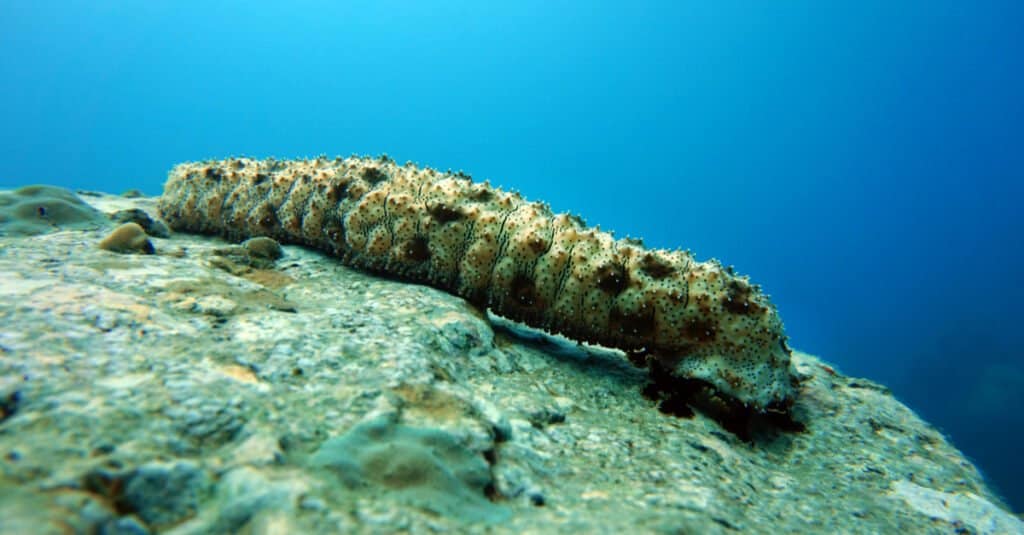
Sea cucumbers use the modified feet around their mouths to gather food particles.
©Natalia Siiatovskaia/Shutterstock.com
Leptosynapta species are a special type of deposit feeder, sometimes called burrowing deposit feeders or funnel feeders, that burrow in soft sediment like silt, sand, and mud. They use the tentacles around their mouths to gather organic material from the substrate, digesting any food particles they find under the surface.
Sea Cucumbers’ Predators
Many marine animals overlook sea cucumbers due to their defensive abilities. Sea cucumbers have Cuvierian tubules, which are long, sticky, string-like structures expelled through the anus to entrap and immobilize predators. Some species may also contain a toxin called holothurin, which can cause pain, inflammation, and even blindness if it comes into contact with the eyes.
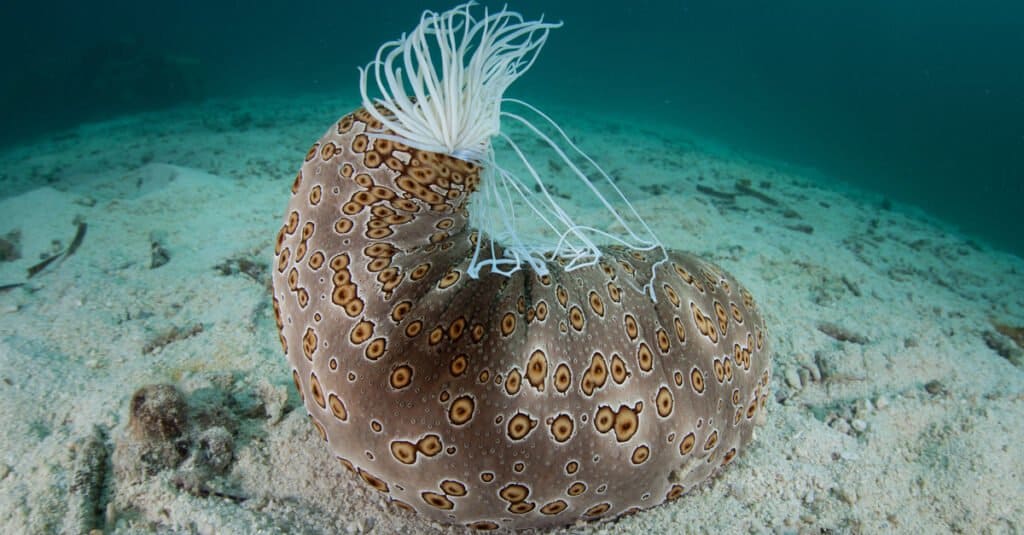
Sea cucumbers can release long, sticky tubules to protect themselves from threats.
©Ethan Daniels/Shutterstock.com
Sea cucumbers can eject their intestines and other internal organs to scare or distract threats, a process known as evisceration. These parts can later regenerate. They also have the ability to harden their bodies through the release of special proteins, making them more difficult to consume.
Some of the primary predators of sea cucumbers are:
- Sea stars
- Fish
- Crabs
- Lobsters
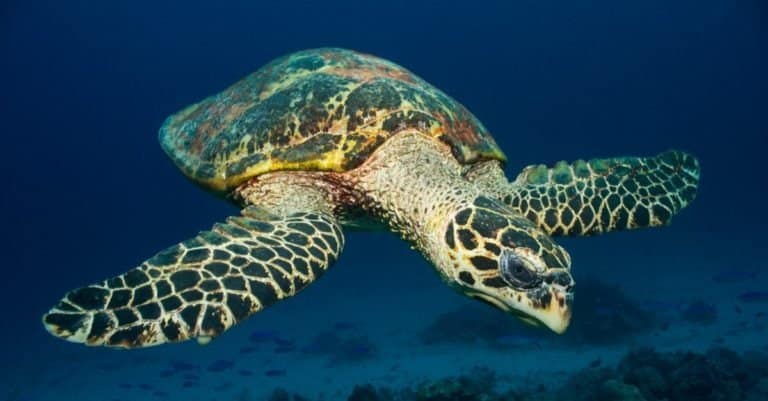
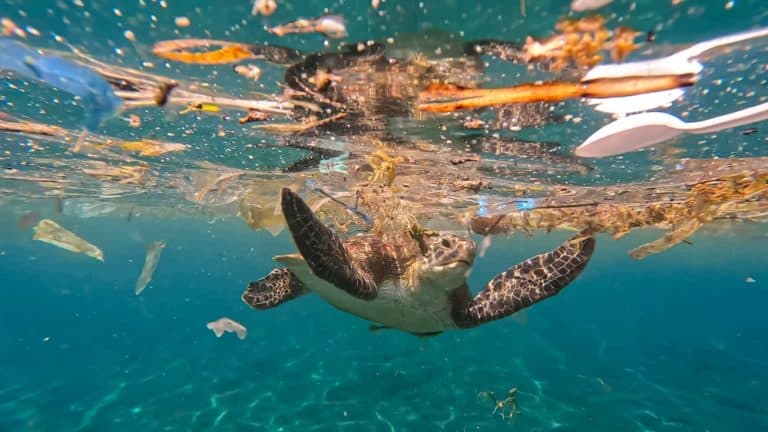
- Sea turtles
- Sea otters
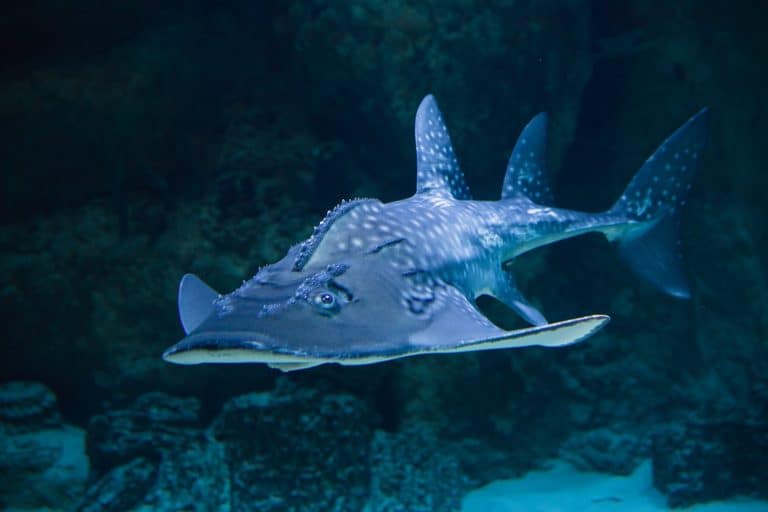
- Some shark species
Sea cucumbers are also eaten by humans. They are consumed in Asia and in some Pacific island nations, where they are considered a delicacy. In China, sea cucumbers are also harvested for use in traditional medicines, as they are believed to have healing properties. However, global trade protections and increased regulations have been implemented to address overexploitation and conservation concerns related to sea cucumber harvesting.
How the Digestive Processes of Sea Cucumbers Help the Ecosystem
Sea cucumbers play a vital role in ocean ecosystems, especially around coral reefs, due to their digestive processes. Sea cucumbers recycle nutrients by initiating the decomposition of organic matter. As they move around the ocean floor, they ingest sediment while consuming detritus and excrete waste. This process aerates the sediment, making it healthier for other organisms like worms and mollusks. It also releases nitrogen and calcium carbonate trapped in between the sediment layers, which are crucial for the growth and health of coral reefs and their symbiotic algae.
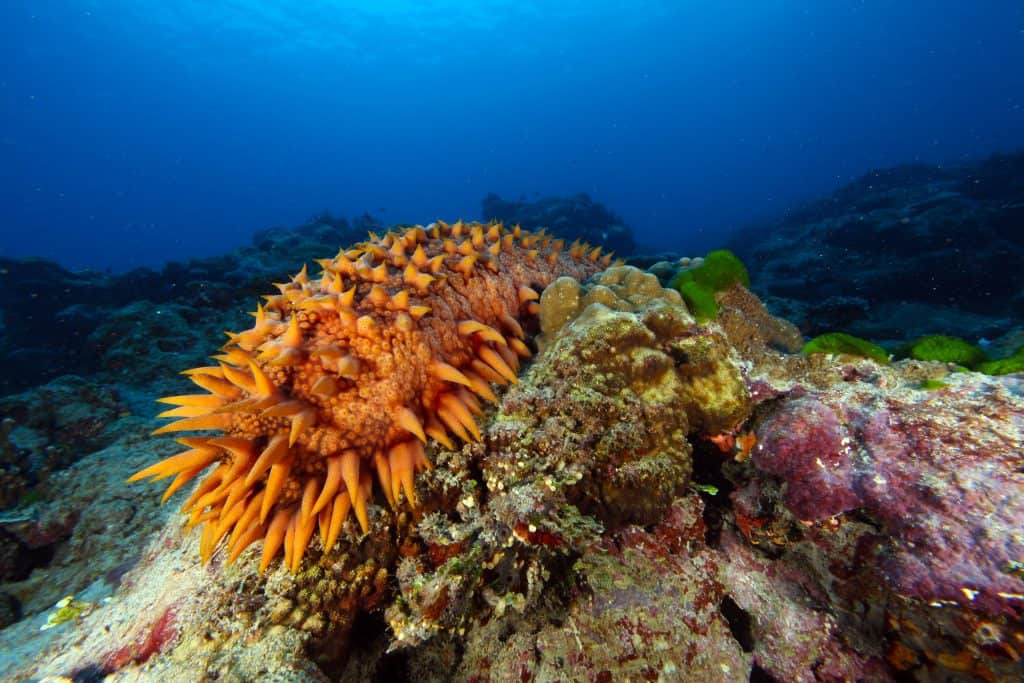
Sea cucumbers aerate sediment as it passes through their digestive systems.
©lego 19861111/Shutterstock.com
Sea cucumbers can also mitigate the impact of ocean acidification around coral reefs. When sea cucumbers ingest sand, the sand travels through their digestive system and the natural processes in their gut create ammonia. The expelled ammonia increases the pH levels of the water wherever sea cucumbers excrete their waste. Researchers has also shown that sea cucumber waste can inhibit sediment-associated pathogens, which may help prevent coral diseases and death. Although coral reefs only cover less than 1% of the Earth’s surface, they are home to at least 25% of all known marine organisms. Coral reefs are also a source of new medicine, and over a billion people worldwide benefit from coral reef ecosystems.