
Quick Take
- That famous colorful beak serves a special purpose during breeding, and afterward puffins shed only its brightly colored outer plates. See the beak's purpose →
- Losing part of your face every year sounds like a liability, but for puffins it might actually be the opposite. Explore the shedding advantage →
- Puffins bond with a mate in a way that makes their beak central to the relationship, and they keep that partner for life. Discover the mating role →
- Puffins have a physical trade-off between two basic survival skills, and their beak is caught right in the middle of it. See the survival trade-off →
Puffins are dapper little birds that spend a lot of time at sea. You can’t miss a puffin, thanks to their distinctive black and grey plumage and vibrantly colored beak. But once a year, part of that beak falls off, making them look quite different and less vibrant. Here’s why this happens.
All About Puffin Beaks
Puffins are members of the Alcidae family, more commonly known as the auks. There are three species of true puffins. The tufted puffin and the horned puffin are found in the North Pacific Ocean, while the Atlantic puffin is found in the North Atlantic Ocean. Puffins are round, stocky birds with distinctive black-and-white coloring.
In the summer, they nest on rocky cliffs and islands. However, they spend their winters foraging out at sea. Puffins are entirely dependent on marine food for their survival.
Puffin Beaks and Breeding
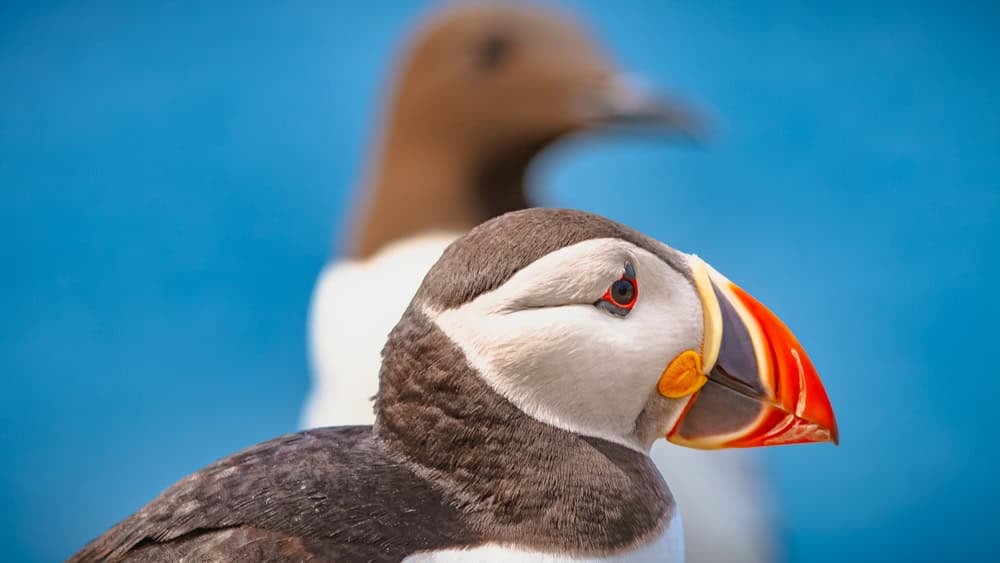
During the summer breeding season, puffins show off their characteristic brightly colored bill. It features a mixture of oranges, yellows, and reds, and both males and females are adorned with this bright display. The vibrant colors signal to other puffins that they are a sexually mature individual and are available to mate. Both male and female puffins reach sexual maturity between 3 and 6 years of age.
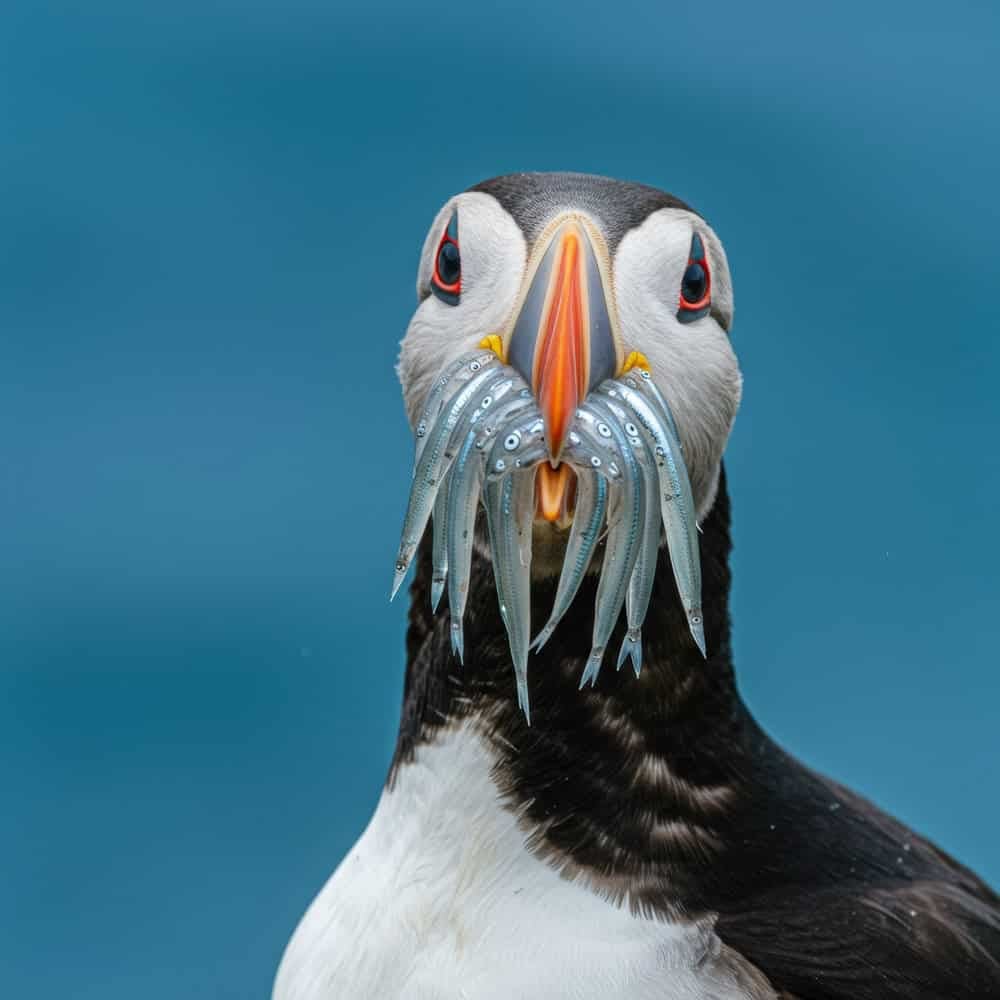
Puffin bills can hold lots of fish!
©Wirestock Creators/Shutterstock.com
Puffins create their bond with their partner by touching beaks, and then they mate for life. Their large bill also helps them regulate their temperature during warm summers and allows them to bring back up to 10 fish at a time to their growing chicks.
How Does a Puffin’s Beak Change?
Once the chick leaves the nest, both male and female puffins shed the outer part of their bills. This leaves behind a smaller and less colorful bill. At the same time, they lose their strongly contrasting plumage and develop a mottled gray appearance. Their legs, usually a bright reddish orange in summer, turn a muted yellow.
Experts are not entirely sure why this happens. One theory, however, is that the less colorful bill is harder to spot by predators and keeps the puffins safer. Great black-backed gulls, jaegers, and sharks all hunt puffins. Also, puffins are better at swimming than they are at flying. Therefore, losing that big bill may help them take off from the water more easily.