
Quick Take
- Southern Ocean expeditions confirmed 30 new deep-sea species around Antarctica, including a predatory ‘death-ball’ sponge and armored scale worms.
- Researchers have analyzed less than 30 percent of collected samples, indicating many more species await identification.
- New discoveries span predators, crustaceans, sea stars, mollusks, and a potential new sea pen genus across hydrothermal vents, trenches, and seafloor habitats.
The deep sea around Antarctica just got a whole lot weirder. Researchers exploring the area — one of the most remote and isolated places on the planet — have officially confirmed 30 previously unknown deep-sea species. This unprecedented haul includes a cast of creatures straight out of science fiction: think ghostly ethereal corals, heavily armored worms, and carnivorous “death-ball” sponges. Most astonishing of all is that scientists have analyzed less than 30 percent of what they have collected so far, which means this is just the beginning of what truly lurks beneath the ice.
Expedition to an Untouched Seafloor
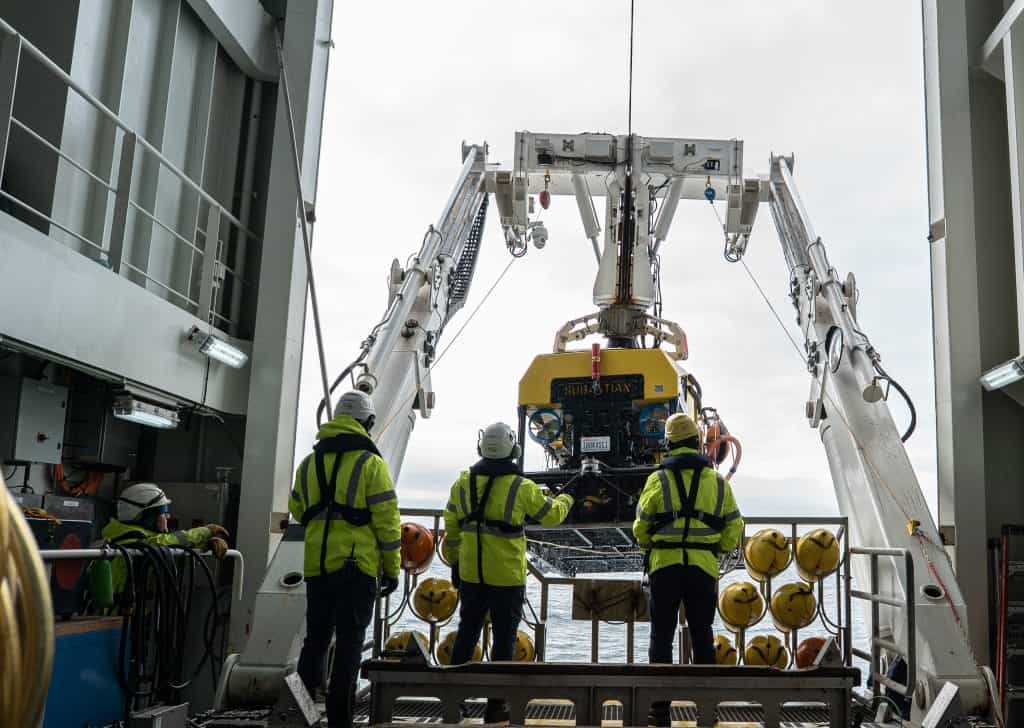
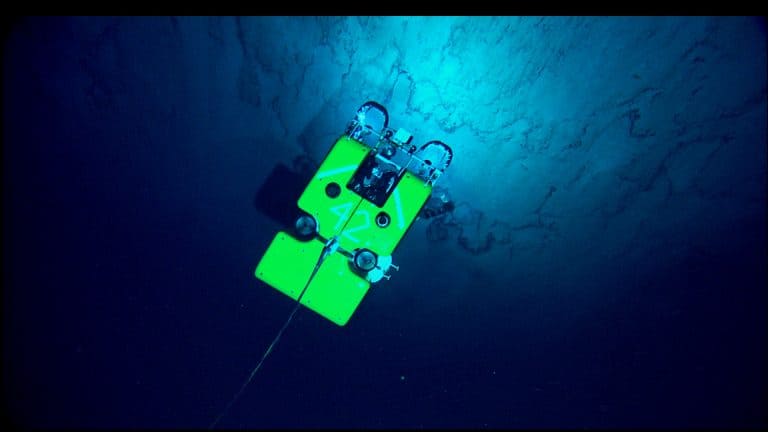
The team launches ROV SuBastian into the Antarctic Ocean, near the South Sandwich Islands.
©Paul Satchell/The Nippon Foundation-Nekton Ocean Census/Schmidt Ocean Institute © 2025 – Original / License
This recent biodiversity boom is thanks to two major 2025 research expeditions into the Southern Ocean. These expeditions gave scientists an unprecedented first look at several untouched habitats along the seafloor. In particular, they explored new areas of the seafloor only recently exposed after the colossal A-84 iceberg broke away from the George VI Ice Shelf.
The teams responsible were The Nippon Foundation-Nekton Ocean Census and their collaborators, operating on two cutting-edge Schmidt Ocean Institute expeditions. But researchers didn’t just look in a single place; they collected nearly 2,000 specimens spanning 14 different animal groups. These specimens came from a variety of extreme environments in the remote South Sandwich Islands and the Bellingshausen Sea, such as hydrothermal areas, volcanic calderas, and deep-sea trenches.
The Carnivorous “Death-Ball” Sponge
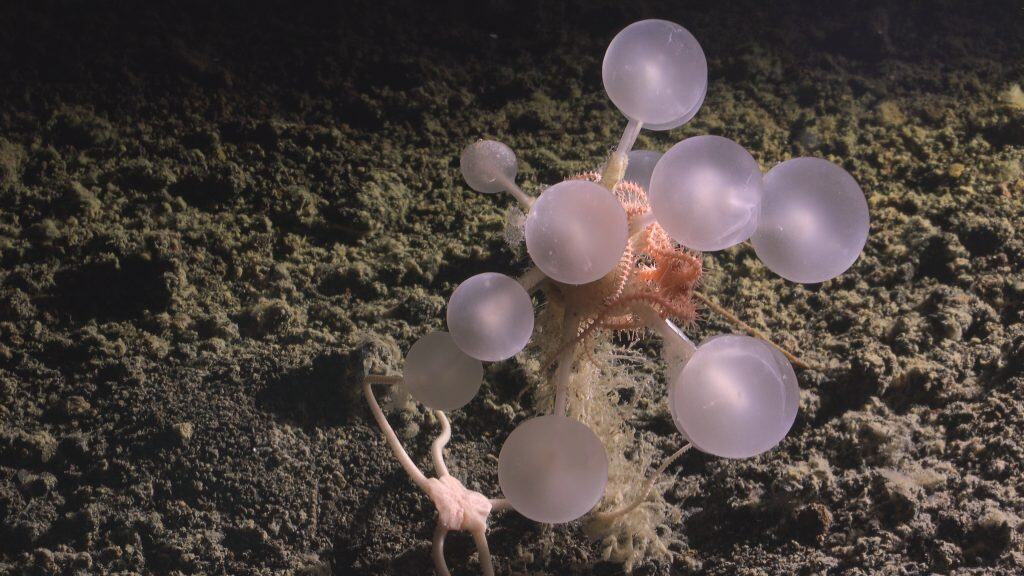
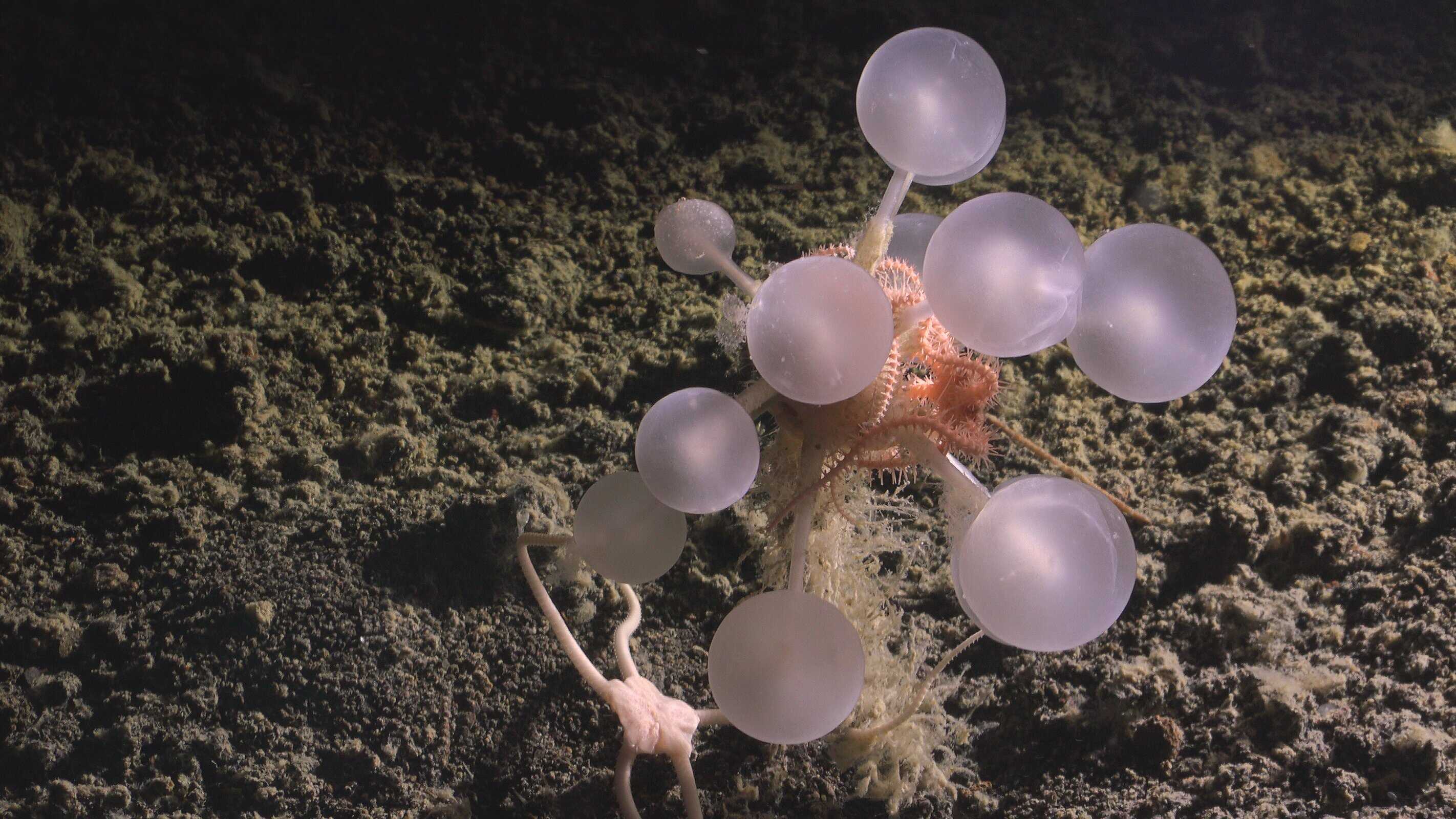
New Carnivorous death ball sponge found by the ROV SuBastian at 3601 metres at the Trench North dive site, east of Montagu Island.
©The Nippon Foundation-Nekton Ocean Census/Schmidt Ocean Institute © 2025 – Original
If a sponge could moonlight as a monster from a deep-sea horror film, this would be the one. Researchers have temporarily labeled this predator Chondrocladia sp. nov. (Latin for “new species”), and its unofficial common name — the “death-ball” sponge — tells a terrifying story.
Unlike the common sponges that passively filter water for food, this newly discovered species from the Chondrocladia genus is an active hunter. It uses tiny, hooked, glass-like spicules to snag and trap small crustaceans drifting by. Chondrocladia species typically grow delicate, tree-like structures with balloon-shaped branches that aid in their specialized feeding strategy. Research suggests that these predatory sponges have been stalking the seafloor since at least the Early Jurassic period, nearly 200 million years ago.
Armored, Iridescent Scale Worms
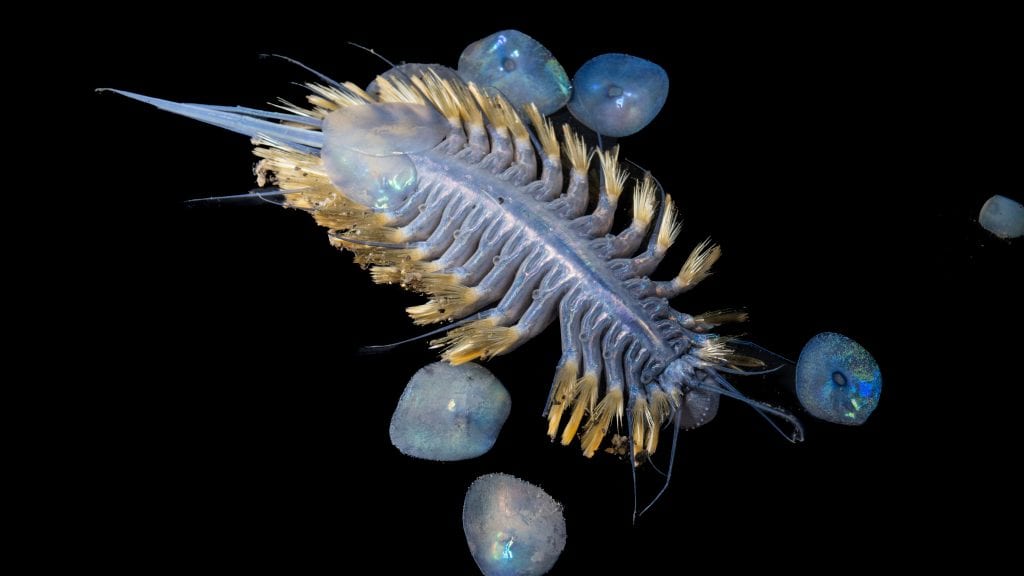
New iridescent scale worm found by the ROV SuBastian at 2859 metres at the South Trench dive site, northwest of Zavodovski Island.
©Jialing Cai/The Nippon Foundation-Nekton Ocean Census/Schmidt Ocean Institute © 2025 – Original / License
These formidable deep-sea hunters look as though they crawled straight out of a sci-fi show. This newly confirmed species is a member of the Eulagisca genus, a group of large, active polychaete worms that can grow 7 inches or more in length. Their most striking feature is their “armor,” which is made of shimmering, overlapping, scale-like plates called elytra. Eulagisca species survive as robust predators. They inhabit virtually every marine habitat on Earth, from shallow tidal pools to the deepest ocean trenches.
Strange Deep-Sea Sea Stars
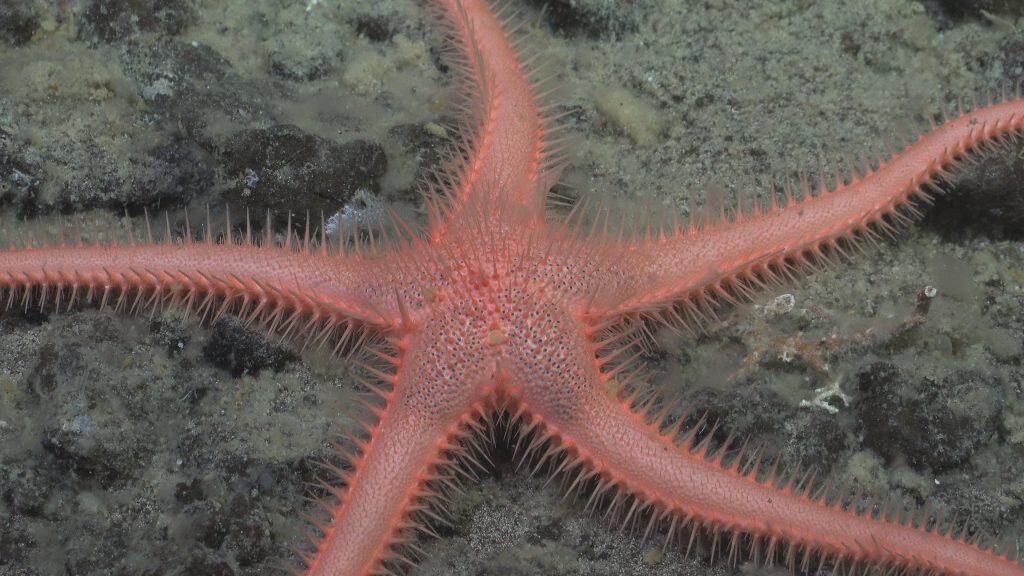
New Seastar found by the ROV SuBastian at 1107 metres at the Mystery Ridge dive site.
©The Nippon Foundation-Nekton Ocean Census/Schmidt Ocean Institute © 2025 – Original / License
The expeditions brought up new species from not one, but three entirely distinct families of deep-sea sea stars: Brisingidae, Benthopectinidae, and Paxillosidae. Members of the Brisingidae family filter-feed in water columns using their five extremely long, slender arms. Benthopectinidae species are remarkably flexible, which is beneficial to them in the abyssal plains where they live. Lastly, Paxillosidae primarily live buried in or move through soft, muddy, or sandy sediments, and have tube feet without suckers.
A Trove of Weird New Crustaceans
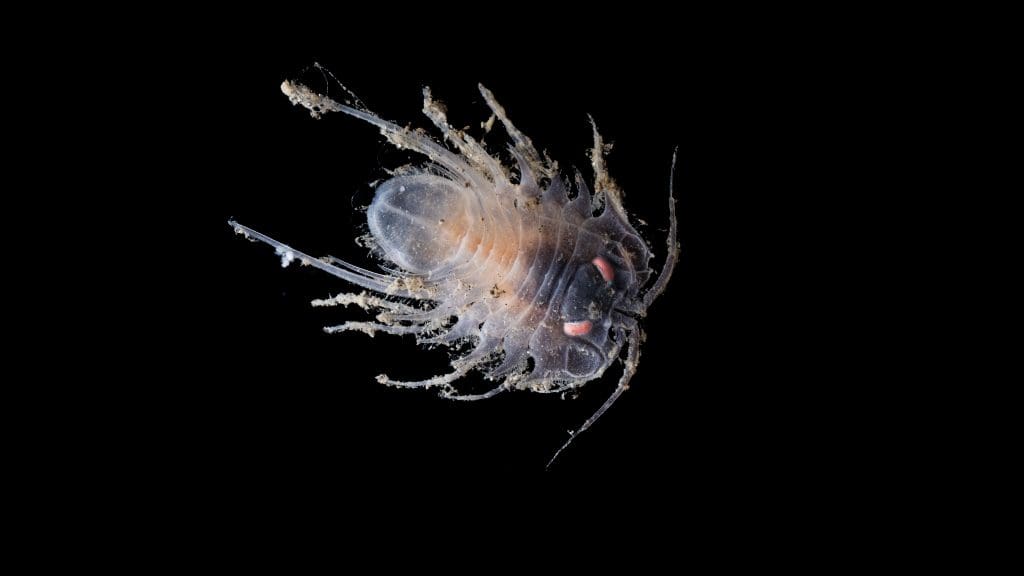
A new isopod was found by the ROV SuBastian at 3533 metres at the Ridge North dive site.
©Jialing Cai/The Nippon Foundation-Nekton Ocean Census/Schmidt Ocean Institute © 2025 – Original / License
Among the new discoveries is a fascinating collection of crustaceans, including several new species of isopods and amphipods. These two groups, although related, have distinctly different body plans tailored to their deep-sea niches.
Isopods have a rigid, segmented exoskeleton, two pairs of antennae, and seven pairs of jointed legs. Their tough, shield-like bodies are adapted for life under pressure. Amphipods, in contrast, are typically flattened from side to side and lack the hard, shield-like covering of many other crustaceans. This streamlined body shape makes them effective scavengers and swimmers.
Black Corals
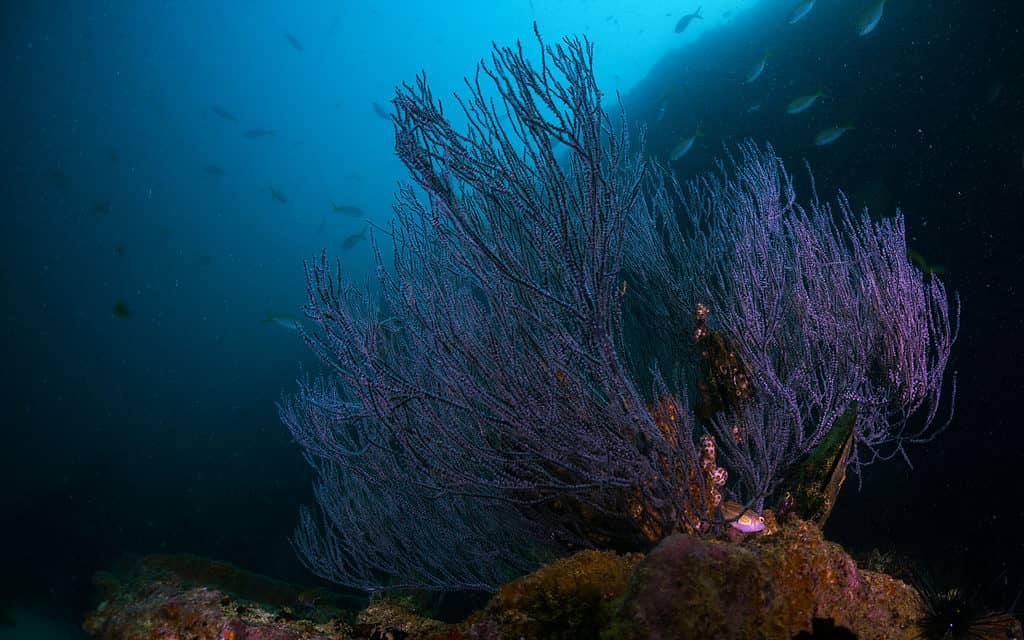
Black corals are incredibly adaptive, flourishing from sunlit coastal zones to the deepest, darkest trenches where there is little to no light.
©Bangtalay/Shutterstock.com
A new species of black coral is currently under assessment, adding to the ranks of these fascinating deep-sea oddities. Despite their name, the external, living tissue of black corals can be quite colorful — it is their hard, internal, chitin-based skeleton that is truly black.
These corals form complex, branching colonies that function as crucial deep-sea habitats, supporting thousands of associated species. Many have also evolved specialized features, such as hooked bases, which they use to anchor securely into soft seabed sediment.
A Potential New Sea Pen Genus
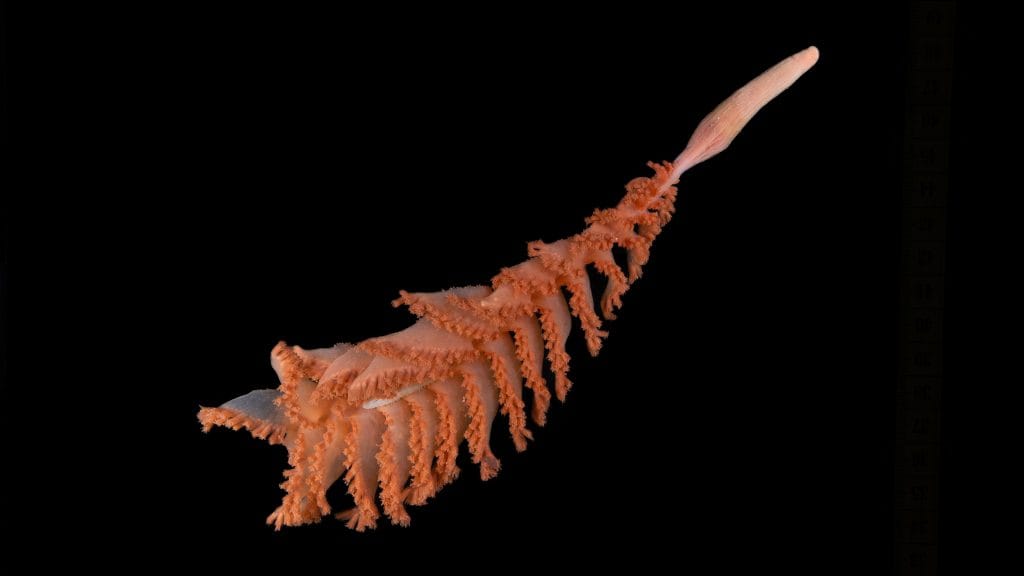
New Sea pen found by the ROV SuBastian at 805 metres at the Mystery Ridge dive site.
©Paul Satchell/The Nippon Foundation-Nekton Ocean Census/Schmidt Ocean Institute © 2025 – Original / License
One of the most beautiful finds from the Antarctic expeditions is a possible new genus of sea pen. These colonial octocorals are aptly named for their resemblance to old-fashioned quill pens. Sea pens are composed of numerous individual polyps that function collectively as a single coordinated colony. They are typically found rooted in soft, muddy, or sandy seabeds, using a large, bulbous foot.
Rare Gastropods and Bivalves from Underwater Volcanic Habitats
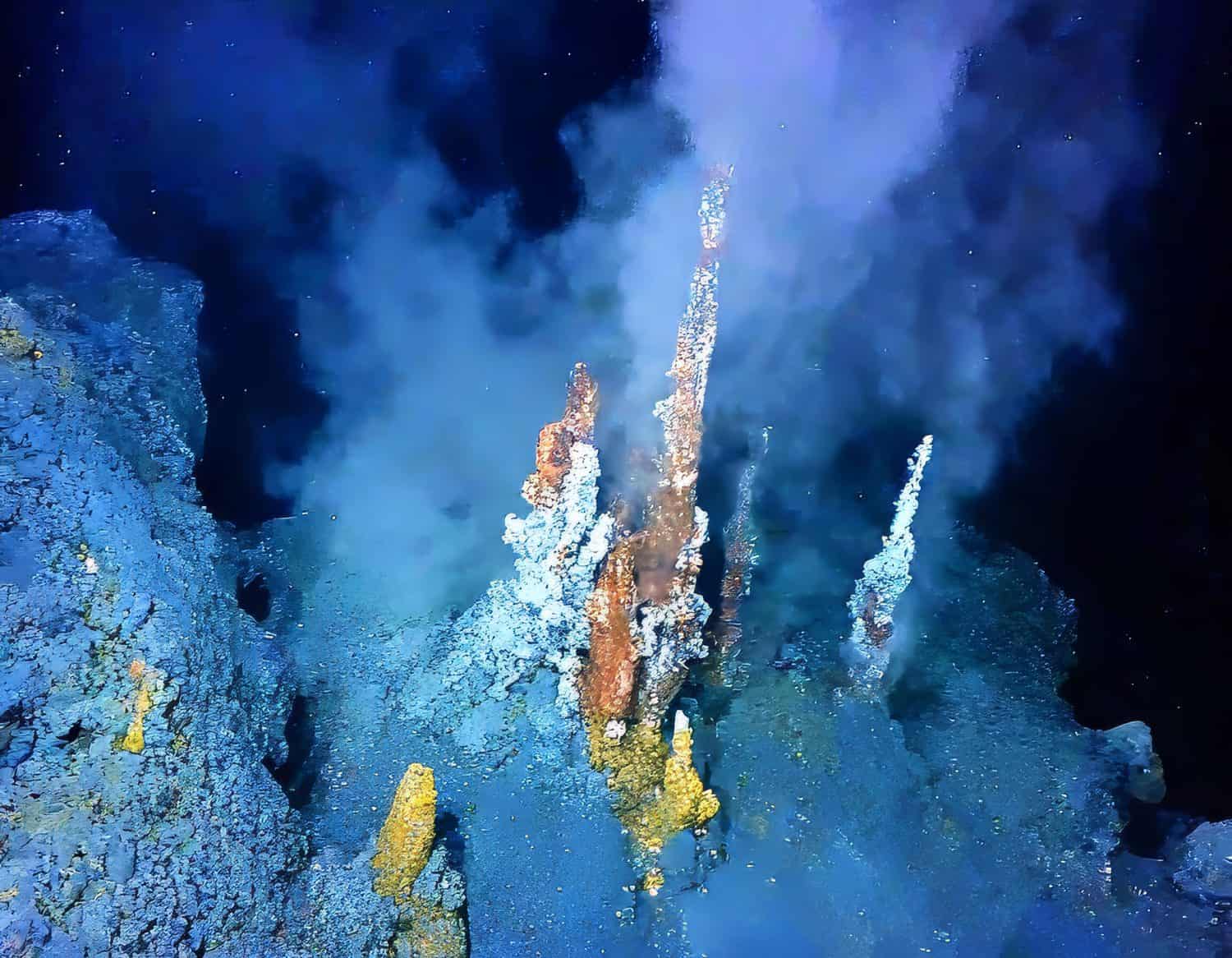
Hydrothermal vents are hot springs in the deep ocean that can reach up to 750 degrees Fahrenheit.
©Gallwis/Shutterstock.com
The deep-sea zones influenced by volcanic activity proved to be a hotbed for specialized life, particularly among mollusks. Researchers confirmed new species among the two major mollusk classes: gastropods and bivalves. Gastropods are mollusks with coiled shells, tentacles, a radula, and muscular feet. Bivalves are filter feeders with a two-part shell and gills for breathing.
These discoveries are particularly notable because life found near volcanic areas thrives in the most extreme environments on Earth. Some deep-sea bivalves can even survive near hydrothermal vents at depths greater than 13,000 feet.
Bone-Eating “Zombie Worms”
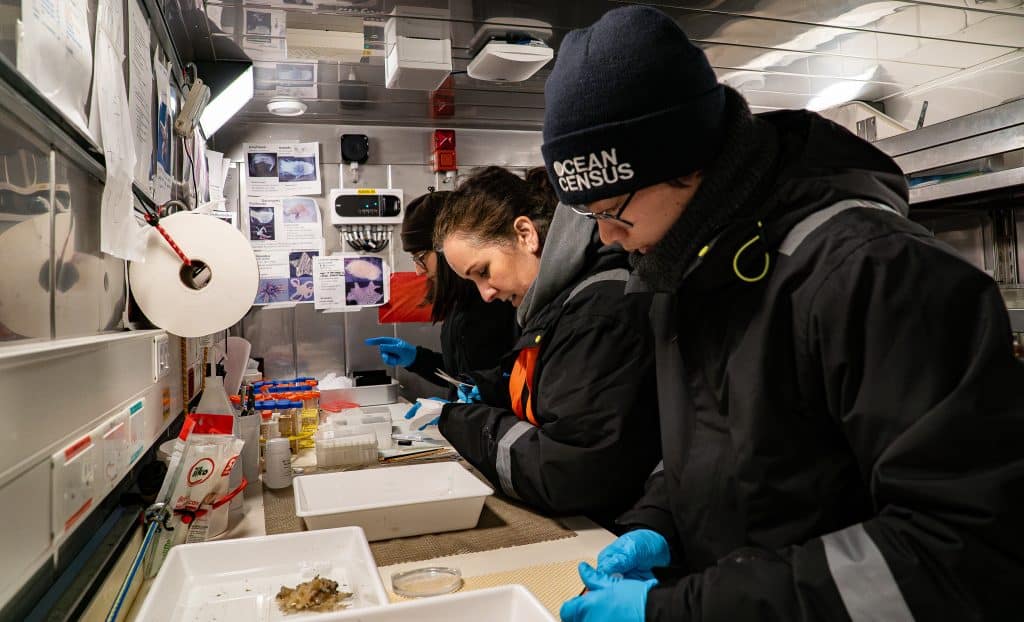
Ocean Census scientists carefully examine deep-sea samples in the ship’s onboard laboratory.
©Paul Satchell/The Nippon Foundation-Nekton Ocean Census/Schmidt Ocean Institute © 2025 – Original / License
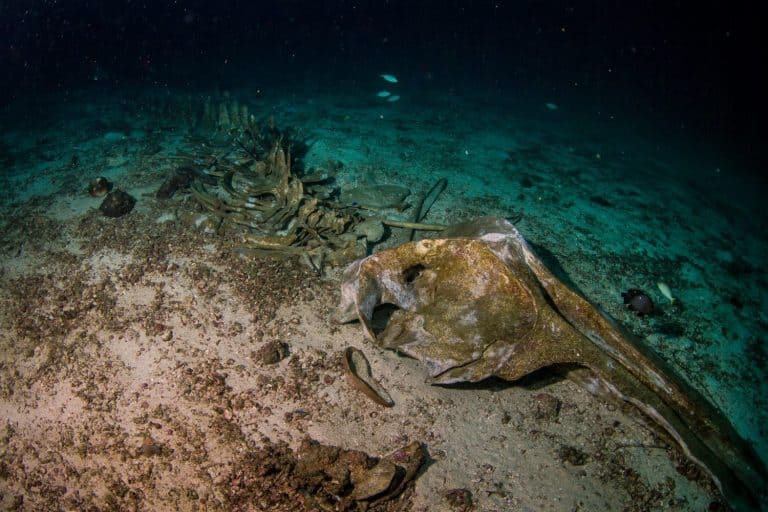
While not a brand-new discovery, the expedition also observed Osedax, commonly known as “zombie worms.” Their unique and macabre biology makes these specialists some of the strangest animals in the ocean, lacking both a stomach and a mouth.
Osedax worms specialize in extracting the last remaining nutrients from the bones of dead animals — such as large fish, whales, and even sunken livestock — that settle on the deep seafloor. They secrete acid through their skin to dissolve the bone material, anchoring themselves firmly to the bone using root-like structures. Even more bizarre than their eating habits are the worms’ reproductive strategies: large females host microscopic males inside their bodies.
Colossal Squid
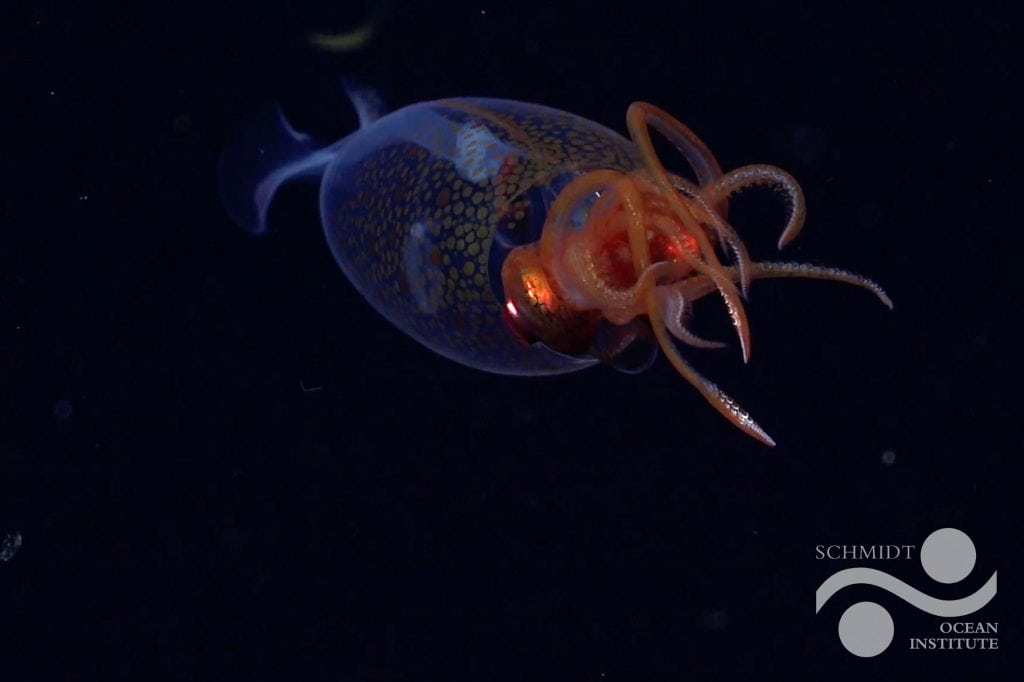
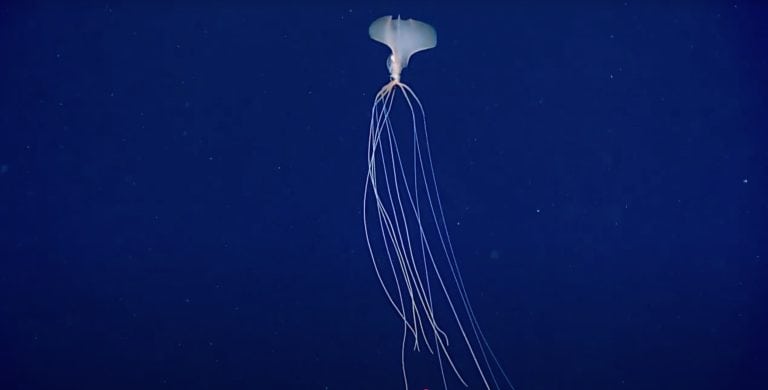
A juvenile colossal squid was filmed for the first time on the South Sandwich Islands expedition.
©ROV SuBastian / Schmidt Ocean Institute – Original / License
In addition to discovering new species, the expeditions documented many deep-sea features, including new hydrothermal vents and stunning coral gardens. One of the most exciting achievements was capturing the first-ever footage of a juvenile colossal squid alive in its natural habitat.
A Race Against Time
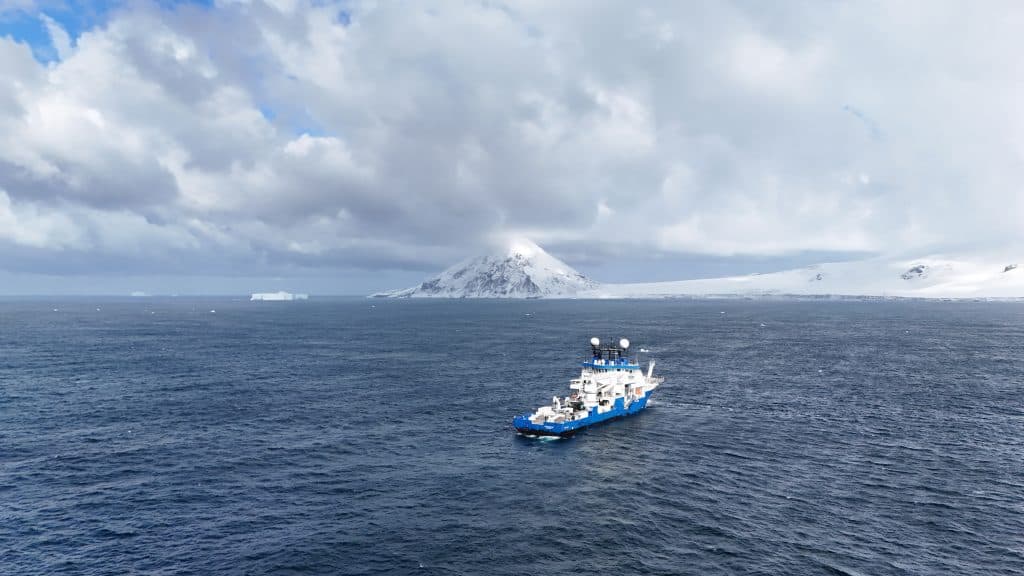
Schmidt Ocean Institute’s research Vessel RV Falkor (too), at the South Sandwich Islands, during the 2025 expedition.
©Paul Satchell/The Nippon Foundation-Nekton Ocean Census/Schmidt Ocean Institute © 2025 – Original / License
The Southern Ocean remains one of Earth’s least-studied ecosystems, and these recent discoveries highlight the vast amount of biodiversity that is still undocumented. With fewer than 30 percent of the collected samples analyzed so far, countless additional new species likely await identification. Unfortunately, this critical region is threatened by pollution, commercial fishing, deep-sea mining, and climate change, so scientists are racing against time to explore and document its unique biodiversity.